
Deep Sea Species
What counts as a deep sea species?
Ocean scientists usually start the deep sea at 200 m, because that is where sunlight gets too weak for plants and algae to grow. Below that line, however, sits most of the living space in the ocean. A deep sea species, then, is any animal that spends all or part of its life below 200 m. For example, lanternfish rise to the surface every night, while snailfish never leave the trenches.
The dive above follows them through all five ocean zones, down to the Challenger Deep in the Mariana Trench, about 10,935 m below the waves. Along the way, you also pass the Titanic, the deepest scuba dive ever made and the spot where Mount Everest’s summit would sit if you dropped it into the trench. For the longer story of how these creatures hunt, breed and find each other in the dark, read my guide to the animals in the deep sea.
Deep sea species, zone by zone
Each layer of the ocean has its own light, temperature and food supply. As a result, each one has its own cast of animals. Many of them cross between zones, though, so the depths on the cards are typical ranges rather than fixed addresses. Tap any card for my full guide to that animal, or jump back into the dive with the zone bar on the left of the screen.
The sunlight zone, 0 to 200 m (epipelagic)
This is the ocean most of us know. In fact, almost all of the sea’s photosynthesis happens up here, and that food eventually feeds nearly everything below. Whales, sharks and tuna dive far deeper; still, they keep coming back up to breathe, to warm up or to feed. None of these are deep sea species, so why are they in the dive? Because they show you how far down the real deep sea begins.
Reefs and coasts, 0 to 40 m
 Polar bear
Ursus maritimus
0–5 m
Males up to about 3 m long
Vulnerable
Polar bear
Ursus maritimus
0–5 m
Males up to about 3 m long
Vulnerable
 Box jellyfish
Chironex fleckeri
0–10 m
Bell up to 30 cm, tentacles up to 3 m
Box jellyfish
Chironex fleckeri
0–10 m
Bell up to 30 cm, tentacles up to 3 m
 Seahorse
Hippocampus spp.
0–30 m
Most species 2 to 30 cm
Seahorse
Hippocampus spp.
0–30 m
Most species 2 to 30 cm
 Parrotfish
Family Scaridae
1–30 m
Most 30 to 70 cm
Parrotfish
Family Scaridae
1–30 m
Most 30 to 70 cm
 Dugong
 dugon
1–20 m
Up to 3 m
Vulnerable
Dugong
Dugong dugon
1–20 m
Up to 3 m
Vulnerable
 Leafy seadragon
Phycodurus eques
4–50 m
Up to 35 cm
Least Concern
Leafy seadragon
Phycodurus eques
4–50 m
Up to 35 cm
Least Concern
 Peacock mantis shrimp
Odontodactylus scyllarus
3–40 m
Up to 18 cm
Peacock mantis shrimp
Odontodactylus scyllarus
3–40 m
Up to 18 cm
 Green sea turtle
Chelonia mydas
0–40 m
Shell up to 1.2 m
Endangered
Green sea turtle
Chelonia mydas
0–40 m
Shell up to 1.2 m
Endangered
Open ocean, 40 to 200 m
 Bottlenose dolphin
Tursiops truncatus
0–50 m
2 to 4 m
Least Concern
Bottlenose dolphin
Tursiops truncatus
0–50 m
2 to 4 m
Least Concern
 Sea snake
Subfamily Hydrophiinae
0–100 m
Most 1 to 1.5 m
Sea snake
Subfamily Hydrophiinae
0–100 m
Most 1 to 1.5 m
 Common octopus
Octopus vulgaris
0–200 m
Up to 1 m with arms
Least Concern
Common octopus
Octopus vulgaris
0–200 m
Up to 1 m with arms
Least Concern
 Mahi-mahi
Coryphaena hippurus
0–85 m
Up to 2 m
Least Concern
Mahi-mahi
Coryphaena hippurus
0–85 m
Up to 2 m
Least Concern
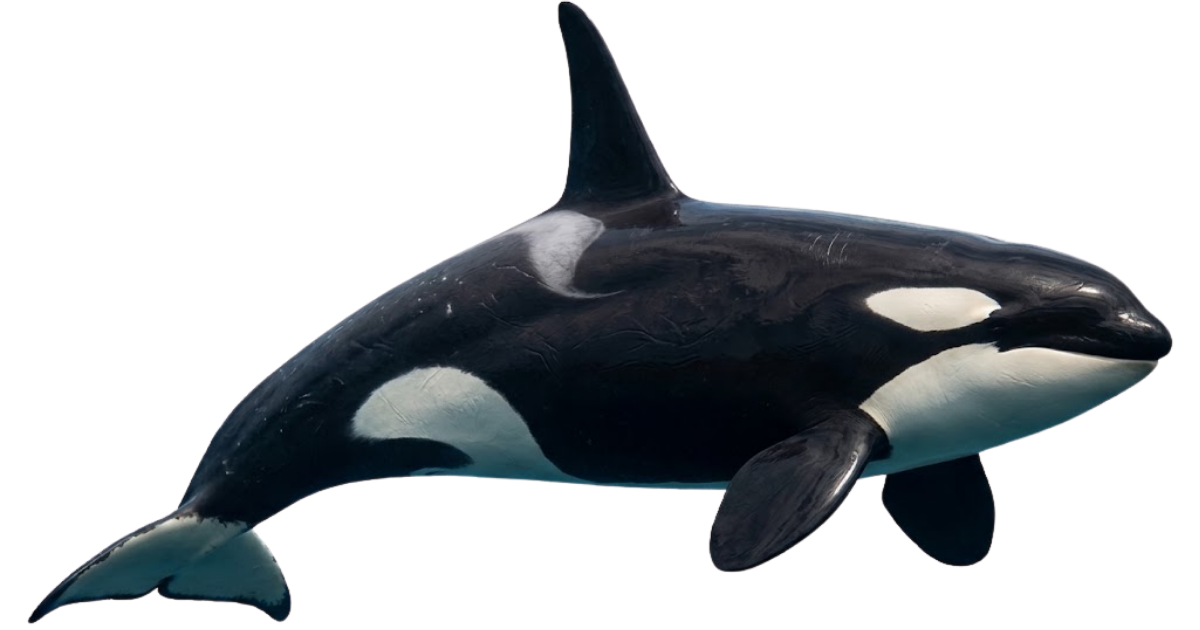 Orca
Orcinus orca
0–100 m
Up to about 9 m
Data Deficient
Orca
Orcinus orca
0–100 m
Up to about 9 m
Data Deficient
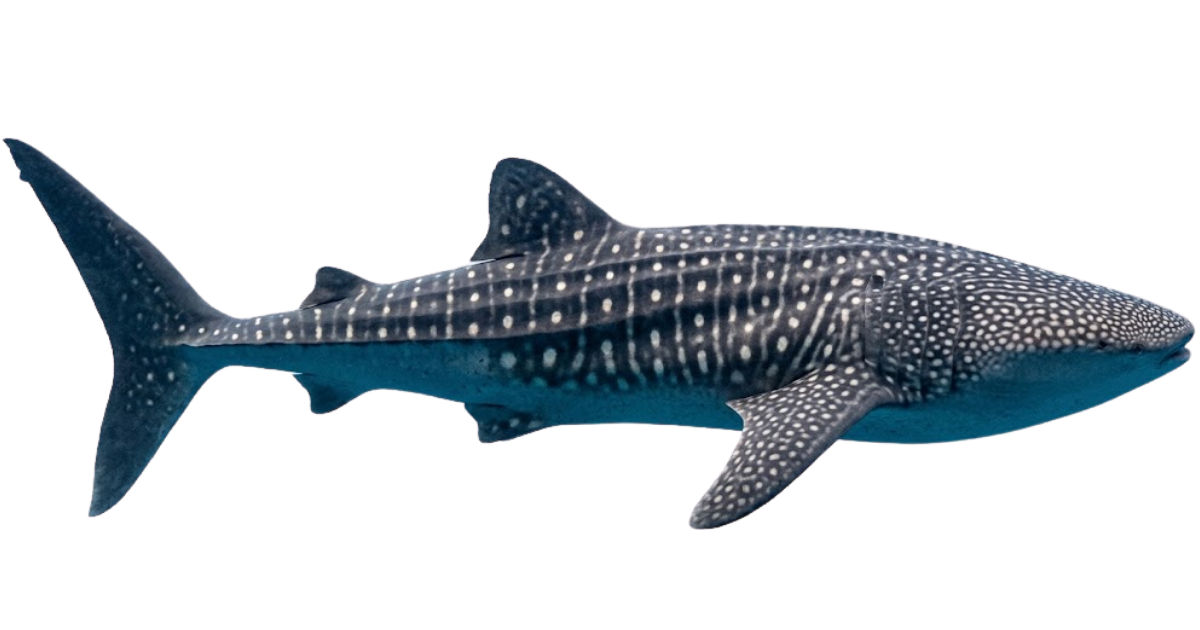 Whale shark
Rhincodon typus
0–100 m
Usually 12 m, up to about 18 m
Endangered
Whale shark
Rhincodon typus
0–100 m
Usually 12 m, up to about 18 m
Endangered
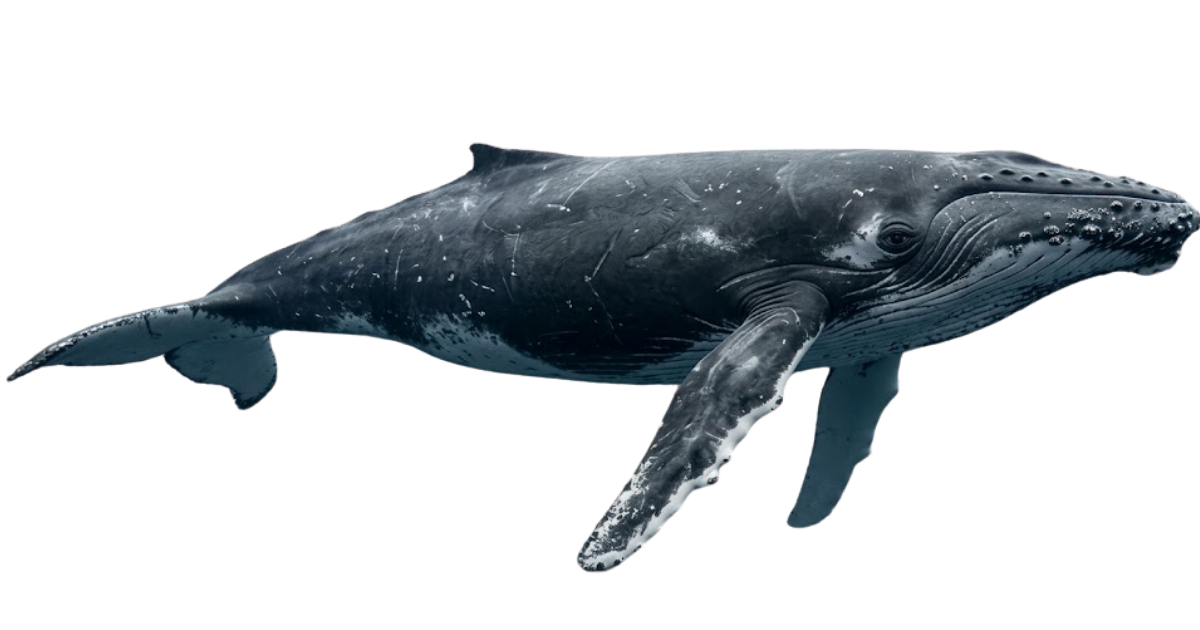 Humpback whale
Megaptera novaeangliae
0–150 m
Up to 16 m
Least Concern
Humpback whale
Megaptera novaeangliae
0–150 m
Up to 16 m
Least Concern
 Sailfish
Istiophorus platypterus
0–200 m
Up to 3 m
Least Concern
Sailfish
Istiophorus platypterus
0–200 m
Up to 3 m
Least Concern
 Ocean sunfish
Mola mola
0–200 m
Up to about 3 m tall
Vulnerable
Ocean sunfish
Mola mola
0–200 m
Up to about 3 m tall
Vulnerable
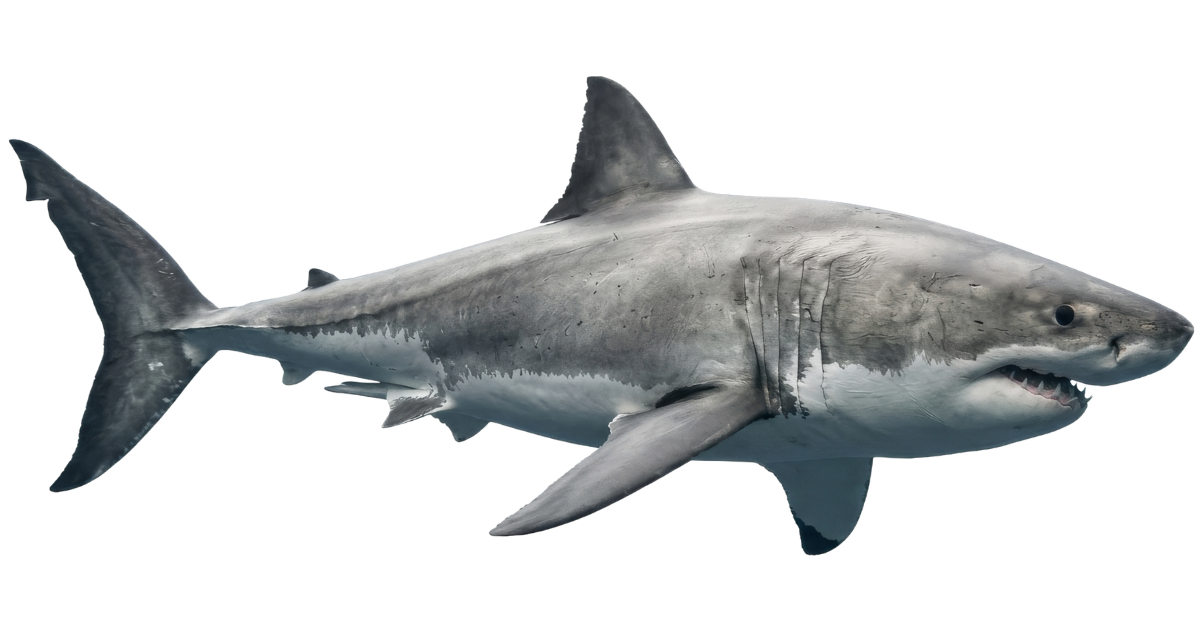 Great white shark
Carcharodon carcharias
0–250 m
Up to about 6 m
Vulnerable
Great white shark
Carcharodon carcharias
0–250 m
Up to about 6 m
Vulnerable
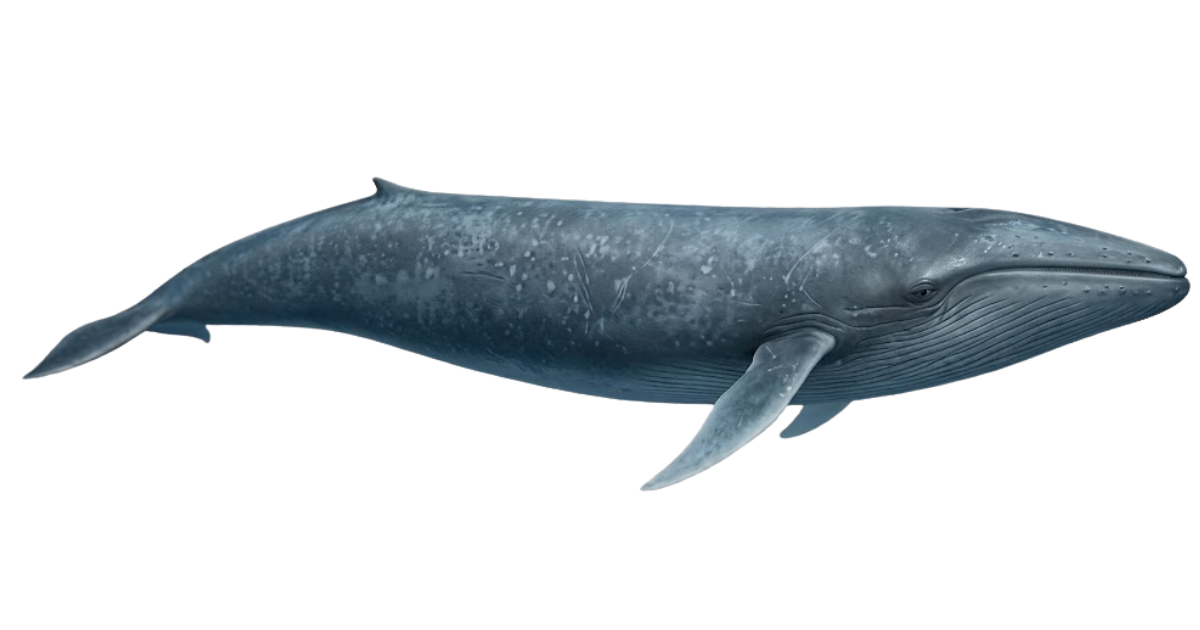 Blue whale
Balaenoptera musculus
0–200 m
Up to about 30 m
Endangered
Blue whale
Balaenoptera musculus
0–200 m
Up to about 30 m
Endangered
 Atlantic bluefin tuna
Thunnus thynnus
0–500 m
Usually 2 to 2.5 m, up to 3 m+
Least Concern
Atlantic bluefin tuna
Thunnus thynnus
0–500 m
Usually 2 to 2.5 m, up to 3 m+
Least Concern
The twilight zone, 200 to 1,000 m (mesopelagic)
By 200 m only about 1% of the surface light is left, and all of it is blue. As a result, many animals here are silver, red or black, while plenty make their own light to erase their silhouette. Every night, moreover, billions of lanternfish and other small animals swim up toward the surface to feed and then sink again before dawn. Scientists even think this zone may hold more fish, by weight, than the rest of the ocean combined.
Upper twilight zone, 200 to 600 m
 Coelacanth
Latimeria chalumnae
150–250 m
Up to 2 m
Critically Endangered
Coelacanth
Latimeria chalumnae
150–250 m
Up to 2 m
Critically Endangered
 Giant oarfish
Regalecus glesne
200–1,000 m
Reliably up to 8 m, the longest bony fish
Least Concern
Giant oarfish
Regalecus glesne
200–1,000 m
Reliably up to 8 m, the longest bony fish
Least Concern
 Chambered nautilus
Nautilus pompilius
100–500 m
Shell up to about 20 cm
Chambered nautilus
Nautilus pompilius
100–500 m
Shell up to about 20 cm
 Megamouth shark
Megachasma pelagios
0–1,000 m
Up to about 5.5 m
Least Concern
Megamouth shark
Megachasma pelagios
0–1,000 m
Up to about 5.5 m
Least Concern
 Swordfish
Xiphias gladius
0–650 m
Up to about 4.5 m
Least Concern
Swordfish
Xiphias gladius
0–650 m
Up to about 4.5 m
Least Concern
 Emperor penguin
Aptenodytes forsteri
0–500 m
Up to about 1.2 m tall
Near Threatened
Emperor penguin
Aptenodytes forsteri
0–500 m
Up to about 1.2 m tall
Near Threatened
 Hatchetfish
Family Sternoptychidae
200–1,000 m
Most under 10 cm glows
Hatchetfish
Family Sternoptychidae
200–1,000 m
Most under 10 cm glows
Lower twilight zone, 600 to 1,000 m
 Southern elephant seal
Mirounga leonina
300–800 m
Males up to about 5 m
Least Concern
Southern elephant seal
Mirounga leonina
300–800 m
Males up to about 5 m
Least Concern
 Lanternfish
Family Myctophidae
300–1,200 m
Most 2 to 15 cm glows
Lanternfish
Family Myctophidae
300–1,200 m
Most 2 to 15 cm glows
 Frilled shark
Chlamydoselachus anguineus
50–1,500 m
Up to about 2 m
Least Concern
Frilled shark
Chlamydoselachus anguineus
50–1,500 m
Up to about 2 m
Least Concern
 Barreleye
Macropinna microstoma
600–800 m
Up to about 15 cm
Barreleye
Macropinna microstoma
600–800 m
Up to about 15 cm
 Ghost shark
Order Chimaeriformes
200–2,600 m
Most 60 cm to 1.5 m
Ghost shark
Order Chimaeriformes
200–2,600 m
Most 60 cm to 1.5 m
 Giant squid
Architeuthis dux
300–1,000 m
Up to about 12 m with tentacles
Least Concern
Giant squid
Architeuthis dux
300–1,000 m
Up to about 12 m with tentacles
Least Concern
 Vampire squid
Vampyroteuthis infernalis
600–1,200 m
Up to about 30 cm glows
Vampire squid
Vampyroteuthis infernalis
600–1,200 m
Up to about 30 cm glows
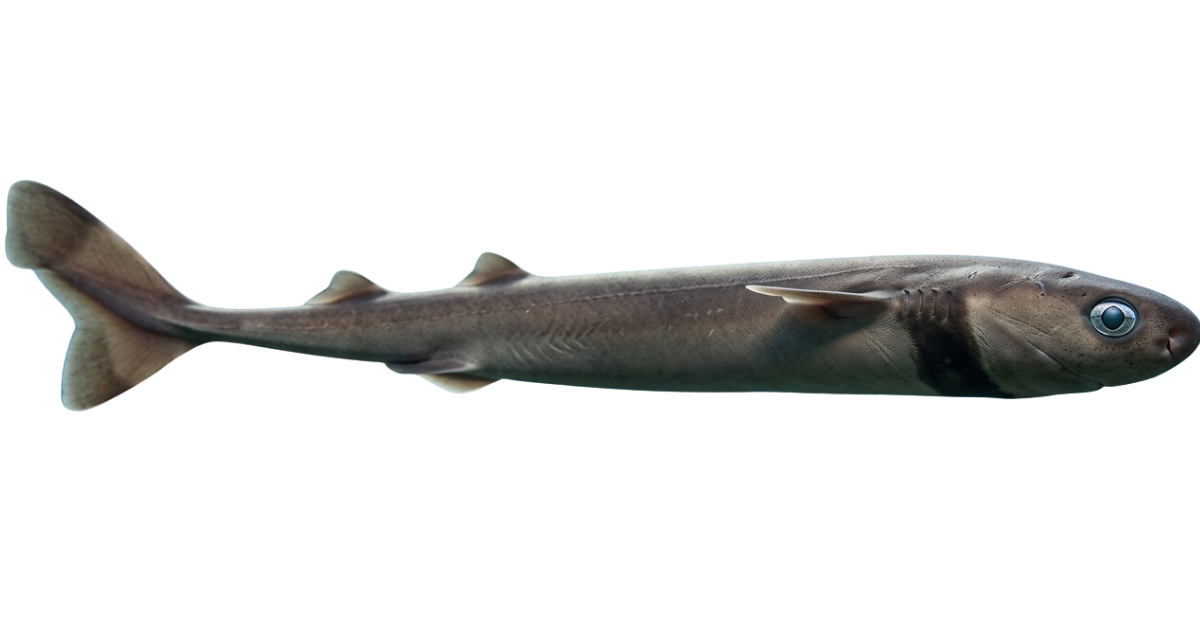 Cookiecutter shark
Isistius brasiliensis
0–1,000 m
Up to about 50 cm glows
Least Concern
Cookiecutter shark
Isistius brasiliensis
0–1,000 m
Up to about 50 cm glows
Least Concern
The midnight zone, 1,000 to 4,000 m (bathypelagic)
Below 1,000 m, no sunlight arrives at all. The water stays at about 2 to 4 °C, and most food reaches it as marine snow, the flakes of dead plankton and waste that drift down from above. Consequently, almost every flash of light here comes from an animal. Even so, a sperm whale, a narwhal or a Cuvier’s beaked whale can reach this zone on a single breath.
Upper midnight zone, 1,000 to 2,000 m
 Blobfish
Psychrolutes marcidus
600–1,200 m
Up to about 30 cm
Blobfish
Psychrolutes marcidus
600–1,200 m
Up to about 30 cm
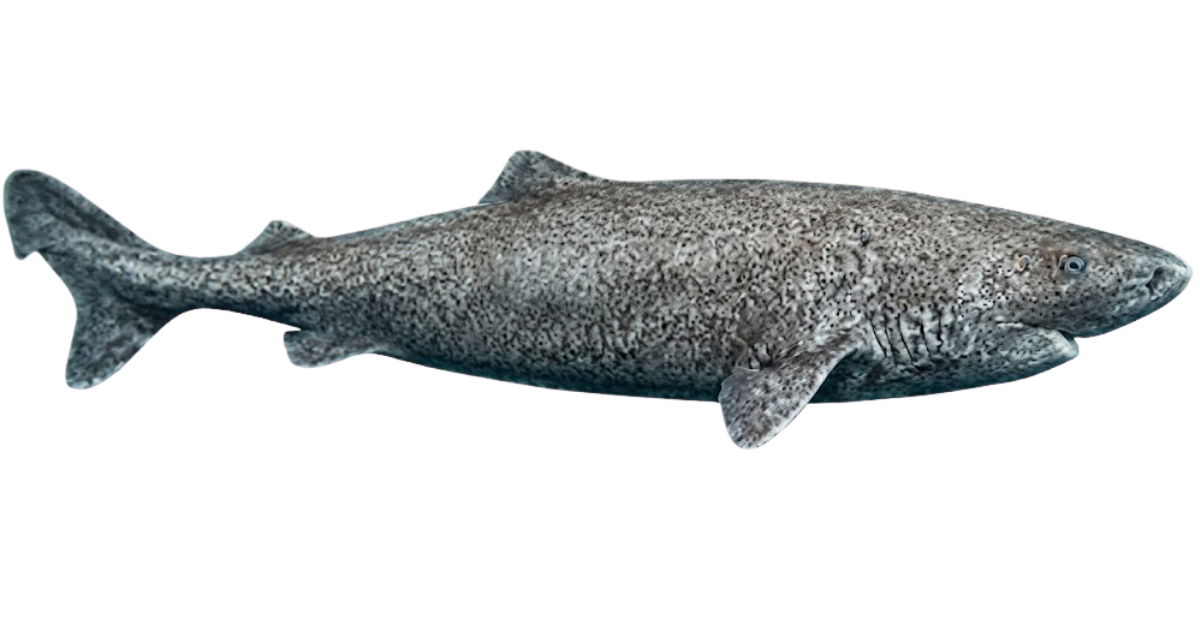 Greenland shark
Somniosus microcephalus
100–1,200 m
Up to about 6.4 m
Vulnerable
Greenland shark
Somniosus microcephalus
100–1,200 m
Up to about 6.4 m
Vulnerable
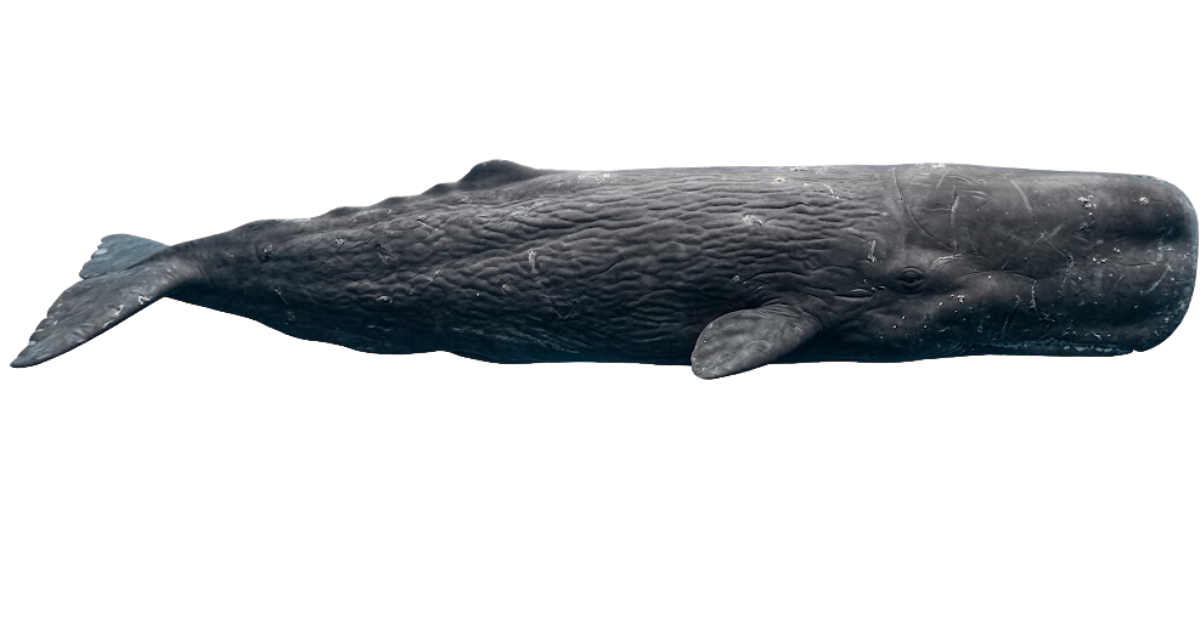 Sperm whale
Physeter macrocephalus
0–1,200 m
Males up to about 16 m
Vulnerable
Sperm whale
Physeter macrocephalus
0–1,200 m
Males up to about 16 m
Vulnerable
 Viperfish
Chauliodus sloani
200–1,500 m
Up to about 35 cm glows
Viperfish
Chauliodus sloani
200–1,500 m
Up to about 35 cm glows
 Goblin shark
Mitsukurina owstoni
270–1,300 m
Usually 3 to 4 m
Least Concern
Goblin shark
Mitsukurina owstoni
270–1,300 m
Usually 3 to 4 m
Least Concern
 Giant isopod
Bathynomus giganteus
170–2,140 m
Up to about 50 cm
Giant isopod
Bathynomus giganteus
170–2,140 m
Up to about 50 cm
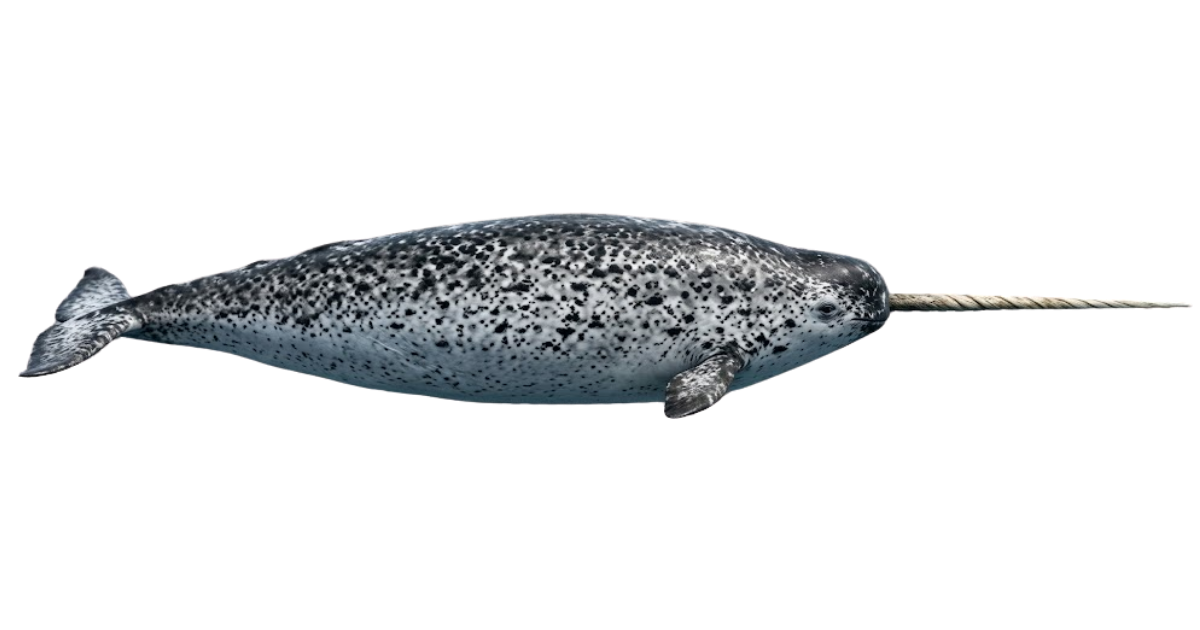 Narwhal
Monodon monoceros
0–1,500 m
Body up to 5 m, tusk up to 3 m
Least Concern
Narwhal
Monodon monoceros
0–1,500 m
Body up to 5 m, tusk up to 3 m
Least Concern
 Black dragonfish
Idiacanthus atlanticus
500–2,000 m
Females up to about 40 cm, males about 5 cm glows
Black dragonfish
Idiacanthus atlanticus
500–2,000 m
Females up to about 40 cm, males about 5 cm glows
 Anglerfish
Order Lophiiformes
1,000–4,000 m
Females mostly under 20 cm glows
Anglerfish
Order Lophiiformes
1,000–4,000 m
Females mostly under 20 cm glows
 Telescope octopus
Amphitretus pelagicus
100–2,000 m
Up to about 30 cm
Telescope octopus
Amphitretus pelagicus
100–2,000 m
Up to about 30 cm
 Patagonian toothfish
Dissostichus eleginoides
300–2,500 m
Up to about 2.3 m
Patagonian toothfish
Dissostichus eleginoides
300–2,500 m
Up to about 2.3 m
 Gulper eel
Eurypharynx pelecanoides
500–3,000 m
Up to about 75 cm glows
Gulper eel
Eurypharynx pelecanoides
500–3,000 m
Up to about 75 cm glows
 Fangtooth
Anoplogaster cornuta
500–2,000 m
Up to about 16 cm
Fangtooth
Anoplogaster cornuta
500–2,000 m
Up to about 16 cm
Lower midnight zone, 2,000 to 4,000 m
 Comb jelly
Phylum Ctenophora
0–7,000 m
Most a few cm, some over 1 m glows
Comb jelly
Phylum Ctenophora
0–7,000 m
Most a few cm, some over 1 m glows
 Black swallower
Chiasmodon niger
700–2,745 m
Up to about 25 cm
Black swallower
Chiasmodon niger
700–2,745 m
Up to about 25 cm
 Atolla jellyfish
Atolla wyvillei
1,000–4,000 m
Bell up to about 15 cm glows
Atolla jellyfish
Atolla wyvillei
1,000–4,000 m
Bell up to about 15 cm glows
 Cuvier's beaked whale
Ziphius cavirostris
0–3,000 m
Up to about 7 m
Least Concern
Cuvier's beaked whale
Ziphius cavirostris
0–3,000 m
Up to about 7 m
Least Concern
 Dumbo octopus
Grimpoteuthis spp.
1,000–4,000 m
Most 20 to 30 cm
Dumbo octopus
Grimpoteuthis spp.
1,000–4,000 m
Most 20 to 30 cm
The abyss, 4,000 to 6,000 m (abyssopelagic)
Between 4,000 and 6,000 m lie the abyssal plains. They are flat, muddy and close to freezing, and they cover a huge share of the seafloor, yet very few people have ever seen them. Instead of chasing prey, most animals here, such as sea pigs, tripod fish and brittle stars, live on whatever sinks from the water above. Life down here therefore runs slowly.
 Tripod fish
Bathypterois grallator
878–4,720 m
Body up to about 35 cm
Tripod fish
Bathypterois grallator
878–4,720 m
Body up to about 35 cm
 Grenadier (rattail)
Family Macrouridae
200–6,000 m
Most 30 cm to 1 m
Grenadier (rattail)
Family Macrouridae
200–6,000 m
Most 30 cm to 1 m
 Sea pig
Scotoplanes spp.
1,000–6,000 m
Up to about 15 cm
Sea pig
Scotoplanes spp.
1,000–6,000 m
Up to about 15 cm
 Brittle star
Class Ophiuroidea
0–6,000 m
Most a few cm across, arms up to 60 cm
Brittle star
Class Ophiuroidea
0–6,000 m
Most a few cm across, arms up to 60 cm
 Abyssal spiderfish
Bathypterois longipes
2,615–5,610 m
Up to about 22 cm
Abyssal spiderfish
Bathypterois longipes
2,615–5,610 m
Up to about 22 cm
 Giant sea spider
Colossendeis spp.
500–7,000 m
Leg span up to about 70 cm
Giant sea spider
Colossendeis spp.
500–7,000 m
Leg span up to about 70 cm
The hadal zone, 6,000 to 10,935 m (hadalpelagic)
Below 6,000 m, the ocean only continues inside deep trenches, such as the Mariana Trench in the western Pacific. At the bottom, the pressure is more than 1,000 times that at the surface. Still, amphipods, sea cucumbers and snailfish live down here. In fact, snailfish hold the records for the deepest fish ever caught and filmed.
 Supergiant amphipod
Alicella gigantea
4,800–7,000 m
Up to 34 cm
Supergiant amphipod
Alicella gigantea
4,800–7,000 m
Up to 34 cm
 Mariana snailfish
Pseudoliparis swirei
6,198–8,076 m
Up to about 29 cm
Mariana snailfish
Pseudoliparis swirei
6,198–8,076 m
Up to about 29 cm
How deep sea creatures survive the pressure, cold and dark
Making their own light
Light is the first thing to go, so many deep sea creatures make their own. When researchers analysed 17 years of video from the surface down to 3,900 m, for instance, they found that 76% of the animals they observed could produce light (Martini & Haddock, 2017). They use it to lure prey, find mates and startle predators. Similarly, the hatchetfish and other bioluminescent animals use it to hide their own shadow. Colour helps too. Because red light vanishes first in seawater, a red animal such as the giant squid looks black in the deep.
Handling the pressure
Pressure is the next problem. Every 10 m of water adds about one more atmosphere, so a fish at 8,000 m carries roughly 800 times the pressure we feel at sea level. However, deep sea fish have no air-filled swim bladders to crush. Their cells also pack small protective molecules that help their proteins keep their shape. Even those have a limit, though, which is why no fish has been found much below about 8,300 m.
Surviving on scraps
Finally, there is hunger. With no plants, almost all food falls from above as marine snow or as the odd dead whale. In response, many deep sea animals have huge mouths, stretchy stomachs and very slow lives. For example, the black swallower can eat a fish twice its own length, while a Greenland shark may live for around 400 years. Some species also grow much bigger than their shallow-water relatives, a pattern called deep sea gigantism. The giant isopod and the supergiant amphipod in the hadal zone are two of the best examples.
The first dive to the bottom of the ocean
On 23 January 1960, Jacques Piccard and US Navy lieutenant Don Walsh climbed into the Trieste, a bathyscaphe built like an underwater balloon. Its crew sphere hung under a float holding 22,000 gallons of gasoline, which is lighter than water and therefore kept the craft from plunging too fast. The descent took 4 hours and 47 minutes. At about 9,875 m, meanwhile, a loud crack shook the sphere when a window in the entrance tube split. Even so, the two men kept going.
Once on the bottom, Piccard reported a flatfish, although most scientists now think he was mistaken. After 20 minutes, the mud they had stirred up hid everything, so they dropped ballast and began the climb back, which took 3 hours and 15 minutes. Afterwards, nobody returned to the Challenger Deep for 52 years, until James Cameron dived there alone in 2012. You can follow their route in the last stretch of the dive above.
New deep sea species discovered in 2025 and 2026
New species turn up every week, and the deep sea supplies a large share of them. In May 2026, for example, the Ocean Census reported 1,121 new marine species found between April 2025 and March 2026, a 54% jump on the year before. They came from 13 expeditions and nine workshops around the world. Among them were a ghost shark from about 800 m in Australia’s Coral Sea Marine Park, a worm that lives inside glass sponges 791 m down off Japan, and a carnivorous “death ball” sponge from 3,601 m near the South Sandwich Islands. You will also pass two of them in the dive.
Finding an animal is only the start, though. On average, it takes about 13.5 years for a new species to be formally described and named. Some arrive faster. In January 2025, for instance, scientists described a new giant isopod from the South China Sea, about 30 cm long, and named it Bathynomus vaderi because its head reminded them of Darth Vader’s helmet.
How much of the deep ocean have we explored?
Less than you might think. By April 2026, the Seabed 2030 project had mapped 28.7% of the ocean floor in high resolution, so most of it is still known only from rough satellite estimates. Seeing it is rarer still. A 2025 study added up every deep sea dive with cameras since the 1950s and found that people have seen less than 0.001% of the deep seafloor, an area about a tenth the size of Belgium (Bell et al., 2025). Moreover, 97% of those dives came from just five countries.
Similarly, the animals are poorly known. A widely cited estimate suggests that about 91% of ocean species have not yet been described (Mora et al., 2011), and the Ocean Census puts the figure at up to 90%. In other words, most of the deep sea species alive today are still waiting for a name.
From the field
The closest I get to this dive is its very top. I have dived with lemon sharks, wobbegongs, whitetip reef sharks and hammerheads, and every one of them was calm. That is one reason I think sharks are so misunderstood. The animal on this page I most want to meet, however, is the sperm whale. I have never swum with one, but it is high on my list, with the Azores first. Knowing that it hunts more than 1,000 m down makes the few minutes it spends breathing at the surface feel even more special. If you would rather start in shallower water, my guide to the best places to swim with whale sharks is a good place to begin.
More wildlife interactives
- Whale size comparisonFourteen whales at true scale, with how deep each one dives.
- Shark size comparisonTwenty sharks beside a scuba diver, from a pygmy shark to a megalodon.
- The Great Animal Speed RaceRace sailfish, mako sharks and tuna against a cheetah and Usain Bolt.
- Animal size comparisonFrom a tardigrade to a blue whale, with a person for scale.
- Animal migration mapsFollow humpback and gray whales on their journeys, month by month.
Frequently asked questions
What was recently found in the ocean?
In May 2026, the Ocean Census announced 1,121 new marine species found in a single year, between April 2025 and March 2026. The finds include a new ghost shark from about 800 m off Australia and a worm living inside deep sea glass sponges off Japan. There was also a carnivorous “death ball” sponge from 3,601 m near the South Sandwich Islands.
What is the most recent animal discovered in the ocean?
New marine species are described almost every week, so the answer changes constantly. The most recent big batch came from the Ocean Census in May 2026, with 1,121 new species, including a ghost shark (Chimaera sp.) from the Coral Sea. For a famous recent example, Bathynomus vaderi, a giant isopod named after Darth Vader, was described in January 2025.
How much of the ocean have we discovered in 2026?
About 28.7% of the ocean floor had been mapped in high resolution by April 2026, according to Seabed 2030. However, far less has been seen: people have looked at under 0.001% of the deep seafloor with cameras or their own eyes. As for life, scientists estimate that up to 90% of ocean species are still undescribed.
What are the 10 rarest sea creatures?
There is no official top ten, but the vaquita, a small porpoise from Mexico’s Gulf of California, tops almost every list, with only a handful left. Other critically endangered sea animals include the Maui dolphin, the North Atlantic right whale, the sawfish, the angelshark, the hawksbill turtle and the coelacanth you meet in this dive. My list of almost extinct sea animals covers them in more detail.
What is the deepest diving mammal?
Cuvier’s beaked whale. One was tracked diving to 2,992 m off California, and another stayed under for 3 hours and 42 minutes on a single breath. By comparison, sperm whales usually hunt at around 1,000 m, while elephant seals have been recorded below 2,000 m.
What is the deepest living animal?
The deepest fish ever filmed was a snailfish at 8,336 m in the Izu-Ogasawara Trench, off Japan, in 2022. Below that, fish give way to invertebrates. For example, amphipods, small shrimp-like scavengers, have been collected from the bottom of the Challenger Deep itself, nearly 11,000 m down.
Why do so many deep sea creatures glow?
Because light is useful where there is no sunlight. Deep sea creatures use bioluminescence to lure prey, attract mates, confuse predators and hide their silhouette against the faint light from above. In one long study, in fact, 76% of the animals observed between the surface and 3,900 m could make light.
References
- Bell, K. L. C., Johannes, K. N., Kennedy, B. R. C., & Poulton, S. E. (2025). How little we’ve seen: A visual coverage estimate of the deep seafloor. Science Advances, 11(19), eadp8602. https://doi.org/10.1126/sciadv.adp8602
- Martini, S., & Haddock, S. H. D. (2017). Quantification of bioluminescence from the surface to the deep sea demonstrates its predominance as an ecological trait. Scientific Reports, 7, 45750. https://doi.org/10.1038/srep45750
- Mora, C., Tittensor, D. P., Adl, S., Simpson, A. G. B., & Worm, B. (2011). How many species are there on Earth and in the ocean? PLoS Biology, 9(8), e1001127. https://doi.org/10.1371/journal.pbio.1001127



