Elephant seals rank among Earth’s most extraordinary marine mammals, but seeing them on a screen doesn’t compare to the reality of their massive presence. Recently, the Wildlife Nomads team crossed paths with a couple from South Africa who lived right on the coast. They shared a jaw-dropping video with us: a massive bull casually lumbering through the streets of an urban beach neighborhood!
As a biologist, this sparked a deep dive into our own field notes and research. These animals spend up to 90% of their lives in the open ocean, diving deeper than almost any other mammal, yet they return faithfully to sandy beaches for breeding and molting. This article combines professional biological insights with real-world encounters to explore the lifecycle, habitat, and conservation of elephant seals, along with the best places to witness these giants for yourself.
What Is a Sea Elephant?
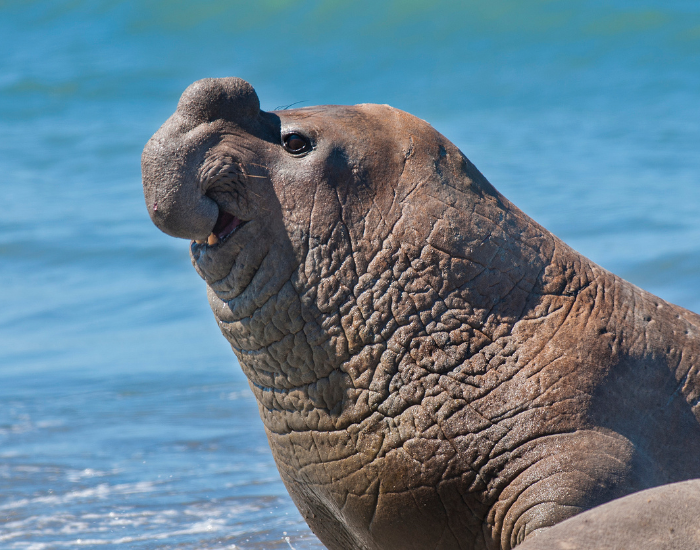
A sea elephant is another name for the elephant seal, a distinctive pinniped that includes two two species. The Northern elephant seals (Mirounga angustirostris) inhabit the Pacific Ocean along North America, from Baja California to the Aleutian Islands. The Southern elephant seals (Mirounga leonina) populate the Southern Hemisphere, including South Georgia, Argentina, the Kerguelen Islands, and Macquarie Island.
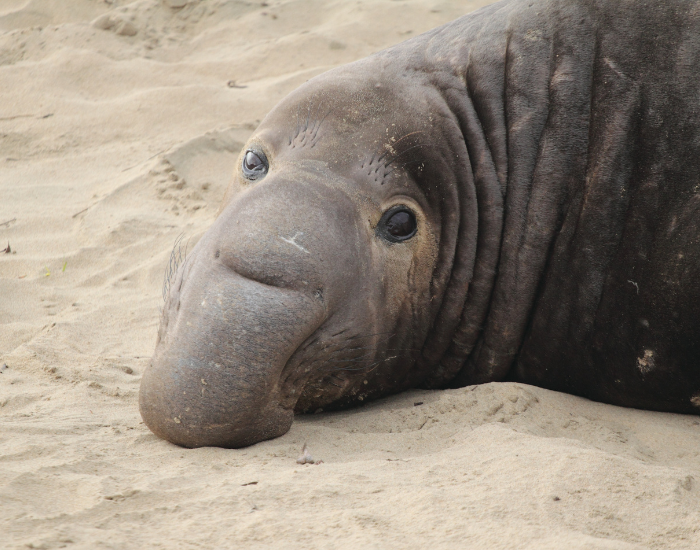
The name derives from the male’s distinctive proboscis, a trunk-like nose that inflates during the breeding season to produce thundering roars. Their trunk serves as a critical secondary sexual characteristic distinguishing dominant males from younger competitors. Unlike sea lions, elephant seals are true seals (phocids), meaning they lack external ear flaps and move on land with an undulating crawl, firmly placing them within the seal family and separating them from their more agile relatives.

12 Cool Facts About Elephant Seals
1. Ancient Evolutionary Origins
Elephant seals evolved approximately 15-20 million years ago during the Miocene epoch. Scientists believe they descended from terrestrial carnivores that gradually adapted to ocean life. The two species, northern elephant seals and southern elephant seals, diverged roughly 4-5 million years ago when changing ocean currents and climate patterns separated northern and southern populations.

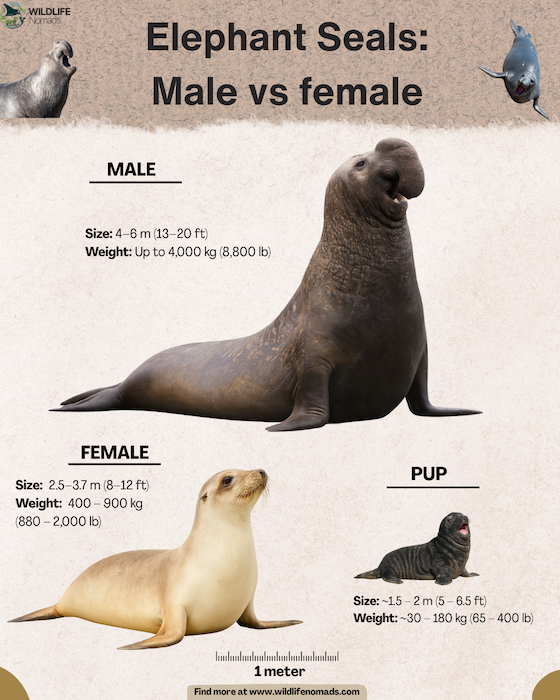
2. Extreme Sexual Dimorphism in Elephant Seals
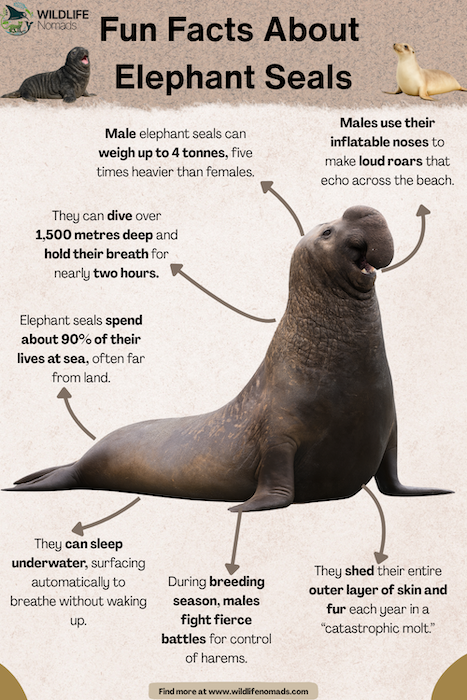
Adult males, known as bulls, reach 13-20 feet in length and weigh between 3,300-8,800 pounds, with exceptional individuals exceeding 11,000 pounds. Females, on the other hand, measure considerably smaller at 8-11 feet and maintain a body weight of 880-1,980 pounds. Males can weigh five to ten times more than adult females, one of the most extreme examples of sexual dimorphism in mammals. Northern elephant seals bulls grow slightly smaller than their southern counterparts, yet all males tower over females dramatically.
3. Record-Breaking Migrations
Northern elephant seals undertake some of the longest mammal migrations ever recorded. Some individuals cover over 13,000 miles annually between breeding colonies on sandy beaches and feeding grounds in the open ocean. Males travel as far north as the Aleutian Islands and Gulf of Alaska, while females typically remain in waters off Washington, Oregon, and Baja California. These elephant seals’ migrations demonstrate remarkable navigation abilities across vast ocean distances.
4. Extraordinary Diving Capabilities
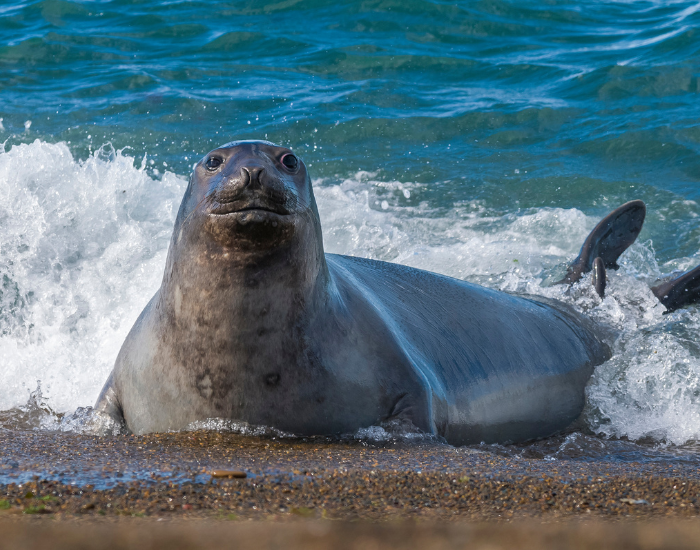
These elephant seals dive to depths exceeding 5,000 feet (1,550 meters), with some dives lasting up to two hours, a capability unmatched among most marine mammals. Most foraging dives of elephant seals last 20-30 minutes as they hunt squid, fish, rays, and small sharks in cold, dark waters where few predators compete. The diving ability of these seals depends on remarkable physiological adaptations: muscles packed with oxygen-storing myoglobin, reduced blood flow to conserve oxygen, and collapsible lungs to avoid nitrogen absorption at depth.
5. Violent Breeding Battles
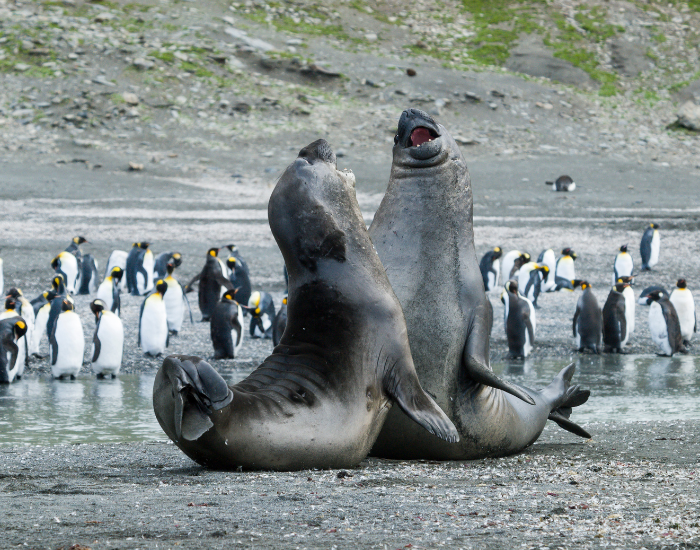
The breeding season transforms quiet California beaches into battlegrounds from December through March. Adult males engage in ritualized combat that can escalate to serious injury or death. Two elephant seal bulls rear up, inflating their proboscis to amplify deep bellowing roars. They crash together chest-to-chest, using thick chest shields to absorb impacts while biting at opponents’ necks and shoulders. A single alpha male may mate with 30-50 females during a successful breeding season, while subordinate males often fail to breed at all.
6. Intensive Maternal Investment
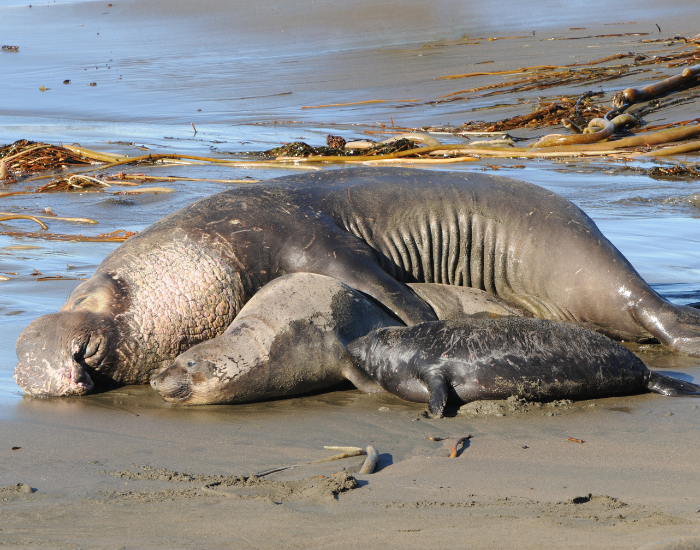
Female elephant seals give birth within days of arriving at breeding colonies. They nurse their elephant seal pups for just 3-4 weeks on milk containing over 55% fat, one of the richest milk of any pinniped. During this nursing period, elephant seal mothers fast completely, often losing more than one-third of their body weight. Pups gain up to 10 pounds daily, ballooning from 65-75 pounds at birth to 250-300 pounds before weaning.
7. Unique Catastrophic Molt
Unlike most mammals that gradually replace hair, elephant seals shed both fur and skin in large sheets, a catastrophic molt that creates a patchy, ragged appearance. This process requires tremendous energy, forcing elephant seals to remain ashore and fast for several weeks while their new coat develops. The molt eliminates parasites, repairs damage from deep diving, and maintains the insulating properties of their fur and blubber layers.
Adult female elephant seals molt from April through May, juvenile seals during late spring and summer, and adult male elephant seals from June through August. This staggered timing prevents overcrowding at popular haul-out sites where elephant seals congregate.
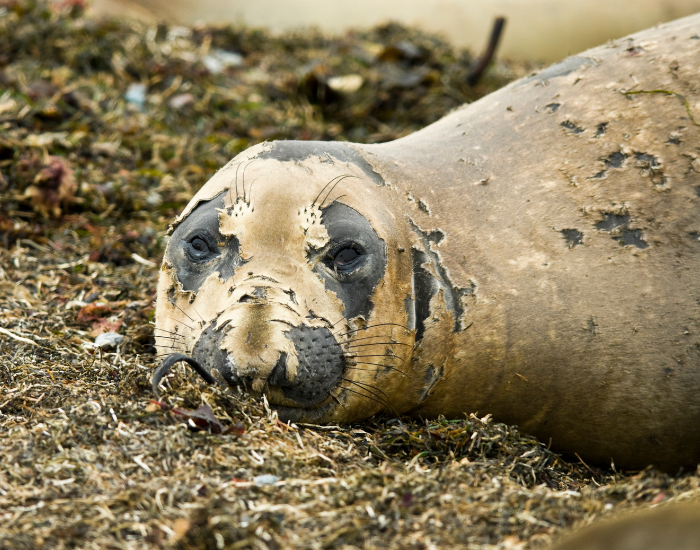
8. Staggered Seasonal Returns
Elephant seals return to shore in predictable seasonal patterns. Adult males arrive first at breeding sites in early winter (November-December), followed by females who give birth and nurse their elephant seal pups. After breeding concludes, different groups return for molting: adult female elephant seals in April-May, juveniles in late spring-summer, and adult male elephant seals in June-August. This timing varies by age group and sex, with each cohort occupying beaches at different times throughout the annual cycle.
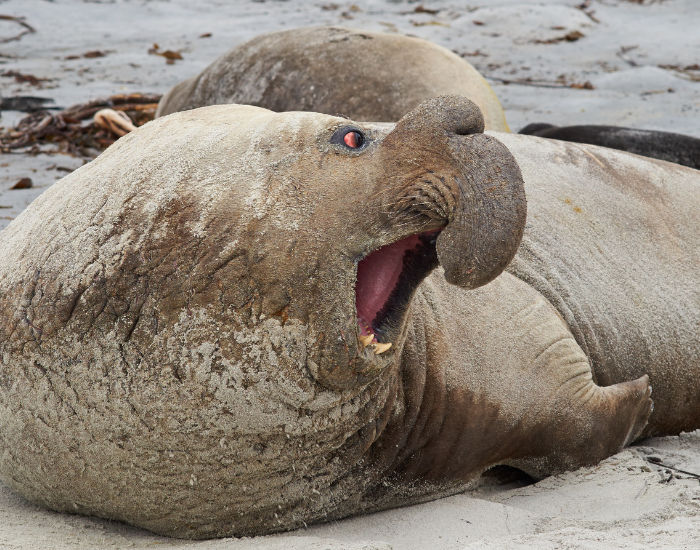
9. Challenging First Year
Weaned elephant seal pups, called “weaners,” find themselves suddenly alone when mothers depart after nursing. Juvenile seals remain on shore for several more weeks, gradually learning to enter the water and hunt. During this vulnerable period, elephant seal pups live entirely on stored blubber, often losing 30-40% of their weaning body weight before successfully feeding at sea. Only about 50% of elephant seal pups survive their first year, facing predation from great white sharks, killer whales, and the challenge of mastering deep diving techniques.
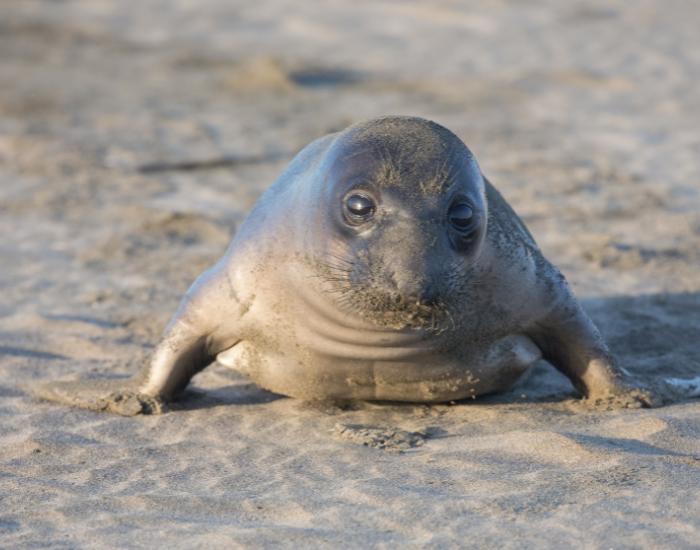
10. Different Maturation Paths
Female elephant seals reach sexual maturity at 3-4 years and typically breed successfully by age 4-5. Male elephant seals mature physically around the same age but rarely compete successfully for mates until reaching 8-10 years old. Male elephant seals generally reach their prime breeding years between ages 9 and 12, when they’ve achieved the massive body weight and size needed to challenge established bulls in mating season competitions.
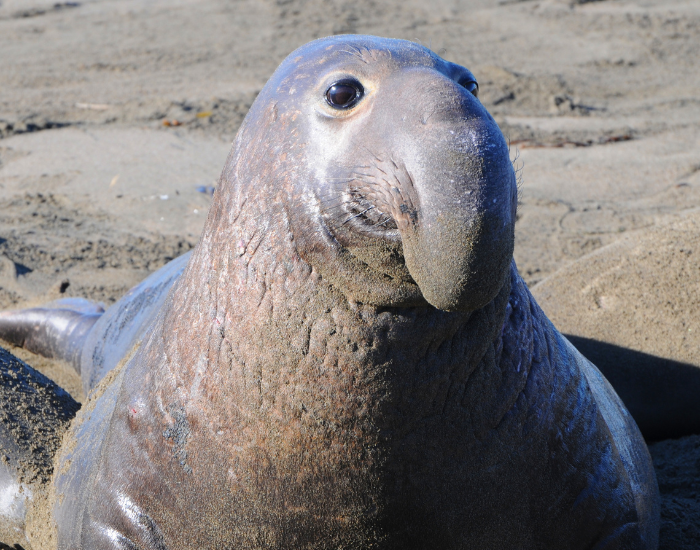
11. Remarkable Conservation Recovery
During the 19th century, hunters pursued northern elephant seals to the brink of extinction, slaughtering them for lamp oil extracted from their oil-rich blubber. By the 1890s, fewer than 100 individuals survived, confined to remote Mexican islands. Today’s northern elephant seals population exceeds 210,000 individuals, one of conservation’s greatest success stories. This dramatic increase followed implementation of the Marine Mammal Protection Act in 1972 and dedicated conservation efforts throughout their range, demonstrating how protected northern elephant seals can recover from near-extinction.
12. Climate Change Sentinels
Scientists increasingly rely on elephant seals as ocean sentinels. By tracking elephant seals’ foraging routes and diving patterns, researchers map changes in ocean productivity and prey distributions. Some studies attach sensors to elephant seals, collecting temperature and salinity data from ocean depths rarely sampled by research vessels. Shifting ocean temperatures alter prey distributions, potentially forcing them to travel farther or dive deeper to find adequate food.
Habitat and Geographic Range
Elephant seals master two distinct worlds throughout their life cycle. They spend approximately 90% of their time in the open ocean, diving continuously for food and surfacing only briefly to breathe. During specific seasons, elephant seals return to sandy beaches and offshore islands for breeding, molting, and giving birth to elephant seal pups.
Northern elephant seals concentrate their breeding activity at key California locations: Point Reyes National Seashore, Año Nuevo State Park, San Simeon, Piedras Blancas, and the Channel Islands host the largest elephant seal colonies. These sites provide protected sandy beaches where thousands of elephant seals can haul out safely.
Southern elephant seals demonstrate even more impressive distribution patterns throughout sub-Antarctic islands in the Southern Ocean. Major elephant seal colonies thrive at South Georgia, Heard Island, and Macquarie Island. Compared to northern populations, southern elephant seals are generally larger with more pronounced features. Adult males from southern populations dive deeper and remain at sea longer, reflecting adaptations to different ocean environments.

Breeding Season Dynamics
From December through March, California beaches transform into amphitheaters of competition, violence, and reproduction where elephant seals dominate the landscape. The male northern elephant seal arrives first at traditional breeding sites, displaying dominance through ritualized combat and vocalizations enhanced by their inflatable proboscis.
Males establish dominance hierarchies before females arrive during breeding season. These hierarchies determine which males earn breeding access to female harems and which are forced to the periphery. Dominance displays include inflation of their pronounced nose and use of their chest shield, critical adaptations for establishing territory and access to mates during the mating season.
Females time their arrival precisely to give birth soon after reaching shore. They carry their elephant seal pups for 11 months, including a period of delayed implantation that allows them to synchronize births with optimal colony conditions. After weaning their pups in just 3-4 weeks, females enter estrus and mate with dominant males before returning to feeding areas.
Pregnant female elephant seals begin this demanding cycle again, spending months at sea building the energy reserves needed for their next pupping season. This schedule means female elephant seals give birth, nurse intensively, mate, and then fast for weeks during molting season, all while maintaining their own survival and building body weight reserves.
What do Elephant Seal Eat?
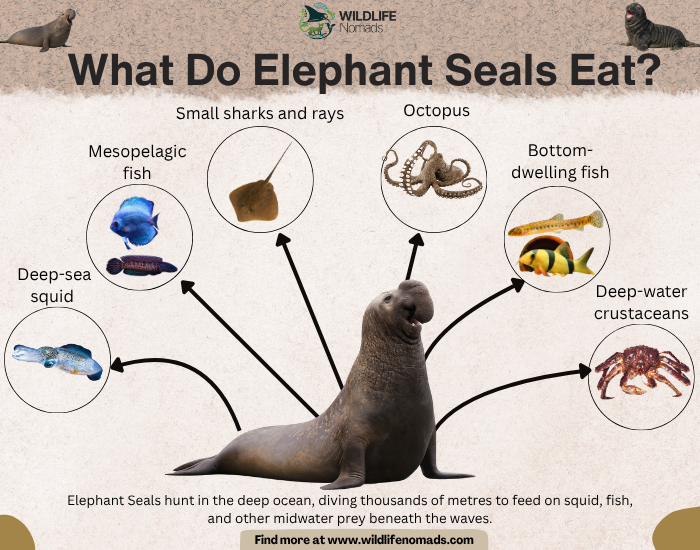
Elephant seals spend the majority of their lives hunting in the open ocean. The extraordinary diving capabilities of elephant seals allow them to exploit food resources in zones where few predators compete and prey remains abundant year-round.
Both male and female target squid as a primary food source, along with various fish species, rays, and small sharks. The specific prey hunted by elephant seals varies by location and season, but deep-dwelling squid constitutes a major portion of their diet.
Females feed more consistently throughout the year, maintaining regular foraging trips between pupping and molting seasons. Males engage in longer, deeper foraging trips between breeding and molting seasons, often fasting completely during their time on shore defending territories or undergoing their catastrophic molt.
Scientific Research and Medical Applications
Elephant seals provide scientists with unique opportunities to study diving physiology, climate change, and marine mammal evolution. Their extreme diving abilities reveal how mammals can adapt to environments that seem impossibly hostile to air-breathing animals. Research has revolutionized our understanding of deep-diving marine mammals.
Researchers studying blood flow, oxygen storage, and pressure tolerance in elephant seals have discovered principles that inform human health research. Medical researchers study their metabolism to understand human obesity and diabetes. They fast for months during breeding and molting seasons, somehow avoiding the negative health effects that plague humans during extended fasting.
Conservation Status and Modern Threats
The northern elephant seals population represents one of conservation’s greatest success stories. Complete population counts conducted in recent decades show remarkable recovery of elephant seals. Today’s northern elephant seals population exceeds 210,000 individuals, with some estimates reaching 239,000, a stunning rebound from near extinction.
Southern elephant seals never faced quite the same threat level from hunting, though it still significantly reduced their numbers. Current southern elephant seal populations remain stable, with breeding colonies throughout sub-Antarctic islands supporting robust numbers. Protected status now prevents hunting under international agreements, and elephant seals continue to thrive under these protections.
Best Places to See Elephant Seals
California offers unparalleled opportunities to observe elephant seals in their natural habitat. Each location provides different advantages for viewing various life stages and behaviors of these remarkable animals.
Piedras Blancas (San Simeon)
Piedras Blancas near San Simeon provides year-round viewing accessibility for observing elephant seals. This easily accessible site requires no hiking and features interpretive displays explaining elephant seal behavior and biology. Visitors can observe elephant seals during breeding battles in winter, pupping from January through March, and molting from April through August.
Point Reyes National Seashore
Point Reyes hosts large colonies accessible during the winter breeding season. Chimney Rock and other viewing areas offer spectacular vantage points for watching males battle and females nurse their pups. The Patrick Visitor Center serves as a key location for visitor education about elephant seals, providing information about wildlife viewing, beach closures, and seal monitoring activities.
Año Nuevo State Park
Año Nuevo requires advance reservations but offers the most intimate elephant seal viewing experiences. Guided tours lead visitors within safe distances of them breeding colonies, allowing close observation of courtship, birth, and territorial battles among elephant seals. Tours operate from December through March during peak breeding season for elephant seals.
Channel Islands National Park
Channel Islands National Park protects offshore breeding grounds used by northern elephant seals. While less accessible than mainland sites, requiring boat transport, these offshore islands allow elephant seals to breed with minimal human disturbance. Visitors typically see elephant seals during guided boat tours or camping trips to the islands.
Find Experiences to see Elephant Seals
This blog is reader-supported. When you buy experiences through links listed on this site, we may earn an affiliate commission.
Frequently Asked Questions About Elephant Seals
Yes, both species thrive today under legal protection. Northern populations have rebounded dramatically from near extinction, while southern populations remain stable throughout their range.
No, manatees represent a completely different order of marine mammals (Sirenia). Despite superficial similarities in size and aquatic lifestyle, manatees evolved from different terrestrial ancestors and occupy different ecological niches than elephant seals.
Hunters nearly drove northern elephant seals to extinction during the 19th century, reducing the population to fewer than 100 individuals confined to remote Mexican islands.
Females can live 19-20 years (maximum recorded 22-23 years), while males average 12-14 years (maximum 14-17 years depending on source).
Females lose more than one-third of their body weight while nursing and fasting during the breeding season. Males also experience significant body weight loss during molting season when they fast for several weeks.
Only about 50% of elephant seal pups survive their first year at sea, facing predation from sharks and killer whales while learning to dive and hunt.
Strength, Survival, and the Spirit of the Sea
The elephant seal stands among Earth’s most extraordinary animals. These massive elephant seals accomplish remarkable feats: diving deeper than almost any other mammal, migrating thousands of miles annually, surviving months-long fasts, and recovering from near extinction to thrive across their range.
Their recovery reminds us how resilient wildlife can be when given adequate protection and habitat. Standing at viewing areas like Piedras Blancas or Point Reyes to observe elephant seals ranks among the most humbling wildlife encounters available anywhere. These protected elephant seals continue to thrive under the Marine Mammal Protection Act, though climate change and human disturbance pose ongoing challenges.
References:
Boessenecker, R., & Churchill, M. (2016). The origin of elephant seals: implications of a fragmentary late Pliocene seal (Phocidae: Miroungini) from New Zealand. New Zealand Journal of Geology and Geophysics, 59(4), 544–550. https://doi.org/10.1080/00288306.2016.1199437
de Bruyn, M., Pinsky, M. L., Hall, B., Koch, P., Baroni, C., & Hoelzel, A. R. (2014). Rapid increase in southern elephant seal genetic diversity after a founder event. Proceedings. Biological sciences, 281(1779), 20133078. https://doi.org/10.1098/rspb.2013.3078
McMahon, C. R., & Burton, H. R. (2005). Climate change and seal survival: Evidence for environmentally mediated changes in elephant seal, Mirounga leonina, pup survival. Proceedings of the Royal Society B: Biological Sciences, 272(1566), 923–928. https://doi.org/10.1098/rspb.2004.3038
McMahon, C. R., Bester, M. N., Burton, H. R., Hindell, M. A., & Bradshaw, C. J. A. (2005). Population status, trends and a re-examination of the hypotheses explaining the recent declines of the southern elephant seal Mirounga leonina. Mammal Review, 35(1), 82–100. https://doi.org/10.1111/j.1365-2907.2005.00055.x
Stewart, B. S., Yochem, P. K., Huber, H. R., DeLong, R. L., Jameson, R. J., Sydeman, W., Allen, S. G., & Le Boeuf, B. J. (1994). History and present status of the northern elephant seal population. In B. J. Le Boeuf & R. M. Laws (Eds.), Elephant seals: Population ecology, behavior, and physiology (pp. 29–48). University of California Press.
Spraker, T. R., Kuzmina, T. A., & DeLong, R. L. (2020). Causes of mortality in northern elephant seal pups on San Miguel Island, California. Journal of veterinary diagnostic investigation : official publication of the American Association of Veterinary Laboratory Diagnosticians, Inc, 32(2), 312–316. https://doi.org/10.1177/1040638720907100