Wildlife Nomads


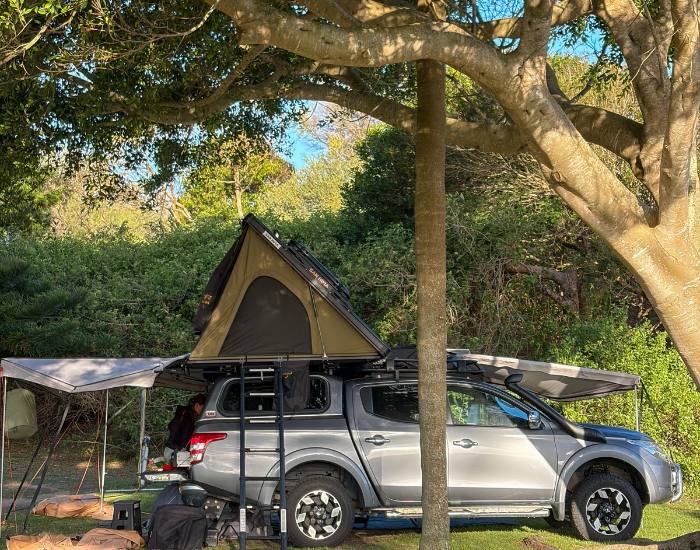
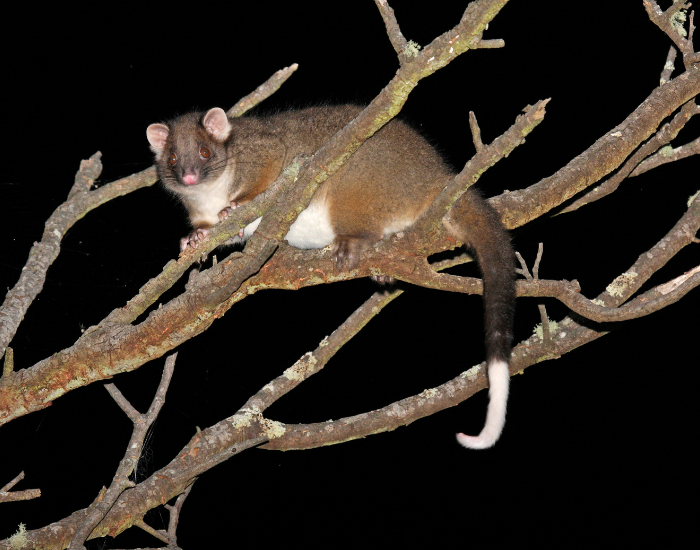
One night at Norah Head, around 3 am, Jackie shook me awake. Something was walking across our car awning, and she wanted to know what that massive rat was. It wasn’t a rat at all. It was a common ringtail possum, our first on this lap of Australia.
Norah Head is a small coastal village on a rocky headland on the Central Coast of New South Wales. It’s about 90 minutes north of Sydney. We spent four nights at NRMA Norah Head Holiday Park. The first night didn’t start well.
We arrived on a hot weekend to a not-so-great site in a park packed with families and kids. That night a fierce wind hit, and the forecast promised more all day. So we moved to a site next to the bush, hoping for shelter. It turned out to be the best decision of the whole stop.
Below are the 17 animals we logged at Norah Head. They range from a bandicoot chasing dinner scraps to a bird I had never seen. You’ll also find tips on the best sites, the lighthouse walk and when to visit.
Norah Head Holiday Park: What to Know
Pick a bush site and come midweek
The park is nestled in coastal bushland on Victoria Street, a short walk down a bush track from Soldiers Beach. It offers powered and unpowered sites, cabins, a camp kitchen and a pool. Our powered site had power and water, which made washing up easy.
Weekends get packed with families and kids. That’s great for a holiday, but the noise doesn’t help if you want to see wildlife like I do. Midweek, the park turns very quiet, and the bush edge is where we found most animals. If you can, ask for a site backing onto the bush.
Walk the track to the historic lighthouse
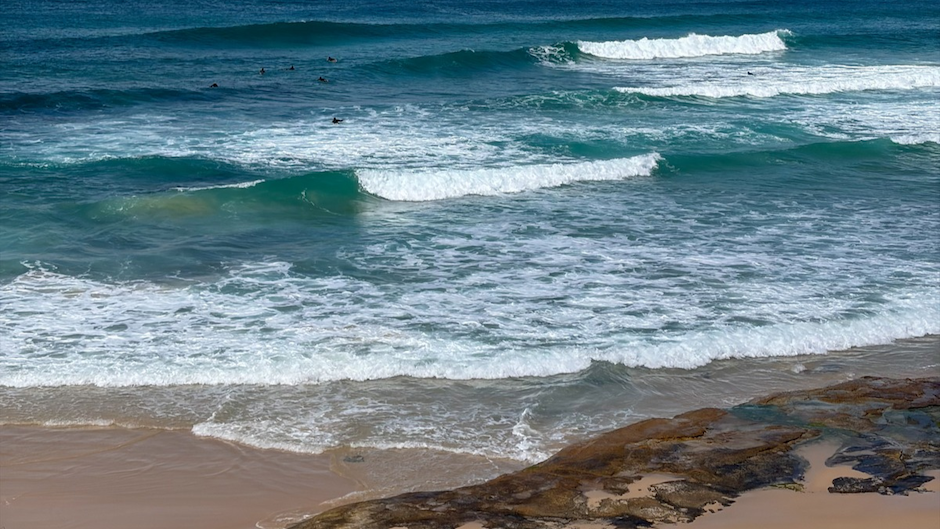
We followed the track from the park to Norah Head Lighthouse and saw more animals along the way. I also loved the signs naming the tree species beside the path. The whole walk is full of scenic views, with waves breaking on the rocks below the headland.
We have seen plenty of lighthouses on this trip, but this one felt peculiar, and it turns out it is. Completed in 1903, it is one of only three precast concrete block lighthouses in Australia. It was also the last staffed lightstation built in NSW.
Locals originally pushed for a light after many shipwrecks off the headland. Today the tower still guides ships travelling between Sydney and Newcastle. Volunteers run tours most days from 10 am, so check current times before you go.
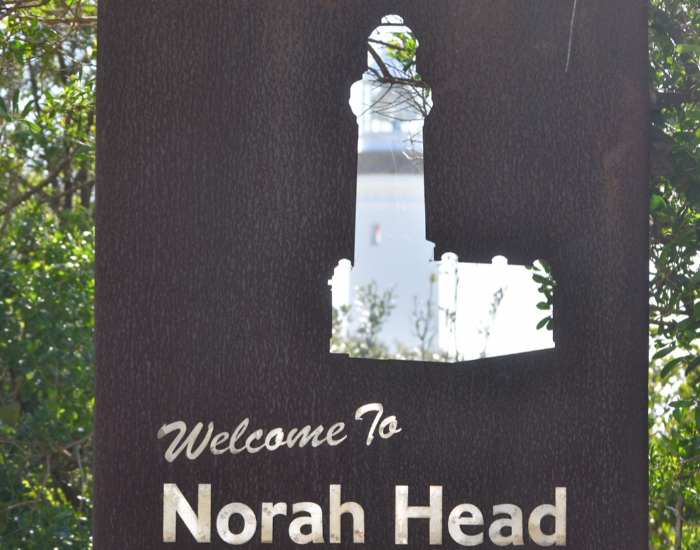
Norah Beach and the Norah Head rock pool
We also spent time at Norah Beach and the Norah Head rock pool. The pool sits at the north end of the beach, sheltered from the waves, so it suits families with kids. A café sits above the rock pool stairs if you want to grab a coffee first.
On this lap, I check every rock pool we find, and it’s a habit I recommend. Move slowly and watch before you touch, because many rock pool creatures hide when a shadow falls. The rock platform below the lighthouse is worth exploring too, but always check the tide and swell first.
Soldiers Beach, Lighthouse Beach and whale season
Lighthouse Beach is perfect at sunset, and it’s a great spot to relax after the walk. Soldiers Beach, a patrolled beach on the south side, is a favourite for swimming. It also offers great surfing when the summer north-easter blows. In 2022, Norah Head became the first National Surfing Reserve on the Central Coast.
From May to November, the headland is also a top whale watching spot during the humpback whale migration.
South of the village, Wyrrabalong National Park protects the Central Coast’s largest stand of littoral rainforest. Its 3.5 km Lillypilly loop trail winds under cabbage tree palms, with views over Tuggerah Lake. Nearby, the Pelican Beach Road lookout looks over the golden sand of Pelican Beach. It’s one of many NSW national parks worth a detour. Norah Head sits on Darkinjung Country.
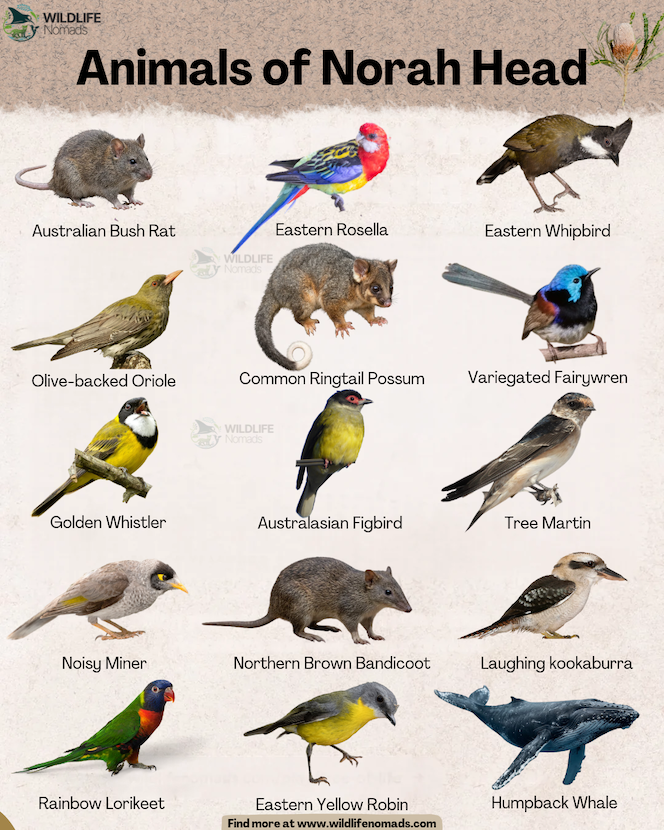
17 Animals We Saw at Norah Head
1. Common Ringtail Possum (Pseudocheirus peregrinus)
Our roof tent sat beneath a tree, with the big car awning stretched out below. At 3 am, Jackie woke me asking what the massive rat on the awning was. It moved like a possum, but the real giveaway was the tail.
We had already met common brushtail possums at Gloucester and Lake Macquarie. Ringtails are smaller, with a thin, white-tipped tail that grips branches like a fifth limb. Brushtails carry a thick, bushy tail instead.
By day, ringtails sleep in a ball-shaped nest called a drey. They also eat a special type of their own droppings to squeeze extra nutrients from eucalyptus leaves. It’s one of the quirkiest habits among Australian possums.
2. Northern Brown Bandicoot (Isoodon macrourus)
This little guy came out of the bush beside our campsite two nights in a row. When I washed the dishes, a few scraps stayed on the ground. He came straight for them, so pack your scraps away.
Norah Head sits north of the Hawkesbury River, where the northern brown bandicoot is common. The long-nosed bandicoot lives on this coast too, so check the head. Northern browns have small, rounded ears, while long-nosed bandicoots show pointed ears and a longer snout.
Bandicoots dig small cone-shaped pits as they hunt insects, worms and grubs. That digging turns over the soil, which makes these marsupials quiet gardeners of the bush.
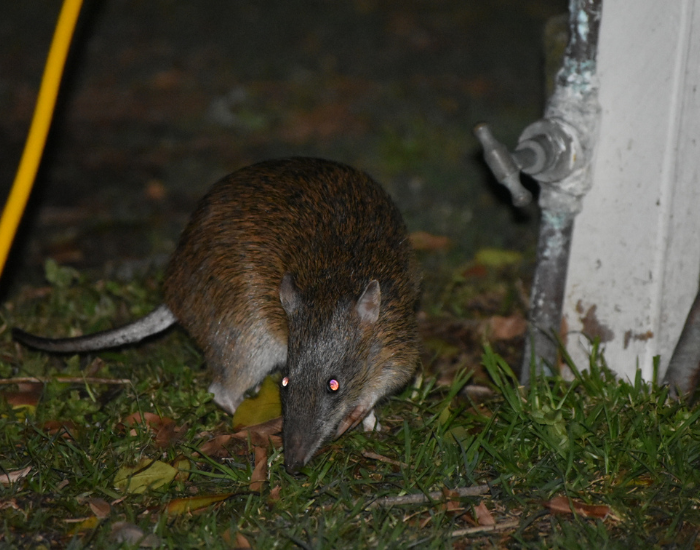
3. Bush Rat (Rattus fuscipes)
This one was hard to ID. It could have been an introduced black rat, but I settled on a native bush rat. Its tail looked shorter than, or equal to, its head and body. Black rats carry a long, whip-like tail that outruns the body.
The ears helped too. They were small and rounded, not the large, thin, almost translucent ears of a black rat. Behaviour sealed it. It stayed on the ground, hugged the scrub edge and bolted at any movement.
Black rats at coastal sites are usually much bolder. They climb into trees and wander into the open far more easily. Bush rats, by contrast, keep to dense understorey and eat fungi, seeds, fruit and insects. They’re one of the native rodents people often mistake for pests.
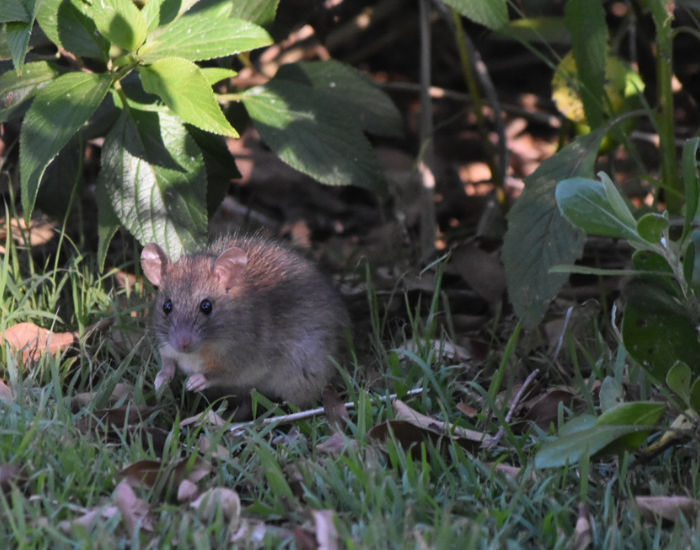
4. Eastern Whipbird (Psophodes olivaceus)
Finally! I saw three eastern whipbirds right beside camp, jumping through a lantana thicket on the bush side. I got a photo, not a great one, but I saw two of them very clearly.
Males make the famous whip-crack call, and females often answer instantly. The duet is so tight that it sounds like a single bird.
Lantana is a Weed of National Significance. As a field ecologist, I spent almost two years controlling invasive species like it around Sydney. Still, its dense thickets shelter small birds. So good weed control replaces lantana with native shrubs rather than leaving bare ground.
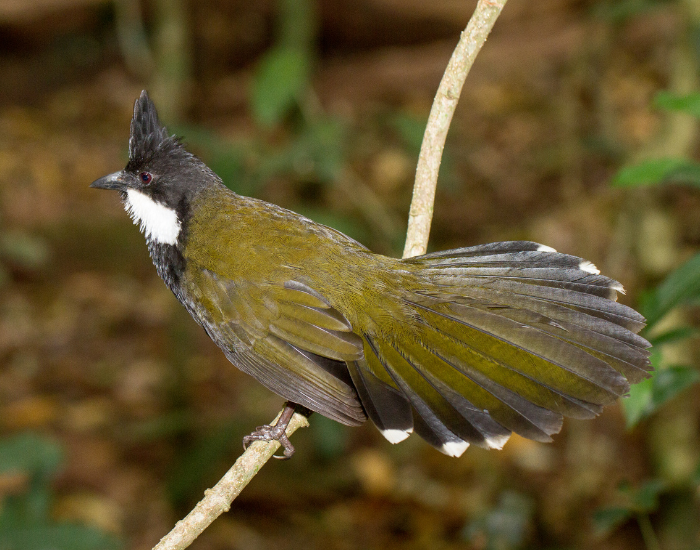
5. Olive-backed Oriole (Oriolus sagittatus)
This was a first for me, ever, and on this lap. It sat in the same bushy patch next to our campsite.
Look for an olive-green back, a white breast streaked with dark spots and a red eye. Adults also have a pinkish-red bill. These orioles are skilled mimics too, so a strange call in the canopy might be one of them.
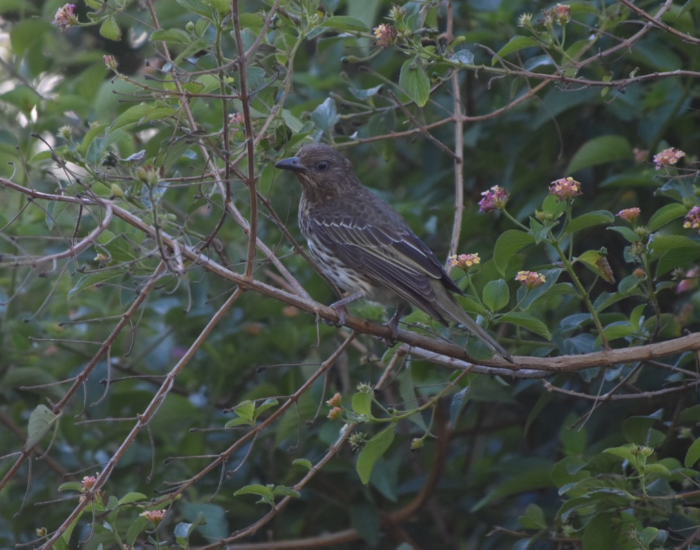
6. Golden Whistler (Pachycephala pectoralis)
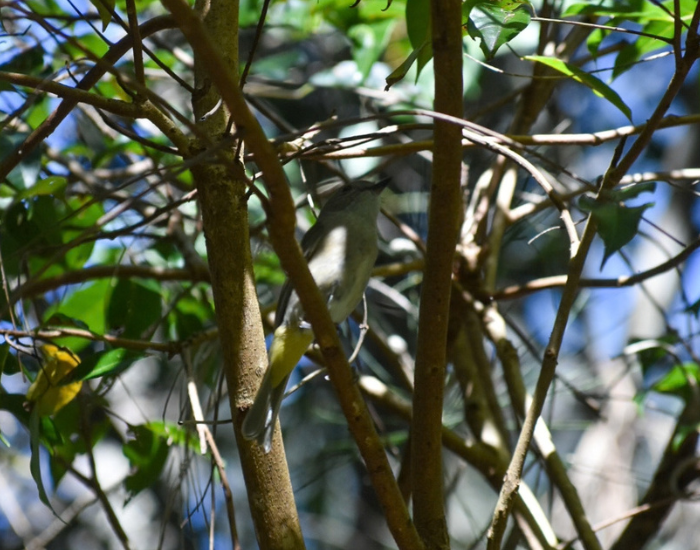
On the trail to the lighthouse, golden whistlers hopped from tree to tree, but only in one patch. We had seen a male at Booti Booti, so I knew to look for flashes of yellow.
Males wear a bright yellow chest, a black collar and a white throat. Females are olive-grey and far easier to miss. Both sing loud, ringing songs that carry through the forest.
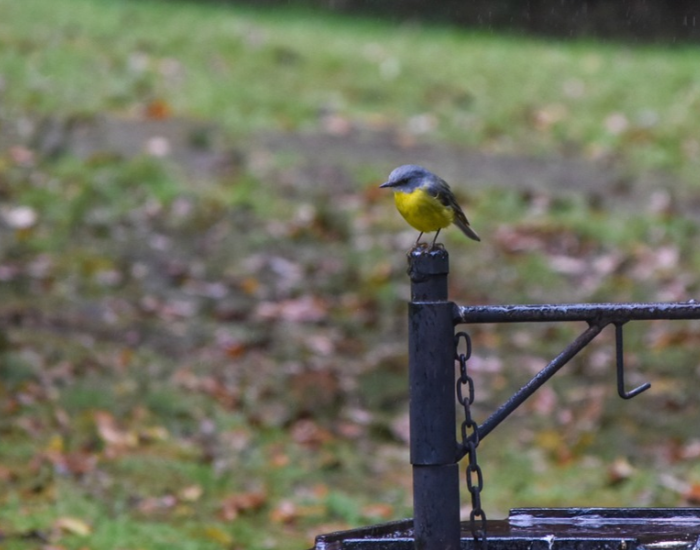
7. Eastern Yellow Robin (Eopsaltria australis)
I saw just one, on the track down to Lighthouse Beach, and it flew off fast. These robins often cling sideways to tree trunks, watching the ground. Then they drop onto insects and return to a perch. It’s one of the most familiar robins of Australia on the east coast.
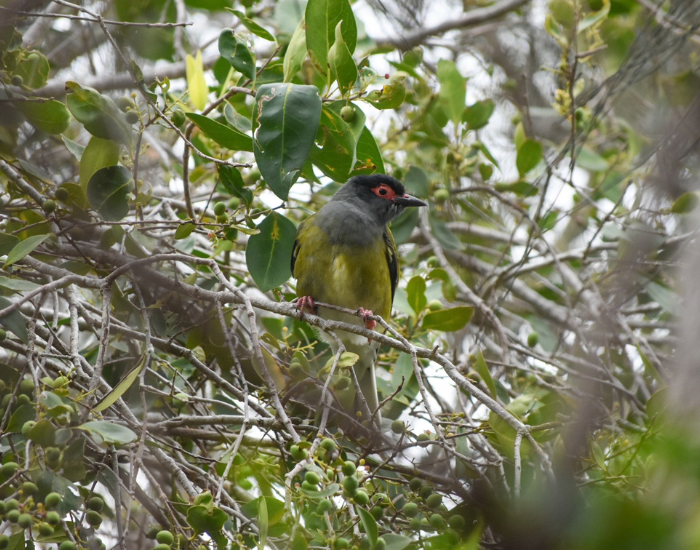
8. Australasian Figbird (Sphecotheres vieilloti)
We saw one figbird, again in the bush next to our site. Moving there was the best call we made, so look closely if you camp on that side. At Booti Booti, one even crashed into our roof tent.
Males show a patch of bare red skin around the eye. Females are browner with heavy streaks below. Figbirds travel in noisy groups and feast on native figs and other fruit.
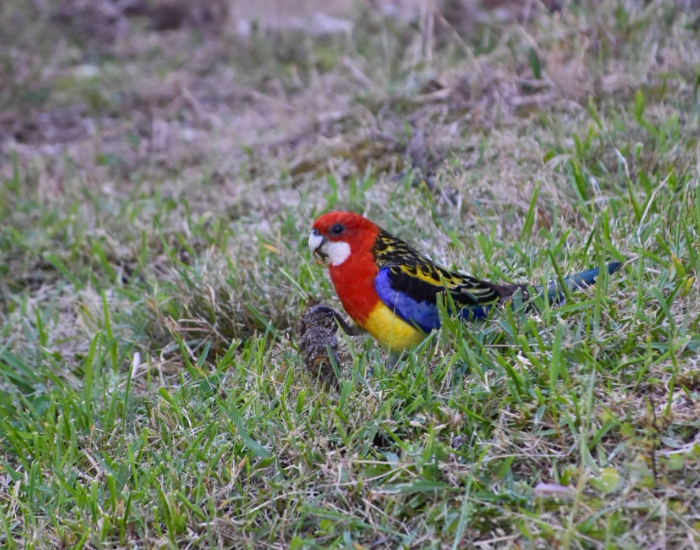
9. Eastern Rosella (Platycercus eximius)
One eastern rosella landed in a tree beside camp, on the bush side, then left. It was our only sighting here, after another at Trial Bay Gaol.
Its red head, white cheeks and yellow-green scalloped back make it hard to mistake. Rosellas feed mostly on seeds, often on the ground. They rank among the most colourful Australian parrots you’ll meet in a campground.
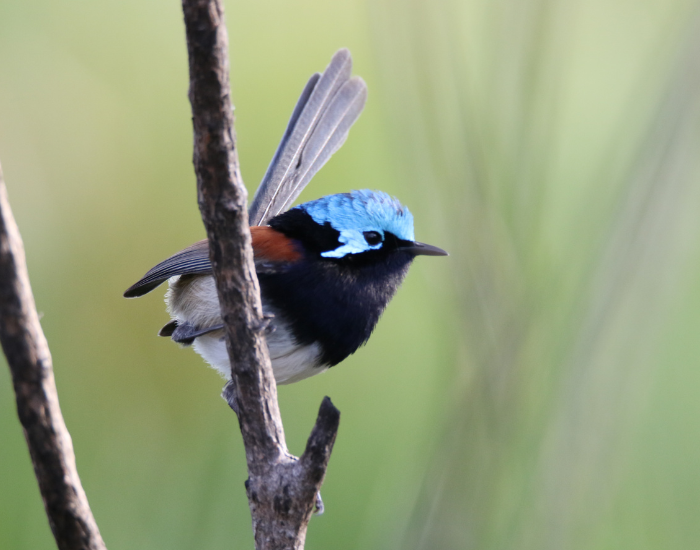
10. Variegated Fairywren (Malurus lamberti)
Variegated fairywrens made our list too. Breeding males wear a sky-blue crown, a black throat and chestnut shoulder patches. Females are mostly brown, with a reddish-brown patch near the eye.
These wrens live in family groups. Helpers, often young from earlier broods, pitch in to feed the new chicks.
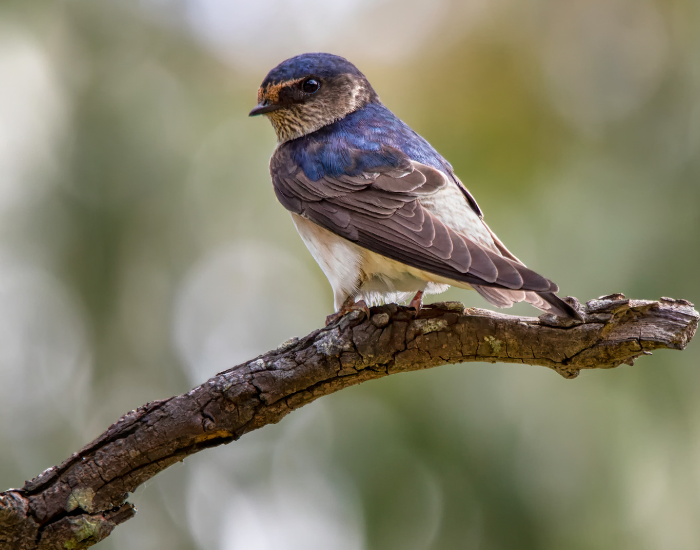
11. Tree Martin (Petrochelidon nigricans)
Tree martins also showed up. These small, fast fliers catch insects on the wing and usually nest in tree hollows. Look for a pale rump and only a shallow fork in the tail. That sets them apart from other swallow species like the welcome swallow, with its long tail streamers.
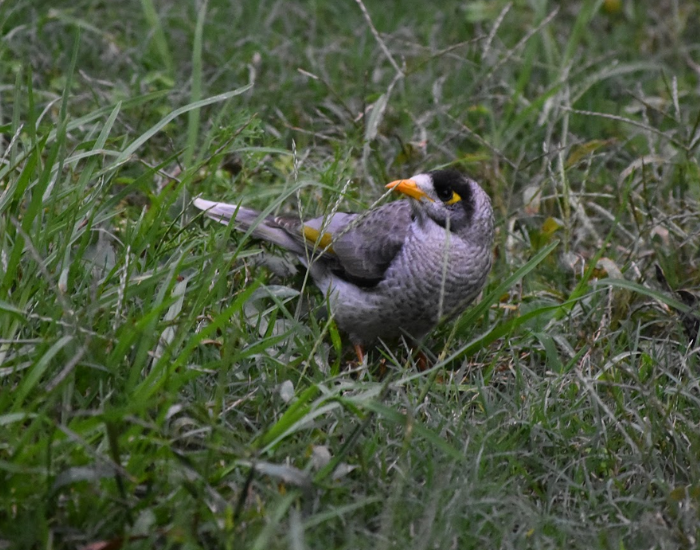
12. Noisy Miner (Manorina melanocephala)
Noisy miners have attacked me a few times before, during breeding season. Here, though, I saw a lot of aggression aimed at other animals. They chased every bird or marsupial they found: brushturkeys, the bush rat, the possum, even magpies and kookaburras.
Noisy miners are native honeyeaters, but they live in colonies that gang up on intruders. A 2013 review found they push almost all smaller birds out of the areas they hold. Open, cleared edges favour them, so a dense native understorey helps small birds fight back.
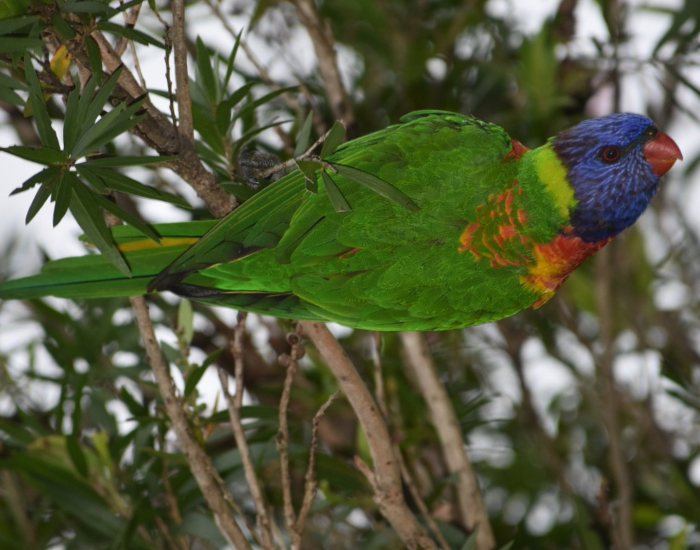
13. Rainbow Lorikeet (Trichoglossus moluccanus)
A few rainbow lorikeets lived along the campground, always noisy in the banksia tree. Their brush-tipped tongues mop up nectar and pollen from flowers. As they move between blooms, they carry pollen for banksias and eucalypts.
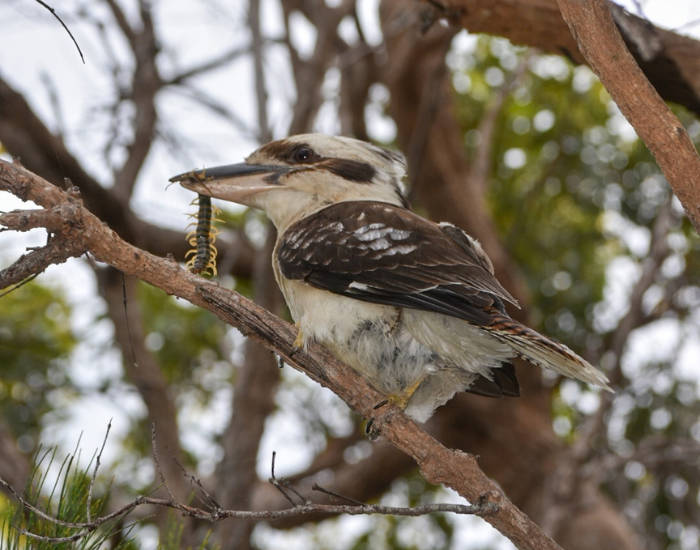
14. Laughing Kookaburra (Dacelo novaeguineae)
Quite a few kookaburras worked the ground, digging up and eating something I couldn’t see. Other birds kept chasing them, mostly the noisy miners.
The laughing kookaburra is one of the largest kingfishers in the world. Yet kookaburras rarely fish. They eat insects, worms, lizards and even small snakes.
15. Australian Brushturkey (Alectura lathami)
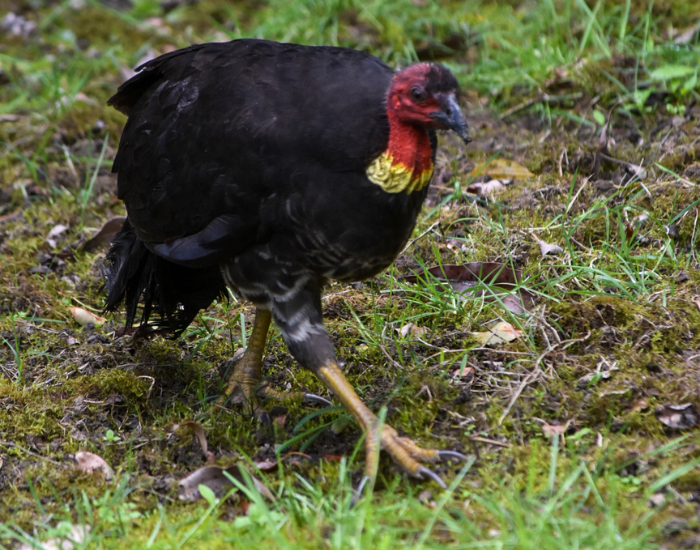
A few brushturkeys patrolled the sites, trying to get food from campers. Please don’t feed them, however hopeful they look.
Hunting once wiped them out around Sydney. Now they’re back, and a 2024 study tracked their return across the city’s suburbs. Males rake leaf litter into huge mounds, where compost heat incubates the eggs. Read more in my scrub brushturkey guide.
16. Silver Gull (Chroicocephalus novaehollandiae)
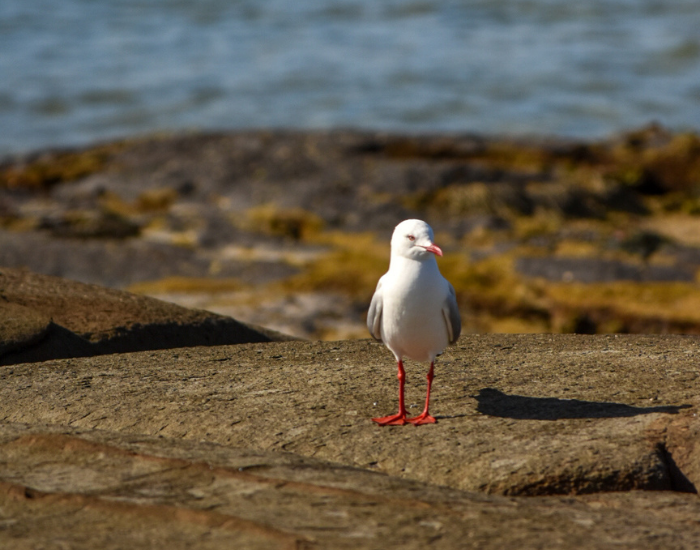
Out over the ocean, silver gulls were everywhere. Adults have bright red bills, legs and eye-rings. Young birds show brown mottling and darker bills. It’s the most common of the seagulls on the Australian coast.
17. European Rabbit (Oryctolagus cuniculus)
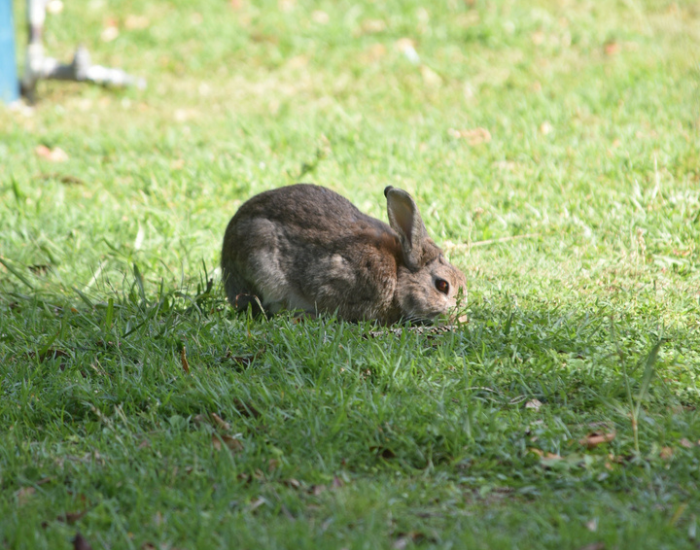
So many rabbits! They grazed all over the park, and they’re clearly a very invasive creature here. This is the downside of a cute sighting.
Rabbits threaten more nationally listed threatened species than any other invasive species in Australia. They eat seedlings, stop native plants regenerating and compete with native animals for food. Over time, they also degrade the land.
FAQs About Norah Head
Norah Head has a mix of coastal bush, beach and ocean wildlife. We saw common ringtail possums, northern brown bandicoots, bush rats, eastern whipbirds, olive-backed orioles, golden whistlers and noisy miners. Silver gulls fill the sky over the ocean, and humpback whales pass between May and November.
Norah Head Lighthouse was completed in 1903. It is one of only three precast concrete block lighthouses in Australia. It was also the last staffed lightstation built in New South Wales.
Yes. The headland is a top whale watching spot on the Central Coast from May to November. Humpback whales pass close to the coast during their annual migration.
It can be, especially midweek. Weekends get crowded and noisy. Sites next to the bush gave us possums, bandicoots, bush rats and shy birds like the eastern whipbird.
Yes. The Norah Head rock pool sits at the north end of Norah Beach, sheltered from the waves. It suits families. The rock platform below the lighthouse is also great for spotting rock pool creatures at low tide. Always check the tide and swell first.
Norah Head is a coastal village on the Central Coast of New South Wales. It sits about 90 minutes’ drive north of Sydney, on Darkinjung Country.
Camp Closer to the Bush
Norah Head packs a lot of natural beauty into one small headland. It also taught me a simple lesson: the right site matters more than the right campground. Our crowded first site gave us heat and noise. The bush edge gave us a ringtail on the awning, a bandicoot at the dishes and my first olive-backed oriole.
If you visit, come midweek, grab a site by the bush and bring a torch for the nocturnal animals. Walk the track to the lighthouse, then catch sunset at Lighthouse Beach. Which animals did you spot at Norah Head? Tell me in the comments. Then follow the rest of our journey south as the lap continues.
References:
Hall, M. J., Martin, J. M., Burns, A. L., & Hochuli, D. F. (2024). The decline, fall, and rise of a large urban colonising bird. Wildlife Research, 51(7), WR23156. https://doi.org/10.1071/WR23156
Henzell, R. P., Cooke, B. D., & Mutze, G. J. (2008). The future biological control of pest populations of European rabbits, Oryctolagus cuniculus. Wildlife Research, 35(7), 633–650. https://doi.org/10.1071/WR06164
Lambert, K. T. A., & McDonald, P. G. (2018). How dependent are bell miners (Manorina melanophrys) on lantana (Lantana camara) as part of their habitat? Wildlife Research, 44(8), 613–622. https://doi.org/10.1071/WR17024
Maron, M., Grey, M. J., Catterall, C. P., Major, R. E., Oliver, D. L., Clarke, M. F., Loyn, R. H., Mac Nally, R., Davidson, I., & Thomson, J. R. (2013). Avifaunal disarray due to a single despotic species. Diversity and Distributions, 19(12), 1468–1479. https://doi.org/10.1111/ddi.12128