

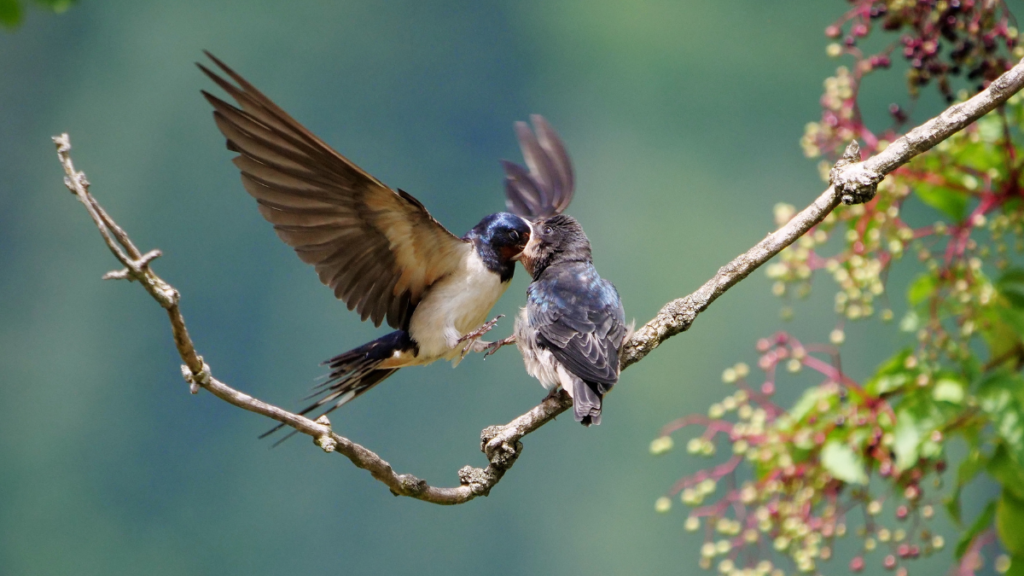
During my undergraduate degree, a friend who was obsessed with birds grabbed me one morning and said, “Come birding with me.” I had zero expectations. Then I saw birds swallows cutting through the air above a retention pond, darting, banking, skimming the water with impossible precision. Swallows were the first bird I learned to identify, not by color or shape, but purely by flight style. Nothing else moves like that.
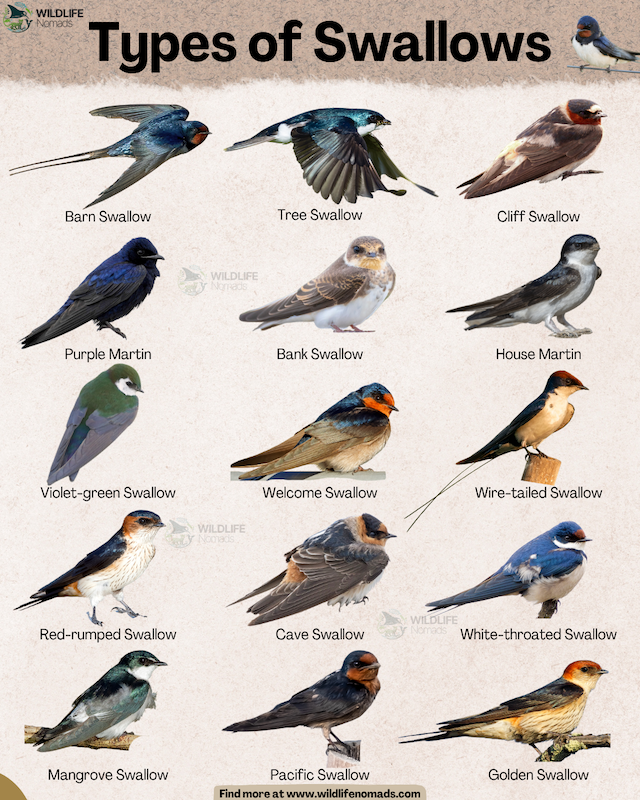
Now I have seen swallows everywhere: Australia, Bali, Europe, and Mexico. Every single time, it takes me back to that moment. These birds (swallows) represent something fundamental about what makes birding addictive. Once you learn to read their flight, you cannot unsee it. Most swallows share that same aerial mastery, yet each species has carved out its own niche. Here are 15 of the most iconic swallow bird species on Earth, plus one impostor that fools nearly everyone.
1. Barn Swallow (Hirundo rustica)
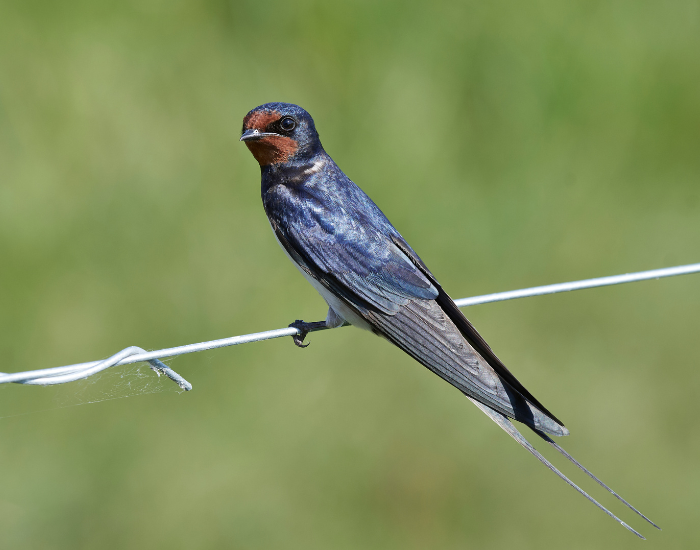
The barn swallow is the most widespread swallow species on the planet. You will find it breeding on every continent except Antarctica. I have watched barn swallows hawking insects over rice paddies in Bali and swooping through old barns in rural Mexico, same deeply forked tail, same dark blue upperparts, same rufous-orange underside and throat.
Adults measure about 7 inches long. Males display a longer forked tail than females, and their dark blue iridescence tends to be richer. The barn swallow builds open cup-shaped mud nests almost exclusively on human-made structures now, barns, bridges, porches, and garages. According to Cornell Lab’s research, a single barn swallow can consume roughly 850 flying insects per day during breeding season.
2. Tree Swallow (Tachycineta bicolor)
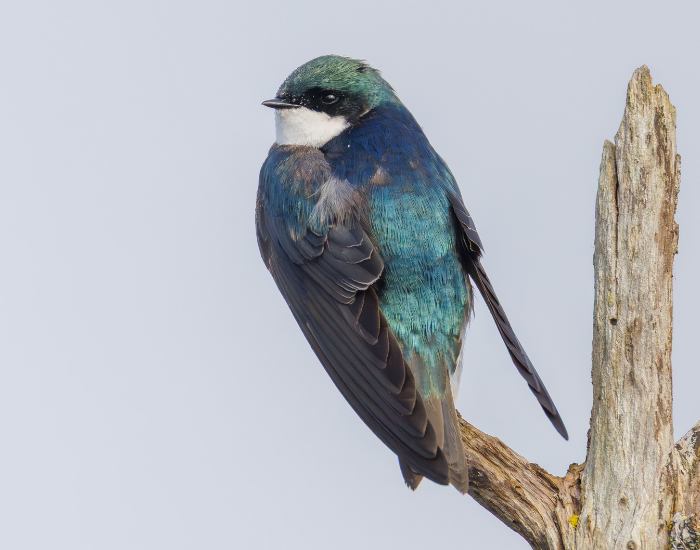
The tree swallow is one of my favorite species to watch in North America. Just look at them, they are beautiful! Males flash iridescent blue-green backs that shift color depending on the angle of sunlight. Their white underside provides a clean contrast, making them easy to identify even at a distance.
Tree swallows nest in natural cavities and readily adopt nest boxes, which makes them a conservation success story. Unlike other swallows, they supplement their insect diet with berries — particularly bayberries — during fall migration. This dietary flexibility gives them a survival edge when flying insects become scarce. Females are duller than males, showing brownish upperparts in their first breeding year before developing full iridescence.
3. Cliff Swallow (Petrochelidon pyrrhonota)
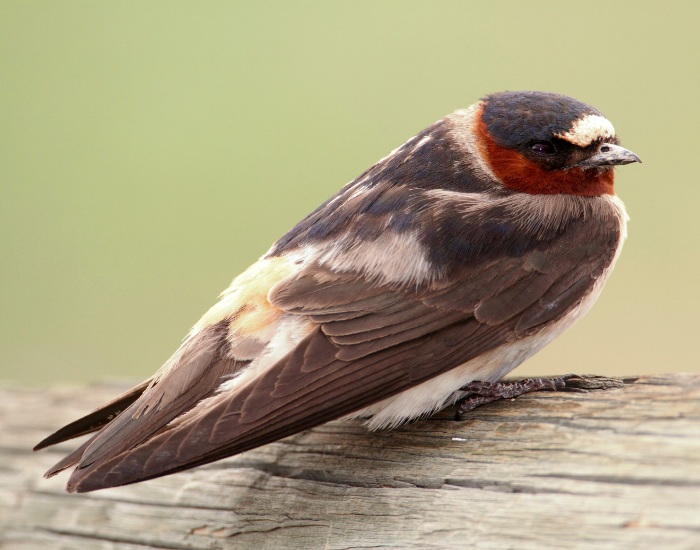
If you have ever driven under a highway overpass and noticed hundreds of gourd-shaped mud nests clustered together, you have found cliff swallows. These birds breed in large colonies, sometimes exceeding a thousand nests at a single colony site. Their pale rump, dark blue cap, and rusty throat patch distinguish them from the barn swallow.
Cliff swallows originally nested on cliff faces across western North America. However, bridges, overpasses, and buildings have expanded their range dramatically eastward. I have watched colonies where birds return to the same bridge year after year, repairing old mud nests or building new ones in close proximity. Their colonial lifestyle creates intense competition for nest sites, and nest parasitism, where females lay eggs in neighboring nests, is surprisingly common.
4. Purple Martin (Progne subis)
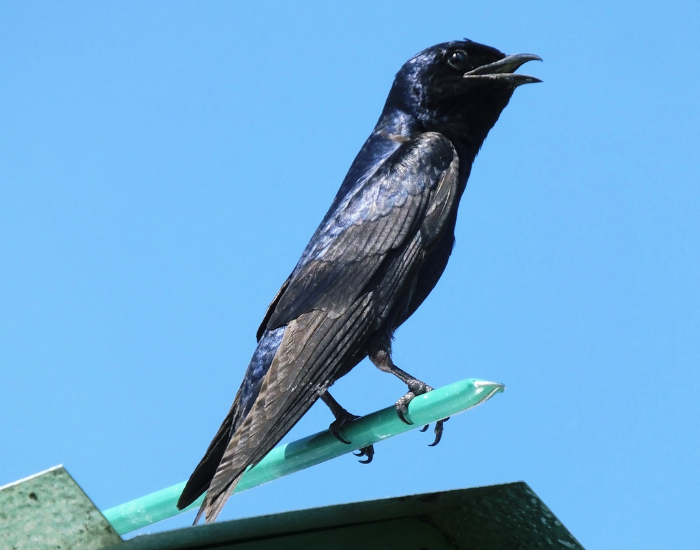
The purple martin holds the title of largest North American swallow at roughly 8 inches long. Males are entirely dark blue-black with a subtle purple sheen. Females and young birds show paler undersides with grayish-brown chest markings.
In the eastern United States, purple martins have become almost completely dependent on martin houses provided by humans. This relationship stretches back centuries — Indigenous peoples hung hollow gourds to attract them. Today, dedicated “landlords” maintain elaborate martin houses with dozens of compartments. In western North America, purple martins still nest in natural cavities and old woodpecker holes. The species winters in Central America and South America, migrating in enormous flocks.
5. Bank Swallow / Sand Martin (Riparia riparia)
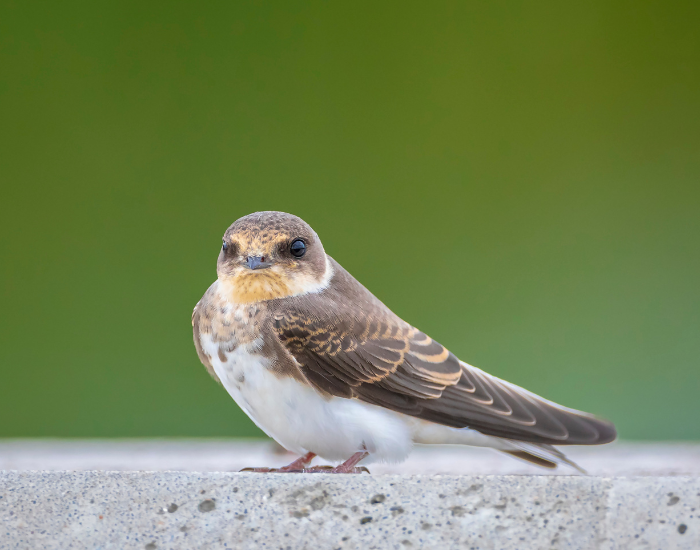
The bank swallow, called sand martin in Europe and one of the most common species globally, is the smallest species in this group. Brown above and white below with a distinctive dark chest band across the breast, it looks plain compared to its flashier relatives. However, its nesting behavior is remarkable.
Bank swallows excavate burrows into vertical sandy banks along rivers, quarries, and coastal cliffs. A colony site might contain hundreds of burrows packed into a single exposed bank. I have watched these birds disappear into tiny holes no bigger than a golf ball. Both males and females dig, using their feet to kick out sand. The sand martin populations in Europe have experienced significant declines tied to habitat loss, when humans stabilize riverbanks, these swallows lose nesting sites.
6. Cave Swallow (Petrochelidon fulva)
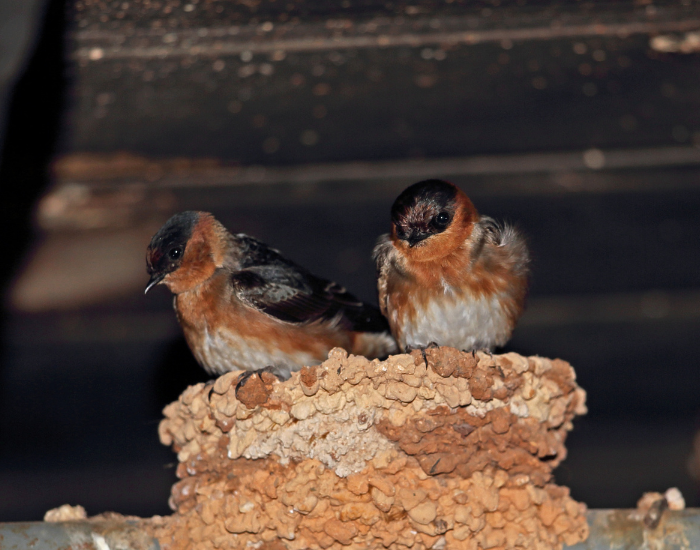
The cave swallow has undergone one of the most dramatic range expansions of any North American bird in recent decades. Originally restricted to caves in the southwestern United States and Mexico, this species discovered highway culverts. Now it breeds across Texas and into Florida, building mud nests inside concrete tunnels.
Cave swallows resemble cliff swallows but show a rusty crown and buffy throat rather than a dark forehead. Their nest shape differs too, more half-cup than gourd. I encountered cave swallows nesting in highway underpasses throughout central Mexico, sometimes sharing sites with other species. Their willingness to exploit human-made structures mirrors the barn swallow story, though on a smaller geographic scale.
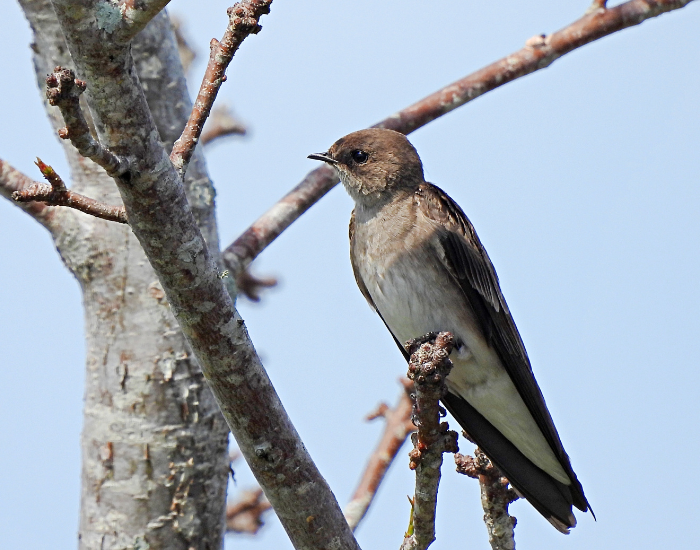
7. Northern Rough-Winged Swallow (Stelgidopteryx serripennis)
The northern rough-winged swallow is the bird that frustrates new birders. Plain brown above, dingy white below with smoky-brown sides, no bold markings, no iridescence, no forked tail. It looks like a swallow that forgot to get dressed. However, look closely at the outer primary feathers and you will find tiny serrations (or hooks) along the leading edge, giving this species its name.
Northern rough-winged swallows breed across the lower 48 states and into Central America. They nest in burrows, sometimes excavating their own, sometimes stealing old bank swallow burrows or using drainpipes and crevices in bridges. Unlike bank swallows, rough-winged swallows do not form large colonies. They tend to nest as solitary pairs or in loose groups. Their flight style is stiffer and more direct than other swallows, with less acrobatic banking.
8. Violet-Green Swallow (Tachycineta thalassina)
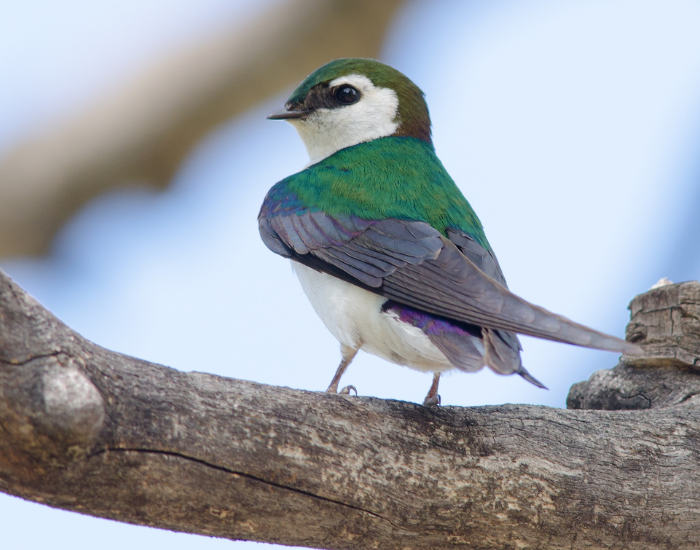
The violet-green swallow is western North America’s jewel. Males display emerald-green backs and violet rumps that glow in direct sunlight. White face patches extend above the eye, and the white underside wraps up onto the rump sides, a field mark visible even in flight.
I have watched violet-green swallows foraging over mountain meadows in the Pacific Northwest, often mixed with tree swallows. They nest in natural cavities, cliff crevices, and occasionally nest boxes at higher elevations. Females are duller with brownish-gray upperparts. By contrast with tree swallows, violet-green swallows tend to forage at greater heights, catching insects high above the canopy.
9. Welcome Swallow (Hirundo neoxena)
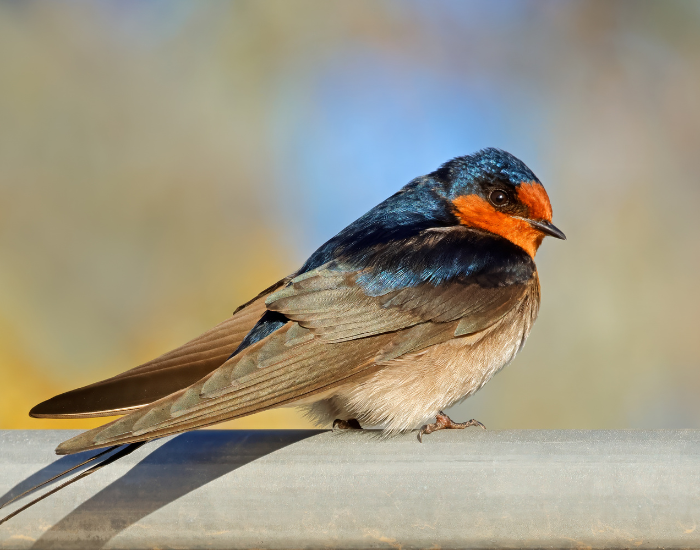
Australia’s answer to the barn swallow, the welcome swallow greeted me the moment I arrived in Melbourne back in 2019. Metallic dark blue-black above with a rusty-red throat and a long forked tail, it looks remarkably similar to the barn swallow but is its own distinct species.
Welcome swallows build mud nests on human-made structures throughout Australia, New Zealand, and nearby islands. They perch on fences and power lines in loose groups, launching after flying insects with quick, agile flight. The species earned its name because sailors historically saw these birds as a sign that land was near. Their habitat flexibility, from urban areas to remote coastlines — makes them one of Australia’s most common and recognizable birds.
10. Wire-Tailed Swallow (Hirundo smithii)
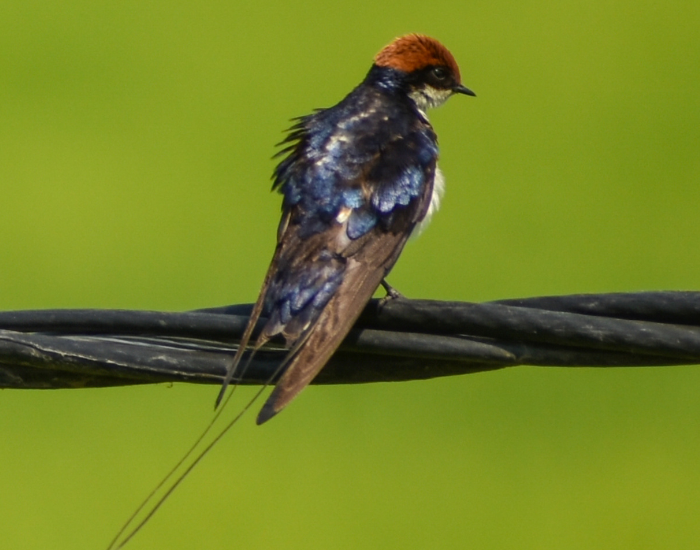
The wire-tailed swallow stopped me in my tracks the first time I saw one. The body is standard swallow, dark blue above, clean white underside, but the tail feathers extend into impossibly thin wire-like filaments. These modified feathers in males can reach extraordinary lengths relative to body size.
This species ranges across sub-Saharan Africa and South Asia, typically near water. A bright chestnut cap distinguishes it from other swallows sharing its range. Wire-tailed swallows nest under bridges and rocky overhangs, building typical half-cup mud nests. Males with longer tail wires attract females more successfully, a textbook example of sexual selection in action.
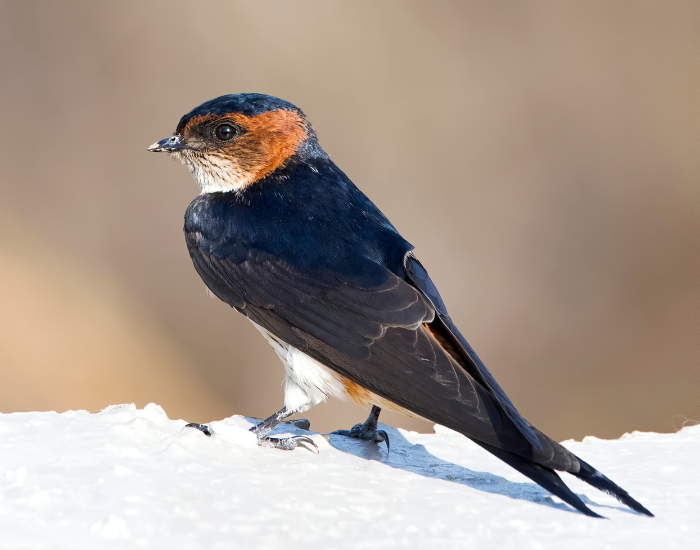
11. Red-Rumped Swallow (Cecropis daurica)
The red-rumped swallow builds one of the most architecturally impressive nests in the bird world. Unlike the open cup of a barn swallow, this species constructs a flask-shaped mud nest with a long entrance tunnel. The tunnel can extend six inches or more, providing protection from predation and parasitic birds.
Buff-streaked underparts and a bold red-orange rump make identification straightforward. Red-rumped swallows breed across southern Eurasia and Africa, favoring rocky hillsides and increasingly bridges. Their wings appear broader than those of barn swallows, and their flight style involves more gliding. I watched a pair constructing their nest in southern Europe — each mud pellet carefully placed, the tunnel growing millimeter by millimeter over days.
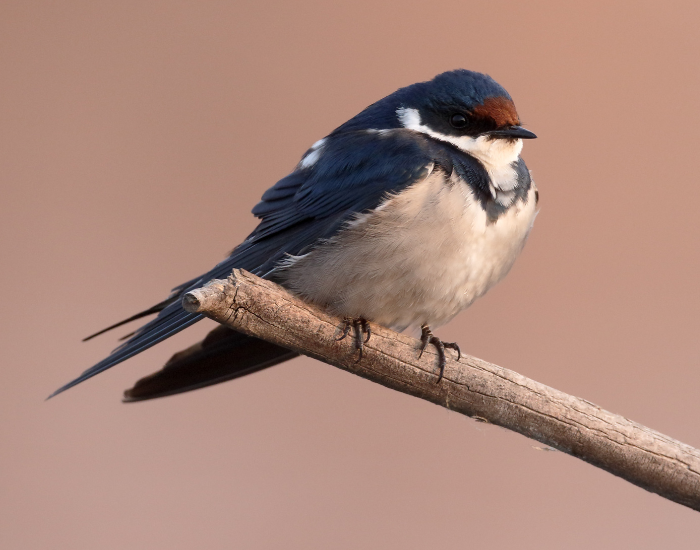
12. White-Throated Swallow (Hirundo albigularis)
Southern Africa hosts the white-throated swallow, a striking species with a glossy dark blue back, chestnut crown, bright white throat, and a bold dark chest band. It resembles the barn swallow in shape, including a forked tail, but the combination of white throat and chest band is distinctive.
White-throated swallows breed across the southern African plateau, nesting on human-made structures and cliff overhangs. They build open mud nests lined with feathers and grass. During the non-breeding season, they form large roosting flocks in reedbeds, sometimes numbering in the thousands. Their habitat preferences overlap with several closely related species, making southern Africa a hotspot for swallow diversity.
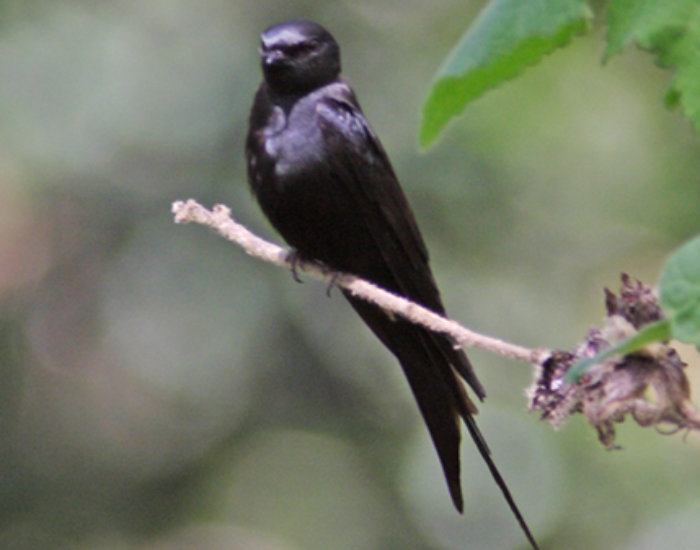
13. Black Saw-Wing (Psalidoprocne pristoptera)
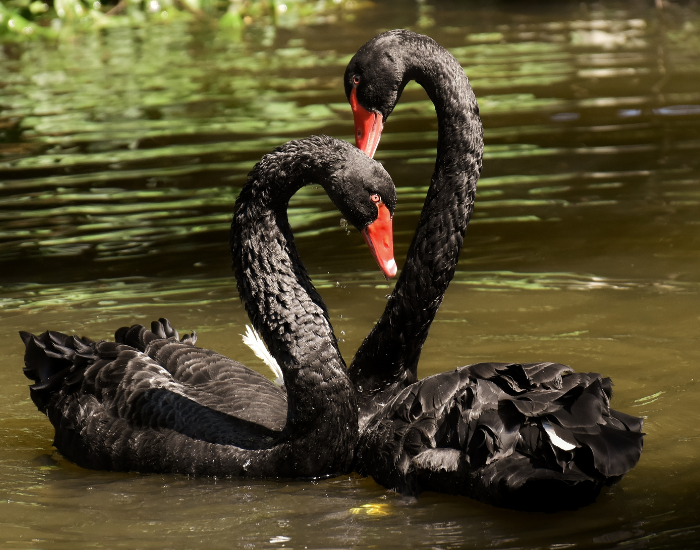
The black saw-wing breaks every swallow stereotype. If you have ever searched for a “black swallow bird,” this is probably what you found. Entirely dark plumage, no white underside, no rufous patches, no pale rump. Males are glossy black; females slightly browner. The common name refers to tiny serrations on the outer wing feathers, similar to the northern rough-winged swallow.
This sub-Saharan African species inhabits forest edges and clearings, foraging below the canopy where other swallows rarely venture. Their dark coloring makes them difficult to spot in shaded habitats. Black saw-wings nest in earth banks and burrows, occasionally in building crevices. For birders visiting East Africa, separating the various saw-wing species requires careful attention to range maps and subtle plumage differences.
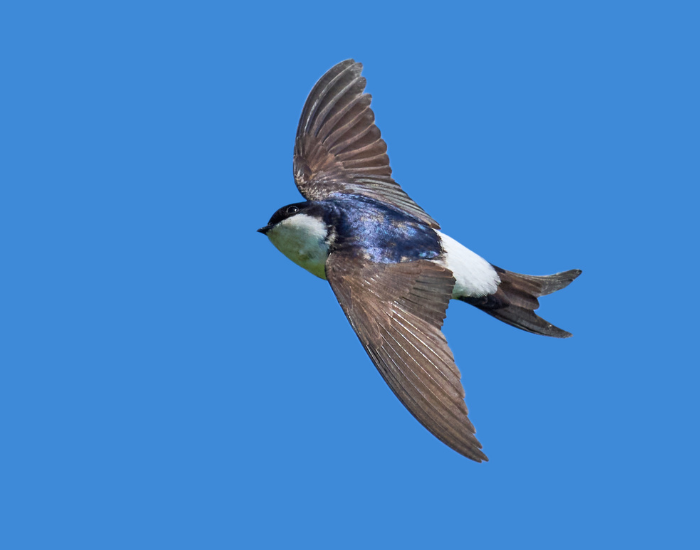
14. House Martin (Delichon urbicum)
House martins are the swallows that European homeowners either love or despise. They build enclosed mud nests with a small entrance hole tucked under the eaves of buildings. A dark blue back, white rump, and white underside make them easy to distinguish from barn swallows overhead. Their short forked tail and feathered white legs are additional field marks.
House martins breed across Eurasia and winter in Africa. Historically, these birds nested on cliff faces, but like so many swallows, they have shifted almost entirely to human-made structures. Colony sites on buildings can persist for decades. However, modern architecture with smooth surfaces and sealed eaves has reduced available nest sites in many areas. Conservation efforts include installing artificial nest cups under rooflines. Like starlings, house martins thrive best where older buildings remain.
15. Chimney Swift (Chaetura pelagica)
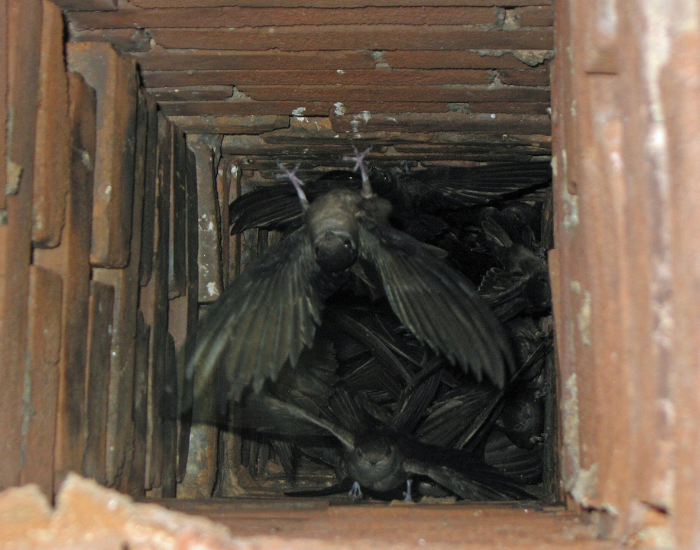
I need to address the elephant in the room. The chimney swift is not a swallow. Swifts and swallows are not closely related, they occupy entirely different branches of the avian family tree. However, chimney swifts get confused with swallows constantly because of convergent evolution. Both groups catch flying insects on the wing with similar pointed wings and agile flight.
Here is how to tell them apart. Chimney swifts have a cigar-shaped body, stiffer wingbeats, and cannot perch on wires. Their wings appear to flicker rather than sweep. Swifts spend virtually their entire lives airborne, while swallows regularly perch. The chimney swift nests inside chimneys and hollow trees, gluing a small platform of twigs to vertical walls with saliva. Their shape, flight style, and behavior differ fundamentally from true swallows once you know what to look for.
Frequently Asked Questions!
Swallows are aerial insectivores, meaning they catch insects in flight. Their diet includes flies, mosquitoes, beetles, moths, and other flying insects. A barn swallow may consume 850 or more insects per day during breeding season, feeding chicks constantly. Tree swallows are unusual in also eating berries, particularly during migration when insects become scarce.
Nesting varies dramatically among different kinds of swallows. Barn swallows, cliff swallows, and house martins build mud nests on structures or cliff faces. Bank swallows dig burrows into sandy banks. Tree swallows and purple martins use natural cavities or nest boxes. Cave swallows nest in caves and culverts. The common thread is that most species have adapted to use human-made structures — bridges, barns, buildings, and martin houses.
Despite looking similar, swallows and swifts are not closely related. Swifts belong to the order Apodiformes (with hummingbirds), while swallows are passerines — songbirds. Swifts have longer, more rigid wings, a cigar-shaped body, and cannot perch on branches or wires. Swallows have more flexible flight, broader wings relative to body size, and perch regularly. The confusion arises from convergent evolution — both groups evolved similar body plans for catching insects in flight.
No, Chimney Swifts are not swallows. While they look similar due to convergent evolution, they belong to the order Apodiformes (related to hummingbirds) rather than Passeriformes (songbirds).
Can You Name That Swallow? 🐦
A 15-photo identification challenge — the wrong answers are deliberately tricky look-alikes. Watch the tail, the rump, and the throat. One of them is a famous swallow impostor. Go back and change any answer before you score.
Which one is this?
Why Birds Like Swallows Matter
Swallows represent something larger than any single species. They are biological indicators — when swallow populations crash, it signals that insect ecosystems are in trouble. That ripple effect touches everything from wrens to nightingales and other insect-eating birds. Every swallow overhead reminds us that healthy skies require healthy landscapes beneath them.
Step outside, look up, and watch how swallows move. Learn one species first — just one. Let their flight burn into your memory the way it burned into mine during that first birding trip. Then come back and tell me which swallow species you found in the comments below. For more identification guides, explore our posts on magpies, ravens, and crows.
References:
Nebel, S., Mills, A., McCracken, J. D., & Taylor, P. D. (2010). Declines of aerial insectivores in North America follow a geographic gradient. Avian Conservation and Ecology, 5(2), 1. https://doi.org/10.5751/ACE-00391-050201
Smith, A. C., Hudson, M. R., Downes, C. M., & Francis, C. M. (2015). Change points in the population trends of aerial-insectivorous birds in North America: Does the North American Breeding Bird Survey detect sharp declines? PLoS ONE, 10(6), e0130768. https://doi.org/10.1371/journal.pone.0130768
Spiller, K. J., & Dettmers, R. (2019). Evidence for multiple drivers of aerial insectivore declines in North America. The Condor, 121(2), duz010. https://doi.org/10.1093/condor/duz010
Imlay, T. L., Mann, H. A. R., & Leonard, M. L. (2021). Integrating regional and site-level data to assess drivers of population decline in a threatened aerial insectivorous bird. Biological Conservation, 264, 109396. https://doi.org/10.1016/j.biocon.2021.109396
Rosenberg, K. V., Dokter, A. M., Blancher, P. J., Sauer, J. R., Smith, A. C., Smith, P. A., Stanton, J. C., Panjabi, A., Helft, L., Parr, M., & Marra, P. P. (2019). Decline of the North American avifauna. Science, 366(6461), 120–124. https://doi.org/10.1126/science.aaw1313
Møller, A. P. (2019). Parallel declines in abundance of insects and insectivorous birds in Denmark over 22 years. Ecology and Evolution, 9(11), 6581–6587. https://doi.org/10.1002/ece3.5236
Ambrosini, R., Rubolini, D., Møller, A. P., Bani, L., Clark, J., Karcza, Z., Vangeluwe, D., du Feu, C., Spina, F., & Saino, N. (2012). Maintenance of livestock farming may buffer population decline of the Barn Swallow. Bird Conservation International, 22(4), 411–428. https://doi.org/10.1017/S0959270912000056



.jpg)