Imagine waking up to a chorus of cackling, a sound so wild that, during my first week living in Australia in 2022, I was convinced a troop of monkeys had escaped into my neighborhood. To my surprise, it wasn’t primates, but the iconic Kookaburra “laughing” from the gum trees.
My obsession with Australia’s birdlife began back in 2019, when I first experienced a New Year’s Down Under and spotted my first brush turkey. Since returning in early 2022 to explore further, I’ve been privileged to witness this “feathered cast” up close across the continent. From the neon-bright Rainbow Lorikeets and rose-breasted Galahs that frequent suburban gardens to the regal King Parrots of the bush, the variety is staggering.
Whether it was spotting the rare, prehistoric-looking Black Cockatoos in the heart of Sydney or watching Little Penguins waddle ashore in Melbourne, my travels have taught me that Australia’s birds are the true unsung heroes of the ecosystem. If you’re ready to start your own journey, check out our beginner’s guide to birdwatching to get the right gear in your kit.
Australia’s Remarkable Birdlife: Why It’s a Feathered Fiesta
Australia’s a sprawling 8.1 million square kilometers of deserts, rainforests, and wetlands, an evolutionary playground cut off from the world for eons. That’s birthed over 800 bird species, with 45% found nowhere else. Each bird species has evolved unique adaptations to thrive in their specific habitats, whether it’s the arid outback or lush rainforests.
Birds in Australia are woven into the cultural fabric of the nation. First Nations stories often feature these feathered friends, highlighting their significance in traditional lore. Ecologically, they are indispensable, many species play crucial roles in seed dispersal, pollination, and pest control, keeping the natural world in balance.
However, the avian paradise is under threat. Habitat destruction and urban expansion are shrinking the spaces these birds call home. Many species are now listed as threatened, making conservation efforts more critical than ever. Protecting these birds means preserving a vital part of Australia’s natural heritage and ensuring that future generations can enjoy their beauty and ecological benefits.
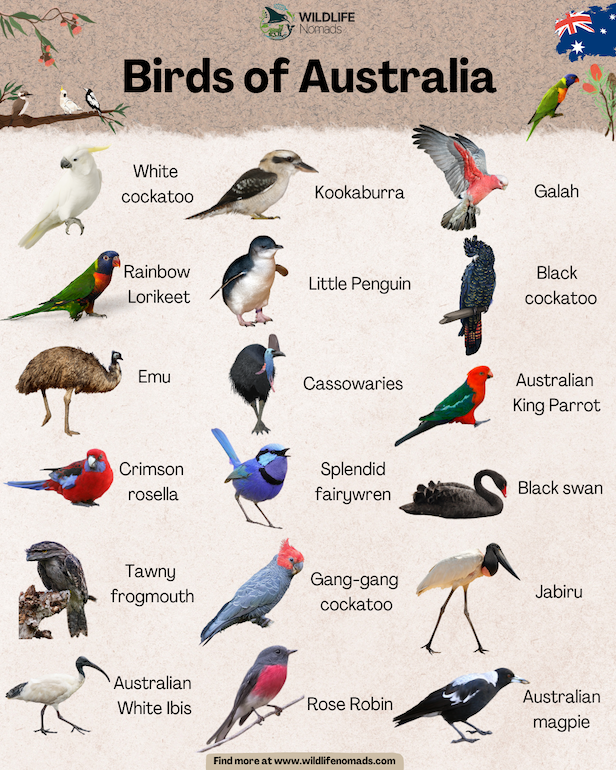
What Birds Are Native to Australia?
Australia’s birdlife is as varied as a Vegemite sandwich lineup, coastal crooners to outback nomads. Here’s a flock of the most iconic Australian birds, packed with a little extra flavor:
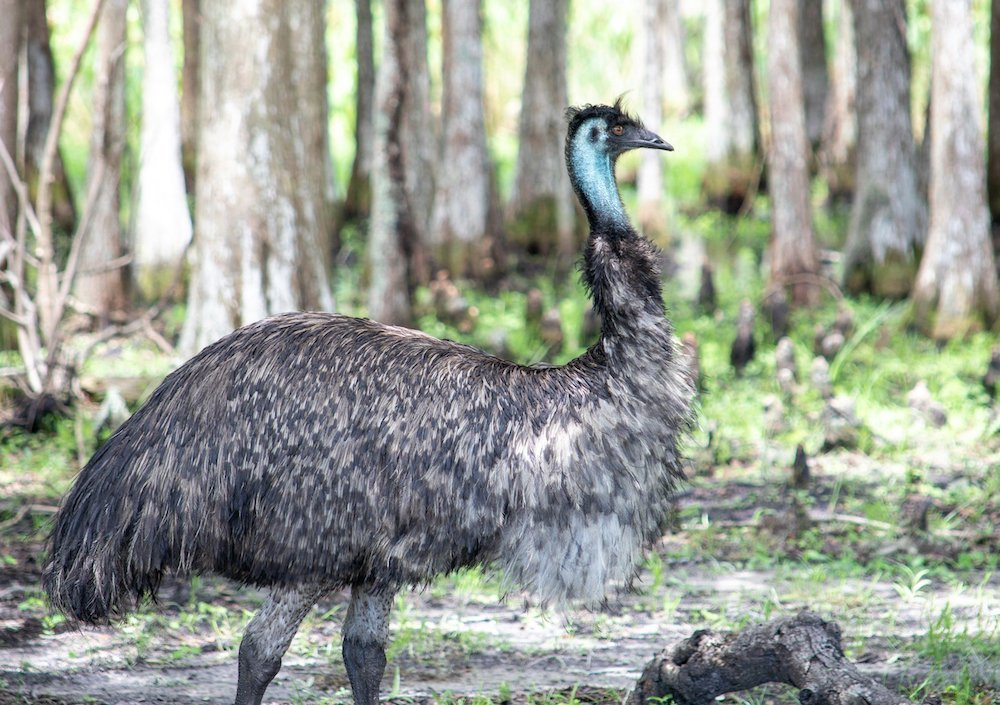
1. Emu (Dromaius novaehollandiae) – Australia’s Largest Bird
The emu’s Australia’s largest bird, a flightless wonder that sprints 50 km/h (31 mph) like it’s late for a barbie. The emu is closely related to the cassowary, another large, flightless bird found in Australia. With legs like steel pistons and emerald-green eggs that scream “look at me,” it’s a seed-spreading legend, think of it as the outback’s roaming gardener.
- Size: Up to 1.9 meters (6.2 feet), a towering, feathered tank.
- Habitat: Open woodlands, grasslands, and the sunburnt semi-arid sprawl.
- Where to See Them: Outback haunts like Kakadu National Park or Flinders Ranges, think red dust and big strides.
- Conservation Status: Least Concern (IUCN), still kicking strong.
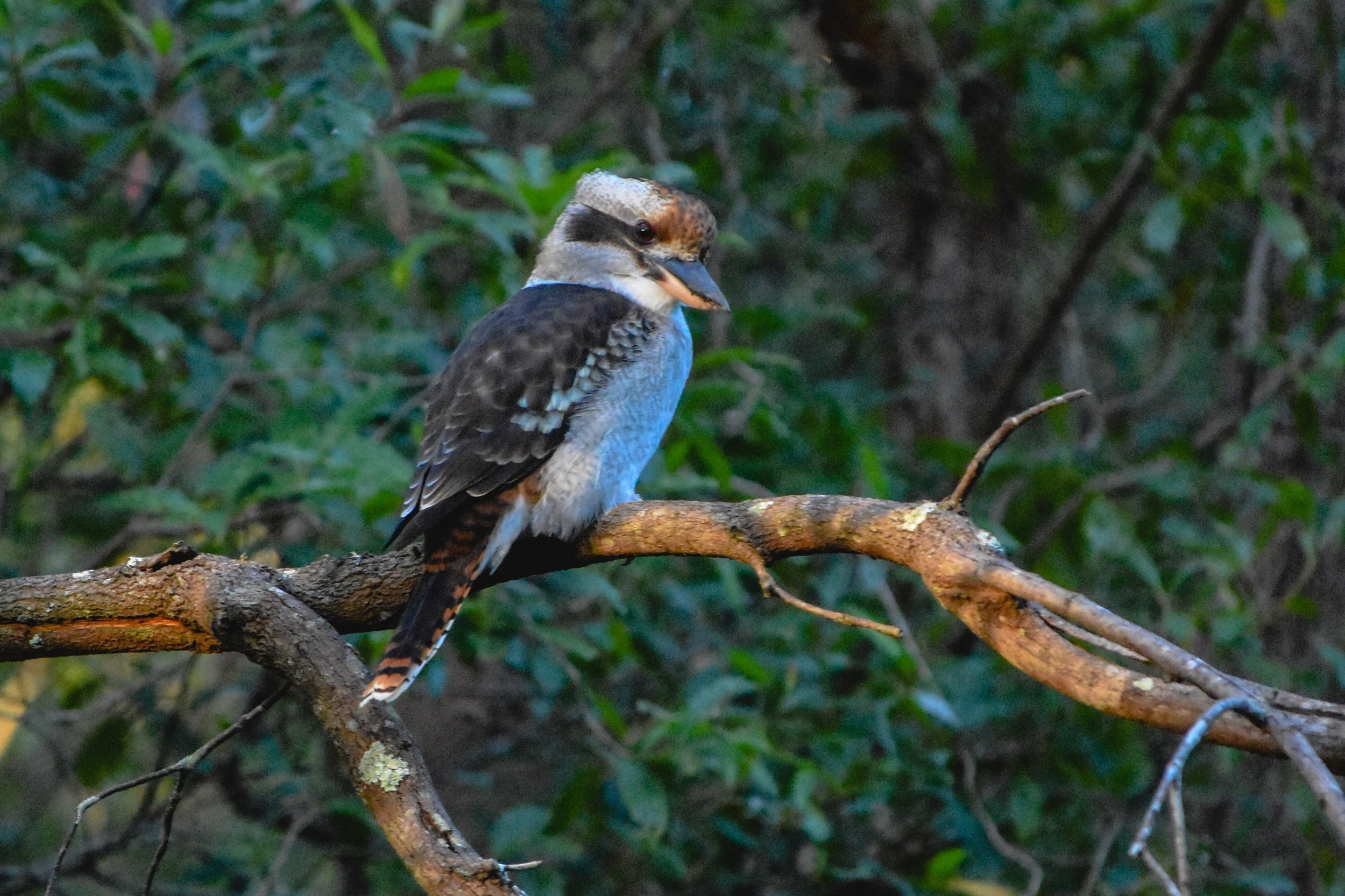
2. Laughing Kookaburra (Dacelo novaeguineae) – The Bird That Sounds Like a Mate’s Chuckle
The laughing kookaburra’s the famous bird of Australia with a call that’s pure bush comedy, a cackling call that resembles human laughter., imagine a mate losing it over a cold one. This beefy kingfisher hunts bugs, lizards, and the odd snake, eyeballing prey like a true-blue predator. It is one of Australia’s most recognizable birds.
This territorial kingfisher is found in forests, woodlands, and even urban gardens across eastern and southern Australia. Unlike other kingfishers, the Laughing Kookaburra primarily hunts on land, preying on insects, small reptiles, and even snakes. Its distinctive “laugh” serves as a territorial call, often heard at dawn and dusk in what sounds like a group chorus.
- Size: 40–45 cm (16–18 inches)—chunky for a kingfisher.
- Habitat: Forests, woodlands, even your mate’s backyard in the ‘burbs.
- Where to See Them: Sydney’s Royal Botanic Garden, Brisbane’s bush, Melbourne’s parks—anywhere with a good perch.
- Conservation Status: Least Concern (IUCN)—laughing all the way.
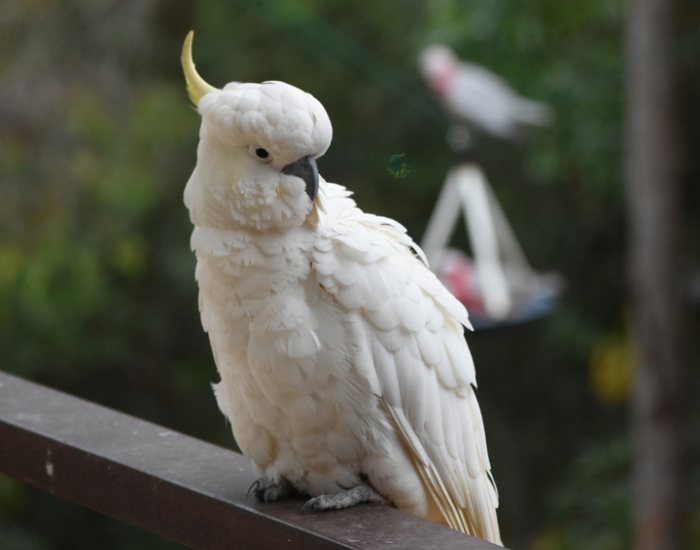
3. White Cockatoo (Cacatua galerita)
This is one of the most common birds found on this country. This white-and-yellow screamer bird with a punk haircut has voice to match. They’re clever buggers, cracking nuts and cracking up birdwatchers with their antics.
- Size: 45–55 cm (17–22 inches)—big, bold, and brash.
- Habitat: Coastal forests, woodlands, city parks where they strut their stuff.
- Where to See Them: Sydney’s Centennial Park, Canberra’s lawns, Perth’s treetops.
- Conservation Status: Least Concern (IUCN)—too loud to fade.
4. Rainbow Lorikeet (Trichoglossus moluccanus)
One of the most common birds in Australia is the colorful rainbow lorikeet, this parrot’s a riot of red, blue, and green, like a kid’s crayon box took flight. They somersault for nectar, chattering like they own the joint.
- Size: 25–30 cm (10–12 inches), small but dazzling.
- Habitat: Rainforests, coastal scrub, urban gardens where nectar flows.
- Where to See Them: Eastern Australia, Sydney’s balconies, Brisbane’s figs, Cairns’ canopy.
- Conservation Status: Least Concern (IUCN): colorful and kicking.

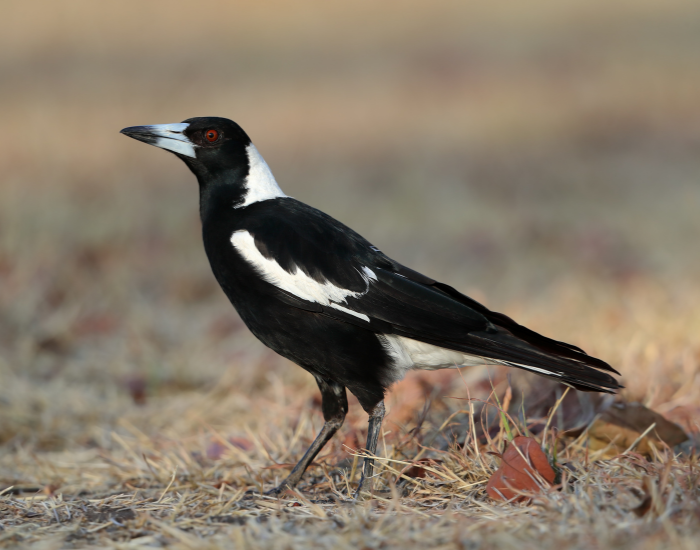
5. Australian Magpie (Gymnorhina tibicen) – The Crooner with a Swooping Streak
The magpie’s a black-and-white beauty with grey plumage and a voice that’ll melt your heart, until it swoops you in spring, defending its turf like a footy enforcer. Smart as a whip, magpies solves puzzles and serenades the dawn. Found across the country in open woodlands, parks, and suburban areas, these highly social birds form lifelong family groups and can recognize human faces.
During the breeding season (spring), some magpies become fiercely territorial, swooping at perceived threats, including cyclists and pedestrians, to protect their nests. Australians have devised creative ways to avoid swooping magpies, such as wearing hats with eye stickers, attaching cable ties to bike helmets, or simply detouring around known nesting sites. Despite their seasonal aggression, magpies are beloved for their complex songs, problem-solving abilities, and strong bonds with humans who earn their trust.
- Size: 37–44 cm (14–17 inches)—sleek and sassy.
- Habitat: Open woodlands, grasslands, every suburb with a BBQ.
- Where to See Them: Sydney’s streets, Melbourne’s parks—anywhere they can belt a tune.
- Conservation Status: Least Concern (IUCN)—too feisty to falter.
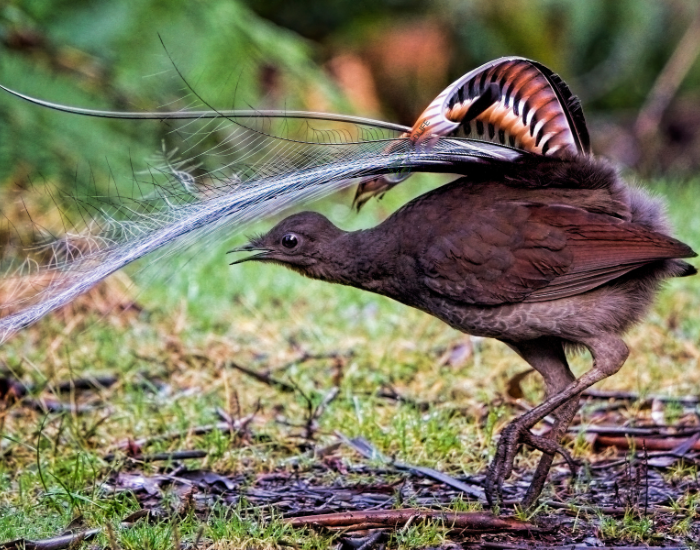
6. Superb Lyrebird (Menura novaehollandiae) – The Bush’s One-Bird Band
This australasian bird’s a sound wizard, it is known for its ability to mimic the calls of other birds, creating a symphony of sounds in the forest (sounds like chainsaws, bird calls, even car alarms). Males strut their shimmering tails like peacocks on a bush stage.
- Size: 80–100 cm (31–39 inches), tail’s the showstopper.
- Habitat: Temperate forests, rainforests dripping with moss.
- Where to See Them: Blue Mountains’ gullies, Victoria’s Dandenong Ranges.
- Conservation Status: Least Concern (IUCN)—mimicking its way through.
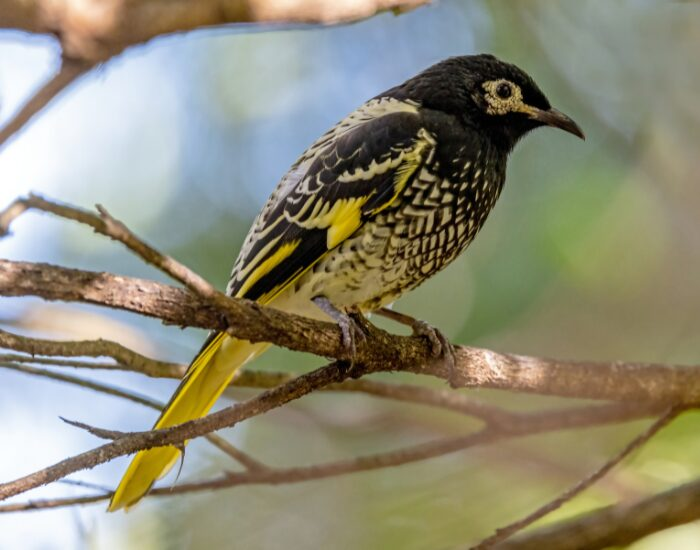
7. Regent Honeyeater (Anthochaera phrygia) – The Threatened Species on the Brink
Once a nectar-sipping regular with short slender bills adapted for feeding on nectar, this black-and-yellow crooner’s down to 300-400 birds, habitat loss hit hard. Breeding programs are its lifeline. They were once abundant in Australia’s woodlands but now critically endangered. Named for its regal appearance, this honeyeater was once a common sight in flowering eucalyptus forests across southeastern Australia, feeding on nectar and insects. Sadly, habitat loss and competition from larger honeyeaters have driven its population to dangerously low levels.
- Size: 20–24 cm (8–9 inches), small but striking.
- Habitat: Box-ironbark forests, dwindling fast.
- Where to See Them: Northern Victoria, NSW’s Capertee Valley…if you’re lucky.
- Conservation Status: Critically Endangered (IUCN)—hanging by a thread.
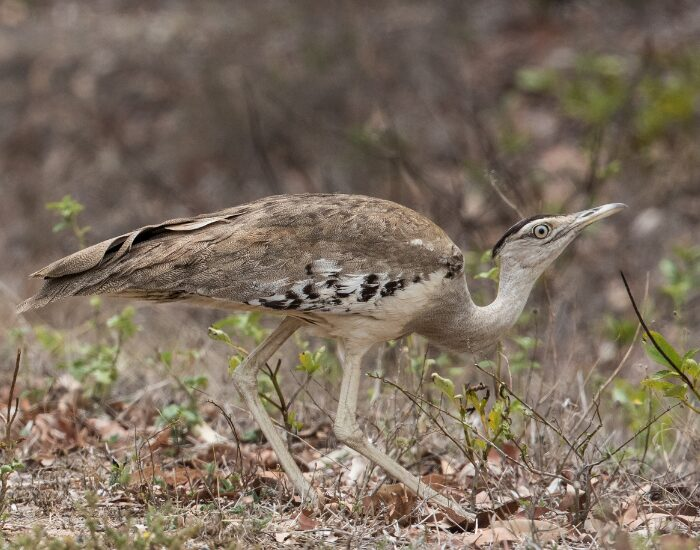
8. Australian Bustard (Ardeotis australis) – The Outback’s Stately Strider
This big fella strolls like it owns the scrub, a ground bird with a strut that says “no rush, mate.” Habitat crunch and hunting are nudging it down. This is one of Australia’s largest flying birds, standing tall in open grasslands and arid plains across the country.
Known as the “Plains Turkey,” this ground-dweller is famous for its cryptic plumage, which helps it blend seamlessly into dry landscapes. During the breeding season, males perform an impressive courtship display, inflating their throat sacs and emitting deep booming calls to attract females. Once common across Australia, their numbers have declined due to habitat loss and hunting, but they remain a symbol of the vast, untamed outback.
- Size: 80–120 cm (31–47 inches), tall and proud.
- Habitat: Grasslands, open woodlands, arid plains.
- Where to See Them: Northern Territory, Outback Queensland’s wide-open spaces.
- Conservation Status: Near Threatened (IUCN)—a slow fade.
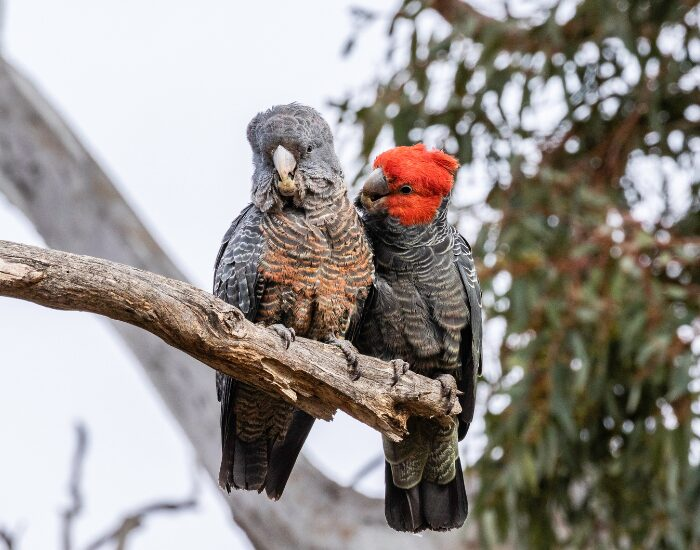
9. Gang-Gang Cockatoo (Callocephalon fimbriatum) – The Red-Headed Rebel
This is a unique and charismatic Australian parrot, instantly recognizable by its soft, crested head and gentle, creaky call that sounds like a rusty hinge. Named after an Aboriginal word, this cockatoo is found in the forests and woodlands of southeastern Australia, particularly in the cooler regions of Victoria and New South Wales. Males sport a striking red head, while females blend into the canopy with their gray plumage. Unlike other cockatoos, Gang-Gangs have a more relaxed and quiet demeanor, often perching motionless as they feed on eucalyptus seeds, berries, and insects. In winter, they migrate to lower elevations, making them a seasonal delight for birdwatchers.
- Size: 32–37 cm (12–14 inches): compact but cool.
- Habitat: Mountain forests, eucalyptus stands.
- Where to See Them: Australian Alps, Tasmania’s bush, Victoria’s hills. These birds can also be found in parts of South Australia, where they inhabit eucalyptus stands.
- Conservation Status: Vulnerable (IUCN)—fires hit hard.
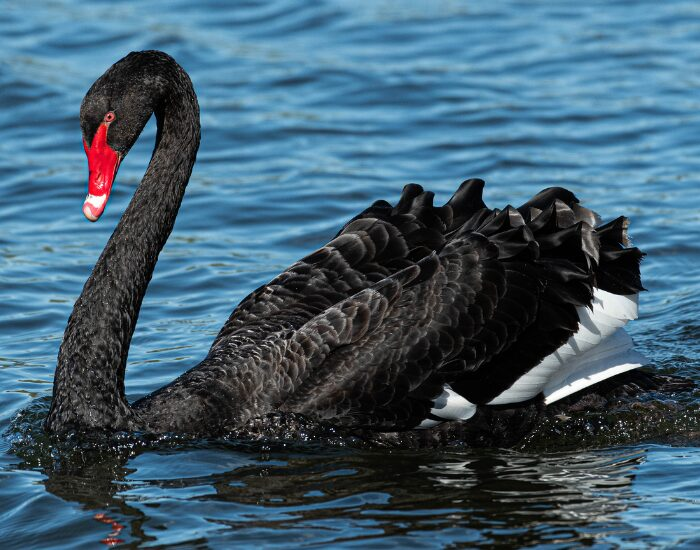
10. Black Swan (Cygnus atratus) – The Graceful Outlier
The Black Swan (Cygnus atratus) was once thought to be a mythical creature by Europeans, who believed all swans were white (like the mute swan), until Dutch explorers encountered them in Australia in the 1600s, overturning that assumption. These elegant birds, native to Australia, are known for their striking black plumage, contrasting red bills, and gracefully long necks. Found in wetlands, lakes, and rivers across the country, they form lifelong pair bonds and are famous for their synchronized courtship displays.
- Size: 110–142 cm (43–56 inches)—elegance on stilts.
- Habitat: Lakes, rivers, wetlands with a mirror finish.
- Where to See Them: Western Australia’s Swan River, Tassie’s lagoons.
- Conservation Status: Least Concern (IUCN)—gliding strong.
Waterbirds
Waterbirds From the prehistoric look of the Jabiru to the elegant Black Swan, Australia’s waterways are bustling. These birds have evolved remarkable adaptations, like the Ibis’s tactile bill for probing mud (or lunch boxes) and the Heron’s lightning-fast neck for spearing fish. Whether in fresh or saltwater, they are the guardians of the wetlands
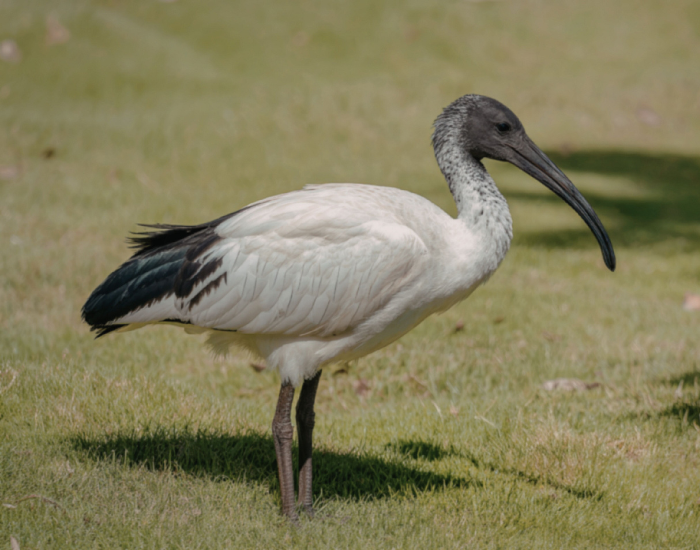
11. Australian White Ibis (Threskiornis molucca) – The “Bin Chicken”
It was crazy to know a very similar type of ibis is considered sacred in Egypt, while in Australia is kind of like unwanted visitor. While scientists call them the White Ibis, most Aussies affectionately (or frustratingly) know them as “Bin Chickens.” Originally wetland birds, they’ve adapted perfectly to city life. You’ll see them expertly navigating trash cans in Sydney’s Hyde Park with their long, curved black beaks. They are the ultimate survivors of the urban sprawl.
- Size: 65–75 cm.
- Where to See Them: Every city park in Australia, especially near outdoor cafes!
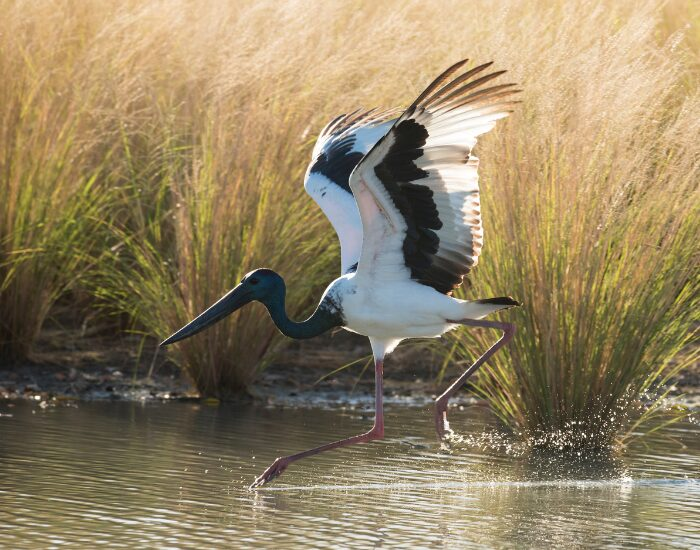
12. Black-necked Stork (Ephippiorhynchus asiaticus) – The Mighty Jabiru
In the Top End, locals call this the Jabiru. It is Australia’s only stork species, and a true giant of the wetlands. Seeing one of these take flight in Kakadu is a spiritual experience, their iridescent black-and-white feathers and bright red legs make them look like a living painting.
- Size: Up to 1.3 meters tall with a 2-meter wingspan.
- Where to See Them: Kakadu National Park (NT) and tropical wetlands in Queensland.
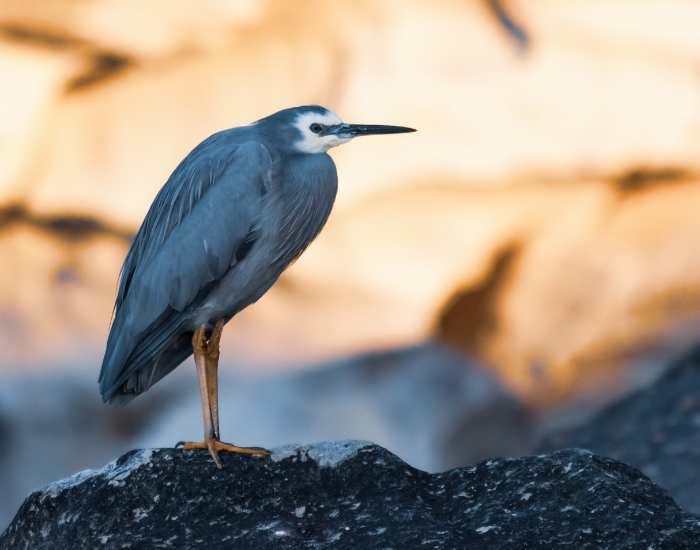
13. White-faced Heron (Egretta novaehollandiae) – The Blue-Grey Sentinel
Herons look like dinosaurs, and I find that fascinating! This is likely the first “water bird” I noticed when walking near the canals and coastal parks. They have a beautiful, slate-blue plumage and a distinct white face. They stand perfectly still, like statues, waiting for a fish to move, a masterclass in patience.
- Size: 60–70 cm.
- Where to See Them: Almost any damp ditch, garden pond, or shoreline across the country.
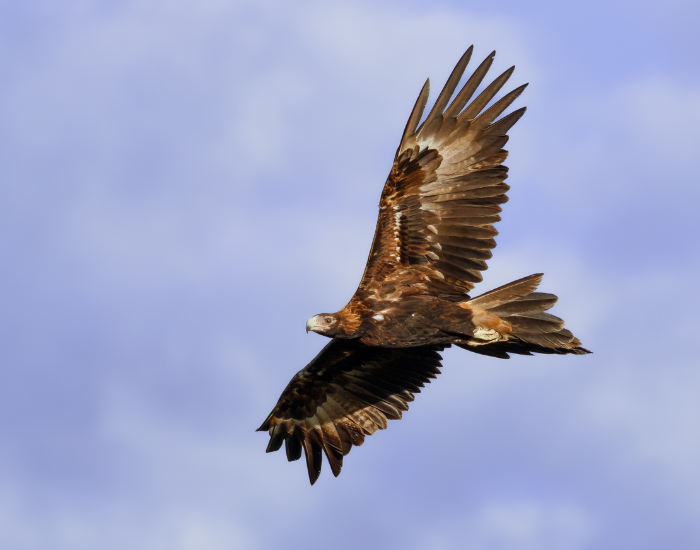
14. Wedge-tailed Eagle (Aquila audax)
This is Australia’s largest bird of prey. On my road trips through the outback, I’ve seen these massive raptors soaring so high they look like small planes. You can identify them by their unique diamond-shaped (wedge) tail. They are apex predators, capable of taking down a small kangaroo!
- Size: Wingspan up to 2.3 meters.
- Where to See Them: Soaring over open country and Nullarbor Plain; often seen on the roadside in rural areas.
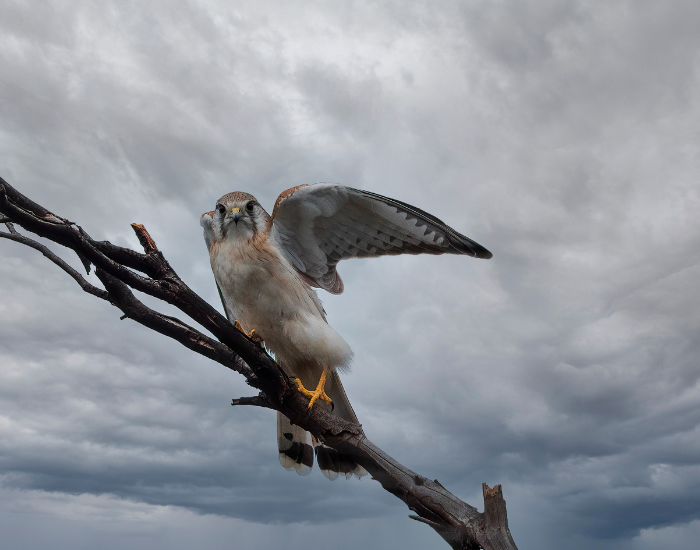
15. Nankeen Kestrel (Falco cenchroides)
If you see a small, reddish-brown hawk “hanging” perfectly still in the air above a highway or a field, it’s a Nankeen Kestrel. They use a technique called “windhovering” to spot mice and insects in the grass. They are small but incredibly fierce and precise. This kestrel is one of the six species of falcon you will find in Australia.
- Size: 28–35 cm (A small, sleek falcon).
- Where to See Them: Coastal cliffs, open grasslands, and even along the edges of Sydney’s highways.
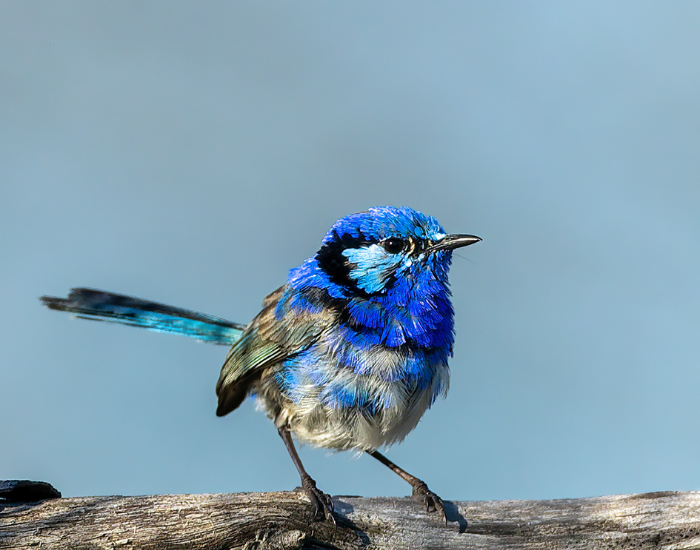
16. Splendid Fairy-wren (Malurus splendens)
If the Rainbow Lorikeet is a crayon box, the Splendid Fairy-wren is a neon sign. The males in breeding season are a brilliant, almost unbelievable electric blue. These type of wrens are tiny, high-energy birds that hop through the scrub like little bouncing balls of light.
- Size: 14 cm (very small with a long, upright tail).
- Where to See Them: They love the drier, shrubby areas of Western Australia and the outback. If you are in Sydney or Melbourne, you are more likely to see their “cousin,” the Superb Fairy-wren (which is also blue and white).
- Personal Touch: They are surprisingly bold! I’ve had them hop right up to my feet while I was sitting still in the bush.
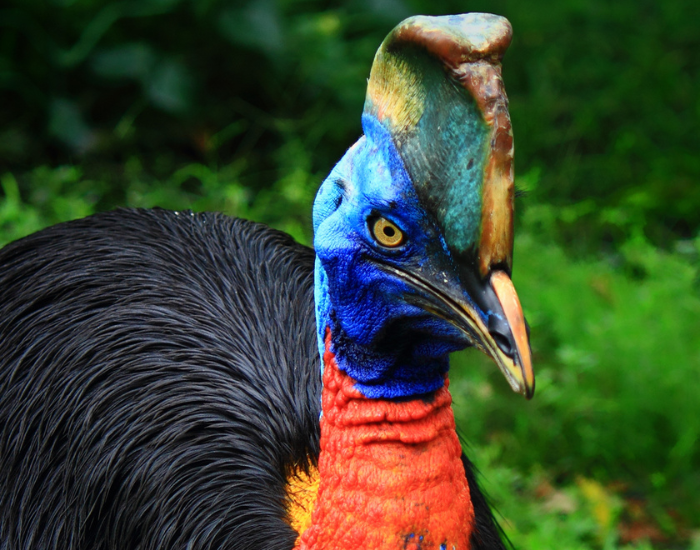
17. Southern Cassowary (Casuarius casuarius)
The Cassowary is the heavyweight champion of the Australian rainforest. With a blue neck, a red wattle, and a “helmet” (called a casque) on its head, it looks like it stepped straight out of the Jurassic period. They are essential “gardeners” because they eat large fruits and disperse seeds that no other animal can handle.
- Size: Up to 1.8 meters—it’s the second-heaviest bird in the world.
- Where to See Them: Tropical North Queensland, specifically the Daintree Rainforest or Mission Beach (where they sometimes walk right onto the sand!).
- Safety Tip: Respect the E-E-A-T! These birds have 12 cm claws and can be dangerous if they feel cornered. Always keep your distance.
18. Black Cockatoos
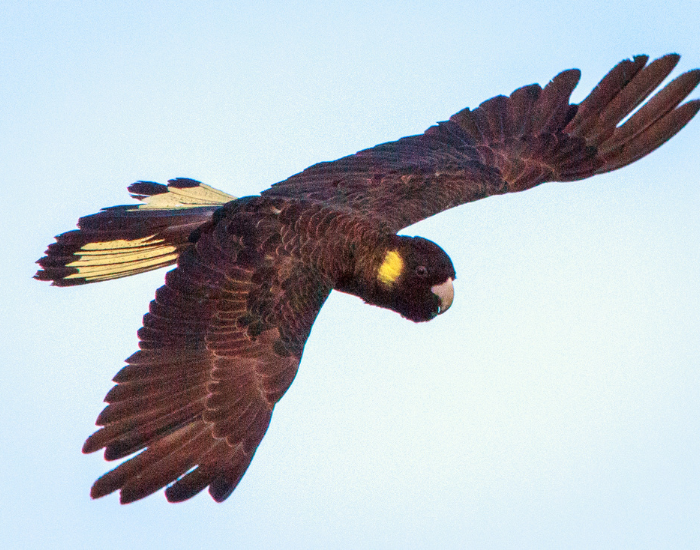
While the white cockatoos are the loud, cheeky pranksters of the suburbs, the Black Cockatoos are the mysterious, soulful intellectuals of the bush. There are five species of these magnificent birds across Australia, each with its own specific range and “tail-light” color. Finding them feels like a reward because they are generally shyer and more elusive than their white cousins.
When I was living in Sydney, I finally had my first encounter with them. Given the location, I was likely watching the Yellow-tailed Black Cockatoo (Zanda funerea), though the rarer, smaller Glossy Black Cockatoo is also known to frequent parts of New South Wales.
- Size: 55–65 cm (much larger than the white cockatoos).
- Where to See Them: Centennial Park in Sydney is a famous spot! Look for them in the pine trees or banksias, where they use their powerful beaks to crush seed pods like they’re made of paper.
- Experience Note: Hearing a flock of these fly over a silent forest is one of the most “Australian” sounds you can experience.
Where to See Australian Native Birds
Australia offers incredible opportunities and places to see wildlife and for birdwatching across its diverse landscapes. Here are the best locations to spot native birds:
- Kakadu National Park (NT) – Home to magpie geese, brolgas, and jabirus.
- Great Barrier Reef Islands (QLD) – A paradise for seabirds, including the white-bellied sea eagle.
- Blue Mountains (NSW) – A hotspot for lyrebirds and cockatoos.
- Rottnest Island (WA) – Famous for the rare and adorable fairy tern.
- Tasmania’s Wilderness Areas – Home to the endangered forty-spotted pardalote.
- Woody Head Campground – We just went recently in August 2026 and found species like the blue faced honeyeaters, gulls, native australian pigeons, pelicans and eagles.
Can You Name That Australian Bird? 🦜
An 18-photo identification challenge from the guide — the wrong answers are other iconic Australian birds. Go back and change any answer before you score.
Which bird is this?