As a biologist, I’ve spent my part of my life chasing wildlife, sometimes in remote corners of the planet. Yet, some of my most profound wildlife encounters happened while eating a sandwich in a city park.
I remember my first trip to Australia. Having spent years in Sweden and Mexico, I had a specific mental image of what an ibis was: a graceful, elusive creature of the wetlands. Imagine my shock when I turned a corner in Sydney and saw a massive Australian white ibis rummaging through a trash can with the confidence of a seasoned burglar.
When I mentioned my surprise to my Australian coworkers, they laughed. “Oh, you mean the bin chicken?”
It felt like a fall from grace for birds that once represented a god in Ancient Egypt. However, that’s the beauty of ibises. They are survivors. Whether dodging macaques in Southeast Asia or stealing chips in Brisbane, these birds demonstrate remarkable adaptation.
Here are 12 facts about these strange, curved-bill wonders that prove they’re much more than just “trash birds.”
1. The Taxonomy: It’s a Family Affair
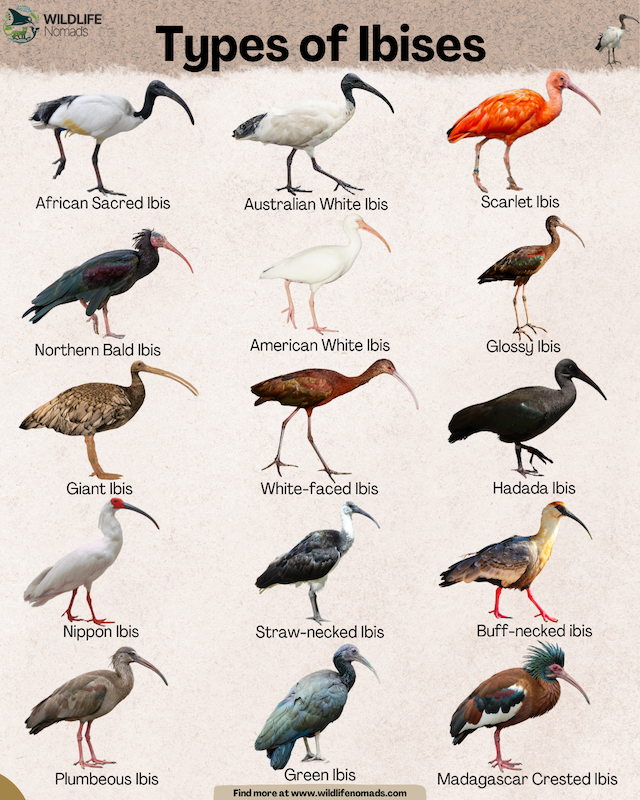
When we talk about ibises, we’re discussing of a type of bird with approximately 29 -30 different ibis species. They belong to the family Threskiornithidae, which they share with spoonbills. While they might look like storks, herons or even shoebills at first glance, ibises are their own distinct lineage.
Within this family, you’ll find everything from the vibrant scarlet ibis of South America to the critically endangered hermit ibis. Several other rare species, such as the dwarf olive ibis, northern bald ibis, white-shouldered ibis, and giant ibis, are also at critical risk of extinction due to various factors. The scientific name for each species follows binomial nomenclature. For example, the white ibis is Eudocimus albus, while glossy ibises are Plegadis falcinellus.
2. The Iconic Curved Bill: Nature’s Precision Tool
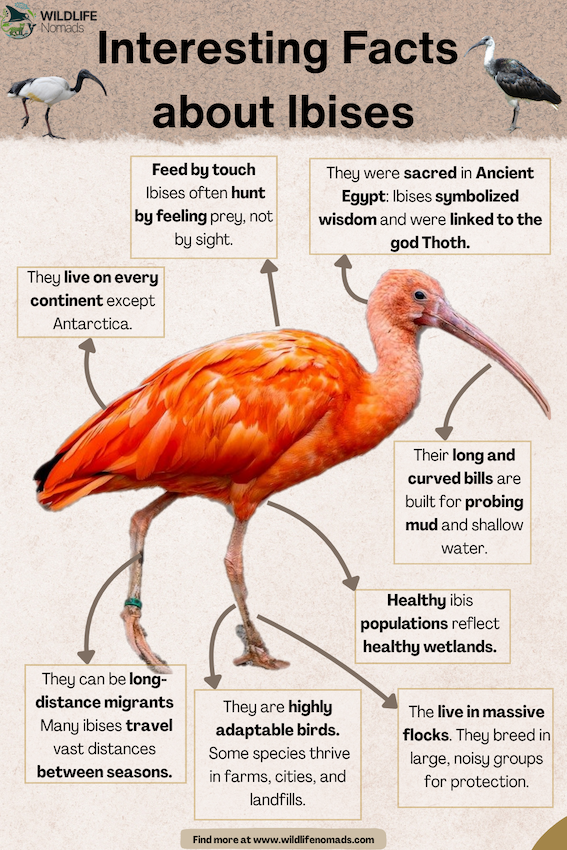
The most iconic feature of ibises is that long, decurved bill. In freshwater marshes and brackish marshes, these birds use their bills as tactile probes.
The tips contain specialized nerve endings called Herbst corpuscles. These allow them to feel prey like crustaceans, marine worms, and small fish deep in the mud without seeing them. It’s essentially biological sonar. I’ve watched female white ibises in the maya Peninsula systematically probe the mud with surgical precision.
The curved bill gives ibises a distinct advantage in shallow water environments. While herons rely primarily on visual hunting, ibises can forage effectively in murky water or at night.
3. The Sacred Connection to Ancient Egypt
You can’t discuss ibises without mentioning Ancient Egypt. The sacred ibis (Threskiornis aethiopicus) was the living representation of Thoth, the god of wisdom, writing, and magic.
Archaeologists have discovered millions of mummified ibises in ancient catacombs. The birds were so revered that breeding colonies were established specifically to supply temples. Priests would ritually mummify these birds as offerings to Thoth.
Ironically, sacred ibis populations are now extinct in Egypt itself. The species still thrives in other parts of Africa. This highlights how dramatically ecosystems can shift over millennia.
Although the thrive in Africa, in places like France, the Sacred Ibis is actually managed as an invasive species because it competes with local herons.

4. White Ibis: The Wetland Specialist
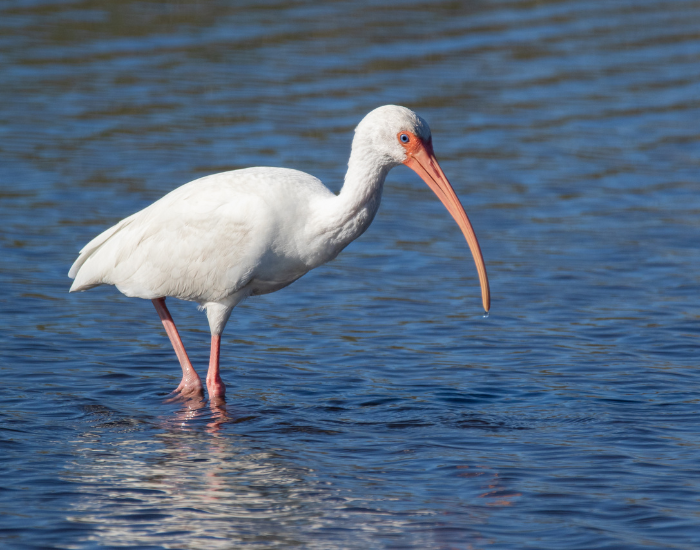
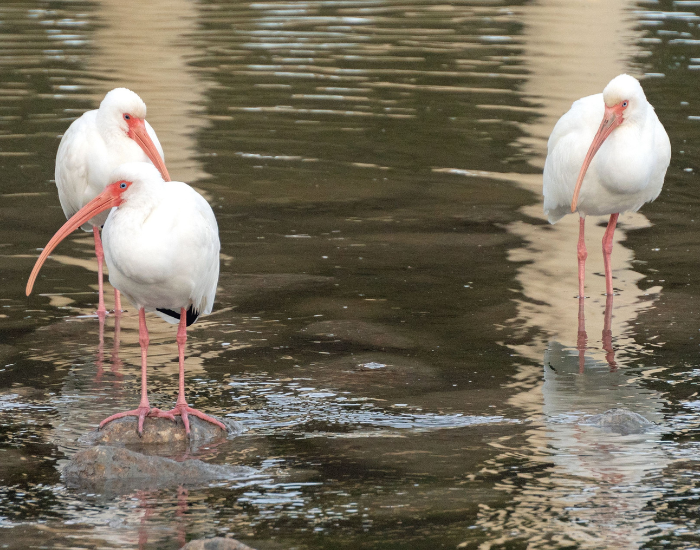
The white ibis (Eudocimus albus) is one of the most recognizable ibis species in North America. These birds are particularly common in the Southeastern United States, especially in Florida’s wetlands. The American White Ibis is common in the southeastern US and is recognized by its bright red legs and bill.
Adult white ibis have striking white plumage with black wingtips. The American White Ibis is recognized for its entirely white plumage. During breeding season, their bills, legs, and facial skin turn bright red. Female white ibises typically lay clutches of 2-4 eggs in nest structures built in trees or shrubs.
White ibis populations have adapted remarkably well to human presence. They forage in flooded fields, marshes, and urban parks. Their diet consists primarily of crustaceans, insects, amphibians like frogs, crabs, and small fish.
Juvenile White Ibises are mottled white and brown and have a duller face, bill, and legs compared to adults.
5. The Scarlet Ibis: A Living Rainbow
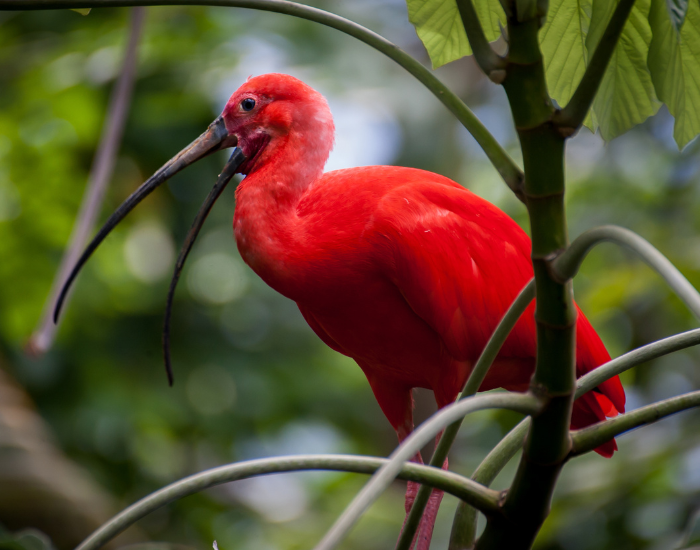
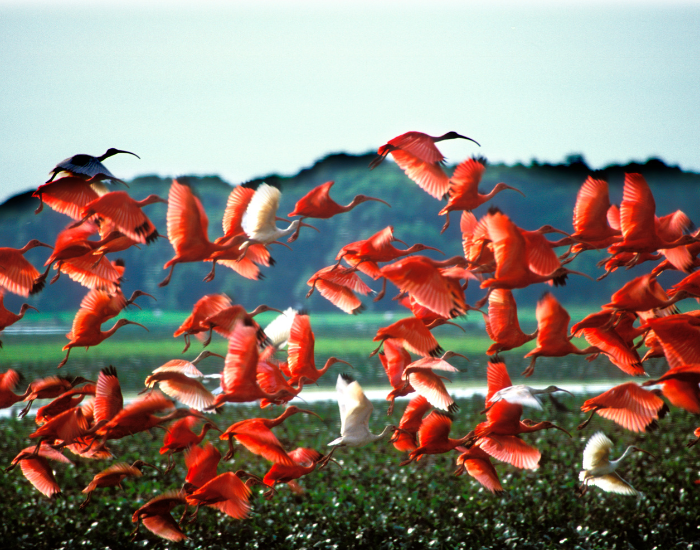
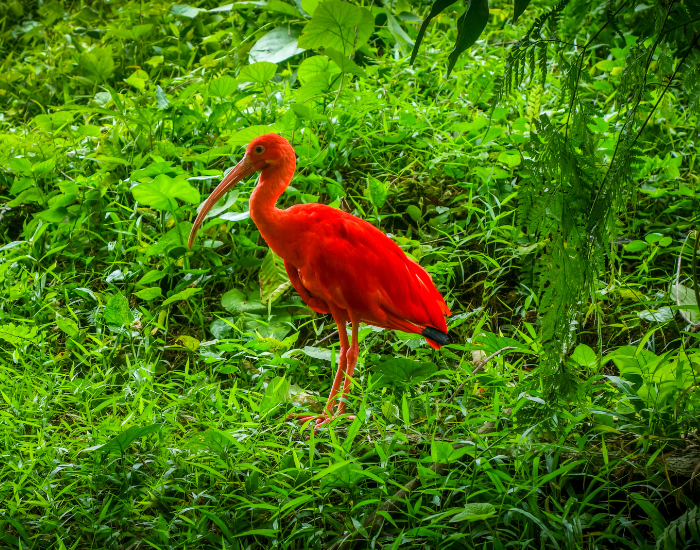
One of the most breathtaking sights in ornithology is a flock of scarlet ibis (Eudocimus ruber) taking flight. Their neon-red plumage comes entirely from their diet. Much like flamingos, they get their pigment from the crustaceans they consume in wetlands.
Scarlet ibis primarily inhabit South America, particularly in Trinidad, Venezuela, and Brazil. They gather in large groups called flocks, which can number in the hundreds. These massive colonies create spectacular displays against green wetland vegetation.
When habitat degrades and food sources change, their feathers fade to dull pink or white. Therefore, scarlet ibis serve as living indicators of ecosystem health.

6. Glossy Ibises: The Global Wanderers
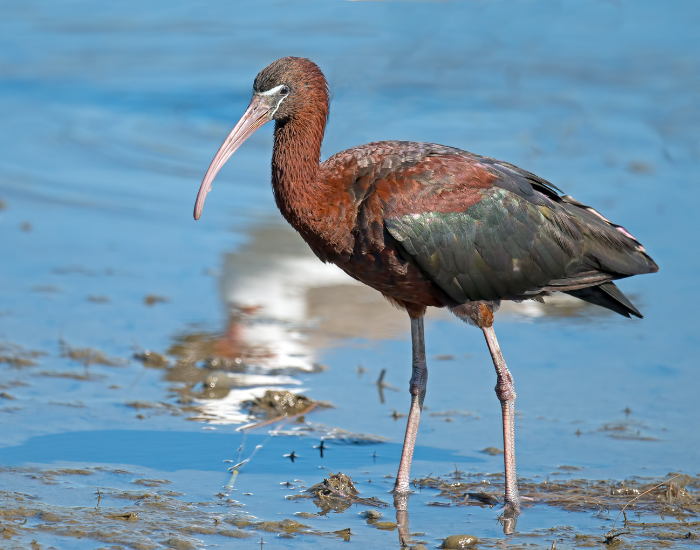
Glossy ibises (Plegadis falcinellus) have one of the most extensive ranges of any ibis species. Their range and population in North America have greatly expanded during the 20th century, shifting from being rare to widespread breeders across northern regions. These birds can be found across multiple continents, including North America, South America, Europe, Africa, and Asia.
Their name comes from their iridescent plumage. In bright sunlight, glossy ibises display brilliant greens, purples, and bronzes. The Glossy Ibis has iridescent, dark maroon feathers that can appear black from a distance. However, in low light, they appear almost black.
Glossy ibises prefer freshwater marshes, flooded fields, and shallow ponds for foraging, where plants play a crucial role in supporting wetland ecosystems. They probe mudflats for beetles, aquatic insects, and small crustaceans. During nesting season, they build nests in trees near water, often in mixed colonies with herons and egrets.
Glossy Ibises use both sight and touch to forage for their omnivorous diet.
7. The White-Faced Ibis: Masters of Western Wetlands
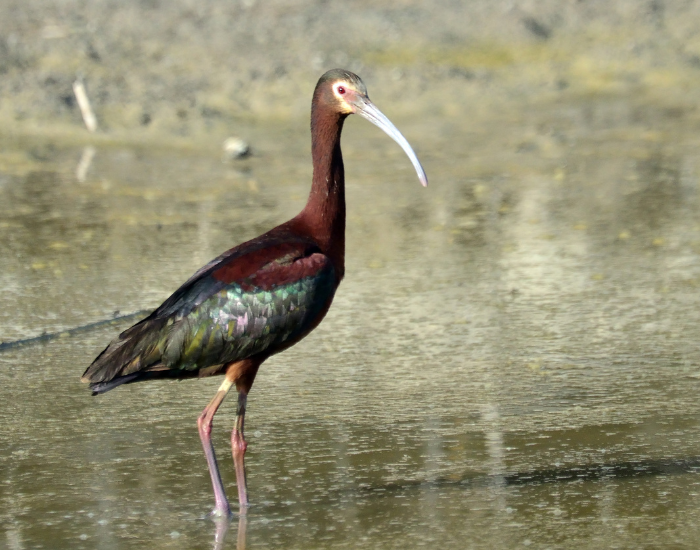
Often confused with glossy ibises, the white-faced ibis is a distinct species found in the western United States. During breeding months, they develop a distinctive white border around their eyes and bill.
What fascinates me about these birds is their nomadic nature. They will abandon sites used for years if water levels aren’t exactly right. They’re the “Goldilocks” of the bird world—everything must be just right in shallow water and flooded fields for them to settle down.
White-faced ibis populations migrate between breeding and wintering grounds. They nest in freshwater marshes across the western United States and winter in Mexico. Their breeding season typically runs from April to June, with females laying 3-4 eggs per nest.
8. The Australian White Ibis: From Sacred to Scavenger
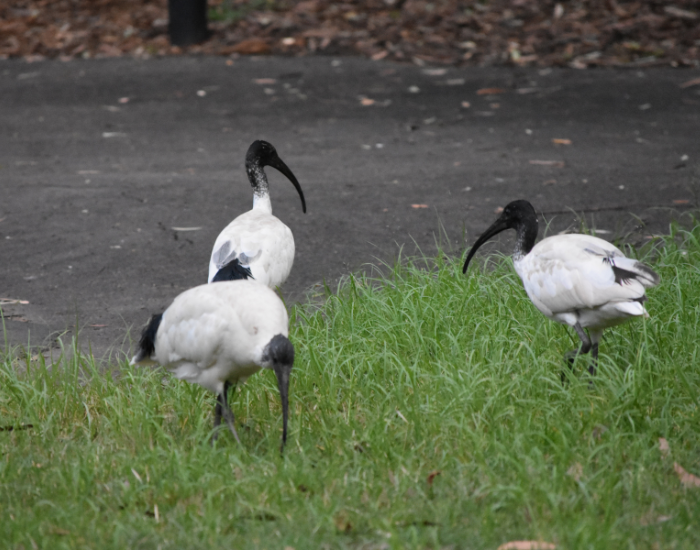
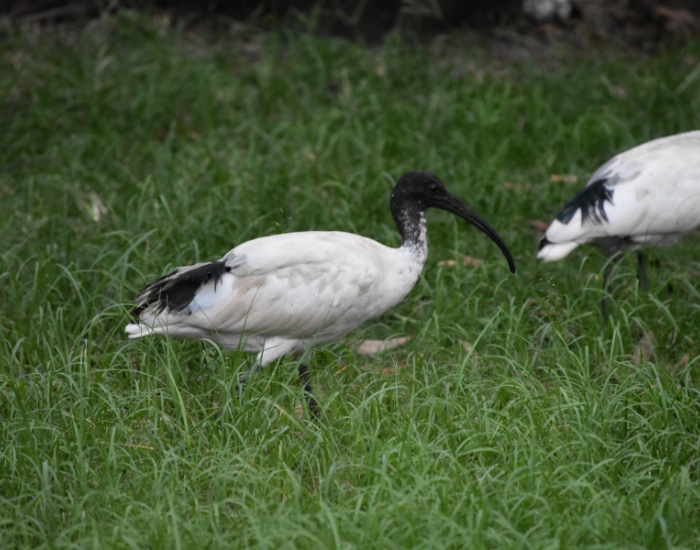
An iconic Bird of Australia, or at least for me. The Australian white ibis tells one of the most interesting adaptation stories in modern ornithology. Originally, these birds inhabited inland wetlands and coastal estuaries across Australia. However, as wetlands disappeared due to development, these ibises moved to cities.
Today, Australian white ibis are ubiquitous in urban parks and outdoor dining areas. Their shift from eating marine worms in marshes to eating leftover pizza demonstrates remarkable evolutionary flexibility. While some view them as pests, biologists see brilliant adaptation.
Despite their “bin chicken” reputation, Australian white ibis still maintain many natural behaviors. They roost in large groups in trees, build nests during breeding season, and maintain social hierarchies.
Dive deeper into oir blog about Animals in Australia and some of the most unusual mammals, the marsupials.
9. The Hermit Ibis: A Conservation Success Story
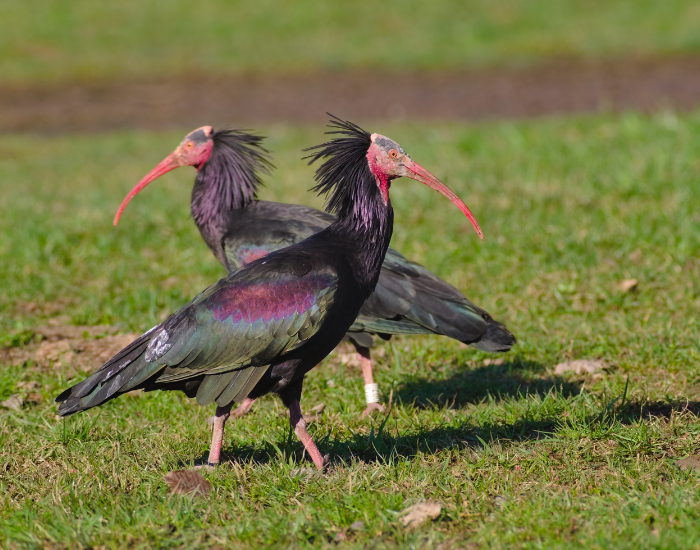
The hermit ibis, also called the Northern Bald Ibis, is one of the world’s most endangered ibis species. Unlike their water-loving cousins, these birds prefer semi-arid habitats and nest on cliff ledges.
For decades, hermit ibis populations declined dramatically. By the 1990s, fewer than 250 wild birds remained. However, intensive conservation efforts have brought them back from the edge. Scientists used creative techniques, including “human-led migration” where pilots in microlight aircraft teach captive-bred birds their traditional migration routes.
Today, hermit ibis numbers are slowly increasing. While they were downlisted from Critically Endangered to Endangered in recent years, they remain one of the rarest birds in the Palearctic. Their recovery is a testament to what international cooperation can achieve.
10. Breeding Season: Mega-Colonies and Parental Care
During breeding season, ibises gather in massive colonies. These colonies can include thousands of pairs and often contain multiple species of wading birds.
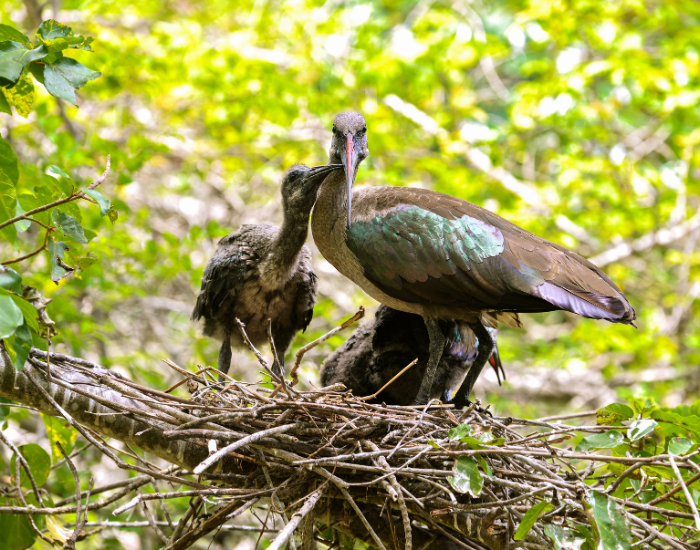
Both males and females share nesting responsibilities. Males typically gather nesting material while females construct the nest structure. Nests are built in trees, shrubs, or thick reed beds.
A typical clutch contains 2-4 eggs, though some species lay up to 6 eggs. Both parents incubate the eggs and feed the chicks after hatching. Young ibises, called chicks, require intensive parental care for several weeks.
Nesting season is a frantic period of foraging. Parents make countless trips to feeding areas, returning with insects, crustaceans, fish, and other prey.
11. Social Behavior: Flocks, Flying, and Foraging
Ibises are highly social birds. They gather in large groups for foraging, roosting, and flying. Watching a flock of ibises flying in V-formation is a lesson in aerodynamics. This formation reduces wind resistance.
Within their groups, clear social hierarchies exist, especially during foraging. “Scout” birds often lead the way into new mudflats or estuaries. Their social behavior is a survival strategy. More eyes mean better chances of spotting predators like snakes or birds of prey.
Ibises also communicate through various vocalizations. During breeding season, males perform courtship displays involving bowing and bill-clapping.
12. Conservation: Protecting Wetland Ecosystems
Ibises depend heavily on wetlands, marshes, and estuaries. These habitats provide the insects, crustaceans, and fish that sustain ibis populations. Unfortunately, wetlands worldwide face serious threats from development, pollution, and climate change.
Conservation efforts for ibises focus on protecting wetland habitats. Organizations like the IUCN and National Audubon Society monitor ibis populations. In the United States, the Migratory Bird Treaty Act protects native ibis species.
Some ibis species face more urgent conservation challenges. The hermit ibis remains critically endangered. Wetland conservation benefits entire ecosystems. When we protect marshes for ibises, we also protect habitat for countless other species.
Where Are Ibises Found? A Global Distribution
Ibises inhabit wetlands, forests, and plains in warm regions worldwide.
North America: The white ibis dominates the Southeastern United States, particularly Florida. The white-faced ibis inhabits western states. Glossy ibises appear along the Atlantic coast.
South America: The scarlet ibis paints coastal wetlands bright red. Several other species inhabit the continent’s diverse wetlands and grasslands.
Europe and Asia: Glossy ibises range across southern Europe and Asia. The hermit ibis now survives only in small populations.
Africa: Sacred ibis, glossy ibises, and several endemic species thrive across the continent. However, sacred ibis are extinct in Egypt despite their ancient significance.
Australia: The Australian white ibis and glossy ibises inhabit wetlands and urban areas across the continent.
Ibises are often associated with wetlands in tropical and subtropical habitats, but some like to live in open meadows, farmlands, grasslands, and forests.
FAQs About Ibises
No. While both are long-legged wading birds, cranes belong to a different family. Ibises have distinctively curved bills, whereas cranes have straight bills.
While they share similar body types and habitats, ibises belong to their own family, Threskiornithidae.
Their diet includes insects, crustaceans, fish, frogs, beetles, marine worms, and in urban areas, human food waste.
In the wild, ibises typically live 15-20 years.
This nickname comes from their habit of foraging in urban garbage bins for food.
Conservation status varies by species. White ibis populations are stable, while hermit ibis are critically endangered.
Survivors of a Changing World
Whether you see them as sacred symbols or quirky urban neighbors, ibises are among the most resilient birds on the planet. Their ability to bridge the gap between wild estuaries and bustling cities demonstrates remarkable biological flexibility.
From the sacred ibis mummies of Egypt to the white ibis wading through Florida marshes, these birds have survived for millions of years. The scarlet ibis still paints South American wetlands red, while glossy ibises span continents.
The next time you see an ibis, whether in a pristine wetland or a city park—don’t just see a strange-looking bird. See a lineage that has endured mass extinctions and climate shifts. These curved-bill wonders remind us that wildlife doesn’t always exist in pristine wilderness. Sometimes, it survives right next to us.