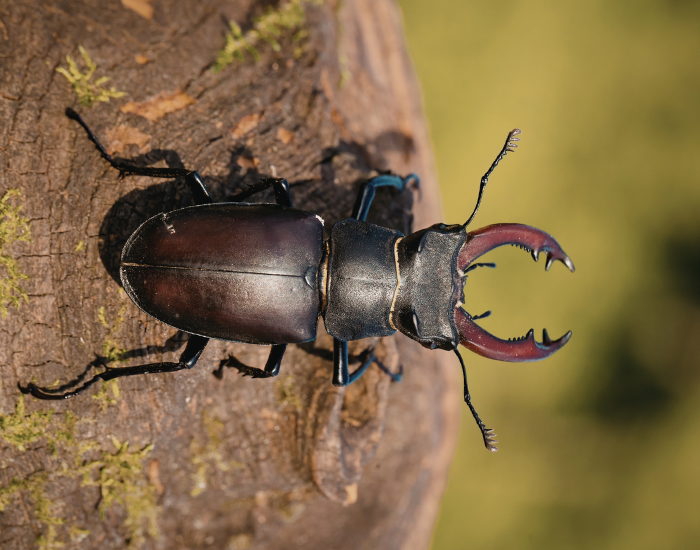
During my biology degree, I had an entomology professor who changed how I saw the world. His laboratory overflowed with insect collections, pinned wasps, honeybees, moths, and ants, plus drawers packed with beetle after beetle. One course assignment required us to build our own entomological collection. So there I was, net in hand, chasing different kinds of beetles through fields and forests. That experience made me appreciate these other insects like nothing else. Under the microscope, beetles looked like tiny aliens, iridescent armor, bizarre chewing mouthparts, and delicate wings folded beneath hardened covers called elytra. I ended up with a handful of colorful and jet-black specimens that I still think about years later.
So what is a beetle, exactly? Every beetle is an insect belonging to the order Coleoptera, the most species-rich group of animals on Earth. Scientists have described roughly 400,000 beetles species so far, yet estimates suggest the true number of beetle species could exceed 1.5 million. That variety of beetles is staggering, they account for about 25% of all known animal species. To see where beetles sit among the insects on the tree of life, open my phylum explorer.
How many kinds of beetles are there? More than all plant species combined. With so many different beetle species across so many beetle families, narrowing down a must-see list felt almost impossible. Here are 15 that deserve your attention.
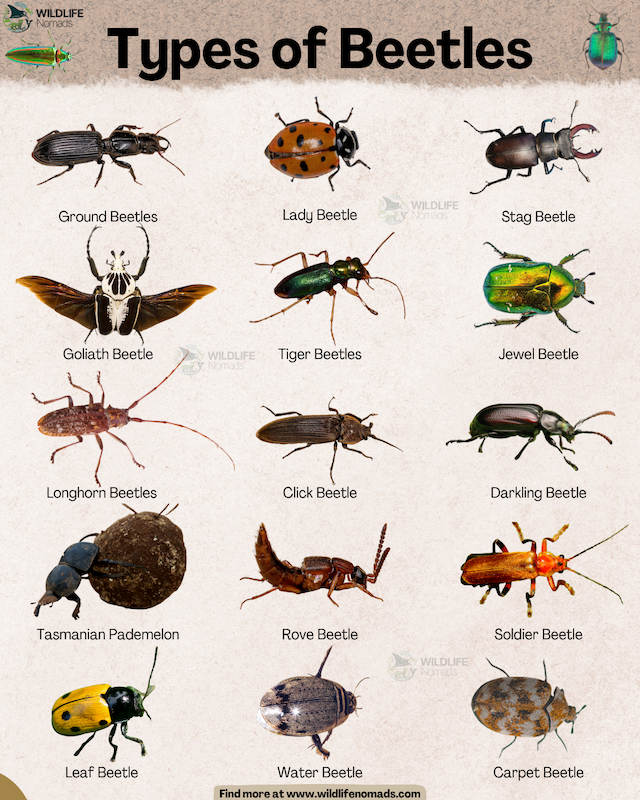
1. Ground Beetles (Family Carabidae)
Ground beetles rank among the most abundant predatory beetles on the planet. The family Carabidae contains over 40,000 described species, making it one of the largest beetle families. Most ground beetles are nocturnal hunters. They patrol leaf litter and soil surfaces in search of slugs, snails, and other insects.
I’ve turned up ground beetles under rocks and logs in Mexico, Sweden and recently on my lap around Australia. Their speed is impressive, many ground beetles sprint across the forest floor fast enough to outrun prey in open pursuit. As beneficial predators, ground beetles help farmers by consuming agricultural pests like aphids and caterpillars. Adult beetles in the family Carabidae feed on invertebrates and seeds, while beetle larvae hunt through soil and plant debris.
Compared to many other insects in gardens, ground beetles deliver unmatched pest control. Not all beetles get recognition, but ground beetles earn it through sheer ecological importance. Ground beetles share leaf litter habitat with other invertebrates like centipedes, spiders, and checkered beetles. You can find ground beetles in almost any green space, from urban parks to mountain forests.
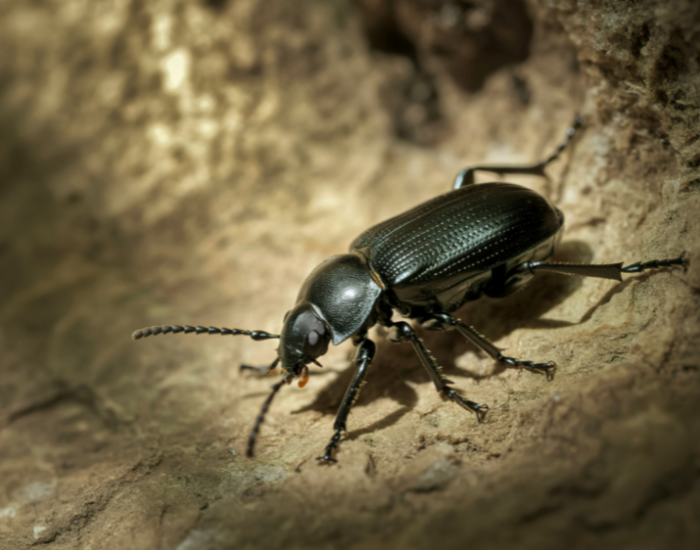
2. Lady Beetles (Ladybird Beetles)
Lady beetles, also called ladybird beetles in much of the world, rank among the most recognized beetle species alive. Over 6,000 species exist worldwide, and most beetles in this family serve as voracious predators of aphids and scale insects. A single lady beetle can devour hundreds of aphids per week, outperforming most other insects used in biological control.
Many species of lady beetles sport bright warning colors: reds, oranges, and yellows dotted with black spots. That coloring signals toxicity to birds and other species that might eat them. Ladybird beetles undergo complete metamorphosis, and their larvae look nothing like the rounded adults, they resemble tiny, spiny alligators. Lady beetles lay eggs near aphid colonies so larvae feed immediately after eggs hatch. Not all of them hunt, though. The Mexican bean beetle and the 28-spotted potato ladybird eat plants, and some species graze on mildew.
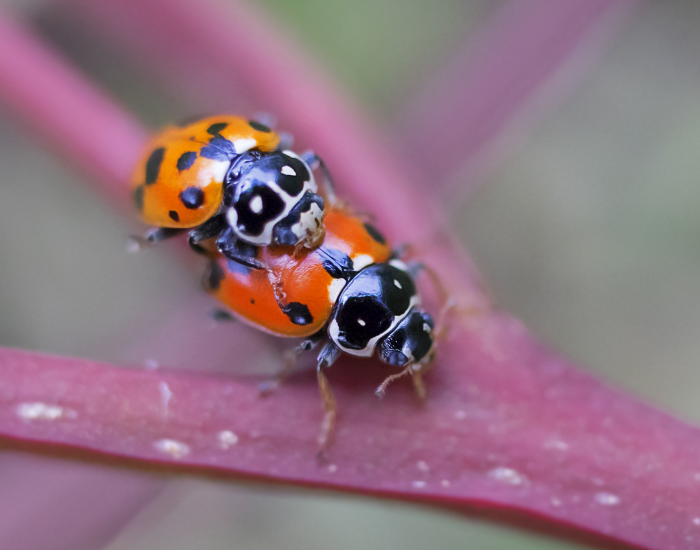
3. Stag Beetle
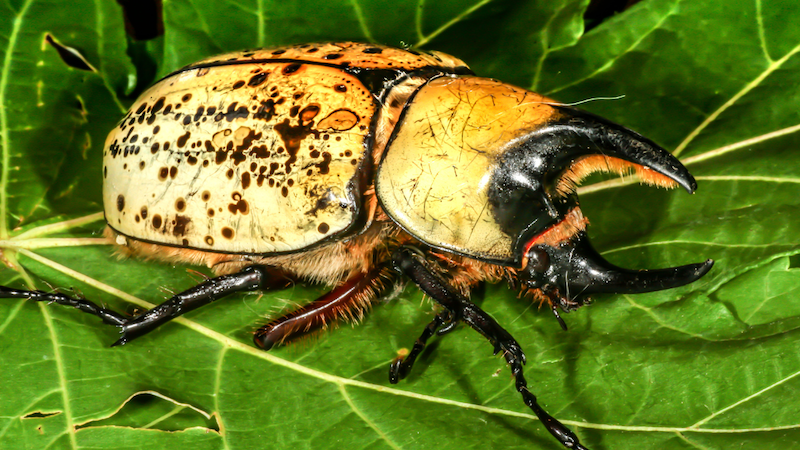
The stag beetle earns its name from the male’s enormous mandibles, which resemble antlers. Over 1,200 stag beetle species exist globally, and many beetles in this group depend on dead wood and rotting wood for their larval stage. Stag beetle larvae spend years, sometimes up to seven, feeding inside decaying logs and rotten wood before pupating into adults.
Males use those oversized jaws to wrestle rivals during mating season. The fights look dramatic but rarely cause injury. I’ve watched footage of European stag beetles grappling on tree bark, each trying to flip the other off the branch. Adult stag beetles primarily feed on tree sap and overripe fruit. Females dig down into the soil beside buried, rotting stumps and lay their eggs there. The larvae then spend years chewing through the decaying wood.
4. Goliath Beetle
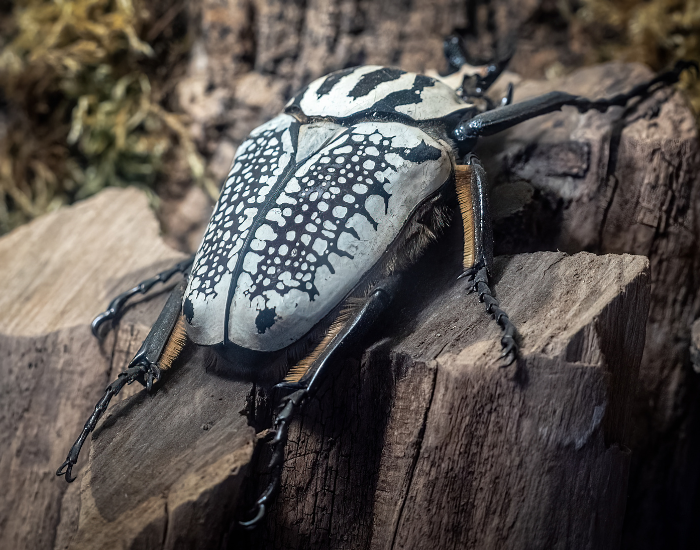
The goliath beetle is one of the heaviest beetles on Earth. Adults can weigh 50 to 60 grams, and larvae can top 100 grams, roughly the weight of an apple. Adults reach 11 centimeters in length, with striking black-and-white patterning across their thorax. Five goliath beetle species exist, all native to tropical Africa.
Goliath beetle larvae feed on decaying organic matter in the forest floor, recycling nutrients back into the soil. Adults feed on tree sap and fruit, using their chewing mouthparts to scrape bark surfaces. Males sport a Y-shaped horn used to pry rivals away from feeding sites. These beetles undergo complete metamorphosis, spending months in a pupal chamber of compacted earth.
5. Tiger Beetles
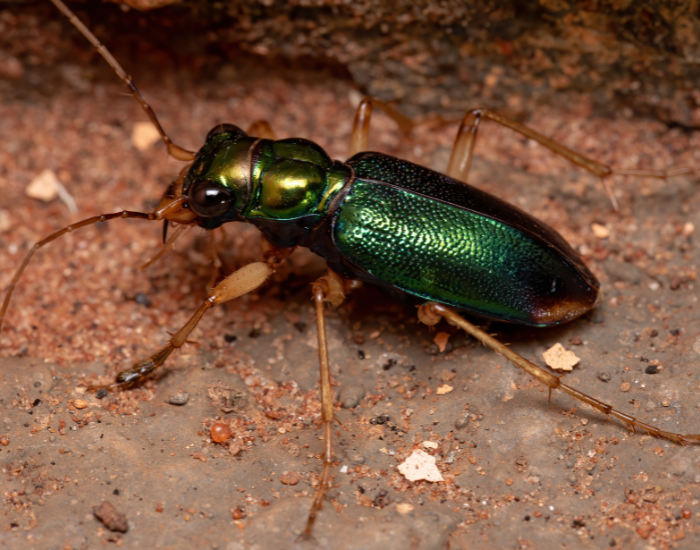
Tiger beetles are the cheetahs of the insect world. The fastest tiger beetles can sprint at 9 kilometers per hour, roughly 125 body lengths per second. That speed makes them fearsome predatory species among terrestrial beetles. Unlike many other insects that ambush prey, tiger beetles hunt by sight and chase.
More than 2,800 tiger beetle species exist worldwide, often in sandy or open habitats. Their metallic green, blue, and bronze coloring makes them visually stunning. Tiger beetles lay eggs in individual burrows, and the larval stage is equally predatory, larvae wait in vertical tunnels and ambush passing insects.
6. Jewel Beetles (Metallic Wood Boring Beetles)
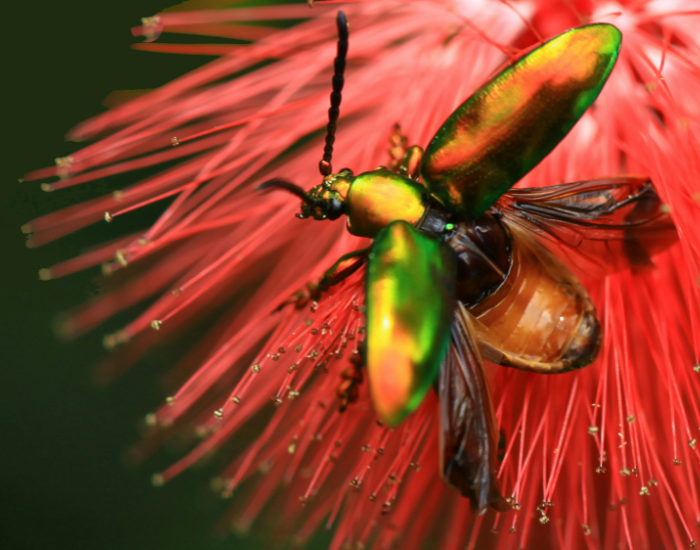
Jewel beetles belong to the family Buprestidae, and they fully earn their name. Their exoskeletons shimmer with metallic green, copper, blue, and gold iridescence. Cultures across Asia have used jewel beetle wing cases in jewelry and textile embroidery for centuries. These metallic wood boring beetles represent some of the most visually striking other insects on the planet.
Around 15,000 species exist in this family, making them one of the more diverse beetle families. As wood boring beetles, their larvae bore into tree bark and wood, feeding beneath the surface. Adults feed on pollen, nectar, and foliage, some even pollinate flowers in the process. One group, the fire beetles (Melanophila), can sense a forest fire from kilometres away using infrared pits on their bodies. They fly towards the smoke, because freshly burnt trees are perfect for laying eggs.
7. Longhorn Beetles (Long Horned Beetles)
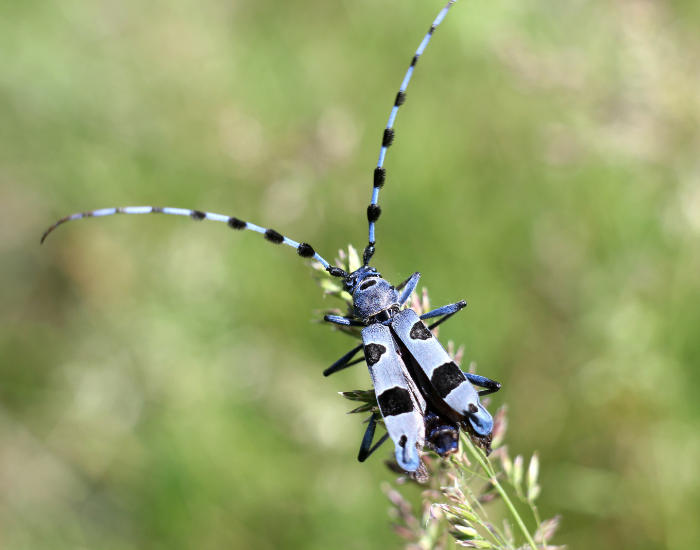
Longhorn beetles get their common name from spectacularly long antennae, which can exceed the body’s length. The family Cerambycidae includes over 35,000 described species, with scientists identifying new species regularly. Long horned beetles appear on every continent except Antarctica. Interestingly, weevils of the family Curculionidae, another massive beetle family, sometimes get confused with longhorn beetles because both groups bore into wood.
Most longhorn beetle larvae bore into dead wood, rotten wood, and sometimes living trees. Their tunneling creates beetle gallery patterns visible beneath tree bark, winding channels that aerate wood and speed decomposition. Adults feed on pollen, bark, and plant roots in some species. Many longhorn beetles display striking color patterns: blacks and yellows, reds and blues, or subtle bark-like camouflage.
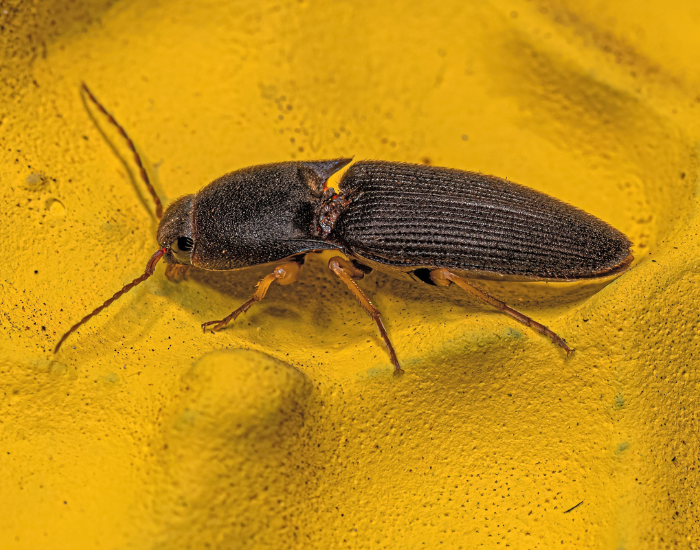
8. Click Beetles (Family Elateridae)
Click beetles perform one of the most entertaining tricks among other insects. When flipped onto their backs, beetles in the family Elateridae snap a spine on their thorax into a groove, launching themselves airborne with an audible click. That mechanism generates a force of over 300 Gs, among the highest in the animal kingdom.
Roughly 10,000 click beetle species exist worldwide. Most beetles in this family have elongated, somewhat flattened bodies with functioning hind wings for flight. Their larvae, called wireworms, live in soil and feed on plant roots and seeds, making some click beetle species notable agricultural pests. Adult beetles eat pollen, nectar, and soft plant material. The family Elateridae also includes bioluminescent species in tropical regions.
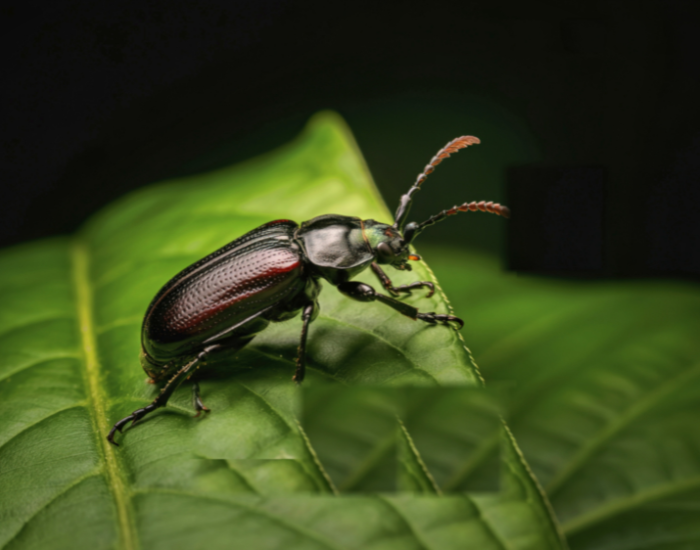
9. Darkling Beetles (Tenebrionidae)
Darkling beetles form one of the most diverse beetle families, with over 20,000 species worldwide. The Tenebrionidae darkling beetles thrive in deserts, forests, and even grain stores. If you’ve ever kept mealworms as pet food, you’ve raised darkling beetle larvae.
Many darkling beetles have adapted to extremely arid environments. The Namib Desert’s fog-basking darkling beetle, for example, tilts its body into morning mist to collect water droplets along ridged elytra. That adaptation has inspired biomimicry research for water harvesting technology. Tenebrionidae darkling beetles typically feed on decaying organic matter, plant debris, and fungi. Most beetles in this family are black or dark brown, helping with thermoregulation.
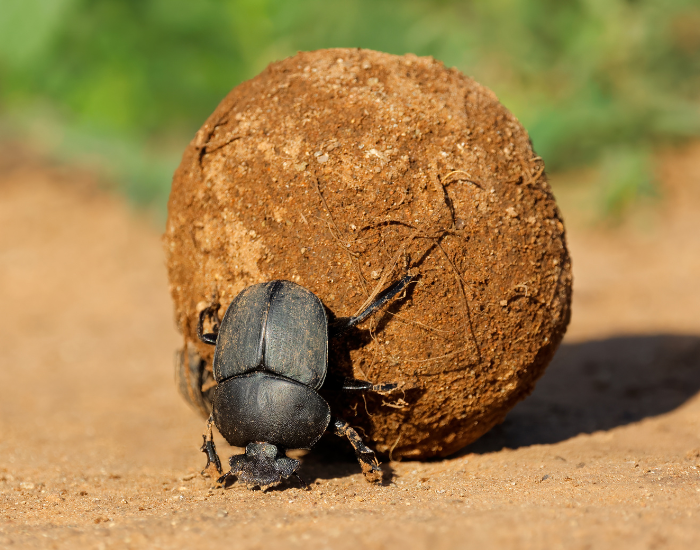
10. Dung Beetles (Family Scarabaeidae)
Dung beetles are ecosystem engineers. These beetles eat animal waste and bury it underground, aerating soil, distributing seeds, and recycling nutrients. They are key in the food web chain. Australia found out what happens without them. Native dung beetles evolved for dry marsupial droppings and couldn’t cope with cow pats. Paddocks were smothered and bush flies boomed, so between 1965 and 1985 the CSIRO brought in 43 dung beetle species from Africa and Europe. Twenty-three of them established and still work Australian paddocks today
Found across a remarkable range of environments, dung beetles thrive in the savannas of Africa, where they follow massive herds of elephants, buffalo, and wildebeest, as well as in tropical rainforests, grasslands, and even deserts, navigating using the milky way!
The family Scarabaeidae, which also includes broader scarab beetles, contains roughly 30,000 species of beetles. What is the purpose of beetles like these? They keep entire ecosystems functioning.
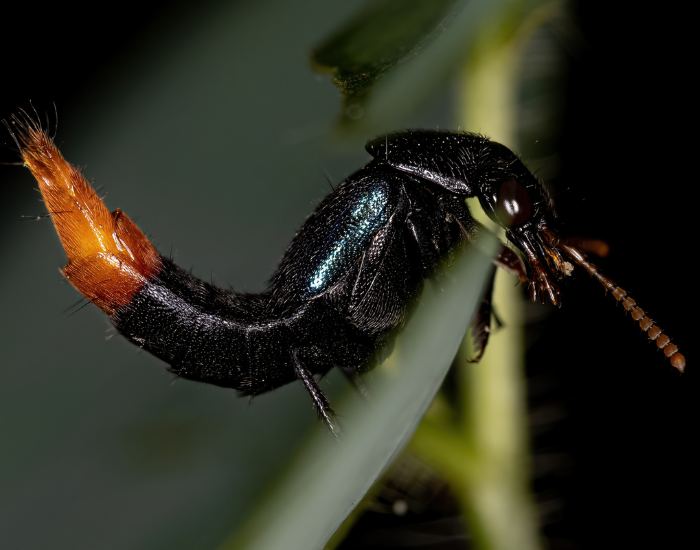
11. Rove Beetles
Rove beetles are one of the largest beetle families, with more than 66,000 described species, rivalling the weevils for the top spot. Many more are still waiting to be named. Most rove beetles look nothing like typical beetles, they have shortened elytra that expose flexible abdomens, giving them an ant-like appearance. Their hind wings fold with origami-like precision beneath those tiny covers.
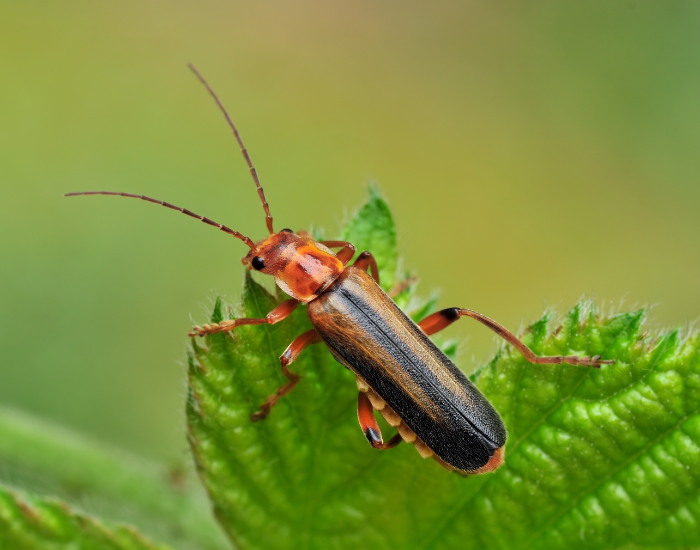
12. Soldier Beetles
Soldier beetles earned their military nickname from their resemblance to British red-coated soldiers. These soft-bodied beetles are common across meadows and gardens, where adults feed on pollen and nectar. Soldier beetles also serve as predators, catching aphids and small caterpillars on flower heads.
Over 5,000 soldier beetle species exist in the family Cantharidae. Their bright orange, red, and yellow coloring warns predators of chemical defenses. Soldier beetles produce toxic compounds that make them unpalatable to birds and other species that hunt other insects.
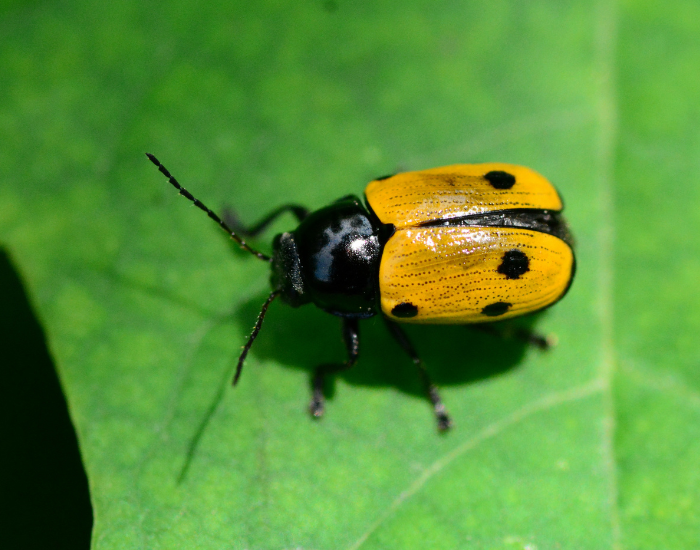
13. Leaf Beetles
Leaf beetles belong to the family Chrysomelidae, one of the largest beetle families with over 35,000 species. These beetles feed almost exclusively on plant tissue, with many beetles specializing on a single host plant. Leaf beetles display an extraordinary variety of colors, metallic green, golds, reds, and striped patterns.
Flea beetles, a subgroup of leaf beetles, earned their name from powerful hind legs that let them jump when disturbed. Other flea beetles specialize on crops like brassicas and potatoes, making them persistent agricultural pests. Leaf beetle larvae typically feed on leaves, stems, or plant roots depending on the species.
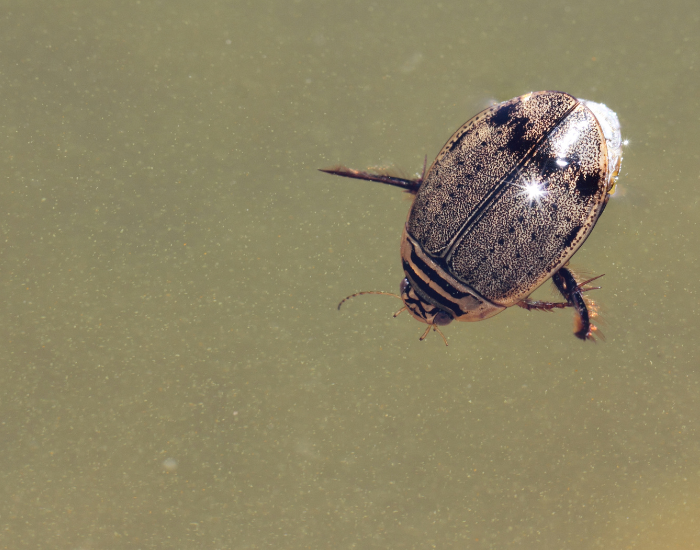
14. Water Beetles
While most beetles are terrestrial beetles, several beetle families have conquered freshwater habitats. Diving beetles, whirligig beetles, and water scavenger beetles all spend much of their lives submerged. Water beetles carry air bubbles beneath their elytra, functioning like a scuba tank. Their hind wings remain fully functional, allowing water beetles to fly between ponds and lakes.
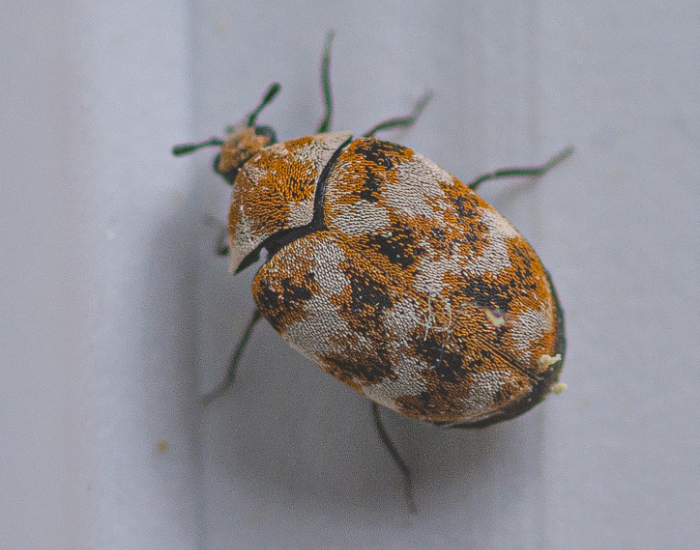
15. Carpet Beetles
Carpet beetles may be the most commonly encountered beetles in human homes, yet people rarely recognize them. These small, rounded beetles in the family Dermestidae feed on keratin, the protein in wool, fur, feathers, and dried animal products. That diet makes carpet beetles a household pest and a museum curator’s nightmare.
FAQs about Beetles
Most beetle bugs pose no threat to humans. The vast majority of the roughly 400,000 known species of beetles are harmless. A handful of species like blister beetles produce irritating chemicals, and some — like wood boring beetles — can damage property. However, most beetles are either neutral or beneficial to people, serving as pollinators, decomposers, and pest controllers.
Many cultures consider beetles good luck. Ancient Egyptians revered scarab beetles as sacred symbols of rebirth. In parts of Europe, ladybird beetles landing on you signals good fortune. The association between beetles and luck stretches back thousands of years across multiple civilizations. Whether or not you believe in luck, encountering many beetles often signals a healthy, thriving ecosystem.
Yes, ladybugs are absolutely beetles. They belong to the family Coccinellidae within the order Coleoptera. Ladybugs — more accurately called lady beetles or ladybird beetles — share all defining characteristics of beetles: chewing mouthparts, hind wings folded under protective elytra, and complete metamorphosis through egg, larva, pupa, and adult stages. They rank among the most familiar beetle breeds worldwide.
Let’s Keep the Beetles Safe
Every beetle on this list represents just a fraction of the staggering diversity within Coleoptera. From predatory ground beetles patrolling your garden to goliath beetles lumbering through African rainforests, these animals shape ecosystems in ways most people never notice. Many beetles fill roles we depend on, pollinating crops, recycling waste, and controlling pests. Next time you flip a log or walk through a meadow, slow down and look closely.
Wildlife Nomads Challenge
Name That Beetle
Twelve photos, all from this article. Name each beetle, then scroll back up to meet it properly.
References:
Stork, N. E. (2018). How many species of insects and other terrestrial arthropods are there on Earth? Annual Review of Entomology, 63, 31–45. https://doi.org/10.1146/annurev-ento-020117-043348
Dacke, M., Baird, E., Byrne, M., Scholtz, C. H., & Warrant, E. J. (2013). Dung beetles use the Milky Way for orientation. Current Biology, 23(4), 298–300. https://doi.org/10.1016/j.cub.2012.12.034
Stork, N. E., McBroom, J., Gely, C., & Hamilton, A. J. (2015). New approaches narrow global species estimates for beetles, insects, and terrestrial arthropods. Proceedings of the National Academy of Sciences, 112(24), 7519–7523. https://doi.org/10.1073/pnas.1502408112
McKenna, D. D., Shin, S., Ahrens, D., et al. (2019). The evolution and genomic basis of beetle diversity. Proceedings of the National Academy of Sciences, 116(49), 24729–24737. https://doi.org/10.1073/pnas.1909655116
Nichols, E., Spector, S., Louzada, J., Larsen, T., Amezquita, S., & Favila, M. E. (2008). Ecological functions and ecosystem services provided by Scarabaeinae dung beetles. Biological Conservation, 141(6), 1461–1474. https://doi.org/10.1016/j.biocon.2008.04.011
Nørgaard, T., & Dacke, M. (2010). Fog-basking behaviour and water collection efficiency in Namib Desert Darkling beetles. Frontiers in zoology, 7, 23. https://doi.org/10.1186/1742-9994-7-23
Thaenasa, A., Pradit, N., Pilap, W., Jaroenchaiwattanachote, C., Wongpakam, K., Inkhavilay, K., Saijuntha, J., Tawong, W., Suksavate, W., Tantrawatpan, C., & Saijuntha, W. (2025). Exploring the Genetic Diversity of the Jewel Beetles Sternocera aequisignata Saunders, 1866, and S. ruficornis Saunders, 1866 (Coleoptera: Buprestidae) in Thailand and Lao PDR. Insects, 16(3), 322. https://doi.org/10.3390/insects16030322