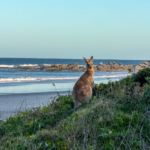

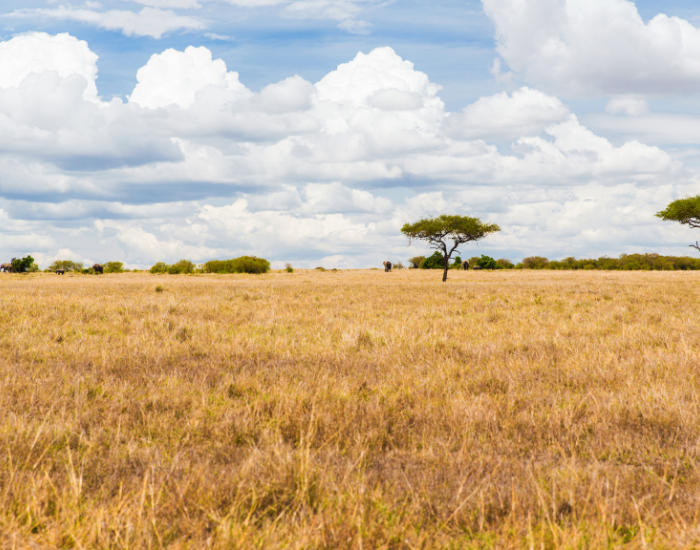
This vast, iconic wilderness, where kangaroo grass stretches to meet scattered acacia trees, is known as the savanna biome. It is a place of breathtaking drama and delicate balance, the stage for one of nature’s grandest spectacles. Many savanna plants, including a wide variety of grasses, shrubs, and trees, thrive here, each uniquely adapted to the seasonal rainfall and frequent fires that define the savanna environment.
We often think of savannas purely through wildlife documentaries. However, they are so much more! They are global powerhouses, crucial players in Earth’s climate system, and home to some of the most resilient animals you will ever encounter.
This post is a deep dive into the essence of the savanna biome. In addition, we’ll explore from characteristic climate cycles to the keystone species that shape its destiny. We’ll discover amazing facts, essential ecosystem services, and crucial conservation efforts.
What is a Savanna? The World’s Transitional Treasure
Let’s start with the basics. What exactly defines this remarkable ecosystem?
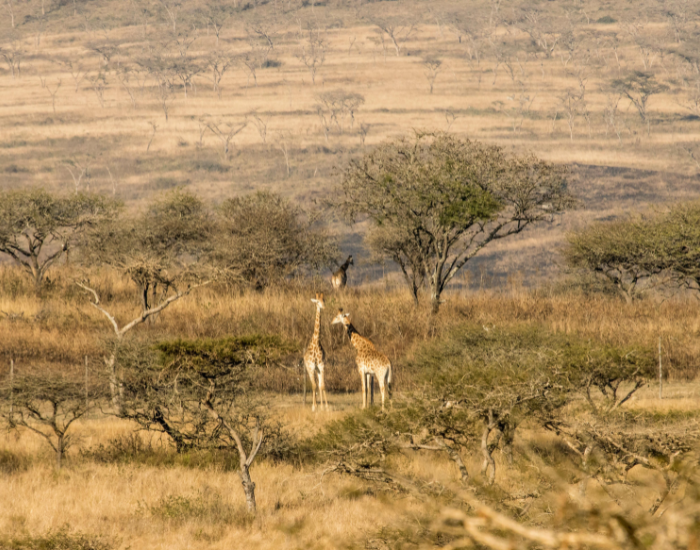
The savanna biome is a mixed woodland-grassland ecosystem. It’s a vast, open terrain where continuous savanna grass is occasionally punctuated by individual trees, often hardy species like the iconic baobab trees or thorny acacia trees. These individual trees are specially adapted to the savanna environment, with features such as deep roots for accessing underground water and the ability to store water during dry periods. Rather than forming dense forests, these trees are typically scattered or grouped in small groves, which contribute to the unique structure and biodiversity of the savanna landscape. Critically, it is not a forest, and it is not a desert. Instead, it’s a stunning, life-rich transition zone found in tropical and subtropical regions.
The name ‘savanna’ originates from the Spanish word sabana, meaning ‘treeless plain.’ However, this is somewhat misleading. The defining characteristic is actually a grassland biome with an open woodland canopy. Savannas are classified as tropical grasslands, characterized by warm temperatures year-round and distinct seasonal rainfall patterns. For example, many trees like acacia trees are prevented from forming a closed forest canopy primarily by two recurring events: the distinct wet and dry season cycle and fire.
You can tell much about an ecosystem by savanna climate. The savanna climate is typically a tropical wet and dry climate, sometimes called the Sudan Climate. It’s warm to hot year-round. Nevertheless, annual rainfall is intensely seasonal:
The Wet Season: During the rainy season, torrential rain falls turn the landscape into a green ocean. Tall grasses shoot up rapidly, and water holes fill. This is the season of abundance. Moreover, wetter summers bring life back to the dry grasses.
The Dry Season: The dry season lasts several months. Temperatures soar, and most savanna grass becomes parched and yellow. The land often cracks under the sun’s intense heat. Therefore, this forces a natural, desperate migration for water. In fact, the dry season occurs 11-12 times less frequently in wet years, but remains the defining challenge.
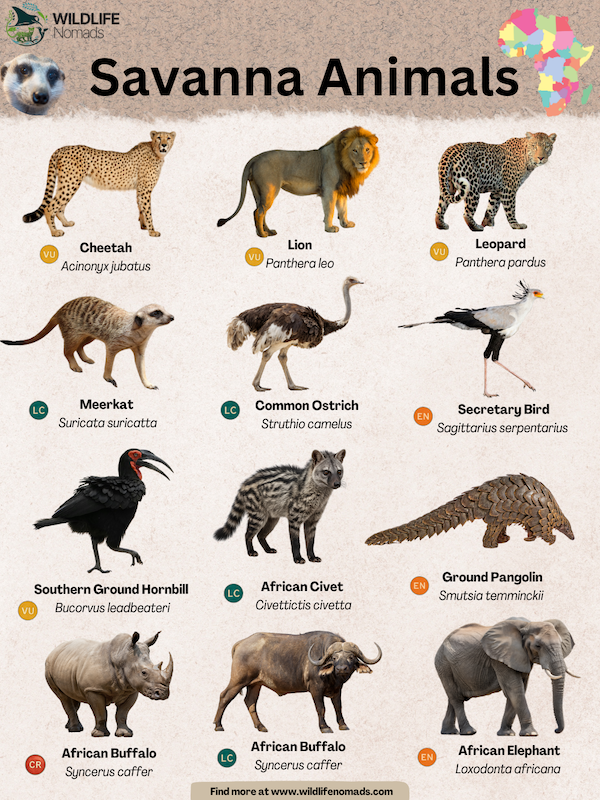
Where in the World are the Savannas?
When you hear the word, your mind likely leaps to Africa. And you’d be right, as the African savanna is the largest and most famous. Nevertheless, savanna biomes facts reveal a much more global presence.
The African Savanna: Found in countries across Equatorial Africa like Kenya, Tanzania (home of Serengeti National Park), Botswana, and South Africa (home of Kruger National Park). East African savannas are quintessential tropical and subtropical savannas. In addition, these savannas located in southern hemisphere regions experience drier winters.
The South American Savanna: Known as the Cerrado in Brazil, one of the world’s most biologically rich savanna biomes. There’s also the Llanos in Venezuela and Colombia.
The Australian Savanna: Vast stretches cover Northern Australia, including the Kimberley region. Southeast Australia also hosts savanna habitat, characterized by eucalyptus and kangaroo grass. Mediterranean savannas appear in parts of Southeast Asia too.
Indian Savannas: Areas of Northern India also feature savanna characteristics.
In total, the savanna biome covers approximately 20% of Earth’s land area. This shows just how crucial it is to global ecology. The world’s savannas are vital open, grassy ecosystems that support a wide range of grazing animals, and both human and animal activities, such as grazing and land management, have significantly transformed these landscapes and their ecological balance.
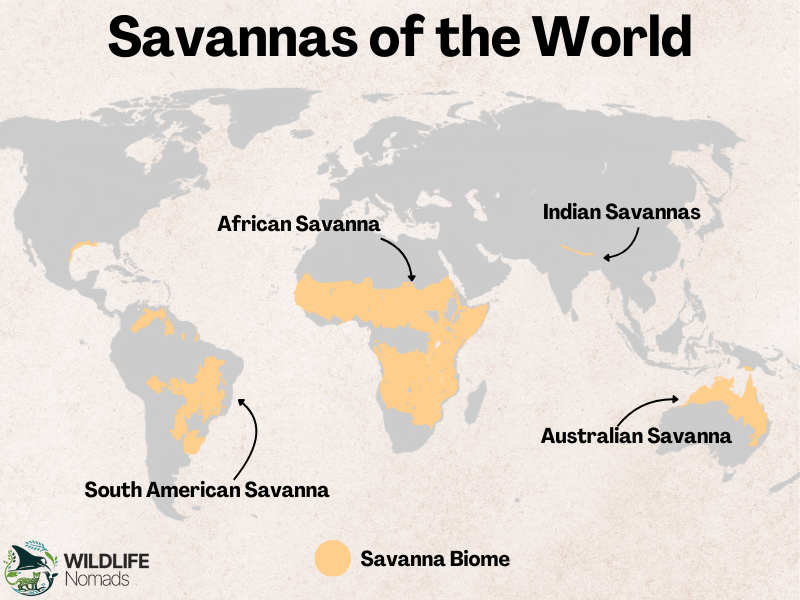
The Magnificent Tenants: Animals of the Savannas
The true magic lies in the density and diversity of wildlife. The open nature means speed and vigilance are paramount for survival. Savanna vegetation is a mix of grasses, shrubs, and low lying shrubs, which provide essential food and shelter for many animals. Here are some incredible animals and other species, each a master of seasonal challenges:
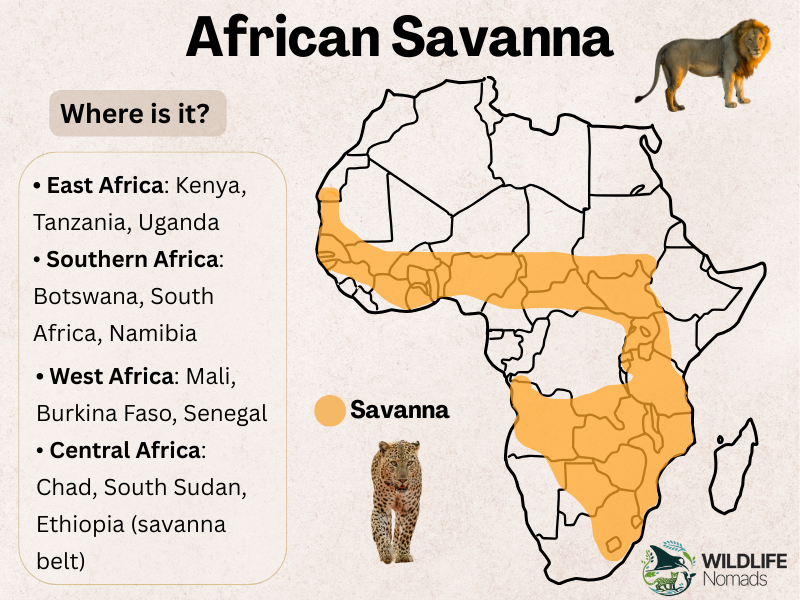
Want to Explore Every African Ecosystem?
Discover 50+ incredible species across savannas, rainforests, deserts, and wetlands in our comprehensive Animals of Africa Ecosystem Explorer ebook. From the hunting strategies of wild dogs to the secret lives of forest elephants, get the complete picture.
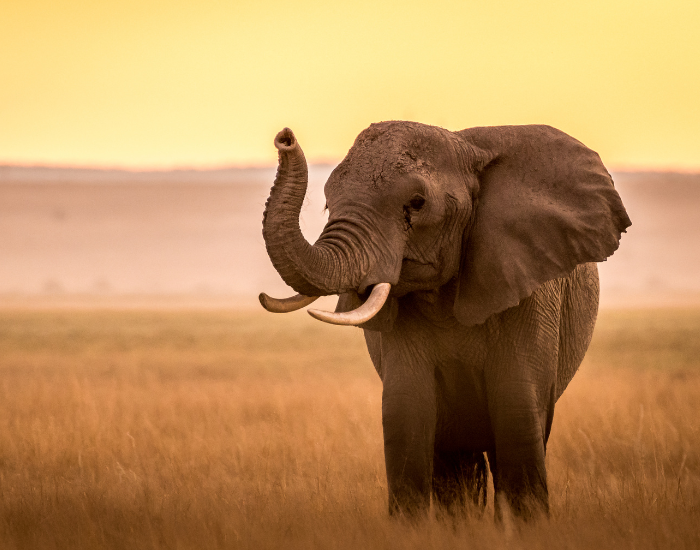
African Elephant (Loxodonta africana)
These gentle giants are the largest hoofed mammals on the planet and a true keystone species. Their immense size allows them to literally shape the landscape. For instance, African elephants push down scattered trees like baobab trees and strip bark from acacia trees (No wonder why they are one of the strongest and smartest animals on the planet). This prevents the grassland biome from becoming a dense forest. Crucially, during the punishing dry season, African elephants use their tusks and long legs to dig deep wells in dry riverbeds. This provides a vital lifeline for countless other animals, including grazing animals and hoofed animals.
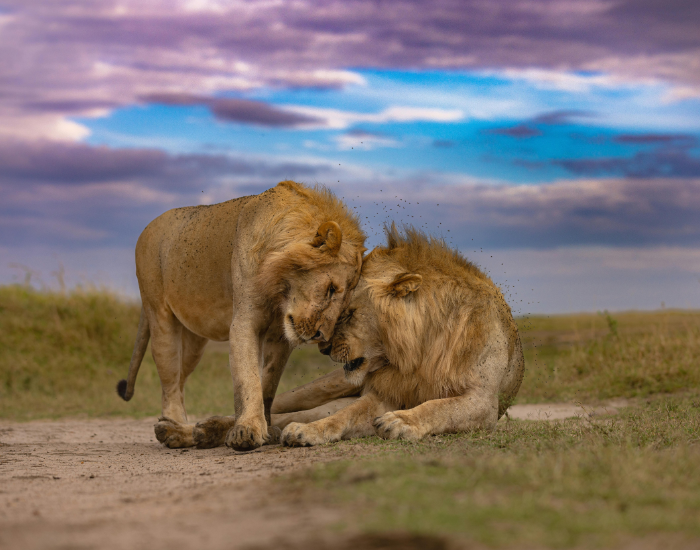
Lion (Panthera leo)
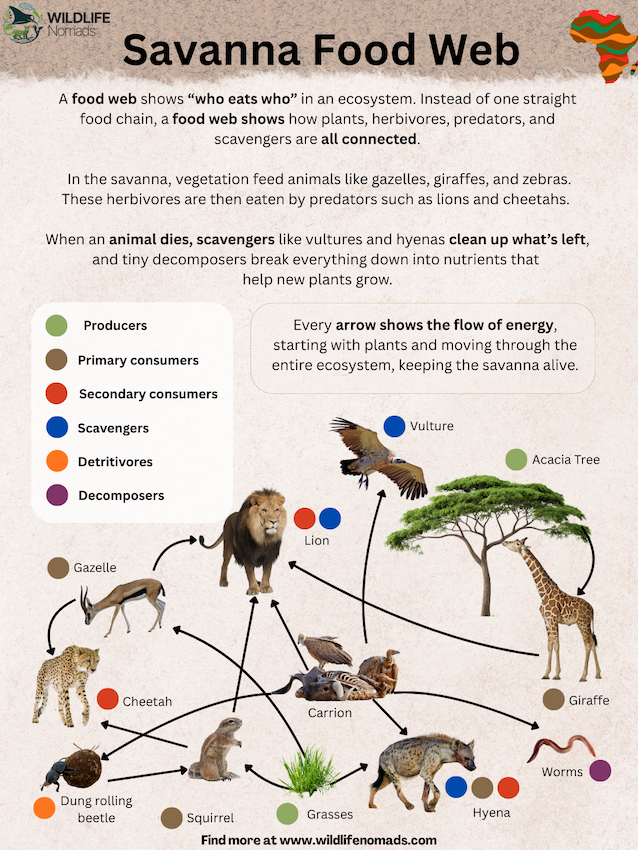
As the apex predator of the African savanna, the lion is an iconic symbol. Lions are unique among big cats for their high degree of social structure, living and hunting in prides. This adaptation suits the open plains perfectly. This group hunting strategy allows them to efficiently take down large, swift hoofed mammals like buffalo and giraffe. Their presence regulates the health and numbers of herbivore populations.
Cheetah (Acinonyx jubatus)
The cheetah, the fastest land animal, is a magnificent example of a specialist predator. Its slender body, long legs, and non-retractable claws are all evolutionary features designed for high-speed chases across the grassland biome. Unlike the lion, the cheetah relies on sheer velocity rather than brute strength. This speed is essential for survival in the savanna habitat, where there is little cover to ambush prey like the springbok.

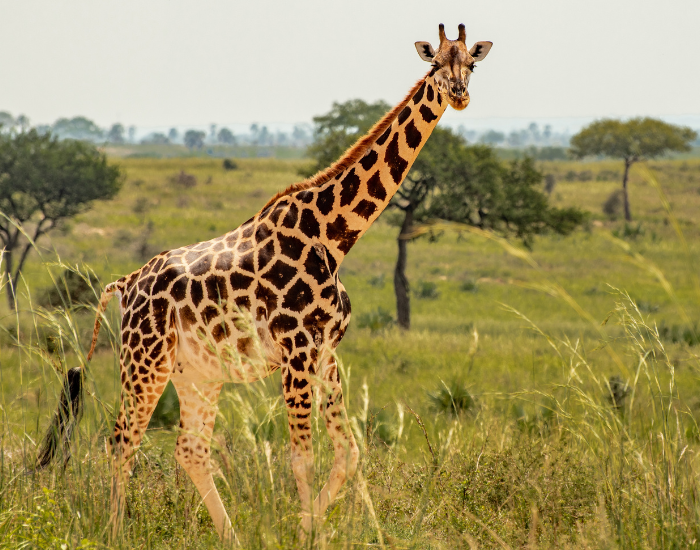
Giraffe (Giraffa camelopardalis)
The giraffe, the tallest land animal, occupies a unique niche. Their incredible height and long legs allow them to browse on the upper leaves of acacia trees and other woody plants, a food source entirely unreachable by other grazing animals. The acacia tree’s umbrella shape canopy maximizes sun exposure for its leaves and provides shade, which is an important adaptation to the savanna environment. By feeding on the tree canopy, giraffes reduce competition for grass on the ground. This creates space for species like wildebeest and zebra. Their ability to reach higher savanna vegetation is a key adaptation to survive when lower grasses turn to dry grasses in the dry season.
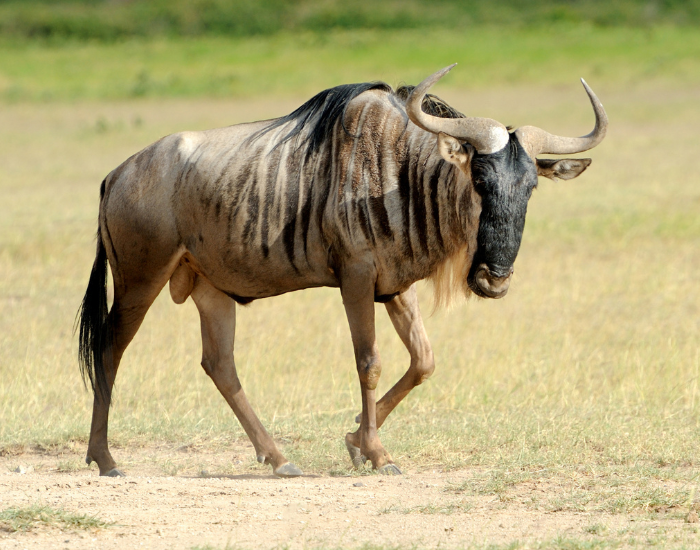
Blue Wildebeest (Connochaetes taurinus)
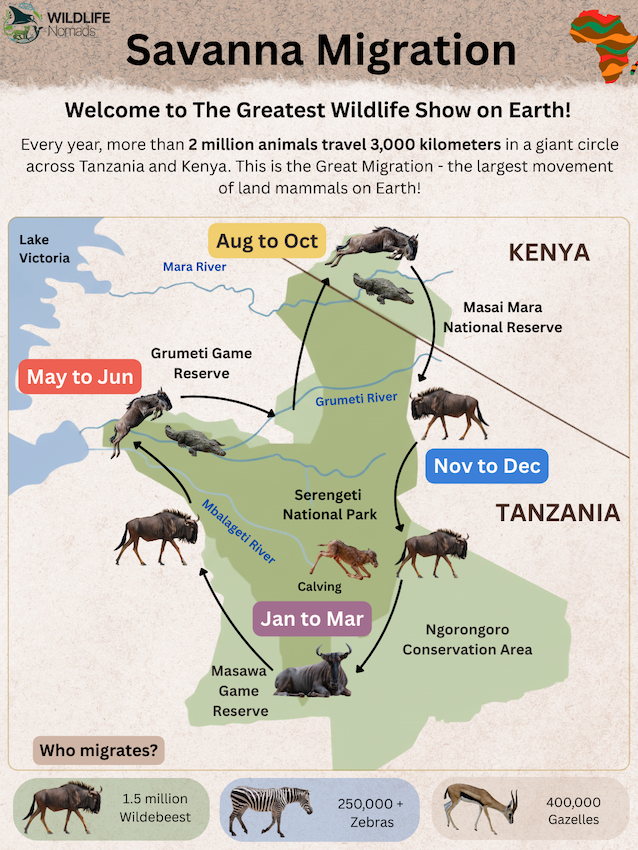
The wildebeest is perhaps the ultimate symbol of East African savannas, known for forming the massive herds of the Great Migration. This communal herding and migration is a direct adaptation to the pressures of the wet and dry season. They possess the instinct to travel hundreds of miles with long legs, following the seasonal rains to find new pastures. This constant movement prevents habitat loss and is vital for nutrient cycling and seed dispersal across the vast grassland biome.
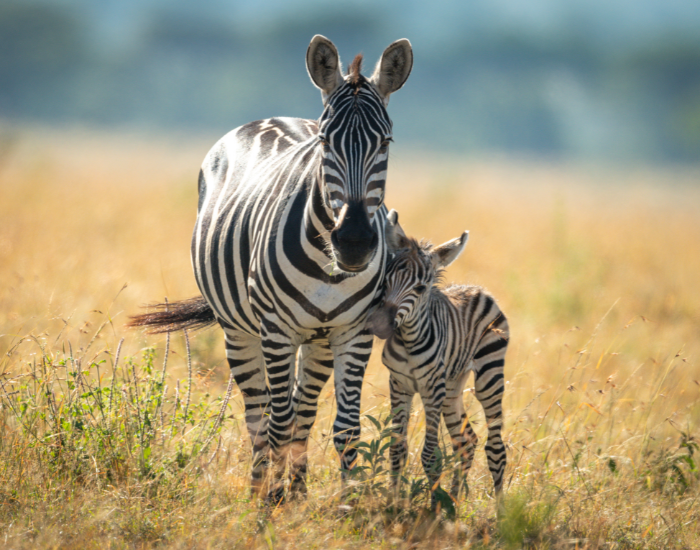
Zebra (Equus quagga)
Recognisable by their striking black and white stripes, zebras are robust hoofed mammals that often travel alongside wildebeest. Their adaptations are numerous: their digestive system can process the coarse, less nutritious parts that wildebeest reject. Moreover, their stripes are hypothesised to confuse predators and biting flies. They are an essential primary consumer, grazing heavily on tall grasses and acting as pioneers for other grazers who need shorter grass.
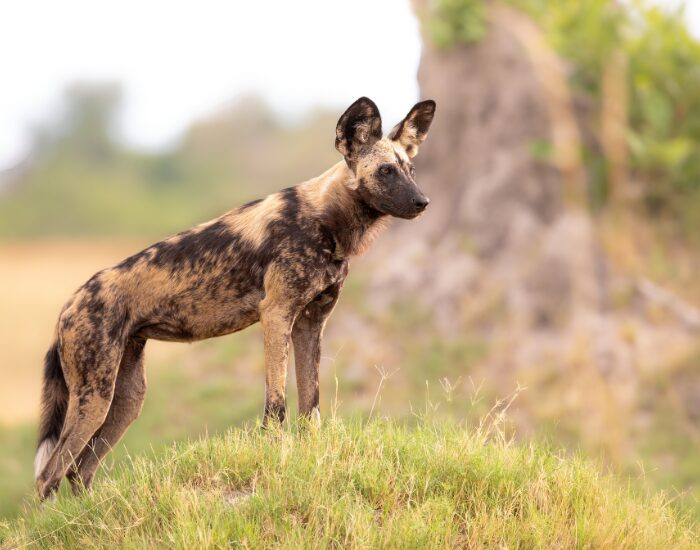
African Wild Dog (Lycaon pictus)
African wild dogs, one of the most endangered predators, exemplify the power of teamwork. These canines are highly social and hunt with intricate, choreographed precision. They use the open plains to run their prey to exhaustion, a clear advantage over solitary hunters. Their success rate is among the highest of any African predator (still not as good as the black footed cat, one of Africa’s wildcats). Therefore, they are critical to keeping large herds agile and disease-free. Protecting these African wild dogs is paramount to maintaining ecological integrity.
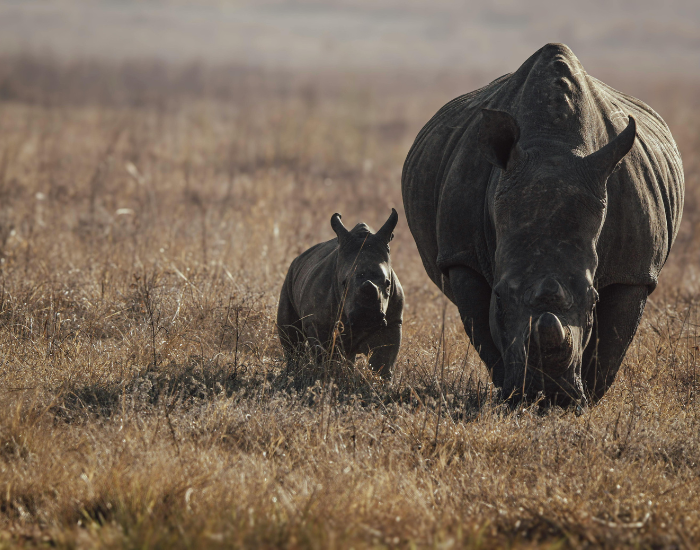
Rhinoceros (Black & White species)
As massive megaherbivores, both Black and White Rhinoceros are quintessential savanna residents. They play a significant role as either browsers (Black Rhino) or grazers (White Rhino). They possess thick, protective skin but still rely on mud wallowing to shield themselves from the sun and insects during hot, intense conditions. Their existence underscores the constant threats in savannas occur, as survival of rhinos is tragically reliant on intensive human conservation efforts against poaching.
Hippopotamus (Hippopotamus amphibius)
Though seemingly slow and placid, the hippopotamus is one of the most dangerous and surprisingly influential animals in savannas. While not technically hoofed mammals, their semi-aquatic nature is a genius adaptation to extreme heat and long periods without water. They spend the day submerged in rivers, emerging only at night to graze on tall grasses, an impressive adaptation to regulate body temperature during the relentless heat. Their nightly treks and immense waste deposits significantly impact both terrestrial and aquatic ecosystems.

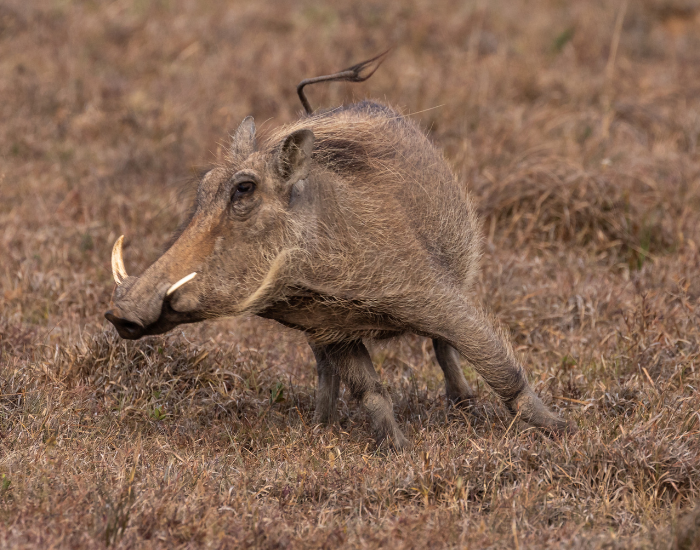
Warthog (Phacochoerus africanus)
The warthog, a common sight rooting around in dry grasses and bare ground, is a highly adapted member. With their characteristic tusks, these creatures are exceptional diggers, primarily foraging for roots, bulbs, and tubers buried beneath the ground, a vital food source when surface grasses wither. Their foraging activities help aerate the hard savanna soil, benefitting plant growth and demonstrating ecosystem engineering on a smaller scale than elephants.
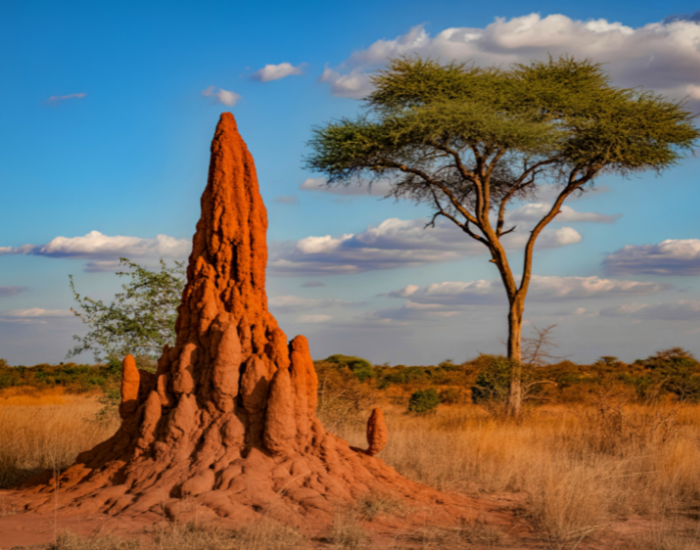
Termites (Various species)
Often overlooked, termites are among the most important residents. Their impressive mounds, sometimes towering several feet high, are not just homes but entire micro-ecosystems. They break down dead savanna vegetation, including tough, dry grasses, and cycle vital nutrients back into generally poor soils. These mounds provide shelter and unique microclimates for countless other species, animals plants, and even certain small predators, contributing significantly to biodiversity.
The Juggling Act: Five Essential Characteristics
To truly understand the savanna biome, we must look at the factors that maintain it. It exists in a perpetual state of flux, balanced on the razor’s edge between forest and true grassland.
1. The Alternating Wet and Dry Season
As mentioned, this is the most defining feature. The dry season is a trial by fire (literally, as we’ll see). In fact, the dry season dominates life for 11-12 months in some regions, while others experience more balanced cycles. Animals like African elephants use their knowledge and strength to dig ‘wells’ in dried riverbeds, providing a lifeline for countless other species—a classic example of a keystone species at work. This cycle creates conditions for wetter summers and drier winters in many regions. In some regions, such as parts of Asia and Australia, the monsoon season brings intense rainfall during specific months, shaping the savanna’s ecological cycles.
2. Fire: Nature’s Land Manager
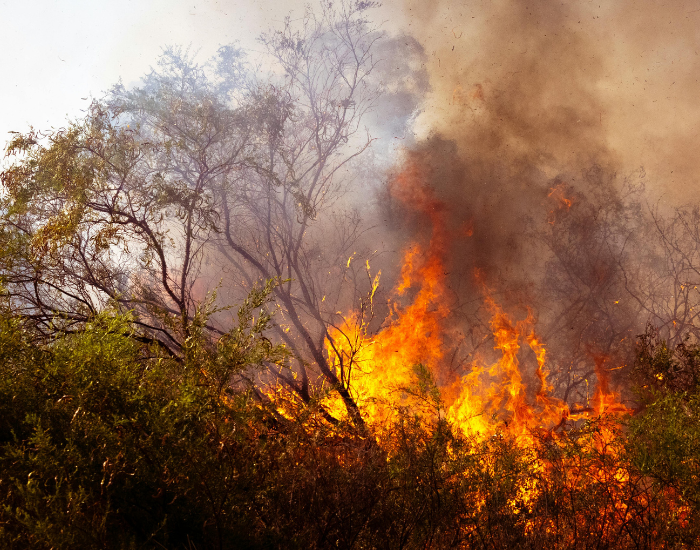
Natural wildfires, often sparked by lightning at the end of the dry season, are crucial. They clear out dead grass, prevent the accumulation of woody debris, and kill off many tree seedlings, which keeps the landscape open. This cyclical burning stimulates a rapid flush of fresh, nutrient-rich grass when rain falls return. Fire regimes, whether natural or managed, play a crucial role in maintaining the balance between grass and tree coverage in savannas by directly influencing grass growth. Far from being destructive, fire is an essential, renewing process that maintains the integrity of the grassland biome within savannas.
3. Grazing and Browsing Pressure
The sheer number of herbivores, from wildebeest and zebras to giraffes and buffalo, exerts massive pressure on savanna vegetation. This heavy grazing prevents grass from completely dominating. Moreover, it crucially limits tree growth of seedlings, contributing to the scattered trees pattern. Without these grazing animals, many savanna biomes would quickly transition into savanna woodlands or forests.
4. Lateritic and Waterlogged Soils
Savanna biomes facts often highlight the poor quality of soil. In many areas, heavy rainfall during the rainy season causes leaching of nutrients. In other areas, a hardpan close to the surface prevents deep root penetration, leading to waterlogging when rain falls. These challenging soil conditions, which cannot support a dense forest, are a key reason why scattered trees dominate over a continuous canopy.
5. High Biodiversity and Migration
The dynamic environment, constantly shifting between flood and drought, supports a vast array of species. The ability to migrate long distances is a key adaptation for many herbivores. This allows them to follow the rains. This is best exemplified by the Great Migration, where millions of wildebeest and zebras move in a massive, continuous search for water and green pasture. This movement sustains countless predators and scavengers along the way.
Beyond the Giants: The Savanna’s Unseen Science
My background as a biologist taught me that the biggest, most charismatic animals often distract us from critical science happening under our feet. The savanna biome is a perfect example. Grasses play a crucial role in these ecosystems, with a variety of species such as Rhodes grass contributing to the plant diversity that shapes ecological processes like fire regimes and grazing dynamics. New research is turning old assumptions on their head, particularly regarding climate change mitigation.
Ecosystem Services: More Than Meets the Eye
The savannas provide essential ecosystem services that benefit not just local wildlife, but the entire world:
Carbon Sequestration: The deep soil carbon storage is critical for global climate regulation. Climate change threatens this storage.
Water Filtration: Extensive grass root systems slow runoff, allowing water to store water and permeate soil. This naturally filters water before replenishing underground aquifers. Therefore, this helps conserve water during long periods.
Soil Conservation: Continuous grass cover prevents wind and water erosion, maintaining soil structure despite bare ground exposure during dry months.
Tourism: The wildlife spectacle is the foundation for eco-tourism. This provides crucial revenue for local communities and national economies, directly funding conservation efforts. For example, world’s savannas attract millions of visitors annually.
Savanna FAQ: Quick Facts
Many countries have savannas. These include large areas in Africa (Kenya, Tanzania, South Africa), South America (Brazil’s Cerrado, Venezuela’s Llanos), Southeast Asia, and Australia (Northern Australia including Kimberley region). Mediterranean savannas also appear in parts of Southeast Australia and high altitude regions.
Neither. It is a transitional zone, or a grassland biome, typically found between tropical rainforests (wetter) and a desert (drier). Therefore, it shares characteristics of both but is defined by its alternating wet and dry season. Flooded savannas can also occur during rainy season.
The largest continuous area is the African savanna, which stretches across large parts of Equatorial Africa. The Brazilian Cerrado in South America is also one of the world’s most extensive savannas. In addition, Australian savanna covers vast stretches of Northern Australia.
Land clearing in savannas is primarily driven by agricultural expansion, cattle ranching, and human development. This results in habitat loss for many animals. Therefore, this threatens the delicate balance of the ecosystem and contributes to climate change.
A Place Worth Fighting For
The savannas are a powerful reminder that stability in nature is often an illusion. They are an ecosystem of constant motion, adaptation, and dramatic survival. From the thunderous migration of wildebeest to the quiet, vital work of grass roots sequestering carbon, this biome is a global treasure.
As an expert in wildlife and conservation, my hope is that scientific understanding of the savanna biome continues to deepen. By recognizing critical roles played by fire, grazing animals, and even simple grass, we can move past old assumptions. Therefore, we can implement smarter, more effective conservation efforts.
These grasslands are not just beautiful backdrops for nature documentaries. They are fundamental to planetary health. Let the incredible animals of the savannas be your inspiration, and let the science be your guide. Our critical thinking and conscious choices, from policies we support to places we visit, will determine if this incredible, life-affirming landscape will continue to inspire for generations to come.
Can You Name That Savanna Animal? 🦁
An 11-photo identification challenge from the grasslands. Pick the species you think it is — go back and change any answer before you score.
Which savanna animal is this?
Find a Safari to see these animal in the wild and Experience the Savanna
Here is a list of our recommended Safari tours with trusted partners so you can spot a cheetah and many other animals in the wild:
This blog is reader-supported. When you buy experiences through links listed on this site, we may earn an affiliate commission.