
After diving into The Loudest Animals on Earth, Animals with the Longest Gestation Period, and Animals with the Biggest Brain, I found myself asking another wild question, who’s the true heavyweight champ of the animal kingdom? From pint-sized powerhouses to muscle-bound beasts, nature is full of jaw-dropping strength. So, let’s dive in and meet the top 15 strongest animals in the world (some of them might surprise you!).
What is the Strongest Animal in the World?
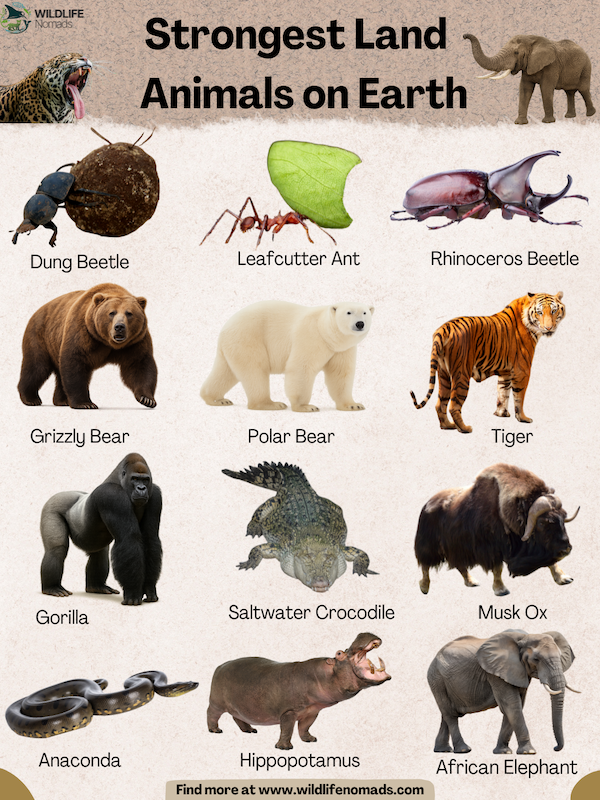
When we think of strength in the animal kingdom, images of elephants charging through forests or gorillas beating their chests might come to mind. But strength comes in many forms, brute force, bite strength, lifting ability, or sheer tenacity. Strength can also be relative to an animal’s body size, with some creatures like the dung beetle demonstrating remarkable power despite their small dimensions. Many animals possess unique strengths that contribute to their survival, showcasing the incredible diversity of strength in the animal kingdom.
In this blog, we’ll explore the top 15 strongest animals in the world. We’re talking pound-for-pound power, evolutionary muscle, and wild feats of strength that put even human athletes to shame.
Let’s dive into the strongest animal contenders!
1. Dung Beetle
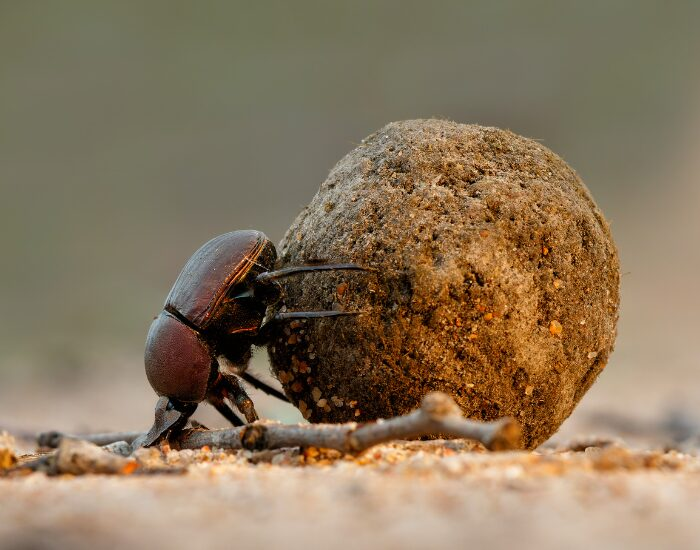
The undisputed champion of pound-for-pound strength, the humble dung beetle (a type of scarab beetle) can pull objects over 1,000 times its own body weight, equivalent to a human pulling six double-decker buses. This is akin to human lifting extremely heavy objects like trucks or adult elephants, showcasing their incredible power. These tiny powerlifters are part of the scarab family and use their super strength to roll balls of dung used for feeding and reproduction. Their necks and legs are biologically reinforced to handle intense loads, making them the strongest creatures on Earth by relative strength.
2. African Elephant
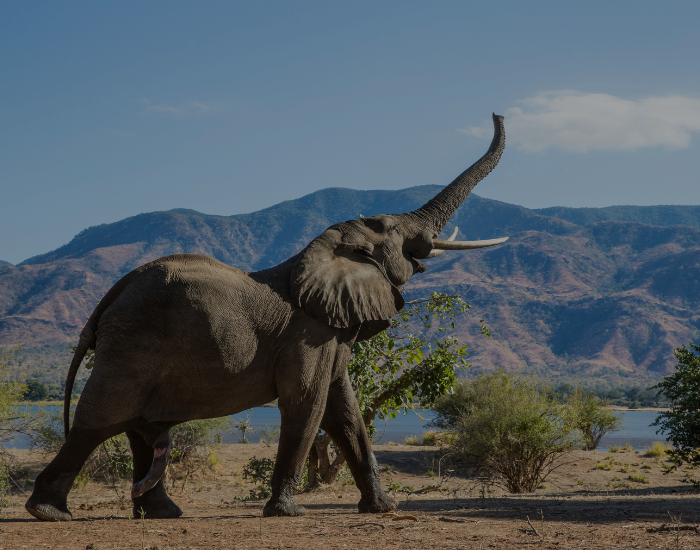
One of the most iconic animals in Africa and one of the biggest animals on earth. The largest land animal is also one of the strongest. Adult African elephants can carry up to 9,000 kg (19,800 pounds) and use their trunks, each with over 90,000 muscles, to lift logs, rip down trees, and gently cradle newborns. Their massive size and muscular structure allow them to bulldoze through thick vegetation and dig for water, making them essential ecological architects in their environment.
3. Leafcutter Ant
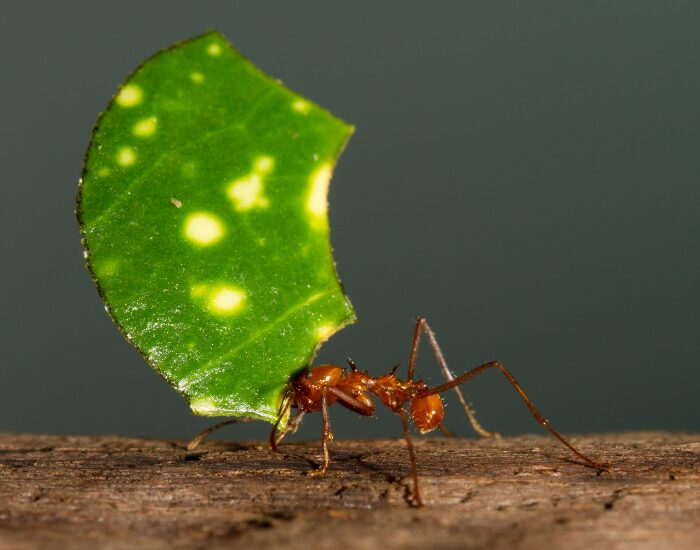
Tiny but mighty, leaf cutter ants can lift and carry objects of more than 8.78 times their body mass. These ants are farmers, harvesting leaf fragments to grow fungus in underground colonies. Their jaw muscles snap shut with incredible force, and their teamwork is unmatched, entire colonies working as one to move mountains of vegetation back to the nest.
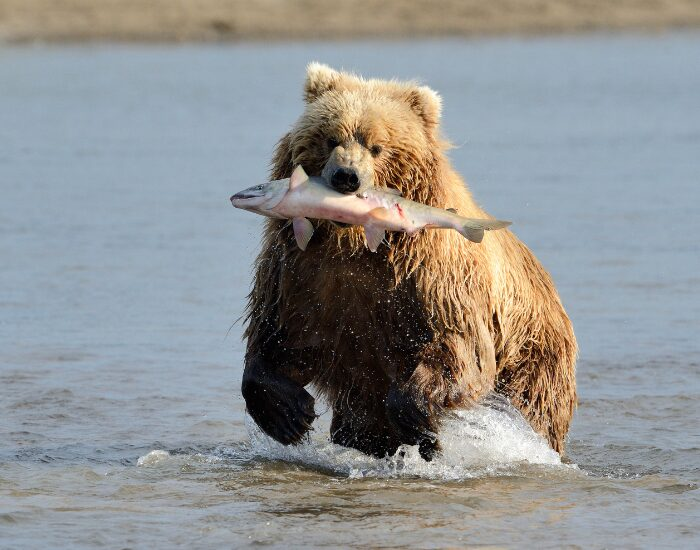
4. Grizzly Bear
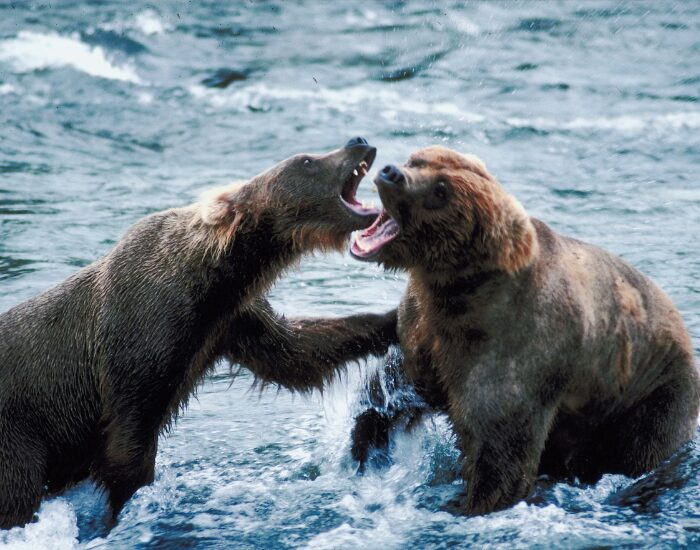
All types of bear are strong, but Grizzlies are known for their brute strength and raw power. The grizzly bear’s muscle mass significantly contributes to its strength and physical power. These bears can lift more than 500 kg (1,100 pounds) and swipe with enough force to break a moose’s spine. They dig massive dens, flip boulders, and take down large prey like elk, with a combination of strength and aggression. Males can weigh up to 600 kg (1,300 lbs) and are capable of running at 35 mph despite their bulk.
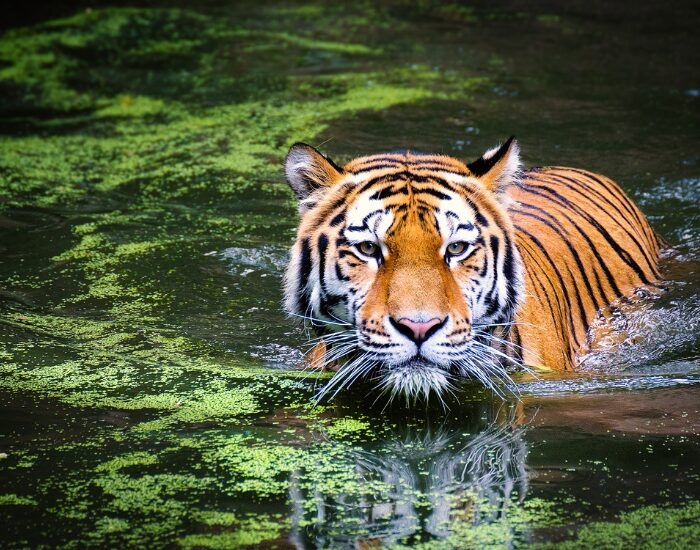
5. Tiger
The largest of the big cats, tigers are solitary hunters with extraordinary strength. A single tiger can drag a carcass twice its body weight for long distances. Their muscular bodies, especially their forelimbs, are built for explosive bursts of power during ambush hunts. Unlike lions, tigers often hunt alone, making their strength crucial for survival.
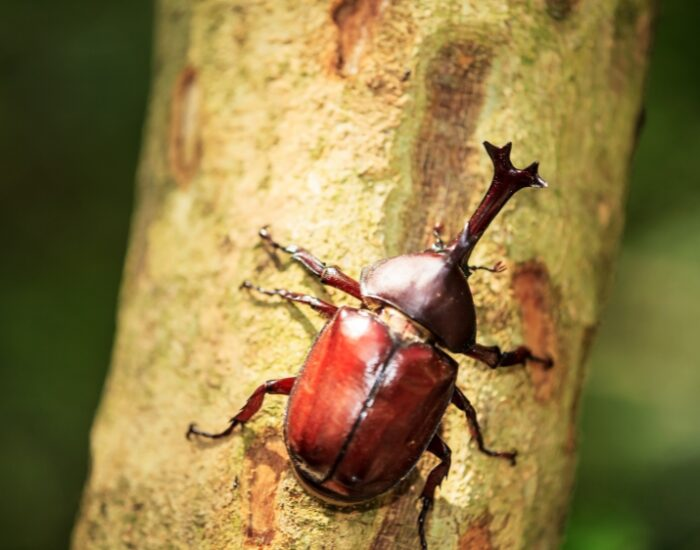
6. Rhinoceros Beetle
Named for the horn-like protrusions on their heads, rhinoceros beetles can lift objects nearly 100 times their body weight. These beetles use their horns for combat and to flip rivals during mating competitions. Their exoskeletons are among the toughest in the insect world, and their bodies are compact powerhouses designed for pushing and climbing.
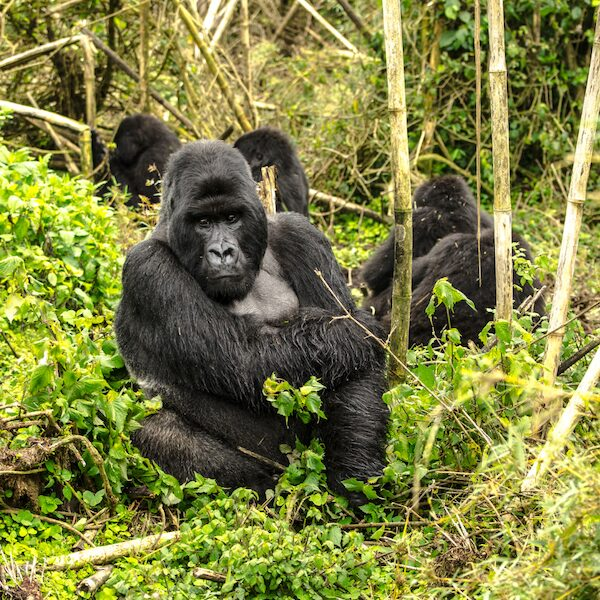
7. Gorilla
The closest living relatives to humans after bonobos and chimpanzees, gorillas are incredibly strong, up to 6 – 10 times stronger than the average adult human. An adult male silverback can lift close to 800 kg (1,800 lbs). Their strength is vital for dominance, nest building, and navigating their forested environments. Despite their power, gorillas are mostly gentle and plant-eating.
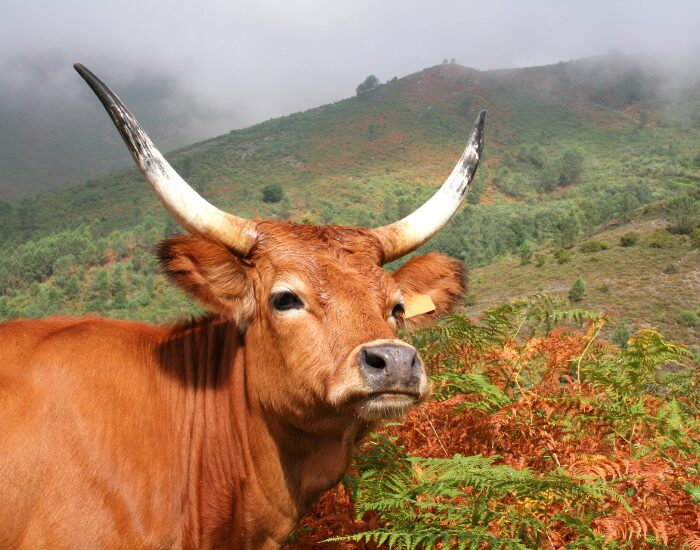
8. Ox
For centuries, oxen have been bred as draft animals for plowing fields, pulling carts, and hauling heavy loads. These domesticated bovines can pull loads over 1,500 kg (3,300 lbs), thanks to their muscular builds and stamina. Their strength, endurance, and calm disposition make them ideal work animals in agriculture.
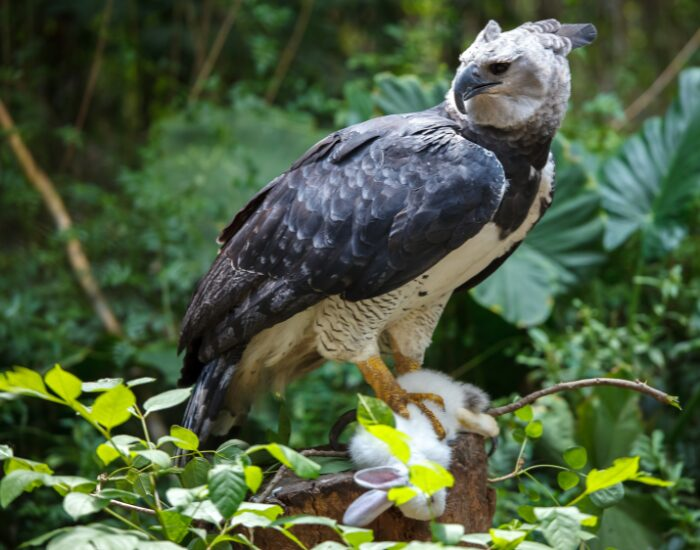
9. Eagle
While birds might not be the first animals you associate with strength, birds of prey like the American Bald Eagle or different types of owls definitely deserve a sport. The harpy eagle is the strongest bird and the strongest among eagles, capable of lifting significant weights during flight. The harpy eagle, for example, can lift prey weighing up to half its body weight, including capuchin monkeys and sloths. Their talons are stronger than a Rottweiler’s bite, and their grip is used to snatch prey mid-air or from dense canopy.
10. Saltwater Crocodile
The saltwater crocodile is the largest and strongest of all living reptiles. As formidable predators, they possess the most powerful bite in the animal kingdom, clocking in at over 3,600 pounds per square inch (PSI). These apex predators use their immense jaw strength to crush bones, seize large prey like buffalo or sharks, and perform their infamous “death roll.”
11. Anaconda
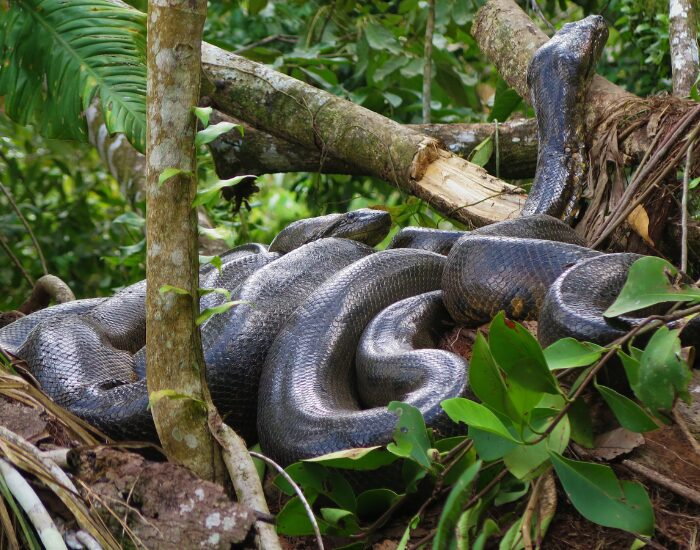
The green anaconda is the heaviest snake in the world and among the strongest constrictors. They are formidable opponents due to their immense size and physical power. These snakes can take down prey as large as deer or caimans by coiling their muscular bodies around them and squeezing until suffocation. Their muscle contractions apply thousands of pounds of pressure in seconds.
12. Polar Bear
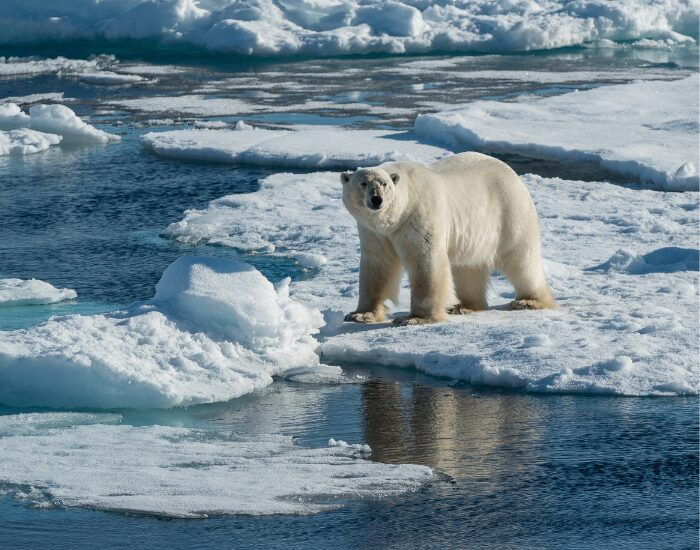
Polar bears are built like tanks making them apex predators. Their remarkable power is crucial for survival in the harsh Arctic environment. Adult males can weigh up to 700 kg (1,540 lbs) and use their size and strength to smash through ice, haul seals from water, and swim long distances. Their forelimbs are particularly powerful, ideal for digging and swimming.
13. Jaguar
The jaguar has the strongest bite of all big cats, relative to its size. It can crush tortoise shells and even pierce crocodile skulls. Jaguars rely on their powerful jaws and muscular build to ambush prey and drag heavy carcasses up into trees, securing their meals from scavengers.
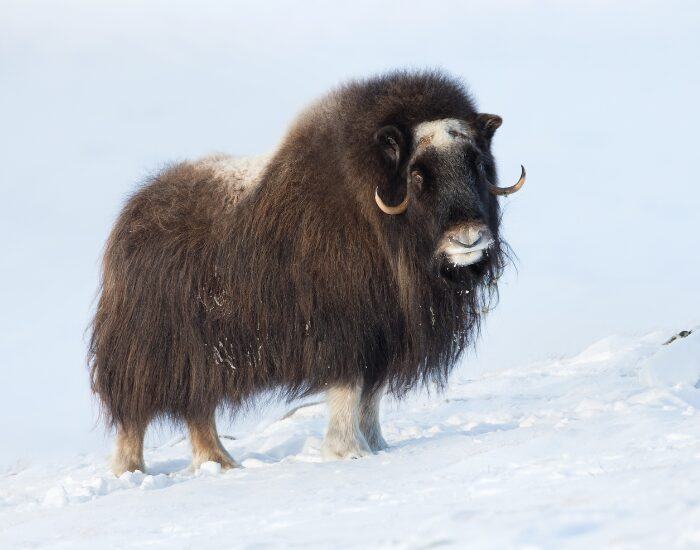
14. Musk Ox
Musk oxen are built for survival in the Arctic tundra. With thick muscle and strong legs, they defend against predators like wolves using headbutts that can shatter bones. During mating season, males clash with incredible force, making them among the strongest hoofed animals in the wild.
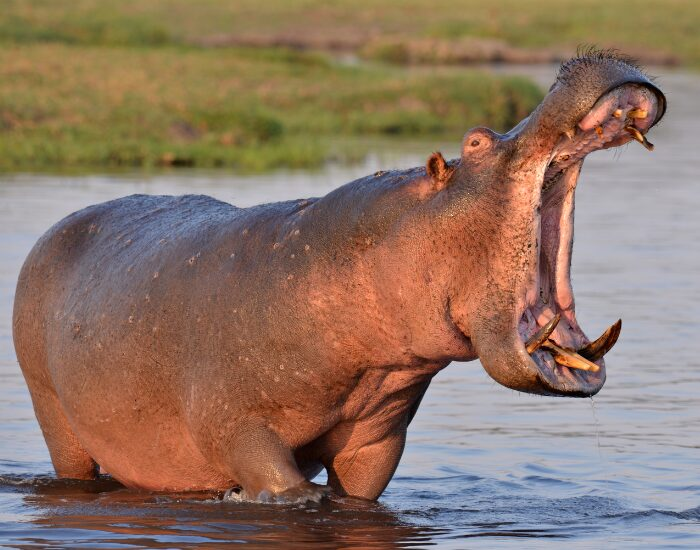
15. Hippopotamus
Despite their round, docile appearance, hippos are incredibly powerful and aggressive. Weighing up to 3,200 kg (7,000 to 9,000 lbs), they can crush bones with their jaws and run surprisingly fast. Their strength allows them to defend territory and dominate rivers, making them one of Africa’s most dangerous animals.
Have a look at our new blog about pygmy hippos!
Marine Animals and Their Strength
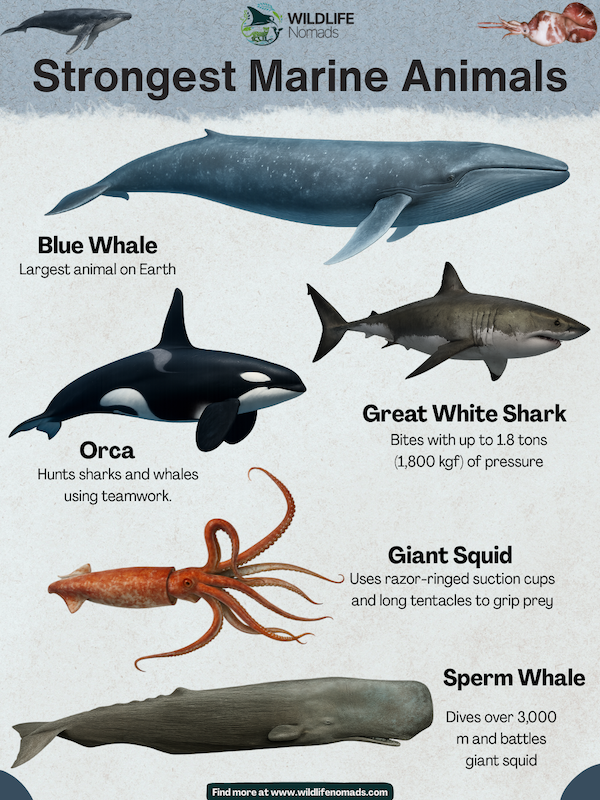
Marine animals have evolved to thrive in the world’s oceans, developing incredible strength and adaptations to survive in this environment. The orca and the great white shark, have developed powerful muscles and streamlined bodies, allowing them to chase and catch prey with remarkable efficiency. The blue whale, the largest animal on the planet, is a gentle giant, but its massive size and strength enable it to feed on tiny krill and small fish by filtering vast amounts of water through its baleen plates.
Animal Strength in Different Environments
Animal strength varies greatly depending on the environment in which they live. In the frozen tundra, animals such as the polar bear and the musk ox have developed remarkable strength to survive the harsh conditions. The polar bear, for example, is capable of lifting and moving objects several times its own body weight, allowing it to hunt and feed in the Arctic environment. Their immense strength and powerful forelimbs are essential for smashing through ice and hauling seals from the water.
In the scorching deserts, animals such as the camel and the lizard have developed unique adaptations to conserve water and energy, allowing them to survive in this unforgiving environment. Camels, with their muscular legs and humps storing fat, can travel long distances without water, showcasing their remarkable endurance.

How Do Scientists Measure Animal Strength?
Animal strength is typically measured in:
- Absolute strength (how much total weight they can carry or pull)
- Relative strength (how much weight they can handle relative to their size)
- Bite force (measured in PSI)
- Gripping strength (in newtons or PSI)
- The world record for the most watts of power generated per kilogram of muscle among all vertebrates, held by the giant palm salamander
Different species dominate in different categories, depending on their evolutionary needs.

Strength Comes in All Shapes and Sizes
Whether it’s a beetle rolling dung balls or an elephant tearing through the savanna, strength in nature is relative, and remarkable. Strength manifests in various forms within the animal kingdom, highlighting both brute force and power relative to body size. From brute force to endurance and precision, each of these animals showcases a unique evolutionary advantage that has helped them survive and thrive.
So next time someone asks, “What is the strongest animal in the world?”, you’ll have more than a few powerful answers.
How Strong Is Your Knowledge? 💪
A 10-question trivia challenge on nature’s heavyweight champions. Answer each one — you can go back and change any answer before you score.
Which animal surprised you most on this list? Let us know or share your favorite strong species!
Experience The Strongest Animals in The Wild!
This blog is reader-supported. When you buy experiences through links listed on this site, we may earn an affiliate commission.
References:
Bigossi, G., Marcozzi, S., & Giuliani, M. (2025). A comparative analysis of grip strength evaluation methods in a large cohort of aged mice. Journal of Cachexia, Sarcopenia and Muscle, 16(5), e70050. https://doi.org/10.1002/jcsm.70050
Christiansen, P. (2007). Evolutionary implications of bite mechanics and feeding ecology in bears. Journal of Zoology, 272(4), 423–443. https://doi.org/10.1111/j.1469-7998.2006.00286.x
Davis, A. K., Attarha, B., & Piefke, T. J. (2013). Measuring the strength of the horned passalus beetle, Odontotaenius disjunctus: revisiting an old topic with modern technology. Journal of insect science (Online), 13, 107. https://doi.org/10.1673/031.013.10701
Dunn, R. H., Beresheim, A., Gubatina, A., Bitterman, K., Butaric, L., Bejes, K., Kennedy, S., Markham, S., Miller, D., Mrvoljak, M., Roge-Jones, L., Stumpner, J., Walter, C., & Meachen, J. A. (2022). Muscular anatomy of the forelimb of tiger (Panthera tigris). Journal of anatomy, 241(1), 119–144. https://doi.org/10.1111/joa.13636
Knell, R. J., & Simmons, L. W. (2010). Mating tactics determine patterns of condition dependence in a dimorphic horned beetle. Proceedings of the Royal Society B: Biological Sciences, 277(1692), 2339–2348. https://doi.org/10.1098/rspb.2010.0257
Kim, S. E., Arzi, B., Garcia, T. C., & Verstraete, F. J. M. (2018). Bite forces and their measurement in dogs and cats. Frontiers in Veterinary Science, 5, Article 76. https://doi.org/10.3389/fvets.2018.00076
Longren, L. L., Eigen, L., Shubitidze, A., Lieschnegg, O., Baum, D., Nyakatura, J. A., Hildebrandt, T., & Brecht, M. (2023). Dense reconstruction of elephant trunk musculature. Current Biology, 33(21), 4713–4720. https://doi.org/10.1016/j.cub.2023.09.007
Moll, K., Roces, F., & Federle, W. (2013). How load-carrying ants avoid falling over: mechanical stability during foraging in Atta vollenweideri grass-cutting ants. PloS one, 8(1), e52816. https://doi.org/10.1371/journal.pone.0052816