
I have seen a wild skunk exactly once in my life, and that still stuns me. Mexico holds one of the richest skunk lineups on Earth. I spent years in the field for my biology degree, plus countless personal hikes, yet skunks stayed invisible. Then, one night in the mountains of Puebla, everything changed.
I was camping with friends near my university town. It was a personal trip, not research, but a biologist never switches that brain off. We heard rustling in the dark near the tents. My first guess was a cacomistle or an opossum, since those felt far more common. Maybe even a fox, I thought, or something squirrel-sized darting through the brush.
Instead, a small striped shape waddled into the light and vanished just as fast. No cinematic spray, no drama, just a ghost with a white stripe. That memory rushed back recently at London’s Natural History Museum, where I stood staring at preserved skunks. So here are eleven fascinating facts about skunks, told from the field.
1. That Bold Coat Is a Billboard, Not Camouflage
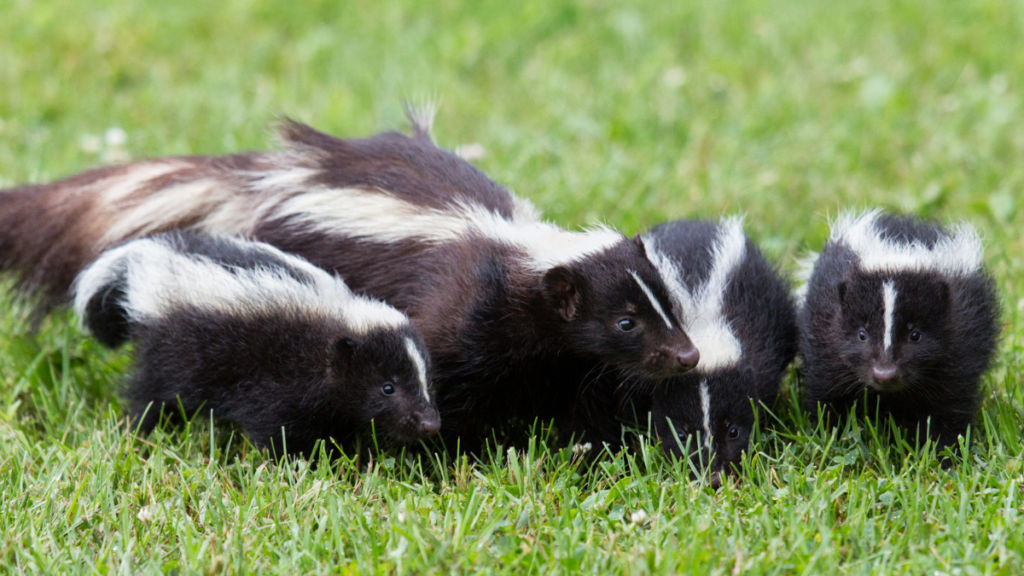
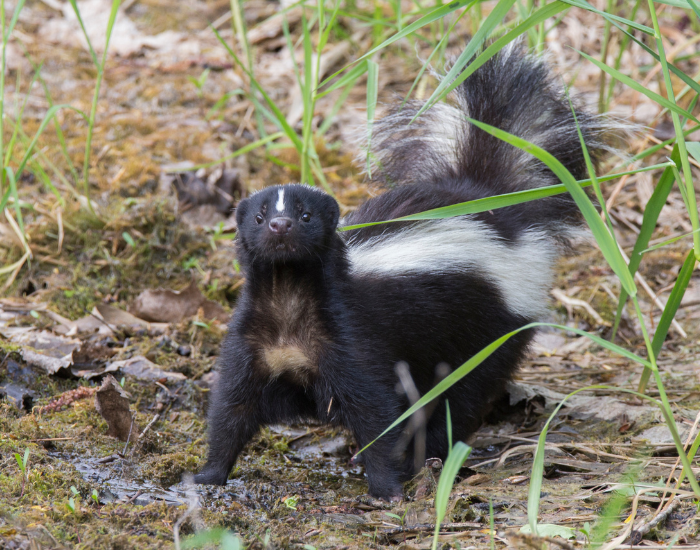
Most animals hide. Skunks advertise. The striped skunk wears glossy black fur split by two bands of white fur, and that pattern is a warning, not a disguise. Predators learn to read those white stripes as a clear “back off” sign.
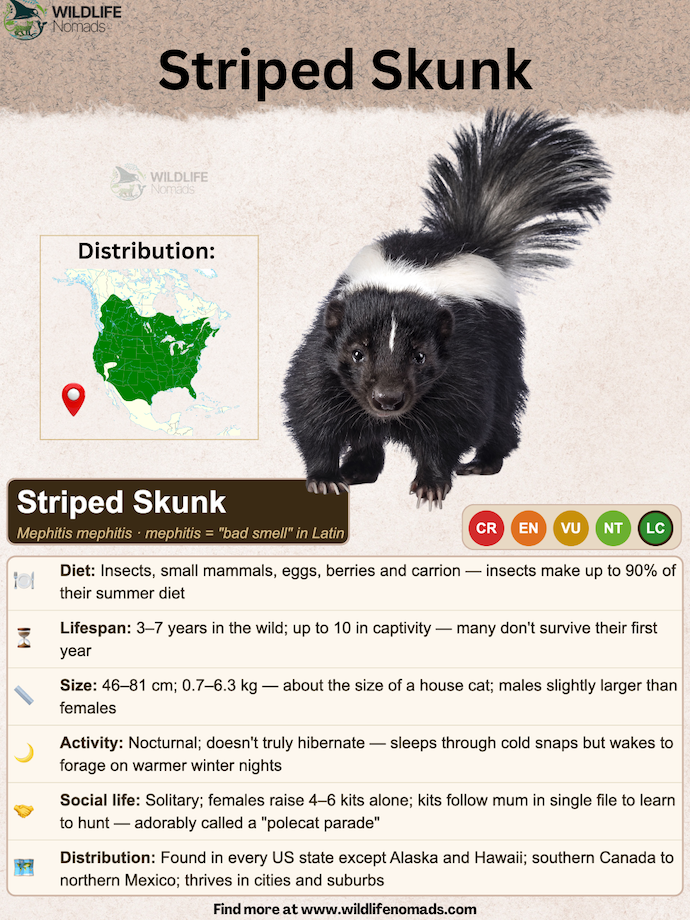
An adult skunk usually measures 20 to 30 inches long, and larger individuals reach 29 to 36 inches once you include one of their signature bushy tails. Most weigh a modest 5 to 10 pounds. What does a skunk look like up close? Picture a house-cat-sized body on short legs, with five toes and long nails on each foot.
Those front feet carry serious digging claws, built for excavation rather than speed. Interestingly, skunks have notoriously poor eyesight, so they navigate a world of smell and touch. That weak vision explains a lot of their calm, nearsighted waddle.
2. Skunks Eat Almost Anything They Can Catch
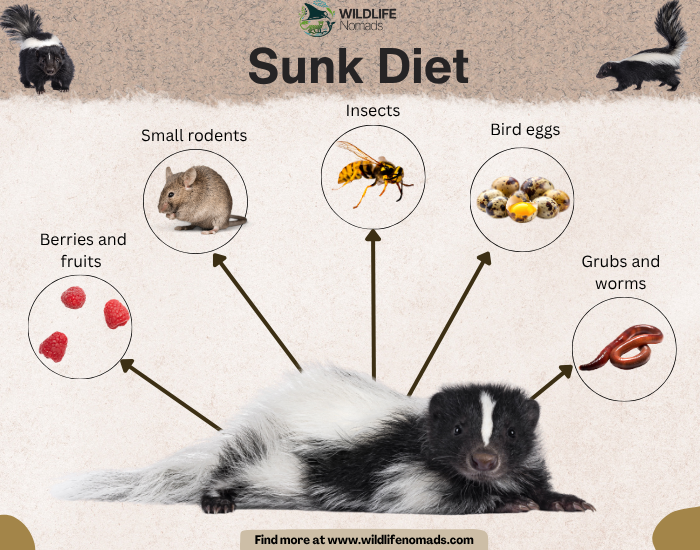
Skunks are omnivores, and their menu is gloriously unfussy. In the wild, skunks eat insects, grubs, earthworms, fruit, small rodents, and other small mammals. They also raid nests for eggs, including turtle eggs buried in soft sand. As the seasons turn cold, more animal matter enters the mix to fuel them.
They even tackle dangerous prey. Skunks can kill and eat poisonous snakes, including rattlesnakes, shrugging off bites that would drop most predators. That fearlessness comes from partial venom resistance and quick, darting attacks.
This diet makes skunks quiet allies for gardeners. By eating beetles, grubs, and larvae, skunks help control pest populations that chew through lawns and crops. Their skunk droppings spread seeds across the landscape, and their taste for carrion recycles nutrients back into the soil. A skunk is free pest control wearing a fur coat.
3. Are Skunks Nocturnal? Mostly, but Twilight Counts Too
Yes, skunks are nocturnal, though the honest answer has nuance. They do most foraging after dark and rest through daylight hours. On mild evenings you may catch one active at dusk or dawn instead.
So where do skunks go during the day? They sleep in burrows, brush piles, or any snug, dark cavity they can claim. A skunk that feels safe will nap the daylight away and emerge hungry at night.
Their nightly rounds stay surprisingly local. Skunks typically forage within a range of about one mile from the den, patrolling the same patches night after night. Understanding these skunk habits helps you predict exactly where one will turn up.
4. The Spray Is a Last Resort, Not a First Reaction
Skunks would rather not spray you, and that surprises most people. Their defensive spray comes from two glands located near the base of the tail. The fluid is a cocktail of sulfur compounds called thiols, and that chemistry is what makes the skunk odor so violently unforgettable.
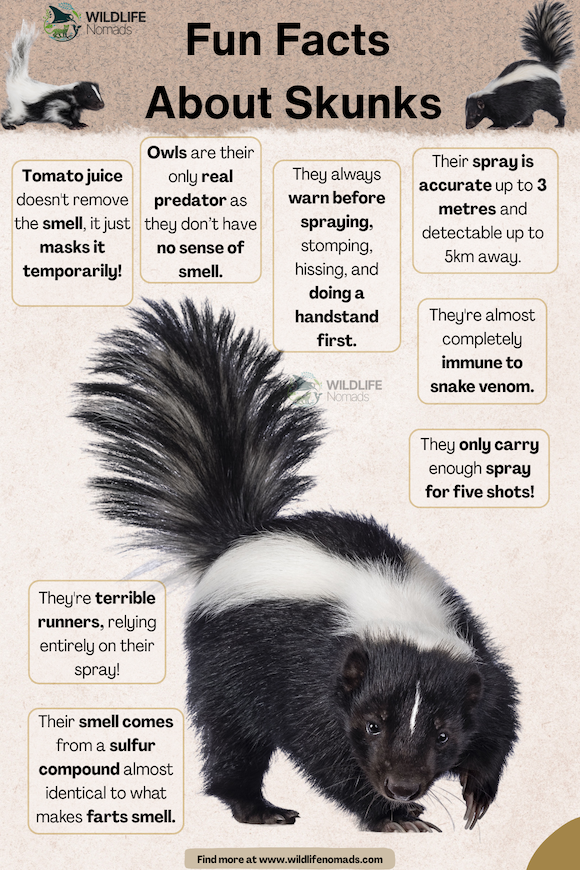
Here is the part the cartoons skip: skunks give clear warning signs before firing. A nervous skunk stamps its front feet, hisses, arches its back, and lifts its tail into a defensive posture. This ritualized skunk behavior means “leave now,” and a smart hiker obeys.
Only as a genuine last resort does the skunk actually spray. It can hit a target up to 15 feet away with startling accuracy. Refilling those glands takes over a week, so skunks ration the ammunition carefully. If your dog does get hit with skunk spray, skip the tomato juice, that folk remedy just masks the odor. A neutralizing wash of hydrogen peroxide, baking soda, and dish soap breaks the thiols down chemically, while cold water alone barely helps.
5. Skunks Don’t Truly Hibernate: They Just Nap Through Winter
People assume skunks sleep straight through winter. Not quite. Skunks enter a state of torpor, a deep drowsiness that is far lighter than true hibernation. During torpor their body temperature falls and their metabolism idles down to save fuel.
They settle into dens roughly from November through March across colder regions. On warm winter nights, once temperatures climb above about 30°F, skunks wake and wander out to forage. That is why you sometimes smell skunk on a mild February evening.
Severe weather changes the social rules, too. Skunks may gather in communal dens during these cold snaps, huddling for shared warmth. Pregnant females especially benefit, burning less fat before the lean days of early spring.
6. Home Is Usually a Borrowed Burrow
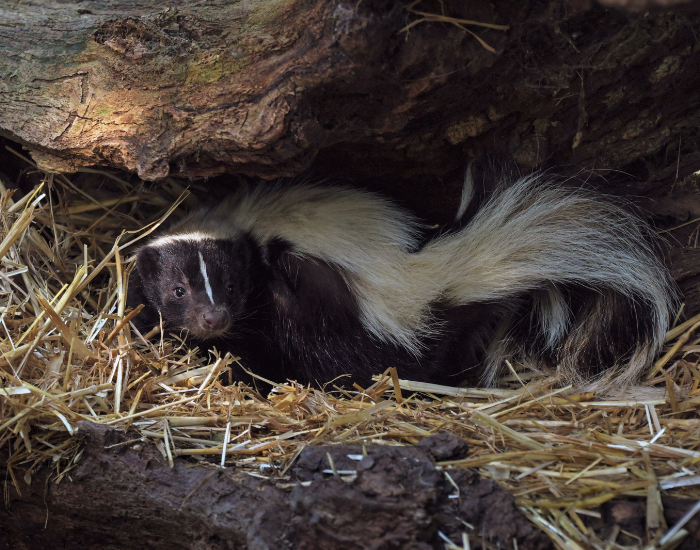
Skunks are opportunists about real estate. Rather than dig elaborate homes, they often adopt abandoned woodchuck or fox burrows. They also tuck denning sites under rock piles, concrete slabs, decks, and porches.
How do you find a skunk den? Look for a hole with an opening roughly 4 to 6 inches wide, often ringed with a faint musky smell. Fresh digging, flattened grass, and coarse guard hairs at the entrance seal the identification. Skunks increasingly favor suburban and urban locations, because our yards serve up food and shelter in one tidy package.
7. Loners That Occasionally Share a Bed
For most of the year, skunks are solitary animals. Adults keep to themselves, defending no strict territory but avoiding one another out of habit. A lone skunk crossing your lawn is the default, not the exception.
The exceptions matter, though. Skunks tolerate company during mating season and while mother skunks raise young. Winter cold can also push several individuals into shared denning sites. Otherwise, most skunks prefer solitary living broken only by these brief social seasons.
8. Skunk Romance Runs on a Late-Winter Clock
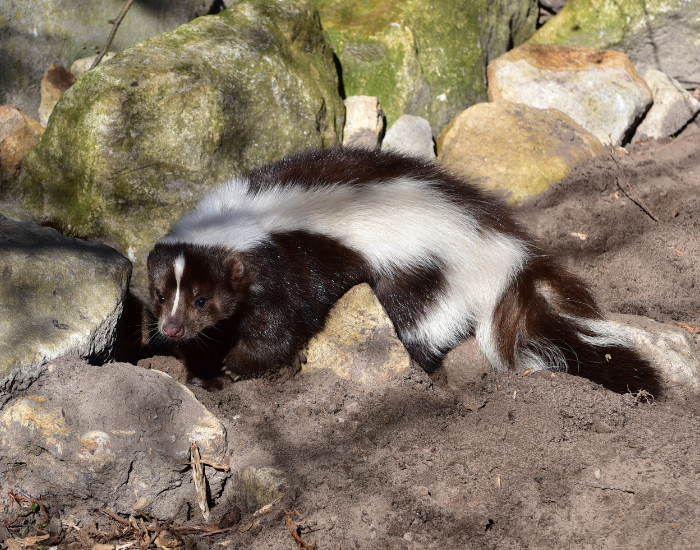
Breeding season arrives early, before winter fully loosens its grip. Skunk mating season typically spans late February through March, sometimes stretching into late April in cooler areas. Males roam widely to find mates, while each female usually breeds only once.
After a gestation period of about nine weeks, females give birth in a grass-lined den. The kits are born helpless, born blind, deaf, and utterly dependent on their mother. Female skunks nurse and guard the litter for weeks before the young venture out.
Those juvenile skunks grow fast. By late summer, young skunks trail their mother in a wobbly single-file line, learning to forage. By early fall, they scatter to claim their own dens.
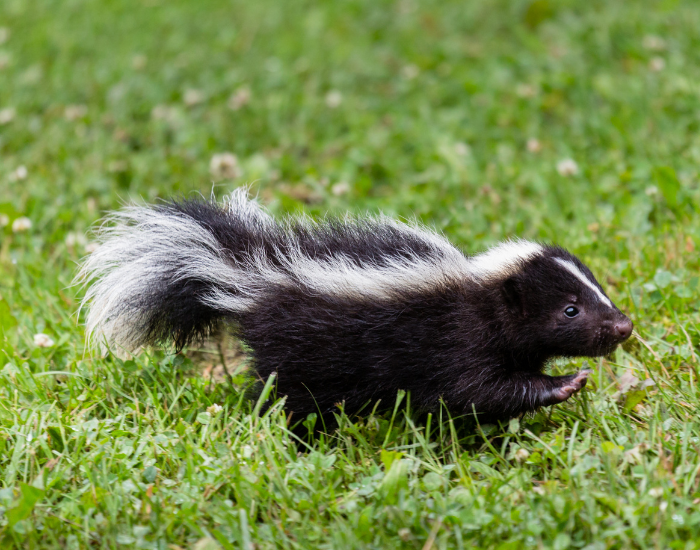
9. Skunk Species: More Than the Cartoon Character
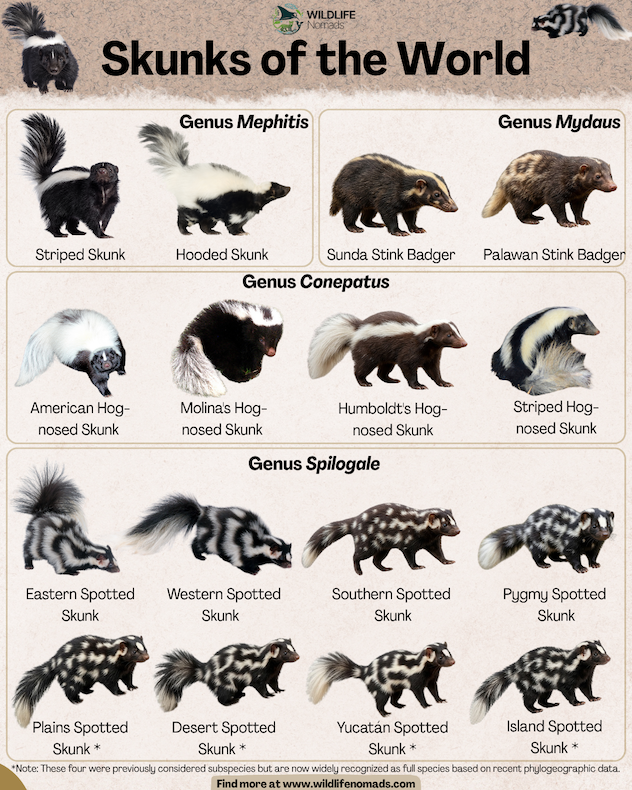
The famous cartoon skunk represents just one of several real species. The striped skunk is the most common and widespread, the one most people picture. Striped skunks live across nearly all of North America, from Canada down into northern Mexico. Yet the family runs far deeper than that single star.
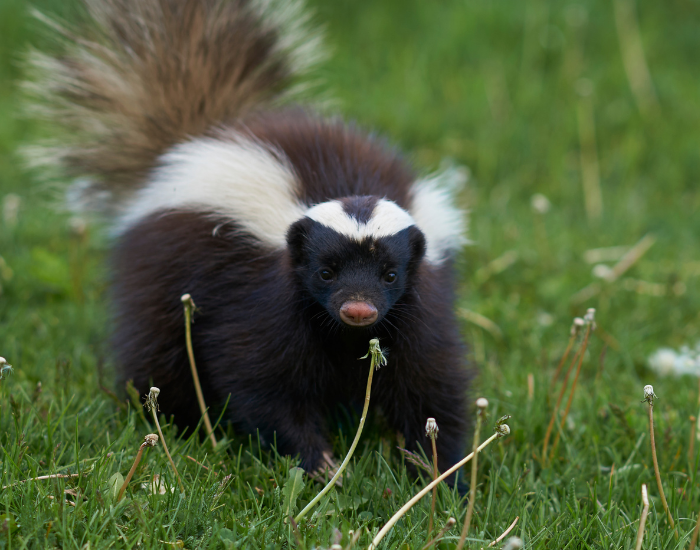
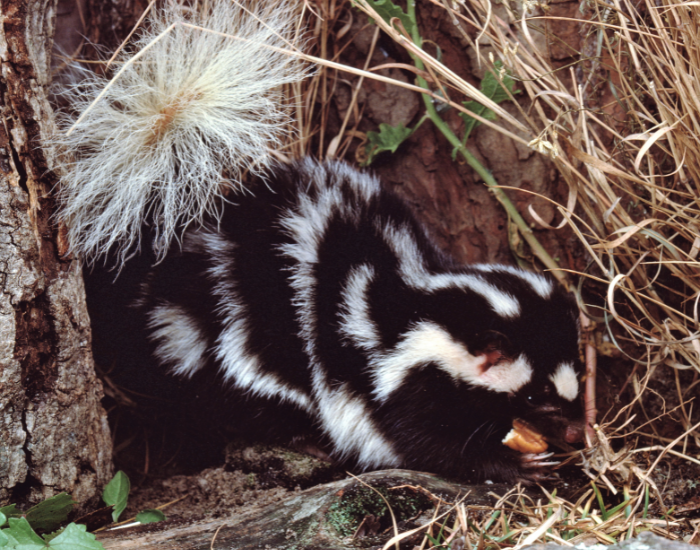
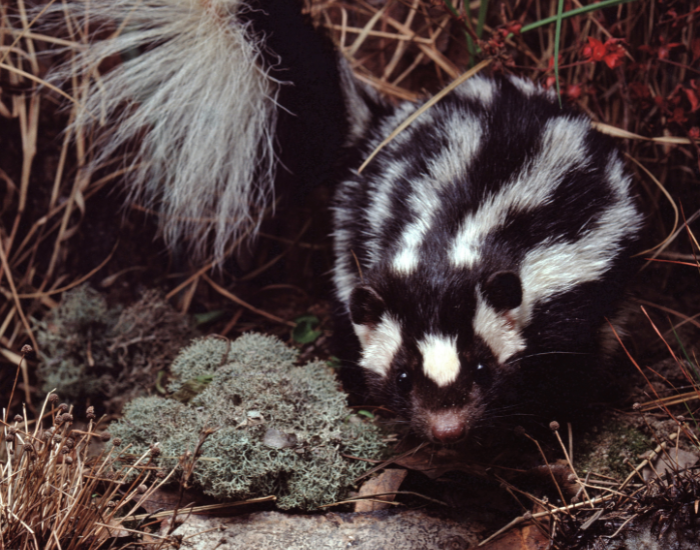
The eastern spotted skunk, Spilogale putorius, is a smaller, spotted acrobat with a wild trick. When threatened, it performs a handstand, spraying while balanced on its front feet. Beyond these, hooded and hog-nosed skunks fill out the group. Mexico, where I finally met my one wild skunk, hosts a remarkable spread of these species across its mountains and deserts.
10. Owls Are a Skunk’s Worst Nightmare
That legendary spray fails against one specific hunter. Skunks are prey for larger predators like coyotes and owls, but great horned owls are the standout threat. Owls hunt in near silence and possess a notoriously poor sense of smell, so the chemical defense means nothing to them.
Coyotes, foxes, and bobcats take skunks occasionally, usually young or desperate ones. Domestic dogs rarely kill skunks, but they absolutely trigger the spray and pay the smelly price. For a warning-based defense, an odor-blind predator is the ultimate loophole.
11. Skunks in the Neighborhood: Why They Come and How to Move Them Along
Skunks show up in yards for one honest reason: easy food. What attracts skunks to your yard is usually pet food, open garbage, fallen fruit, and a buffet of grubs under the lawn. Skunks dig neat, cone-shaped holes about two inches wide while hunting those grubs, and they can excavate 3 to 4 feet deep chasing a meal.
So what does it mean when skunks hang around your house? It means your property offers reliable food or shelter, and they have simply moved in. To deter skunks, remove pet food after dark, secure trash bins, and treat grub infestations in the lawn. Bright motion-activated lights unsettle them, since these night foragers dislike sudden glare.
For a more permanent solution, seal the openings to skunk dens under decks and sheds, but only after confirming no animals are inside. Loosely stuff each gap with newspaper first; if it stays undisturbed for several nights, the den is empty and safe to close. Choosing to evict skunks humanely beats trapping, and it keeps your domestic cat and dog out of a needless standoff.
Frequently Asked Questions
Not always. Where do skunks sleep from one day to the next? They keep several dens within their home range and rotate between them. During cold months they favor one main winter den for weeks, but in warmer weather they shift denning sites frequently. So a skunk may sleep somewhere new tonight, then return to an old burrow tomorrow.
Look for a burrow entrance about 4 to 6 inches wide, often under a deck, shed, rock pile, or concrete slab. A faint musky smell, fresh soil, and coarse black-and-white hairs at the opening confirm it. Skunks also leave two-inch digging holes across the lawn nearby while foraging for grubs.
Food and shelter, mostly. Pet food left outside, unsecured garbage, fallen fruit, and grub-rich lawns all draw skunks in. Open spaces beneath decks and sheds offer ready-made dens. Remove those attractions and skunks usually lose interest fast.
The Takeaway From One Lucky Sighting
For an animal this common, skunks stay astonishingly hidden, I logged years of fieldwork for a single glimpse in the Puebla mountains. That scarcity of encounters only deepened my respect when I met them again behind museum glass in London. Skunks are patient chemists, tidy gardeners, and reluctant fighters who would genuinely rather walk away.
So next time you catch that faint musk on a spring night, pause and appreciate the quiet engineering behind it. Have you had your own close encounter with a skunk? Share it in the comments, and if you loved this, wander over to my posts on opossums, foxes, and squirrels next. Better yet, grab a flashlight and go looking, the best fascinating facts about skunks are the ones you witness yourself.
Skunks: Fact or Fiction? 🦨
Twelve statements about the striped chemist next door — six true, six myths. Can you tell them apart?
Fact or Fiction?
References:
Doty, J. B., & Dowler, R. C. (2006). Denning ecology in sympatric populations of skunks (Spilogale gracilis and Mephitis mephitis) in west-central Texas. Journal of Mammalogy, 87(1), 131–138. https://doi.org/10.1644/04-MAMM-A-172R2.1
Fisher, K. A., & Stankowich, T. (2018). Antipredator strategies of striped skunks in response to cues of aerial and terrestrial predators. Animal Behaviour, 143, 25–34. https://www.sciencedirect.com/science/article/abs/pii/S0003347218302148
Jackson, N. A., Green, D. S., & Allen, M. L. (2021). First documentation of scent-marking behaviors in striped skunks (Mephitis mephitis). Mammal Research, 66(2), 399–404. https://doi.org/10.1007/s13364-021-00565-8
Neiswenter, S. A., Dowler, R. C., & Young, J. H. (2010). Activity patterns of two sympatric species of skunks (Mephitis mephitis and Spilogale gracilis) in Texas. The Southwestern Naturalist, 55(1), 16–21. https://doi.org/10.1894/PS-51.1
Wood, W. F. (1999). The history of skunk defensive secretion research. The Chemical Educator, 4(2), 44–50. https://doi.org/10.1007/s00897990286a
Zhang, V. Y., Williams, C. T., Theimer, T. C., & Buck, C. L. (2019). Reproductive and environmental drivers of time and activity budgets of striped skunks. Integrative Organismal Biology, 1(1), obz013. https://doi.org/10.1093/iob/obz013