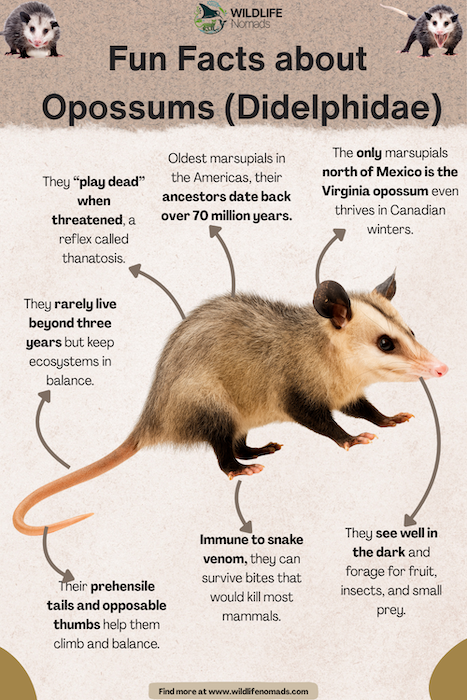
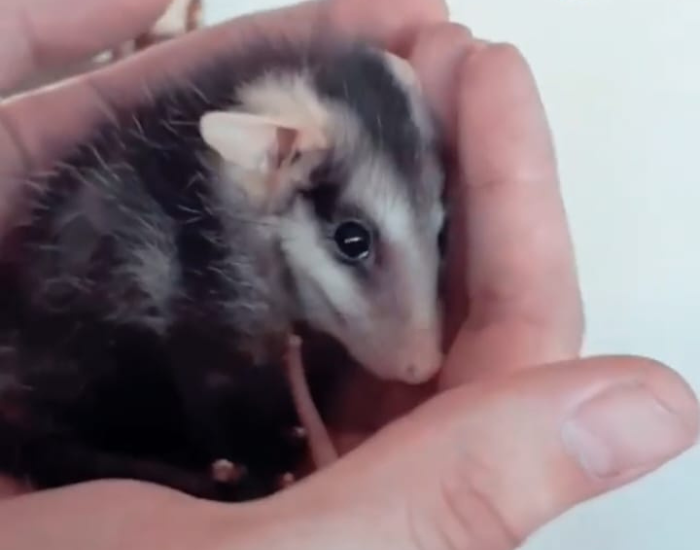
When I was living in Mexico, spotting a common opossum was, well, pretty common. Most people were terrified of them, often trying to chase them away or even kill them. One day, I stumbled upon a burrow on campus where a mother opossum was hiding with her babies. Instead of removing them, the university decided to protect the family. That moment completely shifted my perspective, I wanted to learn everything I could about these misunderstood little marsupials. (You can see the photo below, apologies for bad quality as this was taken in 2016 with a potato camera).
Let’s uncover the world of Didelphidae, from their evolutionary history to their quirky behaviors. These 12 incredible facts reveal why these small marsupial mammals (yes, they are marsupials, like the one sin Australia)deserve a closer look. Plus, discover 10 remarkable types that showcase the family’s incredible diversity.
1. Didelphidae Is the Largest Family of Marsupials in the Western Hemisphere
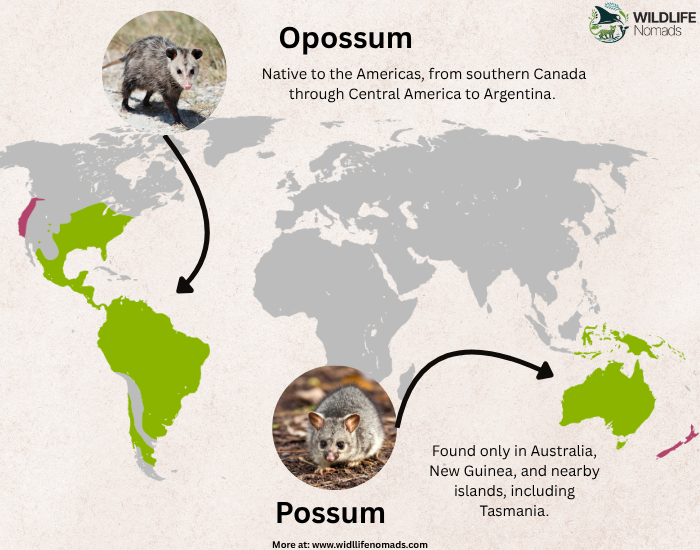
The Didelphidae family includes over 100 species of opossums distributed across Central and South America. Their home range stretches from southern Canada to Argentina. This makes them the most diverse group of American marsupials, a lineage that has persisted for nearly 70 million years.
Unlike their Australasian marsupials cousins, such as kangaroos or koalas, opossums evolved independently in the New World. They occupy ecological niches similar to small mammals like rodents or weasels.
Some species, like the Virginia opossum (Didelphis virginiana), are common even in urban environment settings of North America. Others, such as the black-eared opossum (Didelphis marsupialis), roam the forests of Brazil and French Guiana. The genus Didelphis represents the larger members of this diverse animal family.
2. They Are True Marsupials, Not Rodents
One of the most common misconceptions is that opossums are rodents. They’re not. They belong to the order Didelphimorphia, part of the marsupial biology lineage. Females carry their young in a pouch, a defining characteristic of marsupials.
Rodents, on the other hand, are placental mammals. The difference lies in reproduction and development. Opossum babies are born after just 12–14 days of gestation. Then they crawl into their mother’s fur-lined pouch to continue growing.
Inside that pouch, young opossums attach to a teat and stay hidden for weeks. This scene is both tender and astonishing, like nature’s version of a nursery tucked beneath a mother’s belly. Understanding mammalian biology helps us appreciate these unique animal species.
3. The Virginia Opossum Is North America’s Only Native Marsupial
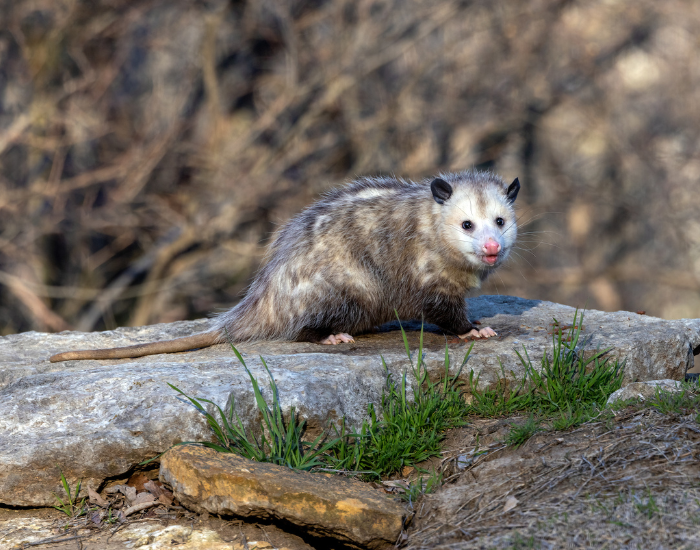
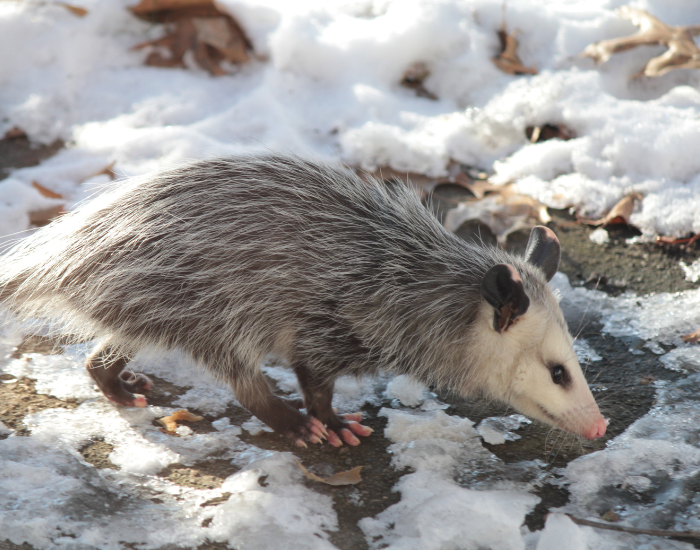
The Virginia opossum (Didelphis virginiana) is a remarkable pioneer. Once restricted to the southern United States, it expanded its range northward through southern Canada. Therefore, the Virginia opossum lives in diverse climates and adapted beautifully to colder conditions.
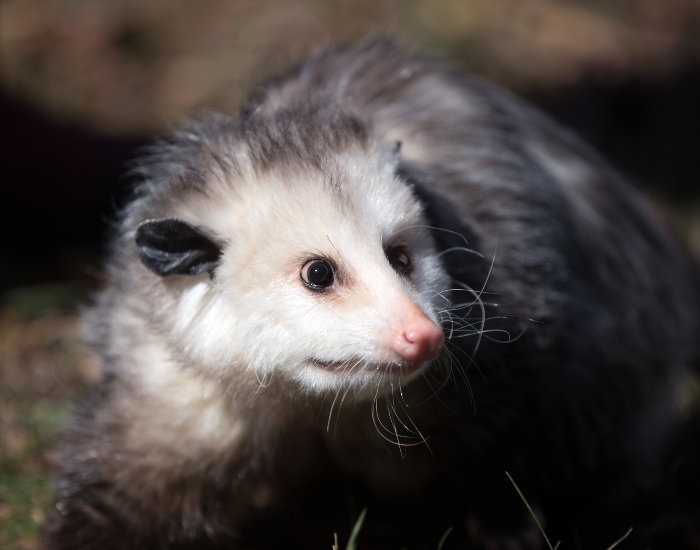
Their pale faces and silver-gray fur earned them the nickname “white animal.” This name derives from the Algonquian word apasum, the root of the word opossum.
This species thrives in an incredible range of habitats. For example, you’ll find Virginia opossums in urban backyards (similar to common opossums), lowland forest areas, and wetlands. I once encountered one in a suburban garden, miles from its native home. It was a gentle reminder of how resilient and opportunistic these animals can be.
4. They Possess Remarkable Adaptability and Habitat Range
Members of Didelphidae live everywhere from Central America’s humid jungles to the dry season habitats of northern Venezuela, Colombia and southern Brazil. Their habitat associations vary widely across different species found throughout the Americas.
They make dens in tree hollows, under roots, or even within human dwellings. Often, they nest near trash cans or crops, earning them the title of “considered pests.”
However, in ecological terms, they are vital. By feeding on dead animals, insects, and other small mammals, they keep disease vectors in check. Their presence in urban environment areas is not a sign of invasion but adaptation. Moreover, it’s a living testament to their 70-million-year survival strategy.
5. The Prehensile Tail Is Their Fifth Limb
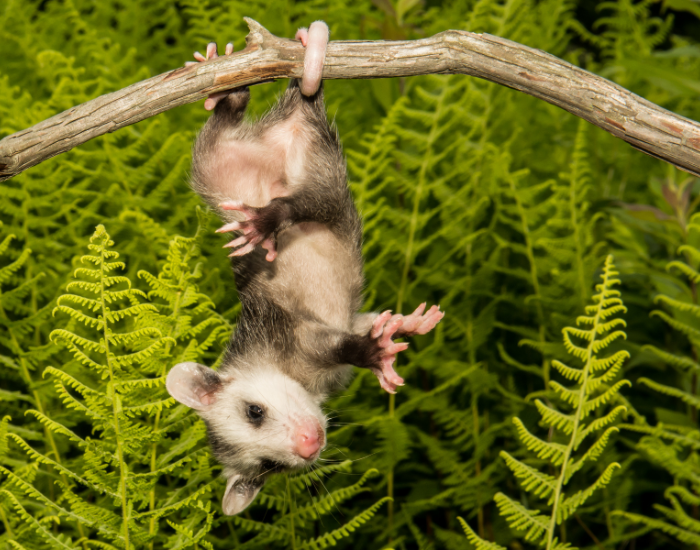
The prehensile tail of an opossum isn’t just for show. It’s a gripping, flexible tool used for balance, climbing, and even carrying nesting materials. Juvenile opossums have especially strong tails, often seen dangling from branches as they explore.
However, contrary to popular myth, adult opossums do not sleep hanging upside-down from their tails. Their body weight makes that impossible. Instead, they use the prehensile tail for stabilization while moving through dense vegetation. This trait is shared by few other small mammals in the Americas.
The tail’s versatility makes it essential for arboreal species navigating complex forest canopies.
6. Opossums Are Omnivores With a Taste for Variety
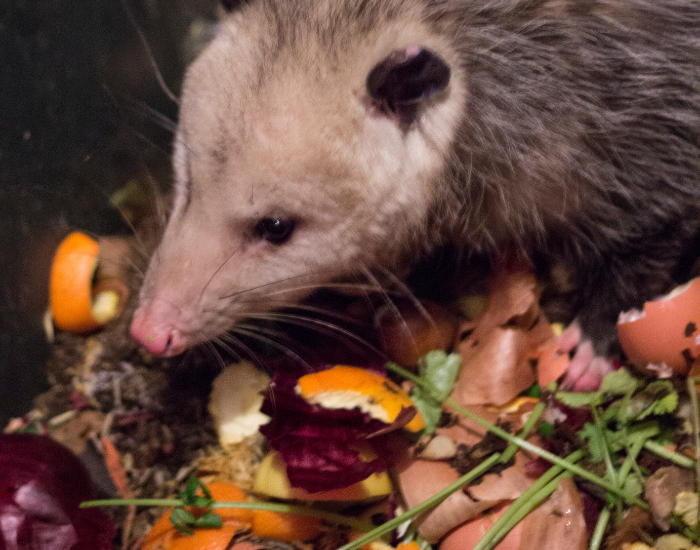
If you’ve ever wondered what opossums eat, the answer is simple: practically everything. Their diet spans insects, fruits, snakes, eggs, and even human refuse. They’re known to consume snake venom without harm, a physiological superpower that scientists believe may hold medical promise for antivenom research (University of Chicago Press, 2016).
This opportunistic feeding makes them ecological janitors. In Mexico, I once watched one pick through fallen mangoes beneath a fig tree. It selected only the ripest fruits. The behavior was both delicate and deliberate, a marsupial gourmet at work. But I also watched them through rubbish bins. They can literally everything.
Common opossums and Virginia opossums share similar dietary preferences. In addition, they help control pest populations naturally by consuming food sources that would otherwise attract rodents.
7. “Playing Possum” Is a Real Defense Mechanism
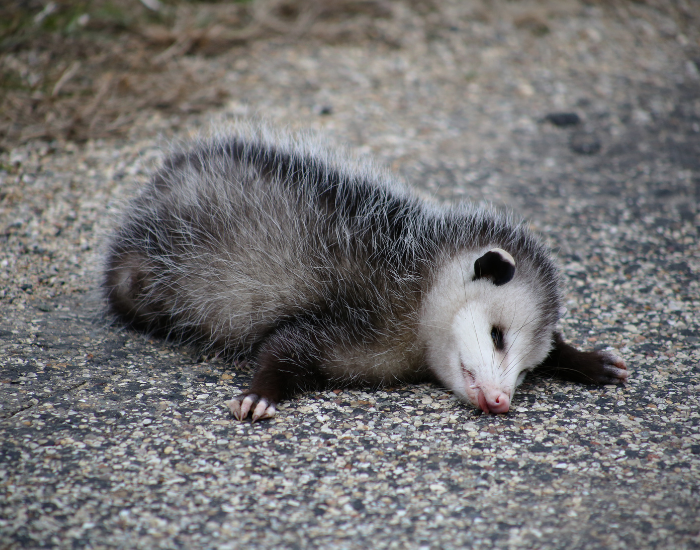
The famous behavior of “playing possum” isn’t an act, it’s an involuntary neurological response. When threatened, opossums collapse, emit a foul odor, and appear dead. This tonic immobility can last up to four minutes. Therefore, it confuses predators that lose interest in lifeless prey.
I once observed a common opossum (Didelphis marsupialis) do this when I found them on my University. One moment it was hissing; the next, it lay motionless. Its tongue hung out, eyes glazed. When we turned away, it sprang up and vanished into the undergrowth, nature’s perfect act of survival theater.
This defense mechanism has helped these animals survive for millions of years.
8. Do opossums control ticks? The viral claim is a myth.
A popular meme says opossums eat thousands of ticks and dramatically reduce Lyme risk. That number traces back to lab extrapolations and media coverage, not field-verified diet data. A 2021 peer-reviewed study that dissected the stomach contents of 32 Virginia opossums in Illinois found no tick parts at all, concluding opossums are not “ecological traps” for ticks and likely do not consume large numbers of them in the wild.
State wildlife educators have since issued corrections noting there’s no robust evidence that opossums eat ticks in meaningful quantities or reduce human tick-borne disease risk. The original narrative grew from early lab observations and later media amplification.
Bottom line: Opossums are fascinating and beneficial for other reasons (omnivory, scavenging, seed dispersal), but they shouldn’t be promoted as tick-eating machines or a Lyme disease solution.
9. Lifespan Is Short but Purposeful
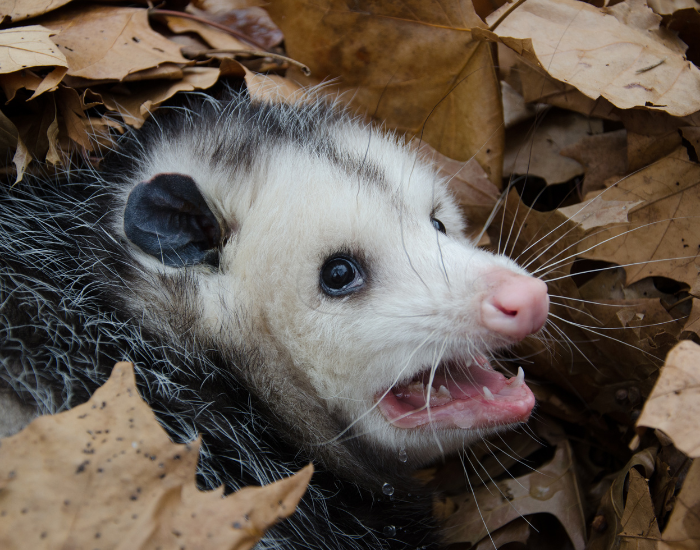
In the wild, opossums typically live only 2–3 years. Some reach 4 years in captivity. This short life is compensated by their high reproductive rate. Females may have two or three litters annually, each with up to 13 young opossums.
Their early maturity and adaptability ensure population stability even in challenging environments. The opossum’s fleeting life perfectly embodies nature’s efficiency. Every species plays its role, however brief.
One species may produce dozens of offspring in a single lifetime, ensuring genetic diversity continues.
11. Conservation Status Varies Across the Family
While many Didelphidae species are listed as Least Concern on the IUCN Red List of Threatened Species, others face pressure from habitat loss. Urban expansion and road mortality threaten several populations.
Species with restricted ranges, like the Chacoan Water Opossum, are especially vulnerable. Deforestation in southern Brazil, French Guiana, and northern Venezuela fragments their habitat associations. This reduces connectivity between populations and isolates other members of the family.
Protecting forested corridors is crucial not just for opossums but for all mammals sharing their ecosystem. Conservation efforts must address habitat use patterns to ensure these species survive. Recent research shows that maintaining wildlife corridors benefits entire communities of mammals of South America.
12. Opossums Bridge the Ancient and the Modern
To observe an opossum is to glimpse an ancient lineage still thriving in a rapidly changing world. Their marsupial biology, nocturnal habits, and evolutionary resilience tie them to the age of dinosaurs. Yet their adaptability places them at the heart of modern ecosystems.
In urban environment settings, where most wildlife disappears, opossums endure. They remain quiet, shy, and perfectly equipped for coexistence. Every time I spotted one along a moonlit trail or scurrying across a fence line, I remember of something important. Nature’s oldest survivors often go unseen, carrying stories that stretch back to the dawn of mammals.
These American opossums continue demonstrating that ancient species can thrive alongside human development when given the chance. Now, let’s take a closer look at the diversity within their family, meet 10 fascinating types of American opossums, each adapted to a unique corner of the Americas.
10 Types of American Opossums
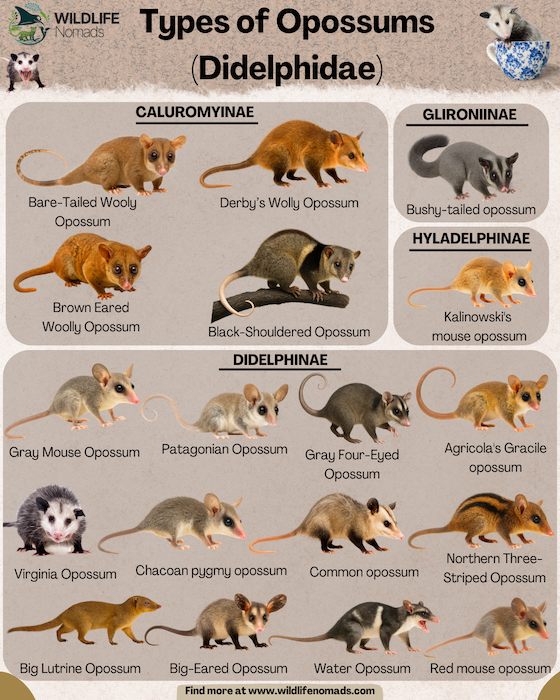
While the Virginia opossum is the best-known species, the Didelphidae family encompasses fascinating diversity. Many species occupy different ecological niches across Central and South America. Here are 10 remarkable types that showcase this family’s incredible adaptability.
1. Virginia Opossum (Didelphis virginiana)
The most widespread species in North America, ranging from southern Canada to Central America. These gray-furred animals thrive in urban environments and adapt easily to human presence. They’re the only marsupials found north of Mexico.
2. Common or Southern Opossum (Didelphis marsupialis)
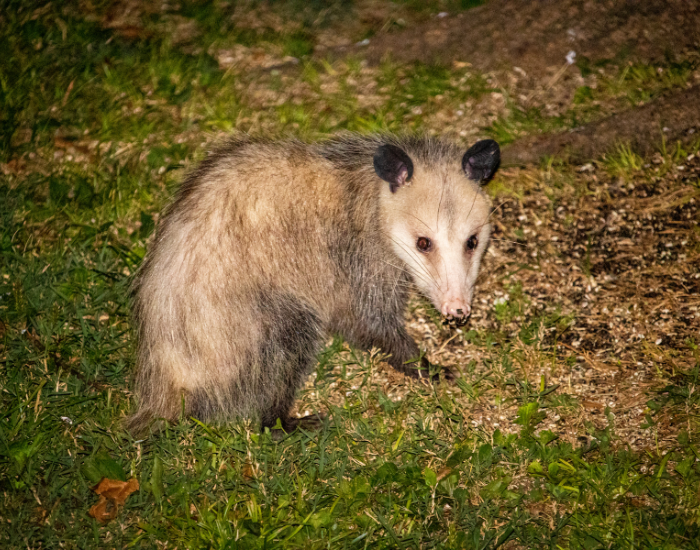
Found across Central and South America, recognizable by its distinctive black ears. This species shares many characteristics with its northern cousin but prefers warmer, tropical climates. Often called possums in informal contexts, these animals are vital ecosystem members.
3. Gray Four-Eyed Opossum (Philander opossum)
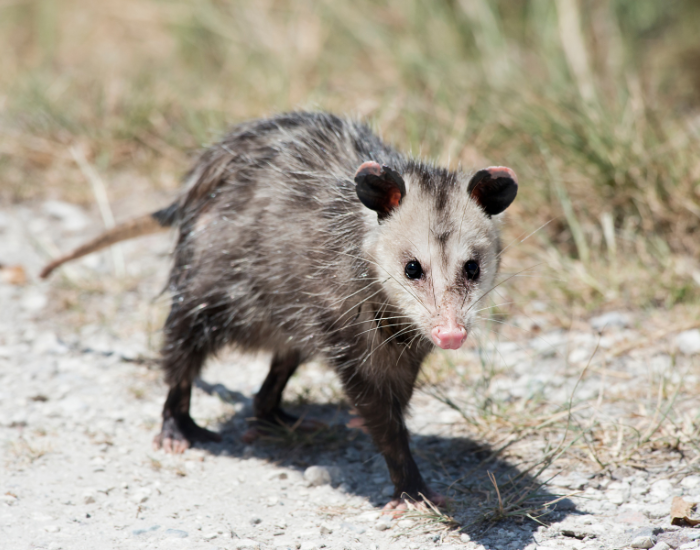
Named for pale facial markings above each eye that resemble extra eyes. These markings may serve to confuse predators. This medium-sized species inhabits forests from Central Mexico to southern Brazil, demonstrating remarkable range.
4. Water Opossum (Chironectes minimus)
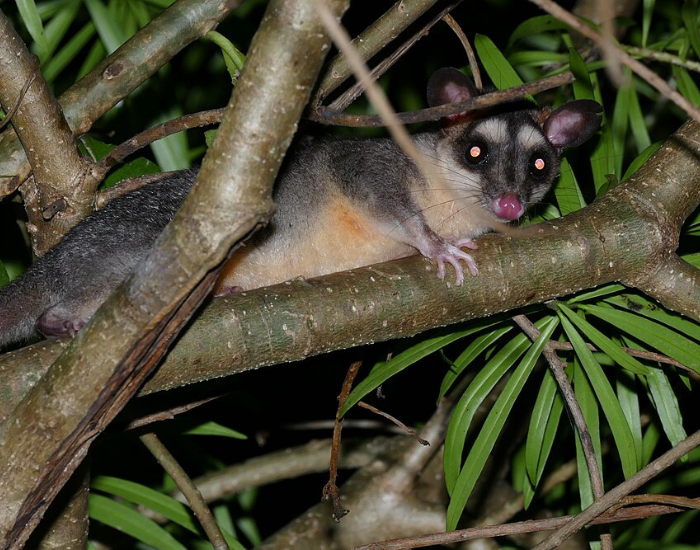
The only aquatic marsupial on Earth. With webbed hind feet and waterproof pouches, these animals swim expertly to catch fish and crustaceans. They inhabit streams and rivers throughout South America’s lowland forest regions.
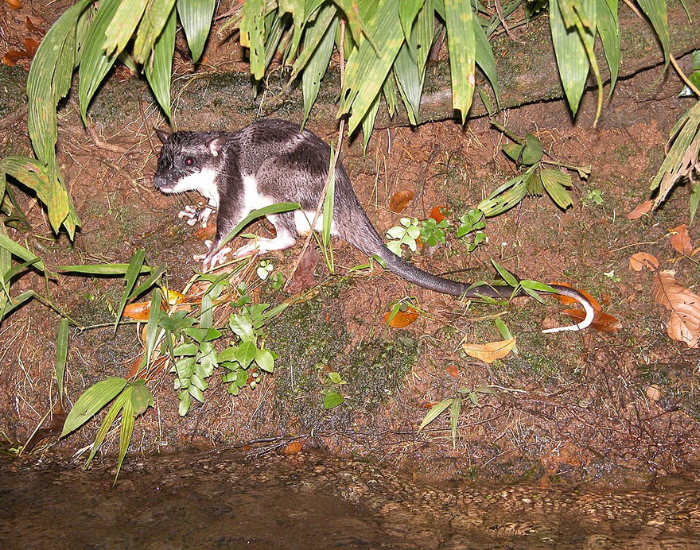
5. Woolly Opossum (Caluromys philander)
A rainforest specialist with dense, soft fur and an extremely dexterous prehensile tail. These arboreal animals rarely descend to the ground, spending their lives in the canopy feeding on fruits and nectar.
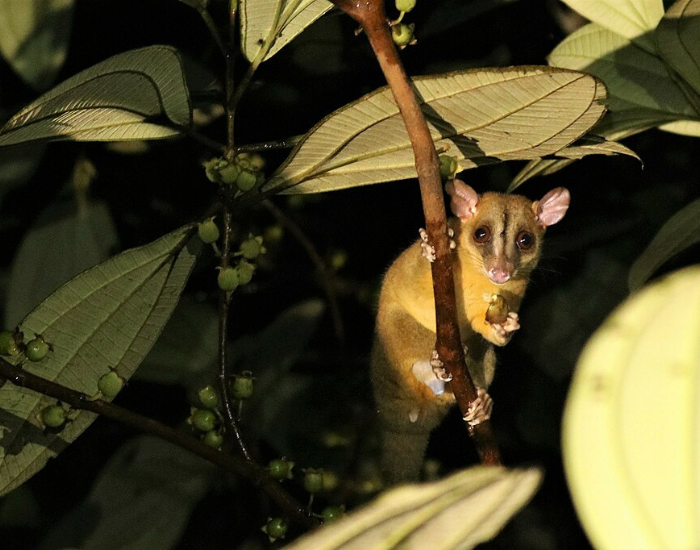
6. Black-Shouldered Opossum (Caluromysiops irrupta)
One of the rarest types, found only in cloud forests of the Andes. With distinctive black shoulder patches and large eyes adapted for night vision, this species represents seven species of specialized woolly opossums.
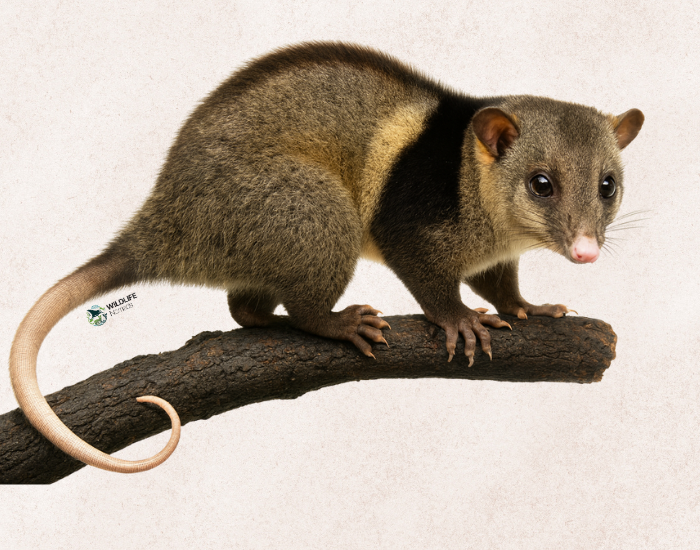
7. Mouse Opossum (Marmosa species)
Tiny animals weighing less than 100 grams, these are among the smallest marsupials. Multiple species exist across Central and South America, each adapted to specific habitat associations from dry season woodlands to humid jungles.
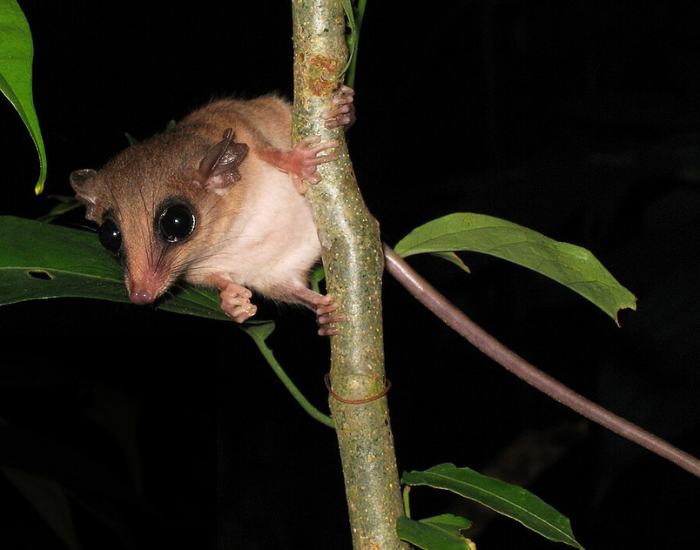
8. Short-Tailed Opossum (Monodelphis domestica)
Unique among opossums for lacking a prehensile tail and having no pouch—young opossums simply cling to the mother’s fur. This species has become important in scientific research due to its short reproductive cycle.
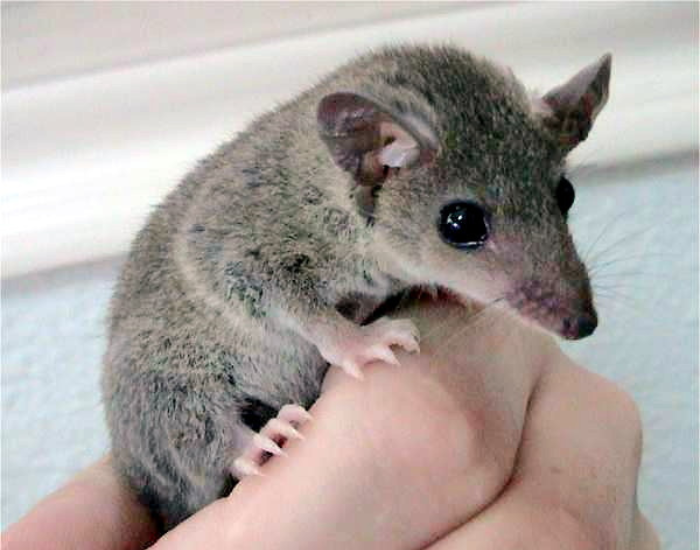
9. Lutrine Opossum (Lutreolina crassicaudata)
Resembling a small otter in body shape, this species hunts along water edges. Found in grasslands and wetlands of southern Brazil and Argentina, it demonstrates the genus diversity within Didelphidae.
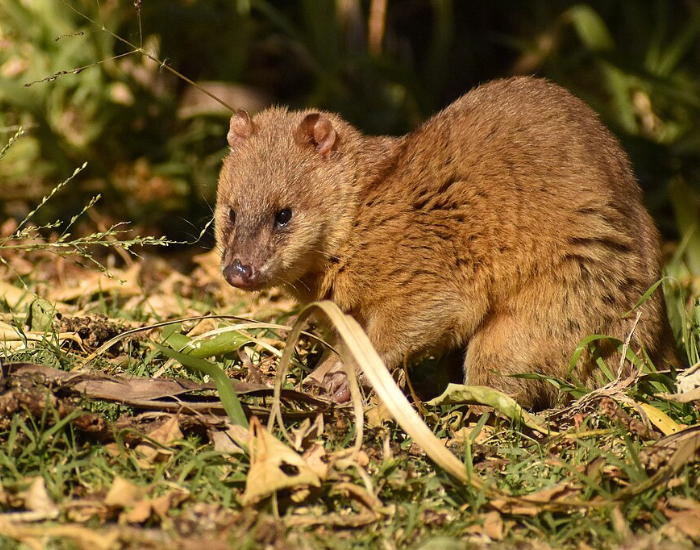
10. Patagonian Opossum (Lestodelphys halli)
The southernmost marsupial in the world, surviving in the harsh Patagonian steppes of Argentina. This rare species shows remarkable cold adaptation, proving that American marsupials can thrive even in extreme environments.
Each of these animal species has evolved unique traits to survive in its habitat. From lowland forest regions of the Amazon to dry season woodlands of Central Mexico, these animals demonstrate remarkable adaptation. Understanding species found across the Americas helps us appreciate the larger members and smaller specialists within this ancient family.
FAQ: About Didelphidae (Opossums)
Didelphidae is the scientific family that includes all New World opossums. These small, pouch-bearing marsupials are native to the Americas and represent one of the oldest mammal lineages.
No. Opossums are marsupials, not rodents. They give birth to underdeveloped young that continue growing in a pouch, unlike placental mammals.
Their closest relatives are other marsupials, particularly those in Australia like kangaroos and wombats. However, Australasian marsupials evolved separately on different continents.
Their fast life cycle balances short lifespan with high reproduction. This evolutionary strategy suits unstable habitats perfectly and ensures species survival.
They’re omnivores, feeding on insects, fruit, eggs, and carrion. Occasionally, they’ll eat pet food if available. Their varied diet makes them successful across many habitats.
They can host parasites like all wild mammals. However, their low body temperature makes them poor hosts for diseases such as rabies, making them safer than many assume.
The Didelphidae family contains over 100 species found across the Americas. Each species has adapted to specific environmental conditions and habitats.
A Survivor of the Shadows
Whether wandering through South American rainforests or urban backyards of the United States, the Didelphidae family embodies adaptability. They’ve survived continental drift, climate shifts, and the rise of modern cities. All the while, they keep ecosystems balanced through their quiet labor.
Perhaps next time you glimpse an opossum in your garden or along a country road, pause before shooing it away. You’re looking at a living fossil, a creature that has walked the same Earth since the age of dinosaurs. These American opossums continue playing their subtle yet indispensable role in the web of life.
Their story reminds us that even the smallest mammals can have enormous ecological impact. From controlling disease to cleaning up dead animals, opossums serve functions we often overlook. Understanding and protecting these marsupials benefits entire ecosystems. The animal kingdom’s resilience is embodied in these remarkable creatures.