Across the rugged cliffs of Patagonia and the forested ridges of North America, a shadow glides silently through the night. Known by many names, cougar, mountain lion, puma, or catamount, this elusive predator reigns as one of the most adaptable wild cats in the Western Hemisphere.
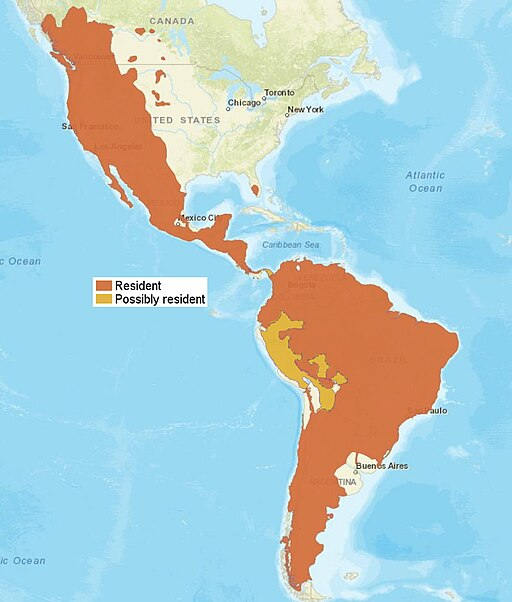
The scientific name Puma concolor means “cat of one color,” yet this remarkable cat inhabits every environment imaginable. From snowy peaks and mountainous regions to arid deserts and dense brush, cougars thrive across diverse landscapes. Their range extends from British Columbia to southern California, and all the way to South America. The cougar has the most extensive range of any land animal in the Americas.
Mountain lion populations face growing challenges from human activity and habitat fragmentation. However, as one of the most significant North American mammals, their resilience continues to inspire conservation efforts worldwide. Here are twelve fascinating facts about these solitary and secretive animals, revealing their biology, behavior, and ecological importance.

1. The Cougar Has Many Names, but One Species
The cougar’s extensive range has given it more names than almost any other mammal. In North America, people call it the mountain lion. South America knows it as the puma. Florida residents refer to their subspecies as the Florida panther, while folklore preserves the term catamount.
Despite these varied names, they all describe the same species: Puma concolor. This solitary member of the Felidae genus belongs to the cat family but stands apart from other large cats. From the rainforests of Brazil to the steep canyons of the western United States, wild cougars play a vital role as apex predators.
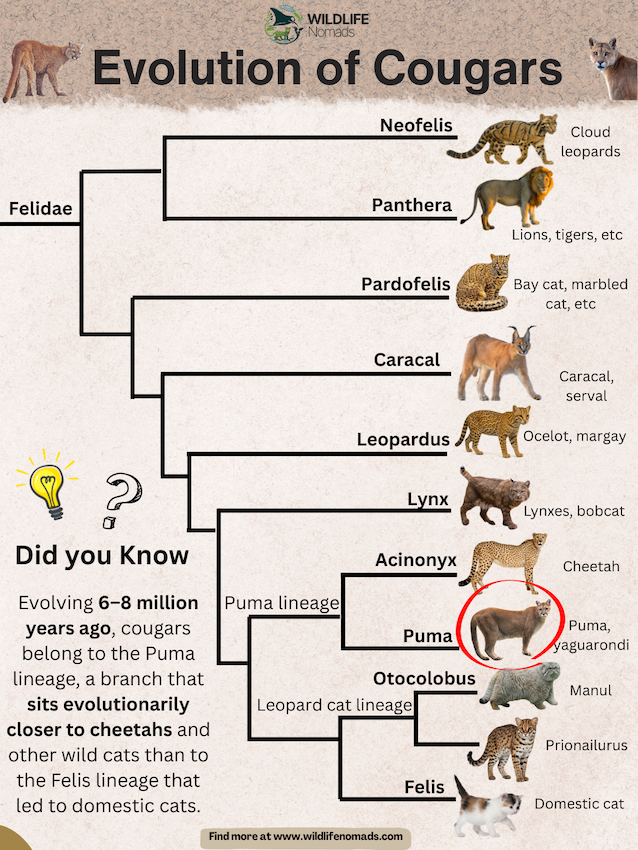
The puma genus separates these cats from true big cats like lions and tigers. Therefore, understanding their classification helps explain their unique behaviors and adaptations.
2. The Mountain Lion’s Range Spans Two Continents
Cougars hold one of the most extensive ranges of any terrestrial mammal on Earth. Their territory stretches across North and South America, reaching from British Columbia down through Central America to Argentina. This makes them true ambassadors of the Western Hemisphere.
Mountain lion habitat varies dramatically across this range. In North America, they inhabit pine forests, rocky mountainous regions, and even coastal areas. Southern California and British Columbia provide prime habitat quality with adequate prey and cover. Meanwhile, South America hosts genetically diverse populations in the Andes Mountains and Amazon basin.
Adult male cougars require large home ranges spanning hundreds of square kilometers. Dominant males patrol these territories, marking boundaries with claw marks and scent posts. Female cougars occupy smaller but equally vital territories where they raise their young. These home ranges often overlap with those of other cougars, and sometimes the ranges overlap with other large predators such as bears and wolves, influencing territorial behavior and resource sharing.
Habitat fragmentation threatens this extensive range. However, wildlife corridors can help reconnect isolated mountain lion populations and ensure genetic diversity.
3. Cougars Are Not True “Big Cats”
Although powerful and intimidating, cougars aren’t classified among big cats. They belong to the puma genus rather than Panthera, which includes lions, tigers, and leopards. This distinction matters because it explains their unique vocalizations.
Unlike big cats that roar, mountain lions produce different sounds. They purr like domestic animals, chirp to communicate, hiss when threatened, and emit a haunting scream during mating season. These vocalizations help mothers communicate with cougar kittens and facilitate breeding behaviors.
Within the Carnivora family, cougars bridge the gap between large prey specialists and smaller mammals. Their flexible vocal cords create a wide variety of calls that serve different purposes throughout their lives. In addition, their physical adaptations make them formidable ambush hunters despite lacking the ability to roar.

4. Ambush Hunters Built for Power and Prey Species
Few predators combine stealth and explosive strength like adult cougars. These cats use dense brush, rock overhangs, and steep canyons as natural cover. They stalk prey silently until the perfect moment arrives for a powerful bite.
Their hind legs generate incredible force, enabling leaps up to 12 meters (39 feet) horizontally (and 7 meters (23 feet) vertically according to the Guinness world record). Large paws provide stability and traction across rocky terrain. Cougar tracks typically show no claw marks because their claws are retracted, which helps distinguish them from other animal tracks. When hunting deer, bighorn sheep, or mule deer, cougars deliver a swift kill to the neck or throat.
After making a kill, these hunters often hide food beneath leaves or brush. This behavior, called caching, allows them to return to kill sites for multiple meals while minimizing exposure to other predators. Male cougars and adult females both demonstrate this efficient hunting strategy.
Mountain lion attacks on large prey showcase their role as apex predators. By controlling herbivore populations, they maintain ecosystem balance across their range.
5. Solitary and Secretive by Nature
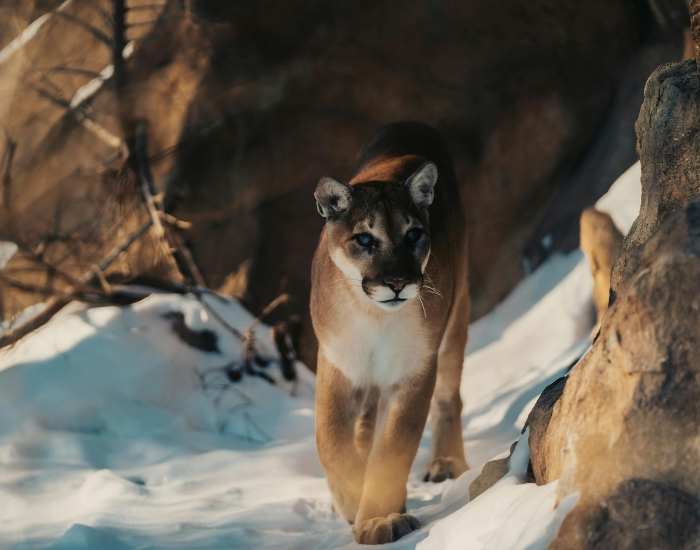
Cougars rank among the most solitary and secretive animals in North America. Each adult defends a mountain lion territory against intruders of the same sex. These territories can span vast areas, especially for dominant males seeking breeding opportunities.
Adult male cougars mark their home ranges with scratches on trees and scent posts along trails. These signals warn other cougars to stay away and advertise breeding fitness to adult females. Female cougars maintain smaller territories focused on prey availability and safe denning sites.
Young males tend to disperse farther from their maternal range than females, often traveling across large areas to establish their own territories. This behavior plays a significant role in gene flow between populations. These cats are primarily nocturnal, moving under cover of darkness to hunt and patrol. During daylight hours, they rest in secluded spots beneath rock overhangs or within dense vegetation. Their extremely sensitive hearing helps them detect prey and avoid human activity.
This elusive nature allows mountain lion populations to coexist with humans in overlapping habitats. In fact, many people live near wild cougars without ever seeing one.
6. Mothers Are Devoted and Fierce Protectors of Cougar Kittens
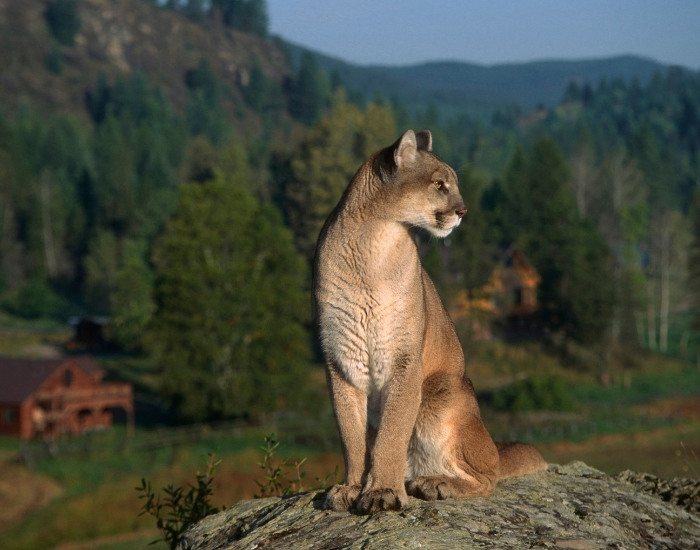
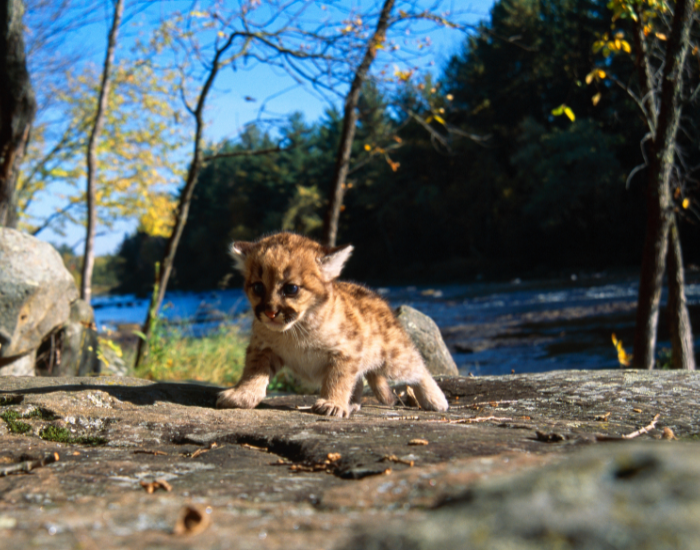
Female cougars demonstrate extraordinary maternal dedication. After mating season, they give birth to one to six cubs in secluded dens. These cougar kittens, also called spotted kittens due to their camouflage patterns, are born blind and completely dependent.
Mothers hide their young beneath rock overhangs or within dense brush for protection. They relocate dens frequently to avoid detection by other predators and male cougars, which sometimes kill cubs. For nearly two years, cubs learn essential survival skills including stalking techniques and prey selection.
Adult females teach their spotted kittens to hunt mule deer, mountain goats, and smaller mammals. This extended training period ensures cubs can establish their own territories successfully. Young males typically disperse farther than females, seeking unoccupied home ranges.
The bond between mothers and cubs represents one of nature’s most powerful relationships. Female adult cougars risk their lives defending offspring from threats, including other mammal predators.
7. Masters of Mountainous Terrain
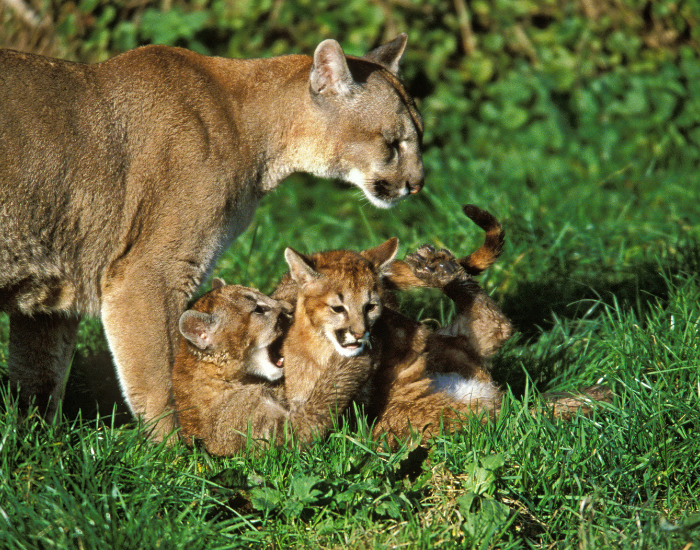
The cougar’s body evolved specifically for mountain life. Its long, muscular tail, nearly a third of total body length, acts as a counterbalance when navigating cliffs. This adaptation proves essential when chasing prey across steep canyons and rocky outcrops.
In high-altitude mountainous regions, snow-dusted peaks and rock formations provide ideal hunting vantage points. Their extremely sensitive hearing detects prey moving through snow or leaves long before visual contact. In addition, their powerful hind legs enable vertical leaps that seem to defy gravity.
Large paws distribute weight across snow and soft soil, preventing sinking while pursuing deer or bighorn sheep. These physical adaptations make cougars the ultimate mountain specialists. From the Andes Mountains to the Rocky Mountains, they dominate rugged terrain where few predators can compete.
Wildlife habitat in these regions faces threats from climate change and development. Therefore, protecting mountainous areas becomes crucial for mountain lion populations.

8. Size and Strength Vary by Geography
Cougars exhibit remarkable physical diversity across their extensive range. Body size, weight, and proportions vary based on climate, prey availability, and habitat quality.
Cougar height: 60–90 cm at the shoulder
Cougar average weight: 45–100 kg, depending on sex and region
Adult male cougars: typically 70–100 kg
Adult females: generally 40–60 kg
Male cougars significantly outweigh females, a trait called sexual dimorphism. This size difference relates to territorial defense and competition for mating opportunities. Adult males in North America tend to be heavier than their South American counterparts.
The Florida panther represents a distinct subspecies adapted to swamp environments. These cats are smaller overall, with unique genetic markers distinguishing them from western mountain lion populations. Conservation efforts focus on increasing genetic diversity within this isolated group.
Regional variations in prey species influence body size. For example, cougars that hunt larger prey, such as elk or deer, tend to grow bigger than those subsisting on smaller mammals. This adaptability demonstrates how environment shapes physical characteristics.
9. Their Color Is Nature’s Perfect Camouflage
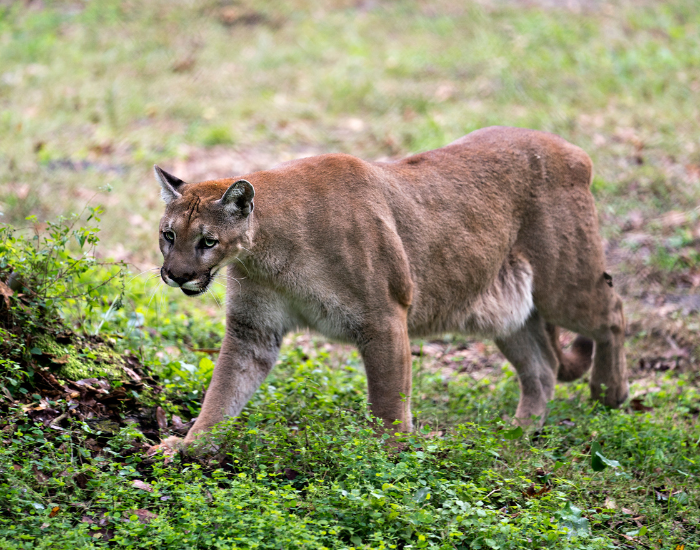
Cougar color ranges from tawny gold to reddish-brown, subtly shifting based on environment and age. This single-tone coat inspired the Latin name concolor, meaning “of one color.” Unlike some cat family members, adult cougars lack spots or stripes.
Cougar kittens begin life with spotted coats that provide camouflage in dappled forest light. These spots fade as cubs mature, usually disappearing completely by 18 months. The spotted coat helps protect vulnerable young from other predators during their most dangerous period.
Adult coloration varies by habitat. Cats in snowy regions appear paler, while those in forests display darker, earthier tones. This natural variation helps them remain hidden while stalking prey or avoiding human activity. Their tail tip often shows darker coloring, providing visual communication during social interactions.
The lack of distinctive markings makes cougars harder to identify individually compared to spotted cats. However, this uniform appearance serves their ambush hunting strategy perfectly.
10. Ecological Role: Guardians of Balance
As apex predators, cougars regulate herbivore populations throughout their range. This top-down control prevents overgrazing and maintains healthy vegetation communities. Studies across the Western Hemisphere demonstrate that mountain lion populations directly influence ecosystem health.
When cougars disappear from an area, prey species like deer and elk multiply rapidly. These herbivore population booms damage forests, reduce plant diversity, and affect numerous other species. By hunting deer, bighorn sheep, mule deer, and mountain goats, cougars create a cascading effect throughout food webs.
Their presence benefits birds that nest in understory vegetation, small mammals that depend on diverse plant communities, and even soil microorganisms. This ripple effect extends far beyond direct predator-prey relationships. In addition, carcasses from cougar kills provide food for scavengers, enriching nutrient cycles.
Conservation efforts increasingly recognize cougars as keystone species. Protecting mountain lion habitat means preserving entire ecosystems. Therefore, coexistence strategies benefit biodiversity far beyond a single species.

11. Threats and Human Conflicts
Modern challenges place mountain lion populations under increasing pressure. Understanding these threats helps develop effective conservation strategies and reduce conflicts.
Habitat fragmentation divides once-continuous territories into isolated patches. Roads, cities, and agricultural development create barriers that prevent genetic exchange between populations. This isolation threatens long-term viability, particularly for small groups like the Florida panther.
Human activity directly impacts survival rates. Vehicle collisions kill numerous cougars annually, especially where highways bisect prime wildlife habitat. Habitat encroachment reduces prey availability and forces cats into contact with people and domestic animals.
Prey species decline affects cougar populations in some regions. When deer numbers drop due to disease or overhunting, cougars struggle to find adequate food. This sometimes leads to increased predation on livestock, escalating human-wildlife conflicts.
Mountain lion attacks on people remain an extremely rare, unlikely event. However, fear often fuels unnecessary killing of these secretive animals. Conflicts typically involve small children or pets left unsupervised in cougar territory.
Coexistence strategies work effectively when properly implemented. Removing attractants, supervising domestic animals, installing motion-activated lighting, and maintaining clean yards all reduce encounter risk. Wildlife corridors that connect fragmented habitats represent long-term solutions for both conservation and human safety.

12. The South American Story
In South America, puma species demonstrate remarkable adaptability across diverse environments. From the Andes Mountains to tropical rainforests, these cats exploit varied prey and habitats with equal success.
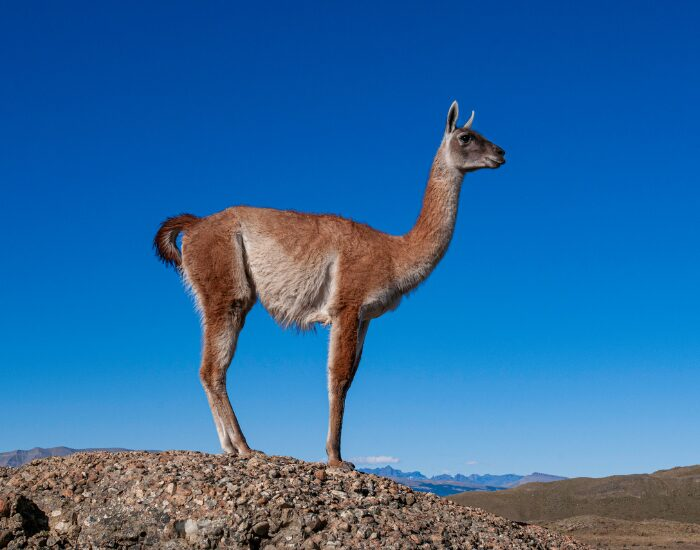
Mountain lion populations in Patagonia hunt guanacos and smaller mammals across windswept grasslands. In the Amazon basin, they navigate dense vegetation pursuing different prey species entirely. This flexibility explains their success throughout the Western Hemisphere.
Research reveals that South America hosts some of the most genetically diverse cougar populations globally. These genetic studies trace ancient migrations and help identify critical conservation priorities. Understanding population structure guides efforts to maintain healthy, connected groups.
Conservation projects in Chile and Argentina focus on reconnecting fragmented wildlife habitat. These initiatives create corridors allowing gene flow between isolated populations. In addition, programs that compensate ranchers for livestock losses reduce retaliatory killing.
Even in remote wilderness areas, cougars face threats from ranching operations and habitat conversion. However, their resilience continues inspiring scientists and conservationists. Protecting these apex predators means preserving the ecological integrity of entire landscapes.
Interactions with Other Predators
In regions where wolves roam, such as parts of the Rocky Mountains, mountain lions may adjust their hunting routines to avoid direct confrontations. Wolves, which hunt in packs, can outnumber a solitary mountain lion at a kill site, sometimes forcing the cat to abandon its hard-earned meal. Similarly, in areas with high bear densities, mountain lions may alter their hunting strategies, often caching their prey in dense brush or beneath a rock overhang to keep it hidden from opportunistic bears.
The story is different in South America, where mountain lions coexist with jaguars. Here, the presence of another apex predator has led to fascinating adaptations. Mountain lions in these regions often target different prey species or hunt at different times to minimize competition, demonstrating their remarkable flexibility as ambush hunters.
Territoriality is a defining trait of adult cougars, especially adult males. They fiercely defend their mountain lion territory from other cougars and potential rivals, using scent markings, claw marks, and vocalizations to communicate their presence. These signals not only warn off other mountain lions but also serve as a deterrent to other predators that might encroach on their home range.
Conflicts can arise where mountain lion habitat overlaps with that of other predators like the Bobcat in Florida. In Southern California, for example, mountain lions and coyotes compete for similar prey, such as mule deer and smaller mammals. These encounters can lead to direct confrontations, especially when food is scarce. In areas where wolves have returned, mountain lions may be pushed into steeper canyons or more rugged terrain, relying on their powerful hind legs and large paws to navigate challenging landscapes and hunt elusive prey like bighorn sheep and mountain goats.

FAQs About Cougars
Yes, cougars and pumas are the same animal. “Cougar,” “puma,” and “mountain lion” all describe Puma concolor, a single species within the Felidae genus. Regional naming differences reflect their extensive range across North and South America.
Generally no. Cougars are shy, solitary and secretive animals that actively avoid human activity. Mountain lion attacks are extremely rare, unlikely events. Most conflicts result from surprising cats at close range or involve pets and small children.
Wild cougars inhabit western states including California, Colorado, Oregon, Washington, Montana, and Wyoming. Small Florida panther populations survive in southern Florida. Mountain lion habitat requires adequate prey species, cover, and minimal human disturbance.
These carnivores eat meat exclusively, functioning as obligate predators. Their diet consists primarily of deer, bighorn sheep, mule deer, and mountain goats. They also hunt smaller mammals when large prey is scarce. Occasionally, they prey on domestic animals near human settlements.
Female cougars give birth to one to six cubs per litter, though two to three is most common. Cougar kittens are born with spotted coats that fade as they mature. Mothers raise cubs for approximately 18–24 months before they disperse.
Territory size varies dramatically by sex and region. Adult male cougars maintain home ranges of 200–1,000 square kilometers. Female territories are smaller, typically 50–200 square kilometers. Dominant males overlap multiple female ranges to maximize breeding opportunities.
The Ghost of the Americas
To glimpse a wild cougar represents witnessing nature’s quiet power, a hunter evolved to near perfection. These solitary predators balance stealth with explosive strength, moving through forests, deserts, and mountainous regions as invisible guardians.
Their survival depends entirely on human choices. Protecting wildlife corridors, reducing conflicts through education, and respecting the unseen forces that shape ecosystems all contribute to coexistence. Mountain lion populations need connected habitats and adequate prey species to thrive.
Cougars are more than apex predators. They serve as guardians of ecological equilibrium, regulating herbivore populations and maintaining biodiversity. Their presence indicates healthy, functioning ecosystems throughout the Western Hemisphere.