
Throughout history, wild cats have fascinated humans and left deep cultural marks. I always found fascinating how the jaguar was revered as a godlike figure in Maya and Aztec mythology, and how snow leopards are seen as spiritual guardians by communities in the Himalayas, and domestic cats were worshipped in ancient Egypt as symbols of protection and mystery. The ocelot, too, holds a special place in this lineage of awe. Across the Americas, its beautifully spotted coat and elusive nature have inspired stories, art, and respect from Indigenous cultures.
For me, that connection between humans and wild animals, when their presence moves beyond biology into myth, symbolism, and art, is what makes species like the ocelot so captivating. Below you’ll find 12 facts that explore the natural and cultural significance of this remarkable cat.
1. What is an Ocelot?
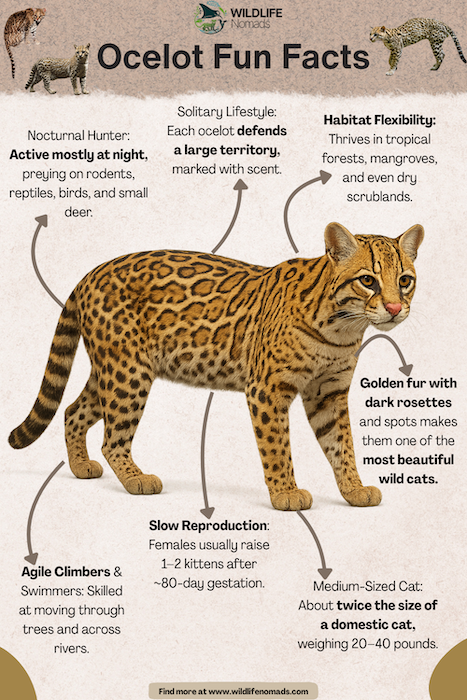
The ocelot (Leopardus pardalis) is a medium-sized cat from the Felidae genus. It belongs to the wild cats of the Americas and is often confused with bobcats or lynx, though its sleek animal build and ornate coat set it apart. Sometimes nicknamed the “ocelot cat,” it’s not related to domestic cats but is instead part of the small spotted cats of Central and South America.
2. Size & Strength – How Big is a full grown ocelot?
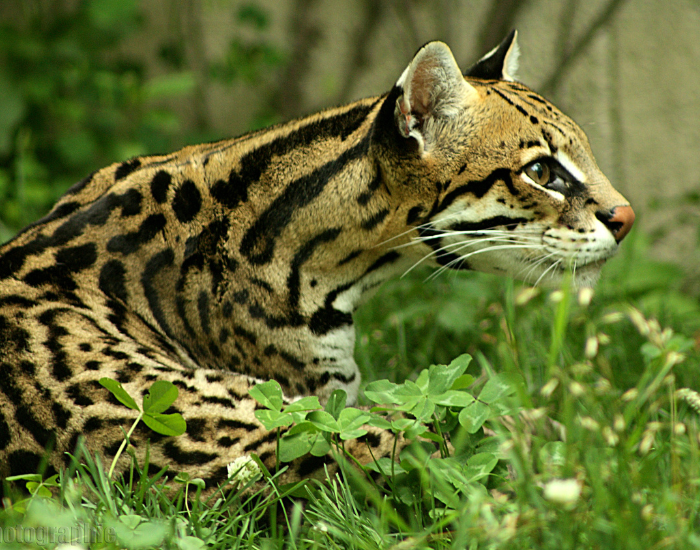
A full grown ocelot measures 2.5–3.5 feet long, with a tail of 10–16 inches. Adult ocelots weigh 15–34 pounds — males larger than females. In the wild, I’ve measured tracks in Costa Rica that confirmed their size rivals that of a bobcat. Compared to an average house cat, they’re nearly triple the size. Some people even compare them to a big Maine Coon cat, but make no mistake: this is a predator with a killing bite. Male and female ocelots differ not only in weight but also in range size. Males patrol larger territories, while females keep smaller home ranges closer to dense vegetation where kittens can hide.
3. Native Range – Where are Ocelots Native to?
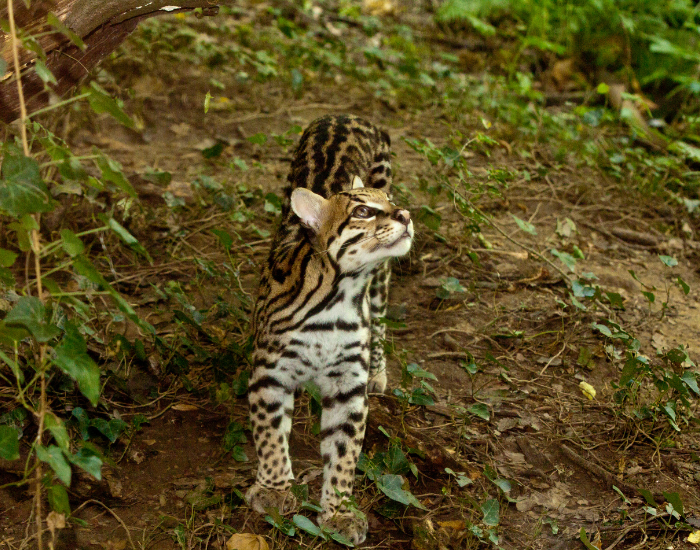
Ocelots live in a wide variety of ecosystems. The ocelots’ range covers deserts, coastal marshes, rainforests, and thorn scrub.
So, where is the ocelot found? Their range spans:
- North America: Endangered populations in southern Texas and southern Arizona.
- Central America: From Costa Rica to Panama, ocelots spend their lives in tropical and subtropical rainforests and mangrove forests.
- South America: From Venezuela through northeastern South America, across northwestern South America, and all the way down to northern Argentina.
- Habitats: Dense forest cover, spiny shrubs, coastal marshes, and thick vegetation.
Scientists recognize several ocelot subspecies across their vast range, from the endangered Texas population to more numerous cats in Central and South America.
If you’re curious about other regional wildlife, check out our guides on the
4. Ocelot Population and Conservation Status
Globally, the ocelot is listed as Least Concern on the IUCN Red List, but that hides regional struggles.
- In southern Texas, fewer than 120 remain.
- Across South America, they are among the most numerous cats, but habitat loss is shrinking their range.
- U.S. ocelots are protected by the Endangered Species Act, with active monitoring of population densities.
In the U.S., ocelots are grouped with other endangered cats like jaguars, and are officially recognized as a threatened species under federal protection
The greatest threats are habitat loss, road collisions, and the illegal pet trade.
5. The Ocelot’s Gorgeous Dappled Coat
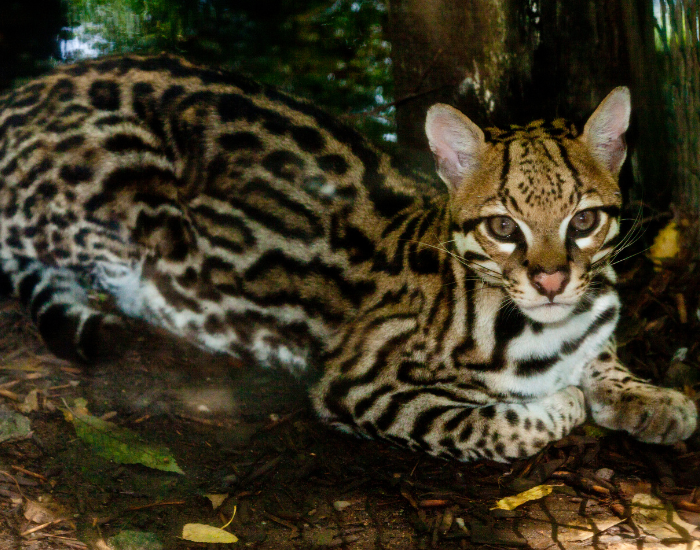
It’s impossible to ignore the beautiful fur coats of ocelots. Their markings include rosettes, streaks, blotches, and reddish gray undertones. No two are alike. Sadly, this same beauty once drove rampant hunting for the fur trade, nearly wiping out some populations.
6. Opportunistic Hunters With Varied Diets
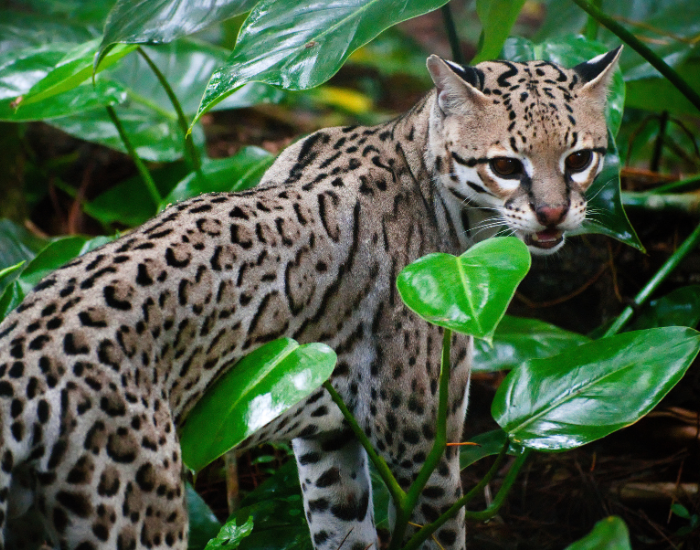
As obligate carnivores, ocelots are designed for eating meat, with sharp teeth adapted for slicing and crushing bones. They are opportunistic hunters, stalking whatever prey is available. I once observed one silently move through spiny shrubs to ambush squirrel monkeys in Panama. Their diet includes:
- Small rodents, rabbits, and young deer.
- Lizards, snakes, and birds.
- Fish, crabs, and even baby peccaries.
By 8 weeks, kittens can eat solid food, and by 4–6 weeks, a mother ocelot teaches them how to stalk prey. They don’t hesitate to tear food from larger prey, showcasing their adaptability.
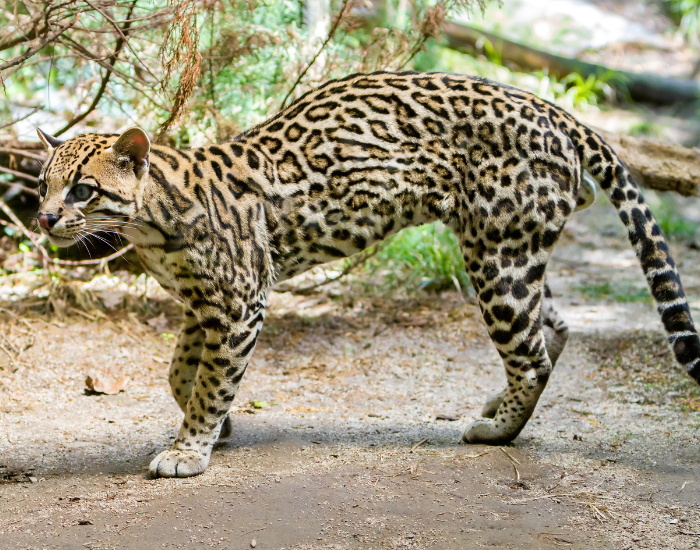
7. Ocelot Habitat Preferences
Where can the ocelot be found? In almost any ecosystem with cover. They thrive in:
- Tropical forests and subtropical rainforests.
- Mangrove forests along coasts.
- Coastal marshes rich in prey.
- Dry thorn scrub and dense vegetation of southern Texas.
Kittens often stay in their mother’s home range for up to two years before dispersing.
8. Solitary and Nocturnal Behavior
Ocelots are largely nocturnal cats, hunting under cover of darkness. They spend their days hidden in hollow trees or dense forest cover.
- Territory: Males roam large ranges, overlapping with several females.
- Communication: They mark with scent and leave feces prominently.
- Behavior: Ocelots communicate with body postures and vocal calls.
I once followed an ocelot’s trail in southern Arizona, where a male had sprayed vegetation repeatedly along the trail — a classic territorial marker.
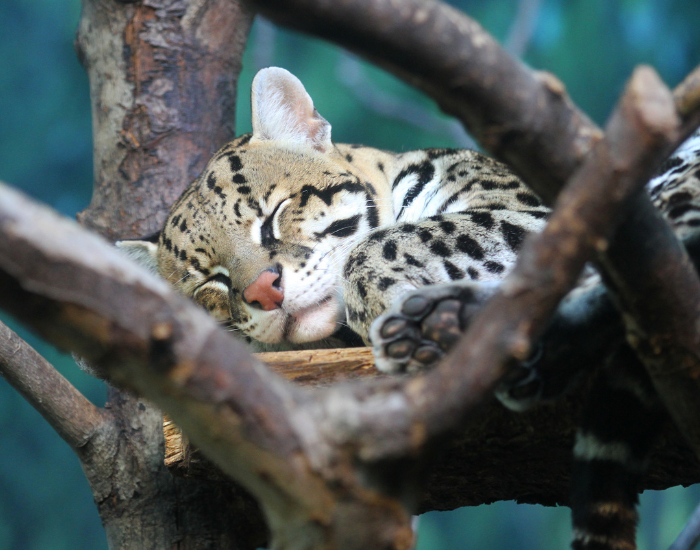
9. Enemies and Predators of Ocelots
Despite their stealth, ocelots face many threats in the wild. Ocelots’ enemies include:
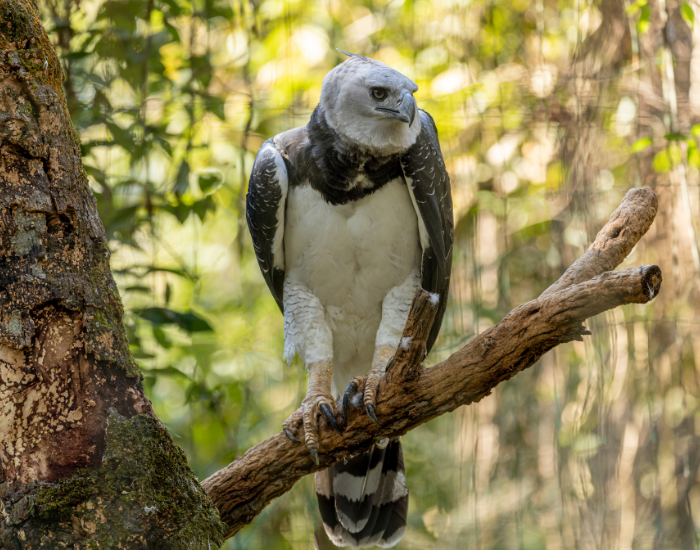
- Harpy eagles, capable of taking kittens.
- Larger mountain lions and jaguars.
- Humans — still the greatest threat.
- Competition with other cats for prey.
In ecosystems with many cats, ocelots adapt by shifting to smaller prey or hunting in denser cover.
10. Endangered Ocelots and Conservation work
The endangered ocelot populations of the U.S. highlight the importance of conservation. Programs include:
- Species Survival Plan in accredited zoos.
- Corridor projects in Texas to reduce road mortality.
- Research across Central and South America using camera traps to monitor survival.
In one project I worked on, setting up remote cameras in Costa Rica revealed ocelots competing with jaguars for the same prey base — a fascinating insight into predator dynamics.
11. Can Ocelots be Pets?
While some still ask if an ocelot cat can be domesticated, the answer is a firm no. Pet ocelots were once trendy, but they are wild animals with complex needs. Even a playful ocelot kitten can become aggressive as it matures. Beyond legality (banned in most U.S. states), keeping them fuels the illegal wildlife trade and undermines conservation.
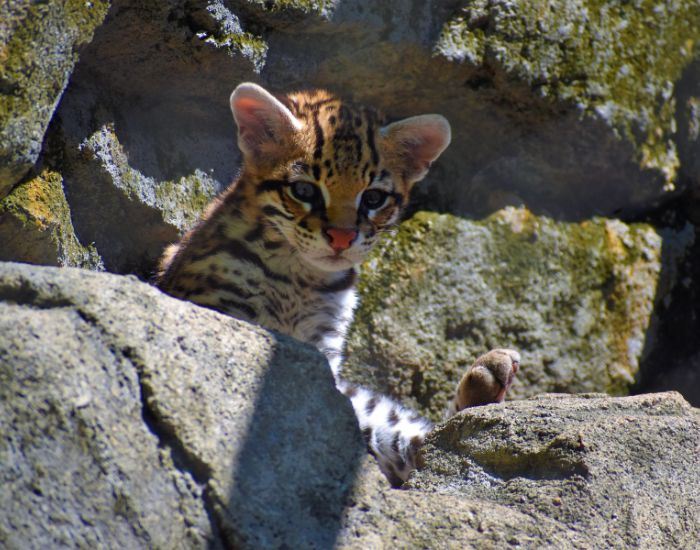
12. Why Ocelots Matter
Ocelots are more than sleek predators with gorgeous coats. They:
- Balance prey populations, from rodents to monkeys.
- Support ecotourism in places like Costa Rica.
- Represent the health of tropical ecosystems.
For me, the ocelot is a reminder of why conservation matters. On nights spent in rainforests listening to their calls echo through the canopy, I felt the deep connection between wild fauna and our own survival. Protecting the ocelot means protecting the forests we all depend on.
FAQs About Ocelots
Curiosity about the ocelot’s natural history is what often brings wildlife enthusiasts to ask whether they can be pets, or how they compare to bobcats.
Yes. An adult ocelot is nearly three times larger than a domestic cat.
They are similar in size, but male ocelots can be slightly longer.
Fewer than 120, all in southern Texas.
No. They are wild predators, not domestic animals.
Habitat loss, fragmentation, and road collisions.
Cute But Fierce Wild Cats
The animal ocelot is an extraordinary species, a predator, a symbol of resilience, and a reminder of our role in protecting biodiversity. From southern Texas to northern Argentina, they weave through ecosystems with grace, yet face the constant pressure of human expansion. Protecting corridors that bring ocelots into safer, connected habitats is one of the best strategies conservationists are focusing on today
If you ever find yourself in the dense forests of Central America or the mangroves of Costa Rica, look carefully: you might just see the glowing eyes of a big ocelot watching from the shadows.
Further reading includes field guides like Walker’s Mammals of the World, which detail the ocelot’s classification and traits!