
Humpback Whale Migration
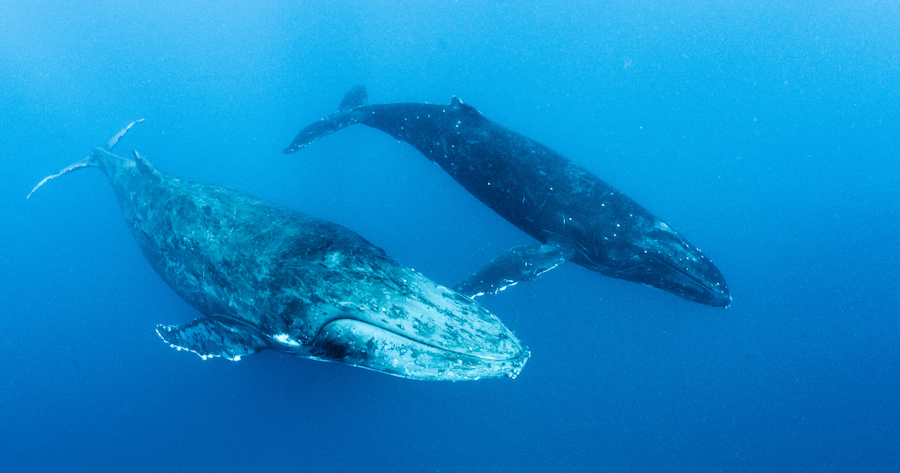
Every humpback on Earth is heading for the tropics.
Just not at the same time.
Somewhere on Earth right now, humpback whales are swimming towards the equator. They always are. The species has arranged itself so that while one hemisphere’s whales are fattening on polar krill, the other hemisphere’s are in warm water having calves — and six months later, they swap.
The map below carries all of it at once. Drag the year, or press play, and watch both hemispheres change places. It opens on today’s date — so if you are reading this in an Australian winter, the amber markers piling into the tropics are the whales currently passing the coast.
The Australian whale migration
Two separate populations of humpback whales move along Australia’s coastline each year, and they never mix. One runs up the east coast, the other up the west, and both begin in the same place: the freezing, krill-heavy water of the Southern Ocean.
The east coast group leaves Antarctic waters around May and swims north past New South Wales, southeast Queensland and out to the Great Barrier Reef. Western Australia’s whales take a mirror-image route past Perth and Ningaloo Reef, up to the sheltered bays of the Kimberley.
Numbers along both coasts are extraordinary now, and that is a recent thing. Commercial whaling took more than 95% of humpbacks worldwide before the moratorium arrived; Australia’s east coast population fell to a few hundred animals. It is one of the more genuinely encouraging conservation stories going.
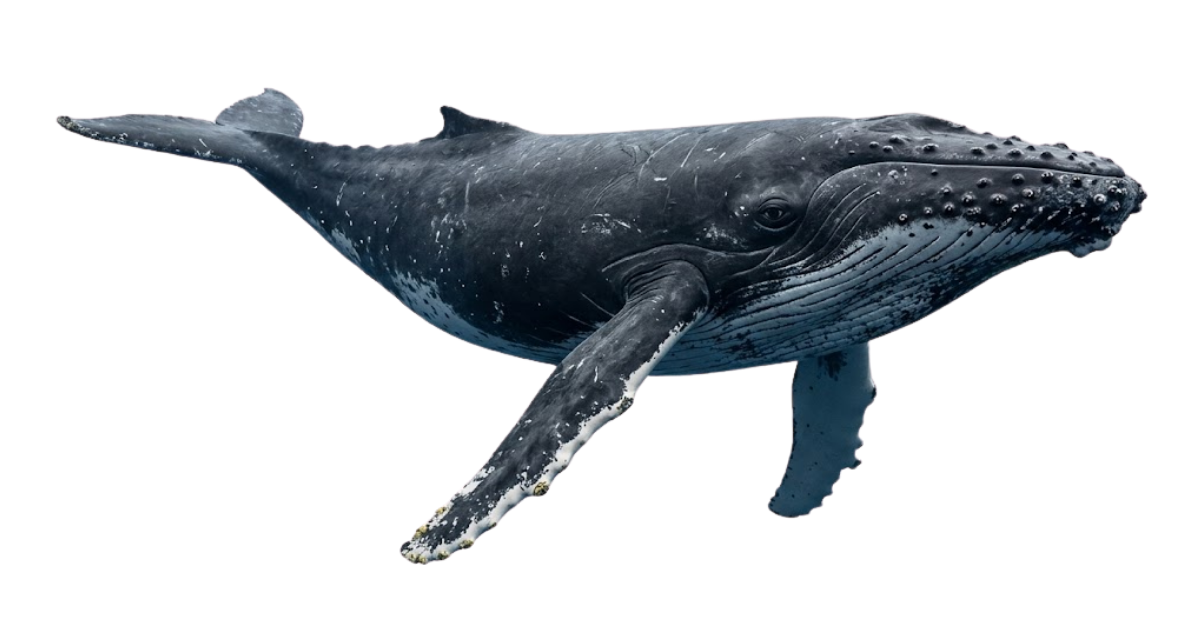
Whale watching season, month by month
Timings shift a little each year with water temperature, but the pattern holds well enough to plan around.
The northbound migration
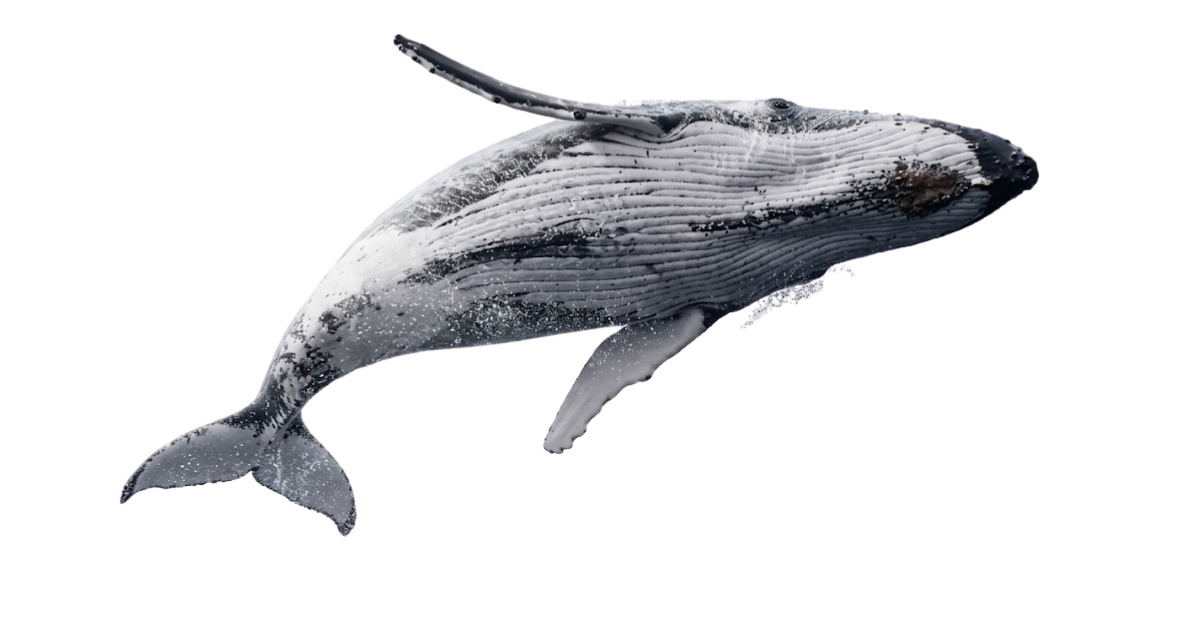
Whales leave the Southern Ocean and head north, travelling fast and purposefully. Heavily pregnant females go first; young males tend to bring up the rear.
This is the leg where you see the spectacular behaviour — breaching, tail slapping, fin slapping — often well offshore. Sydney, Jervis Bay and Byron Bay all come alive from late May.
They are running on fat reserves. Most will not feed properly again until they return to Antarctic krill.
Calving in warm water
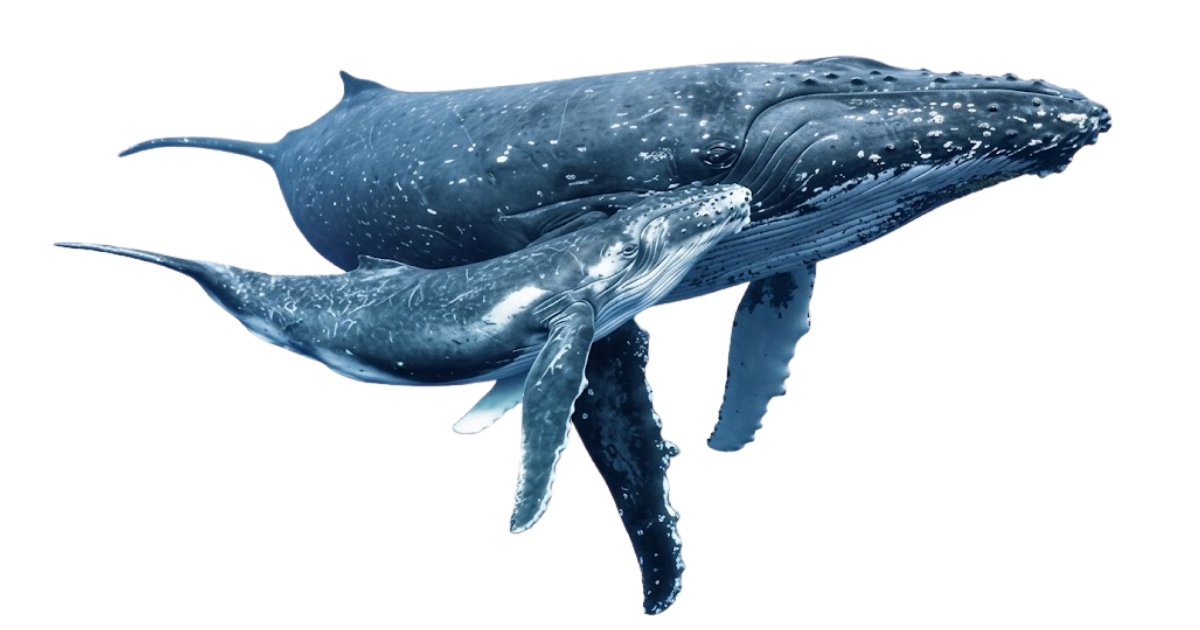
Females give birth in the protected waters of the Great Barrier Reef and, on the other side of the continent, the Kimberley. A newborn calf carries almost no blubber, which is precisely why the tropics are the nursery.
Mating happens here too. Males sing — long, structured, repeating songs that travel for kilometres through water and change from year to year.
The southbound journey
The return journey south is the better one for watching, and most people do not realise it. Mothers with new calves hug the coastline, staying in shallow, sheltered water where killer whales are less likely to find them.
That is why Hervey Bay works the way it does. Whales stop there, in calm protected water behind Fraser Island, and rest — sometimes for days. Curious animals come to boats rather than the other way round.
Feeding in the Southern Ocean
Back in Antarctic waters, the whole population does almost nothing but eat. Antarctic krill swarm in densities found nowhere else on the planet, and a humpback can put on a third of its body weight in a season.
Meanwhile, on the far side of the equator, the northern hemisphere’s humpbacks are arriving in Hawaii and the Caribbean to calve. The map above shows both halves at once.
Where I have watched them
Two winters ago I spent two months in an apartment at Kingscliff with an ocean view, and saw whales from the balcony essentially every day. We worked our way down the headlands — Cabarita, Pottsville, and back up towards the Gold Coast — and the honest finding was that almost every headland works. Some are simply closer to the line the whales take.
Rainbow Bay at Coolangatta is one of the good ones. I was there two days ago, in early September, and saw a couple heading south.
The one I keep coming back to happened underwater. In August 2025 I dived Julian Rocks off Byron Bay, expecting wobbegongs and turtles, which we got. What I did not expect was to hear whales. The song arrives as vibration before it registers as sound — you feel it in your chest rather than your ears, and it has no obvious direction. It is difficult to describe without sounding mystical, so I will just say it felt ancestral. Older than us, and completely indifferent to us.
I had a CD as a teenager with whale song on one of the tracks. Hearing it for real, with sixteen metres of water above me, was not the same thing at all.
The other place I have watched them is Puerto Escondido on the Pacific coast of Mexico, at the end of February. Same species, opposite hemisphere, six months out of step — those were northern hemisphere whales in their breeding season while Australia’s were feeding in Antarctica. Standing on a Mexican beach in February and a Queensland headland in September, you are watching the same behaviour on opposite halves of the calendar.
Watching them well
From land
Free, and often excellent
Any headland with height and a clear view south. Early morning light is kinder, the water is usually calmer, and you have all day. Bring binoculars and give it forty minutes — a blow is much easier to spot once you know what you are looking for.
From a boat
Closer, and worth it once
Hervey Bay and the Gold Coast both run good operators. Look for one that stays with a pod rather than racing between sightings. Australian rules keep boats at a set distance — but the whales are not bound by them, and often close the gap themselves.
What you are looking for
Learn the blow first
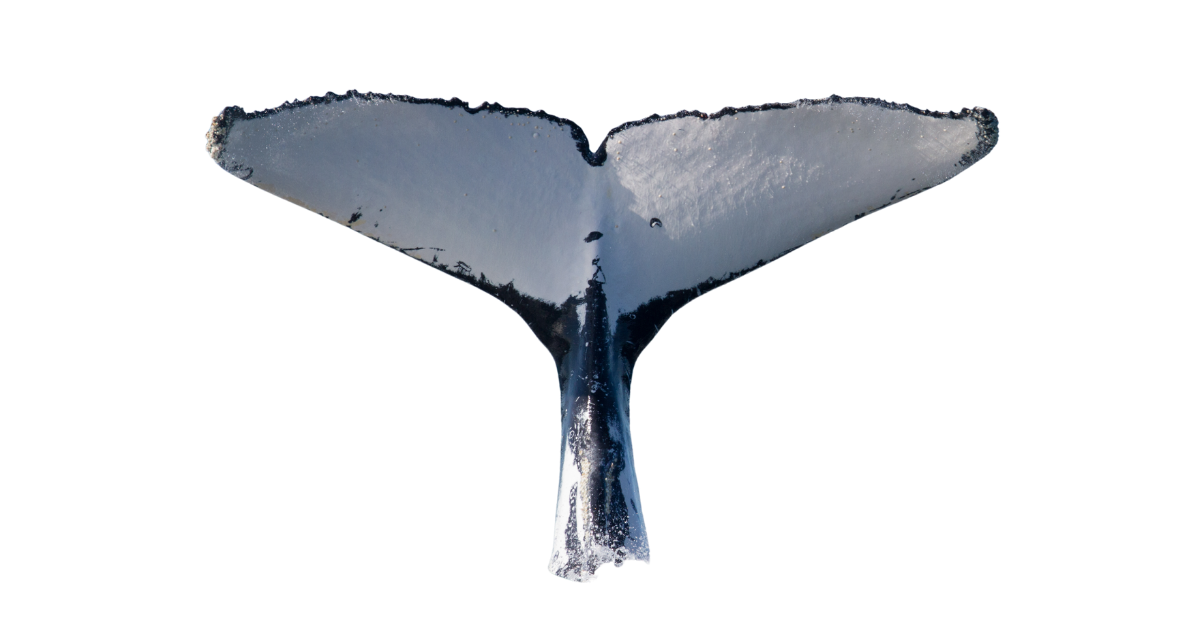
A bushy vertical spout, three to four metres high, hanging in still air. Then the long dark back rolling through, and the small dorsal fin. The tail fluke usually comes last, as the whale dives — and every fluke pattern is unique, like a fingerprint.
Good places along the coast
- Southeast Queensland: Rainbow Bay and Point Danger at Coolangatta, Burleigh Heads, North Stradbroke Island.
- Hervey Bay: the calmest water and the longest encounters, in the lee of Fraser Island. A declared Whale Heritage Site.
- Northern New South Wales: Cape Byron, Cabarita, Pottsville, Fingal Head.
- Sydney and south: Cape Solander, North Head, Jervis Bay, and Eden for the southbound leg.
- Western Australia: Ningaloo Reef, Exmouth, Augusta and Albany.
Common questions
What is the best time to see humpback whales?
In Australia, June to November, with the peak through July and August. The northbound migration from May to July brings the acrobatic behaviour; the southbound journey from August onwards brings mothers with calves travelling close to shore, which is generally the better viewing. In the northern hemisphere the whole pattern shifts six months — Hawaii and the Caribbean are best from December to April.
What is the natural enemy of a humpback whale?
Killer whales, and almost exclusively the calves. Adult humpbacks are too large for orcas to take, but a newborn on its first migration is vulnerable, which is why mothers hug the coast and stay in shallow protected water on the way south. Many adult humpbacks carry rake marks on their flukes from attacks they survived as calves. Humans were by far the greater threat historically: commercial whaling removed more than 95% of the world’s humpbacks before it stopped.
What is the lifespan of a humpback whale?
Roughly 80 to 90 years, comparable to a human. They grow to about 18 metres and 36 tonnes. Individuals are identified by the unique black-and-white pattern on the underside of the tail fluke, which is how researchers have followed the same animals across decades and, in some cases, across entire oceans.
How far do humpback whales travel per day?
Around 160 to 170 kilometres in a day when they are migrating in earnest. North Pacific humpbacks have covered the roughly 4,800 km run from Alaska to Hawaii in as little as 28 days. They keep that up while barely feeding, running down the fat reserves built in polar waters.
Why do whales migrate to warmer water at all?
For the calves rather than the adults. Tropical water holds very little food for a whale, so migrating there costs an adult dearly. But a newborn has almost no insulating blubber and would struggle to keep its temperature in polar water. Warm, sheltered water also means fewer killer whales. The tropics are a nursery, not a feeding ground.
Do humpback whales from Australia mix with other populations?
Barely. The east and west Australian groups keep to their own coasts, and northern and southern hemisphere humpbacks are separated by timing more than distance — even where their ranges overlap near the equator, they are there six months apart. There are 14 recognised populations worldwide, and one of them, in the Arabian Sea, has not migrated at all for something like 70,000 years.
References
- International Whaling Commission. (n.d.). Humpback whale. https://iwc.int/about-whales/whale-species/humpback-whale
- NOAA Fisheries. (2026). Humpback whale. National Oceanic and Atmospheric Administration. https://www.fisheries.noaa.gov/species/humpback-whale
Migration routes on the map are drawn as corridors, not individual tracks, and represent the months populations are typically where shown. Figures checked September 2026.



