
Gray Whale Migration
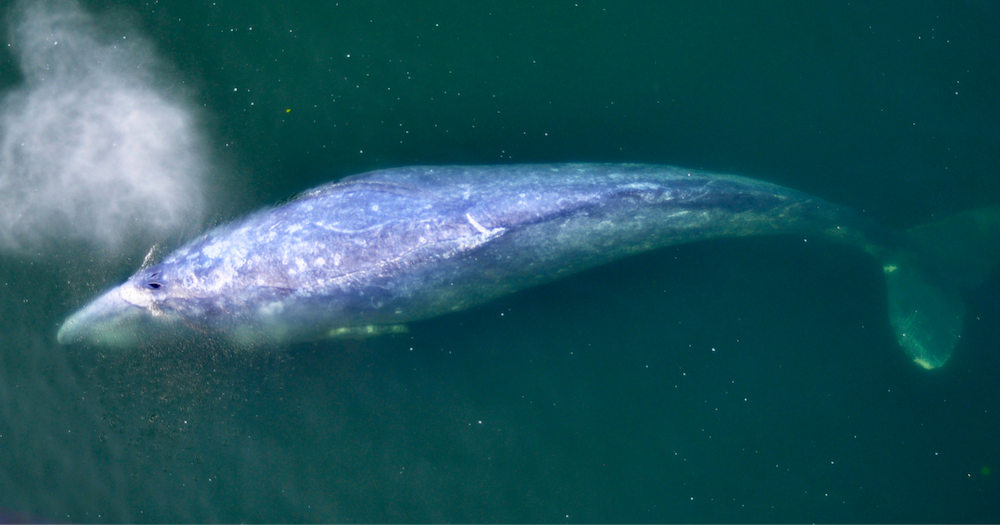
The Arctic to Baja California and back,
close enough to watch from the beach.
The gray whale migration is the one you can watch from land. Almost every other great whale crosses open ocean, out of sight; gray whales follow the shoreline from the Arctic to Baja California and back, roughly 16,000 kilometres a year, close enough that people track them from headlands with binoculars and a thermos.
Why do gray whales make this trip every year?
Three reasons, and the third is the one most people miss.
The food is all in the Arctic
Gray whales feed by rolling onto one side and sucking mouthfuls of mud off the sea floor, then straining out the small crustaceans living in it. The Bering and Chukchi Seas hold those animals in quantities found nowhere else, so a whale eats roughly 1.3 tonnes a day there and almost nothing for the rest of the year.
A newborn cannot survive it
Calves arrive with almost no blubber. Drop one into Arctic water and it loses heat faster than its mother can feed it back. Baja’s lagoons are shallow, warm and salty enough to keep a newborn afloat and alive while it builds the fat it needs.
The lagoons keep killer whales out
Orcas take gray whale calves, and they hunt in deep water. A lagoon with a shallow, narrow mouth is a place they largely avoid. Mothers then run the surf line the entire way north, keeping the calf between themselves and the beach.
The map below runs the whole year. Press play or drag the timeline, and watch two things move at once: the main body of the population, and the mothers with calves who leave weeks later and stay much closer in. The list beside it tells you which stretch of coast has whales going past right now.
The gray whale migration, month by month
Dates shift by a couple of weeks each year with ice and food, but the sequence holds.
Eating a year’s worth of food
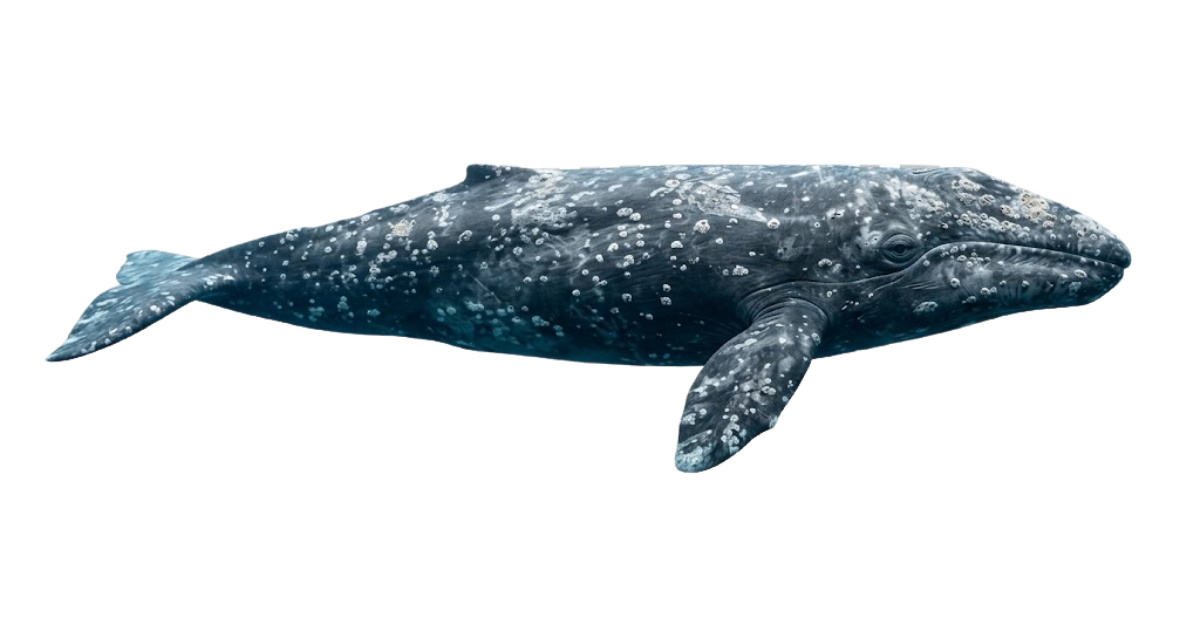
In the Chukchi and northern Bering Seas the whales work the sea floor, leaving oval feeding pits behind them. Because the Arctic summer is short, almost the entire year’s fuel goes on in these four months.
Not everyone goes that far, however. A few hundred whales stop between northern California and southeast Alaska and spend the summer there instead.
Southbound down the whole coast
Pregnant females lead, since they have the furthest to go and the least time to do it. Everyone else follows through November and December, moving about 120 kilometres a day and rarely stopping to feed.
December is the classic month to stand on a Californian cliff and count blows.
Calving in the lagoons
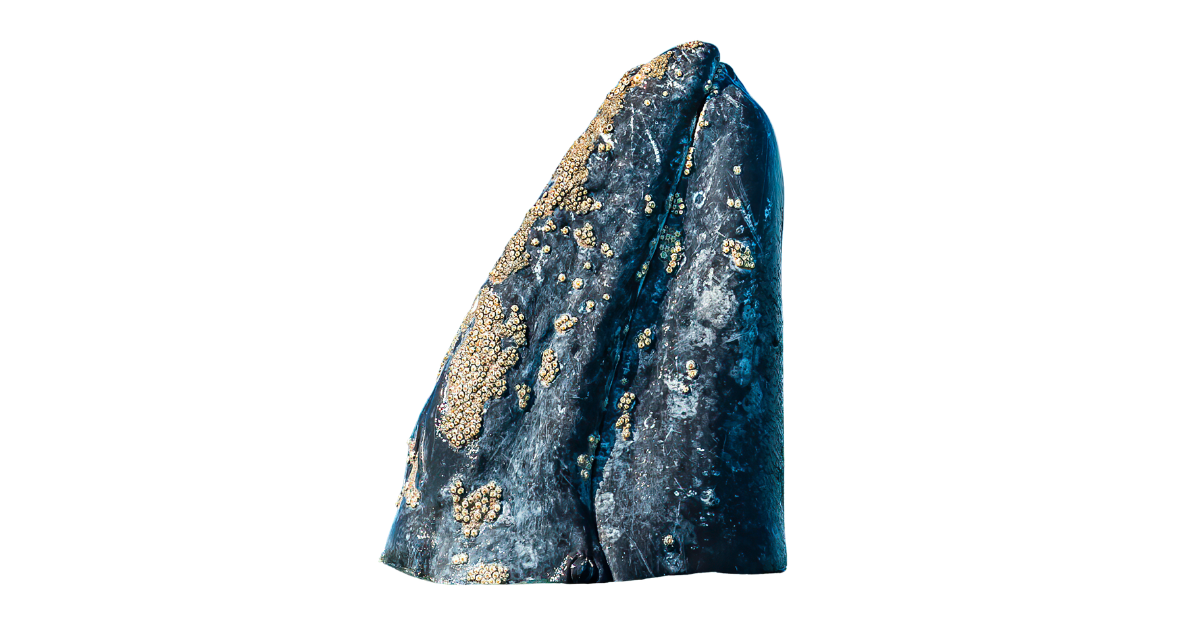
Ojo de Liebre, San Ignacio and Bahía Magdalena fill up. Calves are born from early January to mid-February, arriving at about four and a half metres and 900 kilograms after a pregnancy of twelve to thirteen months.
Meanwhile the first whales are already leaving. Males and females without calves turn north in February, so northbound and southbound animals pass each other off California.
Mothers and calves come last
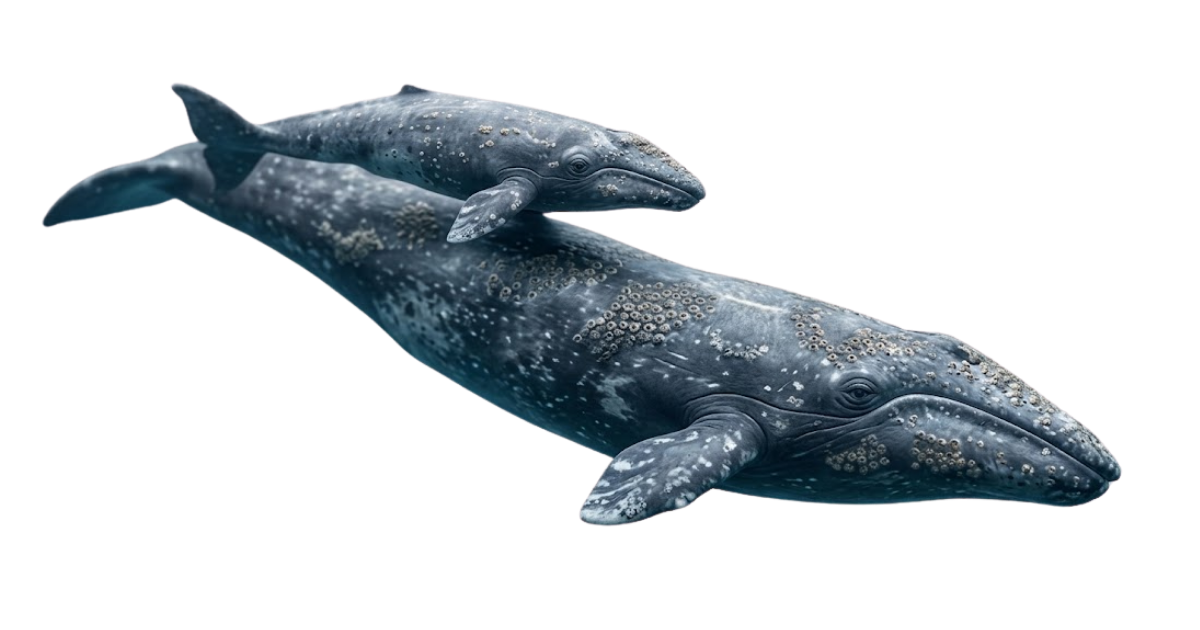
Cows wait until a calf can manage the journey, then follow weeks behind the rest and hug the shoreline the whole way. As a result, April and May bring the closest and slowest whale watching of the year.
By June most have reached Unimak Pass and the Bering Sea, and the cycle starts again.
The day a mother introduced us to her calf
Gray whales hold a special place in my heart, and it comes down to one afternoon: 31 March 2019, in my last semester of a biology degree. I was on a university field trip to the calving lagoons of Baja California, there to study a conservation success story on the ground rather than in a lecture theatre.
A mother surfaced beside our small boat, and she did not move away. Instead she eased her calf towards us, and we sat still with our hands inside the boat while the two of them breathed and rolled at arm’s length. It felt like an introduction — as though she were presenting him to us. Then they left. A friend cried, and I was not far off.
What makes it stranger is that the behaviour is well documented. The lagoons where nineteenth-century whalers called this species the devil fish are the same lagoons where mothers now bring calves to boats of their own accord. Nobody has fully explained it. Learning the comeback story in class was one thing; watching a whale choose that approach was another entirely.
I wrote that day up in more detail in from the brink of extinction, and there is more on the species itself in my gray whale facts guide.
Where to watch the gray whale migration
The Baja lagoons
January to early April
Laguna Ojo de Liebre, Laguna San Ignacio and Bahía Magdalena, all in Baja California Sur. This is where the calves are, and where the friendly-whale encounters happen. My Mexico whale watching guide covers how to get there.
The California coast
December to May
Monterey Bay, Point Loma in San Diego, Point Reyes and Cabrillo National Monument. December and January for the southbound run; March to May for northbound cows and calves working the surf line.
Oregon, Washington and BC
March to June, plus summer
Depoe Bay, Westport and the west coast of Vancouver Island. The Oregon coast also holds about two hundred resident whales from June to November, so summer sightings there are normal rather than lost animals.
How to actually see one
- Learn the blow first. A gray whale’s spout is low, bushy and often heart-shaped from head on. Spot that and everything else follows.
- There is no dorsal fin — look instead for a low hump followed by a row of knuckles along the back. That alone separates them from every other whale on the coast.
- Height beats distance. A cliff or a lighthouse gives you far more water than a beach does.
- Go northbound if you want them close. Southbound whales often travel well offshore, whereas cows with calves in April and May pass within a few hundred metres of the rocks.
- Calm mornings win. Wind chop hides blows, so the first hours after dawn are usually the best of the day.
- In the lagoons, let the whale decide. Boats there are required to wait rather than approach, which is exactly why the encounters are what they are.
From devil fish to friendly whales
Nineteenth-century whalers gave this species its old name. Once shore-based crews worked out that the lagoons held mothers and newborns, they hunted there, and the mothers fought back hard enough to smash boats and kill men. Devil fish stuck.
Two commercial hunts followed, one in the 1850s and another with factory ships in the early twentieth century, and by the 1930s the eastern population was close to gone. Protection arrived in 1946, recovery took five decades, and in 1994 the eastern gray whale became one of the very few species ever removed from the US endangered species list because it had genuinely bounced back. If you want the wider picture of where whaling stands today, I have written about whether whale hunting still exists.
The strange part is what happened next. From the 1970s onward, whales in San Ignacio began approaching small boats voluntarily, often mothers with calves, in the same lagoons where their great-grandmothers had been hunted. Nobody has a settled explanation, yet it happens reliably enough that Mexico built a regulated ecotourism industry around it.
How the population is doing now
The gray whale migration is really two migrations, and their situations are nothing alike. The eastern North Pacific group is the one that fills the Baja lagoons; the western group feeds off Sakhalin Island in the Russian far east and numbers fewer than three hundred animals, which keeps it listed as endangered.
Even the eastern population has had a hard decade. An unusual mortality event ran from 2019 to 2023, and the count fell from roughly 27,000 whales in 2015 and 2016 to about 12,890 by 2025. The 2026 survey put the estimate back at 17,750, although the researchers themselves caution that a swing that large in one year probably reflects survey conditions as much as real growth (Lang et al., 2026). More worrying is calf production: 85 calves in 2025, the lowest figure since counting began in 1994.
Then there is Varvara. Tracked by satellite from Sakhalin, she crossed the North Pacific, reached Baja California and returned — 22,500 kilometres in 172 days, the longest migration ever documented for a mammal (Mate et al., 2015). Two other western whales did much the same thing, which raises an awkward possibility: some animals counted as western may actually be eastern whales that summer off Russia, making the true western population smaller still.
Common questions
How far do gray whales migrate each year?
Roughly 16,000 kilometres round trip, or about 10,000 miles, between Arctic feeding grounds and the calving lagoons of Baja California. Some individuals cover considerably more: a western gray whale called Varvara was tracked over 22,500 kilometres in 172 days, from Sakhalin Island to Mexico and back, which stands as the longest migration ever recorded for any mammal. They average about 120 kilometres a day and barely feed.
Are gray whales aggressive?
No, although the reputation has a real origin. Nineteenth-century whalers named them devil fish because mothers defending calves in the Baja lagoons destroyed boats and killed crew. That was defence, not aggression. Since the 1970s the same lagoons have become famous for the opposite: whales, often mothers with calves, approaching small boats of their own accord. Mexico now regulates a whale watching industry around it.
Can whales live up to 200 years?
One species can. Bowhead whales are the longest-lived mammals known, with the oldest individual estimated at about 211 years, and nineteenth-century harpoon fragments have been recovered from whales killed in recent decades. Gray whales are nothing like that. Their lifespan is not precisely known, but one female was estimated at 75 to 80 years, which is a more typical figure for a baleen whale.
Which whale lives 300 years?
None, as far as the evidence goes. The bowhead is the record holder among whales at an estimated 211 years, and the 300-year figure that circulates online is not supported by any published age estimate. The confusion may come from the Greenland shark, which is not a whale and which may live beyond 250 years. For a comparison across species, see my guide to the types of whale.
References
- Lang, A. R., Eguchi, T., & Weller, D. W. (2026). Abundance of eastern North Pacific gray whales 2025/2026 (NOAA Technical Memorandum NMFS-SWFSC-737). NOAA Fisheries. https://doi.org/10.25923/yk4w-dd52
- Mate, B. R., Ilyashenko, V. Y., Bradford, A. L., Vertyankin, V. V., Tsidulko, G. A., Rozhnov, V. V., & Irvine, L. M. (2015). Critically endangered western gray whales migrate to the eastern North Pacific. Biology Letters, 11(4), 20150071. https://doi.org/10.1098/rsbl.2015.0071
- NOAA Fisheries. (2026). Gray whale (Eschrichtius robustus). National Oceanic and Atmospheric Administration. https://www.fisheries.noaa.gov/species/gray-whale
Routes on the map are corridors rather than individual tracks, and timing is averaged across many years of shore counts and satellite tagging. Figures checked September 2026.



