
Bar-Tailed Godwit Migration
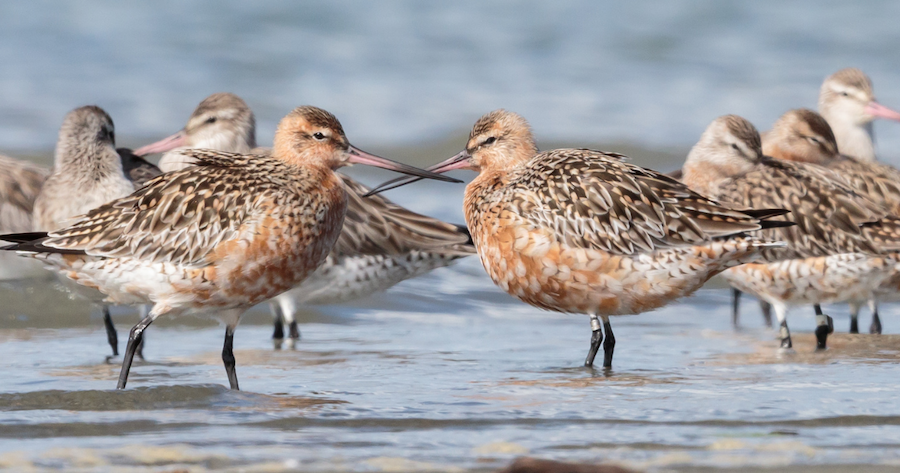
Eleven days in the air. No food, no water,
no landing, and no map.
The bar-tailed godwit migration holds a record no other animal comes close to. In October 2022 a four-month-old bird left Alaska, flew 13,560 kilometres over open ocean, and landed in Tasmania eleven days later. It had not eaten, drunk, or touched down once.
Why on earth would a bird do this?
Three answers, and none of them is stubbornness.
The Arctic summer is a free lunch
For eight weeks a year, the tundra explodes with insects and barely gets dark. A godwit can raise chicks there in near-permanent daylight, with almost no competition and few predators. Nothing in the tropics matches it.
The Arctic winter would kill them
By September the tundra freezes and the food is gone. Australia and New Zealand offer warm estuaries and mudflats that produce worms and shellfish all year, so the birds leave and come back. They are Arctic breeders spending most of their lives in the southern sun.
The ocean is safer than the coast
Flying the Pacific looks reckless, and by distance it is the long way round. What the open sea has instead is tailwinds, no falcons, no hunters and no reclaimed mudflats. Once a godwit commits, very little can go wrong except the weather.
The map below carries the whole bar-tailed godwit migration in one picture. Switch between the year, which follows both populations through the annual cycle, and the record flight, which puts you hour by hour inside that eleven-day crossing.
The bar-tailed godwit migration runs on two different routes
Most Australians who watch godwits are looking at one of two subspecies, and which one depends on which coast they are standing on. The distinction matters more than it sounds, because the two groups run entirely different journeys.
Alaskan godwits (Limosa lapponica baueri) breed in western Alaska and fly straight down the Pacific to New Zealand and eastern Australia. Their year is a loop rather than a there-and-back: south across open ocean in spring, north again up the Asian coast the following autumn.
Siberian godwits (Limosa lapponica menzbieri) breed on the tundra between the Anabar and Kolyma rivers and spend the non-breeding season in north-west Australia, around Broome and Eighty Mile Beach. They travel via the coast of Asia in both directions, which means four visits a year to the same set of mudflats.
That single difference decides how much trouble each population is in, and the map above shows why.
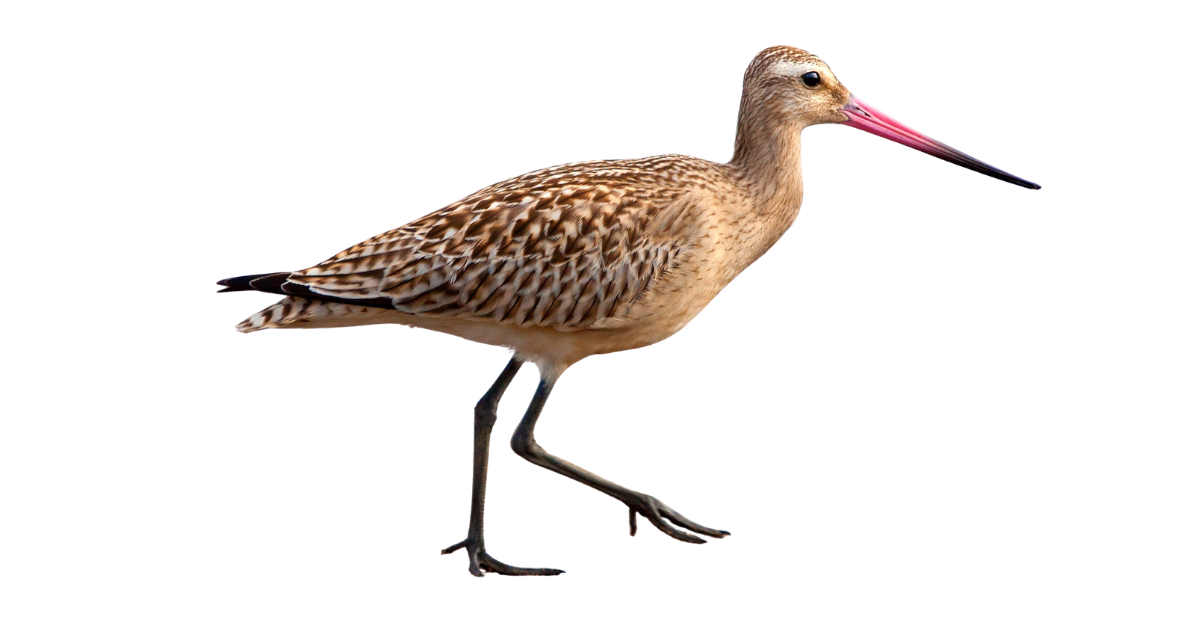
The flight that broke the record
Bird B6, tracked by satellite from the Kuskokwim Delta to Ansons Bay, 13 to 24 October 2022.
Turning into fuel
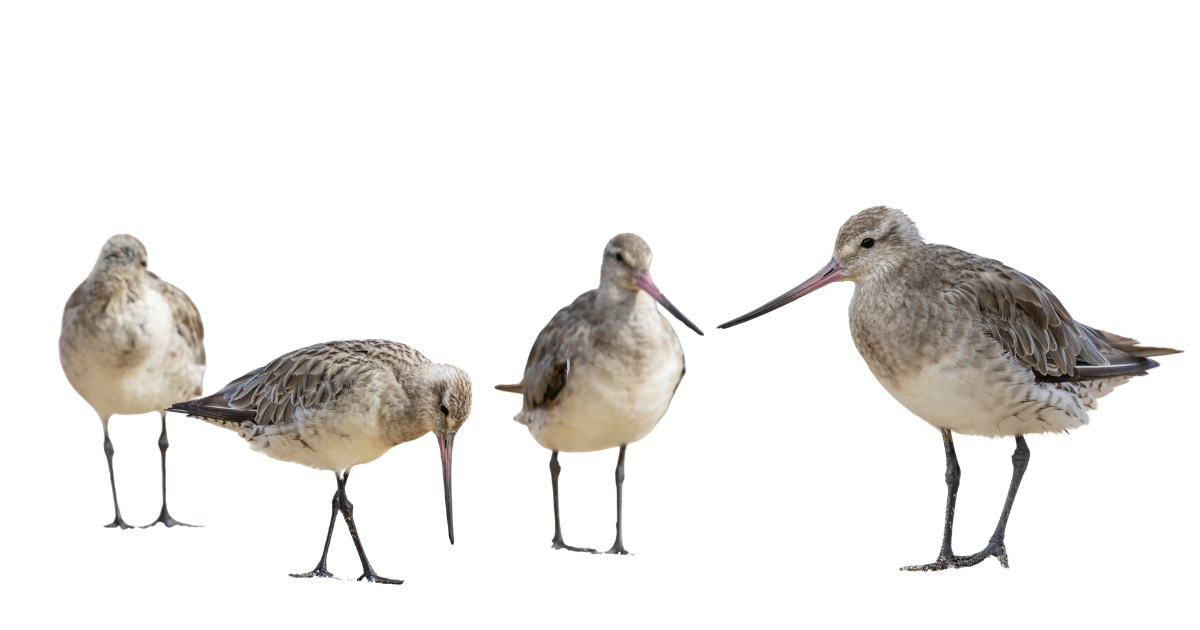
Godwits gathering on the Alaskan shoals in late summer eat clams and marine worms until fat makes up more than half their body weight. Meanwhile the gizzard and intestines shrink almost to nothing.
Carrying a digestive system across an empty ocean makes no sense, so the bird dismantles its own. The organs regrow on arrival.
B6 was four months old and had never flown further than an Alaskan estuary.
Into the empty half of the planet
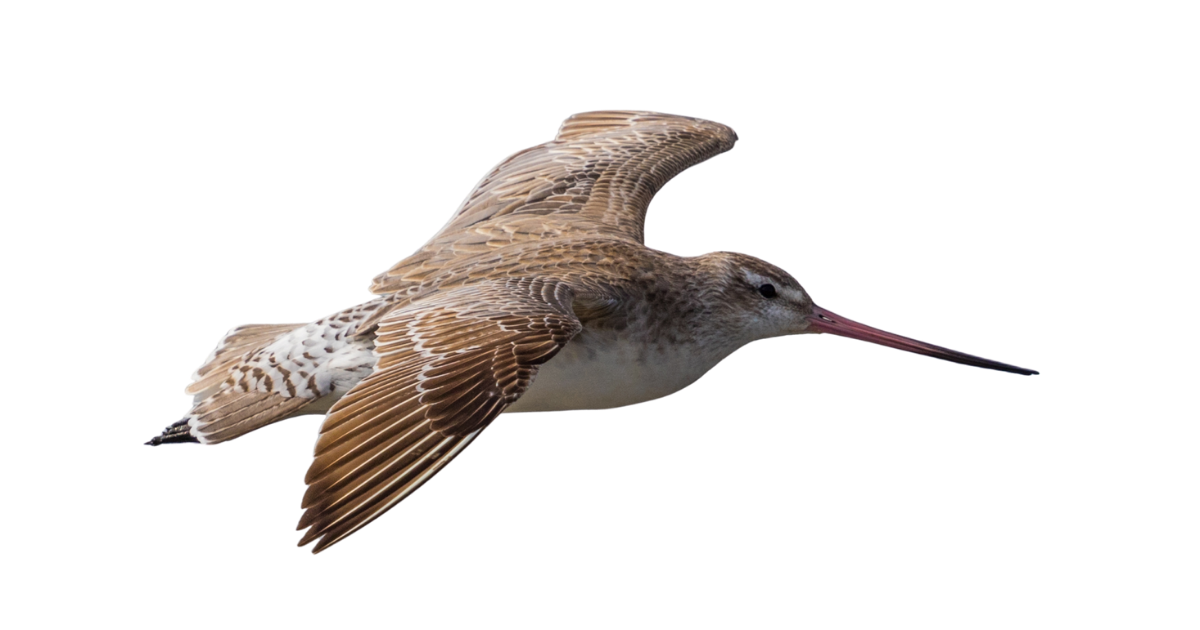
Departure is timed to a weather system. Birds launch on the back of a low, catch the tailwind behind it and hold roughly 50 to 60 km/h over the ground, day and night, without a break.
Within a day there is no land in any direction. A godwit that lands on water at this point does not get airborne again.
Down through the tropics
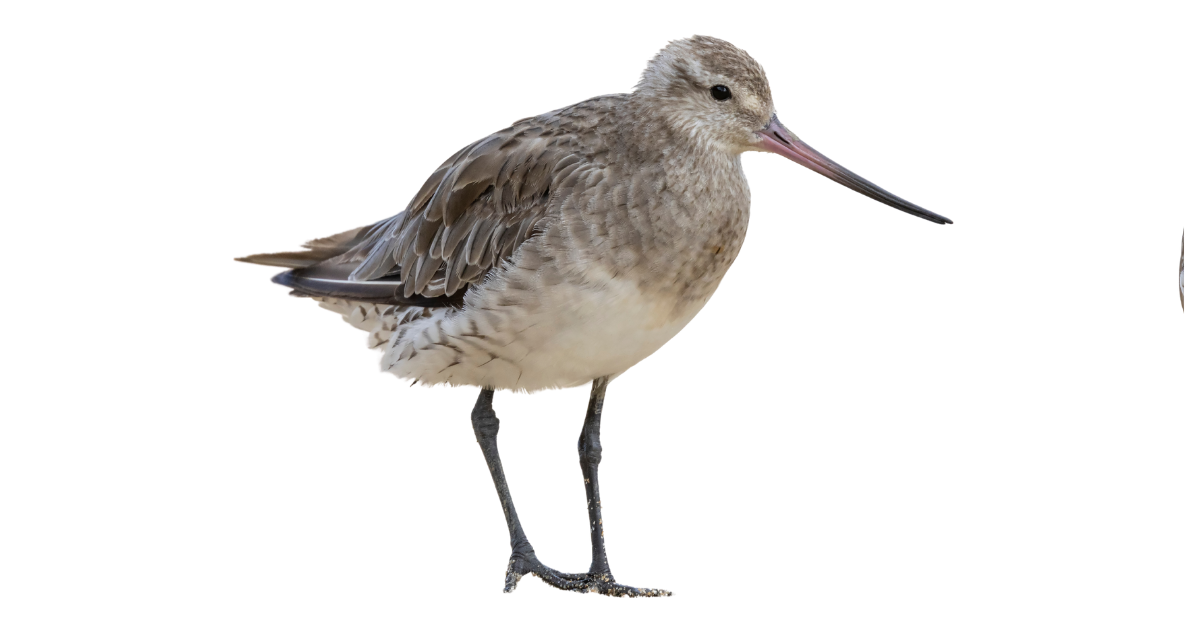
Halfway across, roughly half the fuel has gone. Most Alaskan godwits aim for New Zealand from here, and B6 kept going south-west instead, down the length of eastern Australia.
It came down at Ansons Bay in north-east Tasmania on 24 October, having flown further without stopping than any bird on record.
Where I have watched them
My first encounter was accidental, and I did not know what I was looking at. In July 2024 my partner and I were housesitting a French bulldog in Mandurah, south of Perth, near the end of three months in the south-west. We walked out to the Creery Wetlands and Coodanup, looking mostly for one of the Giants, and found an interpretive sign on the edge of the Peel Inlet instead.
Bar-tailed godwit was on it, with a paragraph about a journey from the Arctic. Standing on a Western Australian estuary reading about Siberia rearranged my sense of the place. There were long-billed waders out on the flats that day and I would not swear on the identification, but that inlet is exactly their habitat — and I now know that first-year godwits often skip the trip north entirely, so July is perfectly plausible.
The east coast is where I am certain. I have seen them at the Noosa Spit Recreation Reserve in January, during three months on the Sunshine Coast. My partner lives ten minutes by bike from Coombabah Lakelands, and I have been there at least seven times — the lake is always worth the stop, and on a hike in October 2025 there were maybe five to fifteen godwits working the shallows over twenty minutes.
The best of them was Christmas 2024. We took my partner’s family boat out to North Stradbroke Island, past the mangroves, and waded through ankle-deep water to reach the dunes. Crabs, goannas and wallabies came first. Then the godwits, twenty or thirty of them, spread across the shallows — and yes, another sign, explaining the same impossible journey.
Two coasts, and probably two different subspecies. That thought had not occurred to me until I built this map.
Where to see bar-tailed godwits in Australia
South-east Queensland
September to March
Moreton Bay is internationally significant for shorebirds, and it is easy to reach. Coombabah Lakelands, the Broadwater, North Stradbroke Island and Toorbul all hold godwits through the austral summer.
North-west Australia
October to March
Roebuck Bay at Broome and Eighty Mile Beach carry some of the largest shorebird concentrations on the planet. These are Siberian birds rather than Alaskan ones, fresh off the Asian coastal route.
Everywhere else with mud
Spring and summer
Godwits turn up on estuaries right around the coast: the Peel Inlet in Western Australia, Corner Inlet in Victoria, the Hunter estuary in New South Wales, Noosa in Queensland.
How to actually see one
- Go on a rising tide. Falling water spreads birds across kilometres of flat. A rising tide pushes them towards you and concentrates them on the roost.
- Bring binoculars. Godwits feed a long way out and look like grey commas without them.
- Learn the bill. Long, very slightly upcurved, pink at the base and dark at the tip. That shape separates them from most other waders at a glance.
- September to March is the window for the full flocks, though non-breeding birds hang around through winter.
- Look for red birds in March. Adults moult into rufous breeding plumage before leaving, and a flock in that state is a genuinely striking sight.
- Keep your distance and keep dogs off the flats. A flushed bird burns fuel it needs for a 10,000 km flight. This is the single most useful thing anyone can do for them.
Why the Yellow Sea decides everything
The bar-tailed godwit migration has one unavoidable refuelling stop between Australia and the Arctic: the tidal flats of the Yellow Sea, between China and the Korean Peninsula. Birds arrive there thin and spend around six weeks eating before they can carry on.
Roughly a third of those tidal flats have been reclaimed for development in the past thirty years, and the birds that depend on them most have declined fastest. A study across the flyway found that shorebird taxa relying on the Yellow Sea for more than half their population were falling at about 5.2% a year (Studds et al., 2017).
Siberian godwits stop there four times a year, which puts them squarely in that category. Alaskan godwits stop only once, on the way north, and their long Pacific crossing looks less like showing off and more like a way of avoiding the problem altogether.
Australia moved the Alaskan subspecies from Vulnerable to Endangered under national environment law in January 2024. Around 41,500 mature birds remain, after a decline of roughly 47% across three generations. If you want the wider picture of where this sits among the world’s great journeys, I have ranked a few of them in the longest animal migrations.
Common questions
What is the longest non-stop flight by a bird?
A juvenile bar-tailed godwit known as B6 flew 13,560 kilometres from the Kuskokwim Delta in Alaska to Ansons Bay in Tasmania between 13 and 24 October 2022, tracked by satellite the whole way. Eleven days in the air, with no food, no water and no landing. It is the longest non-stop flight documented for any bird, and the bird was only four months old.
How far do bar-tailed godwits migrate?
Alaskan birds cross the Pacific southbound in a single flight averaging around 11,700 kilometres, then return north via the Yellow Sea in two legs the following autumn. Siberian birds cover roughly 10,800 kilometres each way between the Russian tundra and north-west Australia, broken by around six weeks in the Yellow Sea. Over a full year, a godwit typically flies more than 25,000 kilometres.
Do bar-tailed godwits sleep while flying?
Almost certainly, though nobody has measured it directly in this species. Frigatebirds and alpine swifts have been recorded sleeping on the wing, one brain hemisphere at a time, and a godwit spending eleven days aloft has no other option. What is confirmed is that godwits do not glide or rest — they flap continuously for the entire crossing.
When do godwits arrive in Australia?
The first birds reach northern Australia in late August, and numbers build through September and October. They stay through the austral summer, then leave on northward migration in March and early April, when adults are already turning rufous. Some first-year birds skip the northward trip entirely and spend a full year, sometimes two, on an Australian estuary, so a godwit in July is not unusual.
How can you tell a bar-tailed godwit from other waders?
Look at the bill: long, slightly upcurved, pink at the base and dark towards the tip. Non-breeding birds are plain grey-brown with fine streaking; breeding adults, especially males, turn deep brick red across the head, neck and underparts. In flight they show no white wing bar and a barred tail, which separates them from the black-tailed godwit.
How long do bar-tailed godwits live?
Longer than most people expect for a bird weighing a few hundred grams. The oldest ringed individual on record reached about 34 years, and birds in their teens and twenties are regularly recaptured. A godwit of that age has flown well over half a million kilometres, which is a little more than the distance to the Moon and back.
References
- Battley, P. F., Warnock, N., Tibbitts, T. L., Gill, R. E., Piersma, T., Hassell, C. J., Douglas, D. C., Mulcahy, D. M., Gartrell, B. D., Schuckard, R., Melville, D. S., & Riegen, A. C. (2012). Contrasting extreme long-distance migration patterns in bar-tailed godwits Limosa lapponica. Journal of Avian Biology, 43(1), 21–32. https://doi.org/10.1111/j.1600-048X.2011.05473.x
- Studds, C. E., Kendall, B. E., Murray, N. J., Wilson, H. B., Rogers, D. I., Clemens, R. S., Gosbell, K., Hassell, C. J., Jessop, R., Melville, D. S., Milton, D. A., Minton, C. D. T., Possingham, H. P., Riegen, A. C., Straw, P., Woehler, E. J., & Fuller, R. A. (2017). Rapid population decline in migratory shorebirds relying on Yellow Sea tidal mudflats as stopover sites. Nature Communications, 8, 14895. https://doi.org/10.1038/ncomms14895
- Department of Climate Change, Energy, the Environment and Water. (2024). Conservation advice for Limosa lapponica baueri (western Alaskan bar-tailed godwit). Australian Government.
Routes on the map are simplified corridors drawn from published satellite tracking, not individual tracks, and timing is averaged across many birds and years. Figures checked September 2026.



