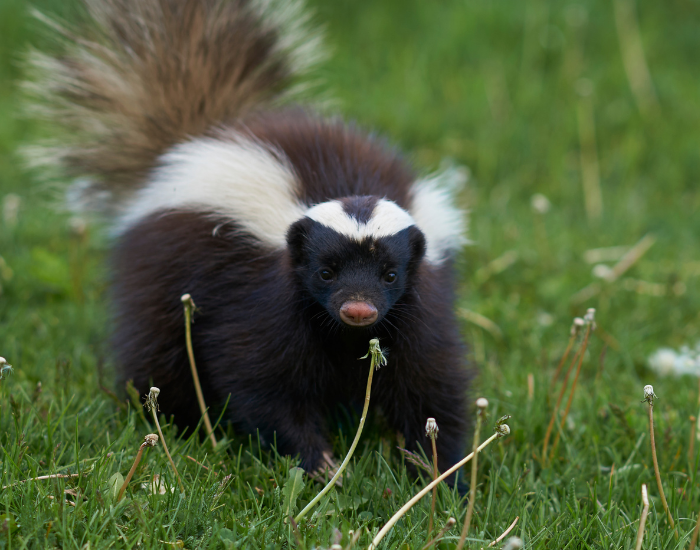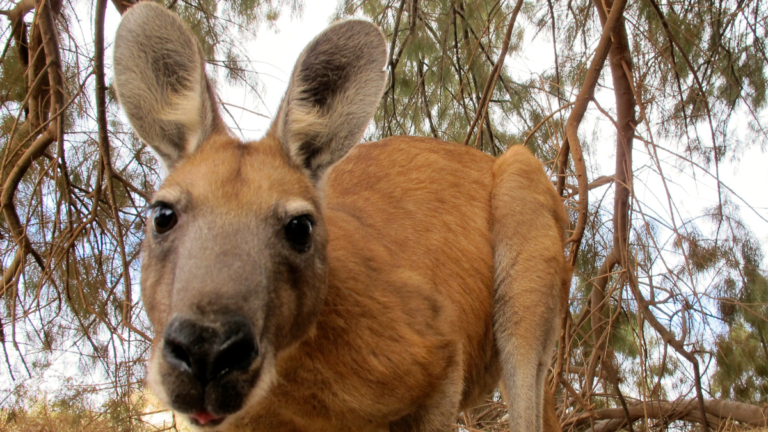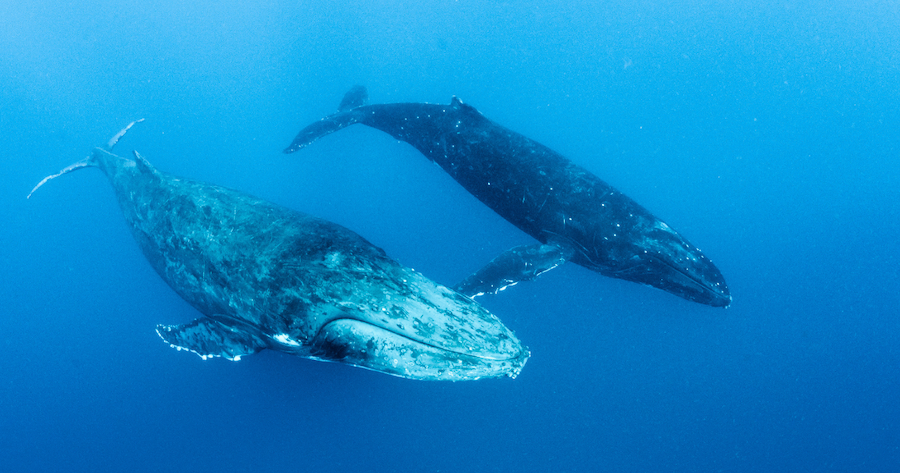
I understand the what it means to migrate. Having born in Mexico I had to travel over 12,900 kilometers (8,074 miles) to reach Australia. With nothing more than two bags. Believe me or not, this journey puts into perspective what some animals achieve in nature, in the wild. Animal migrations are some of the most extraordinary feats in the animal world. From tiny butterflies to enormous whales, the journeys from these animals are an example to the resilience and ingenuity of wildlife. But migration isn’t just a spectacle, it’s vital for the survival of many species and the health of ecosystems worldwide.
I’ve spent most of my working life following animals that move. I’ve watched gray whales in Baja and counted godwits on Queensland mudflats. As a kid I stood under a Mexican butterfly sanctuary. Here, we dive into the stories of twelve record-breaking migrators and discover what makes their journeys so unique.
You can also follow these routes month by month on our interactive animal migration maps, built from published tracking data.
Interactive
All six mapped journeys, on one map
Drag through the year and watch them move. Tap any animal to open its own map.
1. Arctic Tern: The Ultimate Distance Traveler
The Arctic tern is the undisputed champion of migration. Satellite-tracked birds average around 70,900 kilometres a year, and some individuals exceed 90,000 kilometres. That makes it the longest animal migration ever recorded.
These small seabirds embark on a journey from their breeding grounds in the Arctic to the Antarctic and back, effectively following the summer sun across the globe. Navigating vast oceans with incredible precision, they rely on Earth’s magnetic field and celestial cues.
What makes this feat even more impressive is their longevity. Arctic terns can live for over 30 years, meaning they traverse millions of kilometres in their lifetime. Beyond their endurance, they play a vital role in marine ecosystems by feeding on small fish and regulating food chains.
Their route stitches together two polar systems. In the south they join the vast assemblies of Antarctic seabirds. In the north they nest alongside the rest of the Arctic’s wildlife. Climate change threatens both ends of that route, as melting ice and shifting ocean patterns disrupt their feeding grounds.
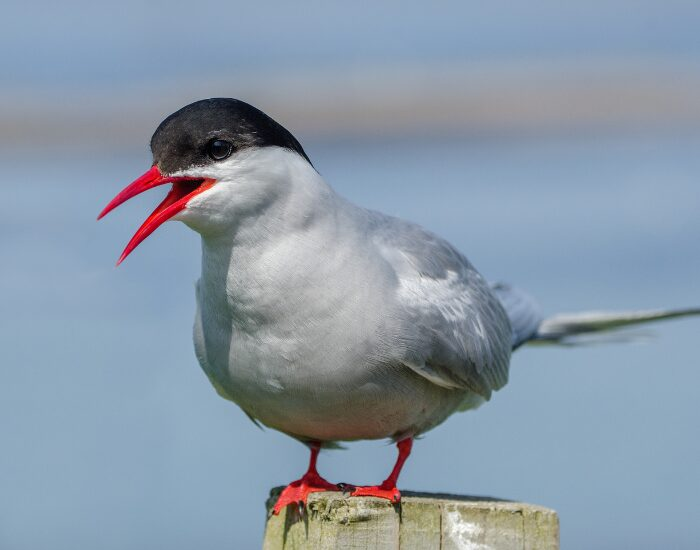
Arctic terns can fly over 70,000 kilometres annually | Photo by Mauri, Getty Images
2. Monarch Butterfly: The Tiny Travellers with a Big Mission
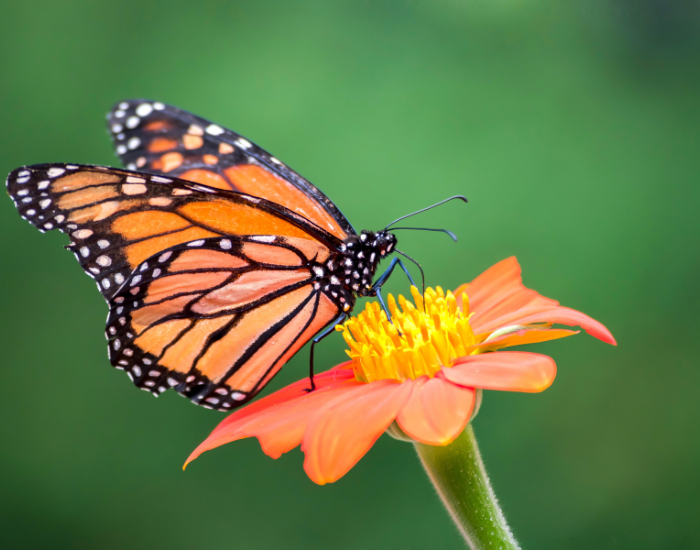
The monarch butterfly’s delicate appearance belies its incredible strength and determination. These vibrant insects undertake a migration of up to 4,000 kilometres (2,500 miles), traveling from Canada and the United States to the mountain forests of central Mexico. Remarkably, this journey spans multiple generations, with each butterfly navigating using an internal compass and environmental cues.
I saw the end of that journey before I understood it. I was about ten, on a family trip to a monarch sanctuary in Michoacán. The branches were not green, they were orange, and they moved. That is still the densest concentration of animals I have ever stood under.
Monarch butterflies are more than just a visual delight. They play a crucial role in pollination and maintaining ecosystem health, alongside bees and other insect pollinators. However, habitat destruction and climate change have severely impacted their migratory routes.
Conservation efforts, such as planting milkweed (their primary food source), are essential to preserving their journey. At university I helped a professor plant a pollinator garden of native Mexican flowers. Within a season it filled with bumblebees, moths and spiders. Small wildlife-friendly gardens genuinely work. You can trace the whole multi-generation route on our monarch butterfly migration map.
3. Humpback Whale: Giants of the Ocean
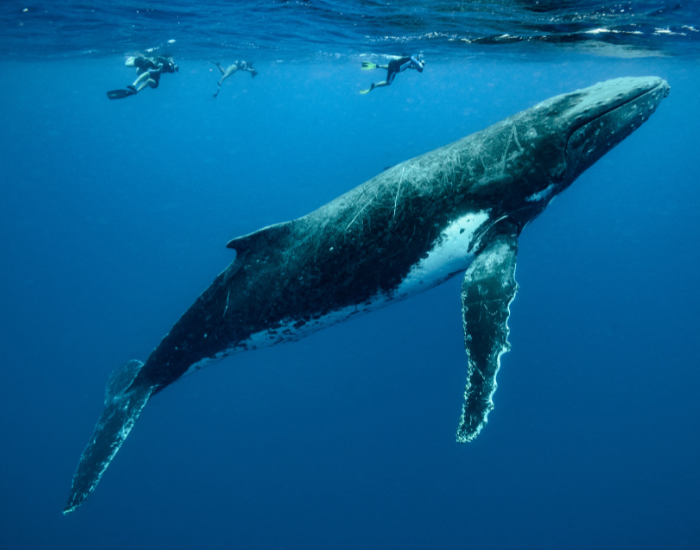
Humpback whales undertake some of the longest migrations among marine mammals, traveling up to 10,000 kilometres between their feeding grounds in polar regions and breeding grounds in tropical waters. Known for their size, acrobatic breaches and haunting songs, humpbacks use fat reserves built up during their feeding season to sustain themselves during their migration.
These gentle giants play a significant role in marine ecosystems, contributing to nutrient cycling and maintaining biodiversity. Their faeces fertilise surface waters with iron and nitrogen, feeding the plankton that feeds everything else.
However, they face numerous threats, including entanglement in fishing gear, ship strikes, and climate change-induced habitat changes. Marine conservation programs and international agreements, like the International Whaling Commission’s protections, are critical to ensuring their survival. Fourteen distinct populations run their own timetables. Compare them on our humpback whale migration map. Our guide to the best places to go whale watching covers where to see them.
4. Bar-Tailed Godwit: Non-Stop Flight Masters
The bar-tailed godwit holds the record for the longest non-stop flight by any bird. In October 2022 a juvenile tagged B6 flew 13,560 kilometres from Alaska to Tasmania in eleven days. It never landed, never fed, and had never made the trip before.
This shorebird’s journey is made possible by its ability to shrink its liver and intestines mid-flight to conserve energy. With no stops for food or rest, godwits rely entirely on fat reserves built before departure. Their ability to navigate open ocean using celestial cues and the Earth’s magnetic field is a testament to nature’s ingenuity.
I have counted godwits on three Queensland sites. The most reliable is Coombabah Lakelands. I’ve walked in seven or eight times and usually find five to fifteen birds. At Christmas 2024 I saw twenty or thirty on North Stradbroke Island. Standing on a mudflat looking at a bird that flew here from Alaska reorganises your sense of scale.
As they traverse multiple ecosystems, godwits help maintain the health of wetlands through seed dispersal and invertebrate consumption. Habitat loss along their route is the main threat, particularly the reclamation of Yellow Sea tidal flats. Wetland and mangrove protection is now the priority. Want to start noticing these birds yourself? Start with our birding for beginners guide. Our bar-tailed godwit migration map shows where the flocks are right now.
Eleven days in the air, mapped day by day
5. Caribou: Nomads of the Arctic
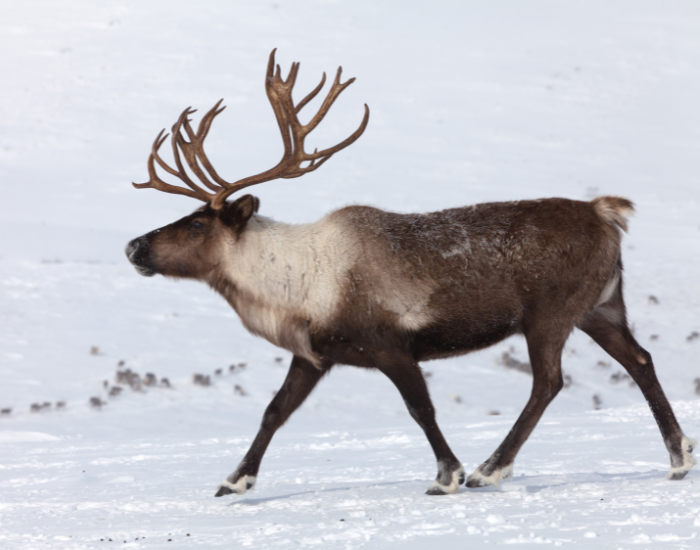
Caribou, or most commonly known as reindeer, hold the record for the longest land migration of any animal. Tracked herds cover over 1,350 kilometres a year across the Arctic tundra. Moving in massive herds, they traverse treacherous landscapes in search of food, water, and safe calving grounds.
Their thick fur and incredible stamina allow them to endure harsh Arctic conditions. Hollow guard hairs trap air, and their hooves broaden in summer for soft ground. I’ve only seen the semi-domesticated herds in northern Sweden, not the great wild migrations of Alaska. Even standing still in the snow, they look built for distance.
Caribou are vital to the Arctic ecosystem. They shape vegetation growth and feed wolves, grizzly bears and occasionally polar bears. Their migratory paths face increasing challenges from climate change and human development, such as oil exploration and road construction. Protecting wildlife corridors is essential to preserving Arctic biodiversity. Watch the herd loop from above the pole on our caribou migration map.
6. Gray Whale: The Longest Migration of Any Mammal
The gray whale holds the mammal record outright. A female called Varvara was tracked swimming 22,511 kilometres in 172 days. Her route ran from Russia’s Sakhalin Island to Baja California and back. No other mammal is known to travel further in a year.
I’ve been alongside them at the far end of that route. On a university field trip to the Baja calving lagoons in 2019, a mother surfaced beside our small boat. She eased her calf towards us at arm’s length. A friend of mine cried. I wrote it up in our piece on gray whale ecotourism in Mexico. It remains the reason I do this work.
Gray whales hug the coastline rather than crossing open ocean, which is why the migration is so watchable from land. They feed by rolling on one side and filtering amphipods from Arctic seafloor sediment. Ploughing the mud releases nutrients as they go. That bottom-feeding habit makes them ecosystem engineers as much as travellers.
The eastern population has recovered strongly, but the western population remains critically endangered. Warming Arctic seas are already shifting where their prey sits. Our gray whale migration map tracks the route south. Our Mexico whale watching guide covers the lagoons where the journey ends.
Follow the gray whale through the year
7. Sooty Shearwater: The Longest Migration Ever Recorded Electronically
The sooty shearwater flies a figure-of-eight across the entire Pacific. Birds tagged in New Zealand covered 64,037 kilometres in a single year, chasing summer between the two hemispheres. When that study published in 2006, it was the longest animal migration ever logged electronically.
Each bird crosses the equator twice and averages roughly 350 kilometres a day. They funnel into rich northern feeding grounds off Japan, Alaska and California, then turn around. Unlike albatrosses, which glide enormous distances on open wings, shearwaters mix low shearing flight with hard dives to 60 metres.
They also feed opportunistically above hunting predators. Where tuna and dolphins drive baitfish to the surface, shearwaters arrive in thousands. That dependence on healthy pelagic food webs is exactly why longline fisheries and shifting ocean temperatures hit them hard.
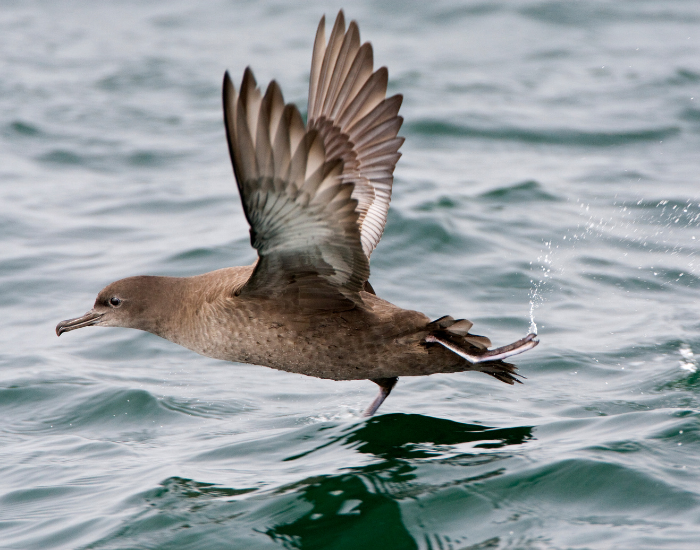
Sooty shearwaters can cover 64,037 kilometres a year across the Pacific. | Getty Images
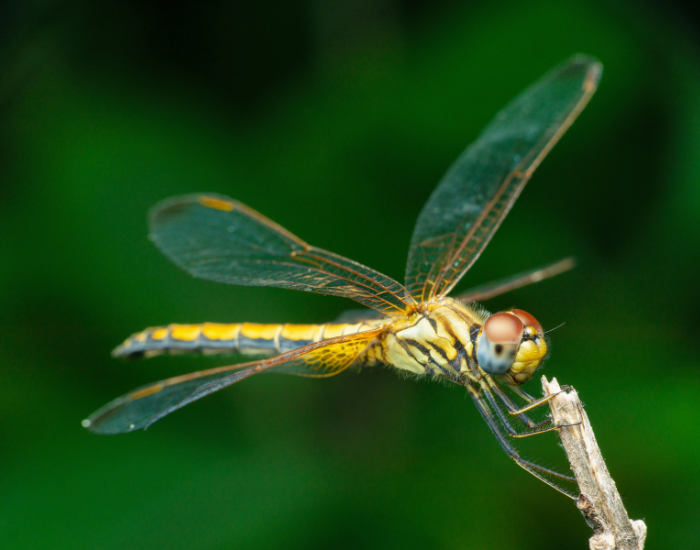
8. Globe Skimmer Dragonfly: The Longest Insect Migration
The globe skimmer (Pantala flavescens) is the longest-distance migrating insect on Earth. Its multi-generational circuit between India and East Africa is estimated at 14,000 to 18,000 kilometres. A single ocean leg can run over 2,000 kilometres of open water with nowhere to land.
No individual completes the loop. Adults ride monsoon winds at altitude, breed in temporary rain pools, and the next generation continues the route. Relative to body size, it is the most extreme migration known in any animal.
They are easy to overlook because they look ordinary. That is the point I make whenever I teach this. The record-holder in your garden may be a two-gram dragonfly, not a whale. Rain-pool loss and pesticide use are the emerging threats, and both are poorly monitored.
9. Leatherback Sea Turtle: The Longest Reptile Migration
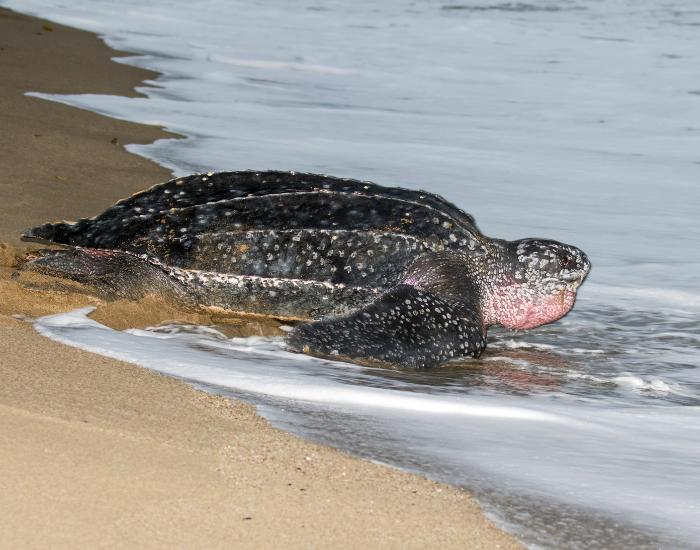
The leatherback holds the reptile record. One female tracked from Papua, Indonesia, swam 20,558 kilometres to the coast of Oregon over 647 days. That is the longest migration recorded for any reptile.
Leatherbacks are the only sea turtle without a hard shell. They are also the only reptile that holds its body temperature above the surrounding water. That lets them forage in cold, productive seas that other turtles cannot use. They live almost entirely on jellyfish, eating up to their own body weight daily.
That diet is also their downfall. A floating plastic bag reads as prey, and ocean plastic pollution is now a leading cause of death. I’ve released olive ridley hatchlings at Puerto Escondido and seen sea turtles from Southeast Asia to the Red Sea. The nesting beach is the easy part to protect. The 20,000 kilometres in between is not.
10. Northern Elephant Seal: The Deep-Diving Commuter
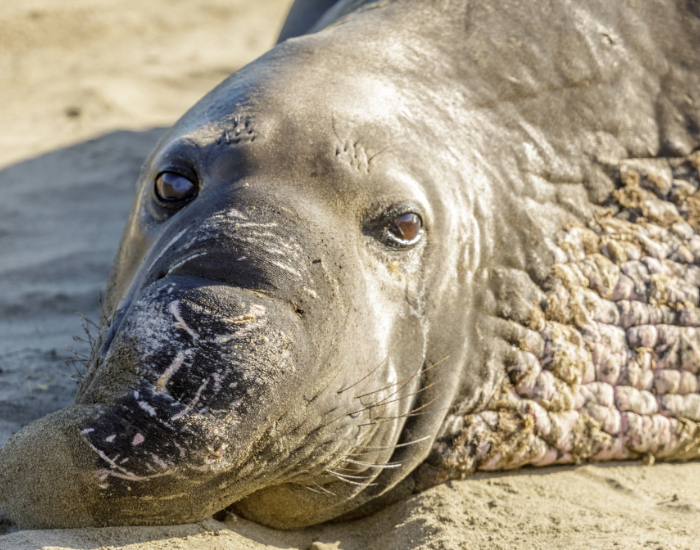
Northern elephant seals migrate twice a year, and the totals are extraordinary. Adult females cover roughly 18,000 to 20,000 kilometres annually across the northeast Pacific. The long foraging trip alone runs about seven months.
They do it almost entirely underwater. Elephant seals dive continuously to 400–800 metres, surfacing for only a couple of minutes between dives. Some individuals reach beyond 1,500 metres, hunting in the deep sea where light never arrives.
The navigation is the part that still surprises me. Research published in 2022 showed females use a map sense. They judge their distance from the beach, then turn for home in time to give birth. They are getting distance and calendar right, thousands of kilometres out, in the dark. Like other seal species, they face pressure from fisheries and warming currents that move their prey.
11. Blue Wildebeest: The Largest Land Migration on Earth
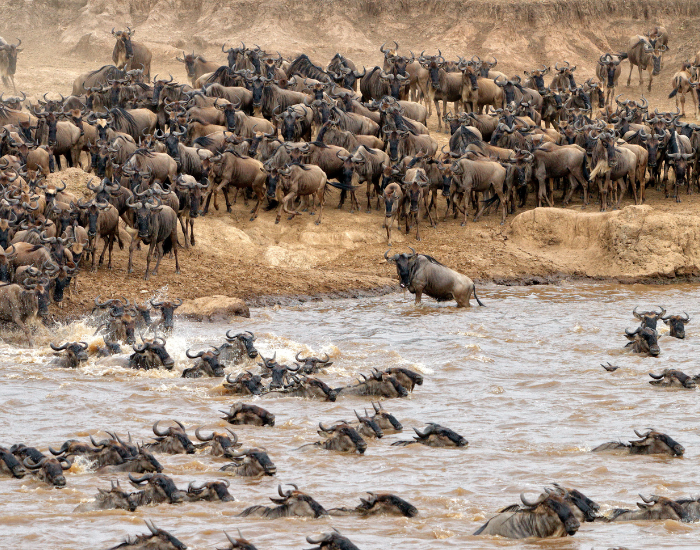
Nothing else moves this much biomass. Around 1.3 million wildebeest circuit 800 to 1,000 kilometres between Tanzania’s Serengeti and Kenya’s Masai Mara each year. Hundreds of thousands of zebra and gazelle travel with them. It is not the longest land migration, but it is the largest.
The herd follows rainfall and fresh grass in a clockwise loop, not a straight line. Two river crossings, the Grumeti and the Mara, concentrate the drama and the mortality. Drownings and lion predation kill hundreds of thousands of animals annually, and those carcasses fertilise the river systems.
The grazing itself maintains the savanna. Wildebeest crop grass, which suppresses fuel loads and reduces wildfire, which in turn lets trees establish. Remove the migration and the ecosystem restructures. Our wildebeest migration map shows where the herd sits this month. Our Masai Mara safari guide and Tanzania wildlife guide cover how to see it responsibly.
12. Burchell’s Zebra: Africa’s Longest Terrestrial Migration
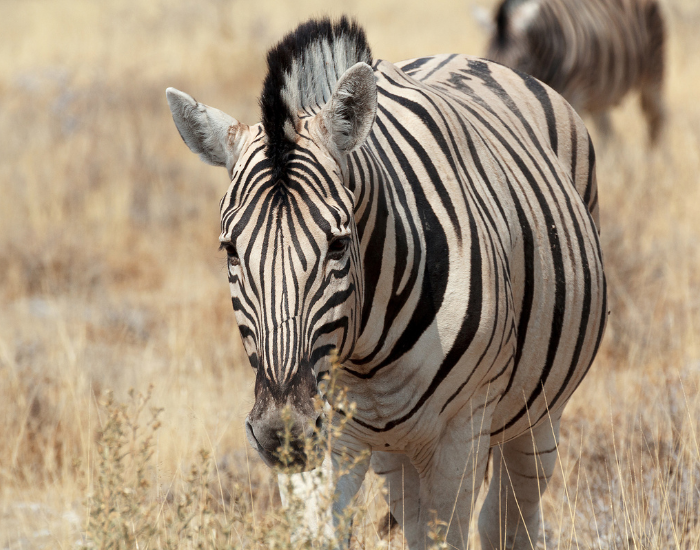
For decades everyone assumed the wildebeest held Africa’s distance record. Tracking data published in 2014 showed otherwise. Burchell’s zebra walk a 500-kilometre round trip from the Chobe River floodplains in Namibia to the Nxai Pan in Botswana. That is the longest terrestrial migration recorded in Africa.
What makes it remarkable is that the route was invisible until collars revealed it. The zebra travel in a near-straight line through country nobody was watching. They are heading for a seasonal pan with better grazing and mineral-rich soils. They had likely been doing it the whole time.
The migration only exists because fences came down. Veterinary cordon fences had blocked the route for decades, and animals resumed it once the barriers were removed. That is the single clearest argument for wildlife corridors I know of. Our Botswana safari guide covers the region, and our guide to wildlife across Africa puts it in context.
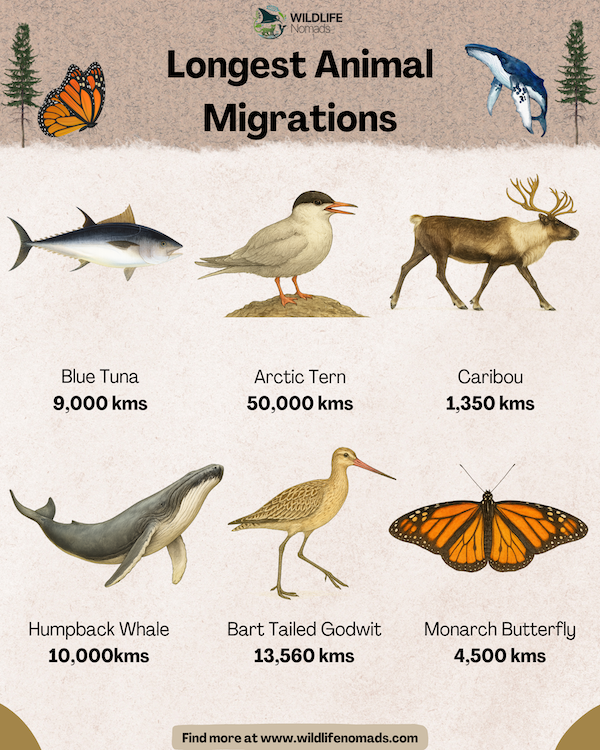
The 12 Longest Animal Migrations at a Glance
| Animal | Annual distance | Route | Record |
|---|---|---|---|
| Arctic tern | ~70,900 km (up to 96,000 km) | Arctic to Antarctic | Longest migration of any animal |
| Sooty shearwater | 64,037 km | Figure-of-eight across the Pacific | Longest ever recorded electronically |
| Gray whale | Up to 22,511 km | Sakhalin Island to Baja California | Longest migration of any mammal |
| Leatherback turtle | 20,558 km (over 647 days) | Indonesia to Oregon | Longest migration of any reptile |
| Northern elephant seal | 18,000–20,000 km | Northeast Pacific, twice yearly | Longest double migration |
| Globe skimmer dragonfly | 14,000–18,000 km (multi-generational) | India to East Africa | Longest insect migration |
| Bar-tailed godwit | 13,560 km non-stop | Alaska to Tasmania | Longest non-stop flight by a bird |
| Humpback whale | Up to 10,000 km | Polar feeding to tropical breeding grounds | Longest migration of any baleen whale population |
| Monarch butterfly | Up to 4,000 km | Canada and USA to central Mexico | Longest multi-generational insect route in the Americas |
| Caribou | Over 1,350 km | Arctic tundra | Longest land migration on Earth |
| Blue wildebeest | 800–1,000 km | Serengeti to Masai Mara | Largest land migration by number of animals |
| Burchell’s zebra | 500 km | Namibia to Botswana | Longest terrestrial migration in Africa |
Migrations Matter
Animal migrations are more than a natural spectacle, they are fundamental to the health of our planet’s ecosystems. Research studies have found that migratory species contribute to pollination, seed dispersal, and predator-prey balance. They also play a significant role in nutrient cycling and maintaining biodiversity.
Migration also moves energy between systems that would otherwise stay separate. A whale feeding in the Arctic and breeding in the tropics physically transports nutrients thousands of kilometres. Many migratory species function as keystone species, and their absence restructures whole food webs.
However, these incredible journeys are under threat. Climate change alters habitats and food availability, habitat destruction reduces critical stopover points, and pollution impacts land and marine migrators alike. Nearly half of all migratory species monitored under the UN Convention on Migratory Species are now in decline.
Protecting migratory paths ensures the resilience of ecosystems and the sustainability of life on Earth. On land that means wildlife corridors. At sea it means marine protected areas placed where animals actually travel, not where they are politically convenient.
FAQs About Animal Migration
The Arctic tern has the longest migration of any animal. Satellite tracking shows an average annual journey of about 70,900 kilometres between the Arctic and Antarctic. Some individuals exceed 90,000 kilometres. Over a 30-year lifespan that adds up to more than two million kilometres. The sooty shearwater holds the runner-up position at 64,037 kilometres a year.
The bar-tailed godwit holds the record for the longest non-stop migration. In October 2022 a juvenile tagged B6 flew 13,560 kilometres from Alaska to Tasmania in eleven days. It never landed, fed or drank. Godwits shrink their liver and intestines before departure to reduce weight and burn stored fat for the entire flight.
Animals migrate to reach seasonal food supplies, find safe breeding grounds, and escape harsh conditions. Whales feed in cold, productive polar waters but calve in warm tropical seas where newborns lose less heat. Birds follow flushes of insects and seeds. Caribou and wildebeest track fresh grass and safe calving ground. In almost every case, migration is an energy calculation rather than a preference.
Migrating animals combine several navigation systems. Most use the Earth’s magnetic field as a compass. That is supported by the sun and stars, polarised light, coastline shapes and even smell. Research published in 2022 showed northern elephant seals also possess a map sense. They judge their distance from home well enough to turn back and give birth on time. Many species inherit the route genetically rather than learning it
Great Migration Challenge
Eight questions on the record-breaking travellers of the animal world — longest on Earth, on land, at sea and non-stop. How many can you get?
References:
Egevang, C., Stenhouse, I. J., Phillips, R. A., Petersen, A., Fox, J. W., & Silk, J. R. D. (2010). Tracking of Arctic terns (Sterna paradisaea) reveals longest animal migration. Proceedings of the National Academy of Sciences, 107(5), 2078–2081. https://doi.org/10.1073/pnas.0909493107
Mate, B. R., Ilyashenko, V. Y., Bradford, A. L., Vertyankin, V. V., Tsidulko, G. A., Rozhnov, V. V., & Irvine, L. M. (2015). Critically endangered western gray whales migrate to the eastern North Pacific. Biology Letters, 11(4), 20150071. https://doi.org/10.1098/rsbl.2015.0071
Studds, C. E., Kendall, B. E., Murray, N. J., Wilson, H. B., Rogers, D. I., Clemens, R. S., Fuller, R. A. (2017). Rapid population decline in migratory shorebirds relying on Yellow Sea tidal mudflats as stopover sites. Nature Communications, 8, 14895. https://doi.org/10.1038/ncomms14895
Joly, K., Gurarie, E., Sorum, M. S., Kaczensky, P., Cameron, M. D., Jakes, A. F., … Berger, J. (2019). Longest terrestrial migrations and movements around the world. Scientific Reports, 9, 15333. https://doi.org/10.1038/s41598-019-51884-5
Hedlund, J. S. U., Lv, H., Lehmann, P., Hu, G., Anderson, R. C., & Chapman, J. W. (2021). Unraveling the world’s longest non-stop migration: The Indian Ocean crossing of the globe skimmer dragonfly. Frontiers in Ecology and Evolution, 9, 698128. https://doi.org/10.3389/fevo.2021.698128