The Arctic tundra is home to legendary creatures. While narwhals capture our imagination as “unicorns of the sea,” or the arctic fox as this elusive hunter jumping into the snow trying to catch an arctic hare, one animal truly defines arctic survival: the reindeer or caribou.
My most vivid memory of these arctic animals takes me back to Sweden. I spent a year studying biology at Uppsala University before heading north to Kiruna, deep within arctic regions.
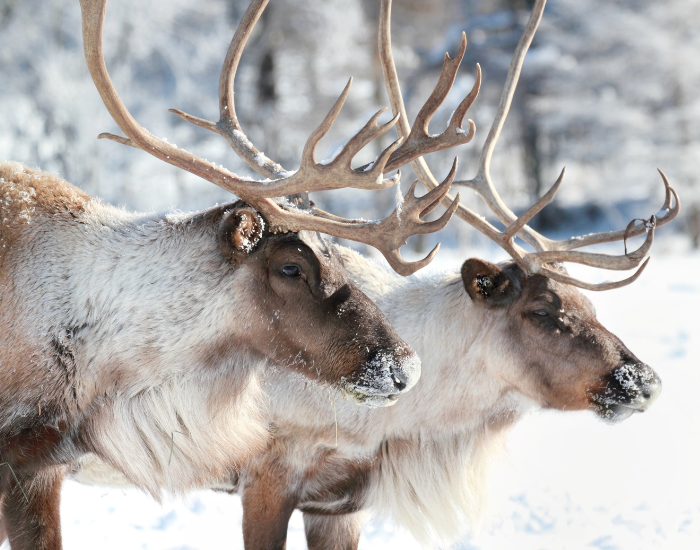
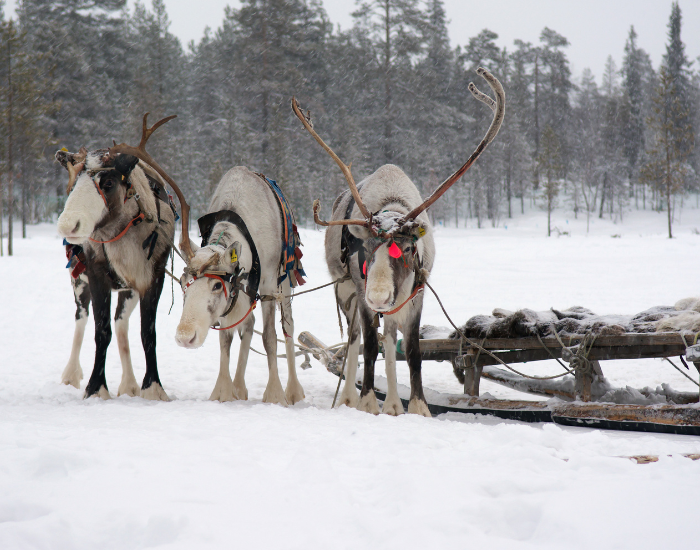
We traveled by dog sledge with huskies through the frozen landscape. The air felt like needles on exposed skin. As the sun dipped low, painting snow in violet hues, we spotted them. Wild reindeer moved like shadows across the drifts. At one point, I saw two reindeer standing together in the snowy landscape, their silhouettes striking against the white expanse. Later, hiking through sub-arctic brush, I managed to spot just one more.
These sightings reminded me how elusive they can be despite their size. They aren’t just Christmas icons. They’re highly specialized biological machines built for cold temperatures. Here you have 12 Reindeer Facts, all you need to know about the Arctic Caribou to understand them better!
1. Are Caribou and Reindeer the Same Species?
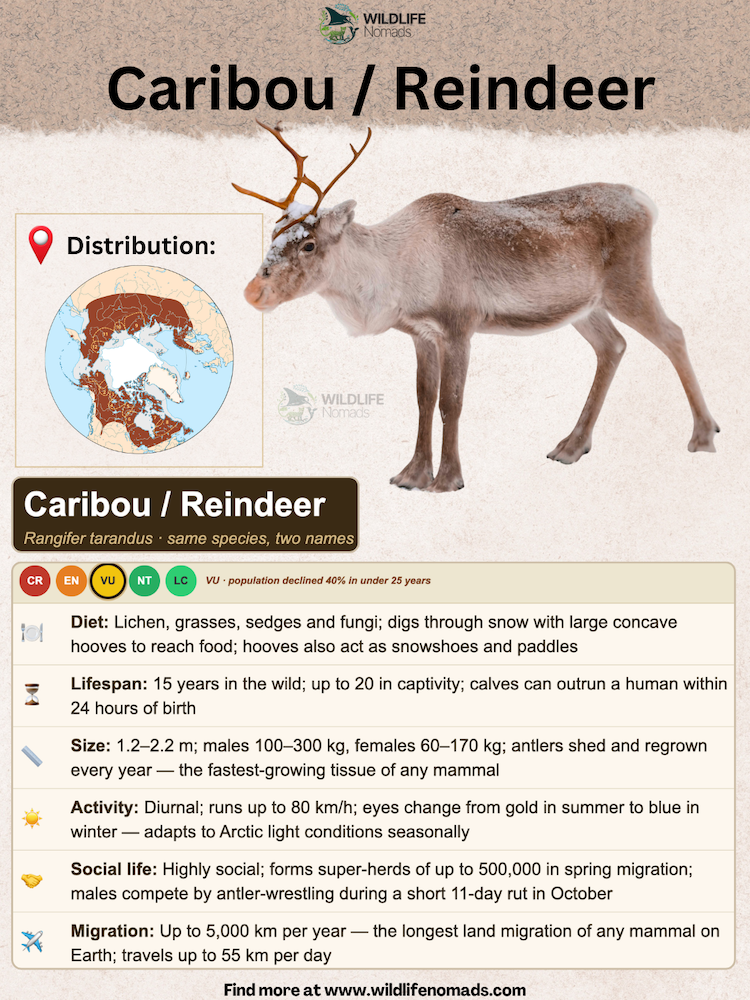
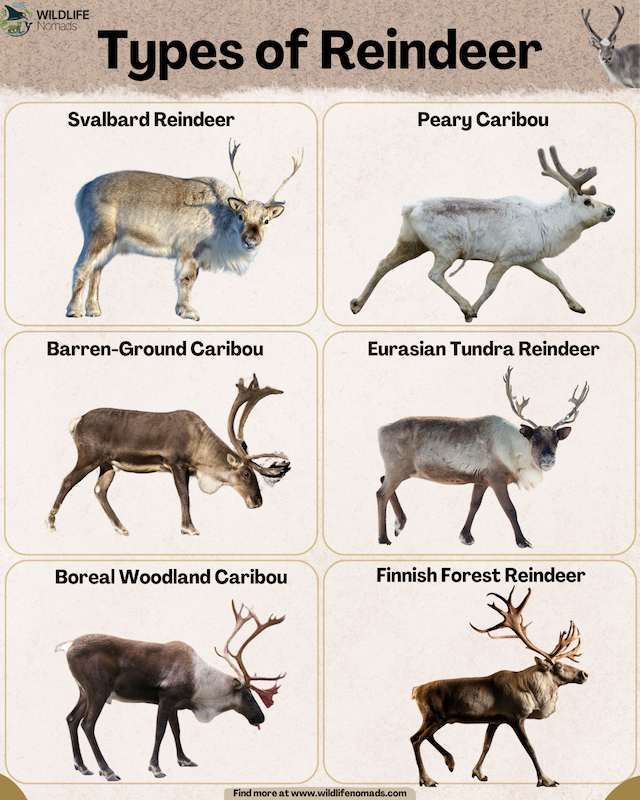
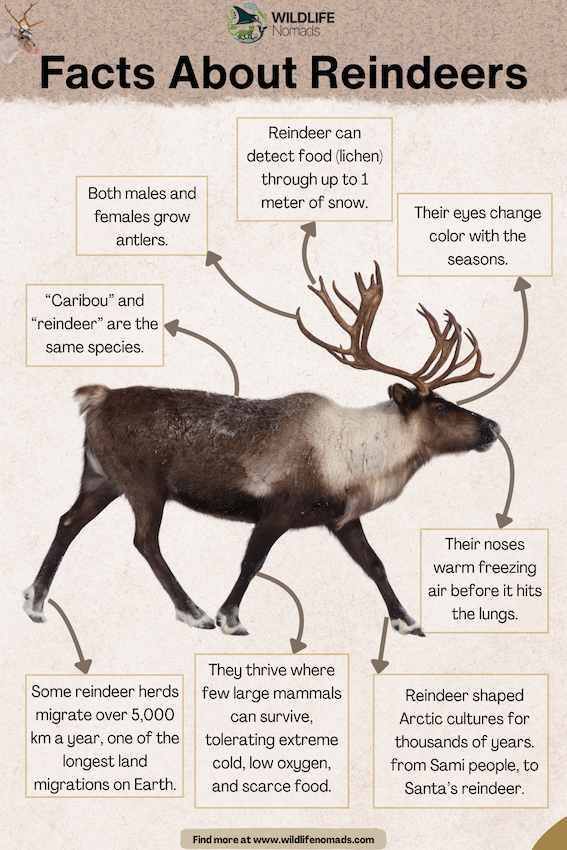
This question comes up constantly. The short answer? Yes, caribou and reindeer are classified as the same genus and species, both are members of the genus Rangifer and the species Rangifer tarandus.
Scientifically, reindeer and caribou are the same species (Rangifer tarandus). The difference is mostly regional, much like how American bison are often called “buffalo” in North America. In Europe and Asia, these animals are known as reindeer, while in North America, wild populations are typically called caribou.
There are several Rangifer species and subspecies, each with differences in morphology and distribution across regions such as North America and Eurasia.
For example, in Canada you’ll hear locals discuss caribou during arctic treks. Meanwhile, my friends in Scandinavia always call them ren. It’s similar to “puma” versus “cougar and mountain lion”, same animal, different regions.
Domesticated reindeer differ slightly from wild caribou in behavior. However, they remain the same species within the deer family.
2. Reindeer Taxonomy: Only Deer Species in Their Genus
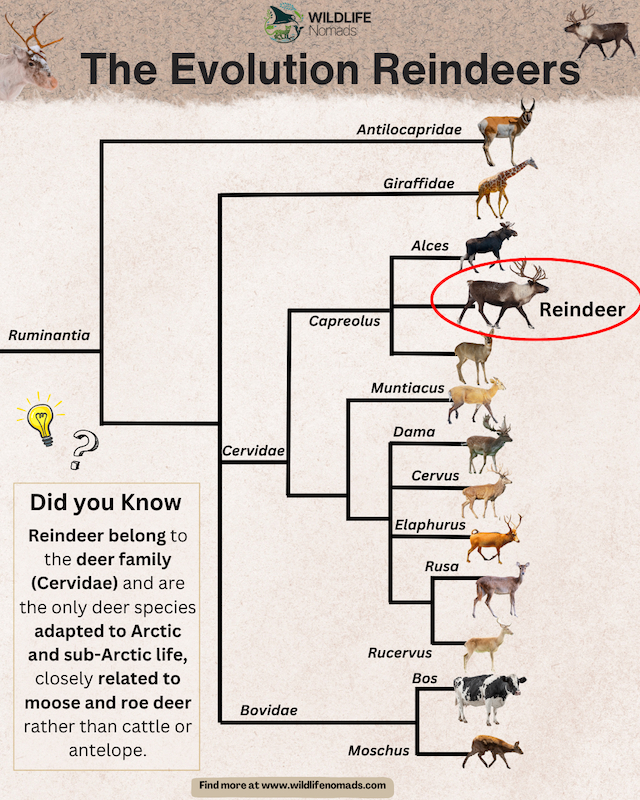
As a biologist, I appreciate good taxonomy. Reindeers belong to the deer family Cervidae. Among living deer species, reindeer stand out as one of the most unique, being the only representative of their genus.
They’re the only representative of genus Rangifer. While they share lineage with other deer species like elk, reindeer populations diverged evolutionarily. In fact, they’re more closely related to extinct ice age deer than typical deer species.
This makes them the only deer species perfectly adapted for arctic tundra survival.
This evolutionary uniqueness becomes clearer when compared to other hoofed mammals. For example, the pronghorn is often mistaken for an antelope but actually belongs to its own ancient family, while the axis deer represents a more tropical branch of the deer family adapted to warm forests rather than cold extremes. Giraffes, meanwhile, diverged much earlier within the ruminant lineage, evolving towering necks and browsing strategies completely unlike those of modern deer.
3. Female Reindeer Grow Antlers: The Only Deer Species
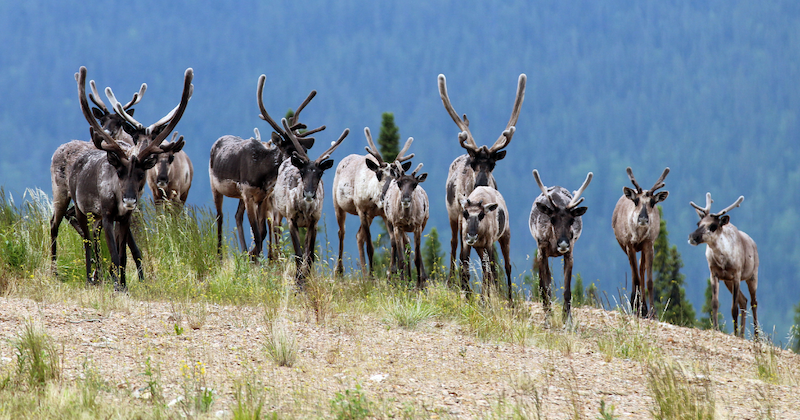
In almost every deer species, only males grow antlers. However, they break this rule completely. Reindeer are the only deer species in which both males and females can grow antlers.
Why do females have this adaptation? It’s about resource competition. Females may keep their antlers year-round, while males shed theirs after the autumn mating season in November and do not regrow them until the following spring.
This gives pregnant females a defensive advantage. They can protect the best feeding spots in snow from larger males. It’s brilliant evolutionary strategy for species survival in harsh conditions.
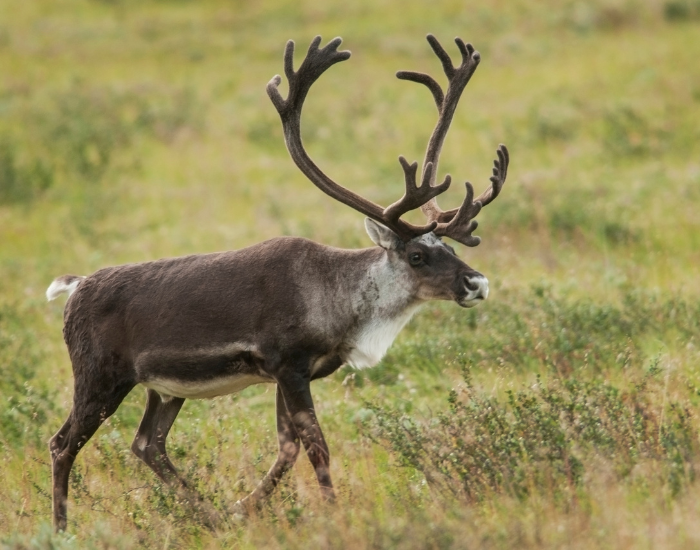
Antlers grow from spring through summer. Males are typically larger than females and are known for their large, heavy antlers, which can be the largest antlers relative to body size among deer species. During growth, antlers are covered in a dark brown velvet that is rich in blood vessels, supplying nutrients and supporting rapid development. However, female antlers serve a different purpose: winter survival rather than mate competition.
4. Their Eyes Change Color with Seasons
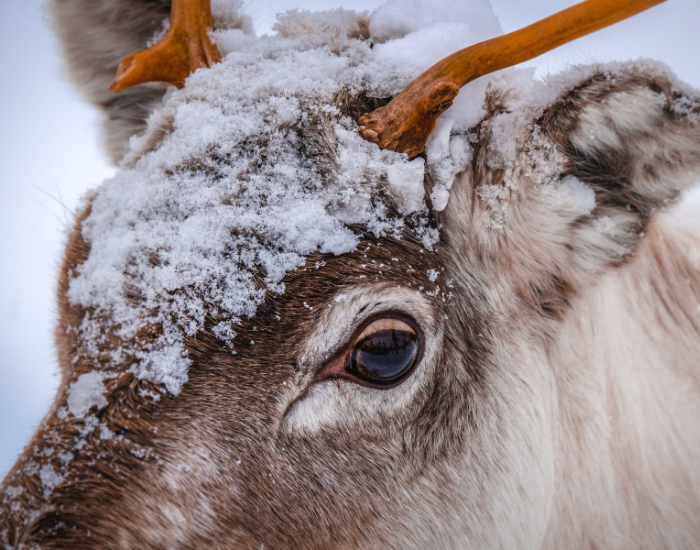
One of the most incredible adaptations I’ve seen in animals is seasonal eye color change. Caribous are the only mammals known to change eye color seasonally! How crazy is that.
During summer, their eyes reflect golden color. This matches the midnight sun’s constant daylight. In winter, eyes turn deep blue.
This transformation happens in the tapetum lucidum, the reflective layer behind the retina. The blue color helps them see in near-constant arctic darkness. It scatters incoming light more effectively.
For example, this adaptation helps them detect predators like wolves and eurasian lynx in the night sky. The color change is essential for survival when daylight disappears for months.
5. Svalbard Reindeer: The Smaller Arctic Subspecies
Not all reindeer populations are identical. If you visit the remote Svalbard archipelago, you’ll find a distinct subspecies: Rangifer tarandus platyrhynchus.
These Svalbard reindeer are the “hobbits” of reindeer species. They’re much smaller with shorter legs and rounder bodies. They evolved this way to minimize heat loss in extreme cold.
In contrast, barren ground caribou of North America are built for long migration patterns. However, Svalbard reindeer stay put and endure harsh winters in place.
This demonstrates how different regions produce different adaptations within the same species.
6. Reindeer Lichen: Their Primary Winter Food Source
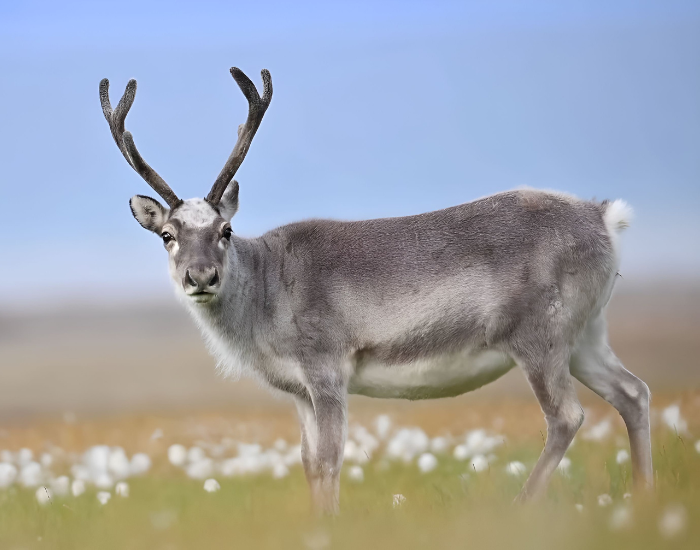
When I stood in Kiruna’s white expanse, finding food seemed impossible. However, caribous are specialists at “lichen hunting.”
They possess a specialized enzyme called lichenase. This allows them to digest Cladonia rangiferina, commonly called reindeer lichen or “reindeer moss.” Despite its name, reindeer lichen isn’t actually moss, it’s lichen.
Reindeer lichen provides glucose for energy. It keeps their internal furnaces burning during winter months. It’s like eating high-carb energy bars in a blizzard.
Caribous also use their specialized hooves to crater through snow. This reveals lichen beneath. However, climate change impacts this feeding strategy significantly.
7. Hollow Fur: Natural Insulation for Cold Temperatures
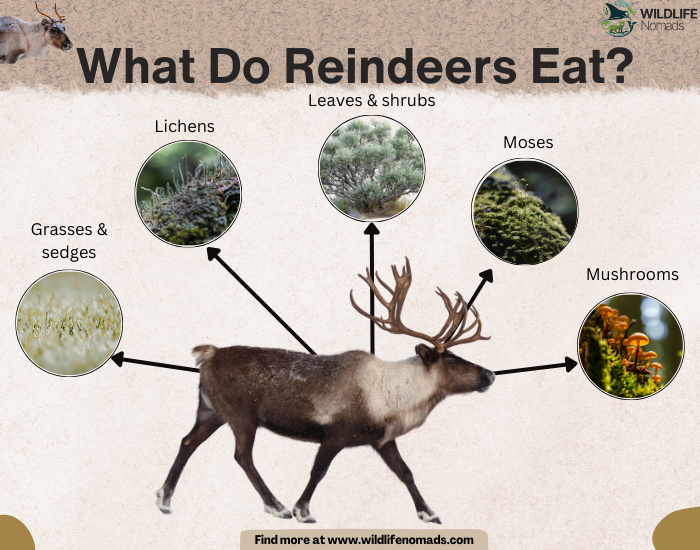
Reindeer fur isn’t just thick, it’s engineered for survival. Each hair is hollow inside. These hollow hairs trap warm air, providing incredible insulation against arctic winds.
This adaptation serves another purpose too. When reindeer cross frigid arctic rivers, their hollow fur acts like a built-in life jacket. Therefore, they’re surprisingly good swimmers despite their body size.
This same fur helps them maintain warm blood circulation in temperatures far below freezing.
8. They Walk on Natural Snowshoes
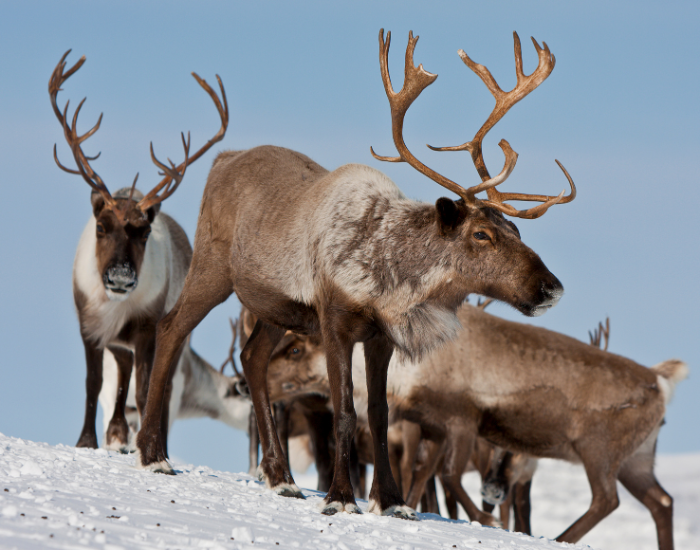
If you examine reindeer tracks in snow, you’ll notice they’re huge compared to leg size. Their hooves are designed to spread wide, acting like natural snowshoes.
During winter months, the fleshy pads of their hooves shrink. This exposes the sharp hoof rim. Therefore, they can “crater”, the biological term for digging through hard-packed snow and ice.
This specialized adaptation lets them reach reindeer lichen buried beneath. However, when rain-on-snow events create ice layers, even specialized hooves can’t break through.
9. Are Reindeer Endangered? Current Conservation Status
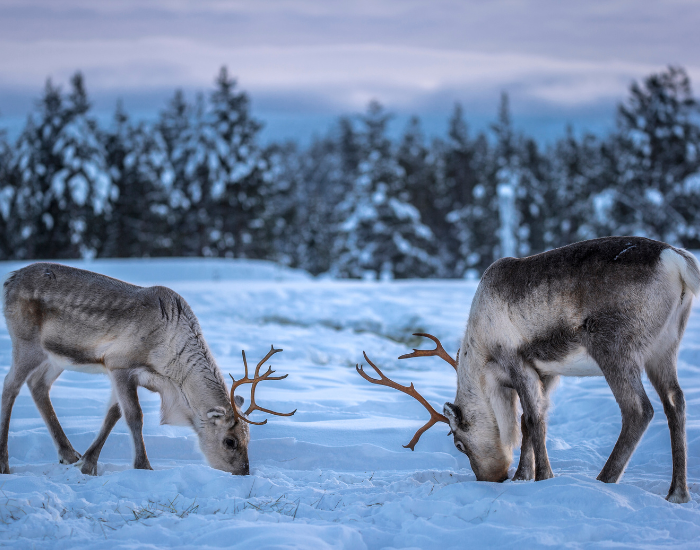
While they appear everywhere in holiday folklore, wild populations face serious threats. According to the IUCN Red List, reindeer are currently listed as Vulnerable. Not yet classified as endangered. However, their populations have declined nearly 40% over the last three decades.
Climate change impacts are the biggest threat. Warmer summers and unpredictable winter months cause problems. For example, rain-on-snow events create ice barriers. Reindeer can’t crater through to reach food. They literally starve while standing on their feeding grounds.
In addition, industrial development fragments migration patterns. Large herds need uninterrupted routes. However, roads and infrastructure block traditional paths.
Conservation efforts focus on protecting arctic tundra and monitoring reindeer populations. Indigenous communities play crucial roles in these efforts.
10. Longest Land Migration of Any Mammal
The Serengeti great migration in Africa gets a lot of attention. And yes thats very impressive, but did you know that some caribou walk over 4,800 km, about 3,000 miles, in a single year. Their round-trip migration reaches 1,350 km, the longest migration of any land mammal.
Reindeer herds constantly move, following the “green wave” of vegetation in early spring. They retreat to boreal forests during winter months for shelter. This migration pattern is essential for survival.
Barren ground caribou in North America undertake the most impressive journeys. Large herds move together across arctic tundra and mountainous regions. However, climate change impacts threaten these ancient routes.
Interactive
The herd year, seen from above the pole
Drag the slider, or press play. Wild herds in Alaska and Canada, herded reindeer in Sápmi, all on one polar map.
Open the full caribou migration map · See all six migration maps
11. Indigenous Cultures and Reindeer Herding
You cannot discuss reindeer without mentioning indigenous peoples. The Sámi people of northern Europe and Nenets of Siberia have lived symbiotically with reindeer for thousands of years.
During my time in Sweden, I learned that reindeer aren’t just livestock to the Sámi. They’re the backbone of cultural identity. These communities use every part of the animal, meat for protein, hides for warm clothing, and antlers for tools.
In addition, domesticated reindeer provide transportation across arctic regions. Reindeer herding represents one of the most sustainable examples of human-animal relationships on the planet.
However, modern threats impact traditional reindeer herding practices. Climate change and industrial development challenge many cultures that depend on these animals.
12. Can Caribou and Reindeer Interbreed?
Since caribou and reindeer are the same species, they can – and do – interbreed successfully. In parts of North America, escaped domesticated individuals often join wild caribou herds.
Biologically, this genetic mixing presents both opportunities and challenges. It can introduce new traits to populations. However, it may also dilute specific adaptations that wild caribou need for their particular migration patterns.
For example, domesticated reindeer lack some wild instincts. Therefore, their genes mixing with wild populations could impact overall fitness.
13. Where Do Reindeer Live? Geographic Distribution
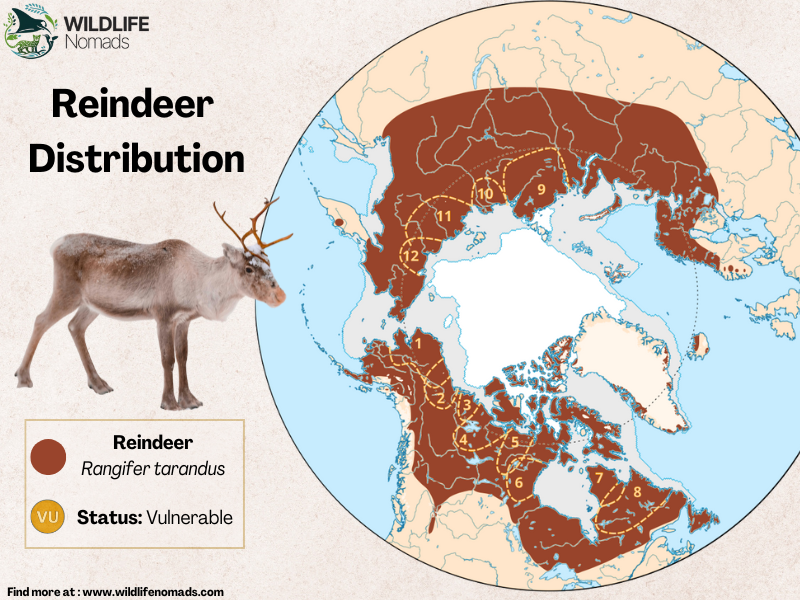
Yes, in the Arctic, I have already mentioned but where specifically? They have a circumpolar distribution across the Northern Hemisphere. They inhabit arctic tundra, subarctic regions, boreal forests, and mountainous regions.
You’ll find populations throughout northern Europe, including Scandinavia and Russia. In Siberia, massive herds roam across vast territories. North America hosts caribou populations across Canada and Alaska.
These regions share common characteristics: cold temperatures, seasonal changes, and vegetation adapted to harsh conditions. However, each population has adapted to its specific environment, from the barren ground caribou of Canada to the forest-dwelling woodland caribou.
FAQ: Quick Reindeer Facts
The main differences are geography and domestication status. Wild North American populations are caribou. European and Asian populations, especially domesticated individuals, are reindeer. However, they’re the same species: Rangifer tarandus.
Absolutely. They’re among the few large mammals that thrive in arctic tundra conditions.
Yes. They can see in the ultraviolet range. This helps them spot white lichen and white predator fur against snowy backgrounds.
Multiple adaptations help: hollow fur for insulation, specialized hooves for snow travel, ability to digest reindeer lichen, and seasonal eye color changes for improved vision. They also have specialized nasal passages that warm incoming cold air before it reaches their lungs, helping conserve body heat and prevent excessive heat loss.
In traditional Christmas legends, Santa Claus’s reindeer pull a sleigh through the night sky to help Santa deliver gifts to good children on Christmas Eve. Rudolph the Red-Nosed Reindeer, created in 1939 for a department store promotion, has since become a global icon.
The End of the Trip to the Arctic Tundra
Watching wild reindeer disappear into Kiruna’s twilight was profoundly humbling. It’s easy to view arctic regions as wastelands. However, through a biologist’s eyes, it’s a theater of extreme adaptation.
Whether it’s barren ground caribou migrating thousands of miles or Svalbard reindeer enduring brutal winters, every population is a master of survival. These arctic animals represent biological engineering at its finest.
We must ensure these arctic survivors have a future. Conservation isn’t just about saving one species. It’s about protecting the intricate web of life that includes arctic tundra ecosystems and the indigenous cultures that depend on reindeer herding.
The arctic reindeer, both wild caribou and domesticated caribous, deserve our attention and protection. Climate change impacts threaten not just reindeer populations, but entire ecosystems across arctic regions.
Where to See Reindeer in the Wild?
Here is a list of 6 lapland tours where you can see Reindeers and Caribous in the wild. As a biologist, I only recommend tours that follow strict ethical guidelines to ensure we don’t disturb wildlife. These are the three tours/ partners I trust most based on their conservation records:
This blog is reader-supported. When you buy experiences through links listed on this site, we may earn an affiliate commission.
Reindeer & Caribou Challenge 🦌
Eight multiple-choice questions on the Arctic’s ultimate survivor. How many can you get?
References:
Fosbury, R. A. E., & Jeffery, G. (2022). Reindeer eyes seasonally adapt to ozone-blue Arctic twilight by tuning a photonic tapetum lucidum. Proceedings of the Royal Society B: Biological Sciences, 289(1977), 20221002. https://doi.org/10.1098/rspb.2022.1002
Harding, L. E. (2022). Available names for Rangifer (Mammalia, Artiodactyla, Cervidae) species and subspecies. ZooKeys, 1119, 117–151. https://doi.org/10.3897/zookeys.1119.80233
Joly, K., Gurarie, E., Sorum, M. S., Kaczensky, P., Cameron, M. D., Jakes, A. F., … Berger, J. (2019). Longest terrestrial migrations and movements around the world. Scientific Reports, 9, 15333. https://doi.org/10.1038/s41598-019-51884-5
Mallory, C. D., & Boyce, M. S. (2018). Observed and predicted effects of climate change on Arctic caribou and reindeer. Environmental Reviews, 26(1), 13–25. https://doi.org/10.1139/er-2017-0032
Forbes, B. C., Kumpula, T., Meschtyb, N., Laptander, R., Macias-Fauria, M., Zetterberg, P., Verdonen, M., Skarin, A., Kim, K.-Y., Boisvert, L. N., Stroeve, J. C., & Bartsch, A. (2016). Sea ice, rain-on-snow and tundra reindeer nomadism in Arctic Russia. Biology Letters, 12(11), 20160466. https://doi.org/10.1098/rsbl.2016.0466