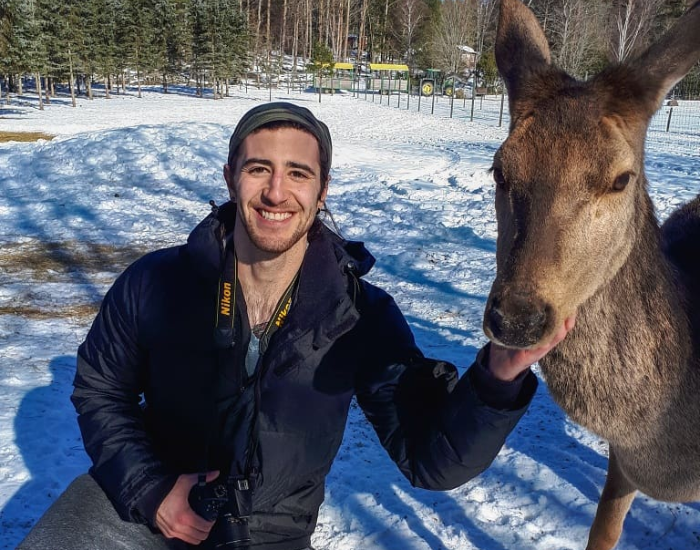
I traveled to Indonesia for the third time last year, but in the last occasion, I went to West Bali National Park, and I won’t forget when I saw the Javan Rusa on the white sands of Menjangan Island. There I was, standing in awe of a creature that looked more like a coastal mirage than a forest-dweller. As a biologist, there’s something uniquely humbling about seeing a “common” animal thrive in an uncommon place.
Most people picture types of deer as forest-dwellers — whitetails in American backyards, or red deer on a Scottish hillside. However, deer have colonised habitats ranging from tropical beaches to Arctic tundra, island scrublands to Andean cloud forest. They are some of the most adaptable animals on Earth.
In this guide, I break down 16 iconic deer species across their two evolutionary lineages: Old World deer (Cervinae) and New World deer (Capreolinae). Whether you are a wildlife photographer, a hunter, or simply curious, learning to tell these animals apart will transform any walk in the wild.
Understanding the Family Cervidae
All true deer belong to the family Cervidae. One common mistake is confusing musk deer with true deer. Musk deer belong to the separate family Moschidae, and several anatomical differences set them apart. Musk deer lack antlers entirely, one of the defining features of true deer — and instead, males sport long, tusk-like canines used in competition. True deer lack a gallbladder, whereas musk deer retain one, a more primitive mammalian trait. They are fascinating animals, but they are not part of family Cervidae.
True deer are defined by their antlers, bony structures shed and regrown annually. Antler development begins with the formation of the pedicel, followed by the growth of velvet antlers that mineralize into hard antlers. This process is influenced by age, hormone levels, and seasonal cycles, and plays a significant role in sexual selection and social hierarchy. Deer require large amounts of minerals such as Hydroxyapatite to support antler growth, necessitating a nutrient-rich diet.
There are approximately 43 deer species globally, ranging from the 800-kg Moose to the knee-high Pudu. The family splits into two subfamilies based on foot bone structure:
- Cervinae (Old World Deer) — evolved in Eurasia, includes red deer, fallow deer, and sika deer.
- Capreolinae (New World Deer) — includes Moose, Reindeer, white-tailed deer, and roe deer, which migrated across the globe.
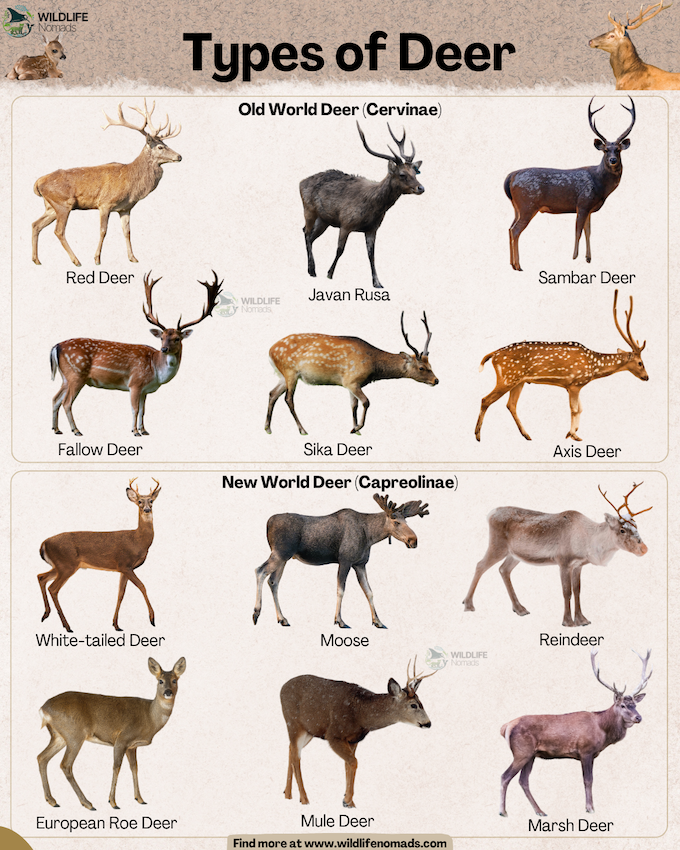
9 Iconic Old World Deer (Cervinae)
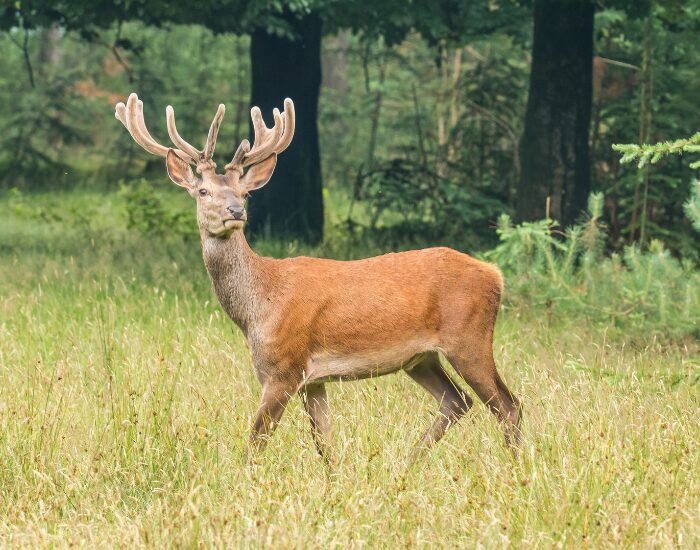
1. Red Deer (Cervus elaphus)
The red deer is the quintessential ‘royal’ deer of Europe. They are a medium-to-large species with a rich reddish-brown summer coat that fades to grey-brown in winter. Look for the pale rump patch, it is the classic field marker.
During the autumn rut, the roar of a stag echoes across the Scottish Highlands in a sound you simply do not forget. Red deer also inhabit Central Asia and North Africa, making them one of the most widely distributed deer species in the Old World.
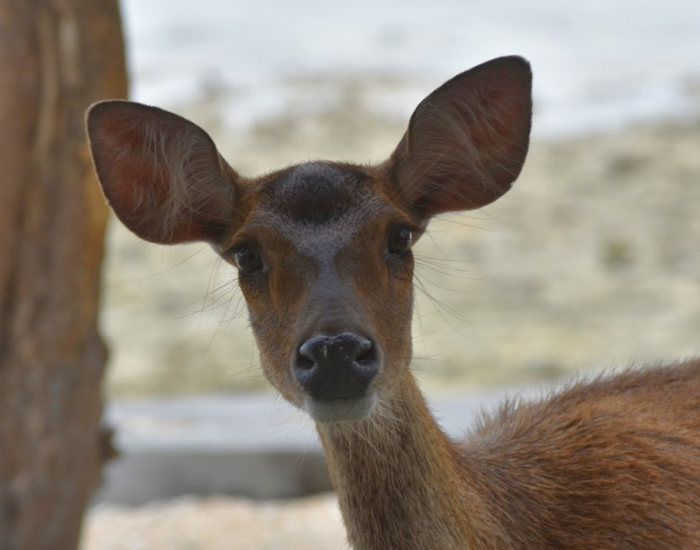
2. Javan Rusa (Rusa timorensis)
The Javan Rusa (Rusa timorensis, not to be confused with Rusa unicolor, the Sambar) is one of Indonesia’s most charismatic deer species. I have spent considerable time watching these animals in West Bali National Park, where they adapt remarkably to coastal terrain. They are slightly smaller than the Sambar, with a coarse, uniform brown coat.
On Komodo Island, Rusa deer are the primary prey of Komodo Dragons, watching one navigate a rocky beach while a dragon waits in the shade is evolutionary tension at its most raw.
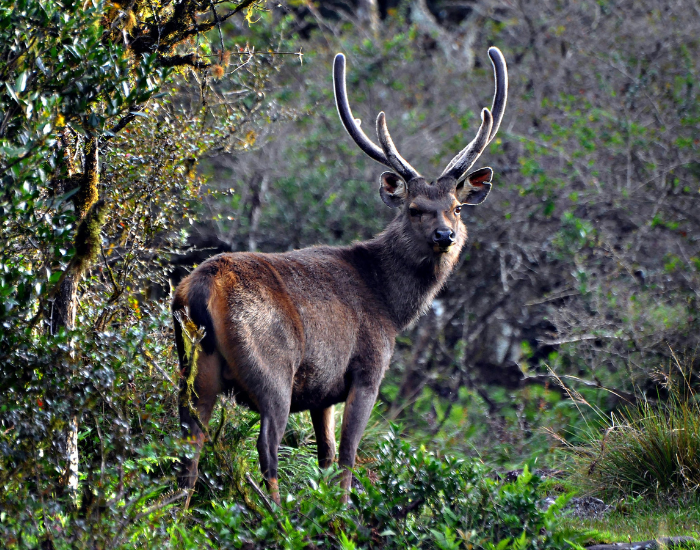
3. Sambar Deer (Rusa unicolor)
The Sambar is the giant of the Asian tropics. The samba deer (Rusa unicolor) is a massive, solitary, and extraordinarily wary animal. In Australia, where Sambar were introduced in the 1860s, they have formed significant feral populations and present major challenges for land managers and conservationists. Identify them by their large, rounded ears and heavy three-tined antlers. In thick forest, a loud single ‘pook’ bark almost certainly means a Sambar has spotted you first.
4. Fallow Deer (Dama dama)
Fallow deer are famous for their palmated antlers and highly variable coat colour. Their broad, flattened antlers serve as display organs during the mating season, playing a significant role in sexual selection. Unlike most deer, fallow deer come in four distinct colour morphs: common (spotted), menil (lightly spotted), black, and white. Therefore, coat colour alone cannot reliably identify a fallow deer, look instead for the heart-shaped white rump patch framed by black lines, visible from behind. They are widespread across Europe and have been introduced to Australia, New Zealand, and parts of the Americas.

5. Chital / Axis Deer (Axis axis)
The Axis deer, also called Chital, is arguably the most visually striking species among all types of deer worldwide. Unlike most species, Axis deer retain their bright white spots for life, not just as fawns.
In India, they form large herds of dozens or even hundreds of animals. These large herds often associate with langur monkeys: the monkeys drop fruit from the canopy, and the deer provide additional eyes watching for tigers and leopards. Axis deer have also been widely introduced across the world, including parts of Australia and Hawaii.

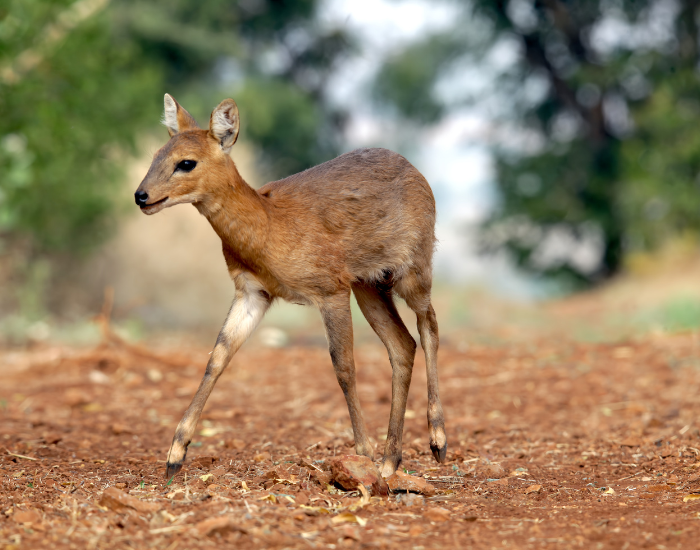
6. Indian Muntjac (Muntiacus muntjak)
The Indian Muntjac, or Barking Deer, is one of the most primitive members of family Cervidae. These small, secretive animals possess both short antlers and visible upper canine tusks, a trait shared with the unrelated musk deer.
When alarmed, they emit a repetitive, dog-like bark that can echo through the Indonesian jungle for minutes at a time. I have spent many nights in the field listening to that sound carry through the canopy. The Indian Muntjac has an unusually low chromosome count (2n = 6 in females and 2n = 7 in males.), making it a subject of significant scientific interest in mammalian evolution.
7. Sika Deer (Cervus nippon)
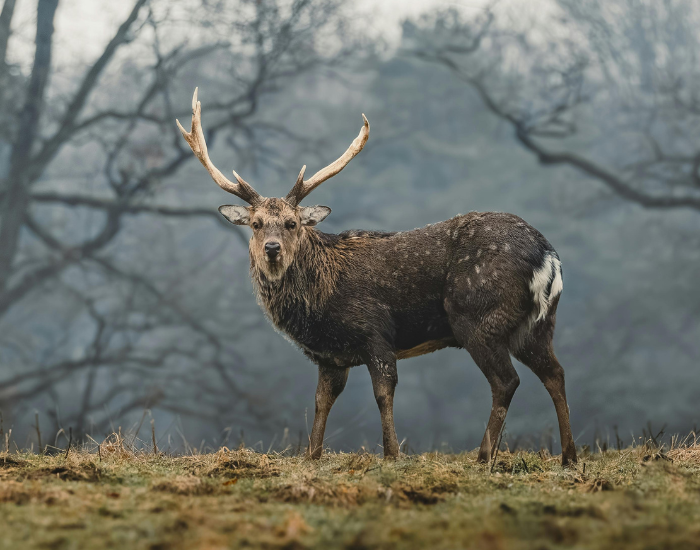
Native to East Asia, Cervus nippon is often called the Japanese Deer. Sika deer are medium-sized and highly variable in appearance across their range. Like the Axis deer, many Cervus nippon subspecies retain spots into adulthood, however, their spots tend to be less vivid. They are famously vocal, producing a range of haunting whistles and high-pitched screams during the rut that can unsettle even experienced field researchers. Sika deer have been introduced to the UK, Ireland, Australia, and New Zealand.
8. Barasingha (Rucervus duvaucelii)
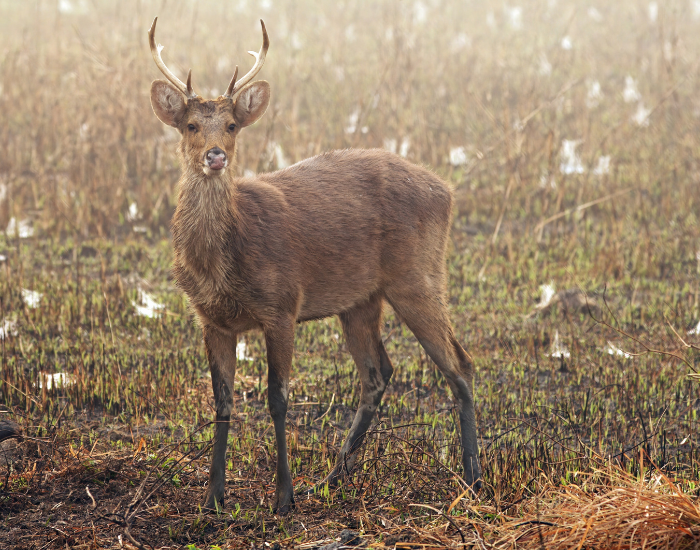
Known as the Swamp Deer, the Barasingha is a conservation icon of India. Their name translates as ‘twelve-tined,’ referencing their complex, multi-branched antlers. Splayed hooves help them navigate the muddy wetlands of Central India. Also, the Barasingha is a major focus of habitat restoration efforts at Kanha National Park, where a once-critically endangered population has rebounded through targeted conservation. The IUCN currently lists Barasingha as Vulnerable.
9. Hog Deer (Axis porcinus)
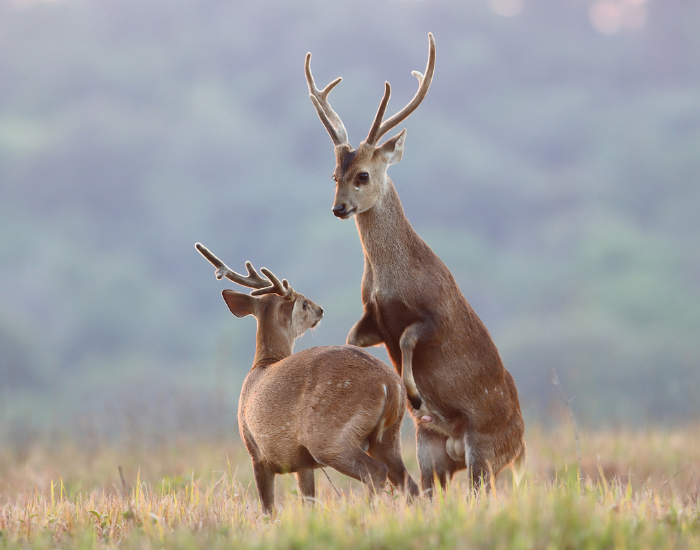
The Hog Deer earns its name from its habit of charging through dense undergrowth head-down, like a pig, rather than leaping over obstacles as most deer do. The hog deer (Axis porcinus) is a small, stocky species native to South and Southeast Asia. In Australia, introduced hog deer populations are managed as a prized game species, with regulated hunting seasons that directly fund coastal habitat conservation.
7 Iconic New World Deer (Capreolinae)
10. White-tailed Deer (Odocoileus virginianus)
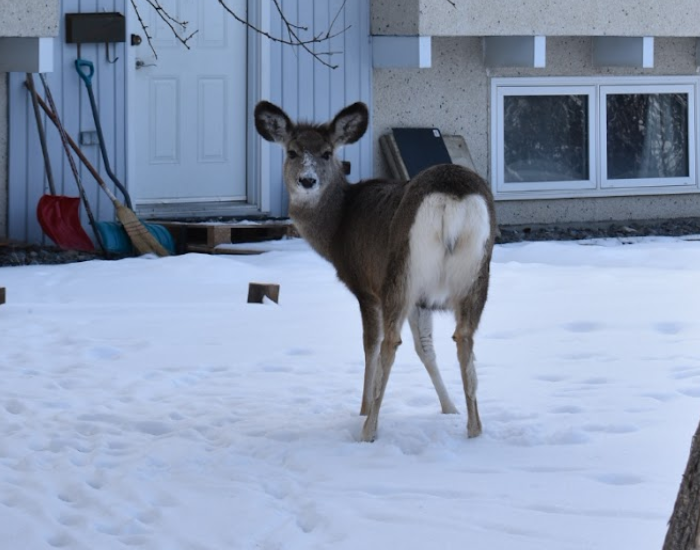
If you live in the America, it is very likely you have seen it. The white tailed deer (Odocoileus virginianus) is the most widespread deer species in the Americas. White-tailed deer thrive from Canadian boreal forests to the wetlands of the Peruvian Amazon, a testament to their extraordinary adaptability. The easiest identification feature? When alarmed, white-tailed deer raise and ‘flag’ their tail, flashing a bright white underside as they flee. This signalling behaviour likely warns other deer of nearby predators.
11. Moose (Alces alces)
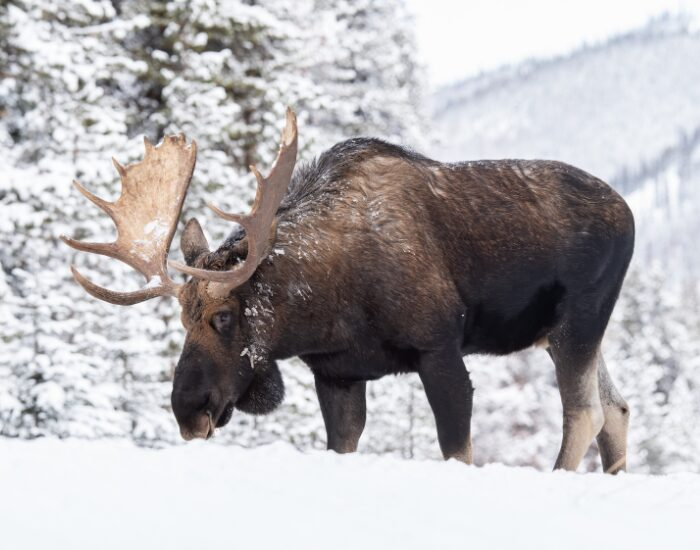
The Moose is the absolute titan of family Cervidae. A large bull can exceed 700 kg and carry antlers spanning up to 2 metres or more. In Europe and Asia, Moose are called Elk (which are a different species), a persistent source of confusion for North American wildlife enthusiasts. Moose are highly adapted to wetland habitats and can dive up to 5.5 metres (commonly between 3-4 m) to feed on aquatic plants. Therefore, encountering a bull Moose in a boreal wetland remains one of the most humbling wildlife experiences on Earth.
12. Reindeer / Caribou (Rangifer tarandus)
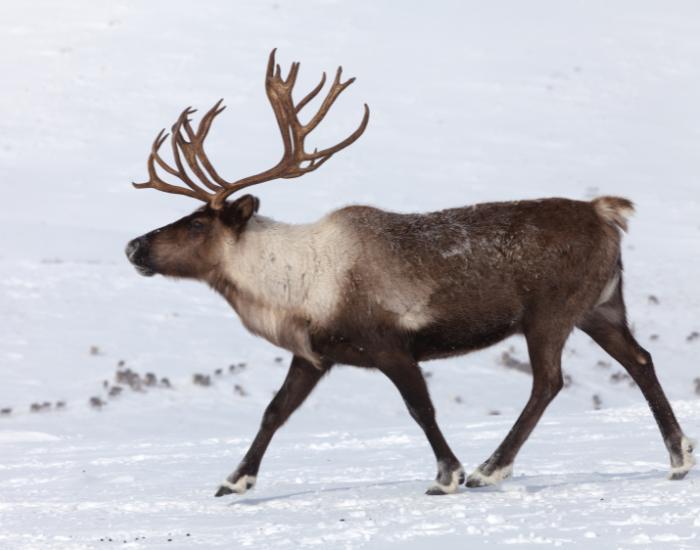
Whether called Reindeer in Eurasia or Caribou in North America, these are the same species. Reindeer are the only deer species in which both males and females grow antlers. They are built for extreme cold, with hollow hair shafts that trap air for insulation and wide hooves that act as natural snowshoes on ice and snow. Some Caribou herds undertake migrations of over 5,000 kilometres, the longest land migrations of any terrestrial animal.
13. Mule Deer (Odocoileus hemionus)
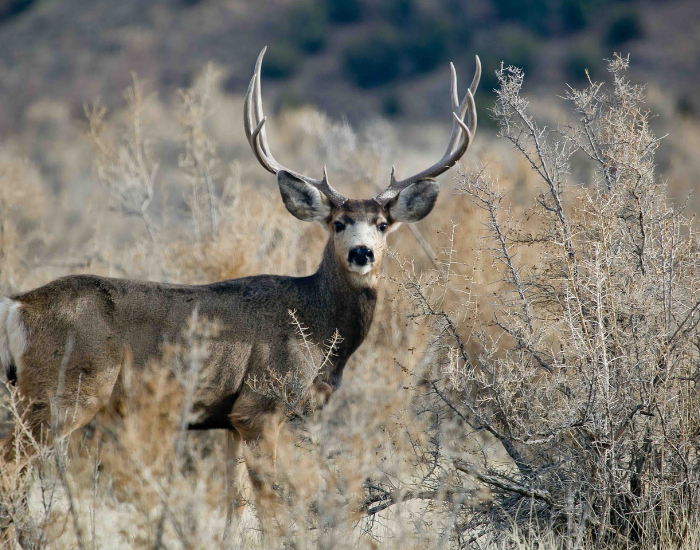
The Mule Deer is the western counterpart of the white-tailed deer. You can identify it by its oversized, mule-like ears and its distinctive ‘stotting’ gait, bounding with all four feet leaving the ground simultaneously. In addition, Mule Deer antlers fork in a Y-shape (dichotomous branching), whereas white-tailed deer tines grow off a single main beam. Mule Deer inhabit the open spaces and mountain ranges of western North America.
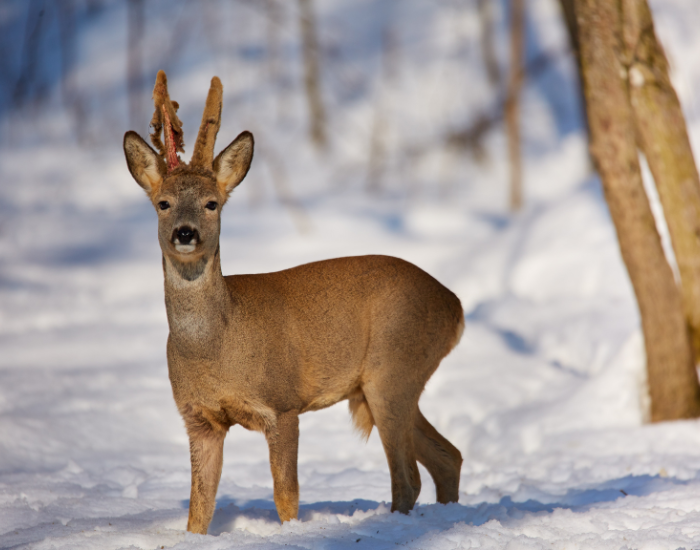
14. European Roe Deer (Capreolus capreolus)
The Roe Deer is a small, elegant species found across most of Europe. Historically, roe deer were absent from central England, but over time they have gradually re-colonized the region. Unlike most deer, Roe Deer are notably territorial. They are also well-known for embryonic diapause — delayed implantation — where the fertilised embryo pauses development for several months. This ensures the fawn is born in spring when food is most abundant. Roe Deer are highly adaptable and are equally at home in dense woodland or open agricultural fields.
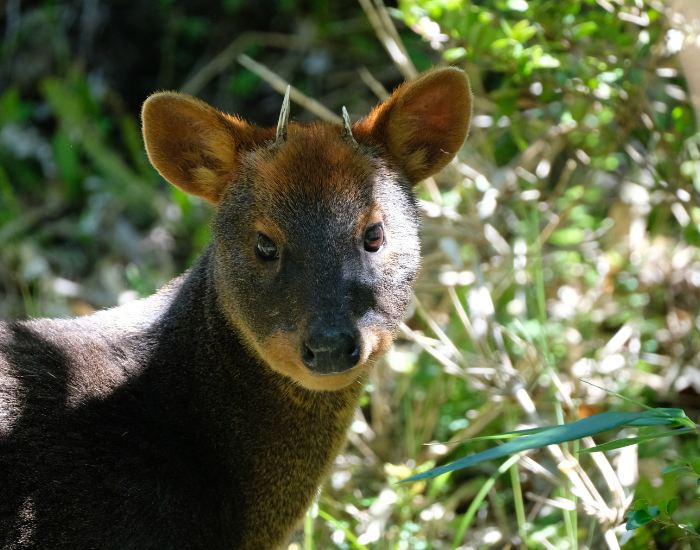
15. Southern Pudu (Pudu puda)
The Southern Pudu is the world’s smallest deer, standing only about 35 cm at the shoulder. Native to the temperate rainforests of Chile and Argentina, these solitary animals hide in dense bamboo thickets to avoid predators. Finding a Pudu in the wild is genuinely one of the most difficult wildlife challenges in South America. The IUCN lists the Southern Pudu as Vulnerable, with habitat loss representing the primary threat.
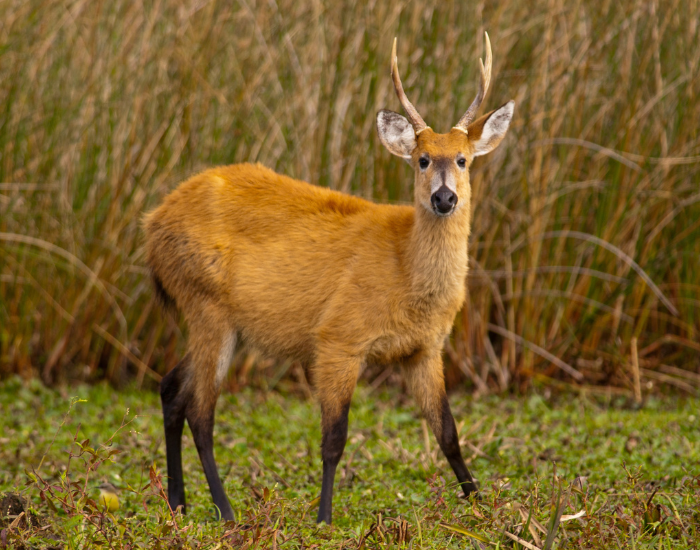
16. Marsh Deer (Blastocerus dichotomus)
The Marsh Deer is the largest deer species native to South America. Like the Barasingha of India, it is a wetland specialist with webbed skin between its hooves for navigating floating vegetation. However, habitat loss in the Pantanal and surrounding floodplains has pushed the Marsh Deer to Vulnerable status on the IUCN Red List. Conservation initiatives across Brazil, Argentina, and Bolivia are working to protect critical wetland corridors for this species.
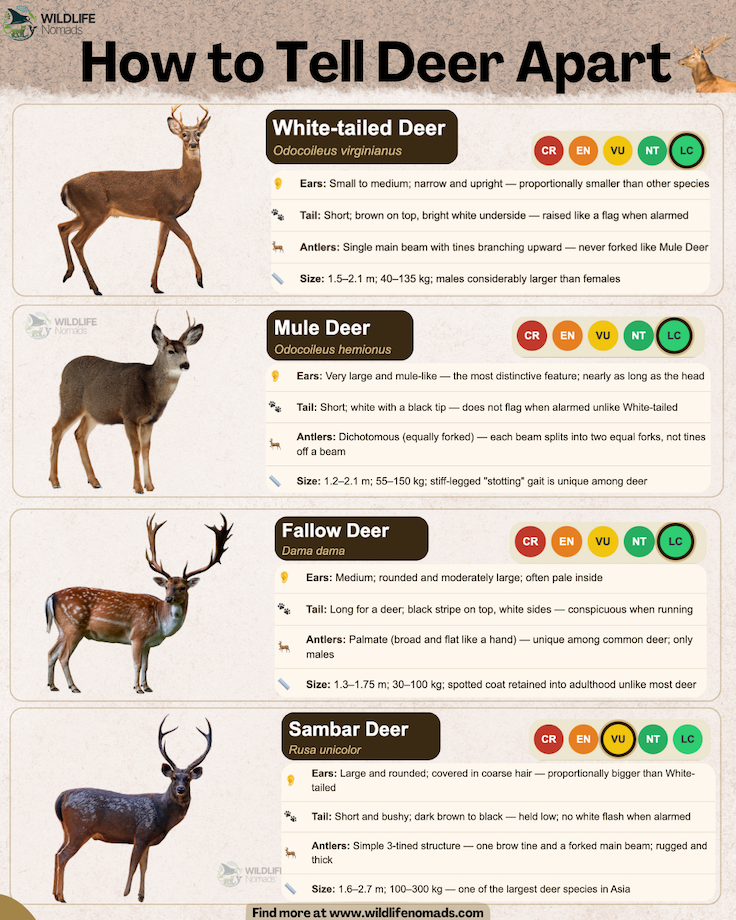
Quick ID Guide: How to Tell Deer Species Apart
| Feature | White-tailed Deer | Mule Deer | Fallow Deer | Sambar Deer |
| Ears | Small / Normal | Large (Mule-like) | Medium | Large / Rounded |
| Tail | White underside, flagged | White with black tip | Long, black & white | Bushy, dark |
| Antlers | Tines off main beam | Dichotomous (forked) | Palmate (flat) | Simple 3-tined |
| Coat Colour | Tan / Brown | Grey / Tan | Often Spotted | Coarse Dark Brown |
Conservation Status of Deer
The conservation status of deer varies widely, with some species thriving while others face significant threats. Many species of deer are currently listed as threatened or endangered due to habitat loss, hunting, and other human activities. For example, the sambar deer is classified as vulnerable on the IUCN Red List, while the hog deer is considered endangered. The Chinese water deer, with its unique appearance and specialized habitat needs, is also listed as vulnerable, and the Indian muntjac is near threatened.
FAQs about Types of Deer
In North America, Elk (Cervus canadensis) are considerably larger than most deer species and carry a distinct antler structure. However, in Europe, the animal North Americans call a Moose is called an Elk. All of these animals belong to family Cervidae — the naming confusion is purely regional.
There are approximately 43 recognised deer species globally, divided between the Cervinae (Old World deer) and Capreolinae (New World deer) subfamilies.
In the UK and Australia, there are six species of deer, and several species have established wild populations outside their native ranges. In Australia, six species of non-native deer have established sustainable wild populations due to acclimatization releases in the 19th century
The Southern Pudu (Pudu puda) of Chile and Argentina is the world’s smallest deer, reaching only about 35 cm at the shoulder and weighing 6–12 kg.
The Visayan Spotted Deer (Rusa alfredi) and Père David’s Deer are among the rarest. Père David’s Deer was extinct in the wild for decades and survived only through captive breeding programmes at Woburn Abbey in the United Kingdom.
In most deer species, only males grow antlers. However, Reindeer and Caribou (Rangifer tarandus) are the notable exception — both sexes grow antlers, making them unique within family Cervidae.
References
Ambarli, H., Catullo, G., & von Arx, M. (2016). Capreolus capreolus (Roe Deer). The IUCN Red List of Threatened Species 2016: e.T42395A22161386. https://dx.doi.org/10.2305/IUCN.UK.2016-1.RLTS.T42395A22161386.en
Li, C., Wang, W., Zhang, G., Ba, H., Liu, H., Wang, J., Li, W., Melino, G., & Shi, Y. (2024). Bone metabolism associated with annual antler regeneration: a deer insight into osteoporosis reversal. Biology direct, 19(1), 123. https://doi.org/10.1186/s13062-024-00561-3
Meijaard, E., & Groves, C. P. (2004). Morphometrical relationships between South-east Asian deer (Cervidae, tribe Cervini): evolutionary and biogeographic implications. Journal of Zoology, 263(2), 179–196. https://doi.org/10.1017/s0952836904005011
Pitra, C., Fickel, J., Meijaard, E., & Groves, P. C. (2004). Evolution and phylogeny of Old World deer. Molecular Phylogenetics and Evolution, 33(3), 880–895. https://doi.org/10.1016/j.ympev.2004.07.013
Randi, E., Mucci, N., Claro-Hergueta, F., Bonnet, A., & Douzery, E. J. P. (2001). A mitochondrial DNA control region phylogeny of the Cervinae: speciation in Cervus and implications for conservation. Animal Conservation, 4(1), 1–11. https://doi.org/10.1017/S1367943001001019
Timmins, R., Duckworth , J.W., Samba Kumar, N., Anwarul Islam, M., Sagar Baral, H., Long, B. & Maxwell, A. (2015). Axis porcinus. The IUCN Red List of Threatened Species 2015: e.T41784A22157664. https://dx.doi.org/10.2305/IUCN.UK.2015-4.RLTS.T41784A22157664.en. Accessed on 23 March 2026.
Wurster, D. H., & Benirschke, K. (1970). Indian muntjac, Muntiacus muntjak: a deer with a low diploid chromosome number. Science (New York, N.Y.), 168(3937), 1364–1366. https://doi.org/10.1126/science.168.3937.1364