
For almost four years, I walked past masked plovers like everyone else in Australia. They were the nervous birds on the footy oval, always flapping off before I got close. Then Jackie told me one had gone for her dog. I honestly laughed. Those birds could never attack anyone, I said. They always look scared.
Now I know better. A masked plover (Vanellus miles) with chicks nearby is a completely different animal. I’ve been swooped by magpies and noisy miners in Sydney and on the Sunshine Coast. However, being charged by a lapwing on an open beach felt different. It came low, loud and straight at my face.
On our Australia lap, masked lapwings have turned up at every single stop including Pebbly Beach, Illaroo and Bellingen. Only brush turkeys, silver gulls and noisy miners come close. So it’s time they got their own post. Here’s what I’ve learned about the mask, the spurs, the swooping, those ridiculously cute chicks, and why this bird thrives right where we live.
1. That Yellow Mask Is Bare Skin, Not Feathers
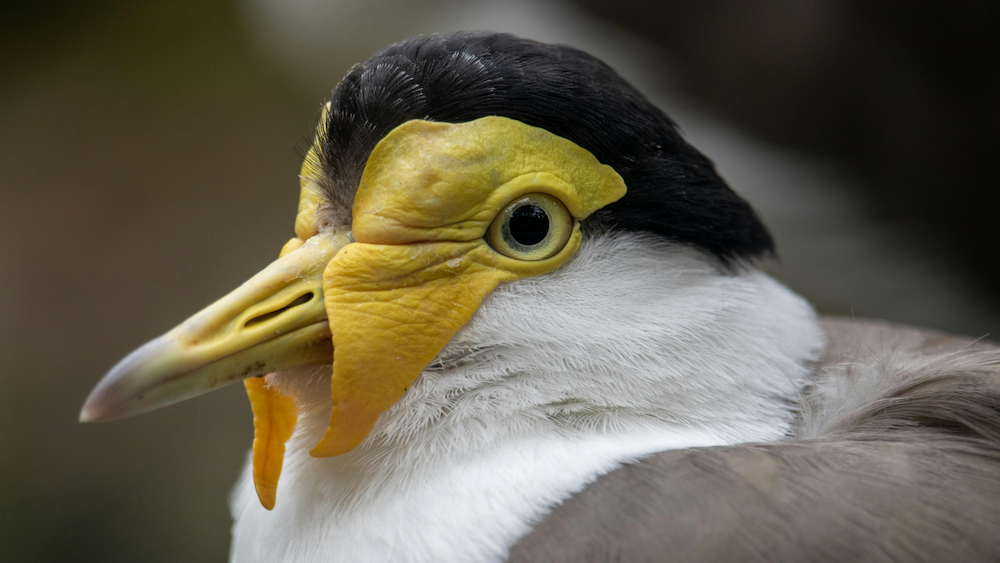
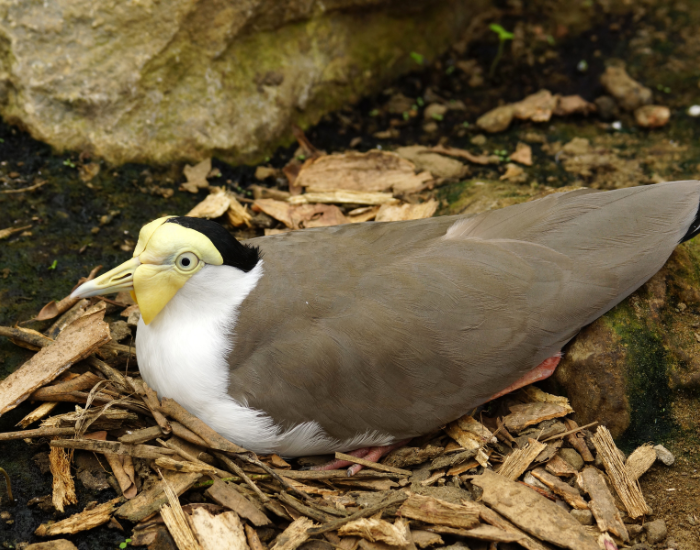
The first thing you notice is the face. That yellow mask looks perfectly carved into the head, as if someone glued it on. In fact, those are fleshy facial wattles, patches of bare skin that sit in front of each eye. very similar to the blue colour on blue-faced honeyeaters.
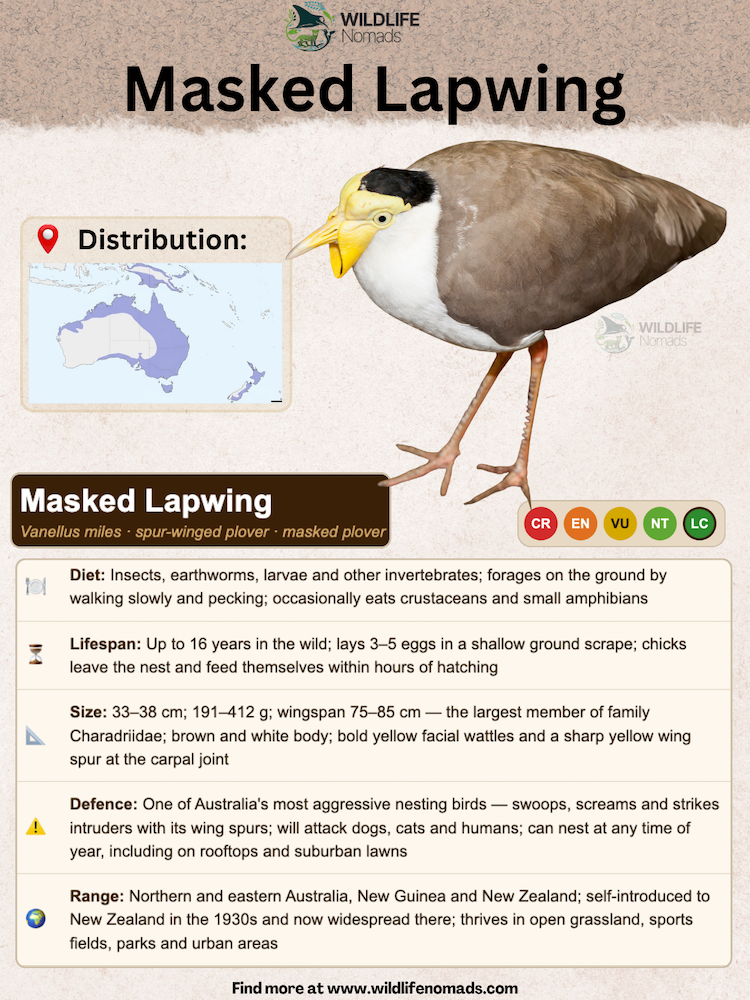
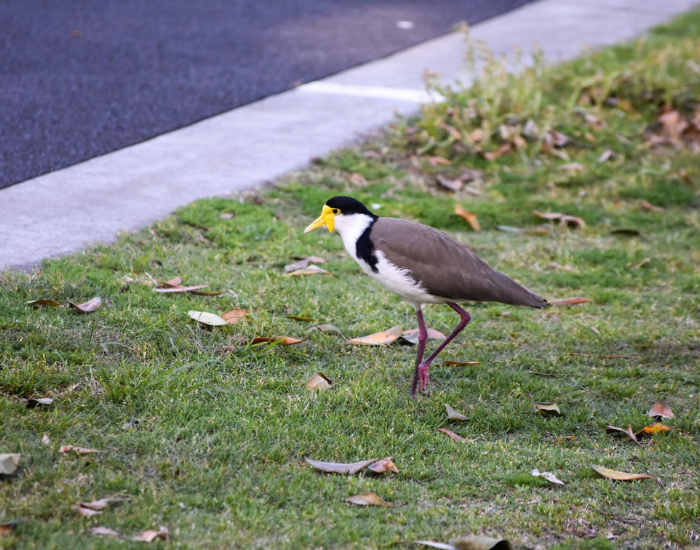
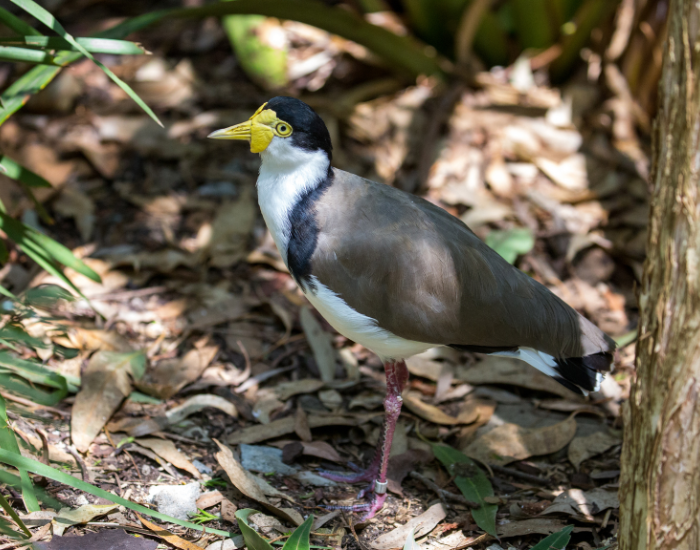
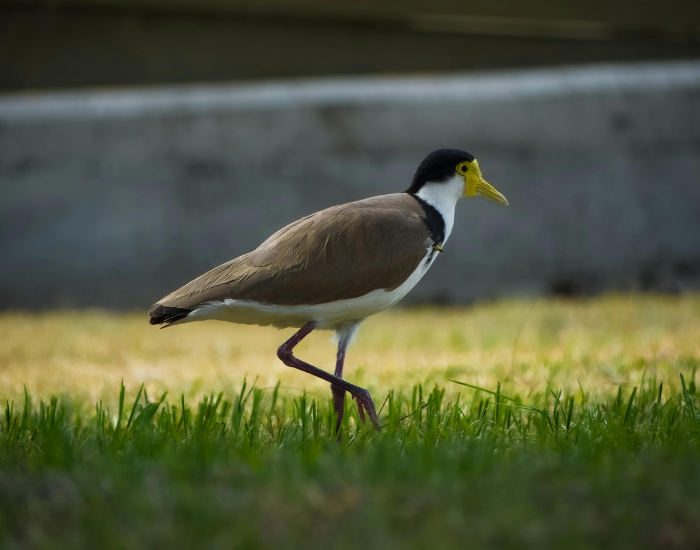
Above the wattles sits a neat black crown. The rest of the bird is crisp and simple: a yellow bill, white underparts and soft brown wings. At 30 to 37 cm long, it ranks among the largest members of the plover family. That distinctive mask makes it almost impossible to confuse with anything else in a park.
2. Two Subspecies Split the Continent
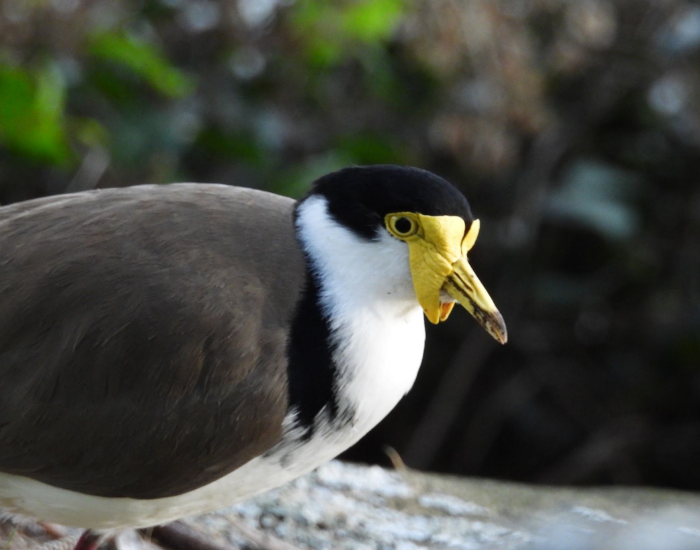
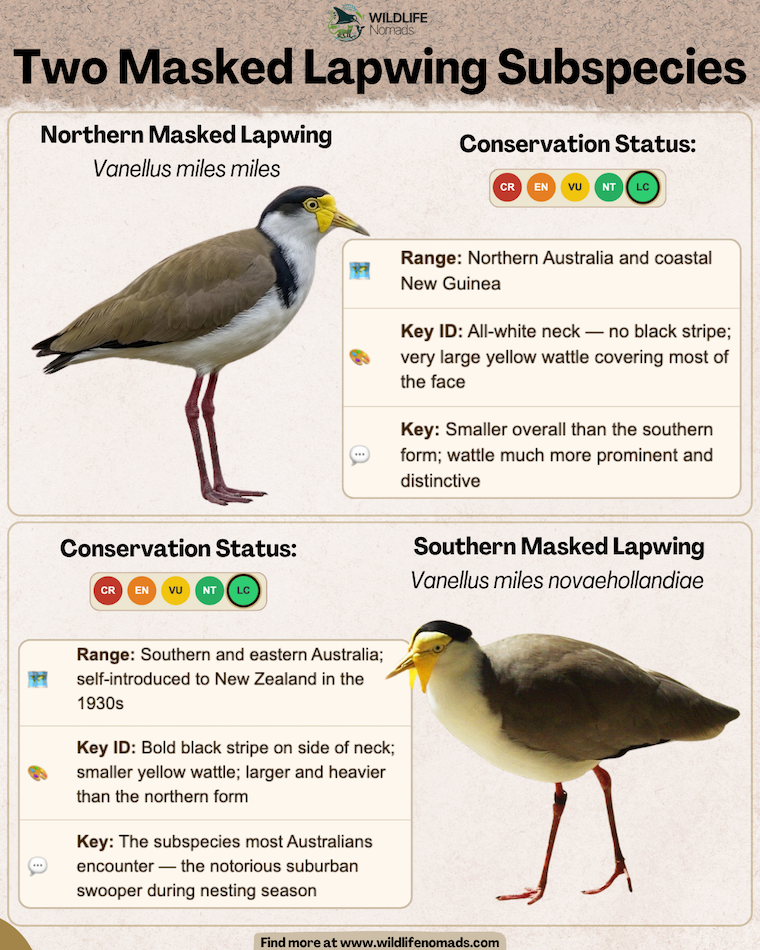
Australia hosts two subspecies, and a quick look tells them apart. The nominate race, V. m. miles, lives across northern Australia and southern New Guinea. It has an all-white neck and large yellow wattles that can droop below the eye.
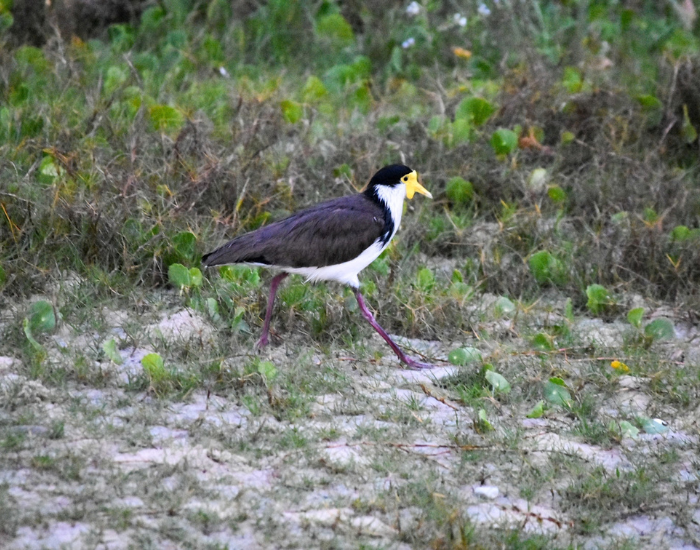
In the southern and eastern states, you’ll mostly meet V. m. novaehollandiae. This bird carries smaller wattles and a bold black neck stripe. The black runs from the crown down the hind neck and onto the sides of the breast. Some older guides call it the black-shouldered lapwing. Where the two ranges meet in Queensland, the birds often interbreed.
3. New Zealand Knows It as the Spur-Winged Plover
The southern subspecies pulled off something remarkable in the 1930s. It crossed the Tasman Sea on its own and began breeding in Southland, New Zealand. Nobody shipped it there. Today it ranks among the most familiar New Zealand birds on farmland.
Kiwis still call it the spur winged plover, and New Zealand Birds Online uses that name too. That creates endless confusion, because an African and Middle Eastern species shares the name. So if you search for a spur winged plover in Australia, you’re almost always looking at our masked lapwing.
4. Masked Plover Wing Spurs Are Real, but Not Venomous
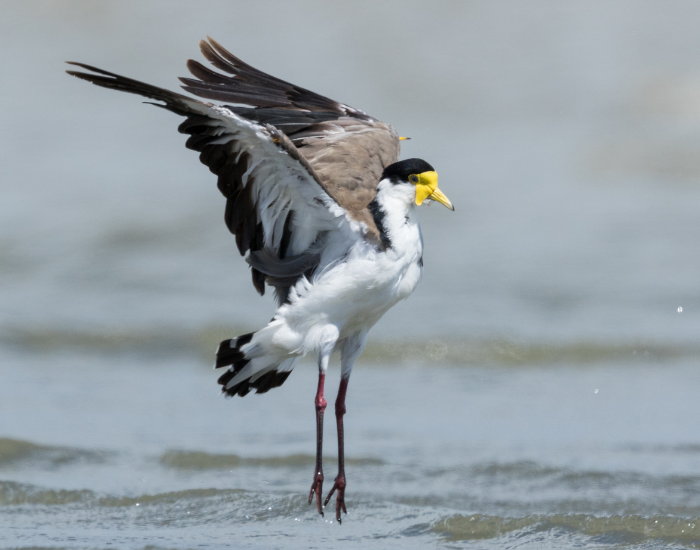
Fold a masked plover’s wing and you’ll find a sharp yellow spur at the wrist. Both males and females carry one on each wing. When a bird half-raises its wings in a threat display, the spurs flash forward like a warning sign.
Here’s the myth I hear constantly: the spurs are poisonous. They aren’t. Masked plovers have no venom glands, and the spurs deliver no toxin at all. Instead, they help intimidate intruders on the ground, especially other lapwings. I’ve watched them turn that spur display on rival plovers, and sometimes on other species entirely.
5. Almost Any Stretch of Short Grass Will Do
In the wild, masked lapwings live on the edges of wetlands, mudflats, grasslands and beaches. They favour moist, open areas where danger is visible from far away. They thin out across the driest arid areas, but they’re widespread almost everywhere else.
Our cities handed them a gift: short grass. Suburban parks, golf courses, school ovals and playing fields mimic the open plains they evolved on. I’ve seen them on the grassy edges near Burleigh Heads National Park and around the wetlands of Coombabah Lakelands. On this lap, they’ve appeared in national parks, at Evans Head, Pebbly Beach and Bellingen. Almost any stretch of open ground seems to qualify.
6. The Nest Is Barely a Nest
Masked plovers don’t bother with much architecture. A nesting pair scrapes a small depression into bare ground or short grass, sometimes adding a few pebbles or twigs. That simple scrape usually holds three to four olive, heavily blotched eggs.
The breeding season runs mainly from late winter to early spring, which means right now as I write this. Eggs hatch after about 28 days of incubation. Interestingly, a Deakin University study found males and females share incubation almost equally, day and night.
Their bold nesting habits are where things get strange. Pairs lay eggs on flat roofs, car park medians and nature strips, sometimes metres from a busy footpath. Wildlife rescuers attend so many lapwing callouts that researchers have used rescue records to study the species.
7. Precocial Chicks Hit the Ground Running
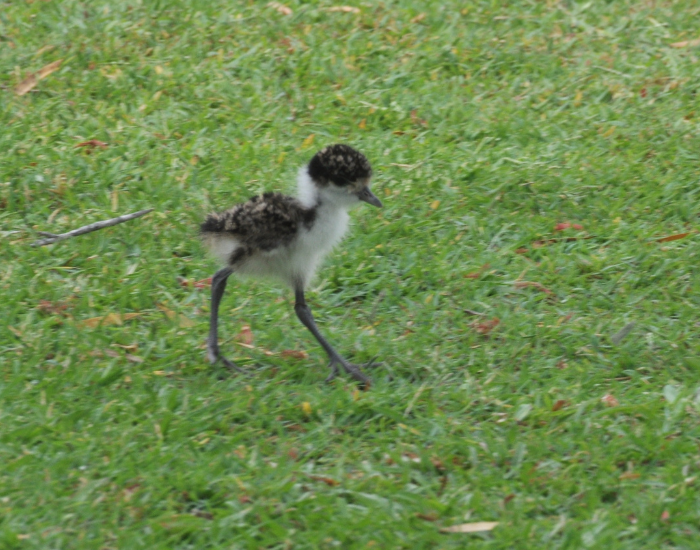
Now for the cute part. Masked lapwing chicks hatch as precocial chicks, with a full covering of speckled down and legs that already work. They can leave the nest a few hours after they’ve hatched. Soon after, they start pecking at insects on their own.
Parents never feed them. Instead, the adults provide protection: alarm calls, brooding under their wings and chasing off threats. Young birds reach full height in four to five months. Chicks from flat rooftops face a scary first day, because they must jump down to reach food.
Most young birds stay close to home. Chicks rarely move more than 10 km from their nest site. Many begin breeding themselves at one to two years old.
8. The Swooping Is Mostly Bluff
My own lesson came at Woody Head. I was walking the beach when a lapwing started calling from the dune vegetation. I couldn’t see her, so I kept going. Her calls grew louder and faster, full of threat.
Then she burst out of the grass, wings up, lining up to swoop. She was a female guarding a chick I hadn’t even noticed. I stepped back, and she eased off. Every step I retreated, she grew a little quieter. That was exactly the point.
Defence works in stages: calling loudly first, then threat displays, then adult birds swooping fast and low. Physical contact is rare, and most swoops pull up short or pass overhead. A Phillip Island study found these birds adjust their defence to the threat. Eye stickers on a walker’s head reduced swooping, yet they increased it against someone pushing a lawn mower.
9. They’ll Fake a Broken Wing
If calling and swooping fail, masked lapwings switch tactics. One parent drags a wing along the ground as if it’s badly hurt. This broken wing display makes the adult look like an easy meal. Potential predators, such as foxes, cats and dogs, follow it away from the chicks.
Meanwhile, the parents squawk loudly to pull every eye onto themselves. The chicks freeze flat and rely on camouflage. Once the threat has wandered far enough, the “injured” bird simply flies off. Many shorebirds worldwide use this trick, but few perform it on suburban footy fields.
10. Suburbs Can Beat Farmland for Breeding
You’d expect city life to hurt a ground-nesting bird. A 2013 Deakin University study found the opposite. Suburban masked lapwings defended their nests harder than farmland birds. Yet suburban females weighed about 7% more, laid slightly longer eggs and hatched more of them.
A four-year study in western Sydney recorded mean hatching success of 81%, remarkably high for a ground nester. On Phillip Island, pairs preferred vacant blocks and holiday houses over busy family homes. Watered lawns likely boost the worms and insects they eat. As a result, this species is a rare example of wildlife that wins from urban sprawl.
11. Other Birds Get the Treatment Too
Humans and dogs aren’t the only targets. Masked lapwings patrol their nesting area against other birds as fiercely as against us. Rival plovers get the full spur display, wings half-open and body puffed up.
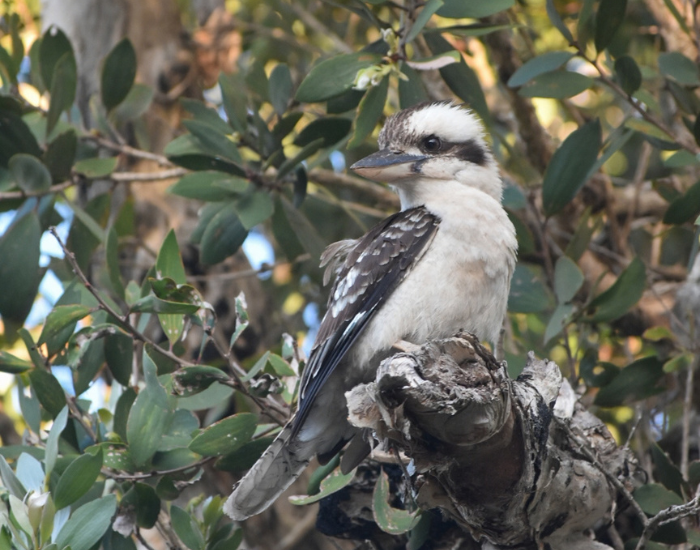
Magpies share the same lawns and often clash with them over space. Kookaburras, which will take small chicks, sometimes get chased too. The pair rises together, calling and diving until the intruder leaves.
12. Their Food Lives Just Under the Lawn
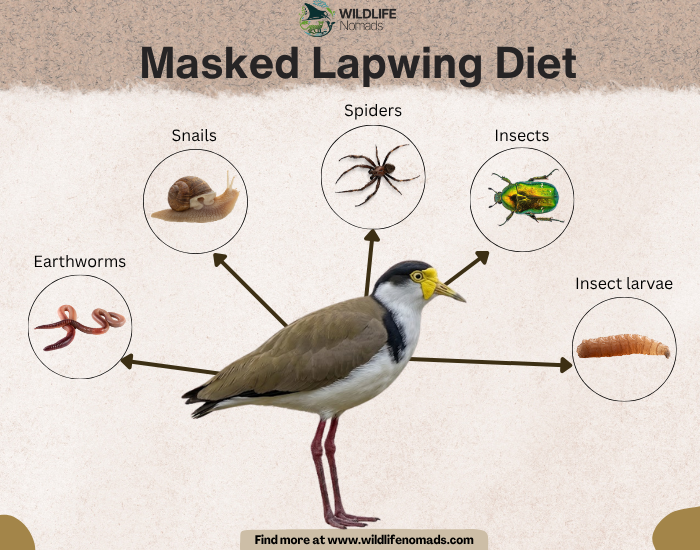
Masked lapwings feed mainly on insects, their larvae and earthworms. They find most prey just below the surface by ground searching across short grass. Watch one for a minute: run, stop, tilt, peck. They also take seeds, greens and even small fish at the water’s edge.
These birds spend most of their day foraging on the ground, and they never fully switch off. Masked plovers stay alert while feeding and rarely sleep deeply. That’s why you often hear them calling at night. Someone in the family is always on watch.
Frequently Asked Questions
No. Their spurs, feathers and flesh contain no toxins. A swoop may startle you, but it can’t poison you. Treat any rare scratch like any other minor wound.
They eat mostly insects, larvae and earthworms. They hunt by sight on short grass, mudflats and beaches. Occasionally, they add seeds, greens and small fish.
You can’t legally harm the birds, move their eggs or destroy an active nest. Instead, give the nesting area a wide berth, walk dogs elsewhere and carry an umbrella if you must pass. Local councils commonly run public education campaigns about coexistence during the breeding season. The defence stops once the chicks can fly. Longer grass or garden beds can make your yard less appealing next year.
Yes. The masked lapwing is a protected species under wildlife laws in every Australian state and territory. Globally, the IUCN lists it as Least Concern because populations are widespread and stable. Relocating a nest normally requires a permit from your state wildlife agency.
Mainly late winter to early spring across southern Australia. In the north, pairs can breed whenever conditions suit. Expect the most swooping during these months, especially near parks and ovals.
The Bird That Taught Me Not to Judge by Nerves
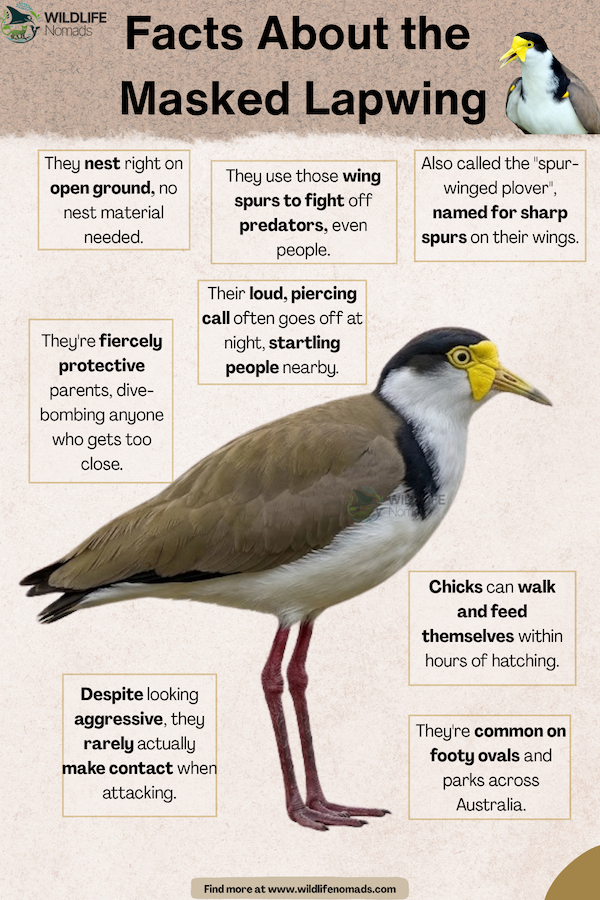
The masked plover taught me that common doesn’t mean ordinary. This bird raises chicks on car parks and rooftops, fakes injuries and bluffs its way past dogs and mowers. Nearly all of its aggression is theatre, performed by extremely dedicated parents.
So next time one screams at you across a park, stop and step back. Then look carefully for the chick. You’ll probably spot a fluffy ball of down on stilts, frozen in the grass.
I’ll keep logging them at every stop as the lap continues. Tell me in the comments: where did your first masked lapwing charge happen?
Masked Lapwing Trivia & Science Challenge
Ten fun photo-based True/False and Multiple Choice questions to test what you’ve learned about Australia’s famous plover!
Multiple Choice
References:
Cardilini, A. P. A., Weston, M. A., Nimmo, D. G., Dann, P., & Sherman, C. D. H. (2013). Surviving in sprawling suburbs: Suburban environments represent high quality breeding habitat for a widespread shorebird. Landscape and Urban Planning, 115, 72–80. https://doi.org/10.1016/j.landurbplan.2013.04.001
Cardilini, A. P. A., Weston, M. A., Dann, P., & Sherman, C. D. H. (2015). Sharing the load: Role equity in the incubation of a monomorphic shorebird, the masked lapwing (Vanellus miles). The Wilson Journal of Ornithology, 127(4), 730–733. https://doi.org/10.1676/14-189
Lees, D., Sherman, C. D. H., Maguire, G. S., Dann, P., Cardilini, A. P. A., & Weston, M. A. (2013). Swooping in the suburbs: Parental defence of an abundant aggressive urban bird against humans. Animals, 3(3), 754–766. https://doi.org/10.3390/ani3030754
Mo, M. (2020). Nesting ecology of the masked lapwing Vanellus miles novaehollandiae at two peri-urban sites: Breeding densities, nest characteristics, clutch sizes and hatching success. Corella, 44, 55–60. https://absa.asn.au/corella_documents/nesting-ecology-of-the-masked-lapwing-vanellus-miles-novaehollandiae-at-two-peri-urban-sites-breeding-densities-nest-characteristics-clutch-sizes-and-hatching-success/
Pyke, G. H., & Szabo, J. K. (2018). What can we learn from untapped wildlife rescue databases? The masked lapwing as a case study. Pacific Conservation Biology, 24(2), 148–156. https://doi.org/10.1071/PC18003
Roche, D. V., Cardilini, A. P. A., Lees, D., Maguire, G. S., Dann, P., Sherman, C. D. H., & Weston, M. A. (2016). Human residential status and habitat quality affect the likelihood but not the success of lapwing breeding in an urban matrix. Science of the Total Environment, 556, 189–195. https://doi.org/10.1016/j.scitotenv.2016.03.008