
On our second night the whole roof tent was moving. Rain hammered the fly, and the awning pulled at every peg. Twelve hours earlier, the same spot had felt like paradise.
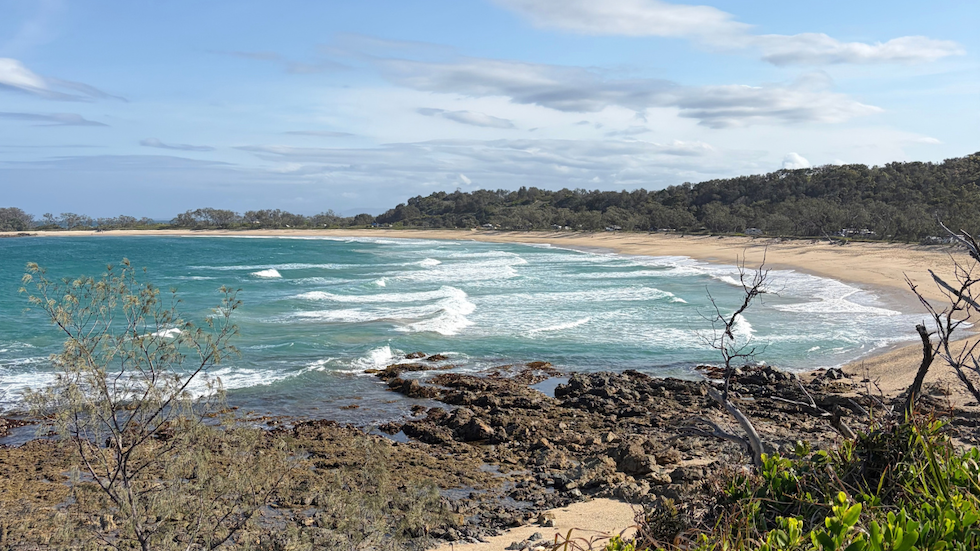
That is Pebbly Beach campground in two sentences. We stayed two nights in Yuraygir National Park, on the NSW north coast, as the next stop on our Australia lap after Illaroo. The first day gave us dolphins in the bay, sea eagles over our site and two pythons on the toilet roof (needles to say, Jackie was not amused by encountering them again). The second night reminded us who is in charge out here.
Pebbly also showed me how paradoxical camping is. Life becomes beautifully simple. You wake up with the birds or the waves, and you go to sleep when the moon comes out to say hello. Nothing seems to worry you, until something does. Then everything becomes a mission: cooking, finding the toilet, showering, even trying to work out.
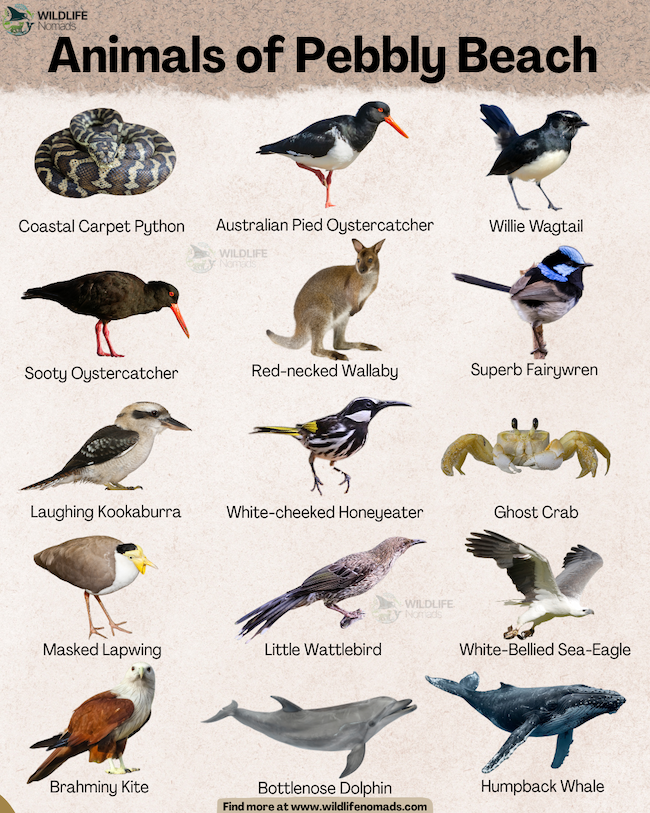
Below are the 19 animals I logged, plus the practical side: the low-tide crossing, water, toilets and where to pitch.
Which Pebbly Beach Is This?
NSW has two Pebbly Beach campgrounds, and people mix them up constantly. The famous one sits in Murramarang National Park on the South Coast, known for kangaroos on the sand. This one lies in the southern part of Yuraygir National Park, north of Coffs Harbour, between Coffs and Yamba.
If you are planning a north coast trip, our guide to the best NSW national parks puts Yuraygir in context.
Camping at Pebbly Beach Campground
Getting There: The Bumpy Road and Station Creek
NPWS sends you off the Pacific Highway at McPhillips Road, about 47 km north of Coffs Harbour, then onto Barcoongere Way. After that comes a long, bumpy unsealed road, a dune track, the beach and finally Station Creek. NPWS rates the whole route as high-clearance 4WD only, and only at low tide.
The drive is rough but beautiful. A swamp wallaby watched us from the roadside on the way in. On the way out, a lone eastern grey kangaroo saw us off.
Check the tide times before you leave, then wait for low tide at the creek. With a high-clearance car, the crossing is easy and honestly fun. We watched small Subarus make it across, and they clearly struggled. While you wait, pied oystercatchers and ghost crabs work the sand around you.
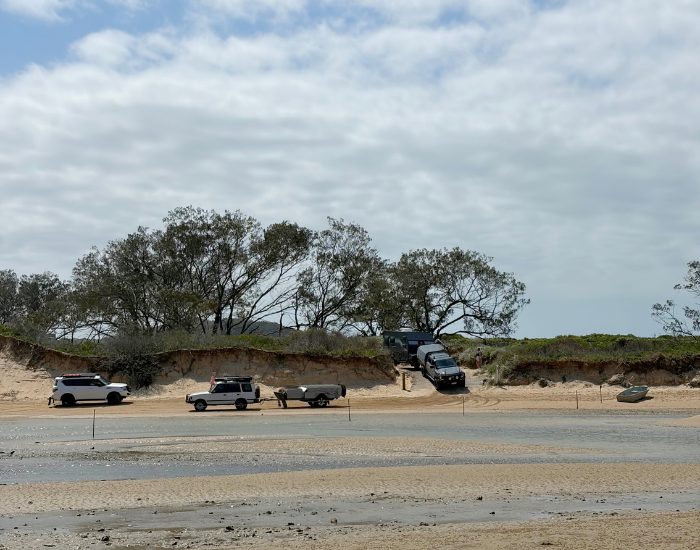
Site 33: Ocean Views, Close to the Toilet, No Shelter
We booked site 33. It sits very close to the toilet block, and as far as I could tell there is only one. That is a real comfort if you stay several days. The ocean view is amazing. However, nothing protects it from the wind.
That is the Pebbly trade-off. Sheltered sites among the trees exist, and there are quite a few. Many of them, though, sit a long way from that single toilet. If you travel with a roof tent, pick your site for the forecast, not just the view.
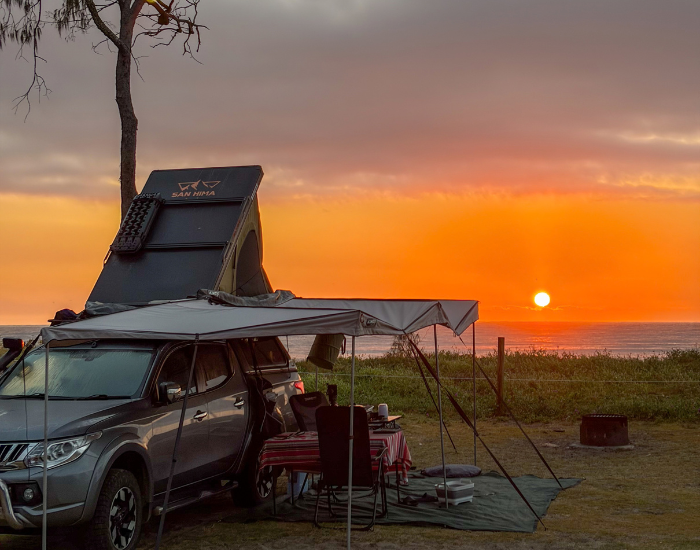
The Second Night: Wind, Rain and a Wrong Forecast
Our second night was the total opposite to the first one. It felt like our windy night at Red Cliff, only wetter. At Red Cliff, the forecast showed winds almost double what Pebbly’s forecast showed. On the night, both felt exactly the same. Pebbly has no weather station of its own, so we read the prediction wrong.
The whole roof tent moved, and the awning moved with it. Peg everything to the ground and pack away anything that can fly. With no drinking water, no shower, a drop toilet and a soaked tent, we packed up and moved on to the next stop.
The Walking Track and Rock Pools
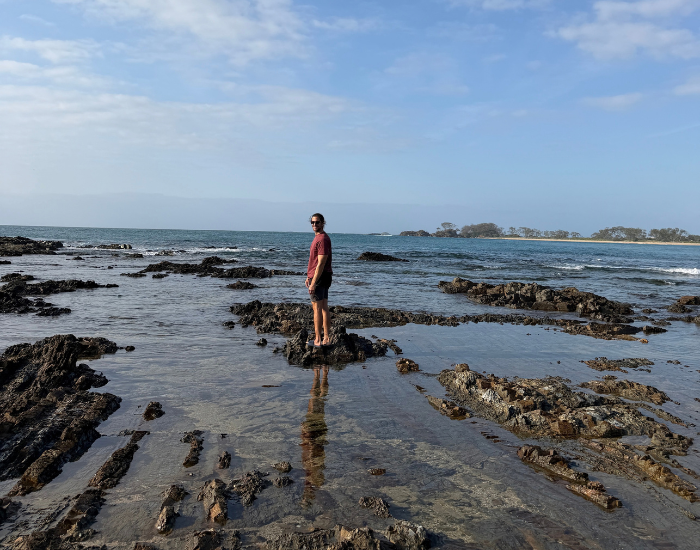
At the far end of the campground, a walking track follows the coast. On a sunny day the views are gorgeous, and the track leads to some very pretty rock pools. Watch your feet on the path, because we met some big fire ants. That track is also where I found the willie wagtails.
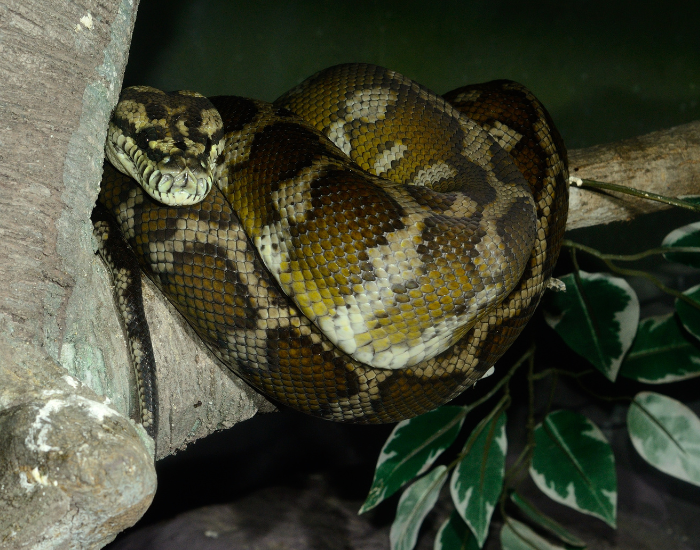
1. Coastal Carpet Python (Morelia spilota mcdowelli)
Two of them, living in the toilet roof, just like the python at Red Cliff. I am starting to believe every drop toilet on this coast comes with a resident.
It makes ecological sense. Shine and Fitzgerald radio-tracked carpet pythons near Bangalow and Mullumbimby, not far north of here. The snakes stayed motionless for long periods, used roof spaces and ate mainly commensal mammals. A toilet block offers shelter, warmth and rodents. Carpet pythons are non-venomous and not among the dangerous snakes of Australia. Look up, then leave them alone.
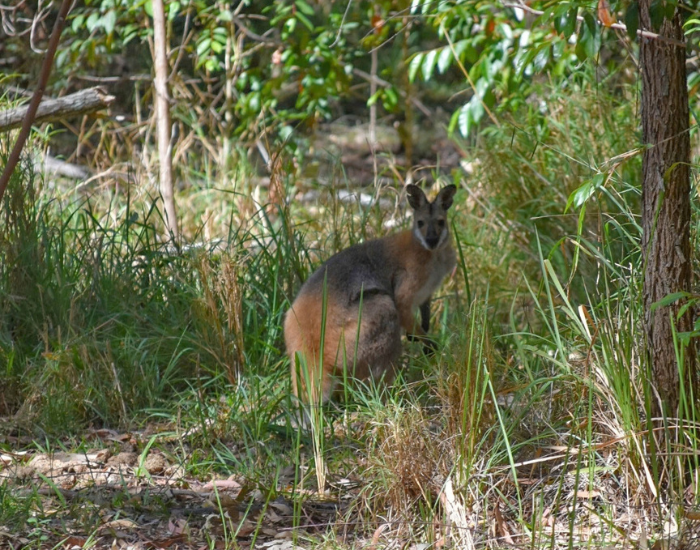
2. Red-necked Wallaby (Notamacropus rufogriseus)
My first wallaby of the whole lap. It stood in the bush beside the bumpy access road and stared straight into my camera.
Look for the rusty wash across the neck and shoulders, which gives the species its name. The body is grey-brown, with a dark muzzle, black paws and a pale stripe along the upper lip. Red-necked wallabies like forest edges beside grassy clearings. They spend the day in cover, then come out to graze in the late afternoon.
They are mostly solitary, although several may feed together on good grass. Older guides list them as Macropus rufogriseus, but taxonomists have since moved them to Notamacropus. Tasmania has its own subspecies, the Bennett’s wallaby, which grows a shaggier coat for the cold.
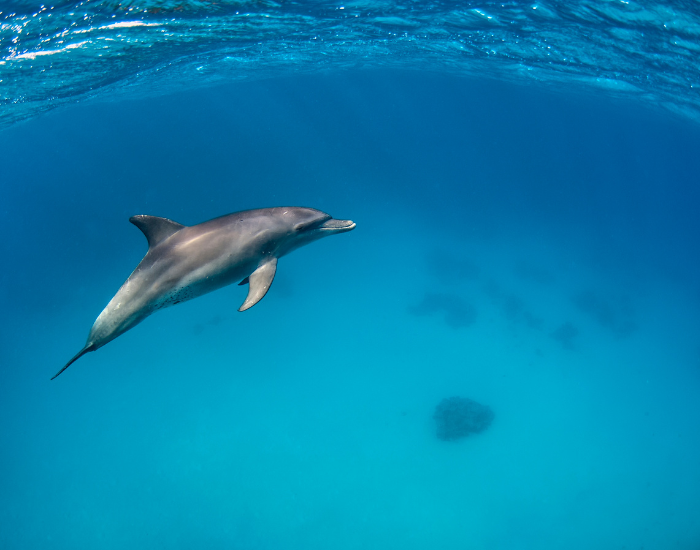
3. Indo-Pacific Bottlenose Dolphin (Tursiops aduncus)
We were walking near the rock pools when I spotted dolphins inside the bay. A few backs rolled through the calm water, then disappeared.
This species prefers shallow, inshore water, so bays and estuaries suit it well. Indo-Pacific bottlenose dolphins are smaller than common bottlenose dolphins. Older adults also develop spotted bellies. Bring binoculars to the rock pools and scan the sheltered water.
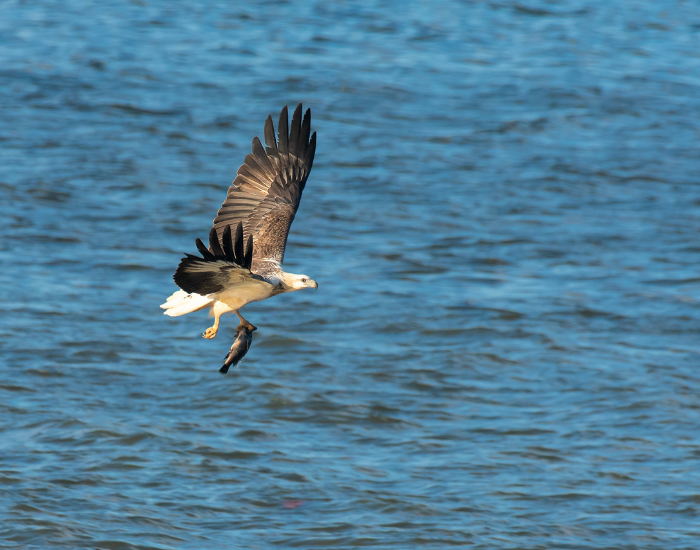
4. White-bellied Sea Eagle (Icthyophaga leucogaster)
A pair flew just above site 33. As campsite neighbours go, it is hard to beat.
White-bellied sea eagles rank as Australia’s second-largest bird of prey, after the wedge-tailed eagle. Pairs hold territories year-round and reuse massive stick nests. They hunt fish and sea snakes and take carrion too. Taxonomists recently moved the species from Haliaeetus to Icthyophaga, so older field guides show the old name. See our guide to Australian eagles for the rest.
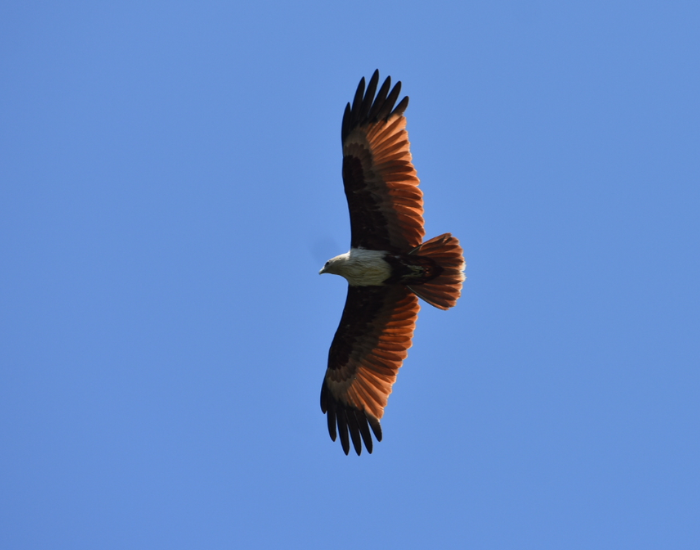
5. Brahminy Kite (Haliastur indus)
This one patrolled above the ocean shore. White head and chest against chestnut wings make it unmistakable, even at a distance.
Brahminy kites are coastal specialists. They snatch prey from the water’s surface rather than plunge-diving, and they scavenge along the tideline. Pebbly’s long beach and creek mouth offer both.
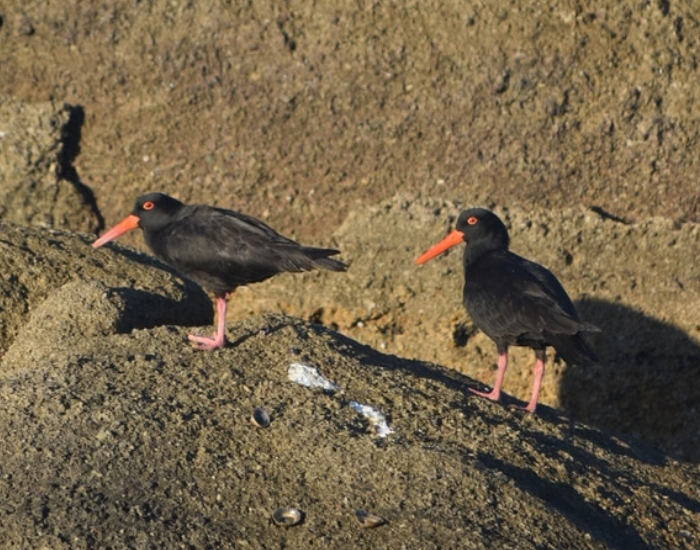
6. Sooty Oystercatcher (Haematopus fuliginosus)
Two birds, spotted on the way back while we drove through the sand. They were a clear reminder that this beach is also nesting habitat.
Sooty oystercatchers are entirely black, with a long red bill, red eyes and pink legs. They favour rocky shores, prising limpets and mussels off the rocks. NSW lists them as vulnerable. Drive slowly, keep to the firm wet sand, and give any birds a wide berth.
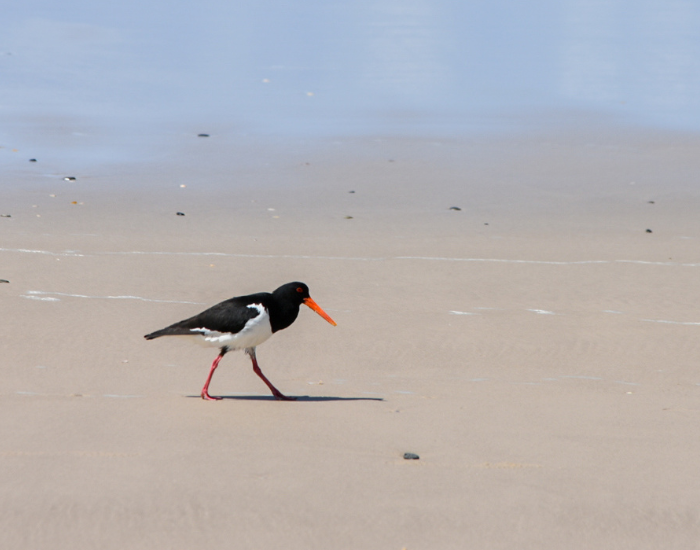
7. Australian Pied Oystercatcher (Haematopus longirostris)
Two more, right at the end of the trip, while we waited for the tide at the crossing. We saw others as we drove along the beach.
Pied oystercatchers lay their eggs in shallow scrapes on open sand, just above the tideline. Unfortunately, that is exactly where vehicles drive. NSW lists the species as endangered, and the eggs are almost invisible. Schlacher and colleagues also found that trampling the upper beach cuts the invertebrate prey these birds depend on.
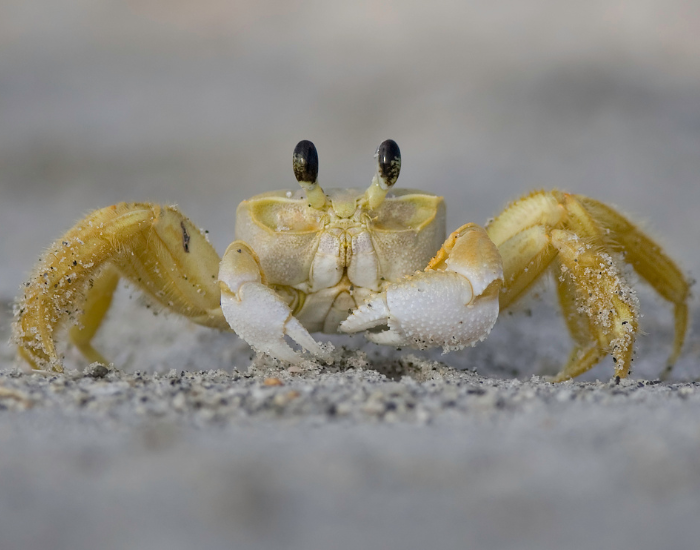
8. Smooth-handed Ghost Crab (Ocypode cordimana)
We found them on the beach and along the creek crossing. The crossing is the better spot, because you can swim in more protected water while watching the cars come through.
Schlacher and colleagues studied this species on North Stradbroke Island. Crab densities dropped where beach traffic was heavy. Burrows gave only partial protection: crabs buried 5 cm deep all died after ten vehicle passes. So drive on the lower, wetter sand whenever the tide allows.
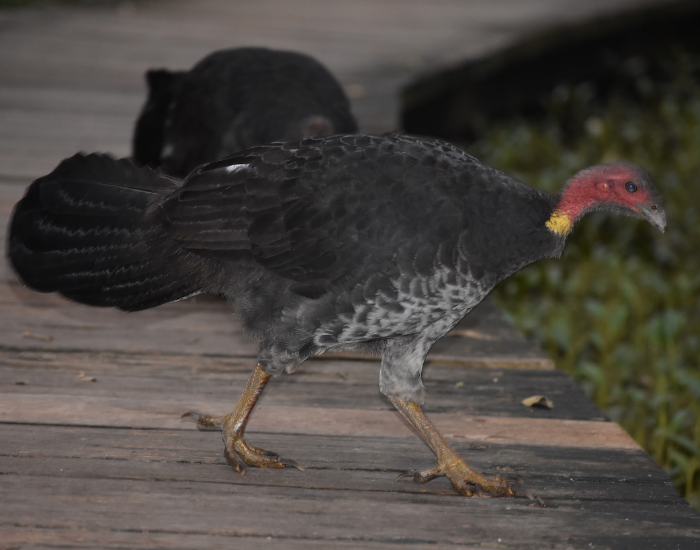
9. Australian Brushturkey (Alectura lathami)
Five of them patrolled the campground, raking leaf litter as if they owned it. They probably do.
Males build enormous incubation mounds and let rotting vegetation heat the eggs. Jones documented how males tend these mounds for months. Chicks dig themselves out fully independent, with no parental care at all. Hall and colleagues showed the species is recolonising Brisbane and Sydney after an early-20th-century decline. There is more in our brush turkey facts.
10. Laughing Kookaburra (Dacelo novaeguineae)
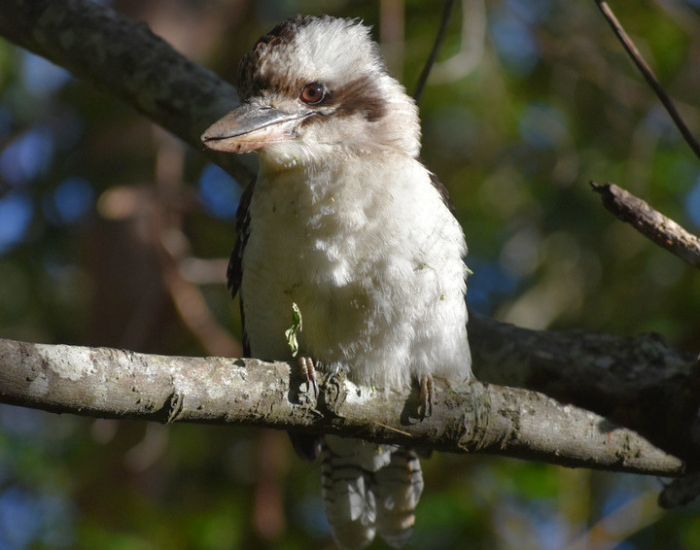
Kookaburras were around the campground, as they have been at almost every stop so far.
They are giant kingfishers that hunt on land, dropping onto skinks, insects and small snakes. Families live in groups, and older offspring often stay to help raise the next chicks. That famous laughing chorus is a territorial announcement, not a joke.
11. Superb Fairywren (Malurus cyaneus)
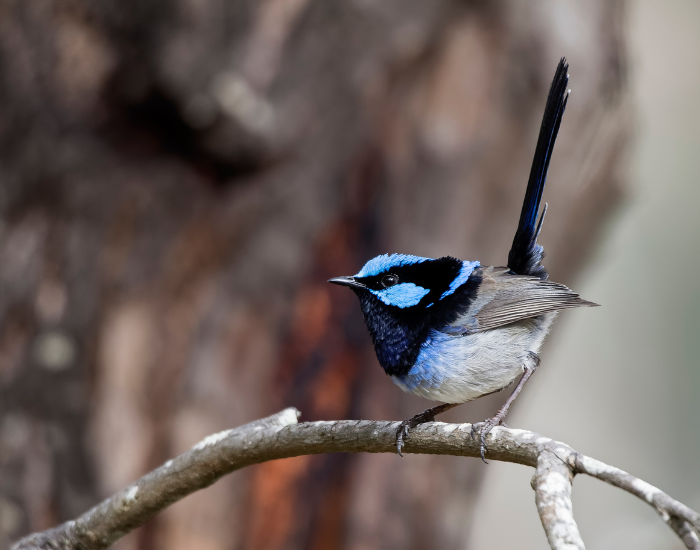
Five birds moved through the banksias along the campsites. They sang every morning, which made a lovely alarm clock.
The electric-blue males look like model partners. Genetically, they are not, because extra-pair mating is common and many chicks have other fathers. The brown birds travelling with them are females, young birds or non-breeding males. Our guide to wrens covers the rest.
12. White-cheeked Honeyeater (Phylidonyris niger)
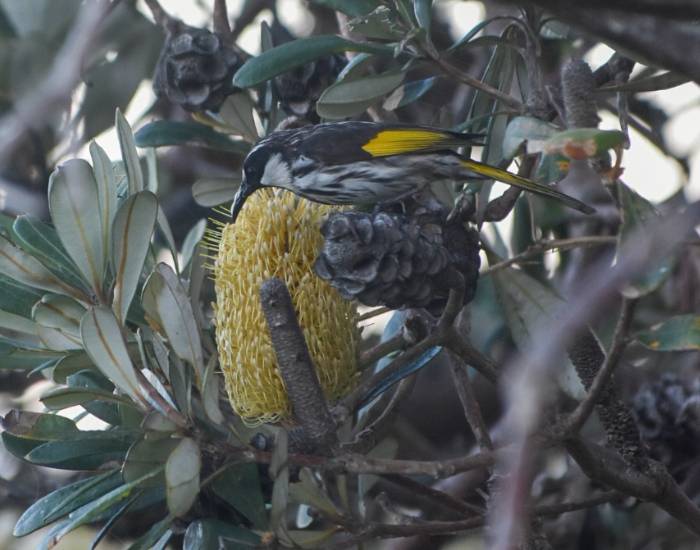
These worked the same banksias as the fairywrens, right along the row of sites near the toilets.
Look for a large white cheek patch, a dark eye and bright yellow wing panels. People often confuse it with the New Holland honeyeater, which has a white eye and a smaller cheek patch. Banksia flowers work as nectar stations, so banksia heath is prime habitat. See our honeyeaters of Australia guide.
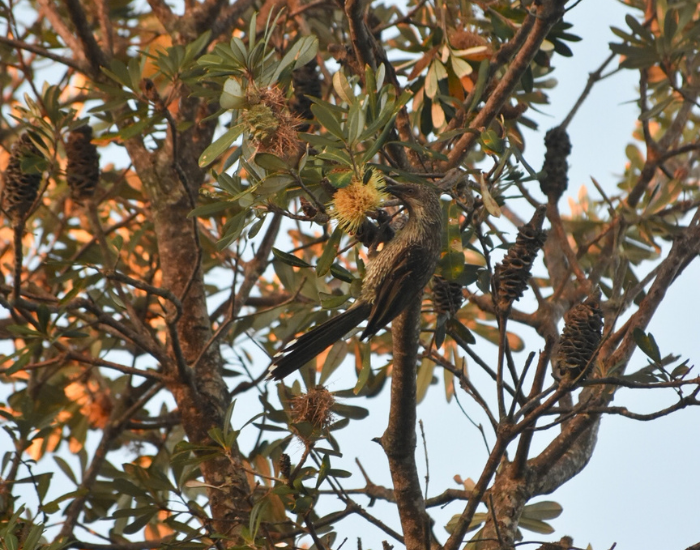
13. Little Wattlebird (Anthochaera chrysoptera)
Three birds, loud and busy in the coastal scrub.
Despite the name, little wattlebirds have no wattles at all. They are streaky grey-brown honeyeaters with a rufous wing patch that flashes in flight. In addition, they defend flowering banksias fiercely, chasing smaller honeyeaters away.
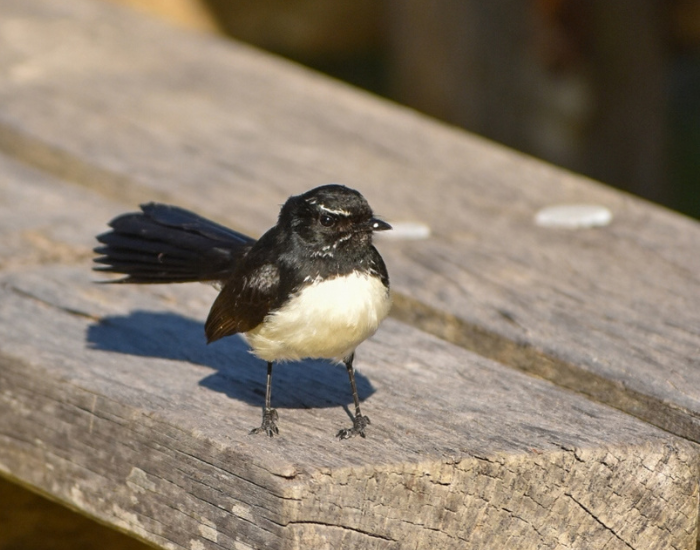
14. Willie Wagtail (Rhipidura leucophrys)
Two birds, and harder to find here than at other stops. They stayed among the trees instead of the open grass. Walk the track past the last campsites and you will find them.
Willie wagtails are Australia’s largest fantail. That constant side-to-side tail fanning likely flushes insects from cover. They are also famously bold, chasing much larger birds away from their nests.
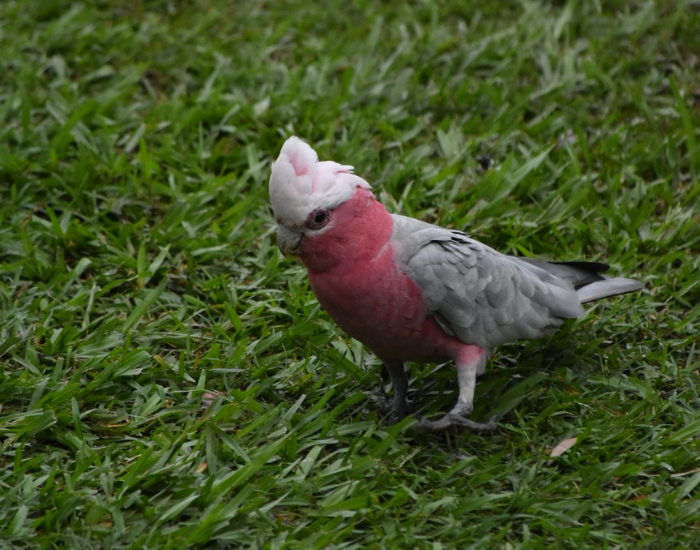
15. Galah (Eolophus roseicapilla)
Three galahs visited the campground, pink and grey against the green.
Galahs form long-term pair bonds and feed mostly on seeds from the ground. Land clearing and farming created open feeding country, and galahs spread across much of Australia as a result.
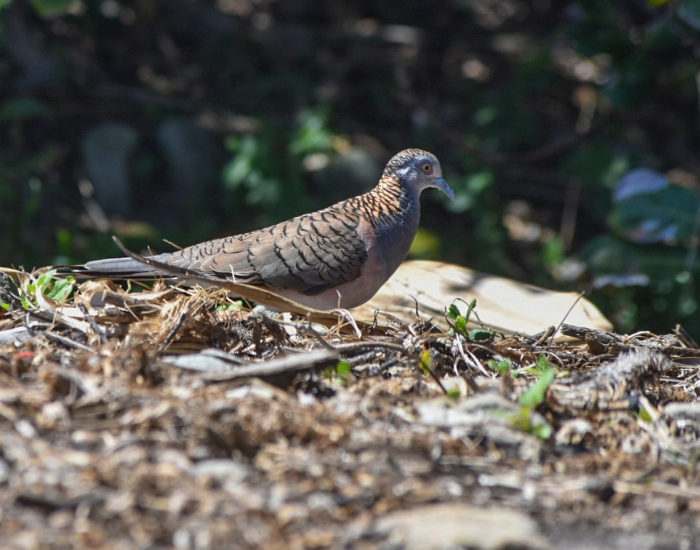
16. Bar-shouldered Dove (Geopelia humeralis)
Fewer than at other campgrounds, but present. I saw my first one at Red Cliff, and now I notice them everywhere.
Look for the coppery, finely barred nape. They favour edges where water, scrub and grass meet. Our guide to the pigeons of Australia sorts out the look-alikes.
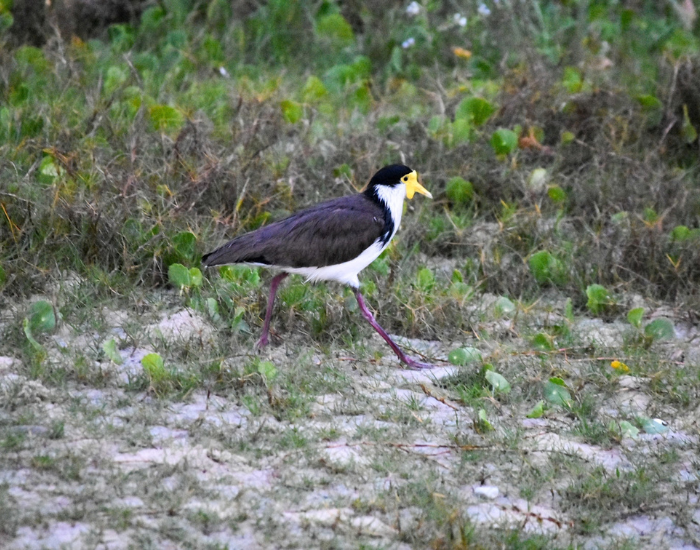
17. Masked Lapwing (Vanellus miles)
The classic masked lapwing, present at every campground so far.
The yellow facial wattle forms the mask. Each wing also hides a sharp yellow spur. Lapwings nest on open ground and defend it loudly, swooping at anyone who gets too close during breeding season.
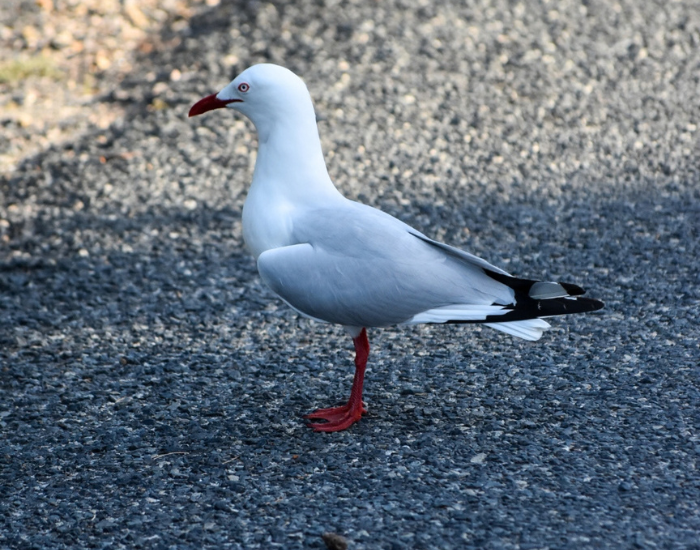
18. Silver Gull (Chroicocephalus novaehollandiae)
Around 20, and many came right up to our campsite. Guard your food. Although they are not aggresSive compared to the seagulls.
Adults have red bills, legs and eye-rings, while young birds show brown mottling and dark bills. Silver gulls are skilled scavengers, and human food waste has boosted their numbers. Feeding them makes camp worse for everyone, including the gulls.
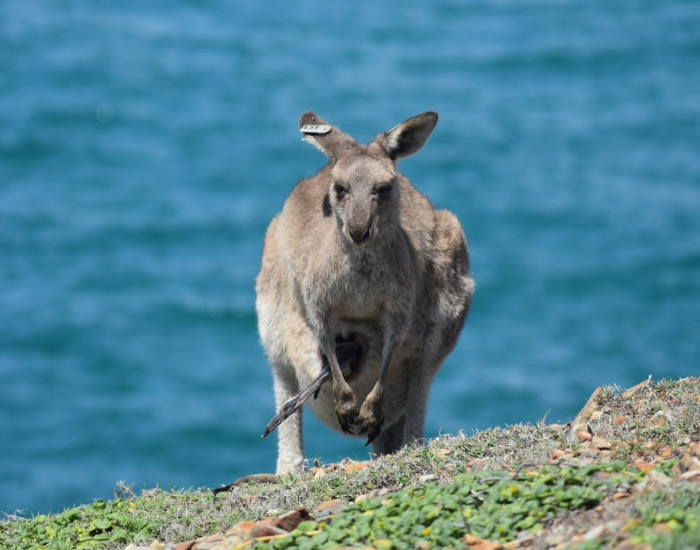
19. Eastern Grey Kangaroo (Macropus giganteus)
Only one, on the way back along the bumpy road. That felt unusual after the mobs at Red Cliff.
Eastern greys need open grass for grazing and clear lines of escape. Pebbly’s access road runs through bush instead, which suits swamp wallabies far better. For more, see our kangaroo facts.
Frequently Asked Questions
No. NPWS confirms there is no water at the campground, so bring all your drinking and cooking water. Carry more than you think you need. If the weather turns and you want to stay put, water is what runs out first.
There are non-flush drop toilets, and we only found one block for the whole campground. There are no showers. Bring a solar or portable shower, and pick your site knowing how far you will walk at night.
Yes. NPWS states the route is suitable only for high-clearance 4WDs, and only at low tide. The drive includes unsealed road, a dune track, beach driving and the Station Creek crossing. Check tide times before you set out.
Pets are not allowed, because Pebbly sits inside a national park. NPWS says you can buy firewood at the campground (but manager left when we arrive so we couldn’t buy)or bring your own. Always check fire danger ratings and total fire bans before lighting anything.
You pay a camping fee when you book through NPWS, plus a separate park entry fee. Vehicle entry is $8 per vehicle per day and is not included in the camping fee. You can book up to two sites or 12 people online.
Reception is limited. Download the Emergency+ app before you go, since it helps emergency services locate you. You will still need some reception to call Triple Zero.
Before You Leave Pebbly Beach Campground
Pebbly Beach campground gave us 19 species in two days, and the best ones came from the edges: the road in, the creek crossing and the walking track. Plan around the tide and the forecast, not the calendar, and pick your site for shelter.
Then go and look. Swim at the crossing, walk the track to the rock pools, and look up in the toilet block. Tell me in the comments what you found, especially if you camped through a windy night. Our guides to Australian native birds and the best places to see wildlife in Australia will help you plan the next stop.
References:
Fearn, S., Robinson, B., Sambono, J., & Shine, R. (2001). Pythons in the pergola: The ecology of ‘nuisance’ carpet pythons (Morelia spilota) from suburban habitats in south-eastern Queensland. Wildlife Research, 28(6), 573–579. https://doi.org/10.1071/WR00106
Hall, M. J., Martin, J. M., Burns, A. L., & Hochuli, D. F. (2024). The decline, fall, and rise of a large urban colonising bird. Wildlife Research, 51(7), WR23156. https://doi.org/10.1071/WR23156
Jones, D. N. (1988). Construction and maintenance of the incubation mounds of the Australian brush-turkey Alectura lathami. Emu, 88, 210–218. https://doi.org/10.1071/MU9880210
Schlacher, T. A., Carracher, L. K., Porch, N., Connolly, R. M., Olds, A. D., Gilby, B. L., Ekanayake, K. B., Maslo, B., & Weston, M. A. (2016). The early shorebird will catch fewer invertebrates on trampled sandy beaches. PLOS ONE, 11(8), e0161905. https://doi.org/10.1371/journal.pone.0161905
Schlacher, T. A., Thompson, L., & Price, S. (2007). Vehicles versus conservation of invertebrates on sandy beaches: Mortalities inflicted by off-road vehicles on ghost crabs. Marine Ecology, 28(3), 354–367. https://doi.org/10.1111/j.1439-0485.2007.00156.x
Shine, R., & Fitzgerald, M. (1996). Large snakes in a mosaic rural landscape: The ecology of carpet pythons Morelia spilota (Serpentes: Pythonidae) in coastal eastern Australia. Biological Conservation, 76(2), 113–122. https://doi.org/10.1016/0006-3207(95)00108-5