
The first snake I ever held on purpose was a gopher snake, draped across both my hands like a cool, dry rope. I was finishing my biology degree, working the reptile and amphibian section at a zoo in Mexico. A keeper there taught me to read a snake’s mood before I ever read another textbook. That season changed how I see these animals.
Here is the thing I keep circling back to. We humans perceive only a sliver of reality. Our eyes catch a thin band of light, our ears a narrow strip of sound waves, and our brains process only what our limited sensors deliver. Snakes pull in signals we cannot feel. They taste the air, read body heat, and listen through their own skulls.
So this is my attempt to live inside that question: what would one day as a snake actually feel like? Below are 12 facts about snakes, blending real fieldwork with the science. By the end, the strange biology of snakes should feel a little less alien.
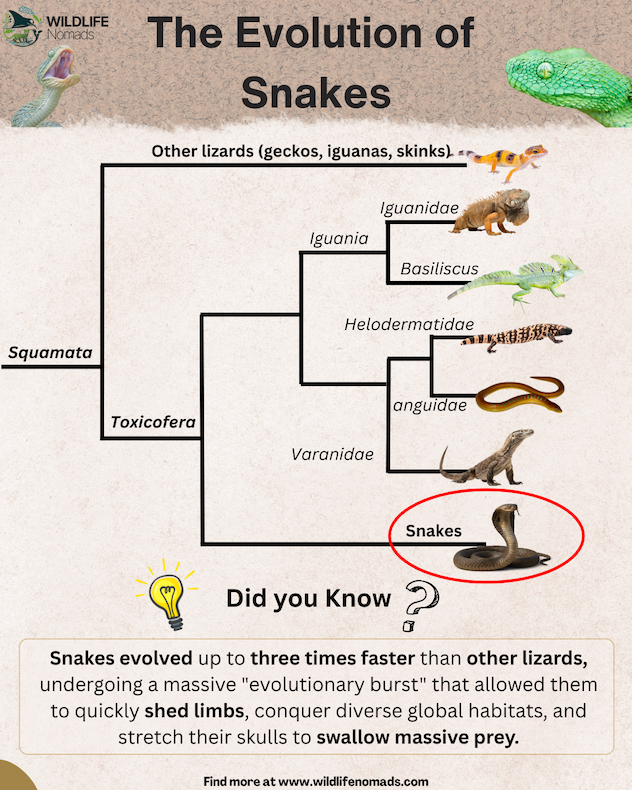
1. Snakes Are Lizards That Quit Their Legs
Snakes evolved from lizards, full stop. The fossil record is now crowded with transitional forms that still wore their hind limbs. The famous Patagonian fossil Najash rionegrina lived nearly 100 million years ago and kept functional back legs.
For a long time we assumed snakes evolved from tiny burrowing lizards. Newer research suggests something different. Najash was a large, wide-mouthed predator, which means snake evolution did not start underground after all. Snakes lack external limbs today, yet they spent their first 70 million years still walking, in a sense.
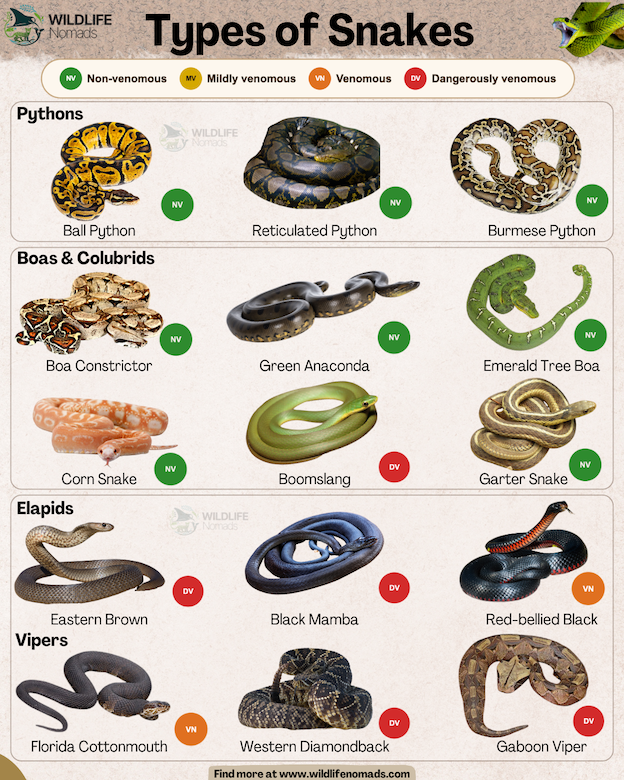
If you want the living branches of that family tree, my guide to types of snakes lays out the modern lineage.
2. The Ghost Legs Hidden in a Snake’s Skeleton
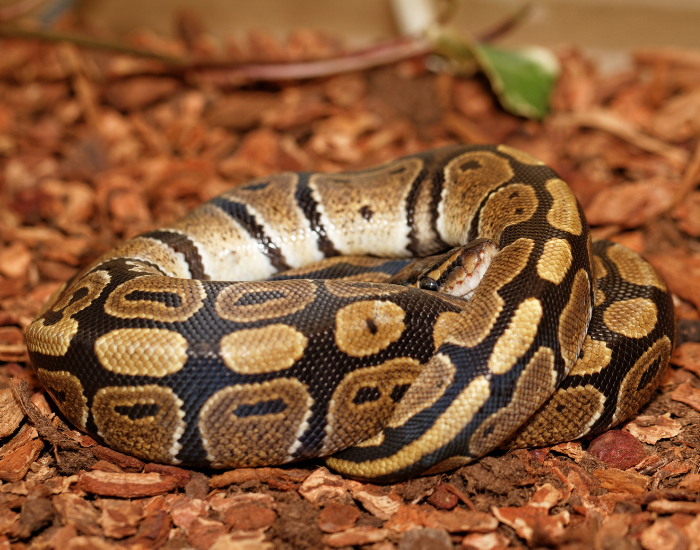
Look closely at a ball python or a boa, and you will find tiny claws beside the vent. These are pelvic spurs, the last whisper of hind limbs that natural history never fully erased. Males use them during courtship, stroking the female.
A snake’s skeleton tells the rest of the story. Where you have 33 vertebrae, some snakes carry over 400, each one paired with mobile ribs. The vast majority of that body is spine and muscle. Snakes are not legless lizards by accident; they are a specialized branch that turned the whole body into a limb.
That body plan scales to wild extremes. The largest living snake, the reticulated python, stretches roughly 6.95 meters. The smallest, the Barbados threadsnake (Leptotyphlops carlae), tops out near 10.4 centimeters, thinner than a spaghetti noodle.
3. Snakes Borrow Their Body Heat From the World
Snakes are cold blooded, or more precisely, ectothermic. They cannot generate heat from food the way you do. Instead they pull body warmth straight from the surrounding environment.
This is why you find snakes draped on warm rock piles at dawn. I have flipped enough boards and stones to know the rhythm by heart. A snake’s body temperature, and therefore its speed, its digestion, even its mood, rides on the sun. Like other reptiles, an individual snake spends much of the day simply managing heat. Cold morning, sluggish snake. Warm afternoon, lightning strike.
4. Some Snakes See Heat Through Pit Holes
Here is where being a snake gets genuinely science-fiction. Pit vipers, pythons, and some boas carry pit organs, small openings between the eye and nostril. These pit holes detect infrared radiation, the body heat thrown off by warm prey.
The biology is gorgeous. A thin membrane inside the pit warms when a mouse walks past, and a heat-gated channel called TRPA1 fires the nerve. The snake’s nervous system then merges that heat image with normal vision. A rattlesnake essentially watches a glowing mouse in total darkness. The thermal thresholds even differ by group, tuned to each predator’s prey. My piece on rattlesnakes digs deeper into these heat-seeking hunters.
5. The Forked Tongue Smells in Stereo
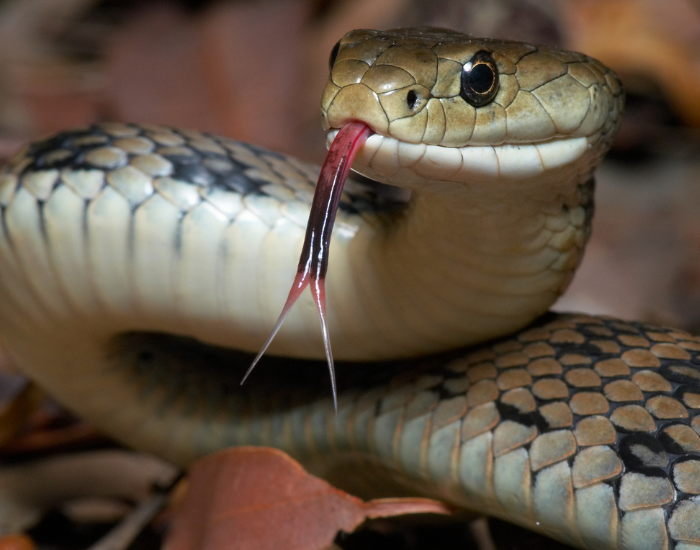
That flickering forked tongue is not a weapon, and it does not sting. It is a chemical antenna. The tongue collects scent molecules from the air and ground, then delivers them to the Jacobson’s organ in the roof of the mouth.
The fork is the clever part. Each tip samples a slightly different patch of air, so the snake smells in stereo. Biologist Kurt Schwenk showed this lets snakes follow a scent trail by comparing left against right, the same way two ears let you locate a sound. A snake does not just smell prey. It smells which direction the prey went.
6. Snakes Have No External Ears, But They Hear You
People assume snakes are deaf because they lack external ears. That is wrong, and a 2023 study finally proved it with freely moving animals. Snakes hear, just not the way we do.
A snake rests its jaw on the ground and on the air around it. Sound waves vibrate the skull, and bones linked to the jaw pass that signal to the inner ear. Researchers found snakes react to airborne sound between roughly 0 and 450 hertz. Some froze, some fled, some flicked the tongue. So yes, that snake in the leaf litter heard you coming. Snakes rely on this skull-borne hearing far more than anyone guessed.
7. A Snake’s Eyes Tell You How It Hunts
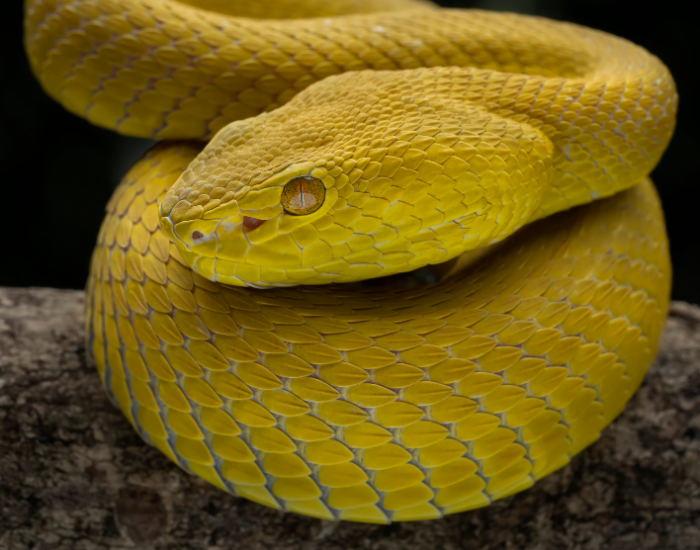
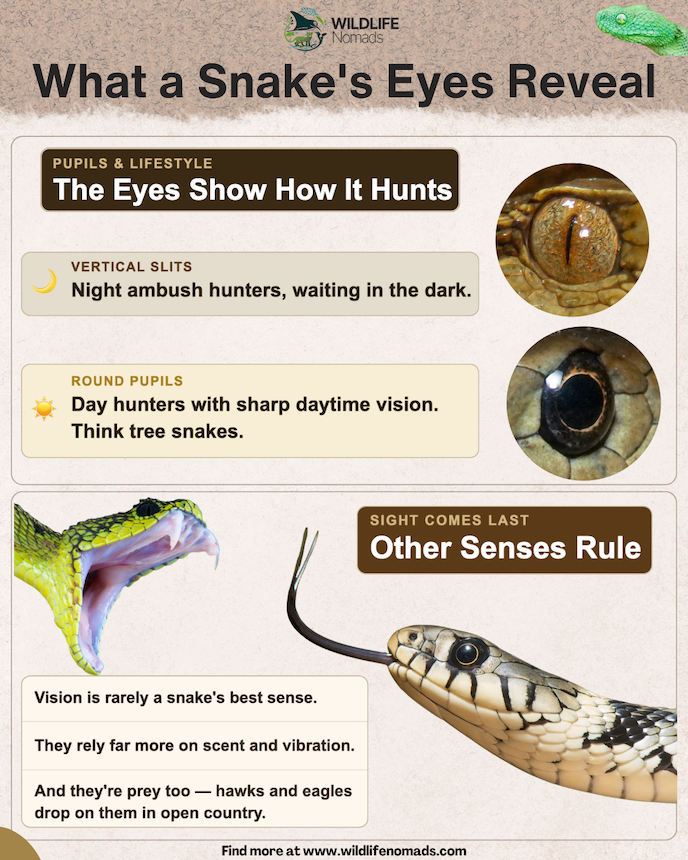
Look into a snake’s eyes and you can often guess its lifestyle. Diurnal snakes that hunt by day, like many tree snakes, tend to have round pupils and sharp daytime vision. Ambush hunters that work at night frequently show vertical slits.
Snakes also have no eyelids. A single clear scale called the brille caps and protects each eye. That is why a snake appears to sleep with its eyes open; it simply cannot close them.
Vision is rarely a snake’s best sense, though. Most species rely far more on scent and vibration than on sight. That trade-off matters out in the world, because snakes are prey as much as predator. Birds of prey hunt them relentlessly, and I have watched hawks and eagles drop on snakes in open country. The raptors keep snake populations honest.
8. Snakes Move Without a Single Leg
Snake locomotion still amazes me after all these years. With no legs, a snake drives itself forward using rib muscles, belly scales, and waves of motion along the spine. Push against a pebble, a root, a ridge, and the whole body flows.
They switch between four basic gaits to match the terrain. Lateral undulation, the classic S-shaped slither, is the primary mode, and aquatic snakes use the same wave to swim. Sidewinding throws loops sideways for grip on loose sand. Concertina locomotion bunches and extends the body through tight tunnels, while slow rectilinear creeping, a straight “caterpillar” crawl, moves heavy snakes like big pythons.
Then there are the show-offs. Flying snakes in Southeast Asia flatten their bodies and glide between tree branches, sailing dozens of feet. No legs, and they still took to the air.
9. Snakes Eat Animals Bigger Than Their Heads
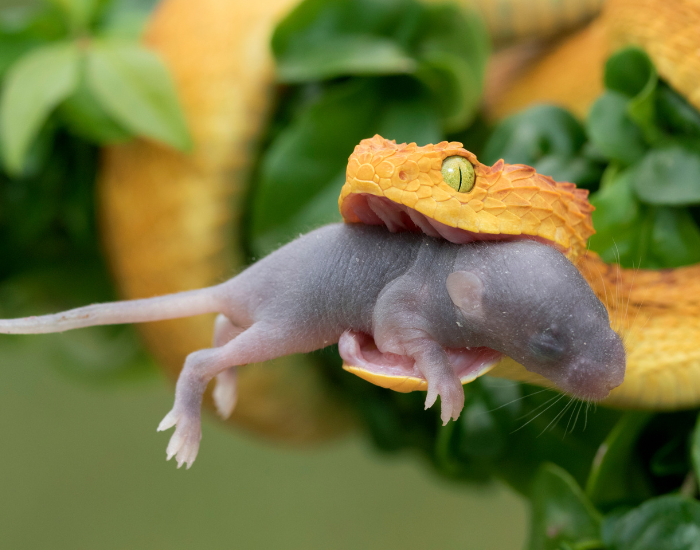
Snakes eat prey that should not physically fit, and the trick is in the jaw. The two halves of the lower jaw are not fused, and stretchy ligaments let them spread wide. A snake does not unhinge its jaw, a common myth, but it does open it astonishingly far.
Every snake is a carnivore, and most are opportunistic feeders. They take whatever they can overpower and swallow, from eggs to fish to other snakes.
Most snakes target small mammals, birds, eggs, frogs, and other reptiles. Larger constrictors take on genuinely large prey relative to their body size. I once watched a python work down a meal that left a visible lump for a week. Snakes swallow prey whole, head first, then spend days digesting in the sun.
10. Venom Is the Exception, Not the Rule
Here is the fact that calms people down at parties. The vast majority of snakes are harmless to you. Of about 3,900 species of snakes worldwide, only a small percentage are venomous species capable of a dangerous bite.
Snake venom itself is simply modified saliva, repurposed to immobilize prey. Venomous snakes include cobras, vipers, and pit vipers, with pit vipers among the most common types. The venom is potent stuff. Even a tiny dose can trigger local tissue damage, which is why a bite deserves real respect.
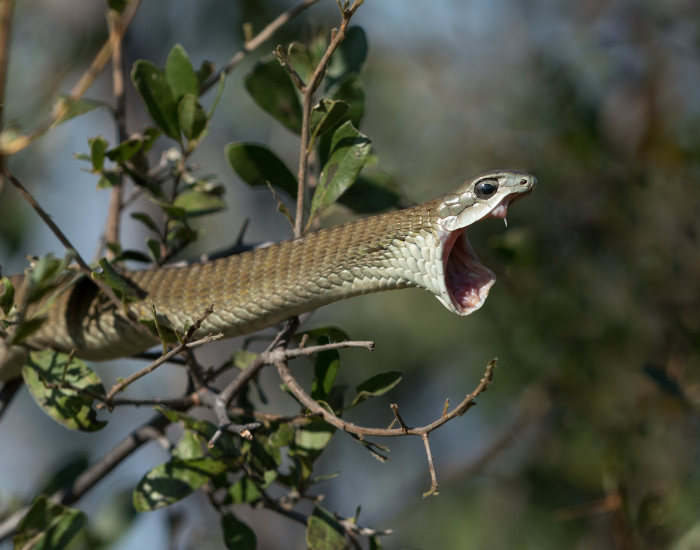
That said, the venomous snakes are spectacular engineers. Front-fanged species deliver snake venom through hollow fangs like hypodermic needles. The black mamba and the king cobra are fast, neurotoxic, and famous. Spitting cobras aim venom at the eyes, while rear-fanged species like the boomslang chew it in. Coral snakes wear warning colors.
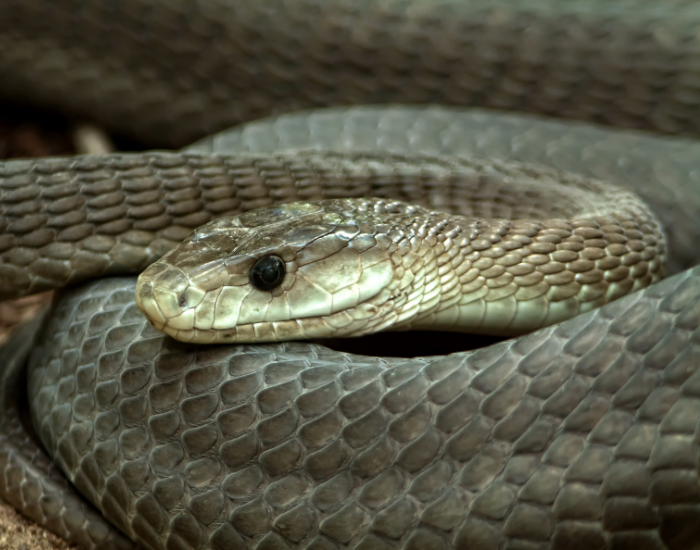
Let me put the danger in perspective, though, because fear distorts it badly. Roughly 80,000 to 140,000 people die from snakebite worldwide each year, mostly in rural regions with limited antivenom. Yet only about 250 of the roughly 725 venomous species can actually kill a human. Australia, despite its fearsome reputation, averages just one fatal snake bite per year.
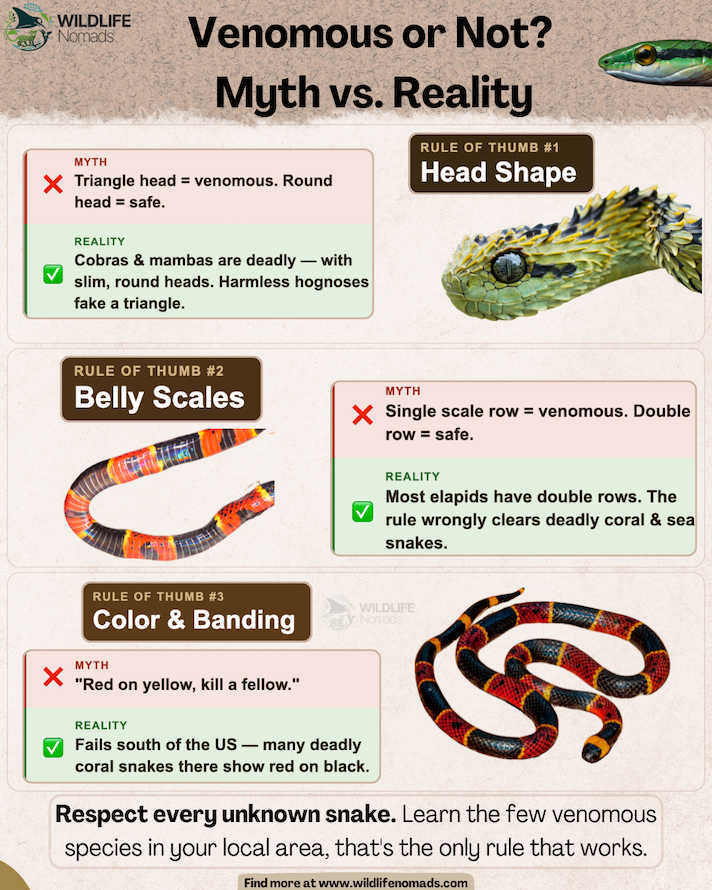
Identification matters more than panic. The old “triangular head means venomous” rule is unreliable, since most snake species do not have triangular heads and plenty of harmless ones flatten theirs to bluff. Most snake bites happen when people try to kill or handle the animal, so the smartest move is distance. If a non venomous snake does nip you, just wash the wound thoroughly with soap and water. Plenty of harmless species, like the gentle smooth green snake or the corn snake, are completely safe and pest-controlling neighbors.
11. Snakes Shed Their Skin in One Piece
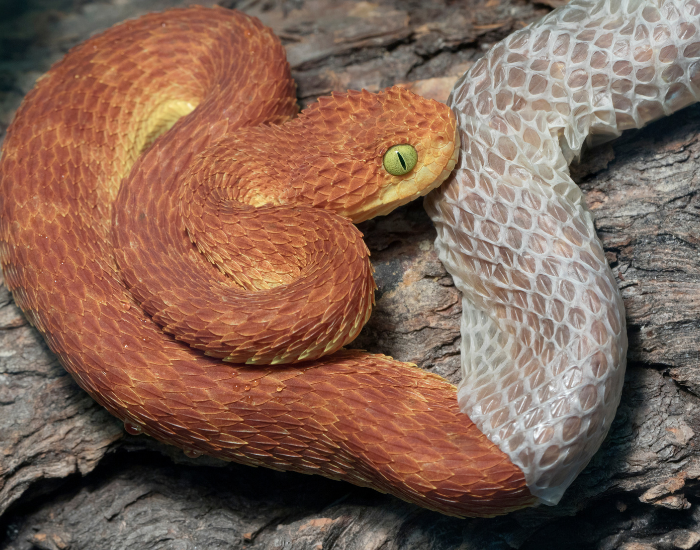
A few times a year, a snake peels off its old skin in a single inside-out sock. The process is called ecdysis. Snake scales do not grow with the animal, so the snake simply replaces the whole outer layer.
And no, snakes are not slimy. People always expect slime and always look shocked. Snake scales are built from keratin, the same protein as your fingernails, so a healthy snake feels cool and dry.
You can tell when a shed is coming. The snake’s eyes turn a milky blue as fluid loosens the skin over the eye cap. During that window the animal nearly goes blind, so it hides and turns defensive. A clean, complete shed is one of the surest signs of a healthy snake.
12. Snakes Live Almost Everywhere, Even Near the Arctic
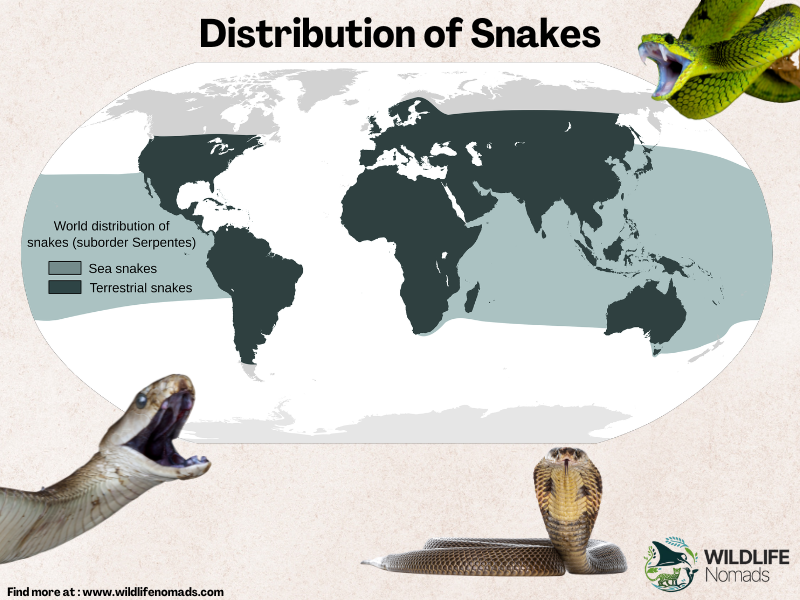
Snakes inhabit deserts, rainforests, grasslands, and open ocean. Sea snakes spend their entire lives at sea, breathing air but birthing live young in the water. Certain species push surprisingly far north. The common garter snake ranges close to the Arctic Circle, surviving brutal winters by denning together in huge numbers.
Reproduction bends to climate, too. Most snake species lay eggs and abandon them after laying, but the exceptions are fascinating. Pythons coil around their clutch and shiver to incubate it, while boas skip eggs entirely and are fully viviparous, nourishing embryos through a placenta. During courtship, males use paired hemipenes housed in the base of the tail, and the male’s tail behavior and pelvic spurs come into play.
Despite all that pairing up, snakes are loners. Most species live alone and form no real social bonds outside of breeding and shared winter dens. They are quiet ecosystem partners, too, controlling rodent populations across farms and forests, and some even act as seed dispersers through the prey they swallow. Scientists still describe new species every year, which tells you how much of snake natural history we have yet to map.
Frequently Asked Questions About Snakes
Snakes evolved from lizards during the age of dinosaurs. Genetic and fossil evidence both point to a squamate (lizard) ancestor more than 100 million years ago. Early snakes still had hind limbs, which they gradually lost as the long, limbless body proved successful.
Yes. Snakes lack external ears, but a 2023 study showed they react to airborne sound waves, not just ground vibrations. Bones connected to the jaw carry skull vibrations to the inner ear, so a nearby snake can absolutely register your footsteps and voice.
The ancestors of snakes looked like long-bodied lizards with reduced legs. Fossils such as Najash and Tetrapodophis show elongated trunks paired with small but real limbs. Research suggests some were large, wide-mouthed predators rather than tiny burrowers.
Snakes are absolutely animals. They are reptiles, and like all reptiles they are vertebrates with a backbone. So whenever someone asks whether snakes are animals, vertebrates, or reptiles, the answer to all three is yes.
Snakes originated in the Mesozoic era, likely well over 128 million years ago. The exact cradle, whether on land or in shallow seas, is still debated. What the fossil record makes clear is that snakes arose from limbed reptiles and spread to nearly every continent.

A Different Way to See
Strip away the fear, and snakes turn into a master class in perceiving the world differently. They taste direction, watch heat bloom in the dark, and hear through their own bones. Spend one imagined day as a snake, and your own narrow slice of reality starts to feel a lot smaller.
Next time you cross paths with one, pause instead of recoiling. Notice the tongue mapping the air and the body reading the warm ground. Then tell me what you saw in the comments, or wander over to my guide on types of snakes and meet a few more of these brilliant, limbless neighbors.
Snakes: Fact or Fiction? 🐍
Twelve statements about the strange biology of snakes — some true, some myths everyone repeats. Can you tell them apart?
Fact or Fiction?
References:
Garberoglio, F. F., Apesteguía, S., Simões, T. R., Palci, A., Gómez, R. O., Nydam, R. L., Larson, H. C. E., Lee, M. S. Y., & Caldwell, M. W. (2019). New skulls and skeletons of the Cretaceous legged snake Najash, and the evolution of the modern snake body plan. Science Advances, 5(11), eaax5833. https://doi.org/10.1126/sciadv.aax5833
Gracheva, E. O., Ingolia, N. T., Kelly, Y. M., Cordero-Morales, J. F., Hollopeter, G., Chesler, A. T., Sánchez, E. E., Perez, J. C., Weissman, J. S., & Julius, D. (2010). Molecular basis of infrared detection by snakes. Nature, 464(7291), 1006–1011. https://doi.org/10.1038/nature08943
Hsiang, A. Y., Field, D. J., Webster, T. H., Behlke, A. D. B., Davis, M. B., Racicot, R. A., & Gauthier, J. A. (2015). The origin of snakes: Revealing the ecology, behavior, and evolutionary history of early snakes using genomics, phenomics, and the fossil record. BMC Evolutionary Biology, 15, 87. https://doi.org/10.1186/s12862-015-0358-5
Socha, J. J. (2002). Gliding flight in the paradise tree snake. Nature, 418(6898), 603–604. https://doi.org/10.1038/418603a
Zdenek, C. N., Staples, T., Hay, C., Bourke, L. A., & Candusso, D. (2023). Sound garden: How snakes respond to airborne and groundborne sounds. PLOS ONE, 18(2), e0281285. https://doi.org/10.1371/journal.pone.0281285
Da Silva, F. O., Fabre, A.-C., Savriama, Y., Ollonen, J., Mahlow, K., Herrel, A., Müller, J., & Di-Poï, N. (2018). The ecological origins of snakes as revealed by skull evolution. Nature Communications, 9, 376. https://doi.org/10.1038/s41467-017-02788-3