
Here is the thing: what you think is a hawk often isn’t. I can’t tell you how many times I’ve been in the field and heard someone point at a types of vulture, a caracara, or at some kind of eagle, and yell “Hawk!” While they share that predatory “vibe” of many birds of prey, hawks are a specific, high-performance group within the family Accipitridae. Hawks and falcons, for example, are often confused, but they belong to different scientific families—hawks are Accipitridae, while falcons are Falconidae—and differ in their wing shapes, hunting techniques, and flight styles. This article will focus on hawks, not falcons or the many other birds found in these regions.
In this deep dive, we are moving past the common mistakes. We aren’t talking about owls or vultures today. We are focusing on the true masters of the middle air: the various kinds of hawks. From the red-tailed hawk I see perched on every third power pole in the Western United States to the “ghosts” of the dense cover like the American Goshawk, let’s break down 15 species that define what it means to be a raptor.
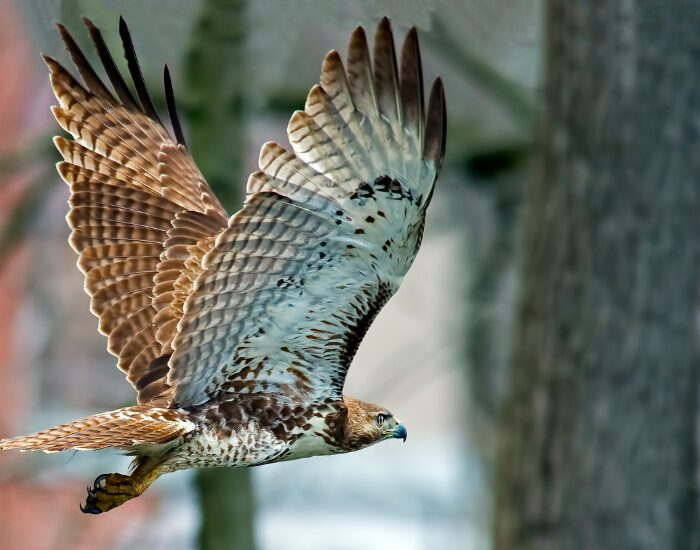
The Two Main Tribes: Buteos vs. Accipiters
Before we name names, you need to understand the “build” of a hawk. In the field, you don’t always see colors; I see silhouettes.
- Buteos (Broad-winged hawks): These are the “soaring hawks.” They have broad wings and short, wide tails. Think of them as the heavy-lift cargo planes of the bird world. They love open country.
- Accipiters (Forest hawks): These are the fighter jets. They have short, rounded wings and long tails for steering through conifer trees and thick brush.
For a broader look at diurnal raptors, check out our guide to birds of prey and types of eagles.

1. Red-tailed Hawk (Buteo jamaicensis)
The red-tailed hawk is the undisputed king of the roadside. In my early days doing surveys, I used to joke that if you see a large hawk with white chest feathers sitting on a fence post, it’s a Red-tail 90% of the time. They are incredibly adaptable, found everywhere from the arctic tundra edges down to Central America. Red-tailed hawks begin their breeding season in early spring, building nests and raising young through late spring and early summer.
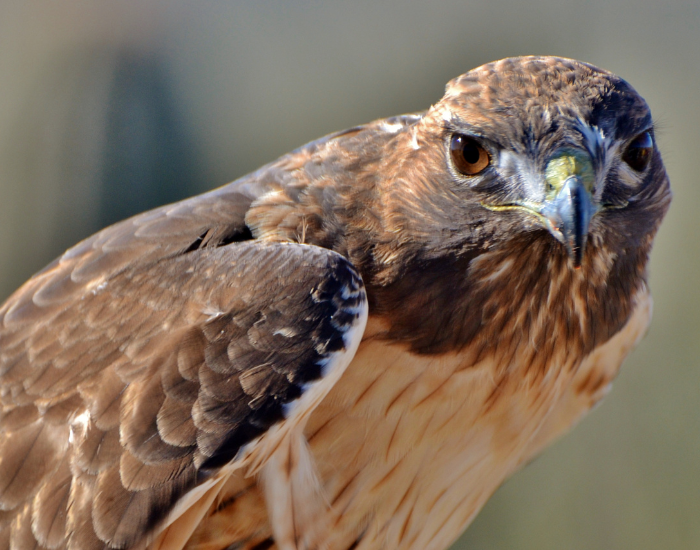
2. Broad-winged Hawk (Buteo platypterus)
The broad-winged hawk is the undisputed champion of mass migration. Each fall, thousands of these compact buteos “kettle” — spiraling together on thermals — over ridge lines in the Appalachians.
They’re smaller than Red-tails and prefer riparian forest during the breeding season. Come winter, the broad-winged hawk heads all the way to South America — one of the longest migrations of any North American raptor.
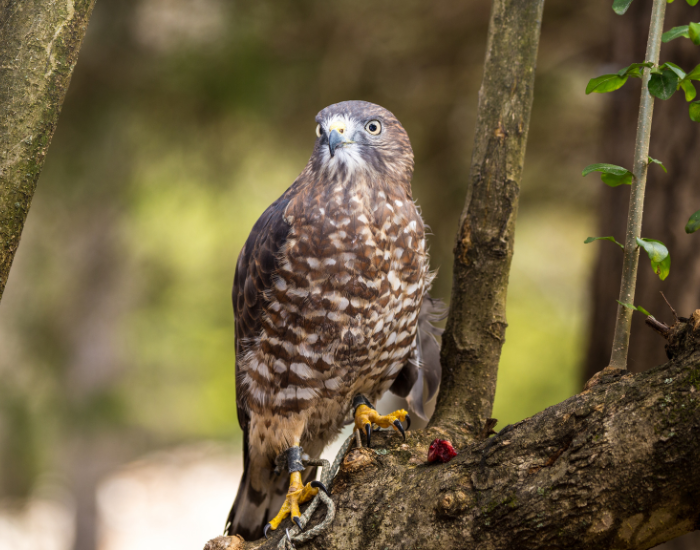
3. Red-shouldered Hawk (Buteo lineatus)
You’ll often hear a red-shouldered hawk before you see one. Their piercing, repeated call echoes through wetlands and dense riparian forest. In flight, look for translucent “windows” near the wingtips — they glow against backlit sky.
Buteo lineatus hugs forest edges and wooded swamps. They’re fiercely territorial and will call aggressively at intruders, including humans walking nearby trails
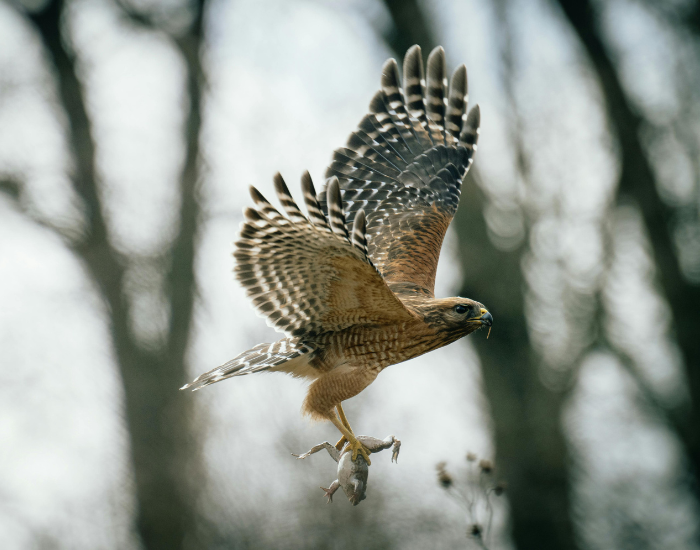
4. Cooper’s Hawk (Accipiter cooperii)
This is the hawk terrorizing your backyard bird feeder. Accipiter cooperii is a medium-sized forest hawk built for ambush — explosive acceleration through tight cover in pursuit of small bird like wrens, thrushes and pigeons.
The Cooper’s hawk has a rounded tail and a relatively large, blocky head. These features separate it from its smaller cousin. In urban and suburban environments, this species has actually increased in numbers as backyard feeders concentrate prey.
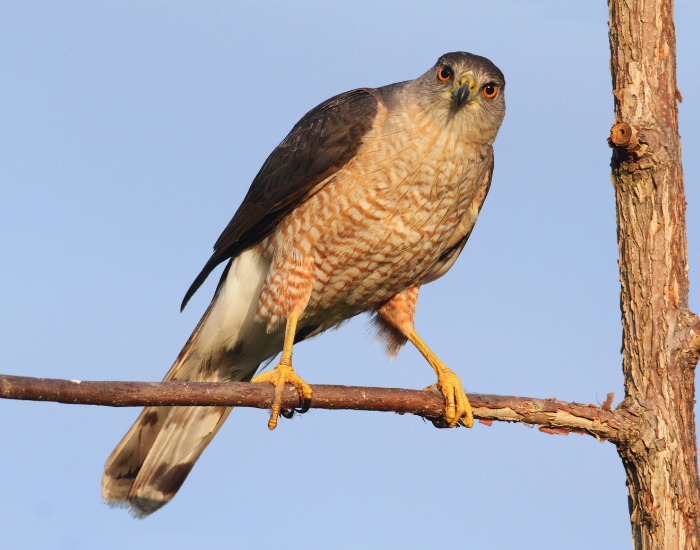
5. Sharp-shinned Hawk (Accipiter striatus)
The “Sharpie” is the smaller cousin of the Cooper’s. To the untrained eye, they look identical. However, the sharp shinned hawk is tiny—about the size of a jay. When I’m banding birds, I look at the tail; Sharpies have a squared-off tail, while Cooper’s are rounded. They are a migratory species that moves in huge numbers.
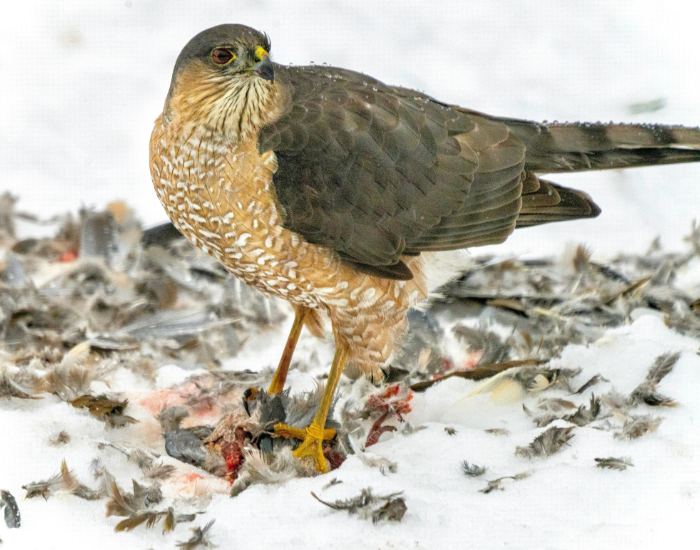
6. Northern Goshawk (Accipiter gentilis)
The Northern Goshawk is the “ghost of the forest.” They are rare hawks to see because they stay deep within old-growth conifer trees. I remember a survey in the Northern Rockies where a Goshawk defended its nest; its piercing red eyes and slate-gray back made it look like a prehistoric predator.
Among the kinds of hawks, this is the largest and most aggressive of the accipiters. While juveniles can look like a speckled hawk with heavy brown streaking, the adults are unmistakable with their “steely” blue-gray plumage and a bold white eyebrow stripe. They are the apex predators of the dense cover.
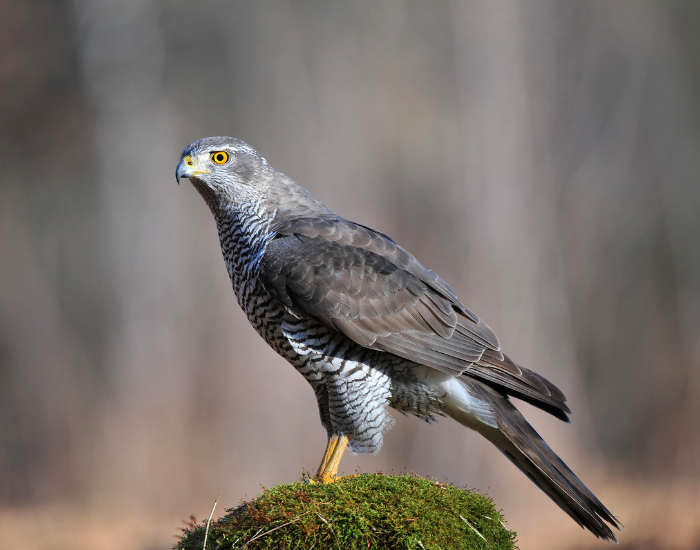
7. Ferruginous Hawk (Buteo regalis)
The ferruginous hawk is a beast. This is a large hawk of the Western United States prairies. They have a massive gape (mouth) which allows them to swallow ground squirrels and meadow mice whole. They are often pale morphs, appearing as a large hawk with white chest from a distance.
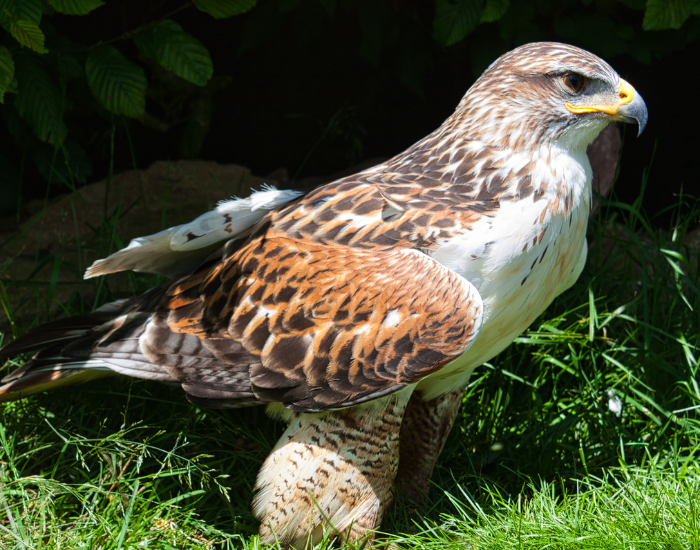
8. Rough-legged Hawk (Buteo lagopus)
Buteo lagopus breeds on the arctic tundra and moves south each winter when prey becomes inaccessible beneath deep snow. It’s the only North American buteo — alongside the ferruginous hawk — with feathering all the way to the toes, an adaptation for extreme cold.
The rough-legged hawk is a master of kite-hovering: it hangs nearly stationary over a field on rapidly beating wings while scanning for small rodents below. If you see a Red-tail-sized hawk hovering like a kestrel, it’s almost certainly a Rough-leg.

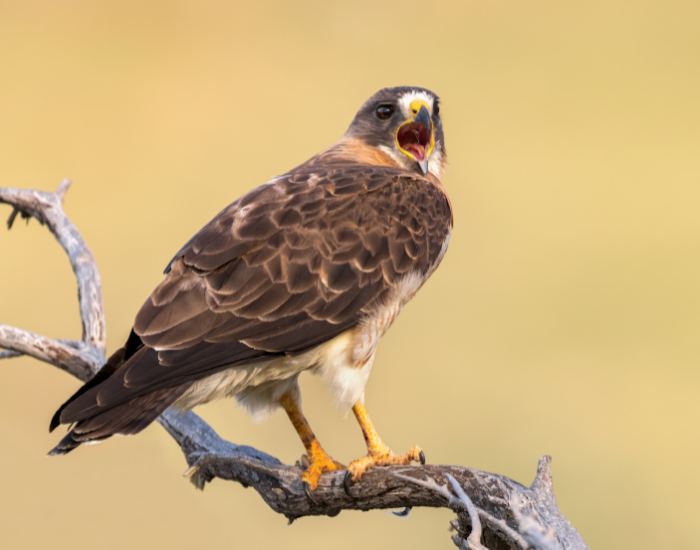
9. Swainson’s Hawk (Buteo swainsoni)
The “Grasshopper Hawk.” During the summer in the Great Plains, I’ve seen hundreds of these following tractors to eat the insects stirred up. Swainson’s hawks feed on large insects, especially grasshoppers, during the winter. The Swainson’s hawk performs one of the longest migrations of any American raptor, flying all the way to South America for the winter. The migration of Swainson’s Hawks is one of the longest of the American raptors, traveling from the western United States to Argentina.
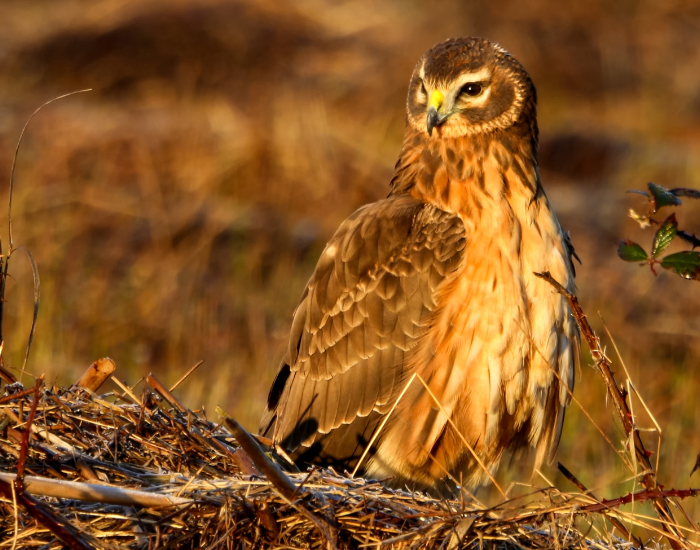
10. Northern Harrier (Circus hudsonius)
Technically a harrier rather than a true hawk, the northern harrier is almost always grouped with soaring hawks in the field. It hunts low over marshes and grasslands, holding its wings in a distinctive shallow V. That white rump patch is the instant field mark — visible from a long distance as it quarters back and forth.
Northern harriers are unique among North American raptors for using both sight and sound to locate prey. Facial disk feathers, similar to an owl’s, help channel sound toward the ears.
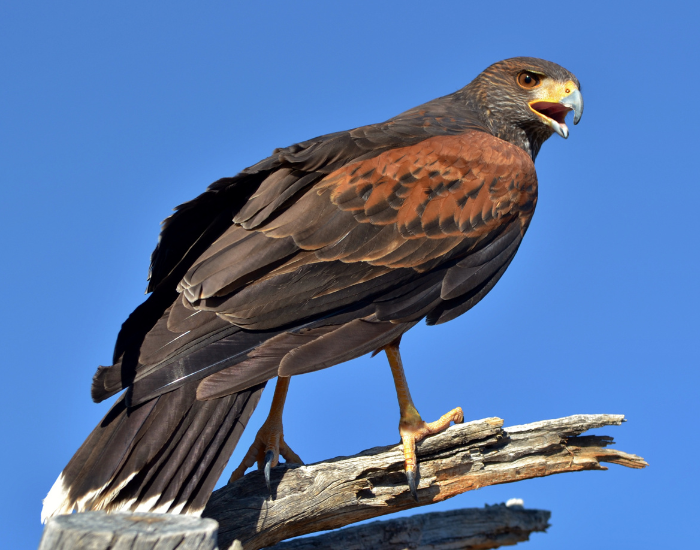
11. Harris’s Hawk (Parabuteo unicinctus)
The “Wolves of the Sky.” Unlike most solitary species of hawks, Harris’s hawks hunt in family groups, coordinated pursuit, relay chasing, and simultaneous flushes from cover.
Their social intelligence makes Harris’s hawk the most widely used species in falconry worldwide. They respond readily to training and work well with human handlers
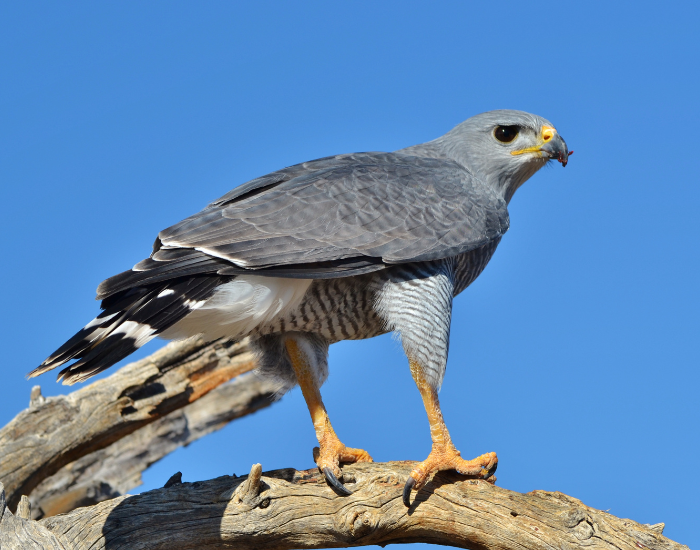
12. Gray Hawk (Buteo plagiatus)
The gray hawk barely touches U.S. soil, appearing mainly along riparian corridors in southern Arizona and Texas near the Mexican border. It has a falcon-like quality — quick wingbeats, compact build, and a bold barred chest.
Seeing a gray hawk typically means a dedicated trip to a specific riparian forest patch. The Santa Cruz River corridor in Arizona is one of the most reliable sites in the country.
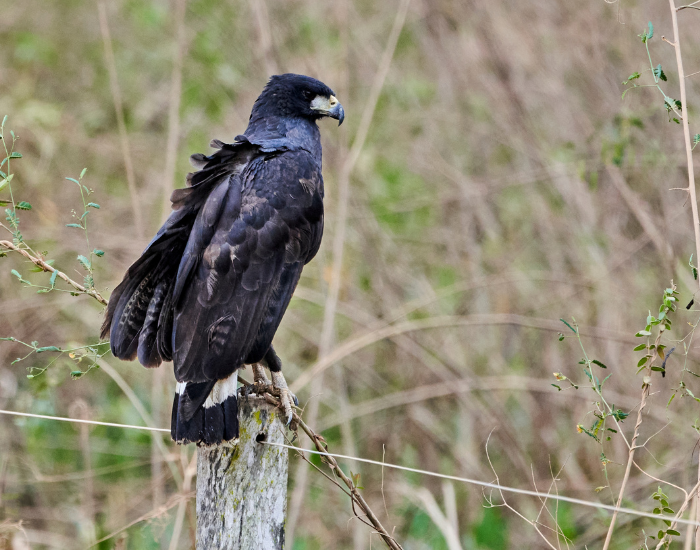
13. Zone-tailed Hawk (Buteo albonotatus)
This is a master of disguise. The zone tailed hawk is a dark brown (almost black) bird that mimics the flight pattern of a Turkey Vulture. I’ve watched them tilt and rock in the wind, tricking small mammals into thinking they are “harmless scavengers until they suddenly drop for the kill.
14. White Hawk (Pseudastur albicollis)
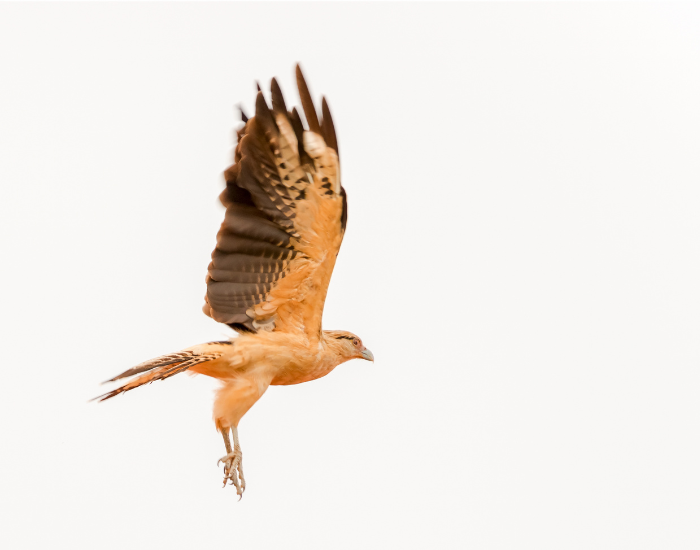
If you ever find yourself in the tropical rainforests, keep an eye out for this speckled hawk. It is almost entirely white with a few black spots on the wings. It’s a stunning example of how variety of hawks adapt to different light environments; in the dappled sunlight of the canopy, a white bird actually disappears.
15. Common Black Hawk (Buteo anthracinus)
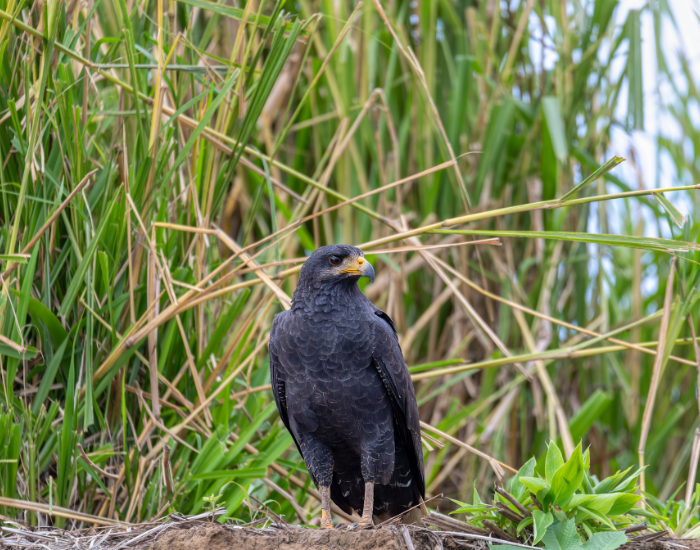
The common black hawk is a specialist of the Southwest and Central America, almost entirely black with a single bold white tail band. Unlike most buteos, it focuses heavily on aquatic prey — crabs, crayfish, some amphibians like frogs — and often perches over streams and rivers waiting for prey to surface.
In the U.S., it’s found along cottonwood-lined waterways in Arizona and New Mexico.
Identification Comparison: At a Glance
| Feature | Buteos (e.g., Red-tail) | Accipiters (e.g., Cooper’s) |
| Wing Shape | Broad, fan-like | Short, rounded |
| Tail | Short, wide | Long, narrow |
| Flight Style | Steady soaring, circling | Flap-flap-glide |
| Habitat | Open country, roadsides | Dense cover, woods |
| Primary Prey | Small rodents, rabbits | Small birds, young birds |

FAQs about Hawks
In North America, the red-tailed hawk is the most common hawk. They are incredibly versatile and can live in cities, forests, and deserts.
“Pigeon hawk” is an old name for the Merlin, which is actually a small falcon, not a true hawk. Similarly, the American kestrel was once called a “sparrow hawk.”
Hawks and falcons are both birds of prey, but they belong to different scientific families—hawks are in the Accipitridae family, while falcons are in the Falconidae family. Hawks (Accipitridae) typically have rounded wingtips and use a mix of soaring and flapping. Falcons (Falconidae), like the peregrine falcon, have pointed wings and are built for extreme flapping speed and “stoops” (high-speed dives).
Most species of hawks migrate to follow their food source. When meadow mice and small birds become scarce in the winter, hawks like the broad winged hawk head to warmer climates in South America.
The Biologist’s Bottom Line
Identifying the different kinds of hawks takes patience and a good pair of binoculars. I always tell my students: don’t just look at the colors. Look at the attitude of the bird. Is it lazy-soaring over a field, or is it a frantic blur of gray darting through the trees?
The world of diurnal raptors is a window into the health of our ecosystems. Whether it’s the common hawk in your backyard or a rare hawk in the wilderness, these birds are the apex “quality control” for nature.
References:
Bednarz, J. C. (1988). Cooperative hunting in Harris’ Hawks (Parabuteo unicinctus). Science, 239(4847), 1525–1527. https://doi.org/10.1126/science.239.4847.1525
Citron, S., Gutierrez-Ibanez, C., Keirnan, A., Weisbecker, V., Wylie, D., & Iwaniuk, A. N. (2025). The evolution of an “owl-like” auditory system in harriers: Anatomical evidence. Journal of anatomy, 247(5), 970–980. https://doi.org/10.1111/joa.14264
Corvidae, E. L., Bierregaard, R. O., & Peters, S. E. (2006). Comparison of wing morphology in three birds of prey: Correlations with differences in flight behavior. Journal of Morphology, 267(5), 612–622. https://doi.org/10.1002/jmor.10425
Kochert, M. N., Fuller, M. R., Schueck, L. S., Bond, L., Bechard, M. J., Woodbridge, B., Holroyd, G., Martell, M., & Banasch, U. (2011). MIGRATION PATTERNS, USE OF STOPOVER AREAS, AND AUSTRAL SUMMER MOVEMENTS OF SWAINSON’S HAWKS. The Condor, 113(1), 89–106. https://doi.org/10.1525/cond.2011.090243
Pokrovsky, I., Ehrich, D., Ims, R. A., Kulikova, O., Lecomte, N., & Yoccoz, N. G. (2014). Diet, nesting density, and breeding success of rough-legged buzzards (Buteo lagopus) on the Nenetsky Ridge, Arctic Russia. Polar Biology, 37(4), 447–457. https://doi.org/10.1007/s00300-013-1441-2