
Exploring Arizona Wildlife
Arizona is home to some of the most fascinating wildlife in North America, and if you’ve ever searched for animals in this state, you know the list is long and diverse. Wildlife in Arizona has adapted in incredible ways to survive the desert heat, scarce water, and rugged terrain.
Arizona wildlife is as diverse as its ecosystems. You’ll find native Arizona animals like desert bighorn sheep clinging to canyon walls, birds like cactus wrens nesting among spiny plants, and predators like mountain lions prowling the desert at night. And if you’re lucky, you may even spot one of the state’s most mysterious visitors, a jaguar crossing through the borderlands!
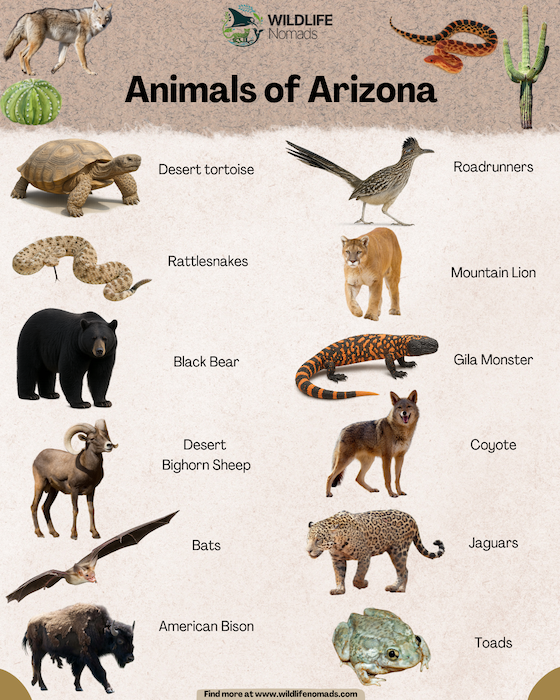
In this article, we’ll go beyond just naming species. This list of 12 animals in Arizona you need to know will highlight their habitats, behaviors, and conservation stories , and give you ways to connect more deeply with the wild side of the Grand Canyon State.
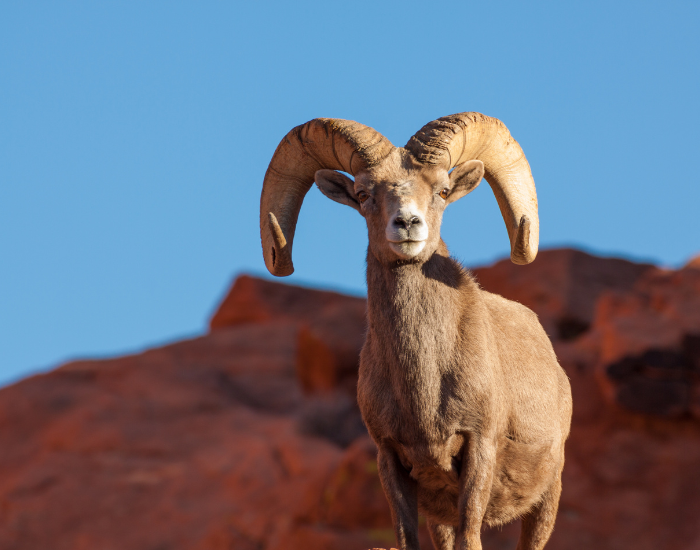
1. Desert Bighorn Sheep
The desert bighorn sheep is one of the most iconic native Arizona animals, known for its massive curved horns and agility on steep cliffs. Adapted to dry, rugged environments, these sheep are often found in the Sonoran Desert and rely on scarce water sources to survive.
Where to see them: Grand Canyon, Kofa National Wildlife Refuge, Organ Pipe Cactus NM
Conservation status: Stable but vulnerable to habitat loss and disease
2. Black Bears
An iconic type of bear, Black bears are the largest mammals in Arizona and are most common in forested mountain areas. Despite their name, their fur can be black, cinnamon, or blond. They are omnivores, feeding on plants, insects, and small animals, and are important for maintaining ecosystem balance.
Where to see them: White Mountains, Mogollon Rim, Kaibab Plateau
- Curious about bears worldwide? Read our blog on “Meet the Different Species of Bear“

3. Gila Monster
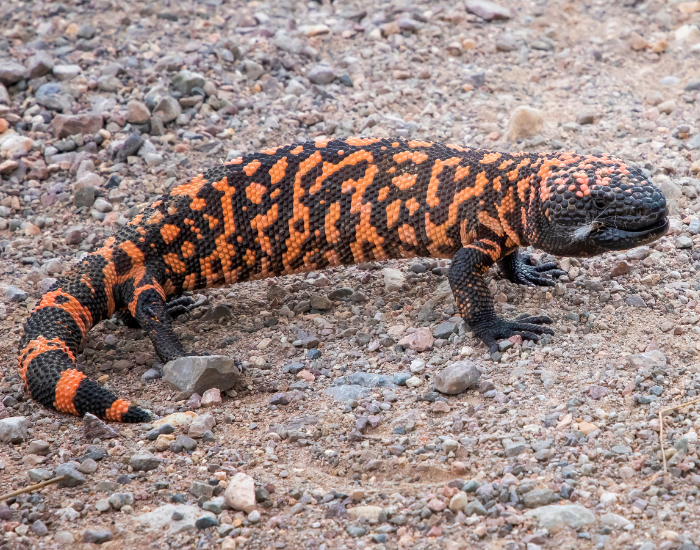
The Gila monster is a rare desert lizard and one of only two venomous lizards in the world. Recognized by its black and orange patterned skin, it spends most of its life underground and feeds on bird eggs, small mammals, and insects.
Where to see them: Sonoran Desert and southern Arizona
- Discover more cold-blooded creatures in our post on “Cold Blooded Animals“.
4. Mountain Lions
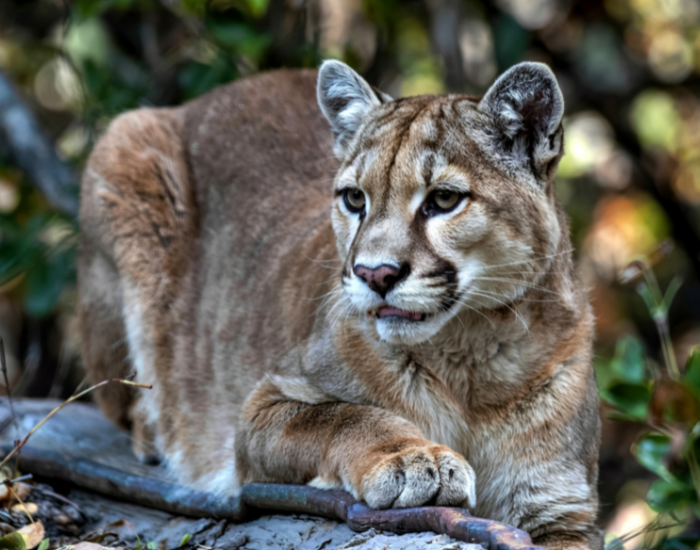
Mountain lions, also known as cougars or pumas, are apex predators in Arizona. They primarily prey on deer but are also known to hunt smaller mammals. Though rarely seen, they live across deserts, forests, and mountains, showing how adaptable animals in Arizona can be.
Where to see them: Statewide, especially in areas with abundant deer
- Learn about other predators across the region in “Animals of the United States“
5. Jaguars
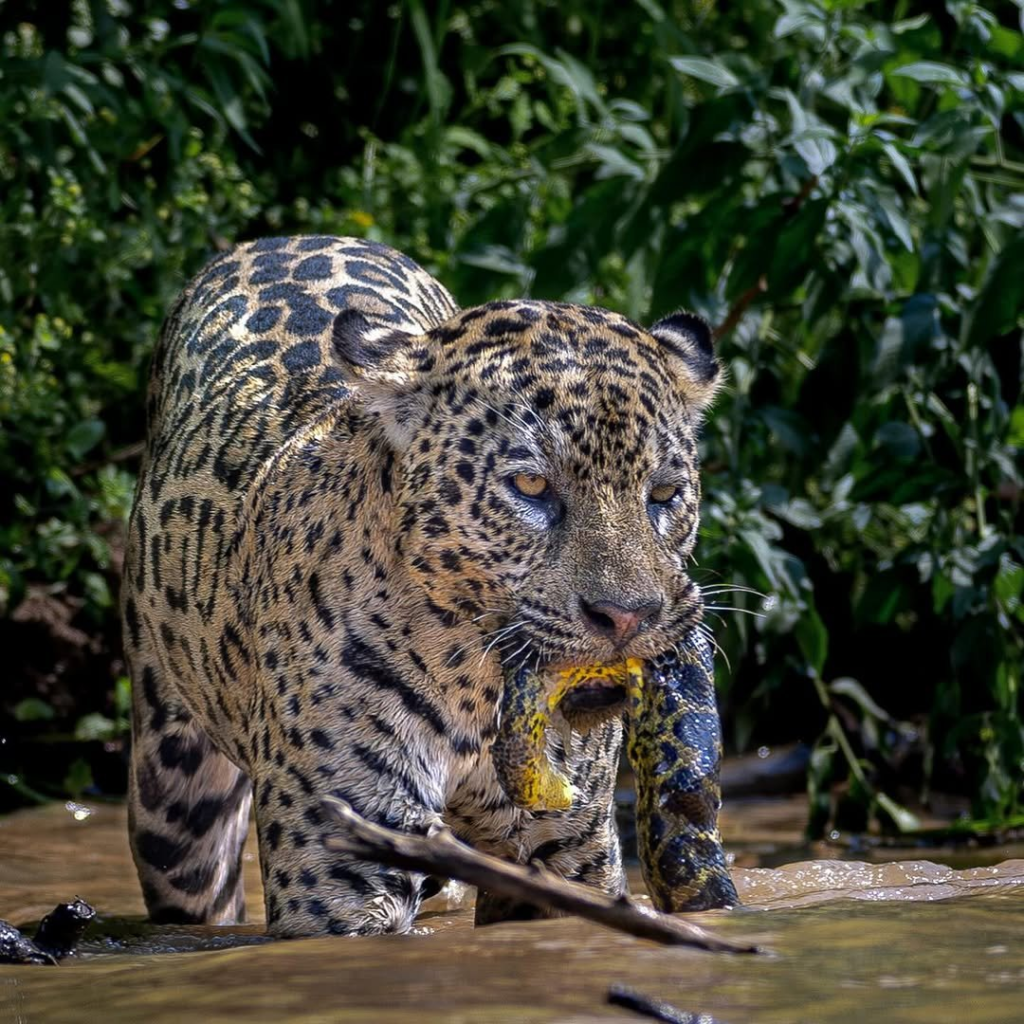
Jaguars are extremely rare but occasionally wander into southern Arizona from Mexico. Camera traps have captured them in the Santa Rita Mountains, sparking conservation efforts to protect cross-border wildlife corridors.
Where to see them: Southern Arizona borderlands, but extremely hard, not gonna lie
6. Bison
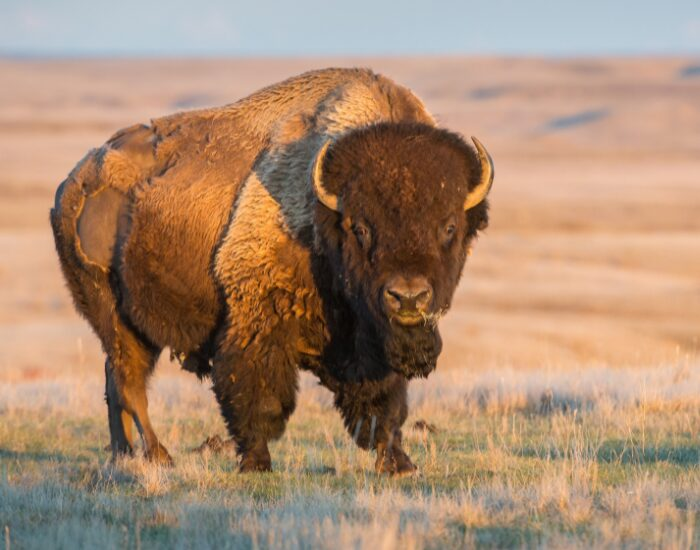
Arizona’s small but significant bison herd roams near the Grand Canyon. These massive grazers were introduced to the state in the early 1900s and now form part of a managed population that helps preserve the species’ presence in the Southwest.
Where to see them: North Rim of Grand Canyon National Park
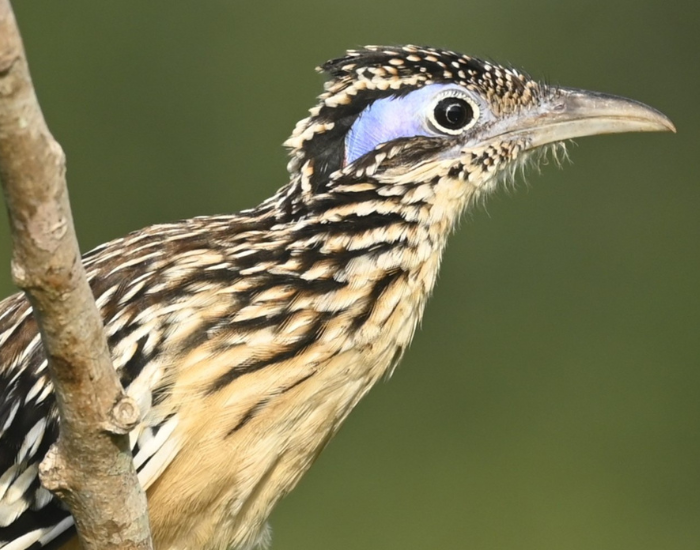
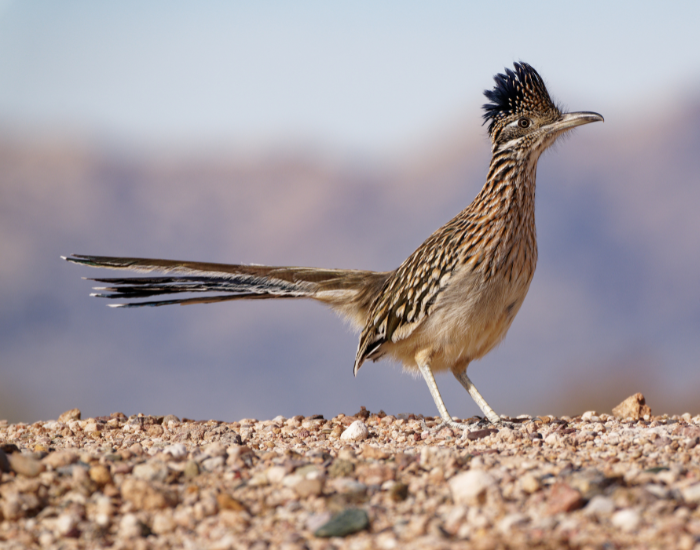
7. Roadrunners
The roadrunner is one of the most recognized birds of wildlife in the Arizona desert. Known for running speeds of up to 20 mph, these ground-dwelling birds feed on insects, reptiles, and even snakes, making them efficient desert predators.
- Interested about Animals in the desert? Have a look at our article: Desert Wildlife: 12 Amazing Animals
Where to see them: Sonoran and Chihuahuan deserts
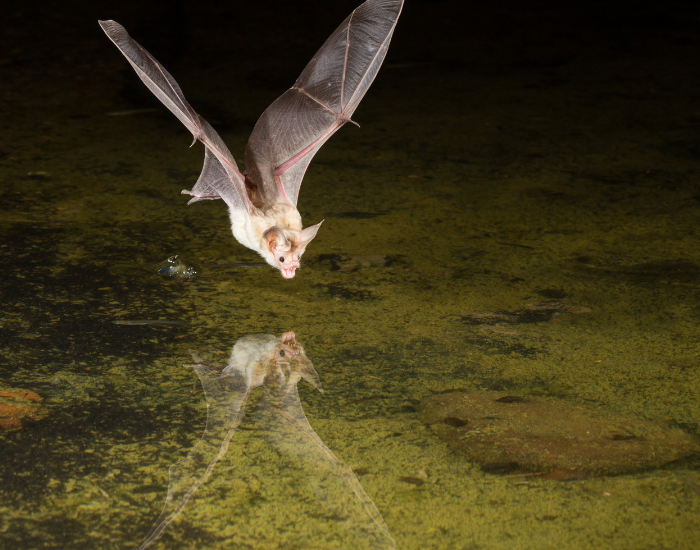
8. Bats
Arizona is home to more than 28 bat species, making it one of the richest bat regions in North America. Bats are vital for insect control, pollination, and seed dispersal, playing key roles in desert ecosystems.
Where to see them: Kartchner Caverns, Phoenix bridges, Tucson caves
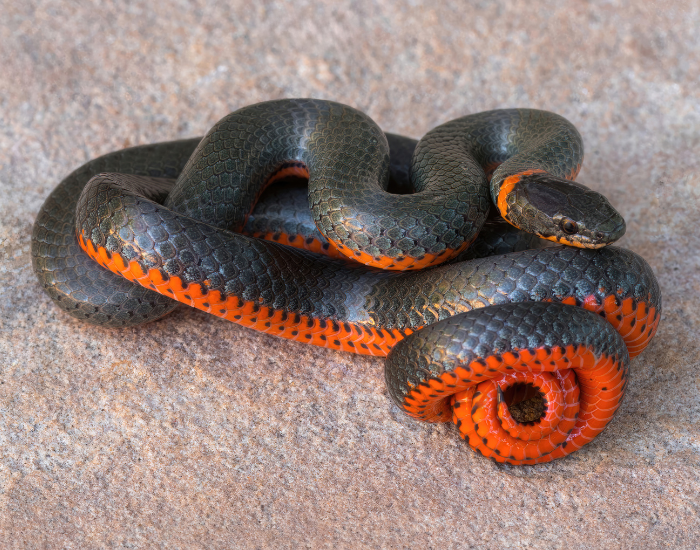
9. Snakes (Including Rattlesnakes)
Arizona has over 50 snake species, including the well-known western diamondback rattlesnake. While venomous species get the most attention, snakes are essential for controlling rodent populations and maintaining balance in desert food webs.
Where to see them: Statewide, especially in deserts and rocky habitats
Love snakes? You’ll enjoy our posts on the
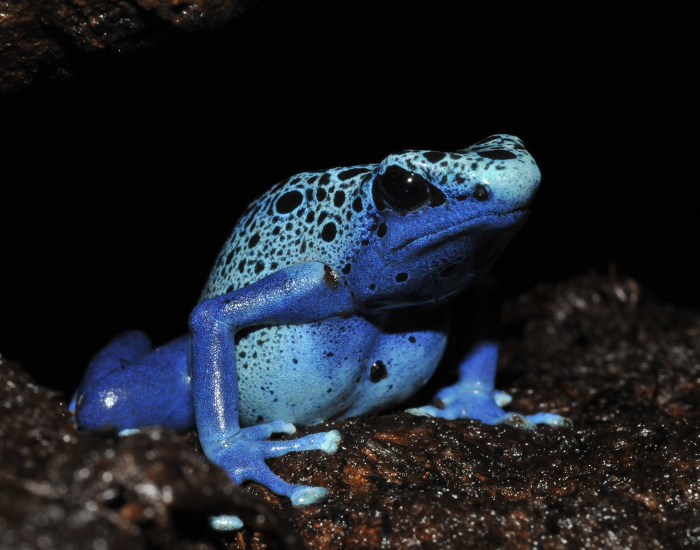
10. Amphibians
Though deserts seem unlikely places for amphibians, Arizona is home to spadefoot toads, chorus frogs, and salamanders. These animals in Arizona deserts survive by remaining dormant underground for months, emerging during monsoon rains to breed and feed.
Where to see them: Seasonal ponds, wetlands, and temporary desert pools
Discover more the types of amphibians in our post on “Types of Amphibians“
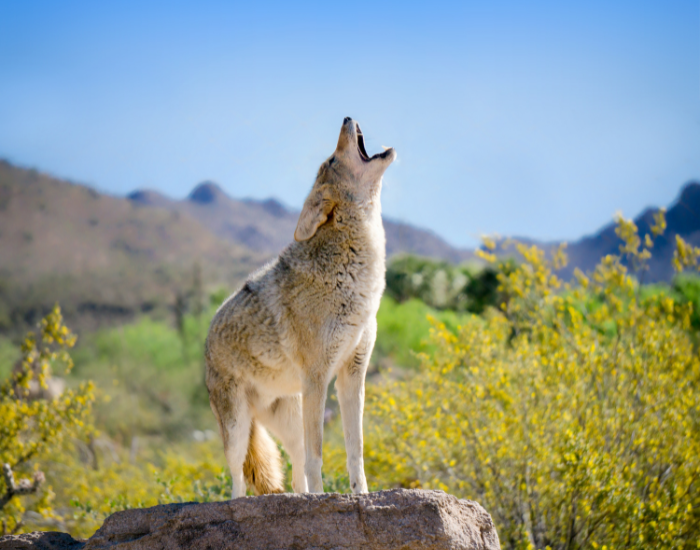
11. Coyotes
Coyotes are one of the most common animals in AZ, thriving in deserts, forests, and even urban areas. Opportunistic and highly adaptable, they feed on rodents, reptiles, birds, and carrion, playing a crucial role in desert ecosystems.
Where to see them: Nearly everywhere in Arizona
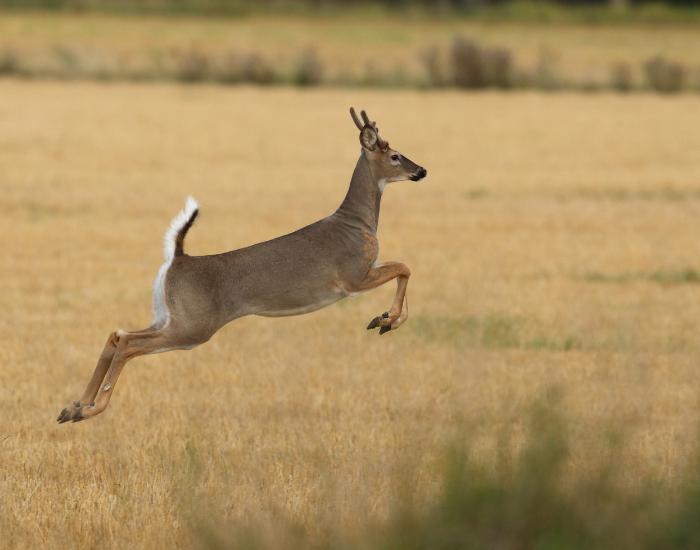
12. Deer
Arizona is home to mule deer and white-tailed deer, two of the most frequently spotted large mammals. Both species of deer are important prey for predators like mountain lions, and their adaptability makes them a cornerstone of Arizona wildlife.
Where to see them: Grasslands, forests, and desert foothills
13. Ringtail (Bassariscus astutus)
The ringtail, often called the “miner’s cat,” is Arizona’s official state mammal. Despite its catlike appearance, it’s actually related to raccoons. These nocturnal animals are agile climbers with long, striped tails that help them balance as they hunt for insects, small mammals, and fruit. They are secretive and rarely spotted, but they play an important role in controlling pests and dispersing seeds in desert ecosystems. Ringtails were once kept by miners as pets for rodent control, earning them their nickname.
Where to see them: Rocky canyons, desert cliffs, and wooded areas across Arizona

Wildlife Watching Tips
- Most Arizona animals are active at dawn and dusk when desert temperatures are cooler.
- Visitors often ask what animals are in Arizona deserts, the best places to find them include national parks, wildlife refuges, and scenic trails.
- Roadrunners, snakes, and deer are frequently spotted along desert highways and park roads.
- To maximize sightings, bring binoculars and patience; some species like mountain lions are rarely found but leave signs behind.
Recent Scientific Research on Arizona Wildlife
A 2024 study published in Frontiers in Ecology and Evolution examined how desert mammals like bighorn sheep and coyotes adjust their activity patterns to cope with extreme desert heat. Using GPS collars and camera traps across southern Arizona, researchers found that many species are becoming more active at night to conserve water and avoid heat stress, a shift that could reshape predator-prey dynamics in the Sonoran Desert. This highlights how climate change is directly influencing the daily lives of Arizona’s animals.
Conservation in Action
Conservation in Arizona isn’t just about protecting animals; it’s about safeguarding the habitats they call home. The Arizona Game and Fish Department and organizations like the Arizona Wildlife Federation work tirelessly to support species such as bighorn sheep, black bears, and even the black-footed ferret, once thought extinct.
Family groups of coyotes, prairie dogs, and deer rely on intact ecosystems to thrive, while predators like mountain lions need wide hunting ranges. Conservationists search for innovative strategies to reconnect fragmented landscapes and restore native habitats. Local communities also support these efforts through donations, volunteering, and education programs.
By working together, we ensure that Arizona remains a place where visitors can see animals in their natural state and where future generations inherit thriving ecosystems.
FAQ About Animals in Arizona
Coyotes, deer, roadrunners, and rattlesnakes are widespread across the state.
Yes, black bears live in Arizona’s mountains and forests.
Mountain lions are common; jaguars occasionally cross into southern Arizona.
Gila monsters, roadrunners, rattlesnakes, coyotes, and bighorn sheep.
The Apache trout (state fish) and certain desert amphibians are unique to Arizona’s ecosystems.
Safeguarding Arizona’s Wild Heritage
Arizona is truly a state defined by its wildlife. This list is just the beginning, countless other species are found across deserts, mountains, and rivers, each playing a role in keeping ecosystems balanced.
The Sonoran Desert, southern Arizona’s borderlands, and the cool highlands are all home to animals that reflect both beauty and struggle. Knowing about them isn’t enough; we must support conservation programs and respect habitats. There are many ways to help — whether through responsible tourism, donations, or simply spreading awareness about the importance of Arizona wildlife.
In the end, what animals live in the Arizona desert is more than a curiosity; it’s a reminder that survival here takes work, adaptation, and community. And if you’re lucky enough to visit, keep your eyes open, you might just spot something unforgettable.
References:
Brocka, C. W., Mazzamuto, M. V., & Koprowski, J. L. (2024). The high cost of movement in an arid working landscape for an endangered amphibian. Ecology and evolution, 14(4), e11259. https://doi.org/10.1002/ece3.11259
Lundgren, E. J., Moeller, K. T., Clyne, M. O., Middleton, O. S., Mahoney, S. M., & Kwapich, C. L. (2022). Cicada nymphs dominate American black bear diet in a desert riparian area. Ecology and evolution, 12(3), e8577. https://doi.org/10.1002/ece3.8577
Epps, C. W., Holton, P. B., Monello, R. J., Crowhurst, R. S., Gaulke, S. M., Janousek, W. M., Creech, T. G., & Graves, T. A. (2024). Population and spatial dynamics of desert bighorn sheep in Grand Canyon during an outbreak of respiratory pneumonia. Frontiers in Ecology and Evolution, 12, Article 1377214. https://doi.org/10.3389/fevo.2024.1377214
Starbuck, C. A., Dickson, B. G., & Chambers, C. L. (2022). Informing wind energy development: Land cover and topography predict occupancy for Arizona bats. PloS one, 17(6), e0268573. https://doi.org/10.1371/journal.pone.0268573