
A Flash of Red in the Pines
I’ll never forget a field trip to a biological station in Baja California. On the wall hung an old infographic filled with images of kingsnakes, banded, striped, speckled, each variation more dazzling than the last. Most were California kingsnakes, famous for their incredible diversity of colors and patterns across the region. That display sparked my curiosity: how could a single group of snakes look so different depending on where you found them?
Since then, I’ve been fascinated by kingsnakes, and this time I want to dive into one of their most spectacular relatives: the California Mountain Kingsnake (Lampropeltis zonata). Though there are many kingsnake species across North America, this one is especially striking, with its red, black, and white bands that mimic the deadly coral snake. Beyond its beauty, it has an ecology and story worth exploring. Let’s look at 10 fascinating facts about this highland jewel of the West.
1. Masters of Mimicry
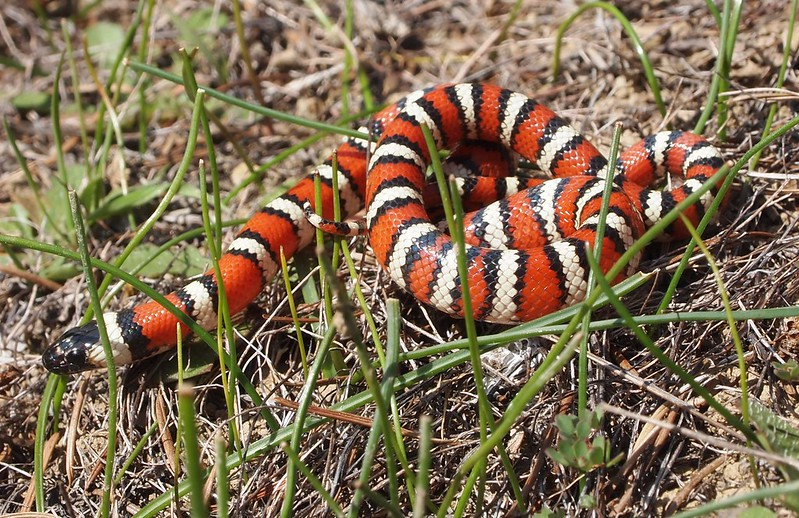
The California Mountain Kingsnake’s bold color pattern of red, white, and black bands isn’t just beautiful, it’s a survival tactic. These snakes mimic the appearance of venomous coral snakes to deter predators, a phenomenon called Batesian mimicry.
The old rhyme, “Red on yellow, kill a fellow. Red on black, friend of Jack”, helps distinguish venomous coral snakes from harmless kingsnakes. In California, the rhyme doesn’t perfectly apply, but the principle is the same: mimicry keeps predators guessing.
2. Habitat: From Woodlands to Rock Crevices
California Mountain Kingsnakes thrive in oak pine woodlands, moist microhabitats, and rock crevices. They’re adaptable, found in southern California, southwestern Oregon, northwestern Mexico, and even the slopes of the Appalachian Mountains in related kingsnake species.
Though usually associated with wild habitats, they sometimes turn up in urban areas, hiding under rotting logs or yard debris. In colder regions, they spend time underground during winter, emerging in the breeding season.
3. Geographic Range
Their distribution stretches across California, including Baja California, San Diego counties, and the Pacific Coast. Some isolated populations occur as far as extreme southwestern Colorado and northwestern Mexico.
Interestingly, their range overlaps with other common kingsnakes, like the Eastern Kingsnake (Lampropeltis getula), the Speckled Kingsnake, and the Black Desert Kingsnake, highlighting the diversity of the genus Lampropeltis.
4. Physical Traits: Medium-Sized but Striking
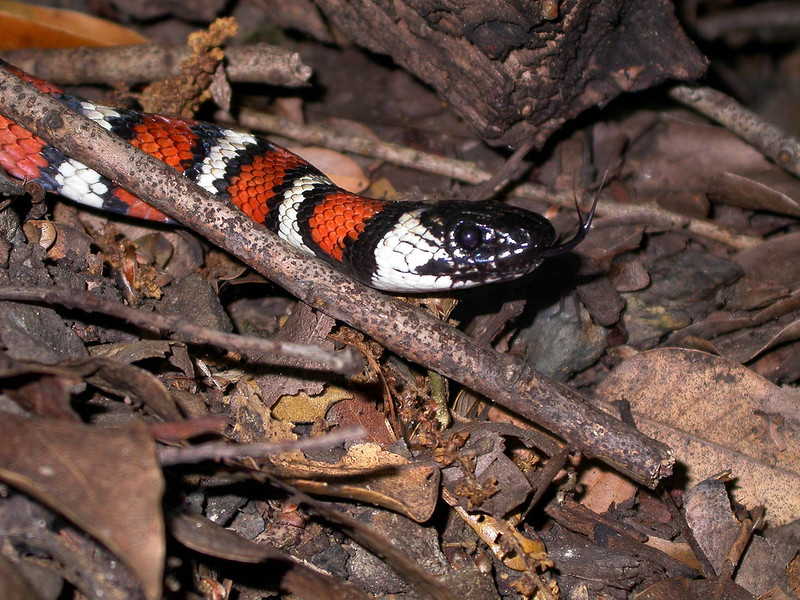
The California Mountain Kingsnake is a medium-sized snake, averaging 2–4 feet long. They have smooth scales, slender bodies, and those iconic red bands and white bands.
Despite their fearsome look, they are completely non-venomous. Their striking color pattern varies by region, some populations show more red, while others have broader black bands.
5. Diet: Rodent Controllers of the West
California Mountain Kingsnakes are opportunistic feeders, helping balance ecosystems. Their food sources include:
- Small mammals such as rodents and shrews
- Lizards and other snakes (they are famous for eating rattlesnakes, immune to rattlesnake venom)
- Turtle eggs and bird eggs
- Occasionally, amphibians
This diet makes them a valuable ally in controlling pest species in both wild habitats and urban areas.
6. Behavior: Versatile and Active
California Mountain Kingsnakes are mostly diurnal, active on warm days, but can shift to nocturnal habits during hotter months. They climb trees, swim in streams, and slip into rock crevices with ease.
They’re also secretive, often spending long periods underground or beneath cover, only emerging during the mating season or while hunting.
7. Reproduction and Life Cycle
Breeding takes place in spring. During the mating season, males pursue females, sometimes competing in combat. Females lay clutches of hard-shelled eggs in protected spots such as rotting logs or soil cavities.
The incubation period lasts 40–60 days, depending on temperature. Hatchlings emerge brightly patterned and independent from birth. They reach sexual maturity within 2–3 years, and adults can live over 15 years in the wild.

8. Species Classification: Lampropeltis Californiae
The California Mountain Kingsnake belongs to the genus Lampropeltis, which also includes Lampropeltis californiae (the California Kingsnake) and Lampropeltis splendida (the Desert Kingsnake).
While closely related to the Common Kingsnakes, each species has its own range and species status, clarified through molecular ecology and genetic studies. Publications from the Smithsonian Institution Press, Princeton University Press, and peer-reviewed journals like Herpetological Review have advanced our understanding of kingsnake taxonomy.

9. Conservation Status
Currently, the California Mountain Kingsnake is not globally endangered, but it is considered a species of concern due to:
- Habitat loss from development and logging
- Road mortality
- Collection for the pet trade (they’re among the most popular snakes for collectors)
Conservation assessments, including those in Herpetological Review and American Midland Naturalist, highlight the importance of monitoring populations and protecting key habitats like oak pine woodlands.
10. Coexistence With Humans
Though often misunderstood, the California Mountain Kingsnake poses no threat to people. In fact, their immunity to venom allows them to prey on rattlesnakes, making them beneficial neighbors.
Still, myths persist. Some confuse them with coral snakes, while others fear any snake in their yard. Educating the public is key to ensuring coexistence.
For wildlife enthusiasts, spotting one in the wild is a reminder of how vibrant and diverse western reptiles truly are.
Life Begins in the Logs: Breeding and Eggs of the Kingsnake
During the breeding season, males actively search for females, sometimes competing when two males cross paths in the same area. These contests are more about strength and persistence than aggression, often ending with one retreating.
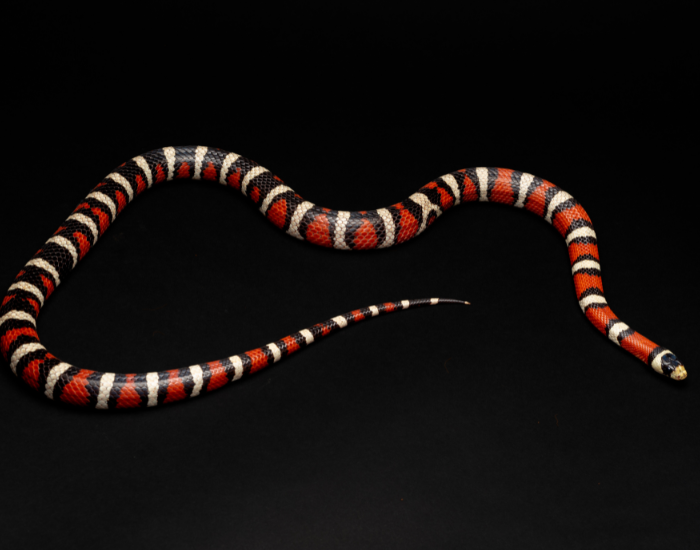
Females lay clutches of snake eggs in protected spots like rotting logs or beneath rocks. The incubation period lasts around 40–60 days, and hatchlings emerge fully patterned in vibrant red bands, black, and white bands. They reach sexual maturity within two to three years, ensuring populations remain healthy where habitats are intact.
From California to the East Coast: Kingsnakes Across America
While the California Mountain Kingsnake is unique to the western U.S. and northwestern Mexico, its cousins roam far beyond. The Eastern Kingsnake (Lampropeltis getula), Speckled Kingsnake, Common Kingsnakes, and the Black Desert Kingsnake thrive across Eastern North America, from the Mississippi River to the East Coast.
This diversity shows how adaptable the genus Lampropeltis is, with kingsnakes occupying deserts, woodlands, wetlands, and even urban neighborhoods across the continent.

From Forest Floor to Living Room: Why Kingsnakes Are Popular Pets
With their striking color pattern of red, white, and black bands, California Mountain Kingsnakes are among the most popular snakes in the reptile hobby. Their beauty and manageable size make them attractive to collectors, but this demand has fueled pressures from the pet trade.
Scientific publications, from Occasional Papers to Herpetological Review, as well as works by Smithsonian Institution Press, Princeton University Press, and Houghton Mifflin Company, highlight both their ecological role and the need for careful monitoring. While they thrive in captivity, conservationists emphasize that wild populations must remain protected.

California vs. Canary Islands: Clearing Up Kingsnake Confusion
While the California Mountain Kingsnake is strictly native to western North America, another close relative has made headlines abroad. The California Kingsnake (Lampropeltis californiae) has been introduced to the Canary Islands, including Gran Canaria, where it now threatens local wildlife.
This example shows how kingsnakes, when introduced outside their native range, can disrupt ecosystems. Fortunately, California Mountain Kingsnakes themselves have not spread beyond their western habitats, but the Canary Islands case is a reminder of why non-native introductions must be managed carefully.
FAQs About the California Mountain Kingsnake
They are uncommon in some areas due to habitat loss but not considered globally rare.
No, they are non-venomous and harmless to humans.
Not usually. They may bite if threatened but prefer to flee.
Typically 2–4 feet, making them a medium-sized snake.
No. Like all Lampropeltis, they are harmless constrictors.
The California Kingsnake (Lampropeltis californiae) reaches 3–4 feet on average.
No. Milk snakes are closely related but occur in eastern and central North America.
“Kingsnake” is a general term for the genus Lampropeltis. The California Kingsnake (Lampropeltis californiae) is one species within this diverse group.
let’s Care for this Misundertsood Snake
As habitat pressures and the pet trade increase, conservation efforts must keep pace. Protecting their native range, from oak pine woodlands to rock crevices—ensures that future hikers, like me, will one day catch a glimpse of those brilliant red and white bands sliding through the pines.
If you are from California, you may be interested in the following articles:
- 12 Fascinating Facts About the Toxic California Newt
- Best Guide to Whale Watching California Los Angeles
- From the Brink of Extinction: The California Condor
- A Guide to The Animals of California You Should Know
- Desert Wildlife: 12 Amazing Animals You Must See
- 12 Legless Lizards You Need to Know