Understanding Reptiles: Why Legless Doesn’t Mean Snake
Walk across the coastal dune areas of southern California and you may spot what looks like a snake weaving through the scrub. Look closer, and you’ll notice a blink, a dead giveaway that it’s not a snake at all, but a legless lizard, highly probably, the California legless lizard (Anniella pulchra). With movable eyelids and a blunt, detachable tail, it’s one of North America’s most intriguing reptiles.
But the California species is just one member of a much larger story. Across the world, from the glass lizards of Europe to flap-footed lizards in Australia, evolution has produced dozens of legless lizards in different families, each perfectly adapted to their environment.
So what exactly are legless lizards? And why are they often mistaken for snakes? Let’s dig in.
- Snakes vs. legless lizards: Snakes lack eyelids and external ears, but many legless lizards still have them. Some species can even drop their tails to escape predators, another lizard trait. Find more on how to tell them apart at the end!
- A group, not one species: “Legless lizards” isn’t one single kind, but rather several families of reptiles worldwide that independently lost their legs.
- Ecological role: They’re often fossorial reptiles, burrowing in loose soil, leaf litter, or sandy coastal dunes, feeding on insects, beetles, and larvae.
This article explores 12 of the most iconic legless lizards, explaining how they differ from snakes, what makes them ecologically important, and why their survival depends on conservation.

The 12 Most Iconic Legless Lizards
Legless lizards exist across continents, and they’re a diverse bunch. Here are 12 iconic species you should know:
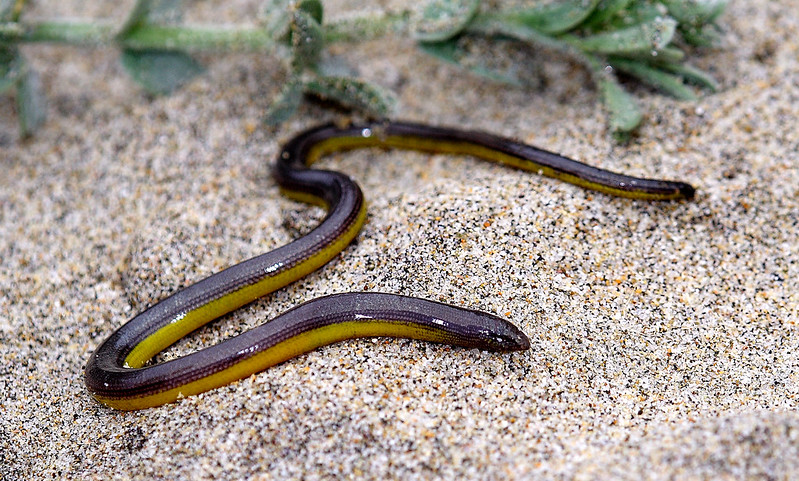
1. California Legless Lizard (Anniella pulchra)
This dark brown lizard is native to California’s sandy soils and coastal dunes, it’s a species of special concern. Habitat loss from urban development and sand mining has made conservation a priority.

2. Black Legless Lizard (Anniella pulchra nigra)
A darker color morph of the California legless lizard, striking for its glossy black sheen. Once thought to be separate, genetic studies revealed it’s part of A. pulchra.
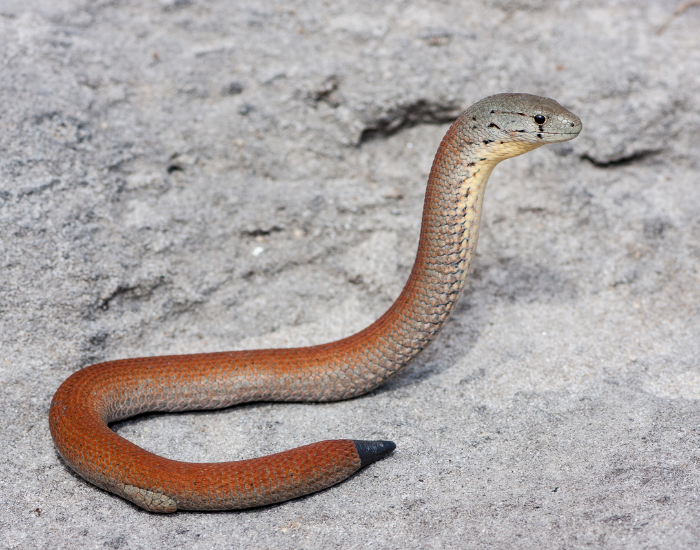
3. Common Scaly-foot (Pygopus lepidopodus)
Widespread across southern and eastern Australia, this legless lizard can grow over 80 cm and is known for its snake-like mimicry. It retains tiny flap-like hindlimbs near the cloaca and can hiss and flatten its body to deter predators, making it one of the most iconic members of the Pygopodidae family.
4. Eastern Glass Lizard (Ophisaurus ventralis)
One of the most widespread glass lizards in the southeastern U.S. Unlike snakes, you can sometimes see tiny remnants of their legs near the body.

5. Slender Glass Lizard (Ophisaurus attenuatus)
Common across the Midwest and southern U.S., this species can reach over 40 inches. I once spotted one darting through prairie grasses in Kansas.
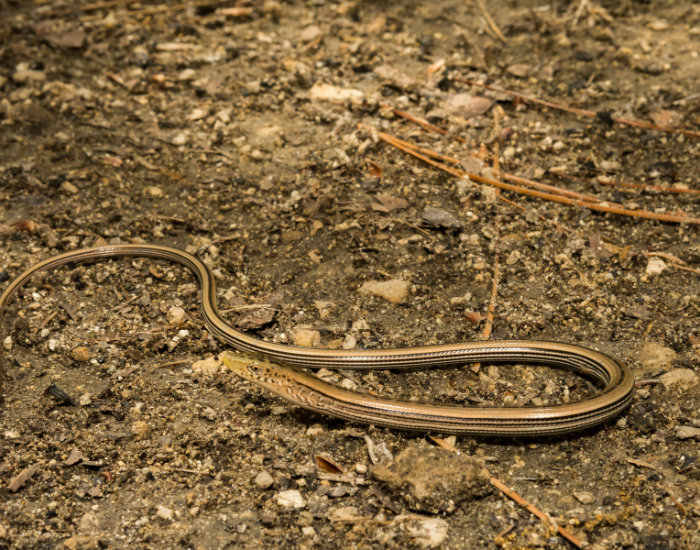
6. Western Glass Lizard (Ophisaurus compressus)
Another North American glass lizard, preferring sandy pine forests. Its long tail can account for two-thirds of its total body length.
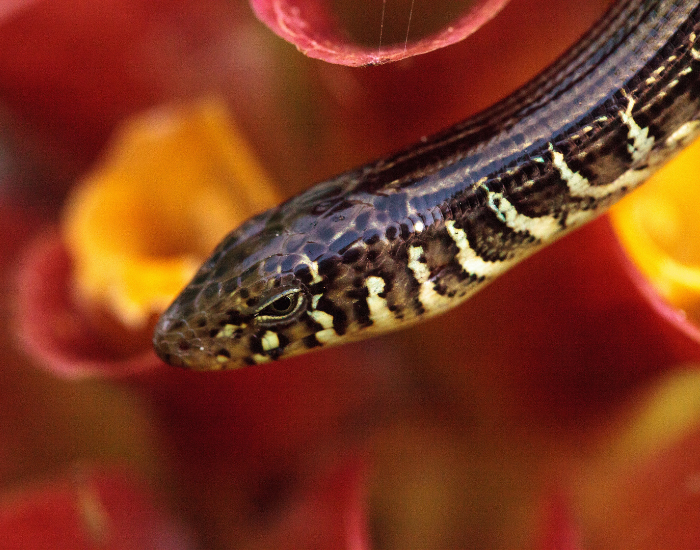
7. Sheltopusik or European Glass Lizard (Pseudopus apodus)
The largest legless lizard in Europe and western Asia, often reaching a meter long. In Turkey, I saw one mistaken for a viper, but its ear openings gave it away.
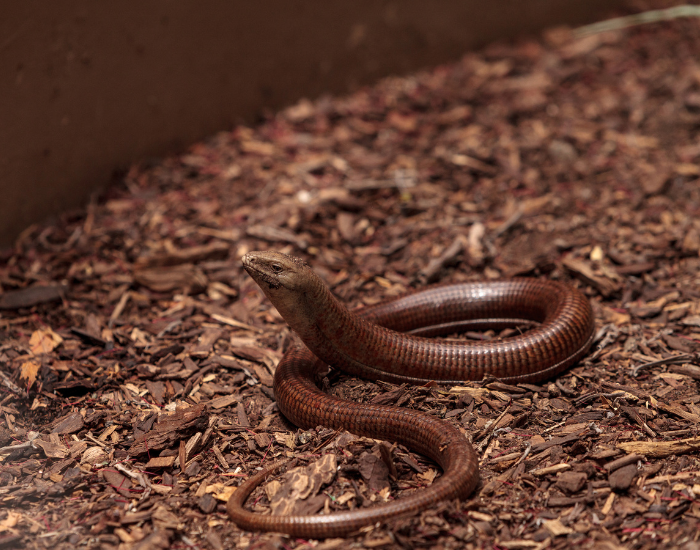
8. Burton’s Legless Lizard (Lialis burtonis)
A master ambush predator in Australia, known for its shovel-shaped snout and hinged jaws that allow it to take on large prey, like skinks.
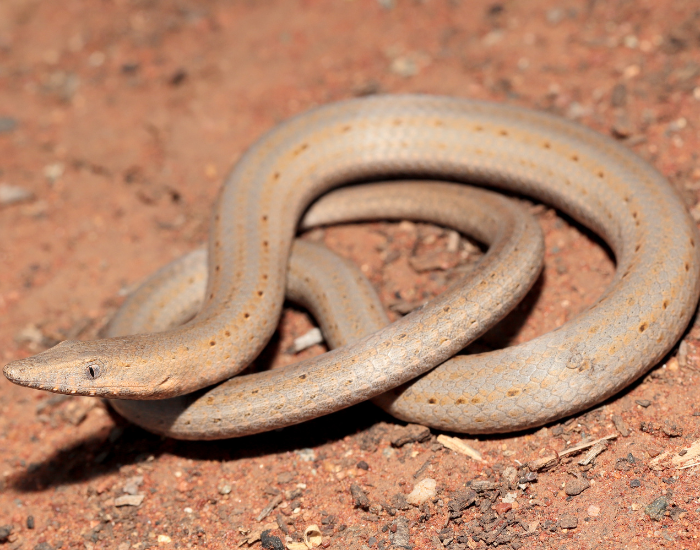
9. Asian Glass Lizard (Dopasia gracilis)
Found from India to Southeast Asia, this limbless reptile thrives in forests and grasslands, playing an important role in insect control.
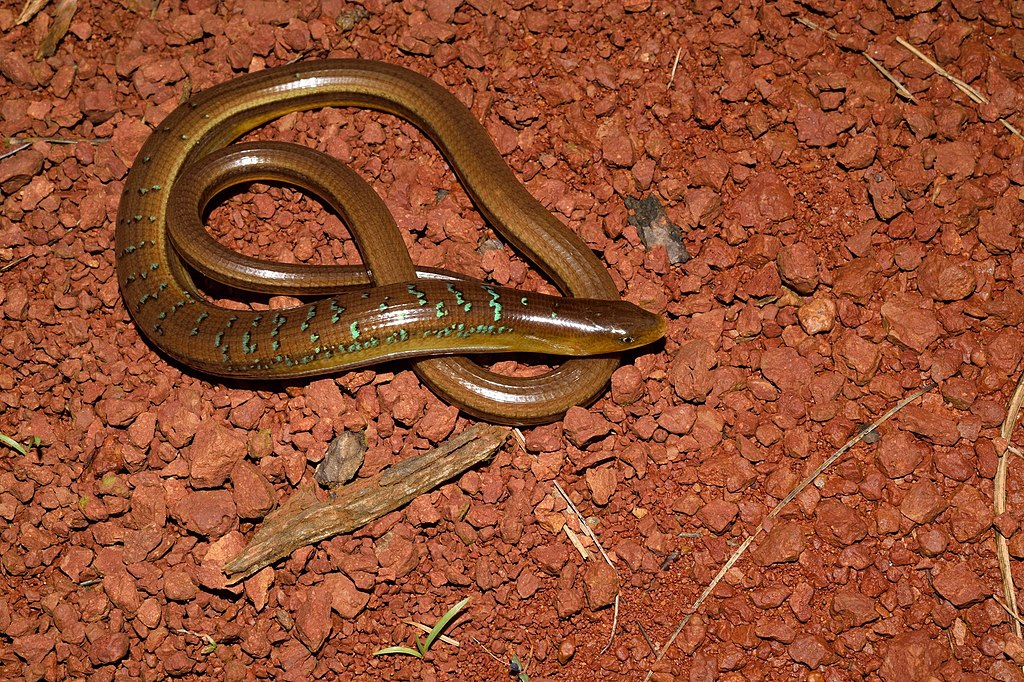
10. Striped Worm Lizard (Ophiodes striatus)
A true legless lizard in the family Diploglossidae (historically placed within Anguidae), native to southern South America, Brazil, Paraguay, and Uruguay. It inhabits grasslands and open scrub, feeds mostly on invertebrates, and keeps classic lizard traits like eyelids and external ear openings. The species is currently assessed as Least Concern

11. Mexican Legless Lizard (Anniella geronimensis)
Recently recognized as separate from A. pulchra, this species is found in Baja California and reflects how much hidden diversity legless lizards still hold.

12. Common European Slow Worm (Anguis fragilis)
Widely distributed across Europe. Unlike snakes, it has eyelids and the ability to shed its tail, a survival trick against predators.
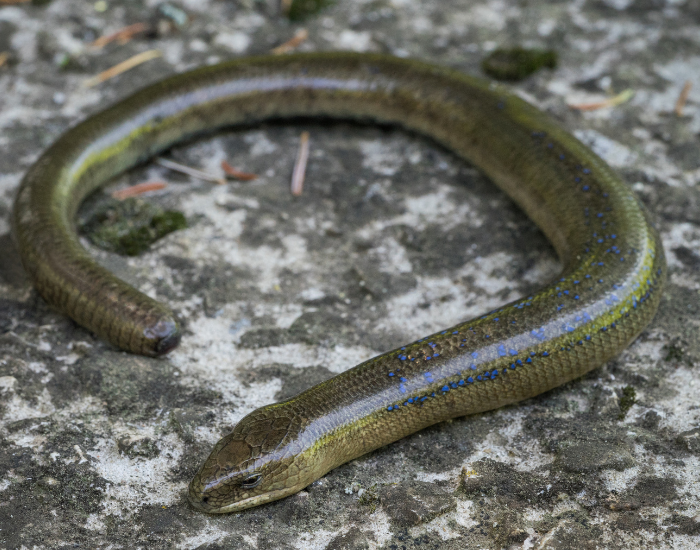
13. Southern Alligator Lizard (reduced-limb form, Elgaria multicarinata)
Not truly legless, but often discussed alongside them due to limb reduction and snake-like movements.
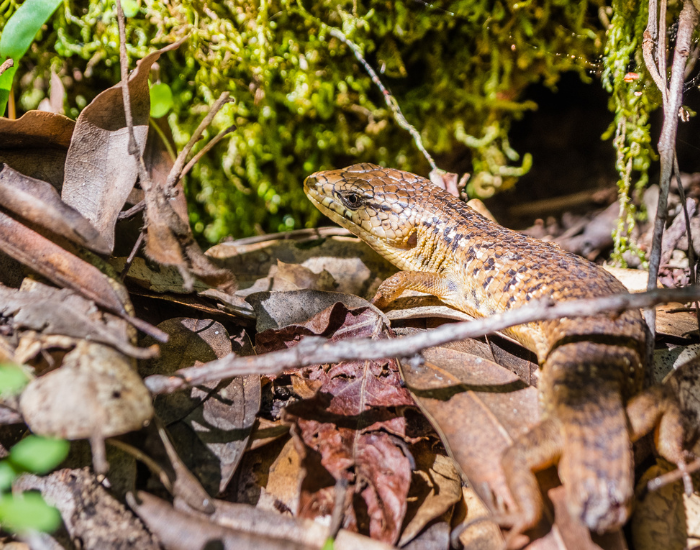
14. Delma Legless Lizards (Delma spp.)
A diverse group of pygopodids from Australia, with slender bodies and striking patterns. Some are highly localized species.
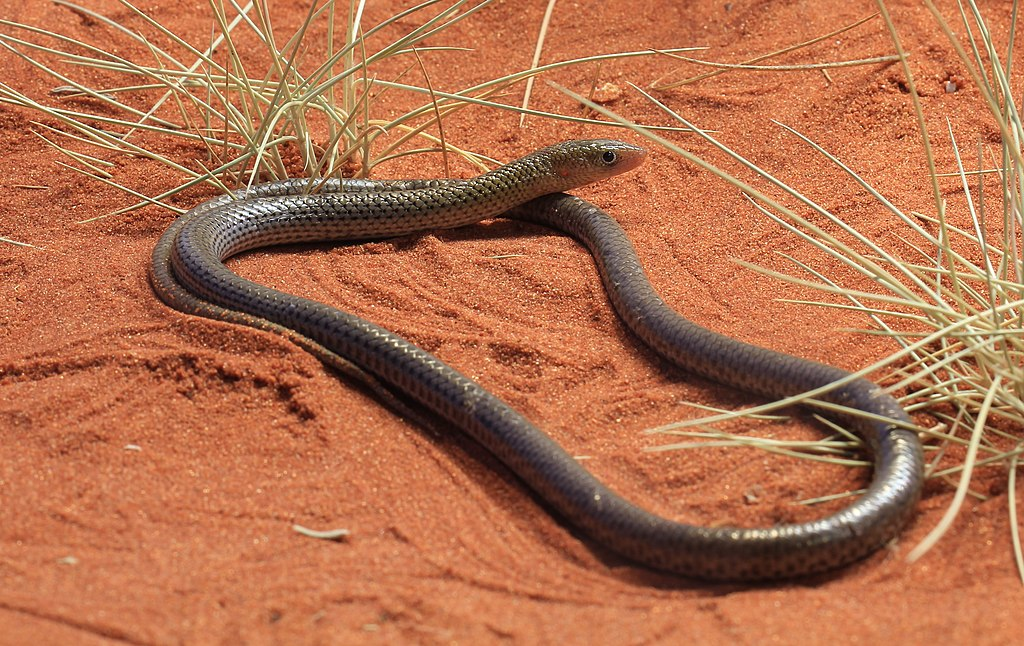
While these 12 legless lizards showcase the incredible variety found across the globe, the story circles back to one of the most iconic species: the California legless lizard. Not only is it a perfect example of how evolution can shape reptiles to thrive in sandy habitats, but it’s also one of the most misunderstood. To many, it looks like just another snake slithering through the dunes, yet a closer look reveals unique traits that firmly place it among lizards.
Characteristics of the California Legless Lizard
The California legless lizard (Anniella pulchra) is probably the most famous limbless lizard in North America. Found from Central California to Baja California, it thrives in sandy, loose soil where it can burrow easily.
Key features that help distinguish it from snakes:
- Shovel-shaped snout – perfect for digging through sand.
- Movable eyelids – snakes can’t do this.
- Smooth shiny scales – often metallic silver, golden, or dark brown.
- Tail vs. body length – the tail is blunt and can break off when threatened.
- Color morphs – the black legless lizard (Anniella pulchra nigra), once thought to be its own subspecies, is now recognized as a color morph.
Diet and Reproduction
Legless lizards are opportunistic hunters of small prey:
- Insects – beetles, spiders, ants.
- Larvae – juicy insect larvae in leaf litter.
- Occasional prey – small invertebrates like snails.
Reproduction is fascinating: females give live birth to 1–4 young, usually in early spring. I once found newborns during a spring survey, delicate, shiny, and already wriggling through sand like seasoned burrowers.
Conservation Genetics and Diversity of the California Legless Lizard and other Legless lizards
The California legless lizard is more than just a reptile that blinks, it’s a symbol of hidden biodiversity. Once thought to be a single species with a couple of separate subspecies, genetic studies now show there are at least five species, each with high genetic diversity and subtle differences in striping, color, and soil preference. All share the same unmistakable features: a shovel-shaped snout for digging into loose soil, moveable eyelids that snakes lack, and a blunt tail that can be shed when threatened.
For example, some lineages thrive at sea level in coastal dune systems, while others are found higher in the Tehachapi Mountains. A few show distinct markings such as a dark line along the back or several thin stripes between scale rows. These details may seem subtle, but they carry big implications for conservation: losing one population could erase an entire evolutionary branch.
Unfortunately, their conservation status remains precarious. Many populations are boxed in by rapidly developing landscapes, where housing projects and road expansion erase the very sandy soils these fossorial reptiles depend on. Conservation biologists now focus on maintaining plant cover, like native mock heather and dune vegetation, which protects the soil from erosion and keeps conditions suitable for burrowing.
In short, protecting the genus Anniella requires a multi-pronged approach: habitat preservation, careful monitoring of intergradient populations, and collaboration with state agencies.
Life for these lizards is precarious. They face natural predators such as long-tailed weasels, California thrashers, and domestic cats, and their sandy habitats are under constant pressure from sand mining, invasive ice plant, and housing developments in sparsely vegetated areas. Conservationists have even found that native dune plants like bush lupine play a role in stabilizing the soils they depend on. During early spring, when conditions are damp and food is abundant, these secretive reptiles become more active, surfacing to hunt beetle larvae and other small invertebrates. Every encounter reveals how tightly their survival is tied to the delicate fabric of California’s coastal ecosystems.
Threats and Conservation
Legless lizards are under pressure from:
- Predators – deer mice, ringneck snakes, domestic cats, and California thrashers.
- Habitat destruction – housing, road building, agriculture.
- Invasive plants – ice plant reduces their sandy habitat.
Snakes vs legless Lizards – How To Tell Them Apart
Telling a snake from a legless lizard can be tricky at first glance, but there are reliable differences once you know what to look for. Snakes lack eyelids and external ears, meaning their eyes stay permanently open and smooth-scaled, while legless lizards can blink and have small ear openings. Most snakes have long, muscular bodies built for striking or constricting, whereas legless lizards often have a shorter body with a blunt tail that can detach if grabbed by predators. Their tongues also differ, snakes use a deeply forked tongue for scent-tracking, while lizards typically have a less forked, fleshy tongue. Habitat and behavior provide more clues: snakes may swallow large prey whole, while legless lizards tend to stay hidden in loose soil or leaf litter, feeding on insects and larvae.

FAQs About Legless Lizards
They have eyelids, external ear openings, and often detachable tails — features snakes lack.
No. Legless lizards are harmless to humans. They feed on insects, beetles, and larvae, and actually help control pest populations.
Yes. The most famous is the California legless lizard (Anniella pulchra), along with closely related species in Baja California. These reptiles are considered species of special concern due to habitat loss.
They feed mostly on insect larvae, beetles, and small invertebrates found in sandy soils. Their shovel-shaped snouts help them burrow and forage underground.
Skinks may have tiny limb remnants and lizard traits, while snakes completely lack them.
Some salamanders lack hind legs, but they are amphibians, not reptiles.
Yes. The sheltopusik (Pseudopus apodus), also called the European glass lizard, is the largest species in Europe and western Asia. It can grow over a meter long and is often mistaken for a snake.
Yes. Australia is home to the pygopodids, also known as flap-footed lizards. They are close relatives of geckos and have tiny vestigial limbs that look like small flaps near the tail.
Yes. The Asian glass lizard (Dopasia gracilis) is found from India to Southeast Asia, where it thrives in grasslands and forests and plays an important role in insect control.
Like Snakes But Not Quite the Same
Legless lizards might be among the most misunderstood reptiles on Earth. From the California legless lizard burrowing in dune sand to the Sheltopusik stretching across Balkan grasslands, they show us how evolution creates many paths to survival.
As a traveling biologist, I’ve seen them in dunes, prairies, forests, and scrub. Every encounter has reminded me how fragile their habitats are, and how urgently they need protection.
If we want future generations to have the joy of mistaking one for a snake, only to notice that blink, then conservation of these limbless reptiles is non-negotiable.