Wildlife Nomads

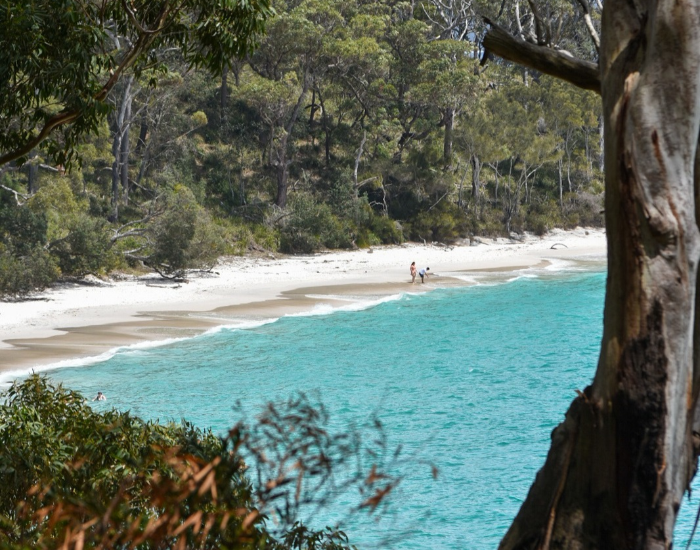
We drove into Green Patch in mist and light rain. Everything was green, wet and dripping. It felt like arriving in a rainforest in the Congo or the Amazon. Honestly, it felt like entering Pandora from Avatar.
I love that kind of place, so it was a perfect start. Over four nights, Jackie and I logged 30 species of Jervis Bay wildlife. They included a diamond python, a blind shark, a striped pyjama squid and a bandicoot on our table.
This was not my first visit. Years ago, during my master’s in Sydney, I came here on a field trip. We ran transects and counted birds, and I saw the bay glow with bioluminescence. This time we came back on our Australia lap to see it properly.
Here is why I rank it among the best wildlife spots on the NSW south coast.
Where We Stayed: Green Patch, Booderee National Park
Green Patch is a campground inside Booderee National Park, on the southern shore of Jervis Bay. Technically, it is not in NSW at all. Booderee sits in the Jervis Bay Territory, which is Commonwealth land.
Booderee is owned by the Wreck Bay Aboriginal Community. It is jointly managed by the community and Parks Australia. The name is a Dhurga word meaning ‘bay of plenty’, and after four nights I understand why.
One honest note: it is not a cheap place to camp. We paid $310 for four nights. For what we saw, it was worth every dollar.
Reason 1: The Wildlife Comes to Your Campsite
Most places make you search for animals. At Green Patch, they came looking for us, sometimes a little too keen.
The Possum Wars
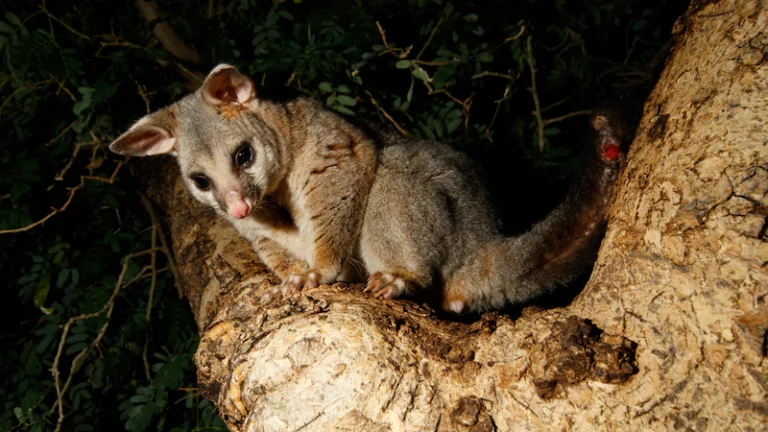
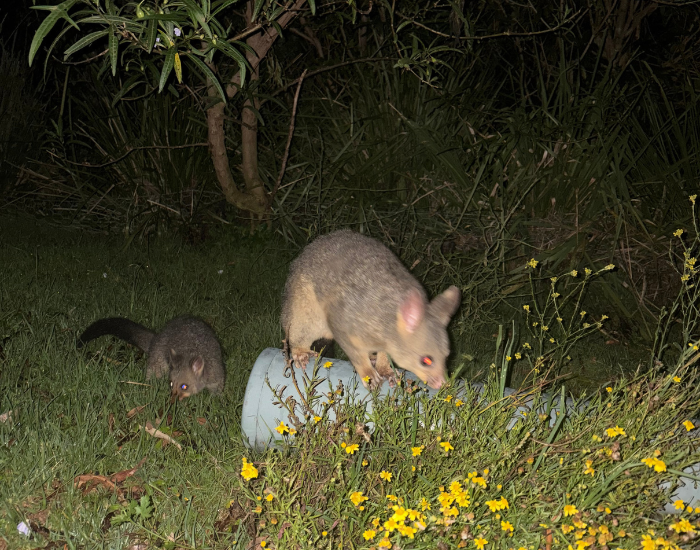
The possums arrived on the very first night. I had met bold ones at Gloucester River, but these had zero fear. Two or three turned up at once, and they even fought each other.
Over the next nights, things escalated. I found one hanging off our bin, biting it, so the bin went inside. Then one got into our car. It chewed our cereal box and other food, and left a poo behind. We had to throw that food away.
We were not the only ones. Two young women in a van across from us yelled and waved their arms at two possums. It made no difference. I watched one slip straight into their van, which was honestly very funny. The night before, a family on that same site had a possum get into their tent.
All night you could hear people around the campground. Some were shooing possums away. Others got a fright when one appeared out of nowhere, especially on their first night.
Nobody was feeding them, and signs ask you not to feed wildlife. Common brushtail possums simply adapt very well to people. They eat leaves, blossoms and fruit in the wild, but around humans they eat almost anything. To me, they are Australia’s raccoons. You can tell a brushtail from a ringtail in my guide to nocturnal animals in Australia.
From the second night, I locked away every bit of food and rubbish. When I stayed up late and saw one coming, a snap of my fingers was usually enough.
A Bandicoot on My Table
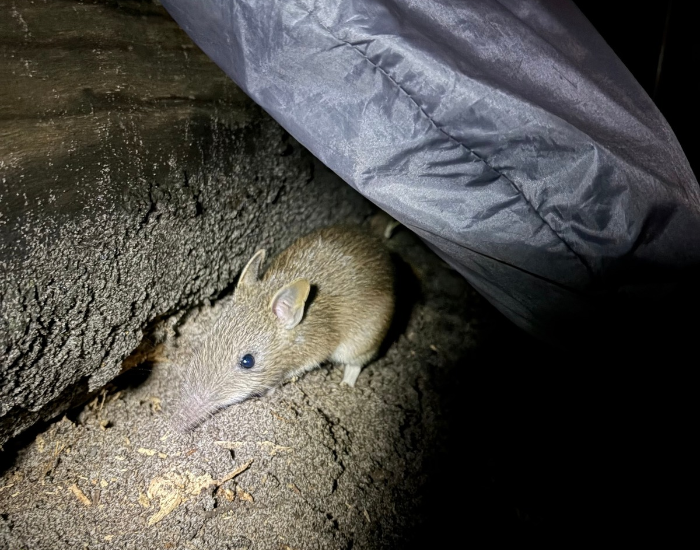
On the first night, a long-nosed bandicoot also came by. I think we had dropped some food while cooking, and it liked it. It was my first long-nosed bandicoot of the lap.
It climbed onto the table and started pushing into my toiletry bag, right where my toothbrush was. I tried to shoo it, and it ignored me. In the end I touched it to move it along. It looked at me as if to say, why are you touching me?
Then it went under my pop-up tent and tried to dig, puffing and snuffling the whole time. Digging is normal bandicoot behaviour. Long-nosed bandicoots dig small conical holes with their front feet. Then they push in their long snout to find insects and grubs. After that night, I never saw it again.
Booderee is a special place for bandicoots. Long-term monitoring found that long-nosed bandicoots first increased after fox control, then declined to a low, stable number. Meanwhile, southern brown bandicoots have returned after a century away, thanks to the park’s fox control. I wrote about that comeback in how quolls and bandicoots returned to Booderee.
A Diamond Python Crossing Camp
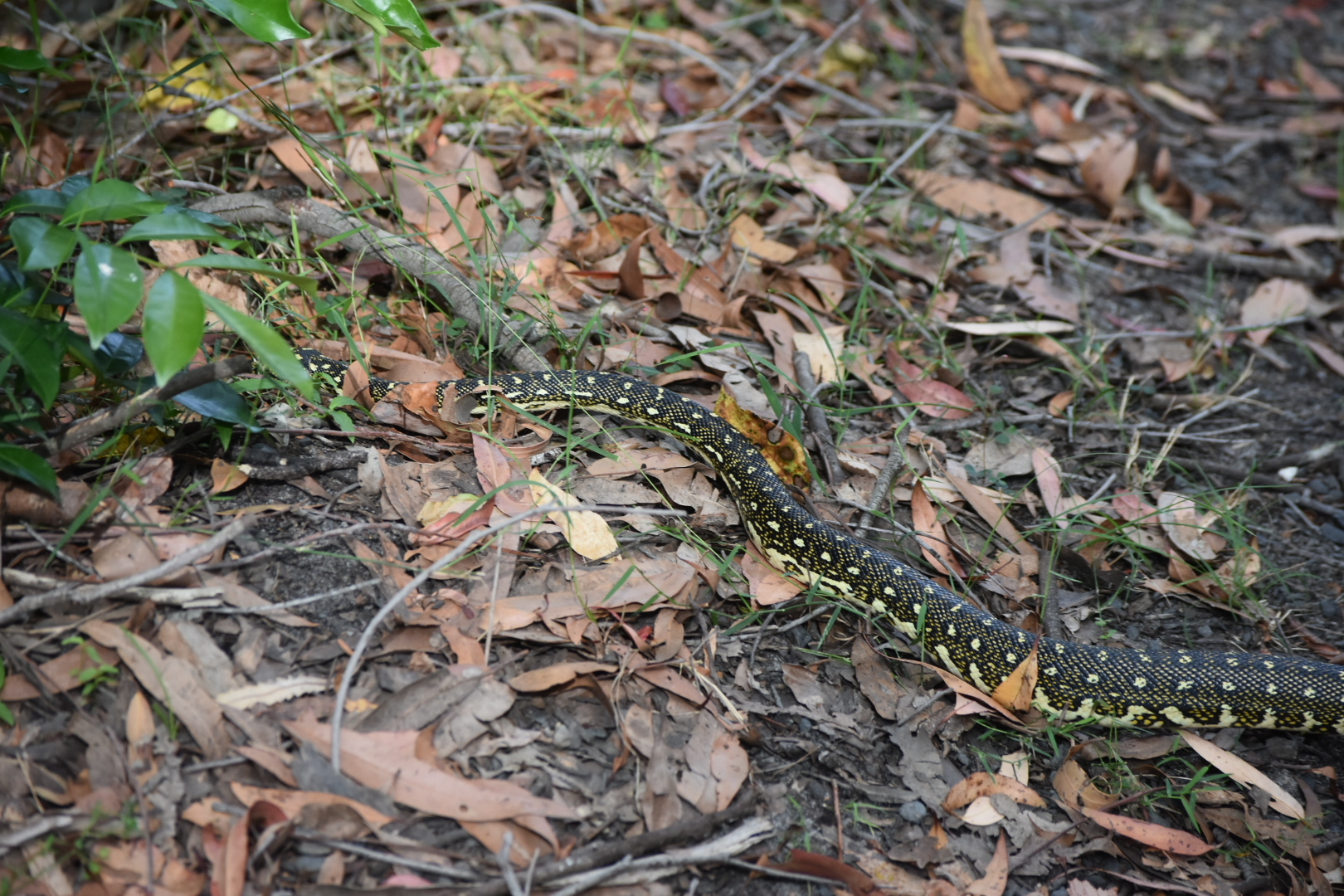
One afternoon, around 4 or 5 pm, a diamond python crossed the dirt road right through the campground. I think it was at least 2 metres long, maybe 2.5. It moved slowly and looked beautiful.
It seemed to surprise some campers, so they warned the family opposite. That family had two little girls playing nearby. Nobody panicked. Several people took photos, me included.
What struck me most was the reaction. In many other countries, people would scream or run. Here, a big snake crossing camp felt almost normal. Diamond pythons are non-venomous, and they usually grow to about 2 metres. Still, it is a wild animal, so give it space. I have worked with many pythons in a zoo, but seeing one this calm in the open was special.
King Parrots and Crimson Rosellas With No Fear
Every day, between morning and midday, Australian king parrots visited our campsite. A male and a female came most often, and sometimes a third bird turned up and they squabbled. One male even perched on our awning strap.
I have seen many king parrots before, but they always kept their distance. These ones came very close. I even took a selfie with them. The crimson rosellas were the same, friendly and completely unafraid.
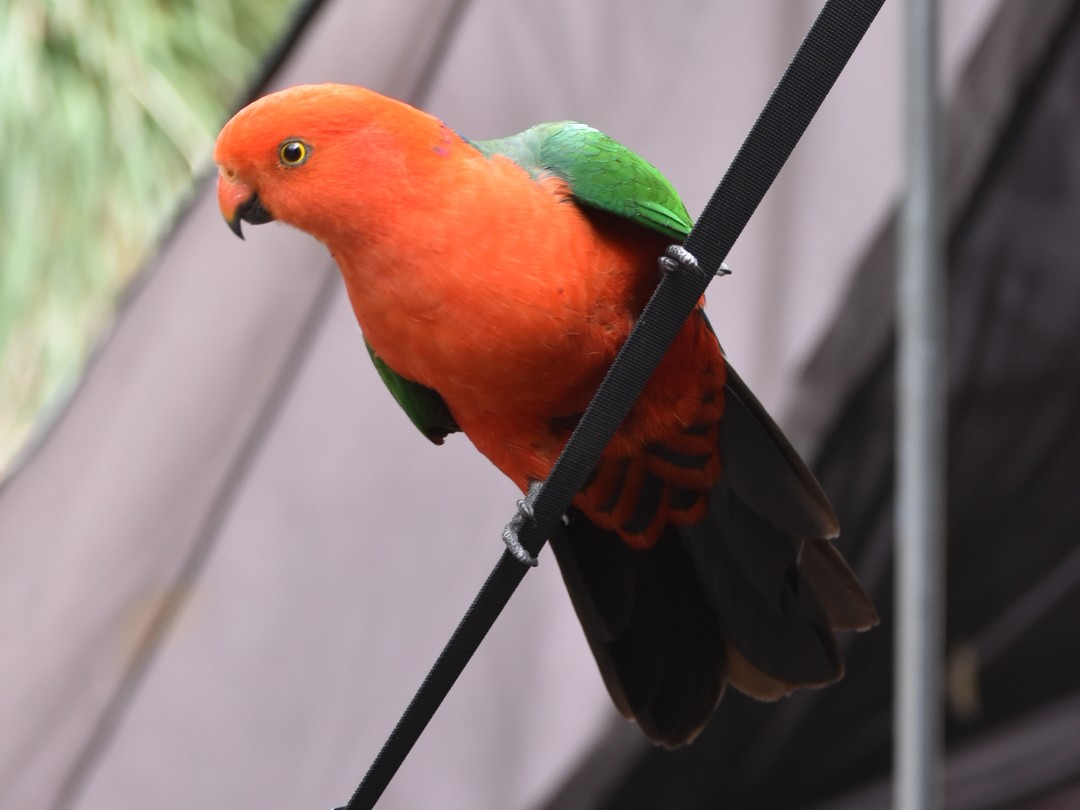
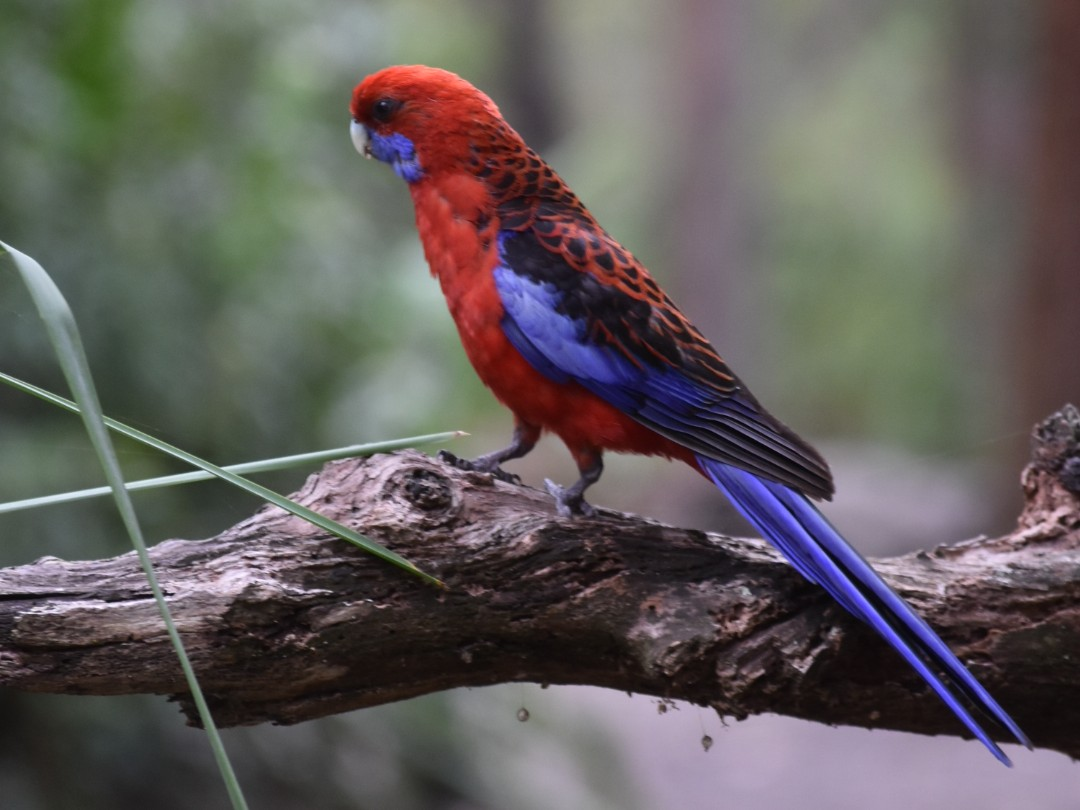
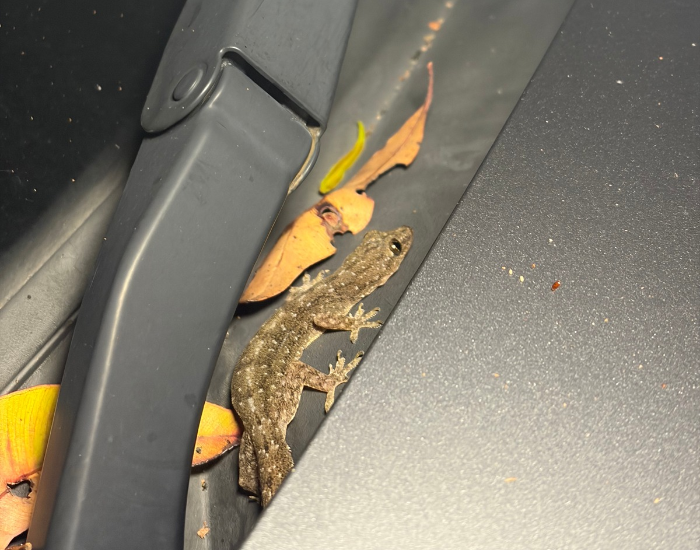
Other daily visitors included pied currawongs, kookaburras, rainbow lorikeets and Australian wood ducks. A swamp wallaby grazed nearby too. Even a Lesueur’s velvet gecko turned up, sitting on our windscreen.
Reason 2: The Bush Trails Are Full of Birds
The short trails around Green Patch pass through several habitats close together. Parks Australia describes rocky shore, beaches, tall blackbutt forest, creeks, woodland and heath. That mix is why the birdlife is so rich.
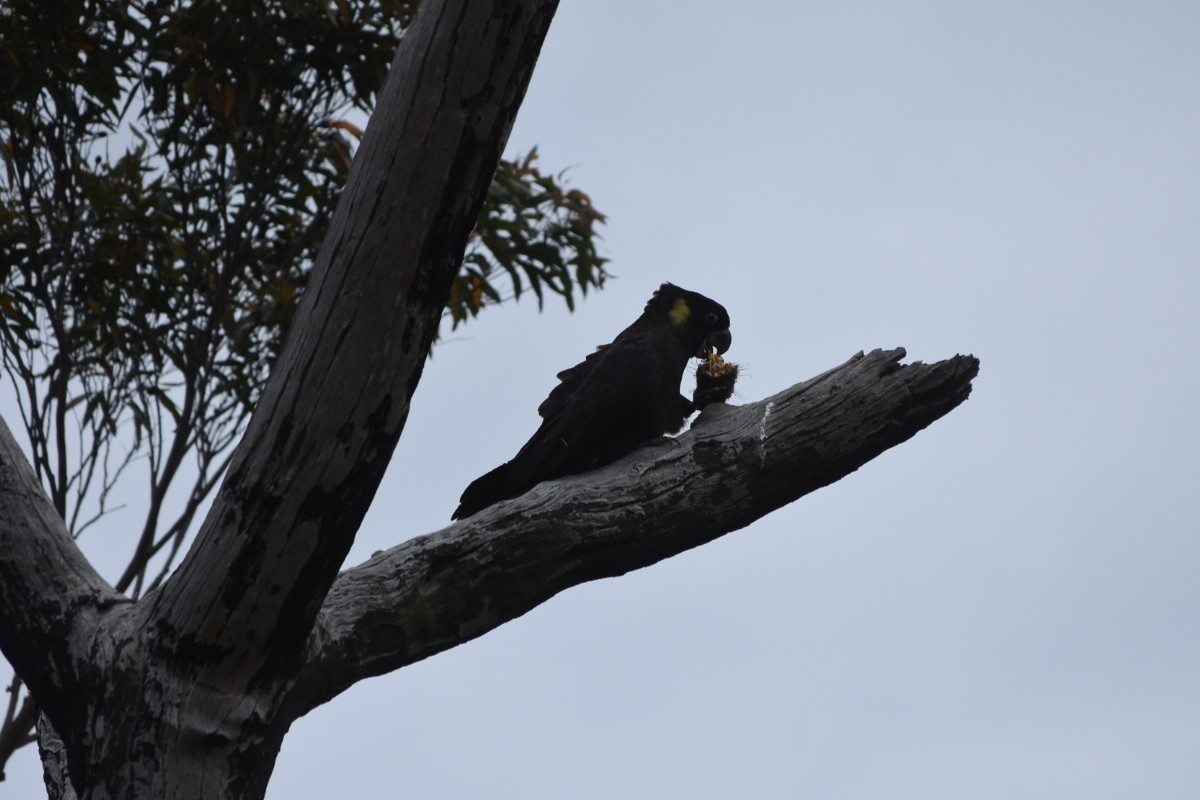
On the walking track, I heard yellow-tailed black cockatoos more than I saw them. I still found two feeding on banksias. At Illaroo they were everywhere. Here they mostly stayed hidden.
I counted at least four New Holland honeyeaters. They look a lot like white-cheeked honeyeaters, but the white eye gives them away. You can compare both in my guide to Australian honeyeaters. At dusk, around 8 pm, two red-browed finches fed beside the track.
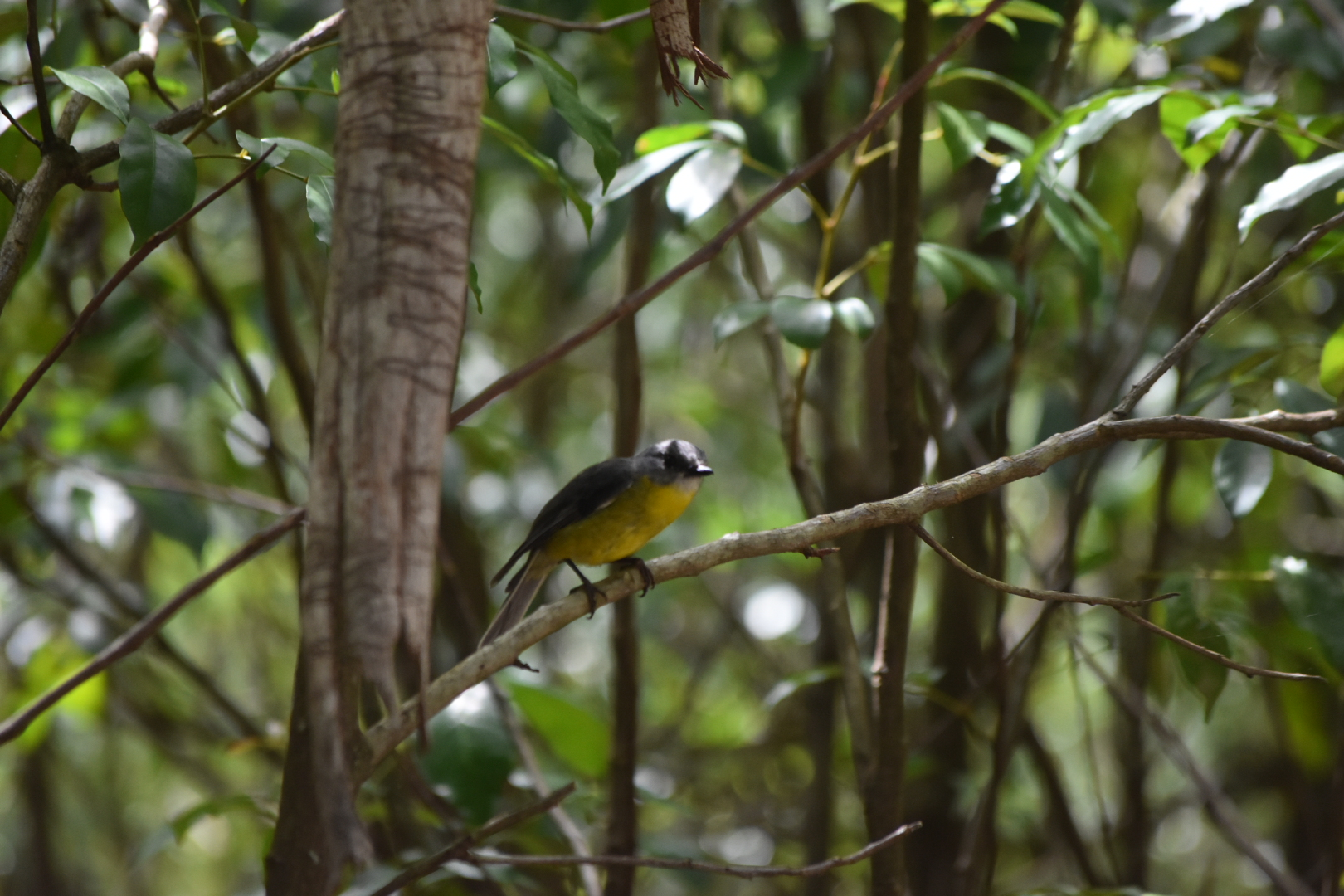
I also saw variegated fairywrens and heard eastern whipbirds cracking from the scrub. And I made my usual mistake. I spotted an eastern yellow robin and first thought it was a golden whistler. I always mix those two up. The robin has a plain grey head and back. A male golden whistler has a black head and a white throat.
Reason 3: World-Class Snorkelling Off the Beach
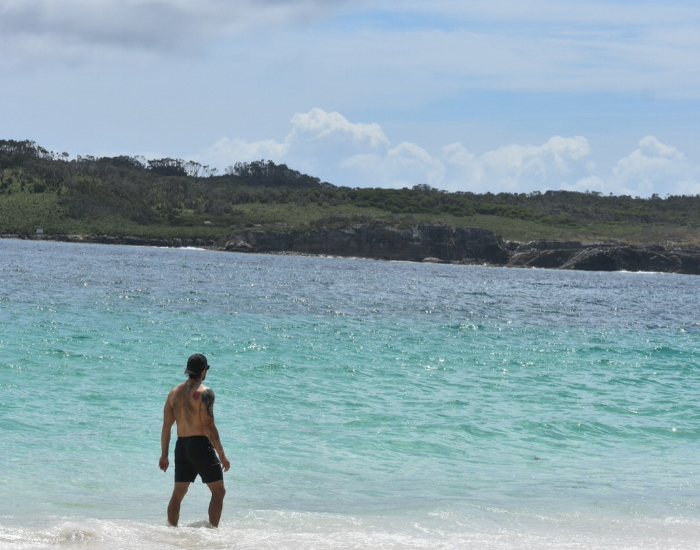
For me, this is what makes Jervis Bay different. You do not need a boat. Parks Australia names the rock platforms at Scottish Rocks and Murrays Beach as the best snorkelling spots in the park. We went to Scottish Rocks, a short walk through coastal bush from its own car park.
Go at both low and high tide. We went twice at low tide, and you can literally walk across the rock platform. That is when we saw the most animals. It felt like a giant version of the rock pools I love exploring.
A Blind Shark Stuck at Low Tide
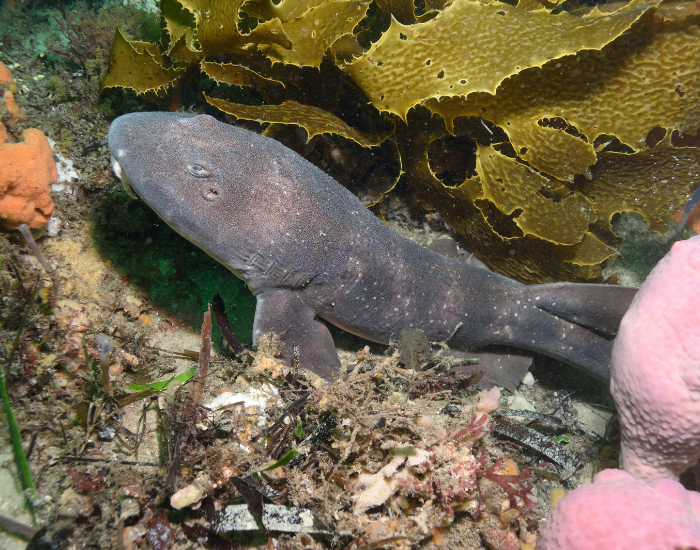
The highlight was a blind shark. We did not find it while swimming. At low tide it was trapped in a shallow pool, just waiting for the water to return. It kept moving its tail. Seeing a shark like that, out in the open, was amazing.
Blind sharks are not blind at all. They got the name from closing their eyes when anglers pull them out of the water. They often get trapped in tide pools and can survive a long time out of water. And they are close relatives of wobbegongs.
Striped Pyjama Squid and Other Small Wonders
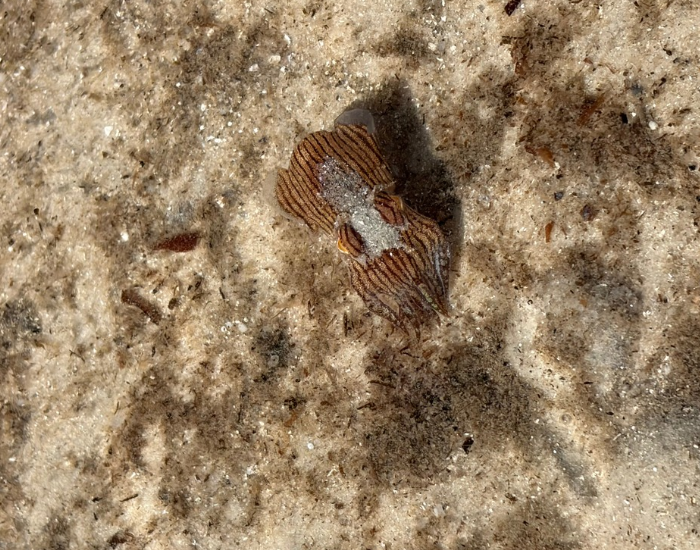
We also found a striped pyjama squid. Despite the name, it is more closely related to cuttlefish than to true squid. It grows to only 7 or 8 centimetres. It can release a toxic slime when attacked, and its stripes may warn predators to stay away.
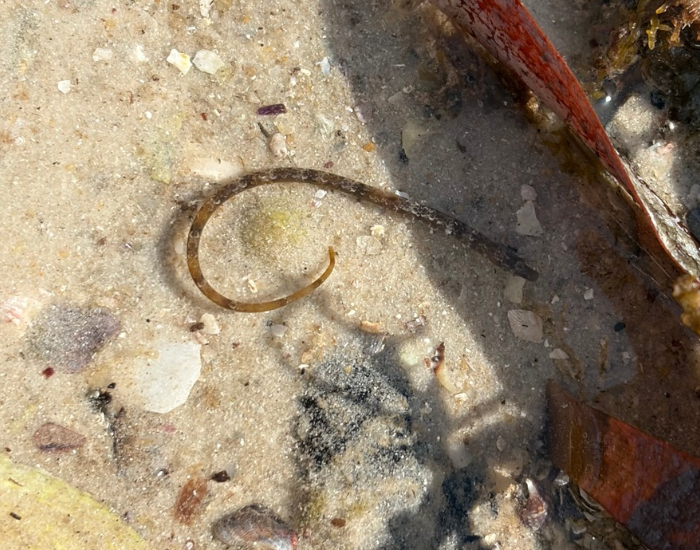
In the shallows we also saw a common stingaree, a wide-bodied pipefish, eastern striped trumpeters and gobies. Pipefish are relatives of seahorses and seadragons, and they hide easily in weed.
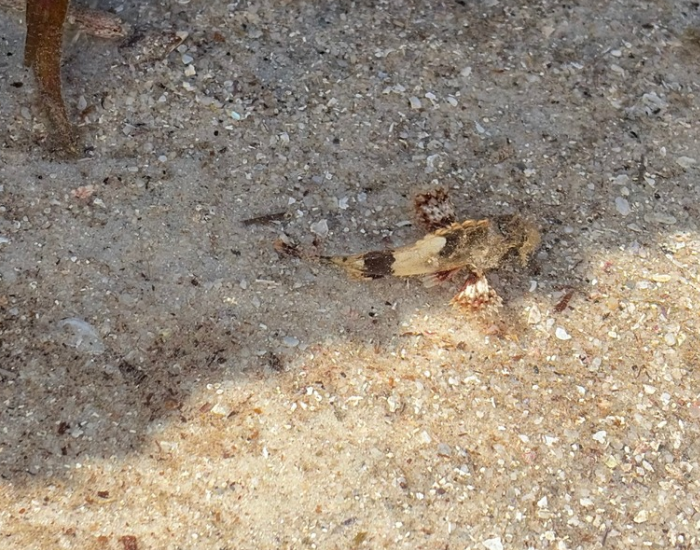
Watch your feet around eastern fortescues. These small scorpionfish have venomous fin spines that can cause a very painful sting. They are on my list of venomous fish for a reason.
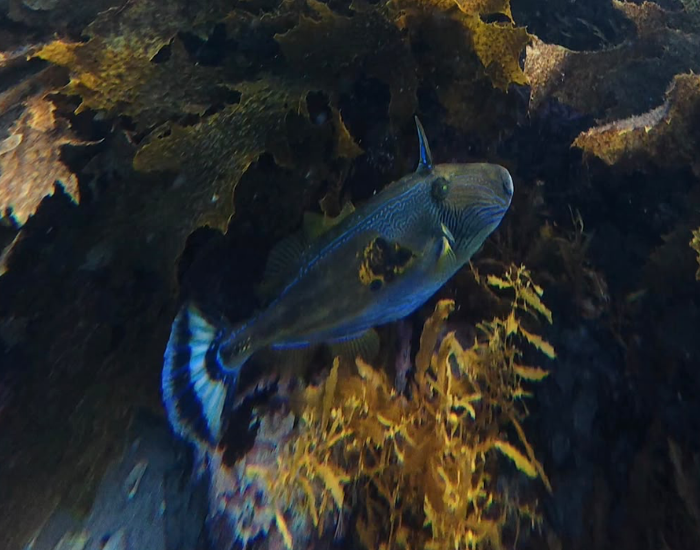
The next morning, we went back at high tide to snorkel properly. Visibility was good, and the water was a bit cold for me. Jackie spotted a fish with blue markings that I missed. It turned out to be a sixspine leatherjacket.
Reason 4: Penguins, Whales and Glowing Water
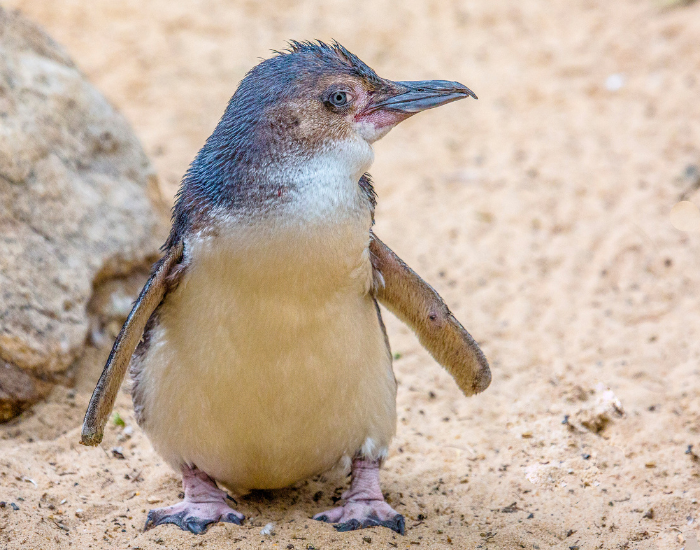
We missed some of Jervis Bay’s best wildlife this time, which is a good reason to return. Bowen Island, at the entrance to the bay, holds a little penguin colony of around 5,000 breeding pairs. Booderee’s penguins feed close to shore and only come back to their burrows at dusk.
We walked the coastal track from Green Patch towards Murrays Beach, which looks straight out to Bowen Island. We tried to spot penguins with the camera, but had no luck. Until this trip, I didn’t even know they nested there.
Jervis Bay is also an iconic place to watch humpback whales during their migration. Parks Australia calls the Cape St George Lighthouse lookout the park’s best whale-watching spot. It was the wrong season for us, but I have seen humpbacks at many other spots on this coast.
Finally, the bay is famous for bioluminescence. The blue glow mostly comes from tiny dinoflagellates, and nobody can predict when it will appear. I saw it on my first visit years ago. This time I missed it, and I would love to see it again.
My Tips for Seeing Jervis Bay Wildlife
- Possum-proof everything. Lock food and rubbish inside your car or tent every night, starting on night one.
- Snorkel at both tides. Walk the rock platform at low tide, then swim at high tide.
- Walk the trails at dusk. Finches, honeyeaters and cockatoos were most active late in the day.
- Stay alert in camp. Pythons, bandicoots and geckos may turn up right beside you.
- Never feed the wildlife. The animals here are bold enough already.
If you are heading this way, my Brisbane to Sydney wildlife road trip covers the stops further north. I also compared what I saw at caravan parks and national parks.
FAQs About Jervis Bay Wildlife
Yes. In four nights at Green Patch in Booderee National Park, I logged 30 species. They included a diamond python, a long-nosed bandicoot, king parrots, a blind shark and a striped pyjama squid.
Parks Australia names the rock platforms at Scottish Rocks and Murrays Beach as the best snorkelling spots in Booderee National Park. Scottish Rocks is a short walk from Green Patch campground.
Bowen Island, at the entrance to Jervis Bay, has a little penguin colony of around 5,000 breeding pairs. The penguins come ashore at dusk. You can look out to the island from Murrays Beach.
They can be. Common brushtail possums at Green Patch are bold and will raid bins, tents and cars. Lock away all food and rubbish at night, and never feed them.
Diamond pythons are non-venomous and usually placid. They can still bite if handled or threatened, so keep your distance and let them move on.
The Bay of Plenty Lives Up to Its Name
Jervis Bay combines beaches, easy snorkelling, rich bush and protected land in one small area. That mix is what makes it so diverse. In four nights, I met animals I had never been this close to: a bandicoot on my table, king parrots at arm’s length, and a shark waiting for the tide.
Bring your snorkel, walk the trails and lock up your food. Then follow the rest of our Australia lap to see where the wildlife takes us next.
References:
Parks Australia. Booderee National Park: Conservation.
Parks Australia. Diving and snorkelling, Booderee National Park. parksaustralia.gov.au
Parks Australia. Little penguin. parksaustralia.gov.au
Parks Australia. (2026, August 3). Success for southern brown bandicoots at Booderee after population disappeared for a century.
Threatened Species Recovery Hub. What 15 years of monitoring is telling us about mammals in Booderee National Park.