

I remember a specific afternoon in Coron, Philippines. I was snorkelling when a white, almost translucent cuttlefish materialised out of the blue. It hovered effortlessly, watching me with pulsing W-shaped eyes, its skin colour shifting in tiny rhythmic waves. That single encounter remains my gold standard for cephalopod magic.
Cuttlefish are marine mollusks belonging to the class Cephalopoda, alongside squid, octopuses, and nautiluses. As coleoid cephalopods in the order Sepiida, they are defined by a unique internal shell called the cuttlebone. All cuttlefish share eight arms and two longer feeding tentacles, blue blood, and three hearts. There are currently around 130 recognised species in genus Sepia and related genera, and each one has a superpower. Here are 12 that prove truth is weirder than fiction.

1. Giant Australian Cuttlefish (Sepia apama)
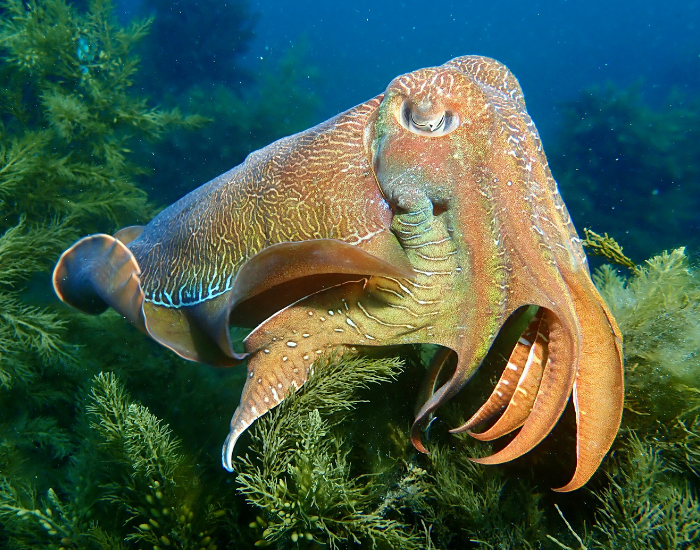
If the cuttlefish world had a heavyweight champion, Sepia apama would hold the title. It reaches up to 50 cm in mantle length and can weigh over 10.5 kg, the largest cuttlefish species on Earth.
Like all cuttlefish, it has eight arms and two longer tentacles for capturing prey. Males use those arms in extraordinary ways during the mating season. Each winter, large numbers gather along the rocky reefs between Whyalla and Point Lowly in South Australia’s Spencer Gulf, the only mass spawning aggregation of its kind in the world. The aggregation once numbered in the hundreds of thousands, but crashed to an estimated 13,000 individuals around 2012–2013. Numbers have since partially recovered, making ongoing monitoring of this unique event a conservation priority.
After mating, both male and female cuttlefish die, a phenomenon called semelparity. The females lay between 100 and 300 eggs in rock crevices before they perish, leaving the eggs to hatch alone. The species faces real conservation pressure from industrial activity and bycatch from trawl fisheries.
2. Flamboyant Cuttlefish (Metasepia pfefferi)
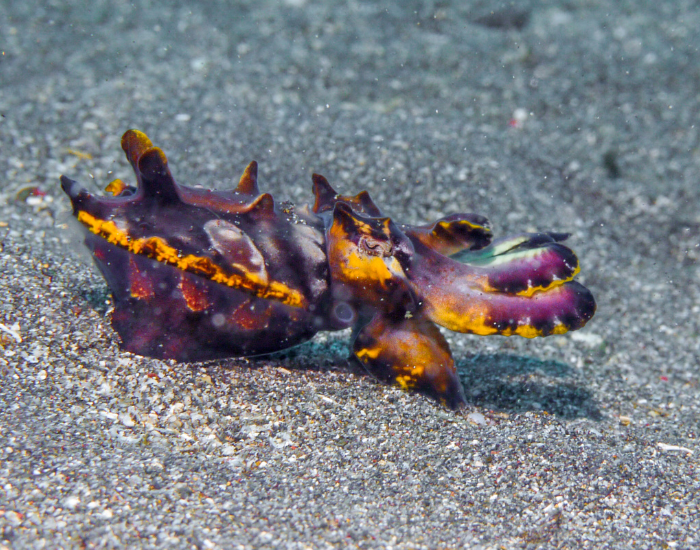
Don’t let the small body size fool you. The flamboyant cuttlefish, around 8 cm in mantle length, is one of the most striking animals in the Indo-Pacific. Its cuttlefish range spans shallow sandy and muddy substrates from Indonesia and Papua New Guinea to northern Australia.
Unlike most cephalopods, it walks along the seafloor using its lower arms and fringe-like fin edges rather than swimming. Its internal shell is too small to provide meaningful buoyancy. Therefore, walking has become its primary strategy. When threatened, it flashes black, white, yellow, and bright-red arm tips, a rippling warning to potential predators.
Its muscle tissue is believed to be poisonous, a predator would need to eat it to be harmed, unlike venomous animals that inject toxins. Early research flagged a similarity to the tetrodotoxin found in some of the most venomous creatures in the ocean like the blue-ringed octopuses, but subsequent studies have detected only trace amounts, and the toxicity remains scientifically disputed. Handle with care regardless.
3. Common Cuttlefish (Sepia officinalis)
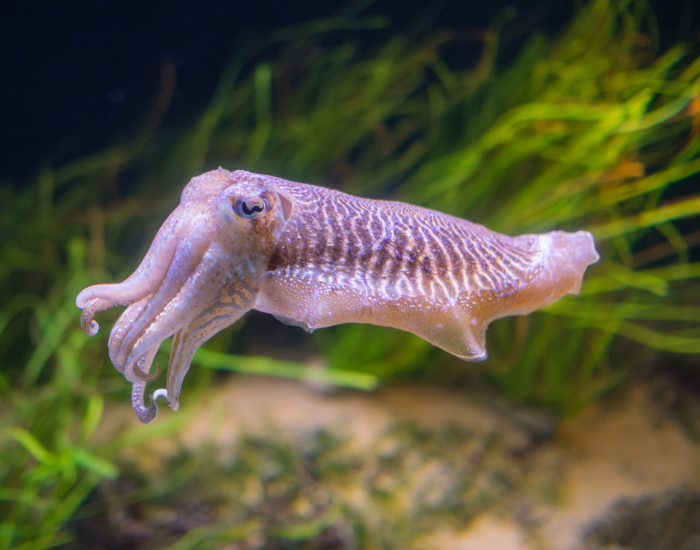
Sepia officinalis is the cuttlefish most people in Western Europe and the UK picture when they hear the name. Found across the eastern North Atlantic and Mediterranean Sea, its internal shell — the cuttlebone — washes up on beaches from Portugal to the North Sea.
What makes this species remarkable is its documented intelligence. Lab studies show the common cuttlefish delays eating a lesser prey item (a crab) to wait for preferred prey (shrimp). This self-control rivals that of primates like chimpanzees or bonobos. In addition, males compete through elaborate visual displays, using up to 34 skin components or body pattern elements to signal dominance or attract females. Females store sperm in a pouch in their body cavities after mating with multiple males, giving them control over fertilisation outcomes.
The species is an important mesopredator in temperate ocean waters, feeding on small fish, crabs, shrimp, and other invertebrates, while also serving as prey for larger fish, sharks, and seabirds.
4. Pharaoh Cuttlefish (Sepia pharaonis)
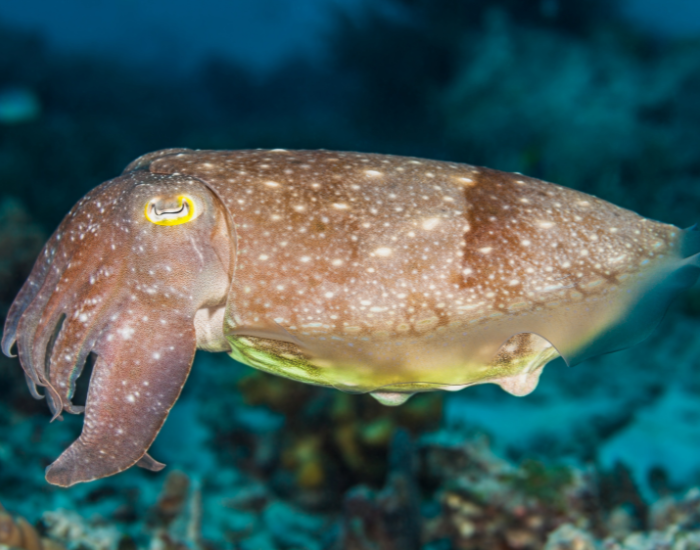
Native to the Indian Ocean and Red Sea, the pharaoh cuttlefish grows up to 42 cm and is a favourite of underwater photographers for its iridescent blue-banded displays. It hovers near the substrate with the calm confidence of an apex predator, fish, crabs, and shrimp all fall to its tentacles.
However, it faces significant fishing pressure throughout South Asia and the Persian Gulf. Like many cuttlefish species, it migrates to shallow waters to lay eggs in rock crevices, making those spawning zones critical. Males arrive first and compete for the best egg-laying territories, with rival males engaging in colour-flashing confrontations before females choose a partner. Protecting these shallow coastal nurseries is a conservation priority.
5. Broadclub Cuttlefish (Sepia latimanus)
The broadclub cuttlefish is the second largest species in this group and one of the most sophisticated hunters in the reef. It uses a “passing cloud” display, rhythmic waves of dark and light rolling across its body, to disorient prey like crabs and fish before striking with two longer tentacles.
High-speed footage shows prey freezing as the passing cloud pulses closer. Researchers have proposed two explanations: the rippling pattern may directly disrupt the prey’s nervous system response, or it may function as motion camouflage, masking the cuttlefish’s physical approach. Both hypotheses remain active areas of study, and the two mechanisms are not mutually exclusive.
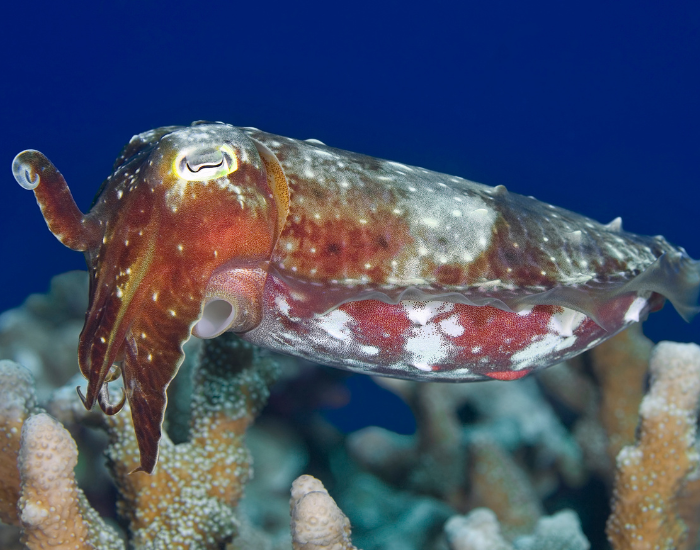
6. Hooded Cuttlefish (Sepia prashadi)
Found in the Red Sea and Persian Gulf, the hooded cuttlefish is smaller and less flashy than most other cuttlefish on this list. However, it is a critical part of the marine food web in its range, feeding on small fish, shrimp, and crabs, and serving as prey for larger fish and sharks.
What makes it stand out is its exceptional textural camouflage. It physically raises papillae on its skin to mimic coral rubble, rock, or sand. The skin colour shifts, but so does the three-dimensional texture. This is one of the most effective defence mechanisms in the animal kingdom, and a reminder that most species in this order evade predators through disguise rather than flight.
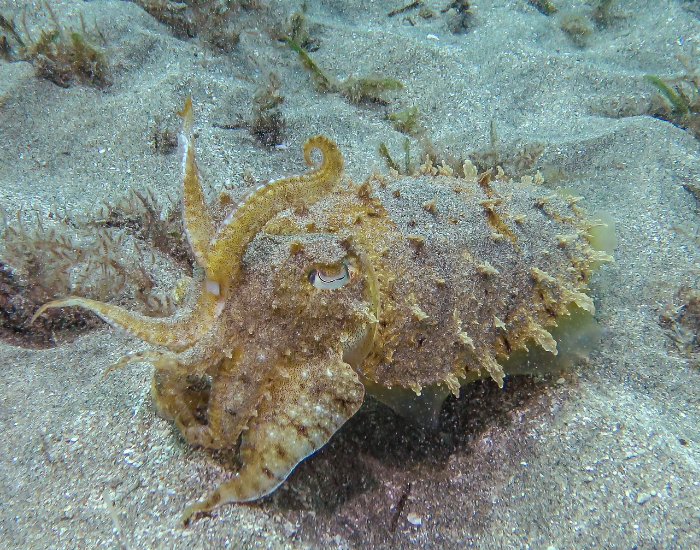
7. Golden Cuttlefish (Sepia esculenta)
The golden cuttlefish inhabits the Western Pacific around Japan and China. It is commercially important and heavily fished across temperate ocean waters. From a conservation standpoint, it is also a sensitive indicator of ocean health.
Its growth rates and survival are tightly linked to water temperature. Too warm or too cold, and populations decline sharply. Ocean acidification caused by rising CO₂ also poses a threat. While some studies show cuttlebones may grow larger under acidic conditions, research suggests this comes with structural trade-offs that can compromise integrity and buoyancy control, a more complex picture than simple weakening, but a concerning one regardless.
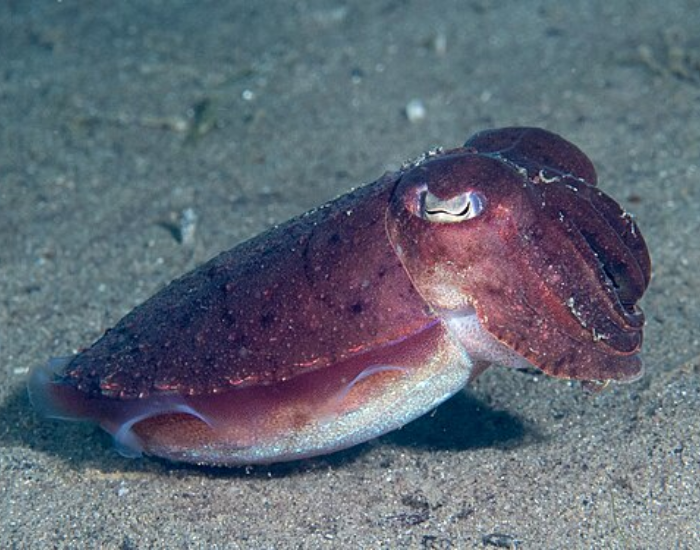
8. Needle Cuttlefish (Sepia aculeata)
The needle cuttlefish gets its name from a sharp spine on its cuttlebone. Widely distributed across the Indo-West Pacific, it has adapted to murky estuarine environments that most other cuttlefish avoid.
That ecological flexibility is remarkable. Needle cuttlefish tolerate variable salinity and turbid water with low visibility, conditions where ink clouds are less effective for evading predators. Instead, they rely on rapid camouflage and tight body posture to hide from larger fish. Conservation of mangrove and estuarine habitats across South and Southeast Asia therefore directly supports this species.
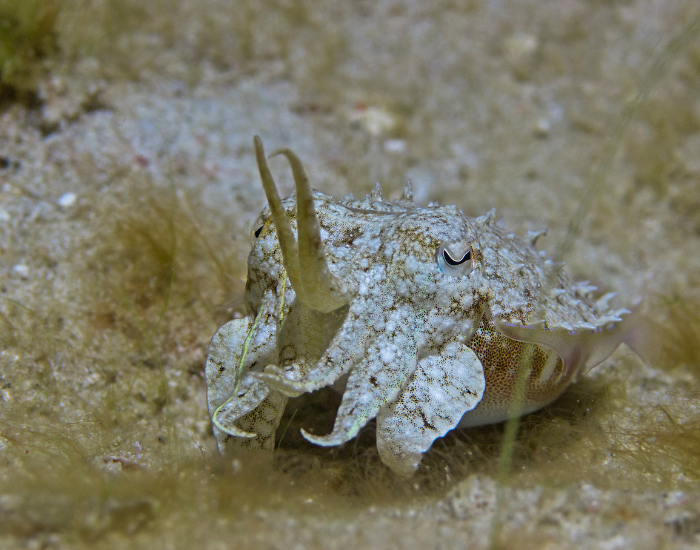
9. Reaper Cuttlefish (Sepia mestus)
This small species lives off the coast of New South Wales, Australia, in deeper water where red wavelengths of light don’t penetrate. Its red-mottled skin, combined with a fringe-like fin along the body, makes it effectively invisible at depth.
Potential predators in those low-light zones simply cannot detect red colouration, so the reaper doesn’t need to flee. It uses stillness and colour as defence mechanisms rather than speed or ink. It is a perfect example of how biology exploits physics to maximise chances of survival.
10. Paintpot Cuttlefish (Metasepia tullbergi)
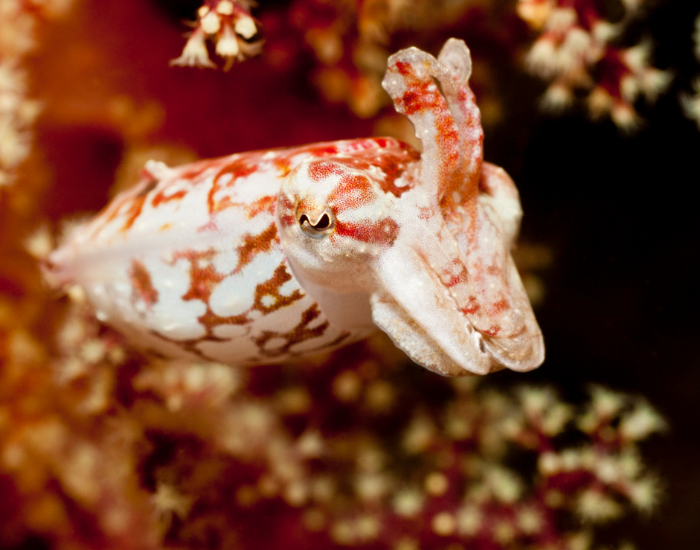
A close relative of the flamboyant cuttlefish, the paintpot cuttlefish inhabits coastal waters around Japan and Taiwan. Like its cousin, it walks on its arms rather than swimming, and its reduced internal shell limits buoyancy. Both species are also diurnal hunters, actively stalking prey during the day, unusual for most cephalopods.
Males display vivid colour patterns to attract females during the mating season. After mating, the female lays eggs one by one in tiny holes and crevices. Like most cuttlefish, both male and female cuttlefish die after spawning, leaving eggs to develop independently. Hatchlings emerge fully formed and capable of producing adult camouflage patterns immediately.
11. Dwarf Cuttlefish (Sepia bandensis)
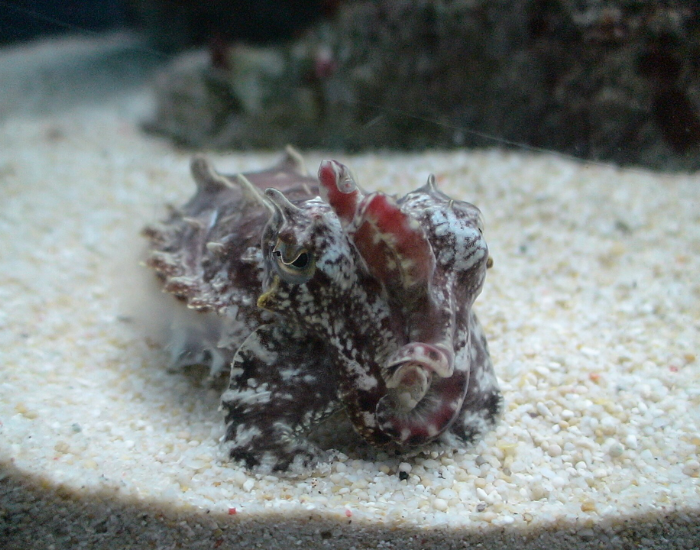
Don’t underestimate body size. The dwarf cuttlefish rarely exceeds 7 cm, yet it deploys the full behavioural toolkit of much larger species, rapid skin colour shifts, ink clouds to evade predators, fringe-like fin undulation, and precise tentacle strikes at prey.
Dwarf cuttlefish breed readily in captivity and have become a model organism for cephalopod cognition research. Scientists study how males compete for females, how females assess and store sperm from multiple partners in their body cavities, and how eggs develop in small clutches over several weeks. Conservation of shallow reef habitats directly supports wild populations.
12. Smith’s Cuttlefish (Sepia smithii)
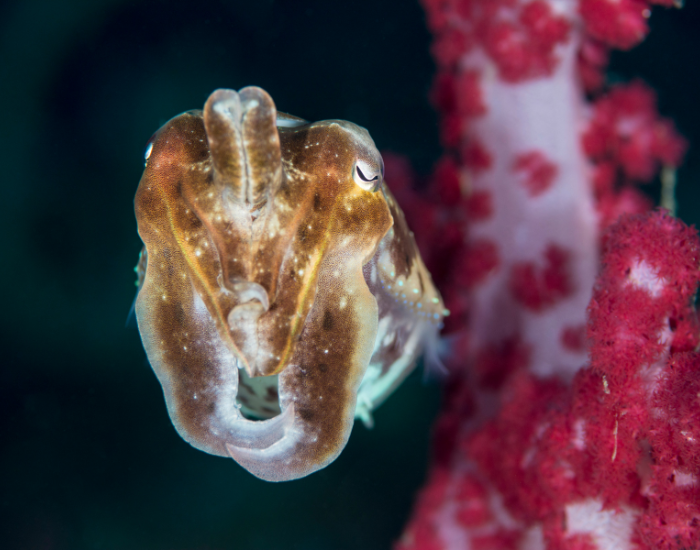
Smith’s cuttlefish inhabits the tropical northern waters of Australia. It is one of many species in genus Sepia that rarely makes headlines, but it is a rugged reef survivor with a complex life.
Males compete for territory during the mating season, using displays that blend camouflage and threat colouration. Females lay eggs in protected crevices, and like all species in the order Sepiida, adults die after spawning. The next generation hatches with eight arms, two tentacles, and a fully functional internal shell, ready to hunt small fish and crabs from day one.
Species like this remind me why the nature nerd in all of us should pay attention to every cuttlefish, not just the famous ones. Every species in this group carries millions of years of extraordinary adaptation.
FAQ: Your Cuttlefish Species Questions Answered
The giant Australian cuttlefish (Sepia apama) holds the record, reaching 50 cm in mantle length and over 10.5 kg. It is the largest of all cuttlefish species in the order Sepiida.
Most cuttlefish are harmless. However, the flamboyant cuttlefish (Metasepia pfefferi) is poisonous if eaten — its muscle tissue contains a toxin as potent as that of the blue-ringed octopus. All cuttlefish can bite or forcefully squirt ink if provoked. Avoid direct contact with any wild cuttlefish.
They use chromatophores — pigment-filled cells connected directly to the nervous system — combined with iridophores that reflect light and papillae that change skin texture. The result is a full skin colour change in under one second.
Around 120 recognised species are classified in the order Sepiida, including many in genus Sepia. Most species are found across the Indo-Pacific, though some inhabit the Mediterranean Sea and western Europe’s Atlantic coasts.
Most species feed on crabs, shrimp, small fish, and other invertebrates. Two longer tentacles shoot out to grab prey, which is then drawn toward eight arms and a powerful beak capable of breaking hard crab shells. Some larger species like Sepia officinalis will also take other cuttlefish.
Still Watching Me Back
After thousands of hours observing wildlife across five continents, cuttlefish still challenge my understanding of what intelligence looks like. They navigate the ocean with eight arms and two tentacles, communicate through light patterns, produce masterpiece camouflage while being entirely colourblind, and leave behind a cuttlefish species legacy in every clutch of eggs laid in the reef.
Next time you are near temperate ocean waters or a tropical reef with many fish, keep your eyes on the sandy shallows. You might catch a glimpse of one of these extraordinary marine mollusks — watching you back through a W-shaped pupil, already deciding whether you are worth investigating.
Scuba with a Cuttlefish
Here is a list of 6 tours where you can see cuttlefish in the wild. As a biologist, I only recommend tours that follow strict ethical guidelines to ensure we don’t disturb wildlife—especially sensitive cephalopods that are often in the middle of complex mating rituals.
This blog is reader-supported. When you buy experiences through links listed on this site, we may earn an affiliate commission.
References
Gibbons, C. J., Rubino, F. A., Barlow, G. T., Garcia-Rosales, D., Guevara, N., Rosales, B., Aneja, S., Elkis, D., Mendoza, G. D., Demayo, J. I., Atienza, E. O., & Montague, T. G. (2025). Natural Habitat and Wild Behaviors of the Dwarf Cuttlefish, Ascarosepion bandense. Ecology and evolution, 15(9), e72001. https://doi.org/10.1002/ece3.72001
Hanlon, R. T., & Messenger, J. B. (2018). Cephalopod Behaviour (3rd ed.). Cambridge University Press. https://doi.org/10.1017/9780511843600
Hall, K. C., & Hanlon, R. T. (2002). Principal features of the mating system of a large spawning aggregation of the giant Australian cuttlefish Sepia apama (Mollusca: Cephalopoda). Marine Biology, 140(3), 533–545. https://doi.org/10.1007/s00227-001-0718-0
Jereb, P., & Roper, C. F. E. (2005). Cephalopods of the world: An annotated and illustrated catalogue of cephalopod species known to date. Vol. 1. Food and Agriculture Organization of the United Nations. http://www.fao.org/3/a0150e/a0150e00.htm
Jozet-Alves, C., Schnell, A. K., & Clayton, N. S. (2023). Cephalopod learning and memory. Current Biology, 33(20), R1091–R1095. https://doi.org/10.1016/j.cub.2023.08.013
Schnell, A. K., Farndale Wright, N. R., & Clayton, N. S. (2023). The Inner Lives of Cephalopods. Integrative and comparative biology, 63(6), 1298–1306. https://doi.org/10.1093/icb/icad122
Thomas, A., & MacDonald, C. (2016). Investigating body patterning in aquarium-raised flamboyant cuttlefish (Metasepia pfefferi). PeerJ, 4, e2035. https://doi.org/10.7717/peerj.2035
Norman, M. D., Finn, J., & Tregenza, T. (1999). Female impersonation as an alternative reproductive strategy in giant cuttlefish. Proceedings of the Royal Society B: Biological Sciences, 266(1426), 1347–1349. https://doi.org/10.1098/rspb.1999.0786



_(49152874797).jpg)
