Wildlife Nomads


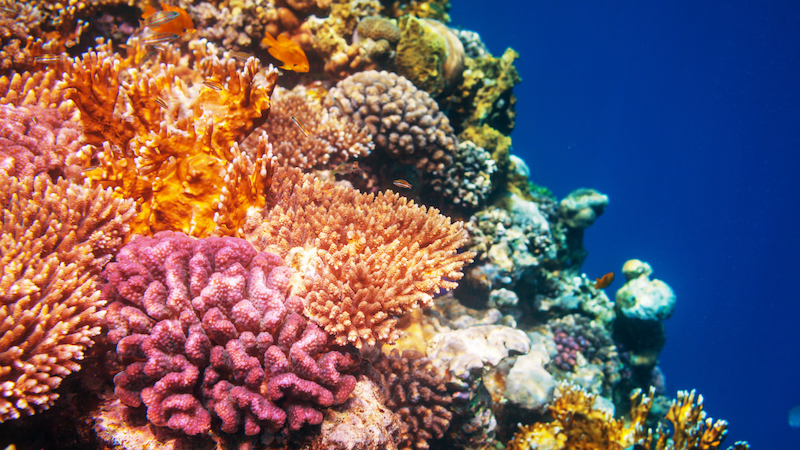
The day I saw my first clownfish was also the day I saw my first bleached coral. That was the Great Barrier Reef in 2019. Since then I’ve dived the Caribbean, Amed in Bali and Koh Lipe in Thailand. Coron in the Philippines followed, and most recently the Red Sea.
One question comes up on every dive boat. What actually counts as coral? Some colonies stand stiff as stone. Others sway like seaweed in the current. A few things that look like coral are something else entirely.
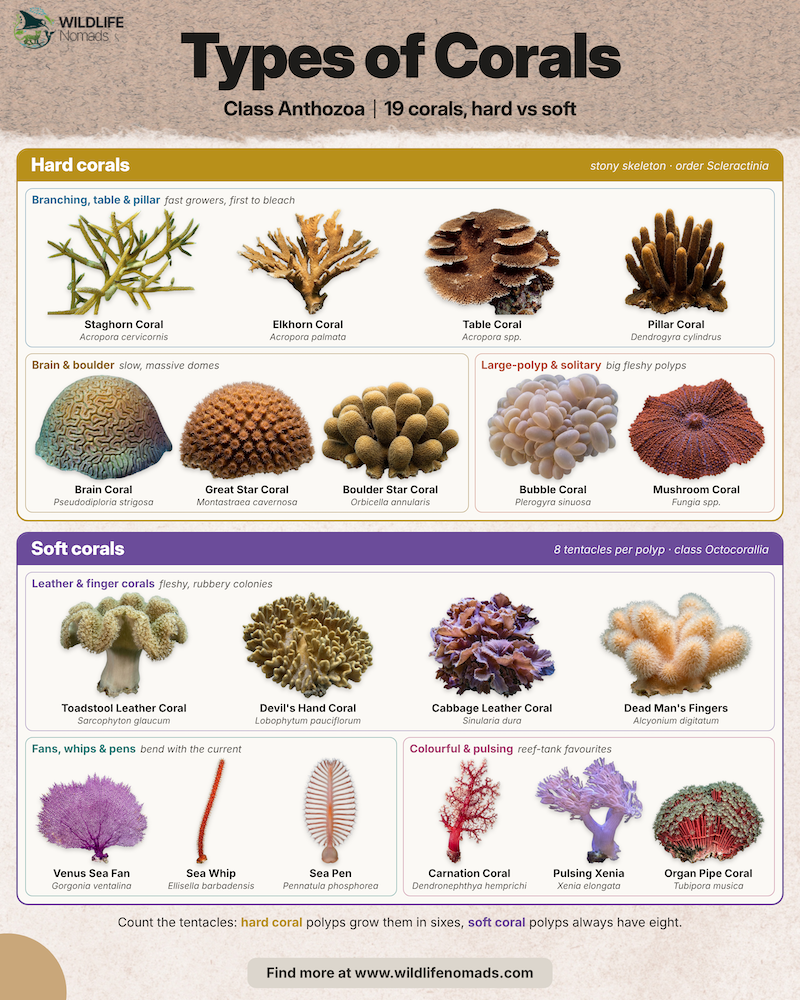
This guide sorts the main types of corals into hard corals, soft corals and three rule-breakers. You’ll meet 18 of them and the clues I use underwater to tell them apart. You’ll also see why those differences decide which corals survive a heatwave on any coral reef.
What Are the Main Types of Corals?
Corals are animals, not plants or rocks. They are marine invertebrates in the phylum Cnidaria, which makes jellyfish and sea anemones their cousins. My first clownfish sat in an anemone, which looks like one giant coral polyp without the skeleton.
You can explore how related they are to you and where do corals belong in the Animal Kingdom in our tool Tree of Life“
Coral polyps are tubes of soft tissue, each with a mouth ringed by stinging tentacles. Most corals are colonial organisms, so thousands of polyps of the same species share one connected body. They grow by budding new polyps, and broken fragments can start new colonies.
Many shallow corals also carry lodgers. Zooxanthellae are microscopic algae, technically dinoflagellates, living inside the coral’s tissue. They photosynthesise and pass glucose and amino acids to their host. In return, the coral supplies shelter, carbon dioxide and nitrogen-rich waste the algae use as fertiliser.
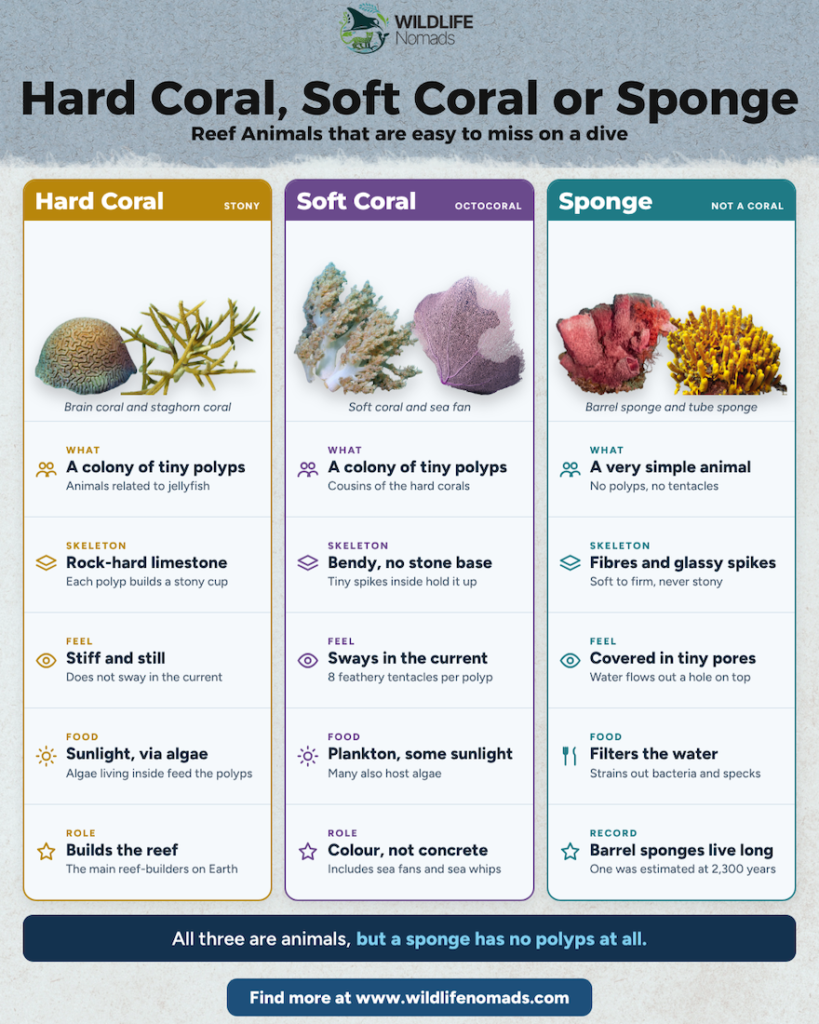
Scientists split true corals into two main types. Hexacorals have tentacles in multiples of six and include the stony reef builders. Octocorals, the soft corals and sea fans, always have eight feathery tentacles per polyp. Fire corals borrow the name without belonging to either group.
Hard Corals (Stony Corals)
Hard corals, order Scleractinia, build skeletons of calcium carbonate. Each polyp lays down a limestone cup, and millions of cups stack into reefs. Scientists recognise more than 1,500 living stony coral species, and almost 800 of them build reefs.
Reef-building corals need clear, shallow water and sunlight for their algae. They form fringing reefs along coastlines, barrier reefs further offshore and the rings of atolls. Pink coralline algae then cement the rubble together. The finished structure shelters more than 4,000 species of fish.
That structure plays a crucial role for people too. Healthy reefs absorb about 97% of incoming wave energy before it reaches the coast. More than 500 million people depend on reefs for food, income or shoreline protection. In the United States alone, NOAA values reefs at over $3.4 billion a year.
Most stony corals reproduce through mass spawning. About three-quarters release eggs and sperm into the water, often many species on the same few nights. On the Great Barrier Reef, that usually follows a late-spring full moon. Some larvae begin settling within two to three days, and most settle within about ten.
Reef fish defend this real estate fiercely. In Komodo and Amed, I’ve been chased by wrasses no longer than my finger. A titan triggerfish once escorted me off its patch too, and that one genuinely scared me.
1. Grooved Brain Coral (Diploria labyrinthiformis)
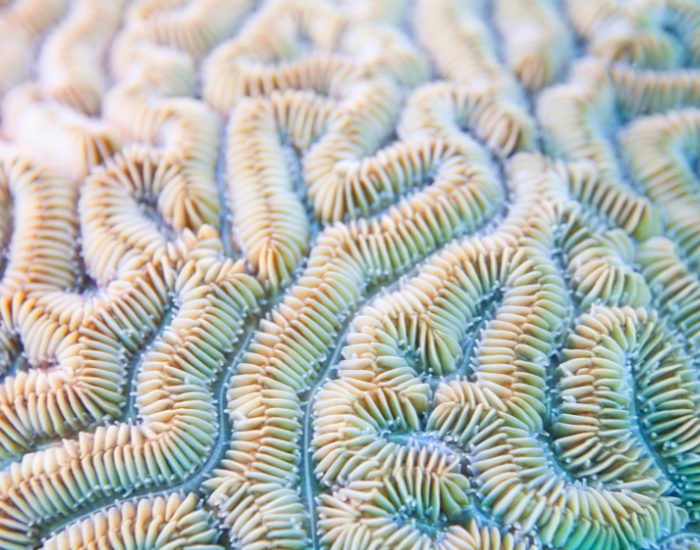
Brain coral is the shape most people picture when they hear the word coral. The grooved brain coral of the Caribbean and western Atlantic builds smooth domes covered in winding valleys. Polyps line those valleys and share walls, so the surface looks like a cortex.
The name points to the best ID clue. A narrow groove runs along the top of every ridge, which look-alike brain corals lack. Domes like these grow slowly, adding only a few millimetres a year.
2. Staghorn Coral (Acropora cervicornis)
Staghorn coral grows antler-like branches that once formed vast thickets across the Caribbean. It ranks among the fastest-growing corals, adding up to about 10 cm a year. Those thickets gave juvenile fish a maze to hide in.
Disease and heat have since cut its populations by 80% or more, and by 98% in places. The IUCN lists it as Critically Endangered. Restoration teams still favour branching corals because fragments regrow quickly. In 2025 I planted coral with Metamorfosa in Pemuteran, Bali, and found a slender seahorse on the same reef.
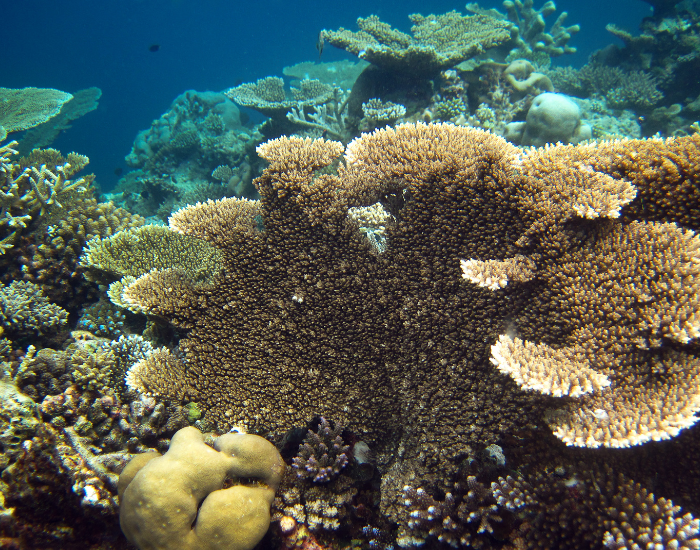
3. Table Coral (Acropora hyacinthus)
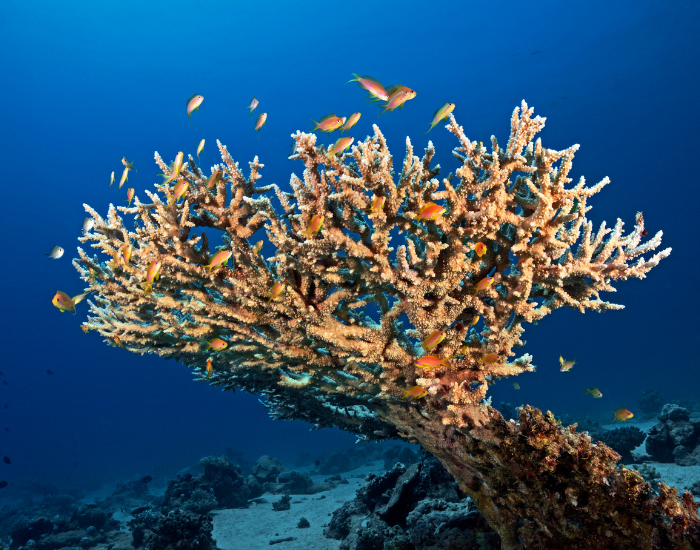
Table corals spread into flat plates on a single stalk, some wider than a dining table. That canopy shades the reef below, and fish crowd underneath. Across the tropical Pacific, reef sharks often rest beneath large tables during the day.
In Komodo, I saw whitetip reef sharks close to shore and baby sharks on the reef flats. Tables and branching corals make that nursery possible. However, they bleach early, so they often die first during marine heatwaves on the Great Barrier Reef.
4. Boulder Coral (Porites spp.)
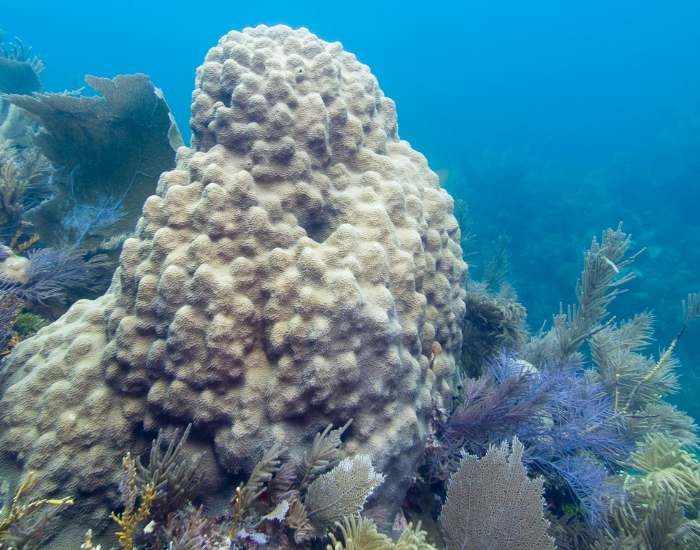
Massive Porites colonies look like grey-brown boulders, smooth and lumpy. They grow roughly a centimetre a year, but they keep going for centuries. Some colonies stand taller than a person.
Cut a core through one and you find annual growth rings, much like a tree. Scientists read those density bands to rebuild centuries of ocean temperatures. Parrotfish graze over them constantly, and the reefs of Coron were full of parrotfish and triggerfish.
5. Great Star Coral (Montastraea cavernosa)
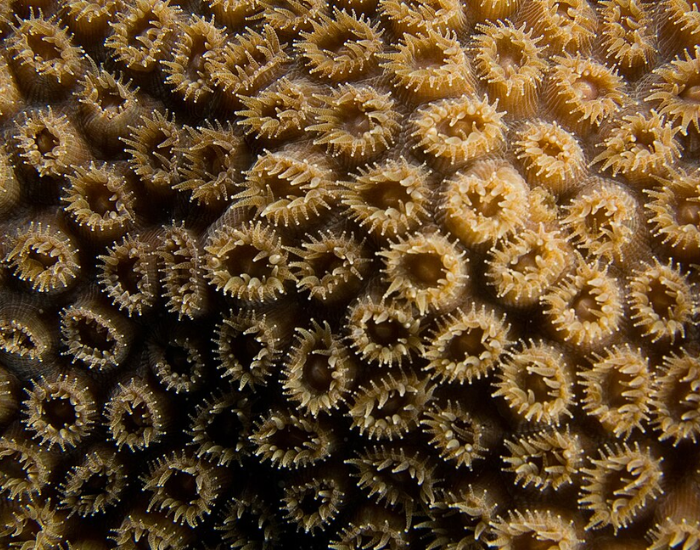
Great star coral forms mounds, plates or crusts dotted with large, round polyps. Each polyp measures about a centimetre across, big enough to spot from the surface. By day the colony looks like a field of buttons. At night the tentacles come out to feed.
It lives across the Caribbean and the tropical Atlantic, including West Africa. Interestingly, each colony is either male or female. Most studied corals are hermaphrodites, so this one breaks the pattern.
6. Pillar Coral (Dendrogyra cylindrus)
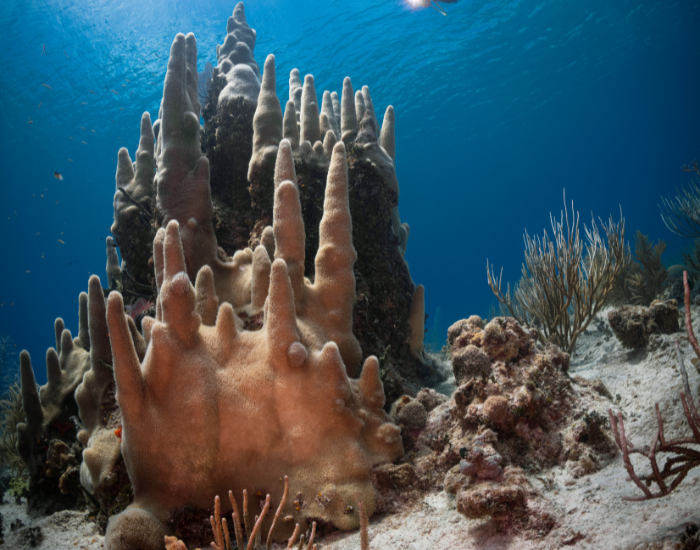
Pillar coral rises from the seabed in upright columns up to about three metres tall. It is one of the few stony corals that extend their polyps during the day. Those fuzzy tentacles make the pillars look soft, which fools plenty of snorkellers.
Its story is a warning. Researchers tracked every known colony on the Florida Reef Tract from 2013 to 2020. Bleaching and stony coral tissue loss disease killed 93% of the colonies, leaving the species functionally extinct there.
7. Mushroom Coral (Fungiidae)
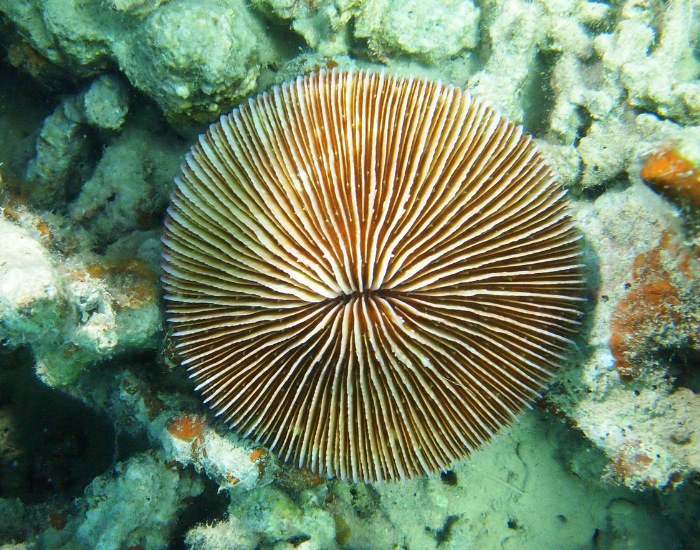
Mushroom corals break most of the rules above. Many species live as one giant polyp instead of a colony. They also lie loose on the ocean floor rather than gluing themselves to rock.
A juvenile starts on a short stalk, then snaps free and lives unattached. Flip one over and it can slowly right itself. Some species even creep across the sand.
8. Bubble Coral (Plerogyra sinuosa)
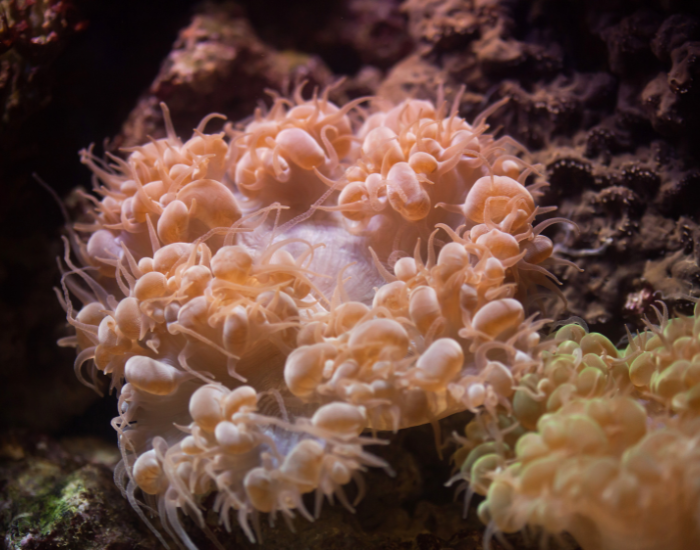
Bubble coral is a large polyp stony coral covered in grape-sized vesicles. By day those bubbles inflate to catch light for the algae inside. At night they deflate, and long sweeper tentacles come out to feed.
Those sweepers also sting other corals that grow too close. That’s why aquarists give it space in reef tanks. Under the bubbles hides a sharp, ridged skeleton, so it is very much a hard coral.
Soft Corals (Octocorals)
Soft corals lack a solid stony skeleton. Instead, flexible tissue holds tiny calcium carbonate spikes called sclerites, which stiffen the colony like rebar. Every polyp carries eight tentacles, each fringed like a feather.
More than 3,000 octocoral species exist, and in 2022 genetic work reshuffled their family tree into two new orders. Many host algae, but plenty feed on plankton from the water column. That lets soft corals thrive in dimmer water and stronger currents than many hard corals.
9. Leather Coral (Sarcophyton spp.)
Leather corals grow into fleshy mushrooms or folded saucers with a smooth, leathery feel. With polyps extended, the whole cap turns fuzzy. Once they retract, it looks almost bald.
They also wage chemical war. Leather corals release terpenes that can harm nearby stony corals and stop competitors settling. At Marsa Alam in the Red Sea, I snorkelled from shore. I swam among unicornfish and lionfish over exactly this mix of hard and soft corals.
10. Carnation Coral (Dendronephthya spp.)
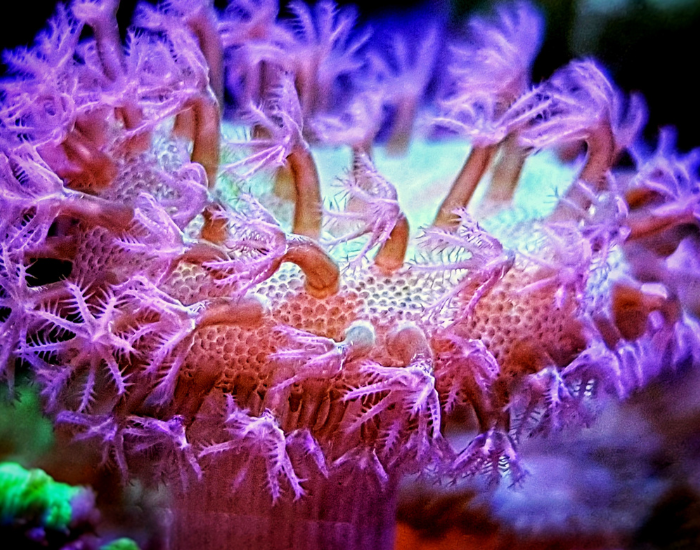
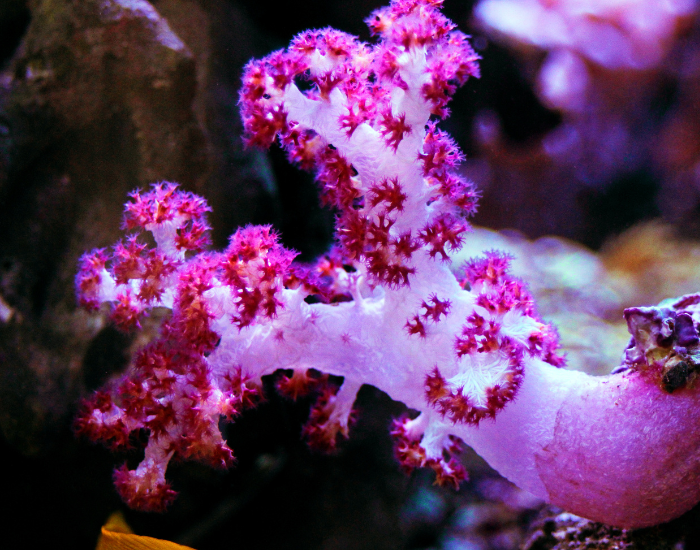
Carnation corals look like glowing cauliflowers in pink, red, orange or purple. You can see white sclerites through their translucent tissue. They rank among the most photographed corals in Southeast Asia and the Red Sea.
They lack zooxanthellae, so they depend on currents to deliver plankton. When the current stops, colonies deflate and slump. As soon as it returns, they swell with water and bloom again.
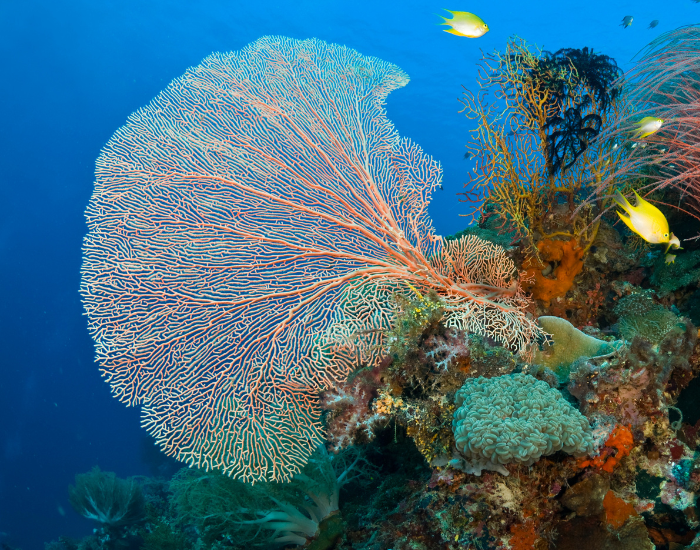
11. Sea Fans (Gorgonians)
Sea fans grow as flat, lacy nets, often wider than a diver’s arm span. A flexible protein called gorgonin forms the core, so they bend instead of breaking. Most turn broadside to the current to strain as much plankton as possible.
In the Caribbean, the purple common sea fan (Gorgonia ventalina) is the classic. Look closely at Indo-Pacific fans before you swim past. Pygmy seahorses, barely two centimetres long, live camouflaged on some of them.
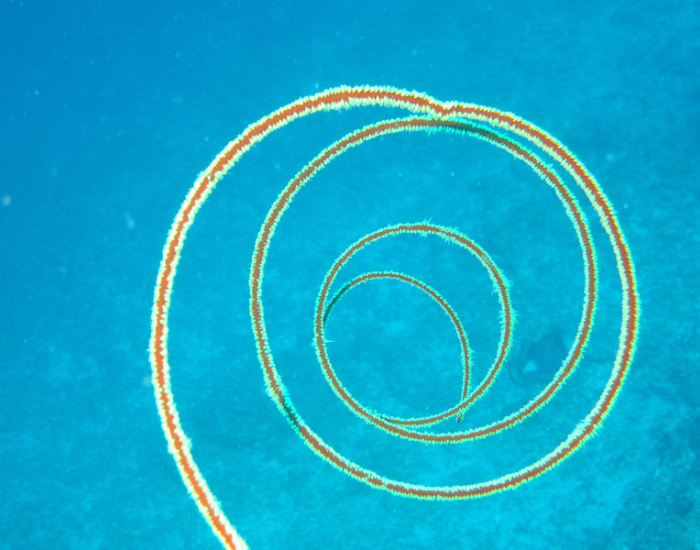
12. Sea Whips (Ellisellidae)
Sea whips grow as long rods, single or sparsely branched. Some reach well over a metre. They sway together in the current like reeds in a field.
Whip gobies and tiny shrimps spend their lives on them, matching their colour. The coral gives them a perch in the current and a place to lay eggs.
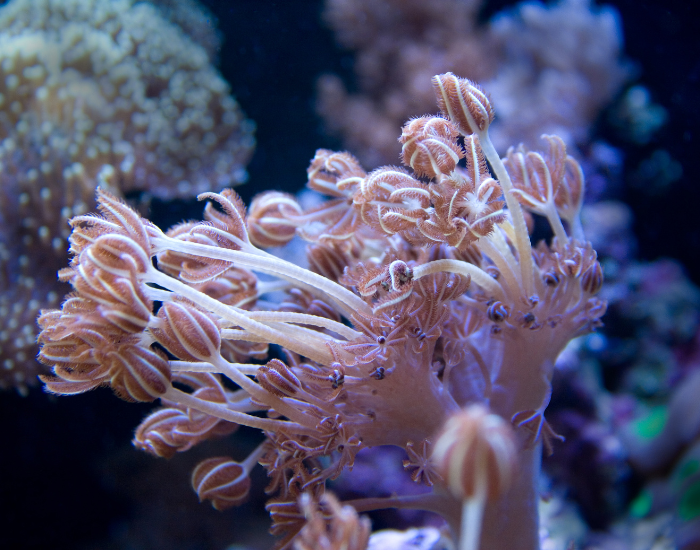
13. Pulsing Xenia (Xenia spp.)
Xenia polyps open and close their tentacles nonstop, like tiny hands grasping water. Researchers found the pulsing flushes oxygen away from the polyps. As a result, the algae inside photosynthesise faster.
The Red Sea and the Indo-Pacific hold most species. Some sea slugs in the genus Phyllodesmium eat xenia and keep its algae alive in their own bodies. I’ve spotted plenty of nudibranchs in the Philippines, and they are worth hunting for on soft corals.
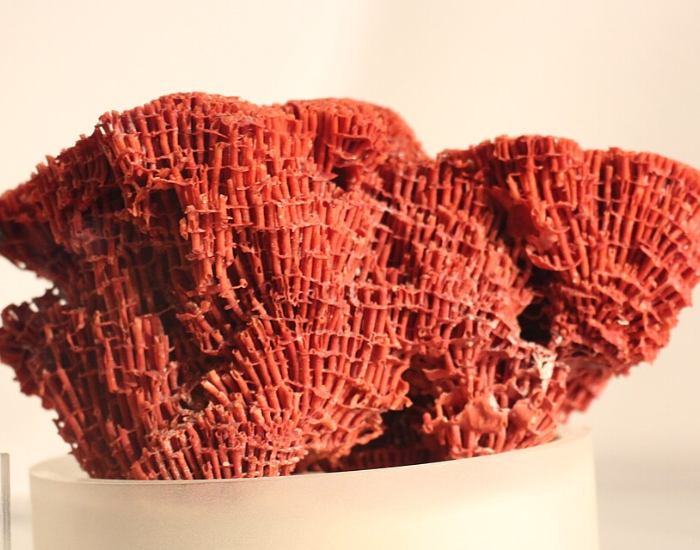
14. Organ Pipe Coral (Tubipora musica)
Organ pipe coral looks like a soft coral while alive, with feathery green or grey polyps. Beneath them sits a skeleton of bright red tubes, stacked like organ pipes. It is an octocoral with a hard skeleton.
Broken red fragments often wash up on Indo-Pacific beaches. If you’ve found brick-red coral on the sand, this is a good bet.
15. Blue Coral (Heliopora coerulea)
Blue coral looks brown or grey-green underwater, so the name surprises people. The blue sits inside the skeleton, coloured by iron salts. A broken branch shows a sky-blue core.
It is the only octocoral that builds a massive skeleton, so it helps form reefs. Fossils show it has barely changed in about 120 million years. It handles warm water better than most stony corals, yet the IUCN still lists it as Vulnerable.
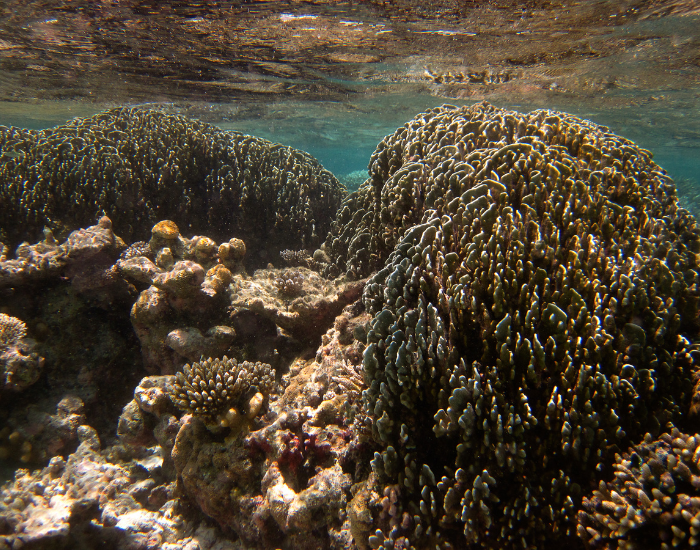
Corals That Break the Rules
These three carry the coral name, but each one defies the hard-versus-soft split.
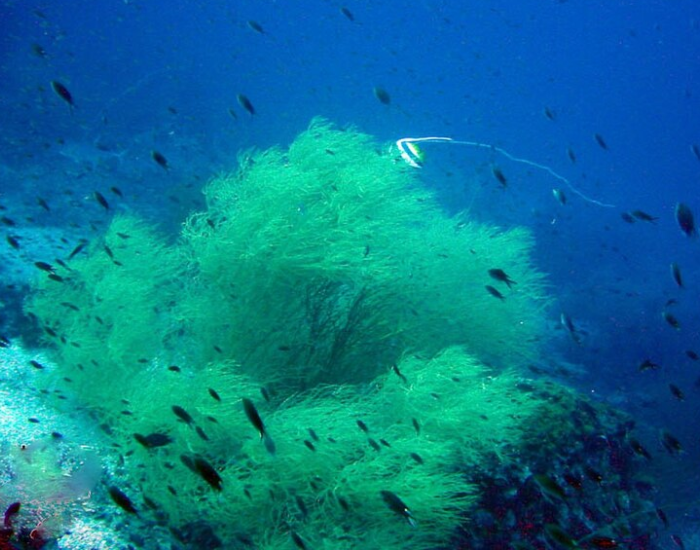
16. Black Coral (Antipatharia)
Black corals often look white, yellow or orange when alive. The black part is the skeleton, built from protein and chitin rather than stone. Despite their bendy branches, they are hexacorals, closer to stony corals than to soft corals.
Most live in deep, dim water and grow extremely slowly. A Hawaiian black coral colony was radiocarbon-dated at 4,265 years old. That makes it the oldest known colonial animal. Harvesting for jewellery remains one of its biggest threats.
17. Fire Coral (Millepora spp.)
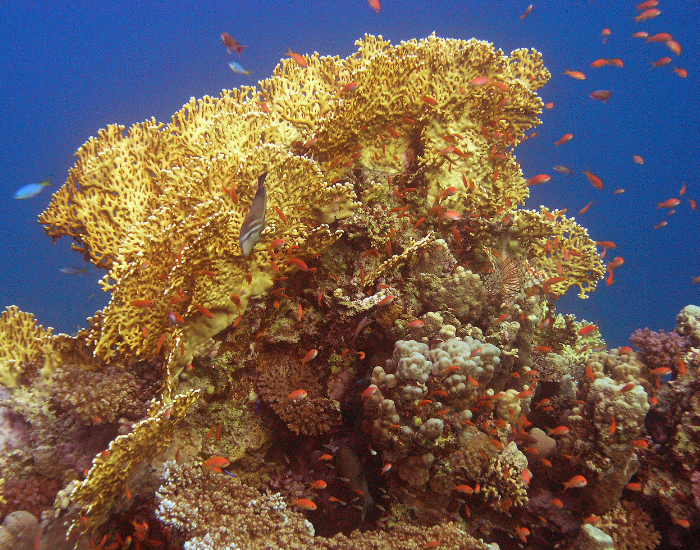
Fire coral builds a calcium carbonate skeleton and helps form reefs, but it is not a true coral. It belongs to the hydrozoans, a separate class of cnidarians. Look for mustard-yellow blades or branches with pale tips.
The name is honest. Tiny hair-like polyps carry powerful stinging cells, and direct contact causes a burning rash. Divers who steady themselves on “rock” learn this quickly.
18. Cold-Water Coral (Desmophyllum pertusum)
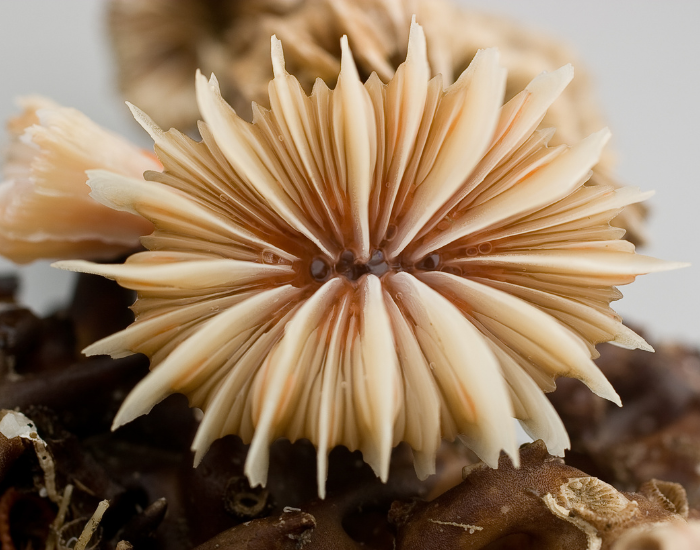
Not all reefs need sunshine. This stony coral, long known as Lophelia pertusa, builds reefs in cold, dark water hundreds of metres deep. It has no zooxanthellae and catches drifting plankton and organic particles instead.
Its reefs stretch for kilometres off Norway and across the North Atlantic. Fish, brittle stars and sea urchins crowd its branches. For more deep sea corals and the animals around them, try my deep sea dive.
Watch Different Types of Corals Bleach
Coral bleaching starts when water sits about 1°C above its usual summer maximum for roughly four weeks. NOAA tracks that heat as degree heating weeks. Past that point, the symbiotic relationship breaks down and corals expel their zooxanthellae. The white you see is bare skeleton showing through clear tissue.
Some corals can shuffle toward more heat-tolerant algae, but only so far. From early 2023 to mid-2025, bleaching-level heat hit 84% of the world’s reef area. The 1998 event alone killed about 8% of the world’s coral. Reefs then lost roughly 14% more between 2009 and 2018.
Heat is not the only pressure. Ocean acidification slows skeleton building, pollution clouds the water, and climate change fuels stronger cyclones. In Bali, I swam over thriving reefs with plastic bags drifting overhead. At 1.5°C of global warming, the IPCC expects tropical reefs to decline by a further 70 to 90%.
You can watch a marine heatwave hit a reef in my coral bleaching simulator. It uses NOAA’s degree heating weeks, so each coral glows, bleaches, recovers or dies at its own heat tolerance. Turn up the heat and watch which of the types above give out first.
🐠Coral Reef ExplorerSwim a 3D Great Barrier Reef, find 61 species, then turn up the heat in the Heatwave lab and watch coral bleach.Start the dive →Frequently Asked Questions
The three main types are hard (stony) corals, soft corals (octocorals) and black corals. Hard corals build reefs from calcium carbonate. Soft corals bend and carry eight tentacles per polyp. Black corals have flexible, protein-based skeletons and mostly live in deep water. If you meant reef types, those are fringing reefs, barrier reefs and atolls.
Many guides add fire coral to those three. It builds a stony skeleton but belongs to the hydrozoans, so it isn’t a true coral. For coral reefs, the fourth type after fringing, barrier and atoll is the patch reef.
Scientists recognise roughly 5,000 coral species. That includes more than 1,500 stony corals, more than 3,000 octocorals and a few hundred black corals. Only about 800 species build tropical reefs. New species, especially from deep water, turn up every year.
Beach coral is usually dead skeleton, bleached white once the tissue is gone. Staghorn branches, mushroom coral discs, brain and boulder chunks, red organ pipe and blue coral fragments are common finds. Many countries restrict taking coral, so photograph it and leave it on the sand.
Next Time You Dive, Look Closer
Every type of coral solves the same problem differently: how to live on sunlight and plankton in poor water. Hard corals build the stage, soft corals add movement, and the rule-breakers show the categories are ours, not nature’s.
Knowing the types of corals changes the underwater world you see. A bleached table stops being white rock. A swaying fan stops being seaweed.
Next time you snorkel, pick one colony and ask three questions. Does it bend? Can you count eight tentacles? What lives on it? Tell me in the comments what you found.
Then meet the rest of the cast. Start with the coral reef fishes and surgeonfish. Then look down at the sea cucumbers and other echinoderms between colonies. Or swim the reef yourself and find all 61 species.
Wildlife Nomads Challenge
Restore the Reef 🪸
This reef has bleached. Name each coral to bring it back to colour. Round 1 is photo ID. Round 2 asks a harder question: hard coral, soft coral, or not a true coral at all?
Round 1 done
Round 2 is trickier. Some corals look soft but have stony skeletons, and one look-alike isn’t a coral at all. Sort each one into the right group.
References:
Baird, A. H., Guest, J. R., & Willis, B. L. (2009). Systematic and biogeographical patterns in the reproductive biology of scleractinian corals. Annual Review of Ecology, Evolution, and Systematics, 40, 551–571. https://doi.org/10.1146/annurev.ecolsys.110308.120220
Ferrario, F., Beck, M. W., Storlazzi, C. D., Micheli, F., Shepard, C. C., & Airoldi, L. (2014). The effectiveness of coral reefs for coastal hazard risk reduction and adaptation. Nature Communications, 5, 3794. https://doi.org/10.1038/ncomms4794
Hughes, T. P., Anderson, K. D., Connolly, S. R., Heron, S. F., Kerry, J. T., Lough, J. M., ... Wilson, S. K. (2018). Spatial and temporal patterns of mass bleaching of corals in the Anthropocene. Science, 359(6371), 80–83. https://doi.org/10.1126/science.aan8048
McFadden, C. S., van Ofwegen, L. P., & Quattrini, A. M. (2022). Revisionary systematics of Octocorallia (Cnidaria: Anthozoa) guided by phylogenomics. Bulletin of the Society of Systematic Biologists, 1(3). https://doi.org/10.18061/bssb.v1i3.8735
Neely, K. L., Lewis, C. L., Lunz, K. S., & Kabay, L. (2021). Rapid population decline of the pillar coral Dendrogyra cylindrus along the Florida Reef Tract. Frontiers in Marine Science, 8, 656515. https://doi.org/10.3389/fmars.2021.656515
Nozawa, Y., & Harrison, P. L. (2008). Temporal patterns of larval settlement and survivorship of two broadcast-spawning acroporid corals. Marine Biology, 155(3), 347–351. https://doi.org/10.1007/s00227-008-1034-8
Roark, E. B., Guilderson, T. P., Dunbar, R. B., Fallon, S. J., & Mucciarone, D. A. (2009). Extreme longevity in proteinaceous deep-sea corals. Proceedings of the National Academy of Sciences, 106(13), 5204–5208. https://doi.org/10.1073/pnas.0810875106