
Underwater Art: My First Encounter With Nudibranch Species
The first time I encountered nudibranch molluscs was during a marine biology field trip on the east coast of Sweden. We spent the day sampling the rocky shores and shallow waters from a small research boat, collecting marine specimens for study. Among the jars and sieves of seaweed and sediment, a few ghost-white sea slugs appeared, delicate, translucent, and otherworldly. Later, under the microscope in the lab we observed them (and we found a tardigrade as well, which you can find here), their fine textures and frilled edges came to life. Those tiny Swedish nudibranchs sparked my fascination long before I ever saw their tropical cousins in South East Asia years later.
Today, nudibranchs molluscs fascinate divers and scientists worldwide. Their diversity rivals any fish species. Yet these tiny animals remain largely undiscovered by casual beachgoers.
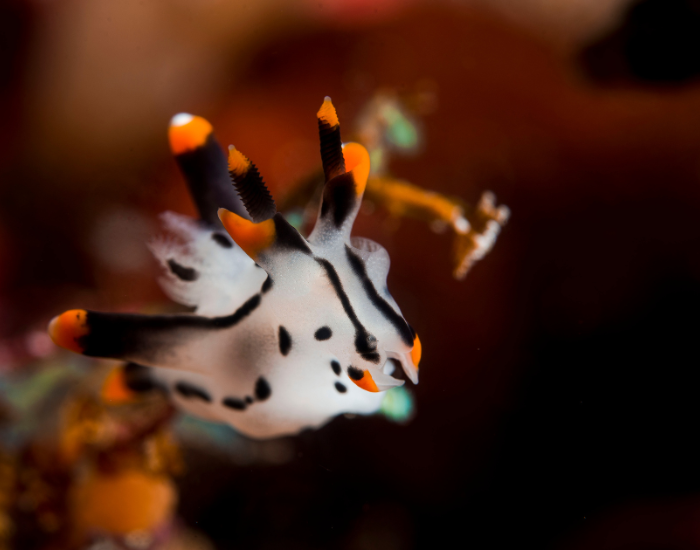
What Are Nudibranchs? Understanding These Sea Slugs
Nudibranchs belong to the phylum Mollusca and class Gastropoda. They are a type of mollusks, and some common names for them include “sea slugs,” “dragons,” and “clowns.” However, not all sea slugs are nudibranchs, nudibranchs are just one group within the broader category of sea slugs. Unlike snails, these sea slugs abandon their shells during development. Instead, they rely on chemical defenses, camouflage, and stunning visual displays for survival.
The order Nudibranchia divides into two major suborders: Dorid nudibranchs and Aeolid nudibranchs. The word nudibranch comes from Latin and Greek, meaning “naked gills,” referring to their exposed gill structures. Nudibranchs are closely related to other marine gastropods, such as Pleurobranchs, within the broader clade Nudipleura. Each group employs different feeding strategies and defense mechanisms. Over 3,000 nudibranch species inhabit the world’s oceans.
These sea slugs live on coral reefs, sandy seafloors, rocky shallows, and even shipwrecks. They thrive in every ocean, from tropical waters to polar seas.

12 Types of Nudibranch Molluscs You Should Know
Nudibranch species showcase nature’s infinite creativity, with divers able to encounter many different species of these colorful sea slugs around the world. However, in some regions, only a few species are found or documented, making each sighting special. Here are some nudibranch facts: they come in a wide range of vibrant colors, some can regenerate body parts, and their unique adaptations help them survive in diverse marine environments. Here are twelve of the most striking sea slugs found across global oceans.
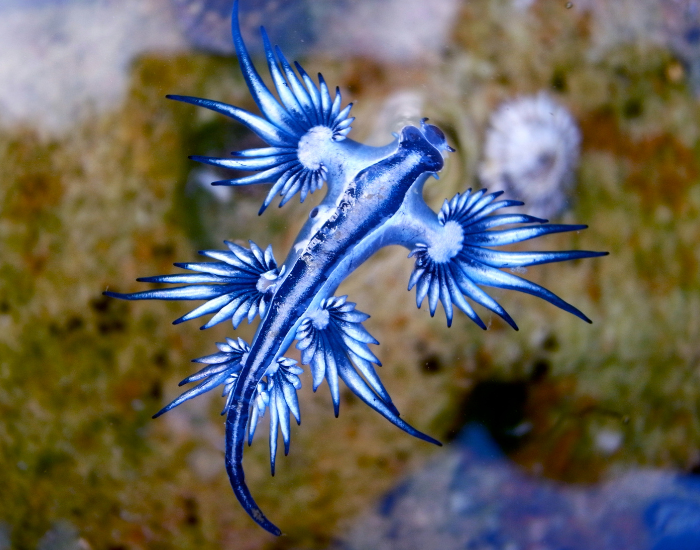
1. Blue Dragon (Glaucus atlanticus): The Pelagic Hunter
The blue dragon nudibranch floats upside-down at the ocean’s surface and can swim in the water column. This remarkable sea slug feeds on Portuguese man-o’-war jellyfish. Most remarkably, it steals their stinging cells and uses them as weapons.
Blue dragons can deliver stings stronger than their prey’s. Despite their small size, these sea slugs command respect. They inhabit open oceans worldwide, swimming and drifting within the water column.
2. Spanish Dancer (Hexabranchus sanguineus): The Ocean’s Ballet
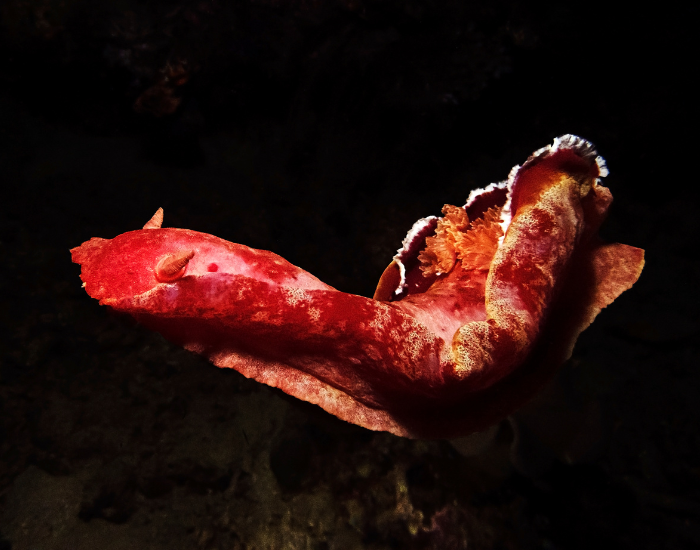
The Spanish Dancer holds the title of world’s largest nudibranch species. This sea slug reaches lengths exceeding 60 centimeters. Its name derives from graceful, ribbon-like swimming motions resembling flamenco dancers.
These soft-bodied molluscs inhabit Indo-Pacific reefs. Their flowing movements captivate divers worldwide. The Spanish Dancer represents peak nudibranch elegance and is commonly encountered by divers.
3. Leaf Sheep (Costasiella kuroshimae): The Photosynthetic Wonder
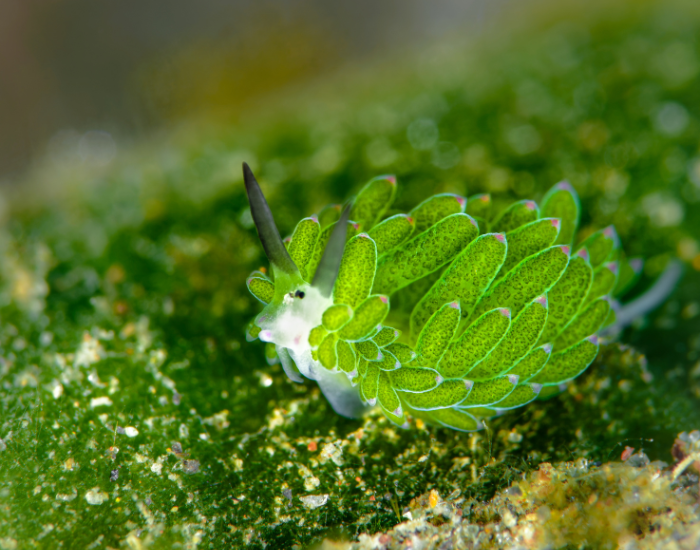
The Leaf Sheep nudibranch resembles a cartoon sea slug. This tiny green species is one of certain species of nudibranchs capable of an extraordinary feat: kleptoplasty, or stealing chloroplasts from algae.
By incorporating these stolen chloroplasts, Leaf Sheep sea slugs photosynthesize. They produce energy from sunlight like plants. This remarkable adaptation reduces their feeding requirements significantly.
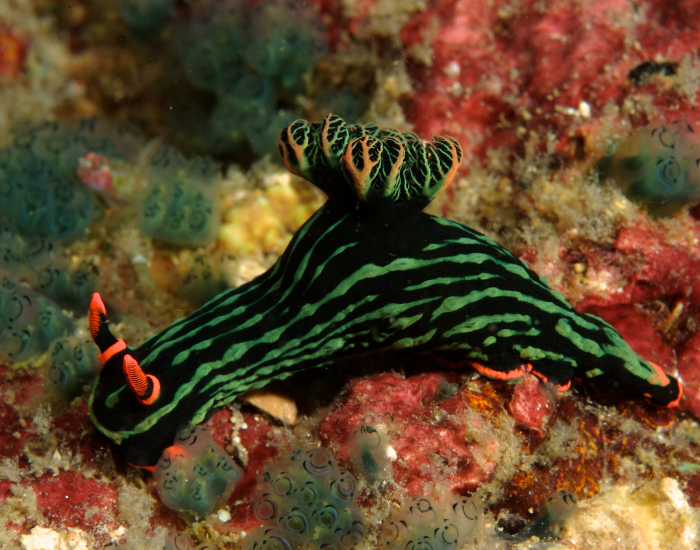
4. Dusky Nembrotha (Nembrotha kubaryana): The Toxic Beauty
This Indo-Pacific species displays bright colours, with fluorescent green and orange stripes. The nudibranch diet consists entirely of toxic sea squirts. These warning colors communicate danger to potential predators.
Photographers prize this sea slug for its vivid coloration. Finding Nembrotha kubaryana on Indo-Pacific reefs feels like discovering treasure. Its bright soft tissues make excellent underwater subjects.
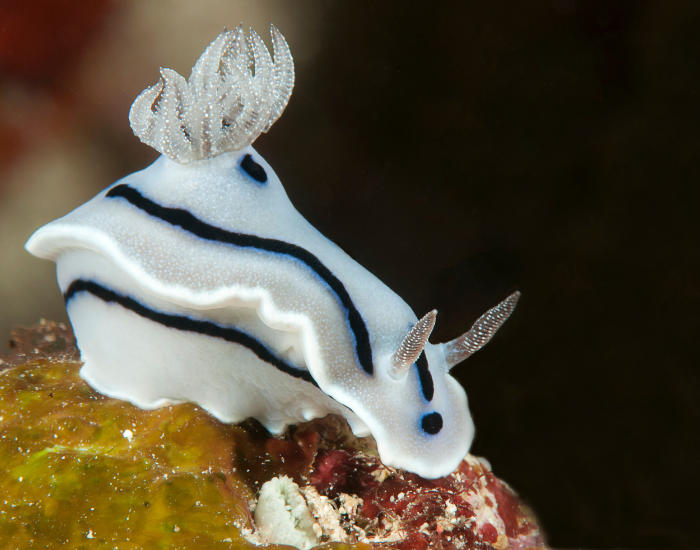
5. Willan’s chromodoris (Chromodoris willani): The Royal Classic
Royal-blue coloration with black stripes defines this dorid nudibranch. White frills adorn its mantle, creating striking visual contrast. Chromodoris willani inhabits coral gardens across Indonesia and Papua New Guinea.
This common sea slug demonstrates nudibranch diversity. Its soft-bodied structure showcases typical gastropod design. Divers frequently encounter this species on reef dives.
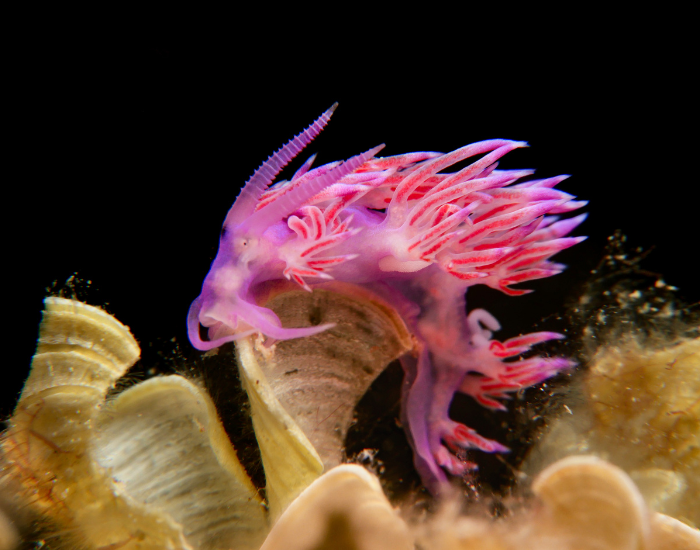
6. Mediterranean Violet Aeolid (Flabellina affinis)
Flabellina affinis feeds on hydroids among rocks and seaweed. Its delicate appendages move gracefully through water. This species thrives in temperate marine environments.
This aeolid nudibranch inhabits Mediterranean waters. Translucent lavender cerata (finger-like appendages) shimmer in sunlight. The sea slug represents cold-water nudibranch beauty.
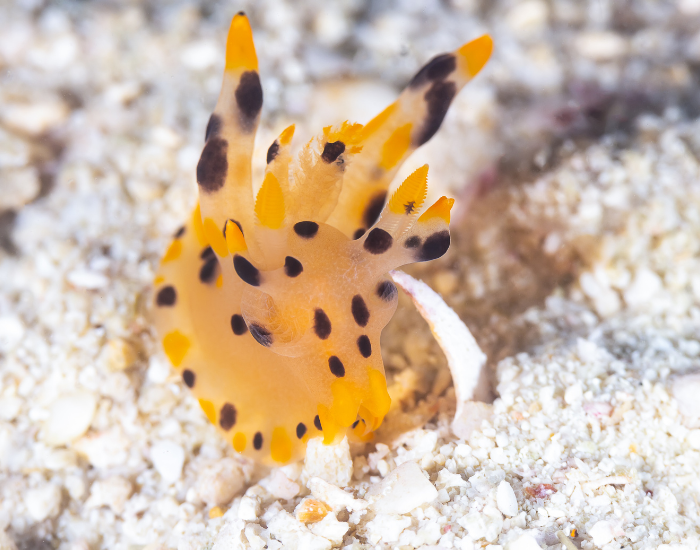
7. The Pokémon Nudibranch (Thecacera pacifica)
Bright yellow coloring with blue-tipped rhinophores earned this sea slug internet fame. Divers nicknamed it the “Pikachu Nudibranch” for obvious reasons. Thecacera pacifica gained recognition as a symbol of sea slug diversity.
This small nudibranch species inhabits Pacific reefs. Its popularity demonstrates how nudibranch molluscs capture public imagination. Even tiny sea slugs deserve conservation attention.
8. Doughnut Doto (Doto greenamyeri) Living Glass
This Indo-Pacific species clings to hydroids among rocks and coral. Its compact body appears nearly transparent. Delicate cerata resemble spun glass catching light.
Doto greenamyeri demonstrates nudibranch camouflage mastery. Its soft tissues blend seamlessly with surroundings. Few divers spot this subtle sea slug.

9. Giant Hypselodoris (Hypselodoris apolegma) – The Photographer’s Dream
Vivid violet soft tissues dominate this sea slug’s body. An orange-rimmed mantle contrasts beautifully. White gills complete this striking color combination.
The Philippines hosts abundant populations of this species, according to reports, but new records are showing this species more widely distributed. Hypselodoris apolegma ranks among the world’s most photographed nudibranchs. Divers travel specifically to photograph this sea slug.
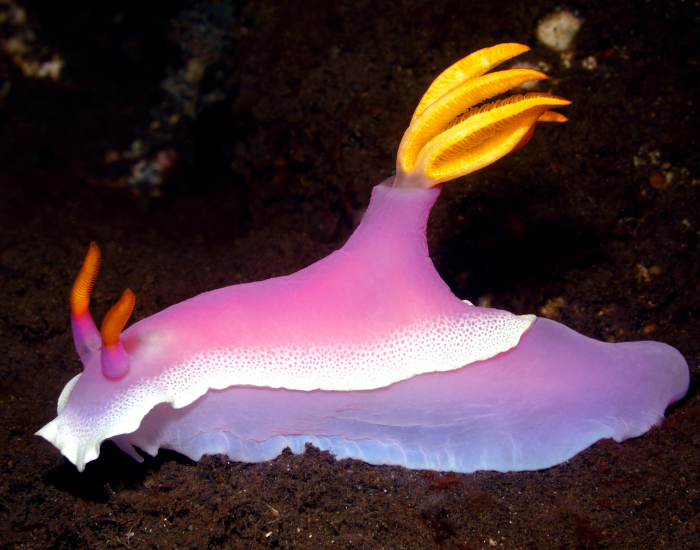
10. Varicose Wart Slug (Phyllidia varicosa) – The Toxic Armored Defender
Black ridges and blue tubercles cover this nudibranch’s body. When threatened, Phyllidia varicosa excretes powerful defensive toxins. Reef fish learn quickly to avoid this sea slug.
This species demonstrates chemical defense sophistication. Its soft body armor, ridges and tubercles, provides additional protection. The nudibranch mollusc exemplifies adaptation through multiple defense layers.
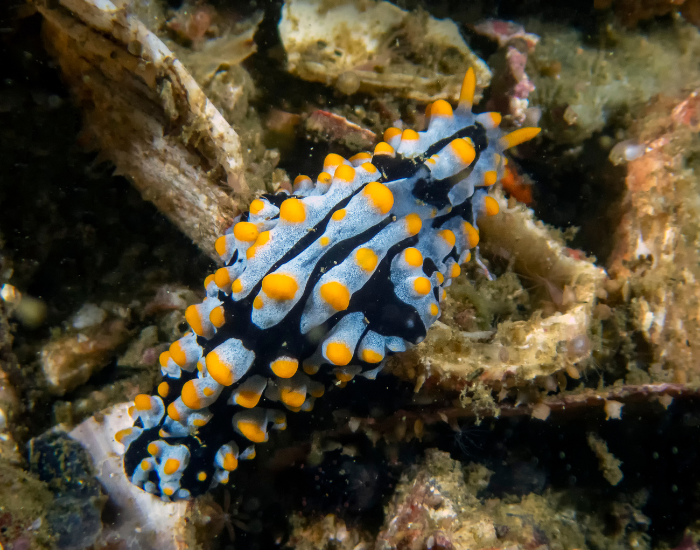
11. White-lined Dirona (Dirona albolineata) – The Cold-Water Beauty
This North Pacific species thrives in colder marine habitats. Divers off British Columbia frequently encounter this sea slug. Semi-transparent soft tissues with flowing white edges characterize Dirona albolineata.
The nudibranch adapts remarkably to cool waters. Its subtle coloration suits temperate reef environments. This soft-bodied mollusc represents cool-water nudibranch diversity.
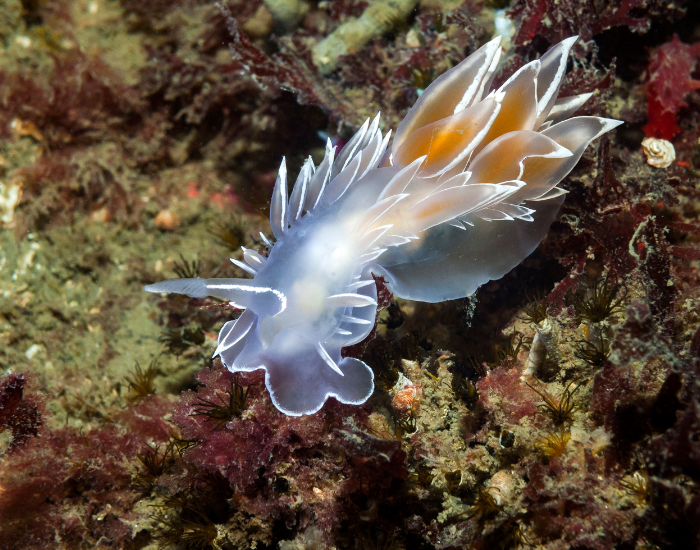
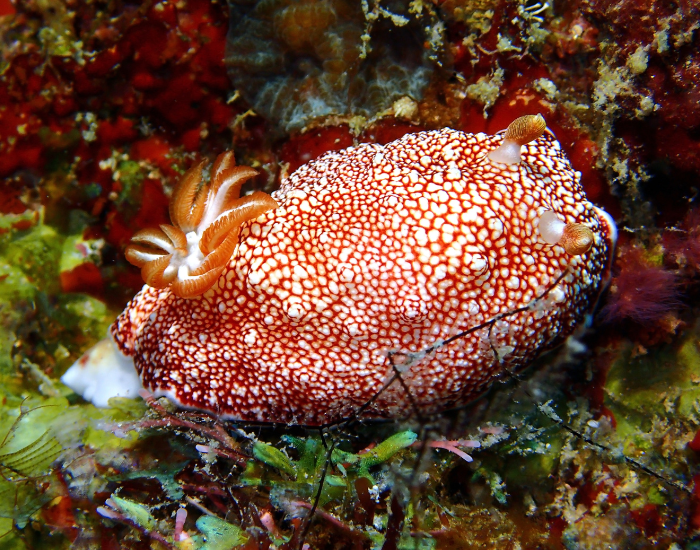
12. Reticulated Goniobranchus (Chromodoris reticulata)
Electric pink -r eddish bodies adorned with electric blue lines create this sea slug’s psychedelic appearance. Chromodoris reticulata blazes across Indo-Pacific reefs like an underwater neon sign. Orange-rimmed mantle edges intensify the visual impact dramatically.
This nudibranch species performs a visual symphony impossible to ignore. The contrasting colors create optical illusions as light shifts. Underwater photographers rank Chromodoris reticulata among the world’s most stunning sea slugs. Its soft tissues pulse with color, transforming reef dives into kaleidoscopic experiences. Divers who encounter this species describe the encounter as absolutely mind-blowing.
Key Characteristics of Nudibranch Molluscs
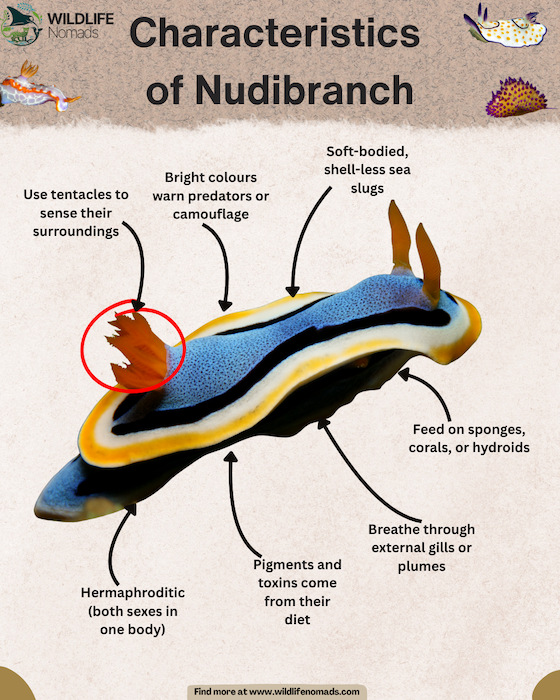
Soft-bodied and shell-less, nudibranch molluscs represent true marine invertebrates, with their delicate bodies lacking any external shell. They breathe through branchial plumes; external gills or feathery appendages on their backs. Nudibranchs also possess tentacles, which serve as sensory organs for smelling, tasting, and detecting environmental cues. The name “nudibranch” literally means “naked gill,” a reference to these flamboyant fronds.
Brilliantly colored sea slugs use their hues for both camouflage and warning signals. Every nudibranch species is hermaphroditic, carrying both male and female reproductive organs, which are located on the right side of the body. Many species are highly specialized feeders, consuming exclusively one prey type, a specific sponge, coral, or hydroid.
Their colors come from diet pigments and chemical defenses stored in soft tissues. This adaptation is both beautiful and functional. Some nudibranchs measure only a few millimetres in length, highlighting their delicate and tiny forms.
Feeding Behaviors: How These Sea Slugs Hunt
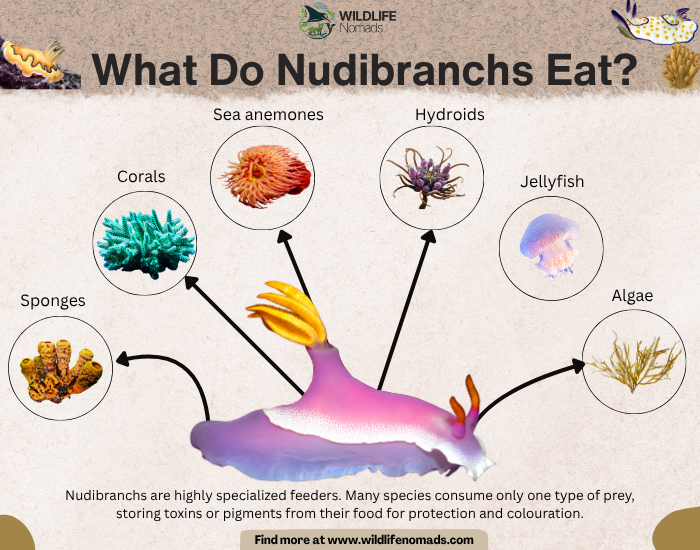
Different nudibranch species employ specialized feeding strategies, with food sources including a variety of prey such as sponges, hydroids, bryozoans, cnidarians, sea anemones, and even other sea slugs. Many nudibranchs feed on bryozoans and other sea slugs as part of their diet. Eating cnidarians and sea anemones allows some nudibranchs to acquire stinging cells (nematocysts) for their own defense. Their diet directly influences their soft tissue coloration. Understanding sea slug feeding reveals their ecological importance.
Remarkable Defense Mechanisms of Sea Slugs
Shell-less nudibranch molluscs survive despite the obvious vulnerability of their soft bodies. How? Many nudibranchs are brightly coloured, serving as a warning to predators, and they weaponize their prey’s defenses.
- Chemical Camouflage and Toxins
Many sea slug species store poisons from sponges or soft corals. When attacked, they release acidic mucus. Bright colors serve as universal warning signals to predators.
These soft tissues accumulate toxins over time. Predators learn to recognize warning coloration. The nudibranch investment in defense compounds proves worthwhile.
- Stolen Stings: Nematocysts Reborn
Aeolid nudibranchs collect live stinging cells from jellyfish and hydroids. These nematocysts embed securely in their cerata. If a fish attacks, it gets stung by the sea slug’s borrowed weapons.
This remarkable adaptation showcases nudibranch mollusc ingenuity. The soft-bodied creatures essentially weaponize their appearance. No wonder these sea slugs inspire marine biology research.
- Photosynthetic Power
Leaf Sheep and similar species perform kleptoplasty through cellular theft. They incorporate stolen chloroplasts into their tissues. This process allows sea slugs to produce energy from sunlight.
These remarkable nudibranch molluscs essentially become plants. They survive weeks without consuming prey. The soft tissues gradually lose their chloroplasts and green coloration.
Reproduction and Life Cycles of Nudibranch Molluscs
All nudibranch species are hermaphrodites possessing both male and female reproductive organs. When two sea slugs meet, they mate by aligning their bodies, often on the right side, and exchange sperm simultaneously. This elegant system ensures reproductive success.
After they mate, nudibranchs lay spiral ribbons of eggs. These soft gelatinous egg masses cling to coral, rock, or seaweed. Ribbon colors range from pink to orange, creating underwater displays.
The larval stage remains planktonic, drifting through ocean currents. Eventually, larvae settle onto suitable habitat and metamorphose into adults. Most sea slug species live under one year. Some larger tropical species survive up to three years.

Where to Find These Stunning Sea Slug Species
Spotting nudibranch molluscs requires patience, excellent vision, and local knowledge. These colorful creatures are often found in shallow waters and sandy areas, making them accessible to both snorkelling enthusiasts and those who prefer to dive. Exploring these habitats through snorkelling or booking a dive trip increases your chances of observing nudibranchs and other fascinating marine life up close. Certain regions harbor exceptional sea slug diversity.
Indonesia and the Philippines represent the Coral Triangle—holding Earth’s highest nudibranch biodiversity. Thousands of sea slug species inhabit these Indo-Pacific reefs, especially in sandy areas and shallow waters. Divers and snorkellers encounter new species regularly here.
Australia’s Byron Bay, Rottnest Island, and Ningaloo Reef harbor hundreds of species. These soft-bodied molluscs thrive in temperate and tropical waters, often in shallow waters and sandy areas. Traveling divers and snorkellers should explore multiple sites.
Mediterranean waters host cold-water species like Flabellina. These sea slugs prefer cooler marine environments, often found in shallow waters. Diving in autumn and winter improves spotting chances.
California and British Columbia support cool-water nudibranch species. Dirona and Janolus inhabit rocky shallows, sandy areas, and kelp forests. Spring and summer offer prime diving and snorkelling conditions.
FAQs About Nudibranch Molluscs
Yes, these sea slugs belong to the phylum Mollusca and class Gastropoda. They’re relatives of snails and clams. All nudibranch molluscs share this classification.
Many sea slug species carry toxins from their diet. A few, like the blue dragon, can sting humans if handled carelessly. Never touch nudibranch molluscs directly.
Most nudibranch species fail in captivity. These sea slugs require constant supplies of specific prey. They don’t adapt to aquarium conditions. Dedicated enthusiasts sometimes succeed with hardy species.
Tiny specimens measure just 3 millimeters. The Spanish Dancer reaches 60 centimeters. Most sea slug species occupy the middle ground, ranging 1-5 centimeters.
These sea slugs serve as reef health indicators. Population changes signal environmental stress. Studying nudibranch molluscs reveals coral reef conditions before obvious damage appears.
Over 3,000 nudibranch species inhabit Earth’s oceans. The Indo-Pacific region hosts the highest diversity. Sea slugs thrive from tropical reefs to cold polar waters.
Soft tissue pigments and chemical compounds from prey create colors. These compounds accumulate in the nudibranch’s body over time. Colors serve both camouflage and warning purposes.
The Ocean’s Living Art Gallery
Nudibranch molluscs represent evolution’s artistic mastery. From the photosynthetic Leaf Sheep to the dancing Spanish Dancer, each species tells an adaptation story. These soft-bodied creatures exemplify resilience and brilliance.
Every time divers spot a nudibranch, they encounter millions of years of evolution. Each soft tissue displays carefully honed survival strategies. These sea slugs inspire wonder and respect.
The next time you slip beneath ocean waves, look carefully at corals and sand. You might discover a living masterpiece. That nudibranch has spent millions of years perfecting its art.
Further Reading
- Stone Fish: 12 Shocking Facts
- 12 Fascinating Facts About Gulper Eels
- Echinoderms: The Spiny-Skinned Architects of the Ocean
References:
Andrimida, A., & Hermawan, R. (2019). Diversity and distribution of sea slugs (Gastropods: Heterobranchia) in Sempu Strait, Indonesia. IOP Conference Series: Earth and Environmental Science, 391(1), 012073. https://doi.org/10.1088/1755-1315/391/1/012073
Bonomo, L., Soong, G. Y., Reimer, J., & Gosliner, T. (2022, August). 50 shades of red: The red-reticulate group of Goniobranchus (Heterobranchia: Nudibranchia: Chromodorididae). Spixiana, 30A, 156.
Hagadone, M. R., Burreson, B. J., Scheuer, P. J., Finer, J. S., & Clardy, J. (1979). Defense allomones of the nudibranch Phyllidia varicosa Lamarck 1801. Helvetica Chimica Acta, 62(7), 2484-2494. https://doi.org/10.1002/hlca.19790620742
Todd, C. D., Walter, J., & Daviee, J. (2001). Some perspectives on the biology and ecology of nudibranch molluscs: Generalisations and variations on the theme that prove the rule. Bollettino Malacologico, 37(5-8), 105-120.
Prieto-Baños, S., & Layton, K. K. S. (2025). Tracing the evolution of key traits in dorid nudibranchs. PloS one, 20(4), e0317704. https://doi.org/10.1371/journal.pone.0317704