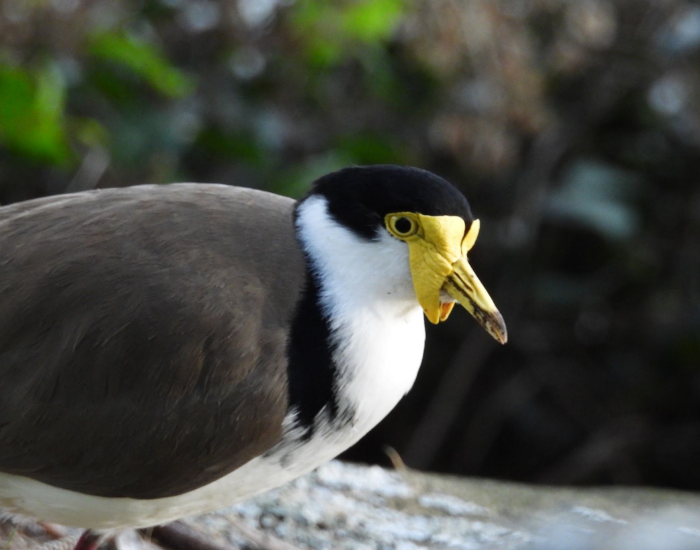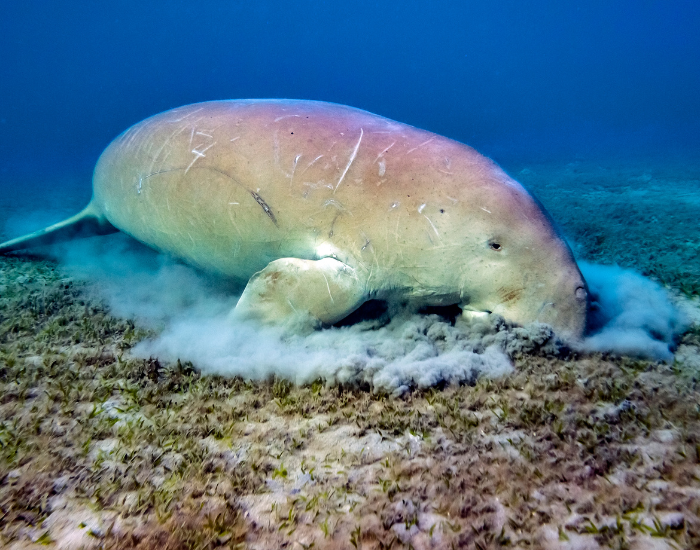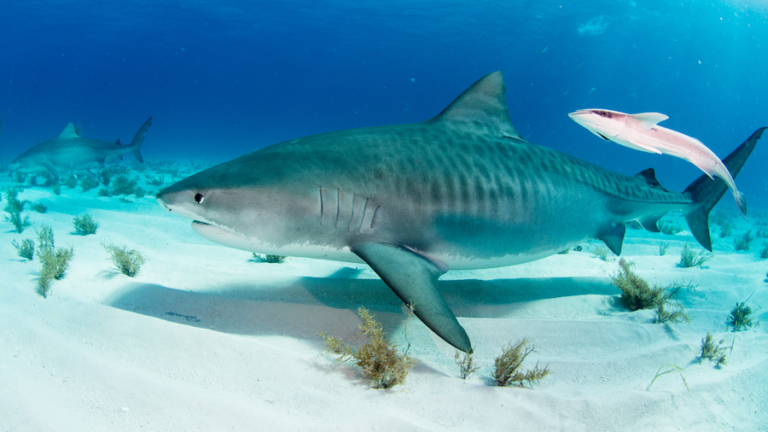

For many people, Finding Nemo was the first time sea anemones entered their imagination. A whole generation grew up watching a clownfish swimming fearlessly between stinging tentacles, learning—almost by accident—that the ocean is full of strange partnerships and hidden dangers. Since then, we’ve talked about many of the animals that appear throughout that story and beyond, from spotted eagle rays and reef sharks to anglerfish and other deep-sea creatures lurking far below the sunlight and hadal zone.
For me, sea anemones have been a constant presence throughout my life in the ocean. I first encountered them while living in the Caribbean and later while diving along Australia’s Great Barrier Reef—the same place I saw my first clownfish in the wild. As I traveled through Southeast Asia, anemones felt even closer, often growing just metres from shore, swaying beneath us as we swam. But it was during a dive off Coron, in the Philippines, that I truly stopped and looked. It became clear: these weren’t delicate flowers at all, but highly efficient predators.
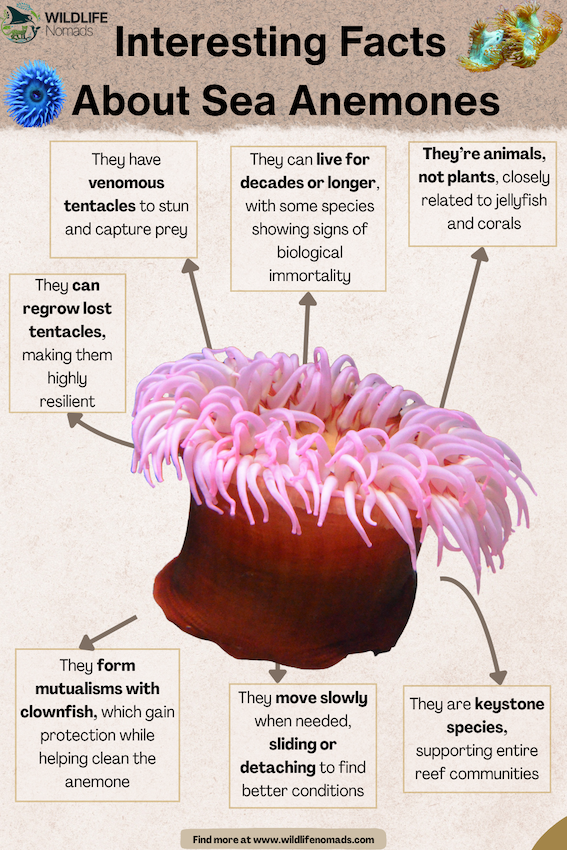
If you look closely, sea anemones are genuinely impressive. Many people may wonder if anemones are an animal… the answer is yes. These creatures are predatory animals from the phylum Cnidaria, closely related to corals and jellyfish. They sting, hunt, reproduce, and survive in some of the most competitive environments on Earth. Far from passive reef decorations, sea anemones play a vital role in marine ecosystems.
So let’s take a closer look. Here are 12 incredible facts about sea anemones that will completely change the way you see these so-called “flowers of the sea.”
1. Sea Anemones Are Animals, Not Plants
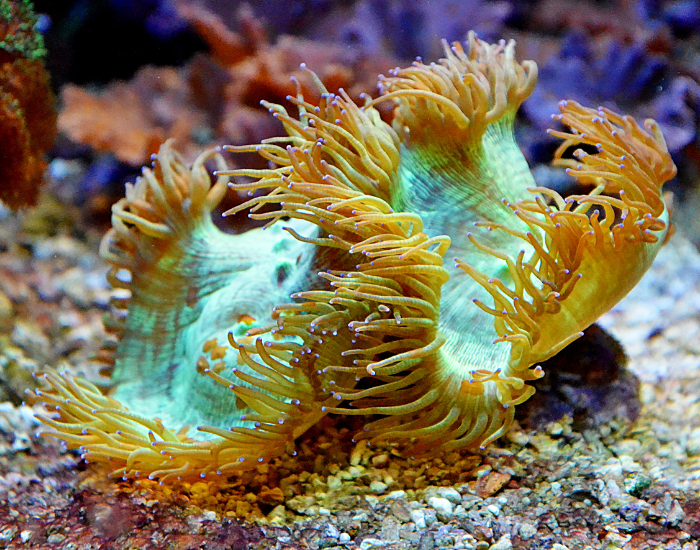
What is a sea anemone, exactly? These soft bodies belong to the order Actiniaria. Despite looking like flowers, they possess a nervous system, capture prey, and digest food. Therefore, they’re classified as animals.
Unlike hard surfaces that coral creates, most anemones remain soft-bodied throughout their lives. They anchor themselves to rocks using a pedal disc, also called a basal disc or adhesive foot. This sticky foot allows them to cling to hard surfaces on the sea bottom.
The body column forms a generally cylindrical trunk that expands and contracts, and may bear specialized structures such as papillae and cinclides. At the top sits the oral disc—the anemone’s “face”—containing the central sea anemone’s mouth. Around this single opening, tentacles ring the sea anemone’s mouth like deadly petals. Sea anemones can have anywhere from a dozen to a few hundred tentacles.
The sea anemone’s mouth opens into a flattened pharynx, which leads to the gastrovascular cavity.
2. Stinging Cells Make Them Deadly Hunters
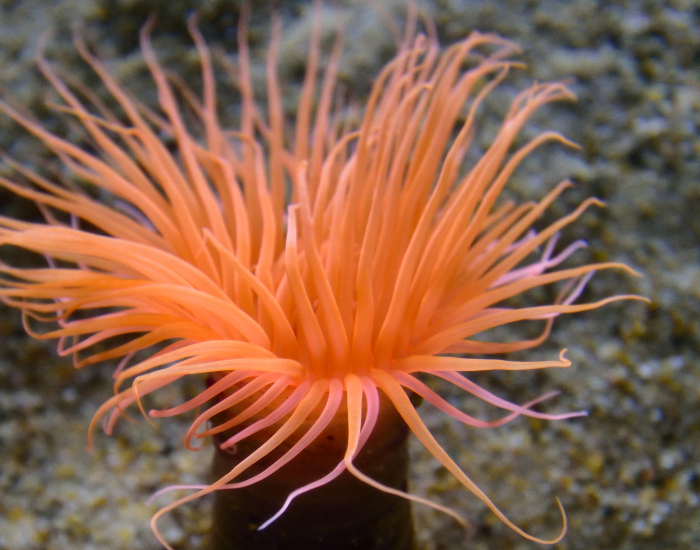
Sea anemones eat using biological harpoons, a process known as the anemone’s sting. Each tentacle contains the anemone’s stinging cells, called cnidocytes. Inside these cells sits a harpoon-like filament coiled under pressure.
When small fish brush against the anemone’s tentacles, the slightest touch triggers this weapon. The filament fires instantly, injecting a paralyzing neurotoxin into the prey. Once paralyzed, the anemone’s tentacles guide food toward the mouth.
This stinging strategy hasn’t changed in millions of years. However, it remains highly effective for capturing crustaceans, tiny plankton, and other sea creatures. The toxin immobilizes prey within seconds.
Anemones can also engage in territorial fights using specialized stinging cells.
3. They Live Across Various Depths Worldwide
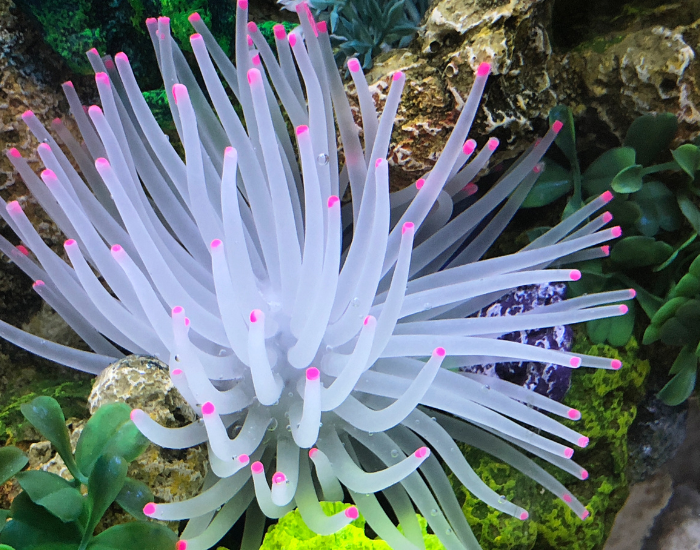
Where does a sea anemone live? You’ll find species of sea anemones from Arctic waters to coastal tropical waters. While many people associate them with shallow coral reefs, they actually inhabit various depths. Sea anemones are found in various marine habitats, from shallow coastal waters to depths of 1.8 miles (3,000 meters).
Some species thrive in tide pools just inches deep. Others survive in the dark, high-pressure environments of the deep sea. In addition, certain species prefer sandy sea bottom areas, while most anemones anchor to rocks. Some species burrow into sand or mud for protection and stability, highlighting the ecological importance of these sandy habitats.
Despite their stationary appearance, they can move slowly. Sea anemones can move by flexing and contracting their bodies, but they usually remain anchored in the same place. They typically stay in the same place once anchored, moving only in response to environmental changes and maintaining their position on the reef or solid surfaces. Sea anemones can also move by creeping on their bases or by casting themselves loose from the substrate. When predators like sea stars approach, they detach their sticky foot. Some species even use internal water pressure for free swimming, though this remains rare. Additionally, some species of sea anemones can close up into a ball when threatened.
4. Their Diet Includes Surprising Prey
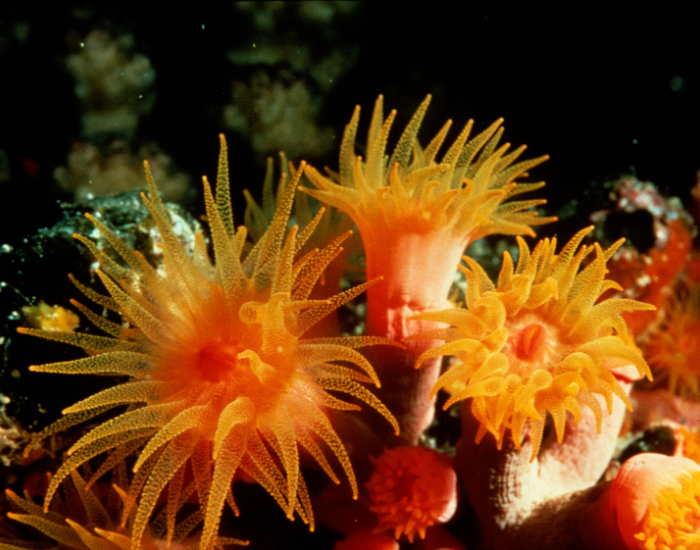
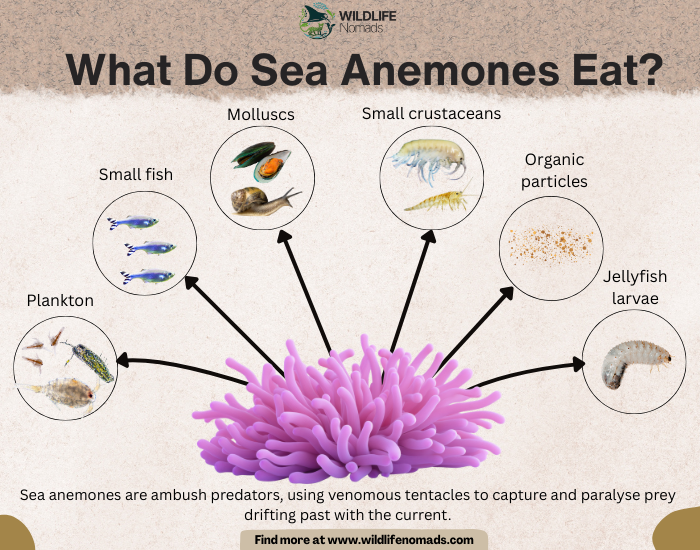
What do sea anemones eat? These opportunistic carnivores consume a variety of high-protein meals. Their diet typically consists of small fish, shrimp, crabs, mollusks, and tiny plankton.
Larger anemone species occasionally capture prey as big as small crabs. The sea anemone’s mouth serves double duty, it’s both entrance and exit. After digestion, waste products leave through the same opening.
This simple digestive system proves remarkably efficient. In fact, some species can go weeks without food during lean periods. Their bodies contract to conserve energy until the next meal arrives.
5. Clownfish Have a Special Immunity
The symbiotic relationships between clownfish and sea anemones fascinate marine biologists worldwide. During my time in Indonesia, I use to watch closely this dynamic partnership. Many sea anemones form mutualistic relationships with clownfish, which gain protection from predators and clean the anemone.
How does a clownfish survive the anemone’s sting? The answer lies in the mucus layer covering the fish. Clownfish develop specialized coating that prevents stinging tentacles from firing.
What the fish gets: safe harbor from many predators. What the anemone gets: the fish cleans parasites, provides nutrients through waste, and the anemone also benefits by consuming scraps and leftovers from the clownfish’s meals. Research suggests the fish’s movement helps circulate water, delivering oxygen to the anemone. This establishes symbiotic relationships where one or both anemones and clownfish benefit.
Interestingly, anemone fish must acclimate gradually to their host. Young clownfish carefully brush against tentacles, building up their protective coating over time.

6. Green Algae Powers Many Species
Many species of sea anemones host zooxanthellae, microscopic green algae, within their tissues. The anemone acts as an algae safe harbor, providing a protected environment where the algae can thrive and access sunlight. Through the algae’s photosynthesis, the anemone receives oxygen and sugar, which are essential for its survival. The anemone receives oxygen and other products of the algae’s, such as glycerol, glucose, and alanine, which supply significant energy for their host. This is a classic example of how sea anemones establish symbiotic relationships for mutual benefit.
In exchange, the algae get a safe place to live with plenty of sunlight, enabling their photosynthesis. This explains why most anemones inhabit shallow, sun-drenched waters. The products of the algae’s photosynthesis can supply up to 90% of the anemone’s energy needs.
Sea anemones are affected directly by pollution and siltation, which also impact their photosynthetic symbionts and prey. In addition to clownfish, several species of fish and invertebrates live in symbiotic relationships with sea anemones, gaining protection and providing nutrients.
This partnership makes certain species particularly vulnerable to climate change. When water temperatures rise, anemones expel their algae, losing their primary food source. This “bleaching” mirrors what happens in coral during heat stress.
7. They Reproduce Both Ways
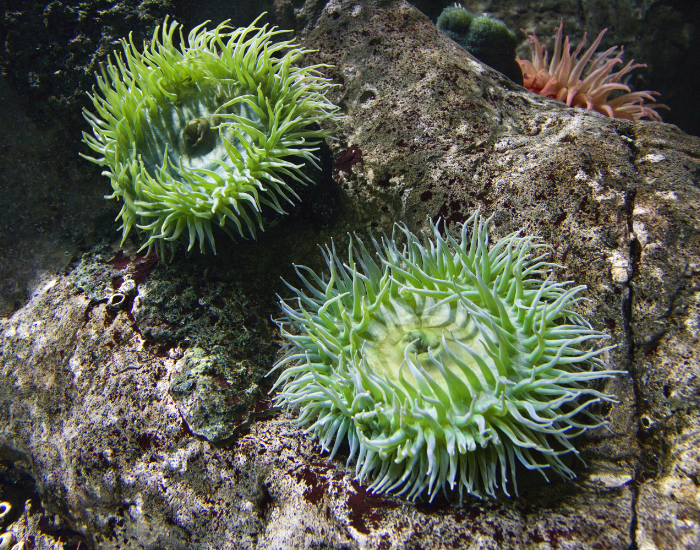
Asexual reproduction allows sea anemone populations to expand rapidly. The most common method is pedal laceration, literally leaving pieces of the sticky foot behind. Each fragment grows into a new individual, creating clones.
Some species also reproduce through longitudinal fission, splitting down the middle. However, sexual reproduction occurs when conditions favor genetic diversity. Male and female anemones release sperm and eggs into the water column.
Fertilized eggs develop into free swimming larvae called planulae. These tiny polyps drift with currents before settling on hard surfaces. Once attached, they transform into adult anemones over several weeks.
8. Their Lifespan Approaches Immortality
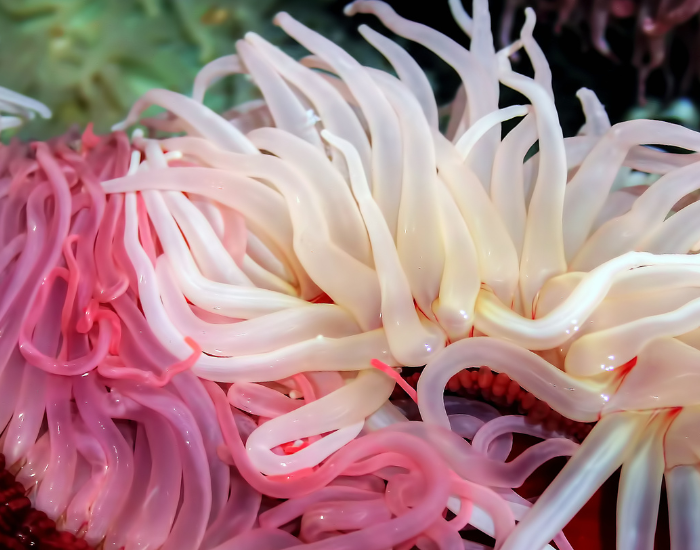
Scientists believe some anemones might be biologically immortal, positioning among some of the longest living animals. Unlike humans, they don’t show typical aging signs. In the wild, certain species live for decades without apparent decline.
One famous specimen at Edinburgh University lived over 80 years in captivity. Laboratory studies suggest that under ideal conditions, anemones could theoretically live indefinitely. Their cells regenerate continuously through asexual reproduction.
Nevertheless, predators, disease, and environmental changes do kill anemones. Some echinoderms like sea stars, certain fish species, and nudibranchs prey on these soft bodies. Despite their stinging cells, they’re not invincible.
9. Over 1,000 Species Exist Globally
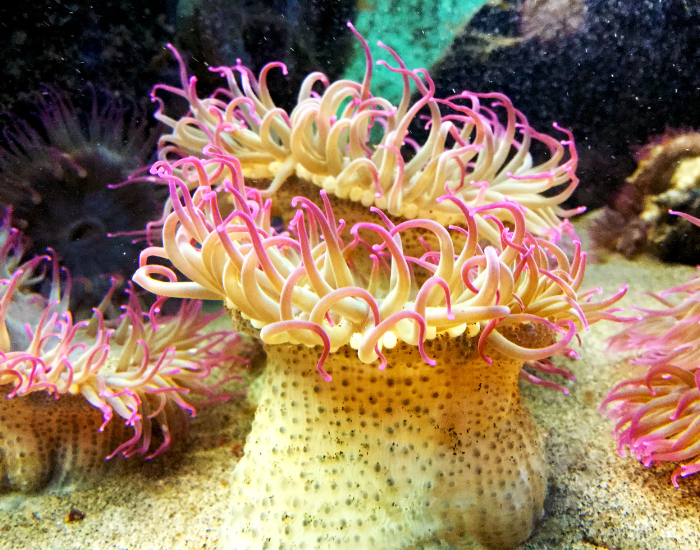
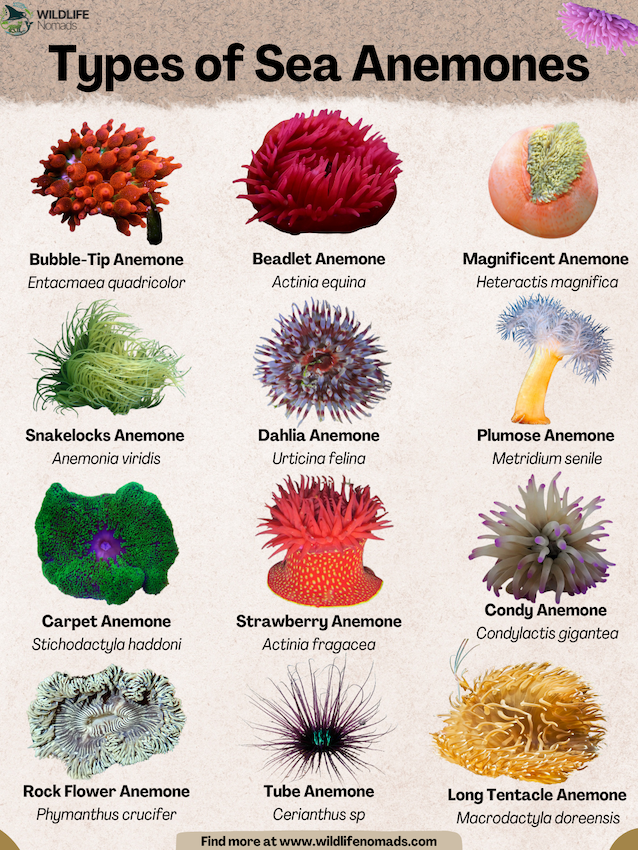
The late Dr. Daphne Fautin dedicated her career to documenting species of sea anemones. Her research identified over 1,000 distinct species worldwide, and there are actually over 1,200 species of sea anemones found across the world’s oceans. Sea anemones inhabit a wide range of marine environments, with most species found in coastal tropical waters. They can vary greatly in size, from less than half an inch to 6 feet in diameter, and some can even grow as large as 6.5 feet. Compared to other cnidarians, sea anemones lack certain life stages or features, highlighting their unique adaptations within the phylum.
Strawberry anemones create stunning red carpets on rocks, though they’re technically corallimorphs, close coral cousins rather than true anemones. Giant Caribbean anemones can exceed 12 inches in diameter. In contrast, some species measure less than half an inch.
Colors range from vibrant purples and greens to pale pinks and browns. The pigmentation often depends on the type of zooxanthellae they host. Species without algae tend toward translucent or white coloration.
10. Most Pose Little Danger to Humans
Can humans touch sea anemones? While most anemones have stings too weak to penetrate human skin, certain species can cause pain. The anemone’s sting might produce a rash or burning sensation.
Do you want to know some fun facts? Well, sea anemones use specialized stinging cells called nematocysts to capture prey and defend themselves. For most people, the experience feels sticky as stinging cells attempt to grip your finger. However, highly toxic species like some encroaching anemones can cause localized pain, swelling, or allergic reactions.
In rare cases, people experience systemic reactions similar to jellyfish stings. Therefore, marine experts recommend the same approach: admire from a distance. As we say in conservation, take only pictures, leave only bubbles.
11. Climate Change Threatens Their Survival
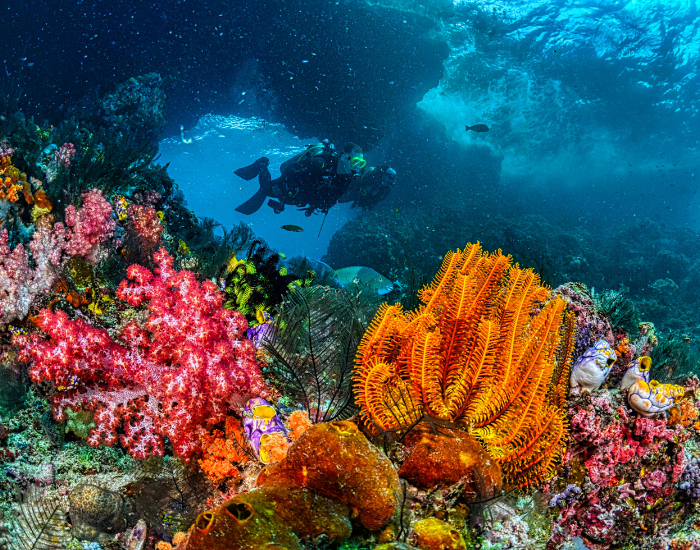
The health of sea anemones connects directly to coral reefs and world’s oceans overall. Rising sea temperatures cause bleaching events where anemones expel their algae. Without this energy source, they slowly starve.
Ocean acidification also impacts their ability to maintain healthy tissues. Pollution from coastal development introduces toxins that accumulate in their bodies. In addition, physical damage from anchors and divers crushes these delicate animals.
Organizations like WWF and the Smithsonian emphasize protecting marine habitats. Reducing carbon emissions, limiting coastal pollution, and establishing marine protected areas all help many species survive. Conservation efforts must address these interconnected threats.
12. They’re Ecosystem Engineers
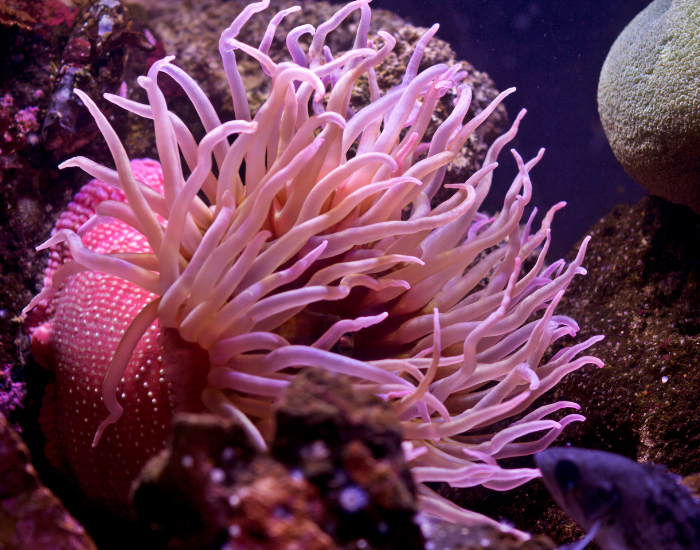
What is the purpose of a sea anemone? Beyond their beauty, they provide essential habitat for numerous sea creatures. Anemone fish, certain shrimp species, and even small crabs seek refuge among stinging tentacles.
By controlling populations of small fish and tiny plankton, they help maintain ecosystem balance and act as keystone species. Their presence on rocks creates microhabitats for other animals. Some fish species use anemones as cleaning stations. In healthy reef systems, they coexist alongside herbivores like parrotfish, predators such as triggerfish, and even highly specialised hunters like anglerfish in deeper environments. Their role indirectly supports reef stability, which benefits everything from coral-building species to some of the most venomous fish in the world, including stonefish and scorpionfish that rely on intact reef structures.
FAQs You may Have about Sea Anemones
It’s 100% an anemone animal. Despite flower-like appearances, they have a nervous system, capture prey, and actively digest food.
No, though both belong to phylum Cnidaria as coral cousins. Coral typically builds hard calcium carbonate skeletons, while anemones remain soft bodies throughout life.
For humans, most species cause slight tingling or stickiness. However, some tropical species deliver painful stings similar to jellyfish.
No. We’re far too large for their digestive capabilities. They focus on prey like crustaceans, small fish, and tiny plankton.
Yes. While symbiotic relationships provide benefits, most anemones survive perfectly well without anemone fish partners.
Snorkel or Scuba with Sea Anemones!
If you are keen to swim with sea anemones, have a look at our recommended tours:
This blog is reader-supported. When you buy experiences through links listed on this site, we may earn an affiliate commission.
Why These Ocean Polyps Matter
My journey from studying biology in Southeast Asia to communicating about wildlife taught me one thing: the smallest sea creatures often hold the biggest lessons. The sea anemone masters survival through adaptation, hunts with precision, and shares resources generously.
Whether clinging to rocks in tide pools or swaying in coral reef currents, they remind us of intricate connections holding our blue planet together. Next time you’re near the ocean, look for those swaying tentacles. Just remember—look, but don’t touch.
Their stinging polyps may be small, but their role in marine ecosystems proves enormous. From providing safe harbor for clownfish to controlling prey populations, these animals deserve our respect and protection. As ocean temperatures rise and habitats face threats, understanding and valuing sea anemones becomes more critical than ever.