Not long ago, a video about the angler fish went viral online. My feed was flooded with comments, some people terrified, others charmed, and many anthropomorphizing this bizarre creature as if it were a misunderstood Disney character. As a biologist, I couldn’t help but smile. It’s rare to see deep-sea life get so much attention outside of documentaries like Blue Planet or Pixar’s Finding Nemo. However, reading through the comments, I also noticed a flood of misconceptions.
Today, I want to set the record straight and celebrate what makes the angler fish one of the most fascinating predators in the ocean. With more than 200 known species found across the world’s waters, these creatures aren’t confined to the abyss, some stalk coral reefs, sandy shallows, or continental shelves. From their eerie bioluminescent lures to their jaw-dropping mating strategy, anglerfish showcase some of nature’s most extraordinary adaptations, both in the inky deep and the sunlit shallows.
1. The Angler Fish Belongs to the Order Lophiiformes
The angler fish isn’t just one species. Instead, it’s part of an entire order called Lophiiformes, which includes over 200 anglerfish species. This diverse group includes deep sea anglerfish, sea toads, and frogfish, all recognized by one key adaptation: a modified fin ray that acts as a fishing rod.
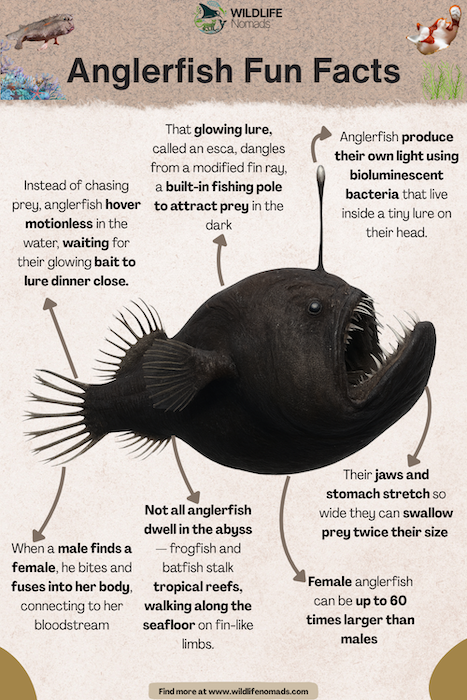
This dorsal spine extends from the angler fish’s head and ends in a fleshy lure known as the esca. Therefore, it’s this glowing apparatus that gives the angler fish its name and hunting advantage. The illicium works like a natural fishing pole, dangling bait in front of unsuspecting prey.
These fish inhabit oceans across the world. Some live on the continental shelf in shallow tropical waters, while deep sea ceratioid anglerfish dwell in the abyss over 4,000 meters below the surface. Their adaptability is astounding, thriving in both coastal environments and perpetual darkness.

2. Deep-Sea Anglerfish Live Where Light Doesn’t Reach
Imagine living in total darkness under crushing pressure, where the water is near freezing and sunlight never penetrates. That’s home for many deep sea anglers, particularly those dwelling in the bathypelagic zone, roughly 1,000 to 4,000 meters deep.
Down there, visibility is virtually zero. Consequently, angler fish use their lure to attract prey instead of relying on vision. The glow is produced by bioluminescent bacteria living inside the lure, a symbiotic relationship where bacteria gain a safe home while the angler fish gains the perfect light trap.
Some species, like the deep sea ceratioid anglerfish, drift motionless in this dark expanse. They save energy until an unlucky crustacean or small fish swims close enough to investigate the glowing lure.

3. Female Anglerfish Are Giants Compared to the Males
Of all creatures in the deep, few display sexual dimorphism as extreme as the angler fish. Female anglerfish can reach over a meter in length, while males rarely grow beyond a few centimeters. In fact, males are significantly smaller than their female counterparts in most fish species within this order.
This isn’t just a matter of size; it’s a matter of survival. In most anglerfish species, only females possess the lure and powerful mouths filled with sharp teeth. They are the hunters, using their glowing lure to attract prey like small fish, crustaceans, and other invertebrates.
Males, on the other hand, have a very different role in reproduction and survival.

4. Males Fuse Permanently to Females During Mating
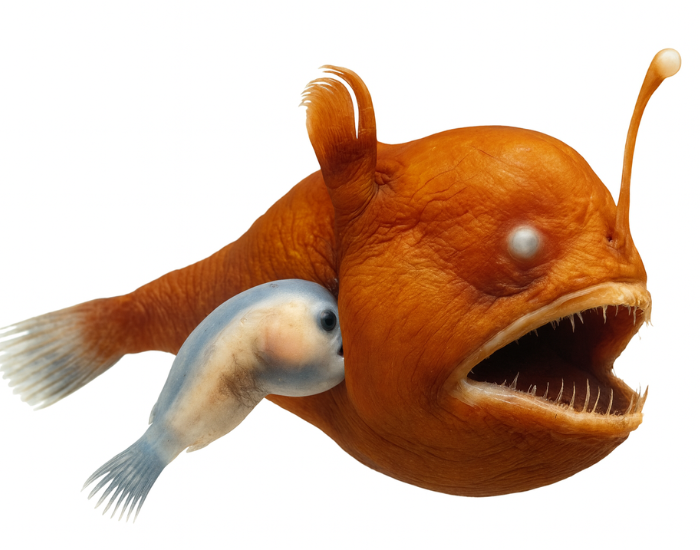
The mating habits of angler fish rank among the strangest in the animal kingdom. When a tiny male encounters a female, a rare event in the vast deep sea, he bites into her body. Then something incredible happens: his body begins to fuse with hers.
Over time, the male’s organs dissolve, except for his testes, which remain connected to the female’s bloodstream. From that point on, she carries him like a living reproductive appendage. He provides sperm whenever she’s ready to spawn. This unique strategy ensures reproductive success in the vast ocean depths.
Scientists call this phenomenon sexual parasitism. It was first confirmed in the early 20th century when researchers discovered what they thought were parasites attached to female anglerfish. Later, they realized these were actually the males.
It’s a haunting yet efficient strategy in a world where mates are hard to find. This adaptation solves the challenge of locating a mate in the endless darkness.
5. Their Lure Is a Living Lightbulb
The angler fish lure is one of nature’s most extraordinary tools. It glows thanks to bioluminescent bacteria, typically from the genus Photobacterium, which live inside specialized tissue at the lure’s tip.
The fish can switch the light on and off by controlling oxygen flow to the lure. This influences the chemical reaction that produces light. Therefore, the angler fish controls when and how it uses this fishing rod.
This glowing apparatus serves multiple purposes. First, it attracts prey as small fish and crustaceans mistake it for food. Second, scientists believe light patterns may help with communication between other anglerfish. Third, the lure’s glow mimics faint ambient light from above, helping hide the fish’s silhouette.
It’s an elegant blend of biology and chemistry that turns darkness into opportunity for these ambush predators.
6. Anglerfish Are Ambush Predators
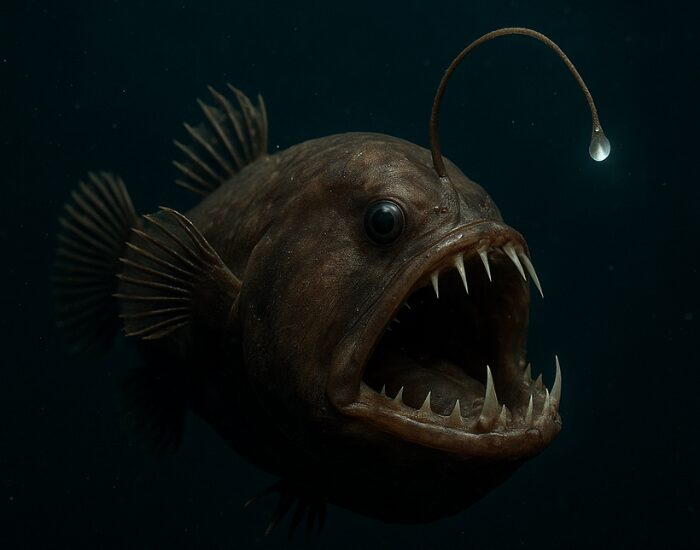
When prey approaches, the angler fish strikes in an instant. Its dorsal fin and pectoral fins help it remain motionless, conserving energy while it waits. Then, with a sudden burst, it opens its enormous wide mouth, creating suction that swallows prey whole.
Some species can swallow prey twice their size. This is possible thanks to an expandable stomach and flexible jawbones. These bottom dwellers rely on stealth rather than speed, an energy-efficient strategy that keeps them alive in the deep.
In a realm where food is scarce, ambush predators like the angler fish have perfected the art of patience. They expend minimal energy while waiting for the perfect moment to strike.
7. Not All Anglerfish Live in the Deep Sea
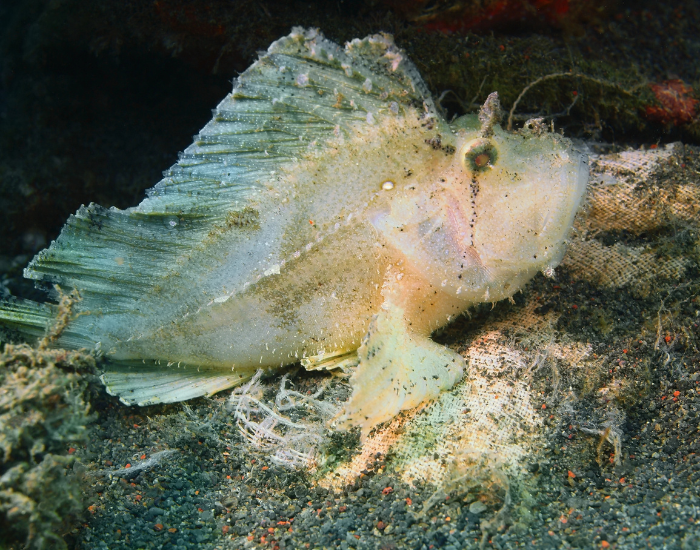
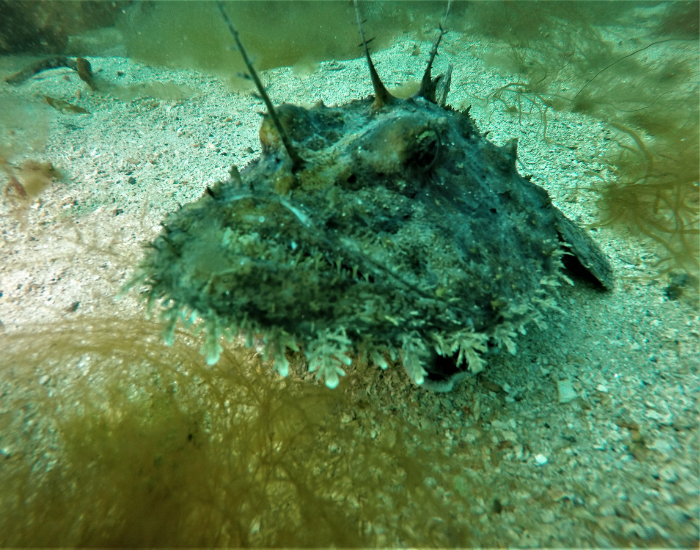
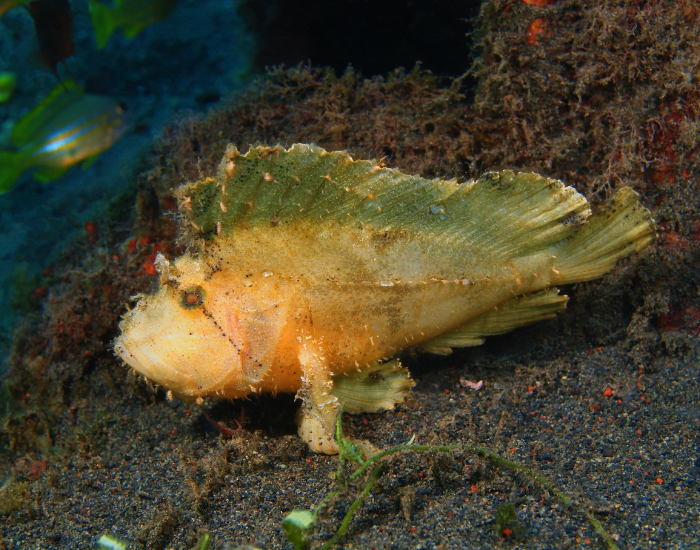
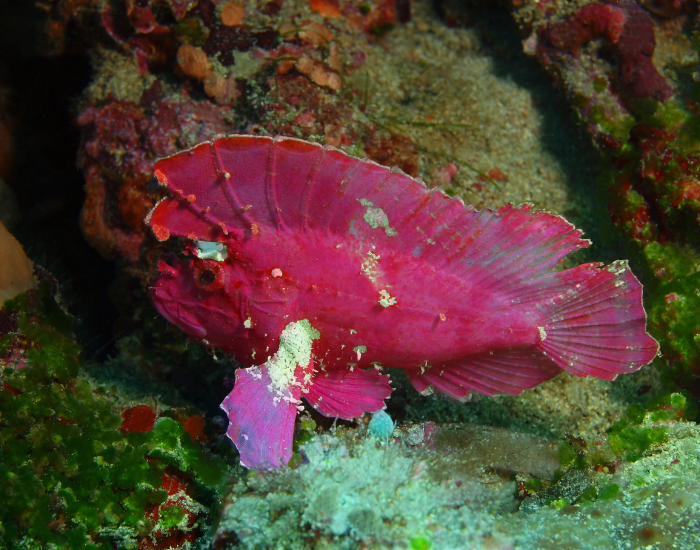
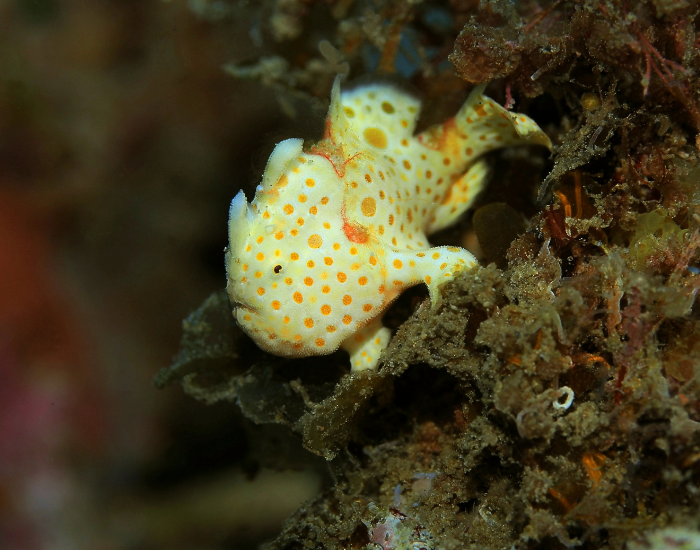
While the deep sea anglerfish gets most of the fame, not all species live in darkness. Some species, like frogfish and sea toads, inhabit shallow waters and tropical coral reefs.
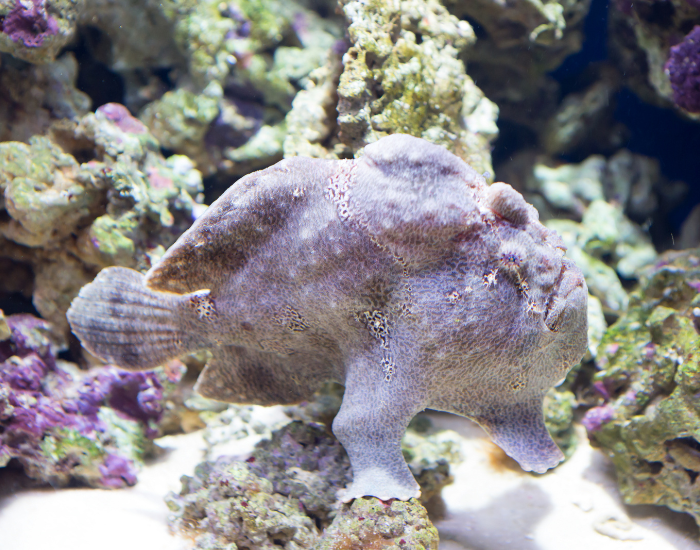
These smaller cousins use their pectoral fins to walk along the seafloor. In addition, they can change color to blend with their surroundings. Instead of producing light, they use motion and mimicry to lure prey, waving their modified dorsal spine like a worm or shrimp.
Therefore, the next time you’re snorkeling over a reef, you might be closer to an angler fish than you think. These shallow-water species demonstrate the remarkable diversity within the order Lophiiformes.
8. They’re Masters of Energy Conservation
At depths where meals are unpredictable, energy conservation is everything. Angler fish can go weeks without eating, expending energy only when necessary by hovering motionless in the water column.
Their slow metabolism and minimal muscle mass are evolutionary trade-offs for survival in the abyss. Every movement is purposeful, a finely tuned balance between hunger and endurance. This adaptation allows deep sea anglers to survive in one of Earth’s harshest environments.
9. They Play an Important Role in Marine Ecology
Despite their fearsome look, angler fish are an essential part of the ocean’s food web. By feeding on small fish and invertebrates, they help maintain population balance in the deep ocean ecosystem.
They also serve as prey for larger predators. Sharks, sperm whales, and occasionally larger anglerfish species hunt these unusual fish. This makes them an important link in marine ecology.
When anglerfish die, their bodies sink to the ocean floor. There, they contribute nutrients to deep benthic ecosystems, the final step in nature’s recycling chain. This process supports countless other species that depend on organic matter falling from above.

10. There Are Dozens of Species, and Many Still Undiscovered
Scientists have described more than 200 species of anglerfish so far, spread across multiple families within the order Lophiiformes. These families include Ceratiidae (deep sea anglerfish), Antennariidae (frogfish), Ogcocephalidae (batfish), and Chaunacidae (sea toads).
However, the deep ocean remains largely unexplored. New anglerfish species continue to be discovered. Some are so fragile they can only be observed through remotely operated vehicles (ROVs). This reminds us that our planet’s most alien worlds still exist right here, beneath the waves!
Marine science continues to uncover new species in the deep sea. Each discovery adds to our understanding of these remarkable fish and their adaptations.
11. They’re Not Dangerous to Humans
It’s amazing how often I still get asked whether angler fish are real. Yes, they are very real, and no, they’re not dangerous to humans.
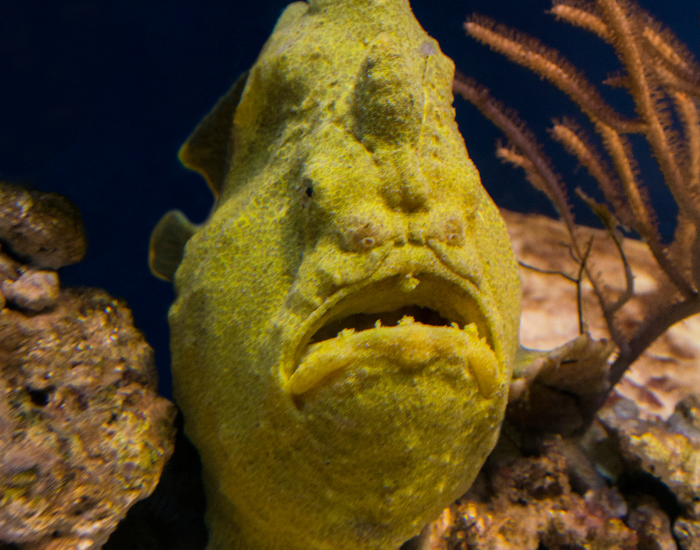
You won’t encounter one while swimming at the beach. Deep sea anglerfish live in zones far below where divers or even submarines usually reach. Those that inhabit shallow waters, like frogfish, are only a few centimeters long and entirely harmless.
While their glowing lure and sharp teeth might look menacing, these predators are more shy recluses than monsters. They pose no threat to humans and prefer to avoid contact entirely.
12. Conservation and Climate Change Are New Threats
For decades, scientists assumed that deep sea anglerfish were insulated from human impacts. They seemed far removed from pollution, overfishing, and warming seas. Unfortunately, that’s changing.
Deep-sea trawling can unintentionally capture or destroy anglerfish habitats. Meanwhile, rising ocean temperatures and reduced oxygen levels are altering the delicate balance of deep marine ecosystems. These changes threaten the bacteria that produce light in the angler fish’s lure.
Although most anglerfish species aren’t currently listed as endangered, conservationists warn that habitat disruption could threaten them in the future. Protecting deep-sea biodiversity means protecting creatures like the angler fish.
13. Some Anglerfish Species Are Culinary Delicacies
While deep sea anglerfish aren’t commercially fished, some shallow-water species are prized in global cuisine. The most famous edible angler fish is the monkfish, also known as Lophius piscatorius in European waters and Lophius americanus along the Atlantic coast.
Monkfish earned the nickname “poor man’s lobster” because its firm, white flesh has a similar texture and sweet flavor. The tail meat is the most commonly eaten part, as the fish’s large head makes up most of its body weight.
In Japan, angler fish is celebrated in a traditional hot pot dish called ankō nabe. This winter specialty features the fish’s meat, liver, skin, and fins simmered in a savory broth. The liver, or ankimo, is particularly prized and often compared to foie gras for its rich, buttery taste.
European cuisines also embrace monkfish. In Spain, it appears in seafood stews like suquet de peix. French chefs wrap monkfish in prosciutto or prepare it with beurre blanc sauce. Therefore, while the deep sea ceratioid anglerfish remains untouched by fishing, its coastal relatives have found their way onto dinner plates worldwide.

FAQs You May About Angler Fish
No, most fish in this order are much smaller. Deep sea females typically measure between 20 to 100 centimeters. However, a few rare species can reach up to 1.2 meters.
Yes, the female angler fish alone wields the bioluminescent lure. Males are small, parasitic, and depend entirely on females for survival after mating.
Some shallow-water species, like the monkfish (Lophius piscatorius), are edible and even prized in cuisines like Japanese ankō nabe. However, deep sea anglerfish are rarely caught and not commercially fished.
The lure glows through bioluminescence, thanks to bacteria that emit light. The fish uses this fishing rod to attract prey in the dark ocean depths.
Their main predators include larger deep sea fish, sharks, and sperm whales. Despite their fearsome appearance, they’re an important food source in the marine ecosystem.
Most deep sea anglers live in the bathypelagic zone, between 1,000 and 4,000 meters deep. However, some species like frogfish inhabit shallow tropical waters and coral reefs on the continental shelf.
The Angler Fish: A Testament to Deep Sea Survival
The angler fish may look like something from a nightmare. However, it’s also a story of survival and adaptation. These creatures prove that even in the most hostile corners of the planet, life finds a way.
From the flicker of its bioluminescent lure to the intimacy of its fused mating ritual, this strange fish continues to remind us that evolution is both brutal and beautiful. The deep sea ceratioid anglerfish and its relatives represent some of nature’s most ingenious solutions to extreme environments.
While most of us will never see one in person, learning about animals like the deep sea anglerfish helps us understand the fragile ecosystems that support all life on Earth. These remarkable predators deserve our attention, respect, and protection for future generations.
Further Reading
- Echinoderms: The Spiny-Skinned Architects of the Ocean
- Hadal Zone: Inside Earth’s Darkest Ocean Depths
- The Giant Squid: 12 Fascinating Facts
References:
Brownstein, C. D., Zapfe, K. L., Lott, S., Harrington, R., Ghezelayagh, A., Dornburg, A., & Near, T. J. (2024). Synergistic innovations enabled the radiation of anglerfishes in the deep open ocean. Current biology : CB, 34(11), 2541–2550.e4. https://doi.org/10.1016/j.cub.2024.04.066
Gudger, E. W. (1945). The Angler-Fishes, Lophius piscatorius et Americanus, Use the Lure in Fishing. The American Naturalist, 79(785), 542–548. http://www.jstor.org/stable/2457908
Miya, M., Pietsch, T. W., Orr, J. W., Higuchi, R., Mabuchi, K., Doan, T., & Nishida, M. (2010). Evolutionary history of anglerfishes (Teleostei: Lophiiformes): A mitogenomic perspective. BMC Evolutionary Biology, 10(58). https://doi.org/10.1186/1471-2148-10-58
Ofstad, L. H., Angus, C., Pedersen, T., & Steingrund, P. (2013). Age and growth of anglerfish (Lophius piscatorius) in Faroese waters. Fisheries Research, 139, 51–60. https://doi.org/10.1016/j.fishres.2012.05.011
Schramm, S., & Weiß, D. (2024). Bioluminescence – The Vibrant Glow of Nature and its Chemical Mechanisms. ChemBioChem, 25, Article e202400106. https://doi.org/10.1002/cbic.202400106