When I first slid beneath the surface of a coral reef in the Pacific Ocean years ago, my attention was caught not by a bright fish but by a slow-moving, alien-looking creature. A crown-of-thorns sea star sprawled across the reef with venomous spines covering its arms. That dive began my fascination with echinoderms every time I was diving, a group of marine animals that seem both simple and complex.
Over the years, traveling from the Pacific Ocean to the South China Sea, I kept encountering these remarkable creatures. Sea urchins in Coron, Phillipines. Brittle stars writhed under rocks in Great Barrier Reef in Australia. Burrowing sea cucumbers filtered sand on the ocean floor in the Caribbean
So, what exactly are echinoderms? Let’s explore the phylum Echinodermata, its defining traits, its evolutionary story, and why these spiny-skinned marine animals matter far more than many realize.

What Are Echinoderms?
Echinoderms (from Greek: echinos = spiny, derma = skin) are exclusively marine animals. They’re not fish, not mollusks, and definitely not related to jellyfish. Instead, echinoderms belong to their own phylum, which includes over 7,000 living species.
These marine organisms evolved more than 500 million years ago. Today, many echinoderms thrive in diverse marine environments, from shallow coral reefs to the deep sea. Therefore, understanding echinoderms helps us understand ocean health itself.
Five Key Characteristics of Echinoderms
- Radial symmetry defines adult echinoderms, typically displaying five-part symmetry. However, larvae start life with bilateral symmetry before transforming into their adult form.
- The water vascular system represents their most unique feature. This hydraulic network powers movement through tube feet. In addition, modified tube feet help with feeding and respiration. Sea stars use this system to pry open clams and mussels.
- An internal skeleton made of calcium carbonate ossicles gives echinoderms structural support. These skeletal structures form a rigid test in sea urchins. In contrast, sea cucumbers have reduced ossicles, making their body surface softer.
- Spiny skin or dermal plates cover the body surface. For example, long spined sea urchins display prominent defensive spines. Meanwhile, sand dollars possess shorter, velvety spines.
- Regeneration ability allows many species to regrow lost limbs. Most sea stars can regenerate entire arms. Similarly, many brittle stars detach arms to escape predators, then regrow them later.
This unusual combination makes echinoderms one of the most distinct groups in marine biology.

The Five Living Classes of Echinodermata
Echinoderms are classified into five main classes. Each class displays unique adaptations for survival in marine habitats.
Asteroidea: Sea Stars
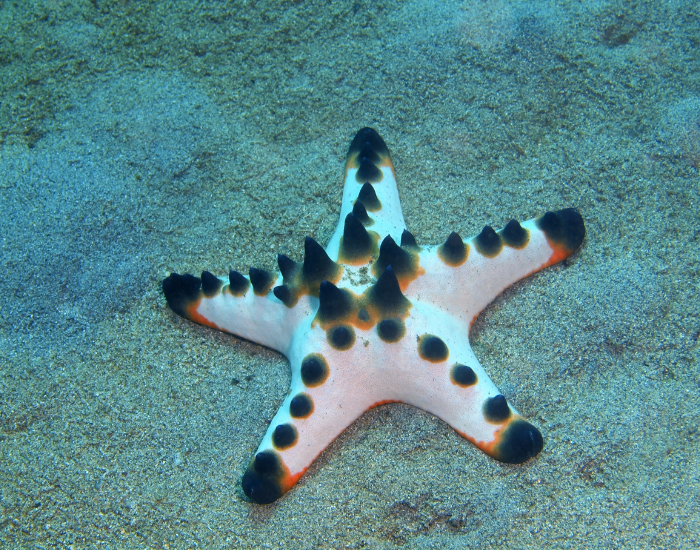
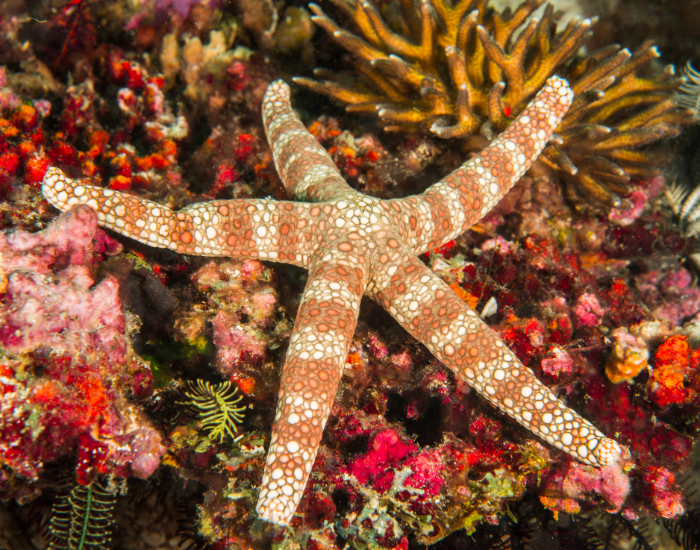
Sea stars possess an iconic star-shaped body with five arms radiating from a central disc. However, some species like the sunflower sea star can grow up to 24 arms. These predators dominate rocky shores and coral reefs worldwide.
The ochre sea star shapes intertidal ecosystems along the Pacific Coast. Meanwhile, most sea stars hunt bivalves using their powerful tube feet. They pry shells open, then evert their stomach to digest prey externally.
In contrast, the crown-of-thorns devastates coral reefs when populations explode. This species feeds directly on coral polyps, leaving behind white skeletons.
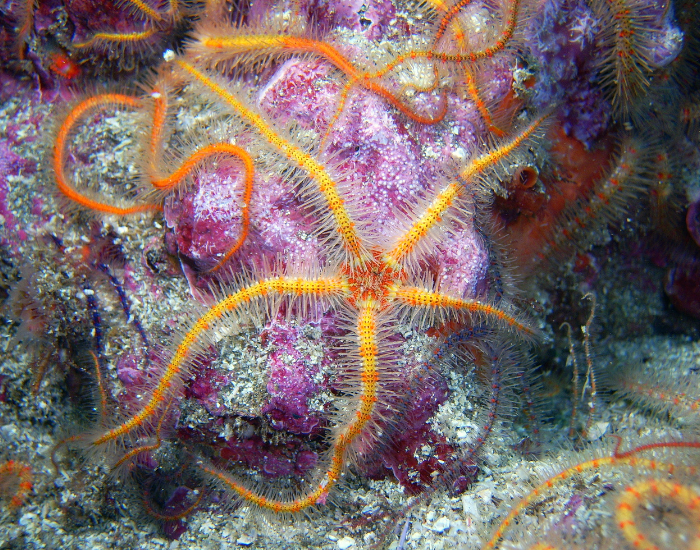
Ophiuroidea: Brittle Stars and Basket Stars
Brittle stars feature slender, highly flexible arms distinct from their central disc. These quick movers navigate rocky crevices with ease. Therefore, most brittle stars hide under rocks during daylight hours.
Basket stars extend their branched arms at night to capture plankton. Many brittle stars regenerate entire arms after predation. This ability helps them survive in competitive marine environments.
Savigny’s brittle star and other species dominate the ocean floor in many regions. The reticulated brittle star displays intricate patterns across its body surface.
Echinoidea: Sea Urchins and Sand Dollars
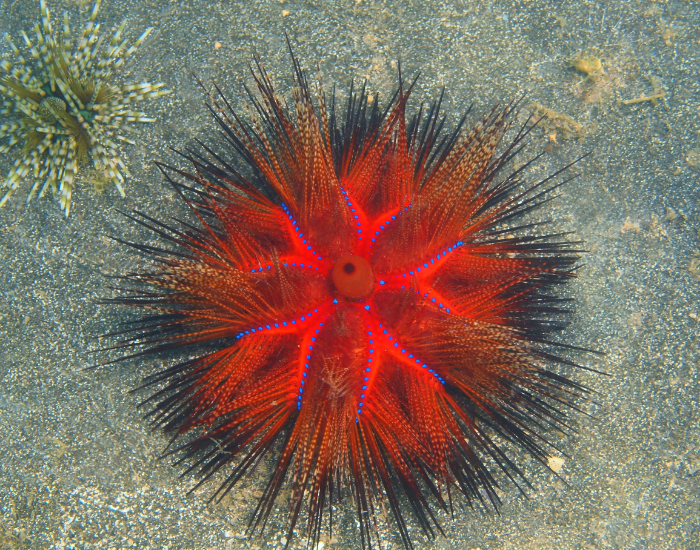
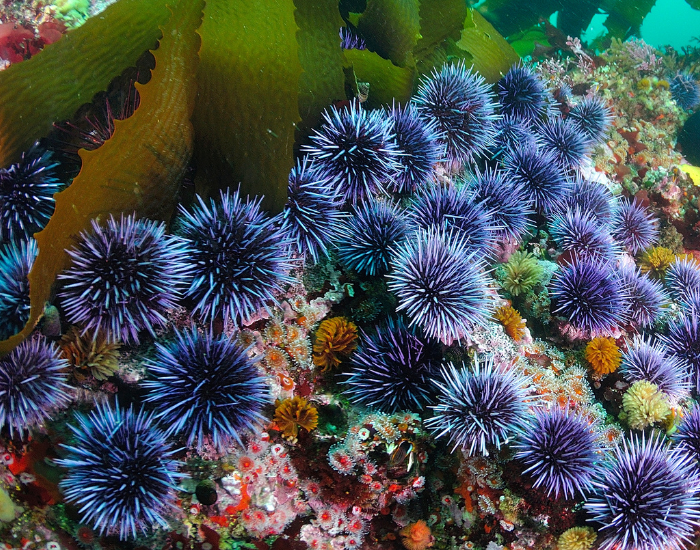
Sea urchins possess rounded bodies with rigid tests covered in spines. Purple sea urchins graze algae in kelp forests. However, when predators decline, most sea urchins can overgraze and create barren zones.
Red sea urchins live longer than most marine animals, reaching over 100 years. The West Indian sea egg inhabits Caribbean waters. Meanwhile, the slate pencil urchin displays thick, blunt spines.
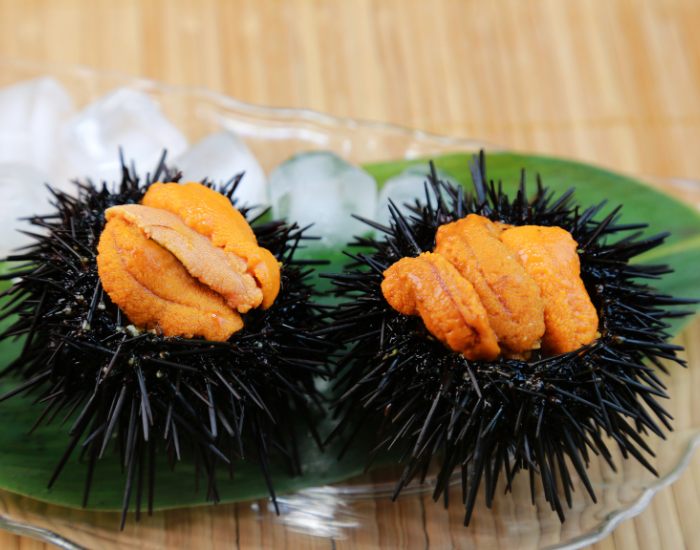
Sand dollars represent flattened sea urchins adapted for burrowing. These species process sediment on sandy ocean floors. In addition, humans harvest many sea urchins for their roe, called uni in Japanese cuisine.
Holothuroidea: Sea Cucumbers
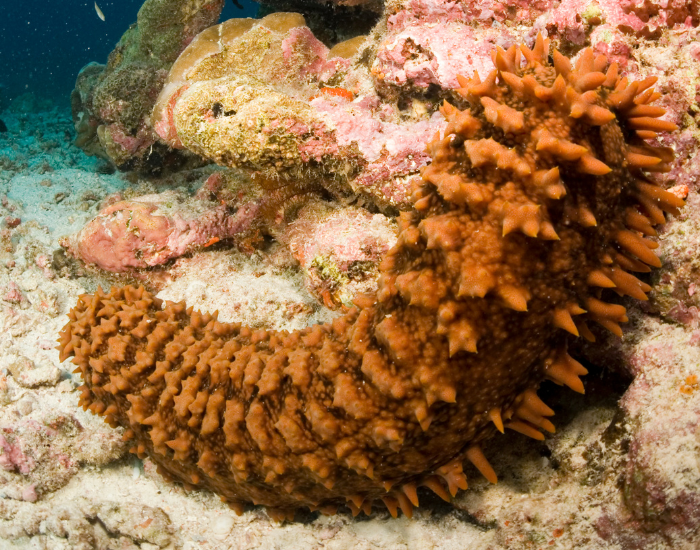
Sea cucumbers possess soft, elongated bodies lacking rigid spines. These burrowing sea cucumbers recycle nutrients as they process sediment. Therefore, sea cucumbers play a vital role in maintaining healthy ocean floor ecosystems.
Some species eject sticky internal organs as defense when threatened. This dramatic response deters predators while the sea cucumber regenerates its lost parts.
Red sea cucumbers and many sea cucumber species serve as delicacies in Asian cuisine. However, overfishing threatens many populations worldwide.
Crinoidea: Sea Lilies and Feather Stars
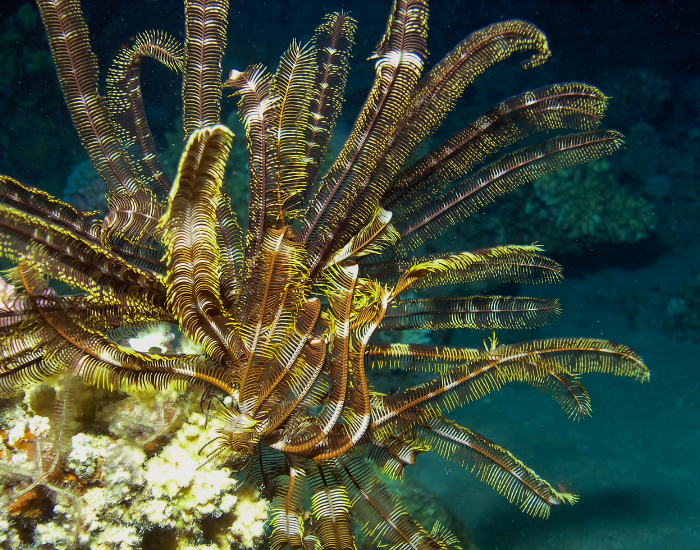
Feather stars and sea lilies represent ancient echinoderms with a rich fossil record dating back over 500 million years. These filter feeders resemble underwater flowers.
Sea lilies attach to the seafloor with stalks. In contrast, feather stars swim freely using their feathery arms. Both types capture plankton drifting through the water column.
Where Do Echinoderms Live?
Echinoderm species inhabit nearly every marine environment on Earth. This wide distribution demonstrates their remarkable adaptability.
Coral reefs host sea stars, brittle stars, and sea urchins among the coral branches. These ecosystems provide shelter and abundant food sources.
The deep sea harbors strange brittle stars and deep sea species adapted to crushing pressure. Burrowing sea cucumbers dominate the abyssal ocean floor.
Polar oceans support species like the arctic sea star in freezing Arctic Ocean waters. These echinoderms evolved antifreeze proteins for survival.
Rocky shores feature sea urchins that sculpt shallow marine environments. However, most sea urchins sometimes overgraze kelp, threatening ecosystem balance.
Sandy ocean floors attract sand dollars and sea cucumbers. These species process sediment and recycle organic matter.
Marine environments from intertidal zones to hadal trenches support living echinoderms. Therefore, protecting diverse habitats ensures their survival.
Echinoderms Evolved: A Rich Fossil Record
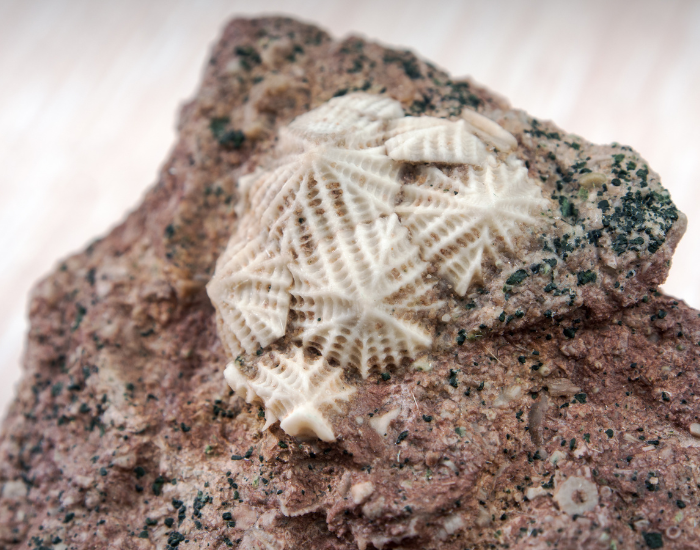
The fossil record reveals that echinoderms evolved during the Cambrian Period, over 500 million years ago. Extinct echinoderms like blastoids and cystoids once thrived in ancient seas.
These extinct groups left behind limestone fossils that help scientists understand marine evolution. For example, crinoid stems formed thick layers of sedimentary rock.
Echinoderms typically preserve well due to their calcium carbonate skeletons. Therefore, paleontologists use fossil crinoids as geological markers. This rich fossil record spans from the Paleozoic Era to modern times.
The Water Vascular System: An Engineering Marvel
The water vascular system sets echinoderms apart from other animals. This hydraulic network uses seawater instead of blood. Water enters through the madreporite, then flows through radial canals.
Tube feet extend from these canals, creating suction through muscular contractions. Sea stars use hundreds of tube feet to grip prey. Meanwhile, sea urchins employ tube feet for locomotion across rocky surfaces.
Modified tube feet serve specialized functions. Some tube feet assist with gas exchange. Others help sense chemical signals in the surrounding water. This versatile system demonstrates evolutionary innovation.
How Echinoderms Reproduce
Most echinoderms have separate sexes, releasing eggs and sperm into the water column. This broadcast spawning strategy produces millions of larvae. However, only few species reach adulthood.
Larvae possess bilateral symmetry and swim as plankton. After several weeks, they settle and undergo metamorphosis. The transformation reveals their radial symmetry and adult form.
Some echinoderms reproduce asexually through fission. A few species split their central disc, creating two individuals. In addition, regeneration allows fragmented arms to grow into new sea stars.

Echinoderms and Human Culture
Echinoderms aren’t just ecological players, they’re intertwined with human life across multiple cultures.
Many sea cucumbers are harvested for Asian markets, sold fresh or dried as bêche-de-mer. Sea urchins provide prized roe consumed in Japan, Italy, and Chile. The delicate flavor makes uni a luxury ingredient.
Traditional medicine incorporates certain echinoderm species for supposed healing properties. However, scientific evidence remains limited for most claims.
Marine animals like echinoderms also advance scientific research. Their embryonic development influenced developmental biology for decades. Scientists study regeneration mechanisms for potential medical applications.
Conservation Challenges Facing Echinoderms
Many echinoderms face growing threats from human activities and climate change.
Overfishing depletes sea cucumber and sea urchin populations. Some fisheries have collapsed due to unsustainable harvesting. For example, red sea cucumber populations declined sharply in the Indian Oceans.
Climate change affects reproduction timing and larval survival. Ocean acidification weakens calcium carbonate skeletons. Therefore, rising temperatures shift species distributions poleward.
Coral reef decline reduces habitat for sea stars, sea urchins, and other species. Crown-of-thorns outbreaks worsen when reefs face other stressors.
Habitat destruction from coastal development eliminates crucial marine environments. Bottom trawling damages ocean floor communities where most brittle stars live.
Marine protected areas and sustainable harvesting practices offer hope. In addition, reducing carbon emissions helps preserve ocean chemistry for organisms with calcium carbonate structures.
Echinoderms in Marine Ecosystems
Echinoderms play vital roles as both predators and prey. Most sea stars control mussel and clam populations. Purple sea urchins shape kelp forest dynamics through grazing.
Sea cucumbers recycle nutrients on the ocean floor, maintaining sediment health. Meanwhile, brittle stars process organic matter in deep sea sediments.
Many species serve as food for sea otters, fish, and sea birds. Therefore, echinoderm population changes ripple through entire food webs. For example, sea otter decline allows sea urchins to overgraze kelp forests.
Fascinating Echinoderm Facts
- The name “echinoderm” literally means “spiny skin” in Greek, referring to the calcium carbonate plates and spines that form their distinctive endoskeleton beneath the skin.
- Over 7,000 described species exist today, with more discovered regularly in the deep sea, particularly in unexplored ocean trenches and abyssal plains.
- Echinoderms possess no blood—seawater circulates through their unique water vascular system instead, which also powers their tube feet for movement and feeding.
- The largest sea star, the sunflower sea star, spans over one meter in diameter with up to 24 arms. Conversely, the smallest brittle stars measure just millimeters across.
- Sea urchins have five teeth arranged in a complex structure called Aristotle’s lantern, which can regenerate throughout their lifetime and works like a powerful jaw to scrape algae from rocks.
- Some sea cucumbers breathe through their anus, drawing water into specialized respiratory trees that extract oxygen from the seawater.
- Cushion stars and serpent stars represent other diverse echinoderm forms, showcasing the phylum’s remarkable variety in body shapes and ecological niches.
- Most echinoderms lack true brains but possess a decentralized nervous system consisting of a nerve ring around the mouth and radial nerves extending into each arm.
- Echinoderms exhibit remarkable regenerative abilities, with many species capable of regrowing lost arms, and some sea stars can regenerate an entire body from a single arm attached to part of the central disk.
- All echinoderms begin life with bilateral symmetry as larvae but transform into their characteristic five-fold radial symmetry during metamorphosis into adults.
FAQs About Echinoderms
Radial symmetry, water vascular system, spiny skin, internal skeleton made of ossicles, and regeneration ability define these marine animals.
Echinoderms are exclusively marine organisms belonging to the phylum Echinodermata. They’re invertebrates with unique hydraulic systems.
No. Sea anemones are cnidarians, like jellyfish and corals. Echinoderms possess completely different internal anatomy and skeletal structures.
Yes. Many sea cucumbers are consumed in Asian cuisine. Sea urchins provide roe harvested in Japan, the Mediterranean, and Chile. Both represent economically important fisheries.
The five living classes include Asteroidea (sea stars), Ophiuroidea (brittle stars), Echinoidea (sea urchins and sand dollars), Holothuroidea (sea cucumbers), and Crinoidea (feather stars and sea lilies).
Roughly 7,000 described living species, though scientists continue discovering new forms. Extinct groups add thousands more fossil species.
Most species inhabit coral reefs, rocky shores, and the ocean floor. However, echinoderms occupy every marine environment from polar seas to tropical reefs.
The Future of Echinoderms
From the delicate arms of feather stars drifting in ocean currents to the armored spines of purple sea urchins, echinoderms showcase evolutionary creativity. They engineer ecosystems, support human cultures, and remind us of our oceans’ fragility.
Today, echinoderms face unprecedented challenges. However, conservation efforts offer hope. Marine protected areas safeguard critical habitats. Sustainable fisheries management protects sea cucumber and sea urchin populations. Climate action preserves ocean chemistry for calcium carbonate skeletons.
Understanding echinoderms helps us appreciate ocean interconnectedness. These spiny-skinned animals connect past and present, linking extinct groups to living species. Their future depends on how we treat marine environments today.
Further Reading
- Box Jellyfish: The Truth About The Ocean’s Most Venomous Creature
- Hadal Zone: Inside Earth’s Darkest Ocean Depths and Hidden Life
- Types of Sea Turtles: A Complete Guide