I still remember dropping into a kelp forest off the coast of Baja for the first time. I was a biology student — and I was completely unprepared for the scale of it.
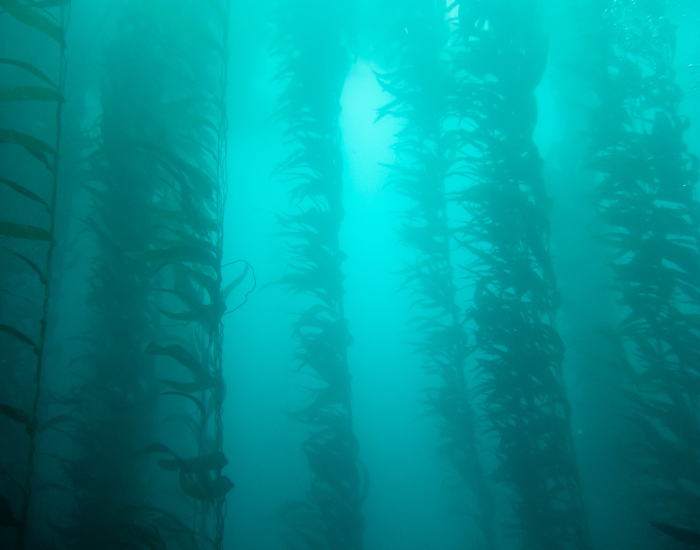
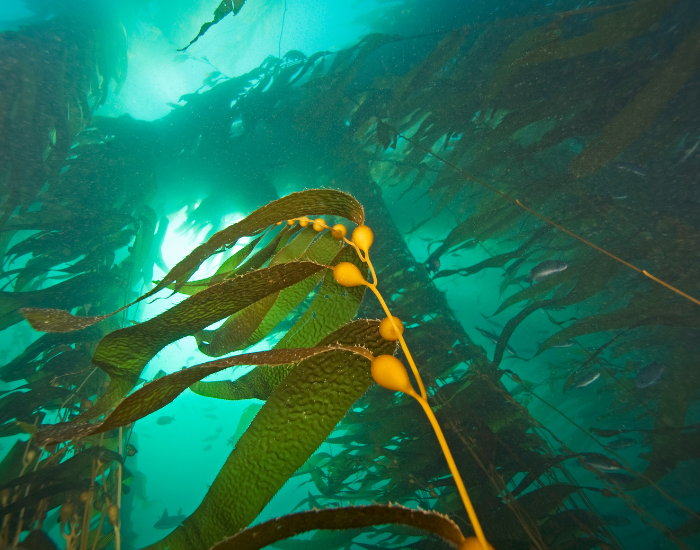
Looking up through the water, I didn’t see open ocean. I saw a towering, golden-hued cathedral swaying in the current. It felt less like a patch of seaweed and more like stepping into an old-growth redwood forest.
That’s the magic of these systems. Kelp forests are the foundational architecture of temperate reefs, yet most people never encounter them. They aren’t just collections of large brown algae. They are dynamic, life-sustaining engines, and they are disappearing faster than most people realise.
What Is a Kelp Forest?
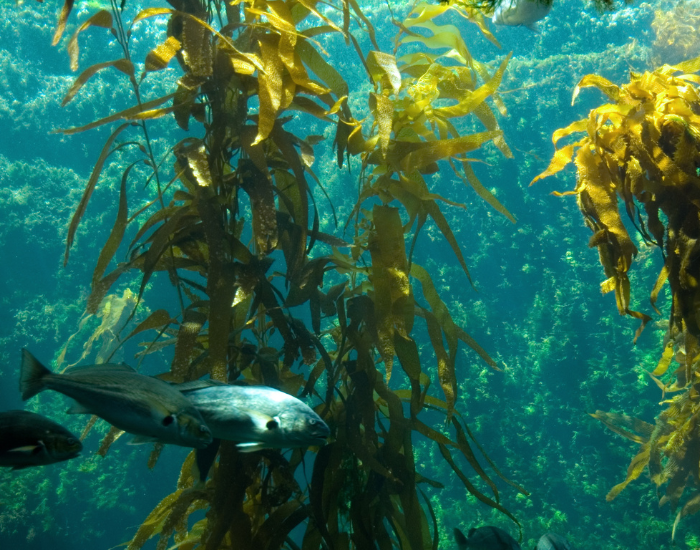
First, let’s clear up a common misconception: Did you know kelp is not a plant? You can check how far it sits from a fern in my tree of life. Kelp belongs to the brown algae group and, while it performs photosynthesis, it lacks the complex root and vascular systems of terrestrial plants. Kelp is a type of giant algae, notable for its large size and its crucial ecological role in forming dense underwater habitats.
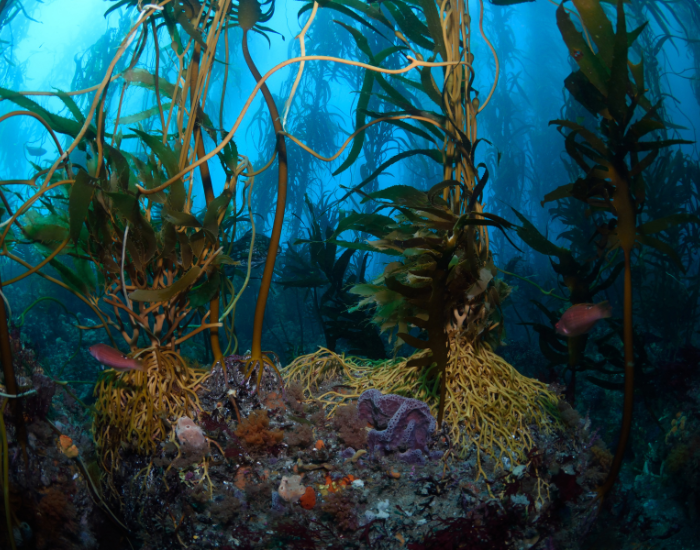
Instead of roots, kelp attaches to the seafloor using a structure called a kelp holdfast, a root-like anchor that grips rocky surfaces on the kelp forest floor. The kelp holdfast secures the kelp and provides stability, supporting the vertical structure of the ecosystem and offering habitat for various benthic organisms. From there, long fronds stretch upward through the water column toward the sunlight, creating dense underwater canopies that can reach 45 metres in height.
A kelp forest typically forms in nutrient-rich, cool coastal waters. These ecosystems are defined by their vertical layering, which allows kelp to form forests underwater, similar in structure to terrestrial forests. Like terrestrial forests, kelp forests create complex, layered habitats that provide shelter and food for a wide range of marine species, supporting high biodiversity and intricate ecological interactions.
How Kelp Forests Form and Grow
These ecosystems rank among the fastest-growing structures on Earth. Under the right conditions, giant kelp (Macrocystis pyrifera) can grow up to 60 centimetres in a single day, making it one of the fastest-growing organisms on the planet.
Environmental factors such as substrate type, light, water flow, and nutrient availability are crucial for kelp growth. Kelp forests thrive in nutrient rich waters, especially where upwelling brings deep-sea nutrients to the surface.
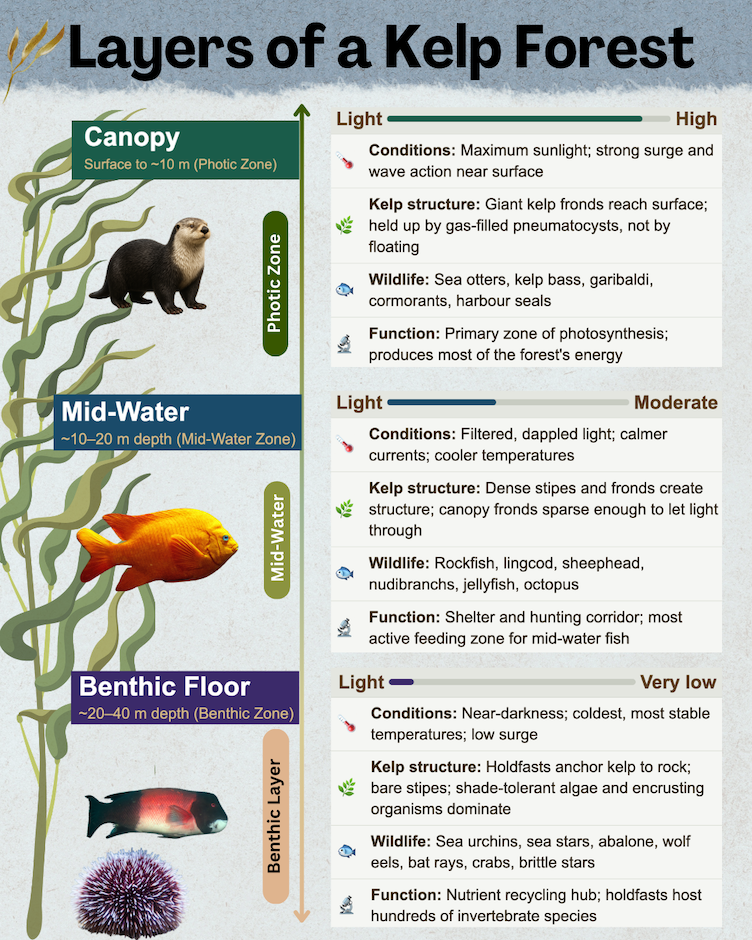
Three distinct zones define the structure of a kelp forest (you can have a look at our interactive tool rainforest layers to explore it deeper):
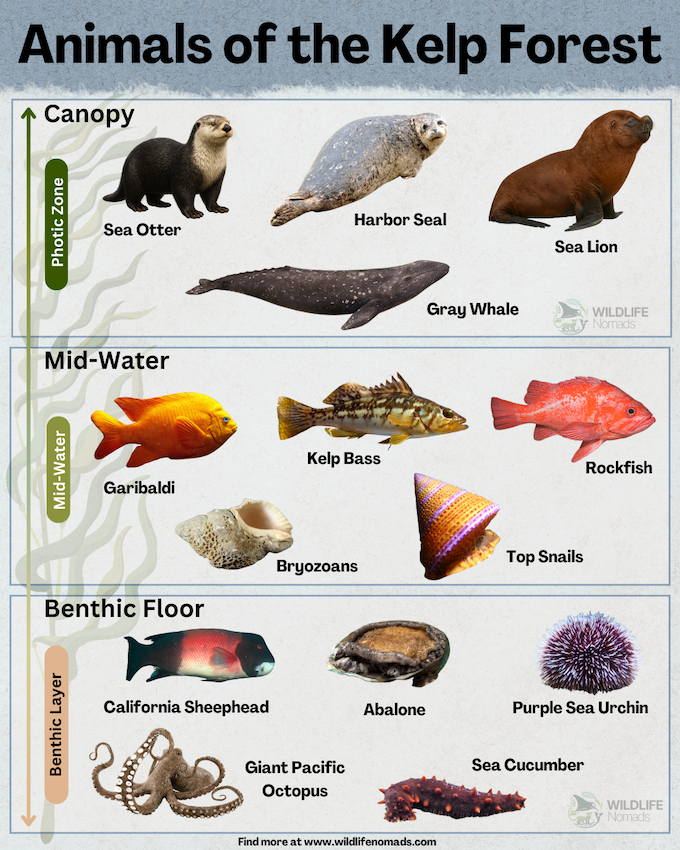
The Canopy — The surface layer that captures the most sunlight. Sea otters, sea lions, and shore seabirds hunt and rest here.
The Understory — A mid-water zone of filtered light, home to rockfish, garibaldi, and a wide variety of marine mammals.
The Forest Floor — Here, you’ll find a world of echinoderms, sea cucumbers, and the ever-present urchins.
Facts About Kelp Forests You Probably Don’t Know
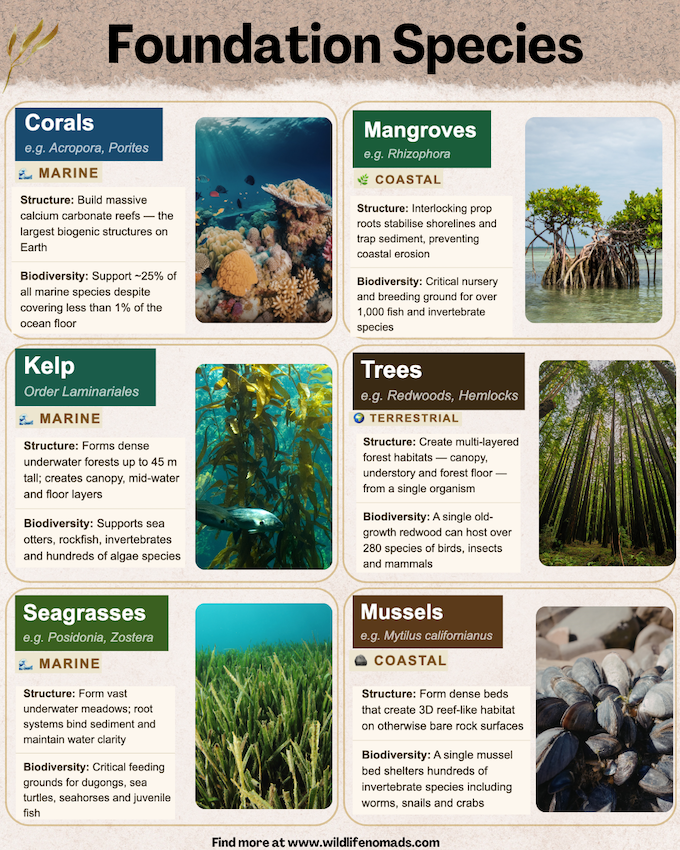
1. They Are Ecosystem Engineers – Foundation Species
Much like beavers on land, kelp physically remodels its environment, considered foundational species. Kelp forests alter their surroundings by reducing wave energy, protecting coastlines from erosion, and influencing sedimentation patterns. It creates shelter, food, and structure for hundreds of marine species that could not otherwise survive in open coastal waters. It supports the whole marine food web.
2. Giant Kelp Grows Remarkably Fast
Giant kelp is one of the fastest-growing organisms on the planet. It races toward the surface at a rate that few other living things can match, up to 60 cm per day under ideal conditions.
3. Holdfasts Aren’t Roots
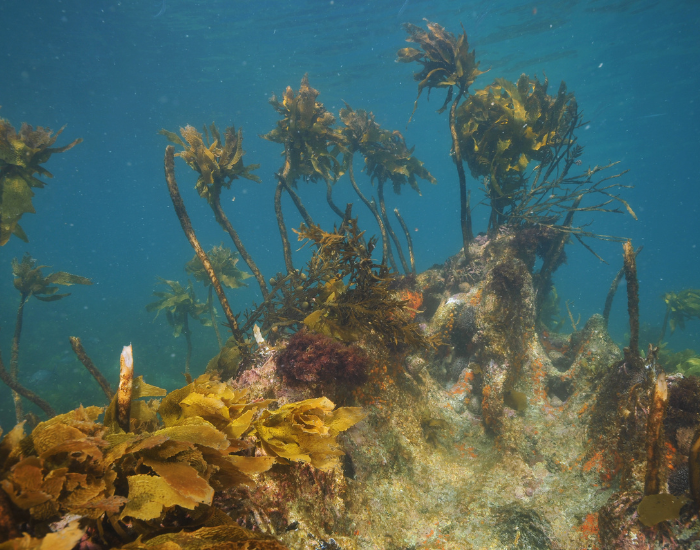
Unlike trees, holdfasts don’t absorb nutrients. They exist purely to grip rock. This means kelp can colonise hard substrates where plants could never take root, anchoring entire kelp ecosystems to the seafloor.
4. Kelp Forests Store Carbon
Kelp forests are powerful blue carbon sinks. They absorb carbon dioxide from the atmosphere and, when kelp dies and sinks to the deep sea, that carbon gets locked away for centuries. This makes kelp forest restoration an increasingly important climate mitigation strategy.
5. Not All Kelp Is the Same
From massive bull kelp (Nereocystis luetkeana) to smaller, feathery species, there are over 30 recognised genera of kelp worldwide. Each creates unique niches within the broader kelp ecosystem. Bull kelp, found along the West Coast of North America, forms dense kelp beds in shallower, more turbulent water than giant kelp.
6. Sea Urchins Can Destroy Them
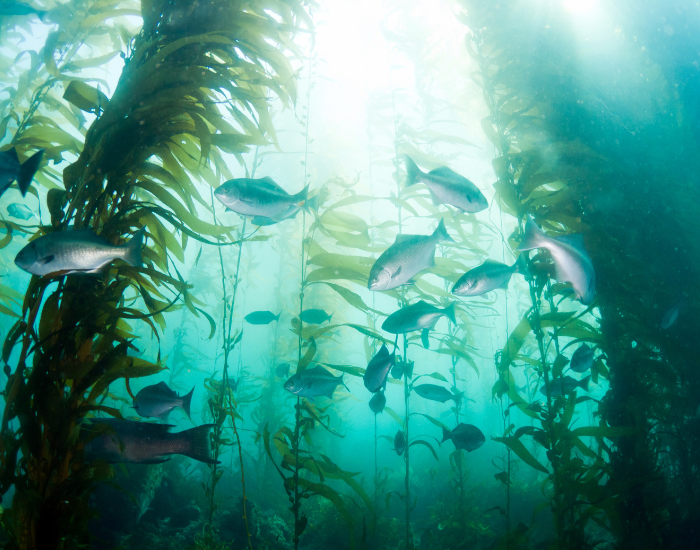
In a healthy kelp forest, natural predators like sea otters keep urchin populations in check, maintaining a balance in herbivore populations that is crucial for ecosystem health. However, when those predators disappear, urchin populations explode. A single population of purple sea urchins can completely denude a kelp forest, turning it into a rocky urchin barren.
7. They Are a Nursery for Commercial Fish
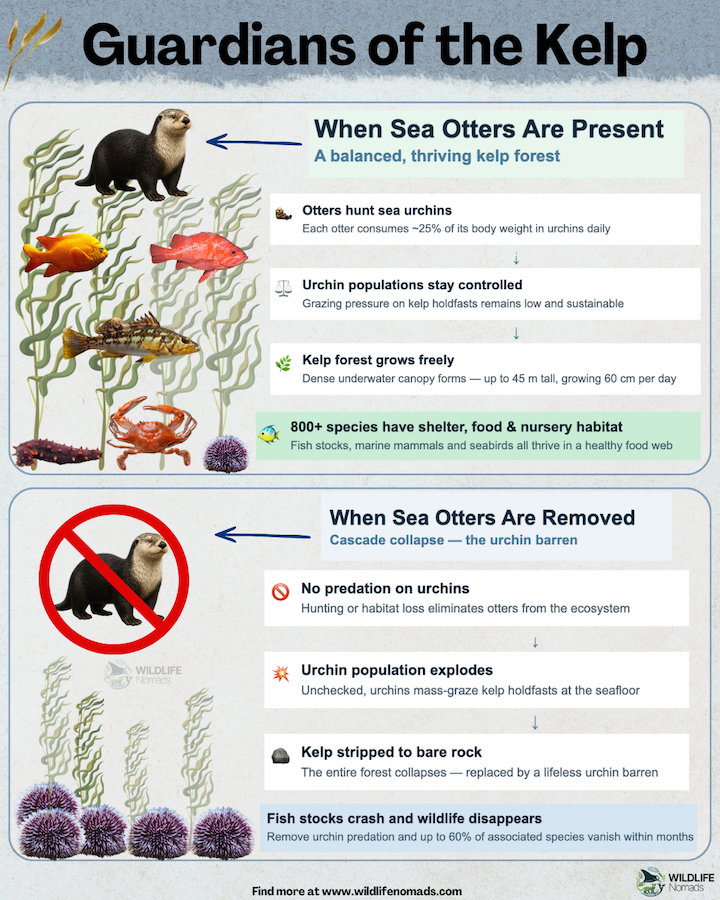
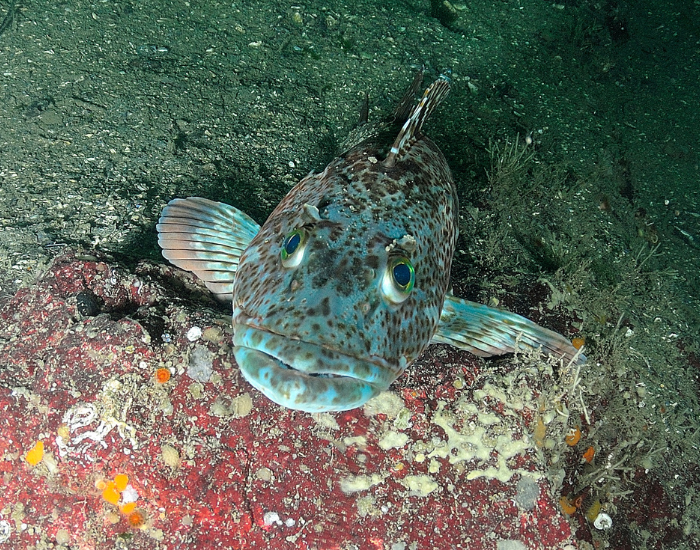
Many commercially important fish stocks depend on kelp forests during their juvenile stages, which are typically found in shallow coastal waters. Rockfish, lingcod, and other species use the dense kelp canopy as protection from predators while they grow. Without healthy kelp beds, fish populations decline.
8. Kelp Forests Exist Across the Globe
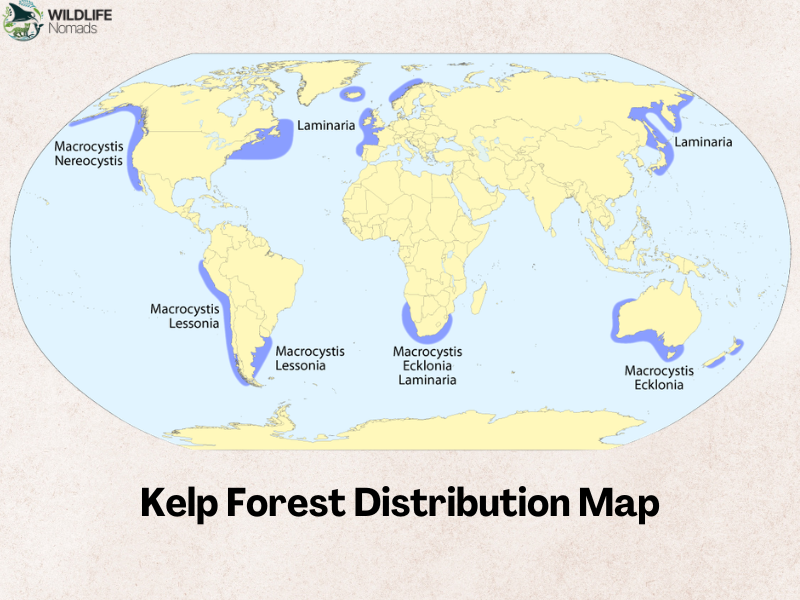
These ecosystems appear from the chilly waters of Scandinavia and Patagonia to the coastlines of Tasmania, South Africa, and the west coast of North America. Some of the most spectacular examples are found in the Monterey Bay region of California and the Cape Peninsula in South Africa.
9. They Provide Critical Food and Shelter
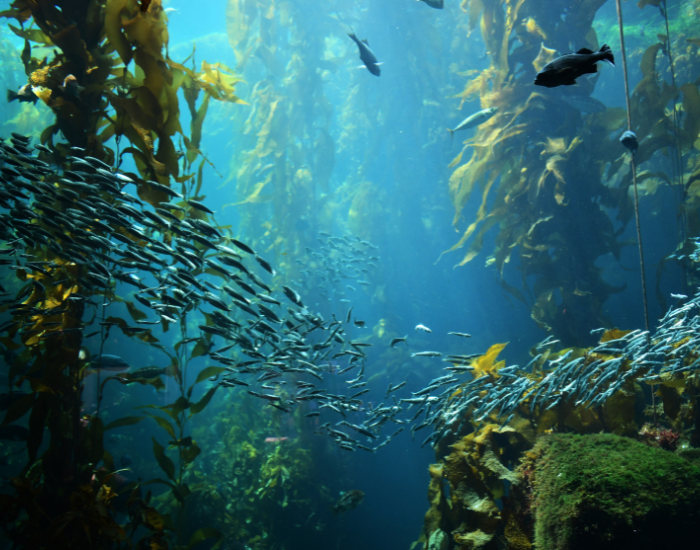
From small crustaceans to sea stars to large marine mammals, virtually every organism in the kelp ecosystem depends on the physical structure the kelp itself creates.
Animals of the Kelp Forest
The dense growth of kelp creates a unique habitat that dampens waves, shelters water, and influences sedimentation, shaping the physical environment of coastal areas.
The Canopy: Sea otters wrap themselves in kelp fronds to avoid drifting while they sleep, a behaviour as endearing as it is ecologically important. Sea lions and shore birds hunt in the upper canopy.
The Mid-Water Zone: Schools of rockfish and the bright orange garibaldi rely on swaying kelp fronds for protection. Marine mammals including harbour seals and California sea lions hunt through this zone.
The Forest Floor: The ocean floor is a world of echinoderms: sea urchins, crabs, sea cucumbers, brittle stars, and sea stars occupy every crack and crevice. Gray whales occasionally forage along the bottom in shallow kelp beds during their Pacific migrations.
| Zone | Primary Characteristic | Notable Residents | Key Ecological Role |
| Canopy | Sunlight-rich surface layer | Sea otters, sea lions, seabirds | Hunting, resting, and thermal regulation |
| Mid-Water | Filtered light, swaying fronds | Rockfish, garibaldi, harbor seals | Shelter from predators; nursery grounds |
| Forest Floor | Dense, rocky substrate | Sea urchins, sea stars, crabs | Benthic foraging; holdfast anchorage |
The Future of Kelp: Threats and Recovery
The Threats Facing Kelp Forests Today
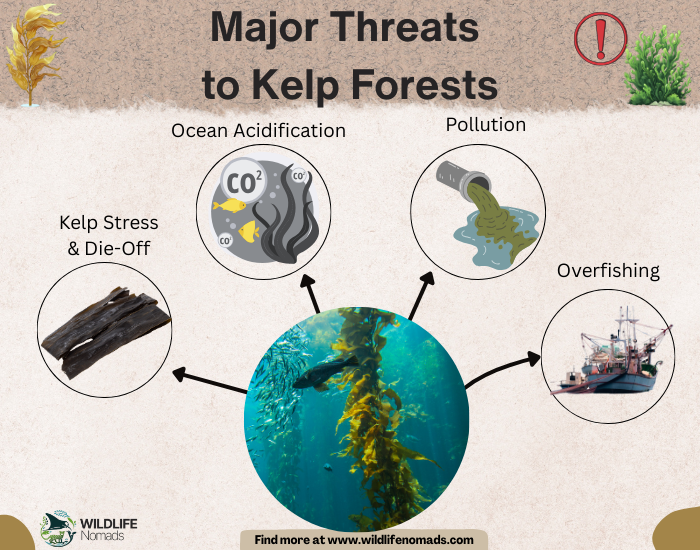
It’s heartbreaking to see, but these forests are under siege. How ocean pollution affects sea animals is a major factor, as runoff can smother the kelp. Even more critical is the shift in global temperatures. Kelp needs cold water. As our oceans warm, the “forests” are shrinking, leading to a loss in biodiversity.
When we lose the kelp forest, we don’t just lose the algae; we lose the keystone animals and species that keep the ecosystem in balance.
Recovery
Across the globe, conservation teams are actively working on kelp forest restoration. In California, organisations are physically removing sea urchins from barren zones to allow regrowth. In Tasmania, where warm-water incursions decimated kelp forests, restoration teams are testing heat-tolerant kelp strains.
However, kelp restoration is complex. Long-term success depends on restoring the broader ecosystem, including natural predators, rather than simply replanting kelp. Without healthy urchin populations controlled by sea otters or sunflower sea stars, restored kelp forests face immediate overgrazing.
As a biologist, I believe kelp forest restoration efforts are one of the most promising intersections of climate science and marine conservation. These are not passive projects; they are active ecological repairs.
Frequently Asked Questions
A kelp bed is a smaller, often less dense gathering of kelp that lacks a surface canopy. A kelp forest has a continuous canopy at the ocean surface, creating that multi-layered structure with canopy, understory, and forest floor zones. Both provide critical marine habitat, however kelp forests support greater biodiversity.
Yes — kelp requires cool, nutrient-rich water to grow. Most kelp forests occur in water between 6°C and 14°C. Warmer temperatures inhibit kelp growth and are a primary driver of kelp forest decline globally.
Sea otters are a keystone species in kelp forest ecosystems. They prey heavily on sea urchins, keeping urchin populations in check. Without otters, urchin populations can explode and consume entire kelp forests down to the rock.
The combination of rising ocean temperatures and the loss of natural predators — particularly sea otters and sunflower sea stars — is the most serious threat. Warming weakens kelp while simultaneously removing the urchin-control mechanisms that allow forests to recover.
Where to See Kelps ?
Here is a list of 3 tours where you can see Kelp Forest and all underwater life. As a biologist, I only recommend tours that follow strict ethical guidelines to ensure we don’t disturb wildlife. These are the three tours/ partners I trust most based on their conservation records:
This blog is reader-supported. When you buy experiences through links listed on this site, we may earn an affiliate commission.
References:
Steneck, R. S., Graham, M. H., Bourque, B. J., Corbett, D., Erlandson, J. M., Estes, J. A., & Tegner, M. J. (2002). Kelp forest ecosystems: biodiversity, stability, resilience and future. Environmental Conservation, 29(4), 436–459. https://doi:10.1017/S0376892902000322
Estes, J. A., & Palmisano, J. F. (1974). Sea otters: Their role in structuring nearshore communities. Science, 185(4156), 1058–1060. https://doi.org/10.1126/science.185.4156.1058
Filbee-Dexter, K., & Scheibling, R. E. (2014). Sea urchin barrens as alternative stable states of collapsed kelp ecosystems. Marine Ecology Progress Series, 495, 1–25. https://doi.org/10.3354/meps10573
Krumhansl, K. A., Okamoto, D. K., Rassweiler, A., Novak, M., Bolton, J. J., Cavanaugh, K. C., … & Harley, C. D. G. (2016). Global patterns of kelp forest change over the past half-century. Proceedings of the National Academy of Sciences, 113(48), 13785–13790. https://doi.org/10.1073/pnas.1606102113
Dayton, P. K. (1985). Ecology of kelp communities. Annual Review of Ecology and Systematics, 16, 215–245. https://doi.org/10.1146/annurev.es.16.110185.001243
Smale, D. A., Burrows, M. T., Moore, P., O’Connor, N., & Hawkins, S. J. (2013). Threats and knowledge gaps for ecosystem services provided by kelp forests: A northeast Atlantic perspective. Ecology and Evolution, 3(11), 4016–4038. https://doi.org/10.1002/ece3.774
Pessarrodona, A., Assis, J., Filbee-Dexter, K., Burrows, M. T., Gattuso, J.-P., Duarte, C. M., … & Smale, D. A. (2022). Global seaweed productivity. Science Advances, 8(37), eabn2465. https://doi.org/10.1126/sciadv.abn2465
Le, D. M., Desmond, M. J., Pritchard, D. W., & Hepburn, C. D. (2022). Effect of temperature on sporulation and spore development of giant kelp (Macrocystis pyrifera). PloS one, 17(12), e0278268. https://doi.org/10.1371/journal.pone.0278268