I remember the first time I noticed a sea cucumber. I was diving off Borneo, fifteen meters deep, gliding over a reef buzzing with coral fish and sea turtles. Then I looked down and saw this lumpy, sausage-shaped thing on the sand. No fins. No eyes. My dive buddy pointed at it and shrugged, “Is that even alive?”
We’ve all been there, right? You’re snorkelling in Southeast Asia, distracted by pufferfish, sea anemones, and sea urchins, and you nearly kick some gelatinous blob on the seafloor. That’s a sea cucumber, and ignoring it is a mistake. In my years studying marine invertebrates across the Indo-Pacific, I’ve learned that the sea cucumber is one of the strangest, most important animals in the ocean. Here are twelve facts that changed how I see these creatures.
1. A Sea Cucumber Is an Animal: Related to Starfish and Sea Urchins
Let’s clear this up. A sea cucumber is not a plant, not a vegetable, and not a fungus. It’s an animal belonging to the phylum Echinodermata, the same group that includes sea urchins, sea stars, brittle starts, starfish, and sand dollars. Within that phylum, sea cucumbers sit in the class Holothuroidea.
What makes echinoderms special is their five-fold radial symmetry. Most echinoderms display this clearly, think of a sea star’s five arms or a sea urchin’s round body. The sea cucumber has stretched that body plan into a long, cylindrical body. The fivefold symmetry hides inside, running along bands of muscle from mouth to tail. I’ve dissected enough specimens to confirm the blueprint.
Other echinoderms like sand dollars share the same water vascular system, a hydraulic network unique to this phylum. That system powers everything from movement to feeding in every species.

2. Over 1,700 Sea Cucumber Species Exist (and Counting)
Here’s the fact that floored me. There are more than 1,700 known sea cucumber species worldwide. They live in every ocean habitat, from shallow tide pools to deep waters past 5,000 meters. Some deep sea species thrive at crushing pressures that would destroy most marine animals.
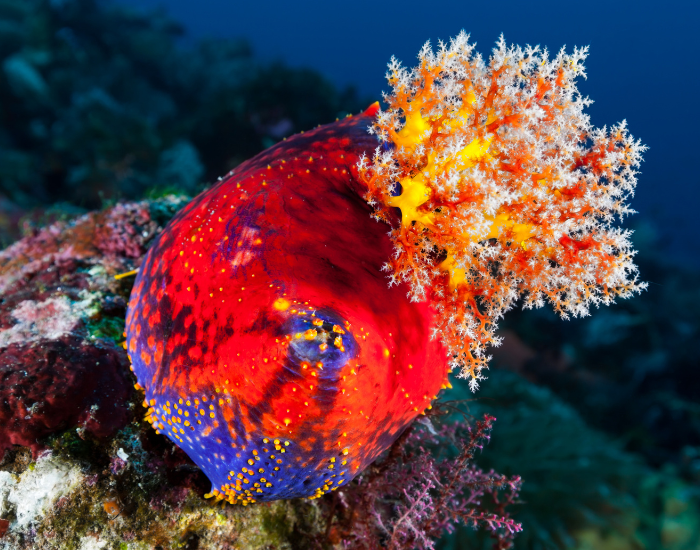
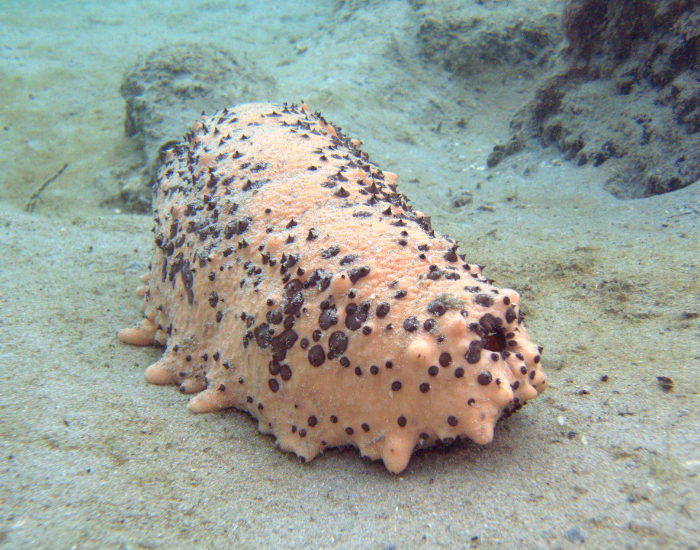
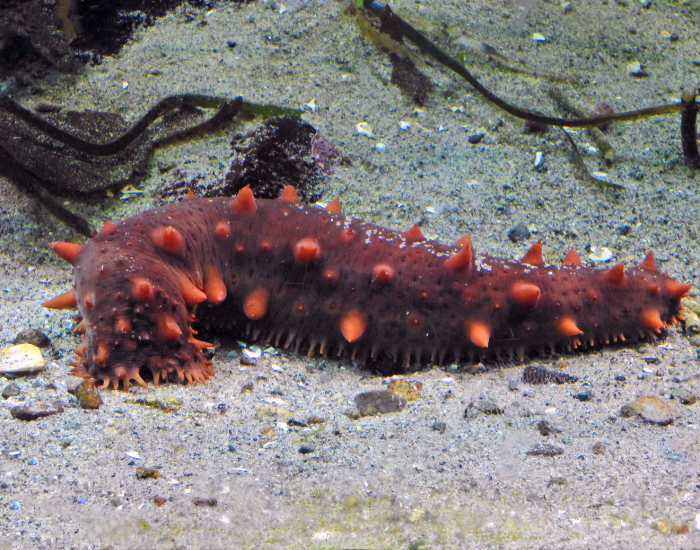
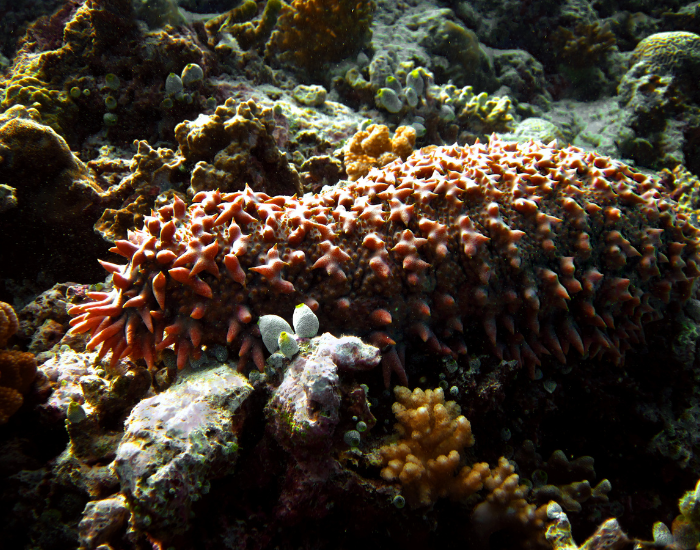
The diversity is staggering. Sea apples are round, brightly coloured, and look more like ornamental fruit than animals. Sea pigs — yes, sea pigs — waddle across the deep sea floor on inflated tube feet. Snake sea cucumbers thread through coral rubble, long and slender. The giant sea cucumber of the Indo-Pacific can reach over half a meter in length.
Many sea cucumbers in the deep sea look nothing like their shallow-water cousins. Deep sea species have adapted transparent bodies and elongated tentacles. Some float through the ocean rather than crawling along the bottom. Others in the abyss have evolved flattened bodies for gliding over soft sediment. Sea apples alone come in vivid purples, reds, and yellows. Snake sea cucumber varieties stretch across reef rubble like living ropes.

3. Sea Cucumbers Breathe Through Their Butt
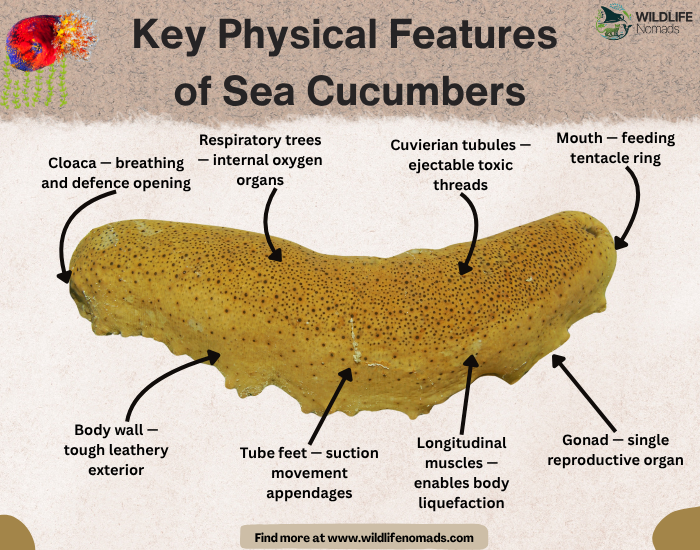
This is the fact everyone remembers. Most sea cucumbers breathe using a structure called the respiratory tree, branching organs inside the body cavity that connect to the anal opening. The animal rhythmically pumps surrounding water in and out through that opening, exchanging oxygen across the thin walls of the respiratory tree.
I’ve watched this happen in real time while monitoring specimens in a research tank. The rhythmic pulsing is surprisingly regular. In many species, these branching organs also help with excretion, expelling waste into the water around them.
This breathing method is unusual even among other echinoderms. Sea urchins and sea stars use different structures for respiration. The respiratory tree is a unique adaptation, and it works remarkably well. Varieties in deep waters with low oxygen levels have especially enlarged breathing organs to compensate.
4. Some Sea Cucumbers Have Teeth Around Their Anus
If breathing through the backside wasn’t enough, some sea cucumbers have developed anal teeth. These are small, calcified structures ringing the anal opening. The leading theory? Defense against the pearl fish.
The pearl fish is a slender parasite that enters the sea cucumber’s body through the rear and lives inside the breathing cavity. The pearl fish uses the sea cucumber’s body as shelter, sometimes feeding on its internal organs.
Anal teeth appear to be an evolutionary countermeasure. They don’t block entry entirely, but they make it harder for the fish to slip inside. Not all species have them, the presence of anal teeth varies across the group. Other sea cucumbers without these structures remain more vulnerable to parasites and predators alike.
5. Sea Cucumbers Eject Their Internal Organs as a Defense Mechanism
When a potential predator threatens a sea cucumber, the animal may respond with one of the most dramatic defense mechanisms in the animal kingdom: evisceration. It expels its internal organs, including the digestive system and reproductive organs, through either its mouth or rear end, directly at the attacker.
The ejected organs are sticky, sometimes toxic, and can entangle predators like crabs and pufferfish. Cuvierian tubules expand into long, adhesive threads that immobilize a crab’s legs in seconds. I’ve triggered this response accidentally during some dives. Other sea cucumbers rely on toxins in their body wall instead, releasing chemicals that repel predators and even kill small fish in confined spaces.
The remarkable part? The sea cucumber regenerates those organs within weeks. This regenerative capacity has drawn serious scientific interest into how these animals rebuild complex internal organs so quickly.
6. Sea Cucumbers Move Using Tube Feet and Hydraulic Pressure
Sea cucumber movement looks glacially slow, but the system is sophisticated. Like other echinoderms, these animals use tube feet, tiny, fluid-filled projections lining the underside of their bodies. These tube feet operate through the water vascular system, using hydraulic pressure to extend and retract each foot.
Most sea cucumbers crawl along the seafloor at a few meters per hour. The tube feet grip sand, rock, or coral rubble and pull the animal forward. I’ve spent entire snorkeling sessions watching this. The coordination between hundreds of tiny feet is seamless.
Some deep sea varieties have modified their tube feet into larger appendages. Sea pigs have enlarged tube feet that function like stubby legs for walking across the ocean floor. Others use their tentacles, modified tube feet around the mouth, to pull themselves along. The variety of movement strategies across different species of sea cucumber reflects how adaptable this body plan is.
7. Sea Cucumber Tentacles Are Modified Tube Feet
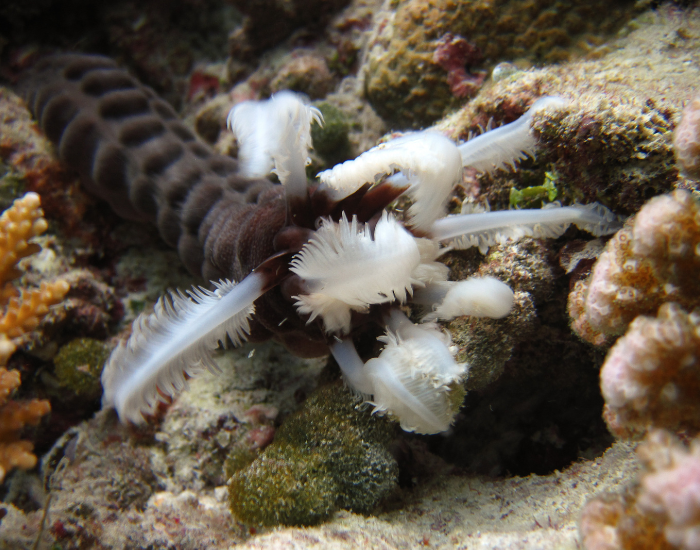
The feeding tentacles that ring a sea cucumber’s mouth aren’t separate appendages. They’re highly modified tube feet. The tentacles connect to the same system that powers locomotion but serve a different purpose: gathering food.
Different types have wildly different tentacle shapes. Deposit feeders, the majority, have short, bushy tentacles designed to sweep organic matter into the mouth. Suspension feeders, like sea apples, have elaborate tentacles that extend into the water column to trap plankton and food particles drifting past.
I’ve observed many sea cucumbers feeding in shallow reef flats, methodically stuffing tentacle after tentacle into the mouth. Each tentacle collects a ball of sediment and food particles, then curls inward. It processes the food while the next tentacle loads up. The tentacles also detect chemical signals in the surrounding water, helping locate food-rich patches on the seafloor.
8. Sea Cucumbers Are the Vacuum Cleaners of the Seafloor
This is the fact that matters most ecologically. Sea cucumbers play a critical role in marine ecosystems by recycling nutrients on the ocean floor. A sea cucumber eats sand, digests the food particles within it, and excretes clean sediment. In a healthy reef system, these animals turn over enormous volumes of seafloor material every year.
Research shows that a single sea cucumber can process up to 45 kilograms of sediment annually. Multiply that across thousands of individuals on a typical reef, and the picture becomes clear. Sea cucumbers regulate nutrient cycling, reduce waste buildup, and maintain the alkalinity of surrounding water, which directly benefits coral growth.
Without sea cucumbers, reefs accumulate excess organic matter. Bacterial blooms follow. Oxygen drops. I’ve seen degraded reef systems in Bali where overharvesting removed most sea cucumbers. The sand looks different, water clarity drops, and the whole ecosystem feels off-balance. Sea cucumbers play a role most people never see, but the reef depends on it.
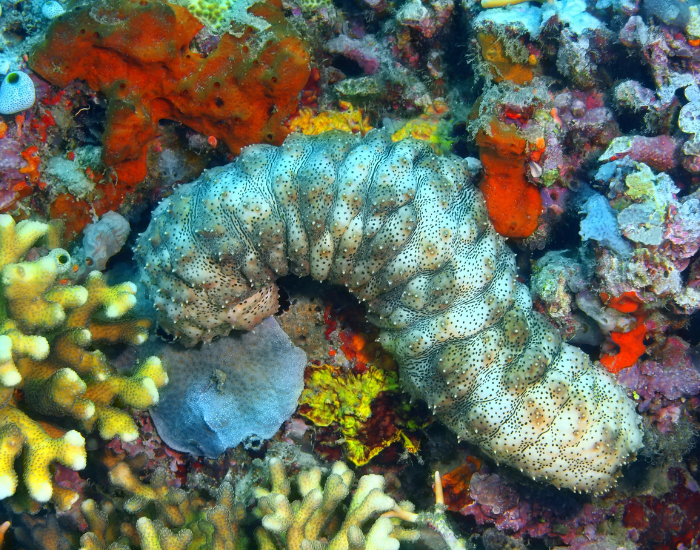
9. Sea Cucumbers Reproduce by Splitting in Half
Sea cucumbers reproduce both sexually and asexually. Most are broadcast spawners, males release sperm and females release eggs directly into the ocean. You’ll sometimes see many sea cucumbers on a reef rise up simultaneously, stretching their bodies upward before releasing eggs and sperm. Lunar cycles or water temperature shifts trigger these events.
Asexual reproduction is equally fascinating. Some literally split their bodies in half, with each half regenerating the missing parts. This asexual reproduction strategy means a single individual can clone itself, useful in deep waters or isolated tide pools where finding a mate is difficult.
The life history varies dramatically across species. Some reach maturity in under a year. Larval stages drift as plankton before settling to the seafloor. Females release eggs in quantities ranging from thousands to millions, depending on body size and length. Other sea cucumbers skip the larval stage entirely, brooding their young on or inside their bodies.
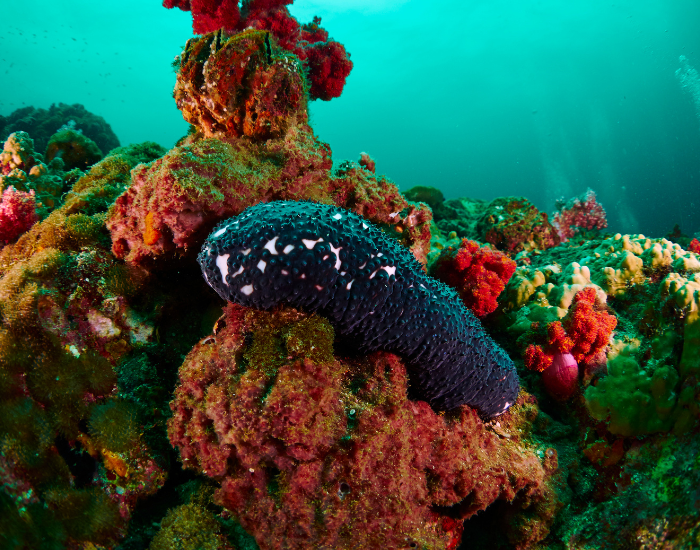
10. Sea Cucumbers Are Worth a Fortune in Asian Markets
Sea cucumbers have been harvested as a delicacy for centuries, particularly in Chinese, Japanese, and Korean cuisine. Dried sea cucumber — known as bêche-de-mer — commands extraordinary prices in the Asian market. Premium species fetch over $3,000 per kilogram dried. That makes some sea cucumbers more valuable by weight than precious metals.
This economic value has driven massive sea cucumber fisheries across the tropics. If one day are able to see them, you will se that the bodies are gutted, boiled, smoked, and sun-dried. The dried bodies shrink to a fraction of their original length. The delicacy status keeps demand high.
The problem is overharvesting. Human activities, including bottom trawling and unregulated collection, have pushed many populations toward collapse. These human activities threaten entire reef ecosystems. The IUCN Red List now includes several species as endangered. Sea cucumber fisheries in the Pacific and Southeast Asia have crashed. Some countries impose harvesting bans, but enforcement remains difficult.
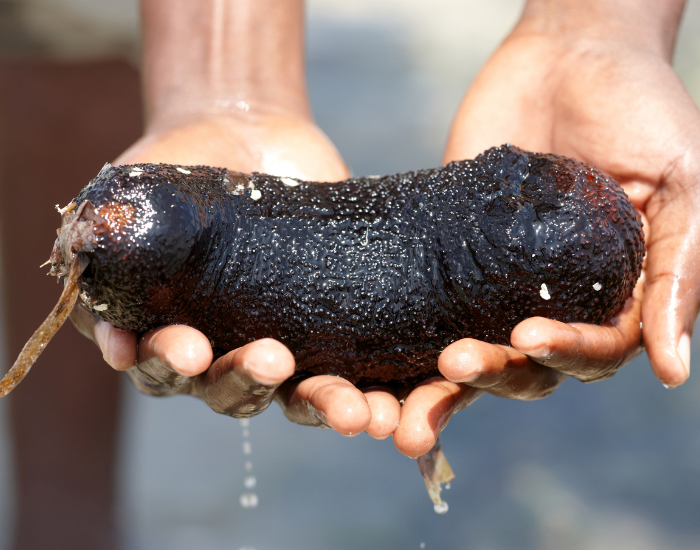
11. Sea Cucumber Skin Shifts from Soft to Rigid in Seconds
The body wall of a sea cucumber contains mutable collagenous tissue. This allows the animal to change stiffness almost instantly. One moment, a sea cucumber feels soft and pliable. The next, it locks rigid. Chemical signals alter the bonds between collagen fibres in the body wall, controlling this shift.
I’ve felt this transition while handling live specimens. You pick one up gently, it’s floppy. Disturb it further and the tissue suddenly firms up, making the sea cucumber harder for potential predators to bite or swallow. This is crucial because predators like triggerfish, crabs, and parrotfish actively hunt them. Some sea cucumbers use this ability to wedge into crevices on the seafloor, they soften their bodies to squeeze in, then harden to lock in place.
Materials scientists are actively studying this tissue technology. No other echinoderms demonstrate this property as dramatically, though sea urchins and sea stars have simpler versions. These animals have had this figured out for roughly 400 million years.
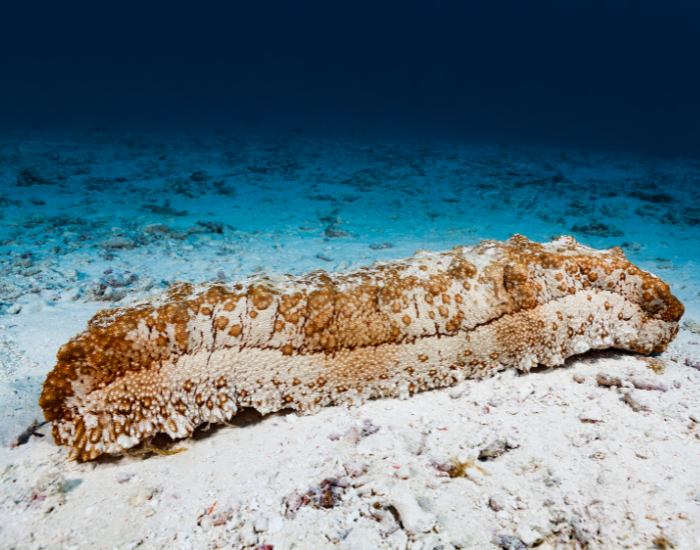
12. Sea Cucumbers Could Unlock Organ Regeneration Secrets
The regenerative abilities of sea cucumbers extend far beyond regrowing ejected organs. A single animal can regenerate its digestive system, respiratory tree, reproductive organs, and even parts of its nervous system. Some species regenerate a complete set of internal organs within six weeks.
Researchers have identified specific genes that activate after evisceration, kickstarting cell proliferation. Unlike mammals, these creatures show minimal scarring. Their bodies rebuild functional organs rather than patching wounds. Other echinoderms like sea stars can regrow arms, but no other echinoderms match the sea cucumber’s ability to regenerate entire internal organ systems.
This has real implications for regenerative medicine. Understanding how a sea cucumber regrows a complete digestive system could inform treatments for organ damage in humans. Research teams studying marine invertebrates across Europe and Asia are mapping these pathways in detail. Most people dismiss them as strange blobs on the ocean floor. The science says otherwise.
FAQs about Sea Cucumbers
Yes. Sea cucumbers have been eaten for centuries and remain a prized delicacy in many Asian countries. They’re typically dried and rehydrated before cooking. The texture is gelatinous, and they absorb the flavour of whatever sauce they’re prepared in. Nutritionally, they’re high in protein. Not all sea cucumber types are harvested for food — only those with the right body wall thickness and length for the Asian market.
Absolutely. Despite their plant-like appearance, sea cucumbers are living animals. They feed, breathe, reproduce, and respond to their environment. Most sea cucumbers move slowly across the seafloor using tube feet and actively process sand through their digestive system. Their stillness is deceiving — these creatures are anything but inactive.
Some produce toxins called holothurins. These toxins deter predators like crabs, fish, and other animals. Some Pacific islanders historically used mashed sea cucumber to stun fish in tide pools. For humans, handling most species is safe. Sea slugs, by contrast, often carry far more potent chemical defenses.
To humans, sea cucumbers pose very little danger. The main risk is mild irritation from the sticky Cuvierian tubules some eject. I’ve handled hundreds of sea cucumbers during field work and never experienced anything beyond sticky hands.

Why the Weird Blob Deserves Your Attention
Every time I drop into the water on a new reef, I look for sea cucumbers first. A sea cucumber tells me something about reef health that flashier animals can’t. Plenty of them mean proper nutrient cycling, good sediment quality, and a strong foundation for the entire ecosystem.
These animals have survived five mass extinctions. They breathe through structures most animals lack. They eject their organs and regrow them. Next time you’re snorkelling and spot a weird gelatinous sea cucumber in the sand, stop and watch. You’re looking at one of the ocean’s most underrated survivors.
Ever spotted a sea cucumber while diving? Drop a comment below. And if you’re curious about other reef animals, check out my posts on parrotfish and their role in creating sand or the fascinating world of triggerfish.
References:
Bordbar, S., Anwar, F., & Saari, N. (2011). High-value components and bioactives from sea cucumbers for functional foods — a review. Marine Drugs, 9(10), 1761–1805. https://doi.org/10.3390/md9101761
Byrne M. (2001). The morphology of autotomy structures in the sea cucumber Eupentacta quinquesemita before and during evisceration. The Journal of experimental biology, 204(Pt 5), 849–863. https://doi.org/10.1242/jeb.204.5.849
Purcell, S. W., Samyn, Y., & Conand, C. (2012). Commercially important sea cucumbers of the world. FAO Species Catalogue for Fishery Purposes, No. 6. FAO, Rome. https://www.fao.org/3/i1918e/i1918e00.htm
Medina-Feliciano, J. G., & García-Arrarás, J. E. (2021). Regeneration in Echinoderms: Molecular Advancements. Frontiers in cell and developmental biology, 9, 768641. https://doi.org/10.3389/fcell.2021.768641
Purcell, S. W., Mercier, A., Conand, C., Hamel, J. F., Toral-Granda, M. V., Lovatelli, A., & Uthicke, S. (2013). Sea cucumber fisheries: Global analysis of stocks, management measures, and drivers of overfishing. Fish and Fisheries, 14(1), 34–59. https://doi.org/10.1111/j.1467-2979.2011.00443.x
Su, F., Sun, L., Li, X., Cui, W., & Yang, H. (2022). Characterization and Expression Analysis of Regeneration-Associated Protein (Aj-Orpin) during Intestinal Regeneration in the Sea Cucumber Apostichopus japonicus. Marine drugs, 20(9), 568. https://doi.org/10.3390/md20090568
Okada, A., & Kondo, M. (2019). Regeneration of the digestive tract of an anterior-eviscerating sea cucumber, Eupentacta quinquesemita, and the involvement of mesenchymal-epithelial transition in digestive tube formation. Zoological letters, 5, 21. https://doi.org/10.1186/s40851-019-0133-3
Uthicke, S. (2001). Nutrient regeneration by abundant coral reef holothurians. Journal of Experimental Marine Biology and Ecology, 265(2), 153–170. https://doi.org/10.1016/S0022-0981(01)00329-X
Wilkie, I. C. (2005). Mutable collagenous tissue: Overview and biotechnological perspective. Progress in Molecular and Subcellular Biology, 39, 221–250. https://doi.org/10.1007/3-540-27683-1_10