I want to tell you something that genuinely changed the way I look at tide pools forever.
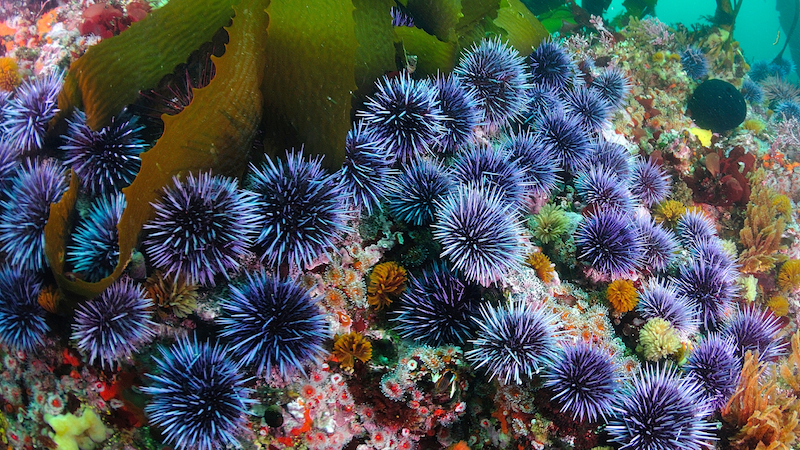
I’d just finished writing my deep-dive on kelp forests, one of the ocean’s most vital and underappreciated ecosystems, and I kept circling back to one animal. In that article, I explored what happens when sea otters disappear from a kelp forest. Remove that single keystone species, and sea urchin populations can explode within a few years. They bulldoze through kelp beds with almost industrial efficiency, and what’s left behind is a bare, ghostly seafloor known as an urchin barren.
Want to see the cascade play out? Remove the sea otters from the kelp forest in my interactive food web and watch what the purple urchins do.
That rabbit hole led me somewhere unexpected. I started realising that sharks, fish, sea stars, depend either directly or indirectly on sea urchins as a food source or as ecosystem engineers. Yet when most people think about them, they picture something vaguely spiky next to a coral fish while snorkelling, pretty to look at, dangerous to step on, and otherwise mysterious.
So I decided to fix that. This is the article I wish existed when I first got obsessed with echinoderms.
What Is a Sea Urchin?
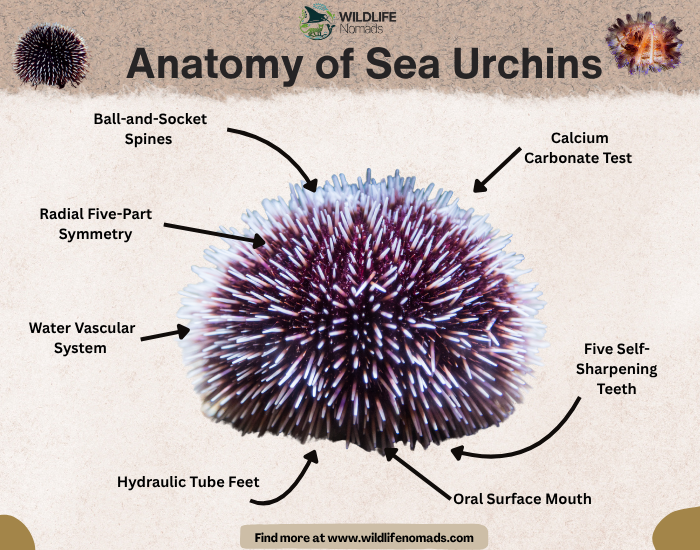
Sea urchins belong to class Echinoidea within phylum Echinodermata, the same group as sea stars, brittle stars, sea lilies, and sea cucumbers. Like other echinoderms, they show five-part radial symmetry and share a common ancestor stretching back over 450 million years. The word “urchin” is an old word for hedgehog, which is why many European languages call these animals sea hedgehog, erizo de mar in Spanish, oursin in French.
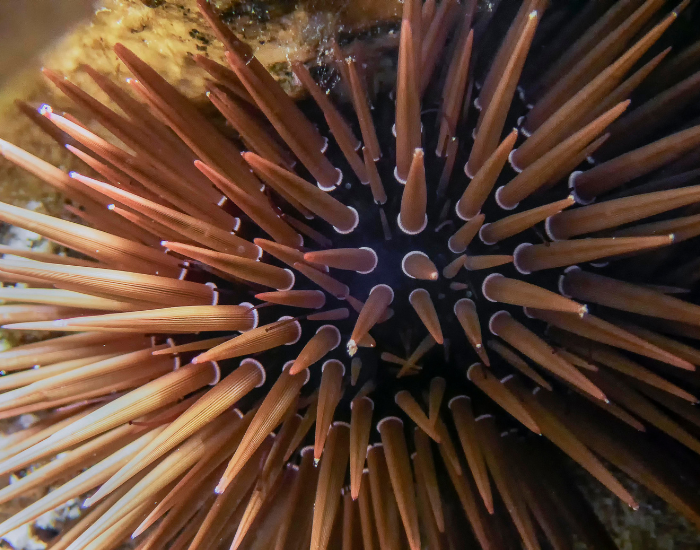
The body centres on a hard internal shell called a test: a framework of fused hard plates made from calcium carbonate. All the spines attach to this test via ball-and-socket joints. Beneath the spines, hundreds of tube feet, hydraulic appendages powered by a water vascular system, extend through pores to grip surfaces, carry food toward the mouth, and move the animal across the seafloor. That mouth contains Aristotle’s lantern: a five-part jaw housing five self sharpening teeth that continuously scrape algae from rock surfaces. Sea urchins use this mouth to eat through enormous quantities of algae, seaweed, and encrusting organisms every day.
Most sea urchins are regular sea urchins, round and spiny, but irregular species evolved flatter, bilateral forms for burrowing in sediment. Together, these animals cover every depth zone of the ocean, from exposed rocky shores to the deep sea. There are about 1,000 living sea urchin species worldwide, and new ones are still being described.
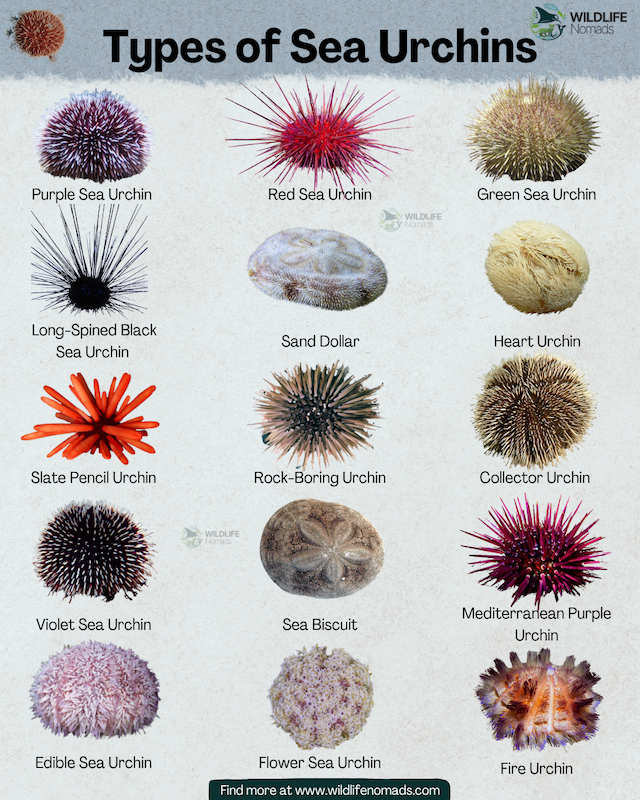
15 Types of Sea Urchins
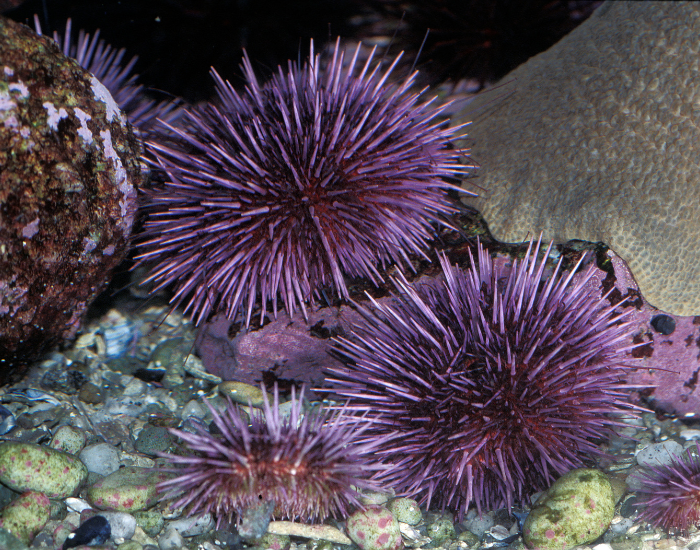
1. Purple Sea Urchin (Strongylocentrotus purpuratus)
The purple sea urchin is arguably the most ecologically important sea urchin species on the western North American coast. Purple sea urchins are the primary drivers of urchin barrens, stripped seafloors left when unchecked populations eat through all available algae and seaweed.
Conservation teams now hand-remove thousands of purple sea urchins from these barrens to allow habitat recovery. What makes purple sea urchins remarkable is their resilience during scarcity: they shrink their internal organs, go dormant, and wait. Purple sea urchins have been documented surviving years with almost no food, their mouth and teeth remain functional, but the animals simply stop feeding until conditions improve.
2. Red Sea Urchin (Mesocentrotus franciscanus)
The red sea urchin holds one of the most astonishing lifespans in the animal kingdom, over 100 years (some models suggest 200), confirmed through carbon-14 dating. These animals grow slowly and occupy slightly deeper, calmer waters than purple sea urchins. The large, golden roe (gonads) are the source of premium uni in Japanese markets, and the commercial sea urchin fishery targeting this species in California, Alaska, and British Columbia is worth tens of millions annually. Natural predators include sea otters, which crunch through urchins with their teeth (they save their rock tools for clams and abalone), and wolf eels whose crushing teeth are specifically adapted for hard-shelled prey.
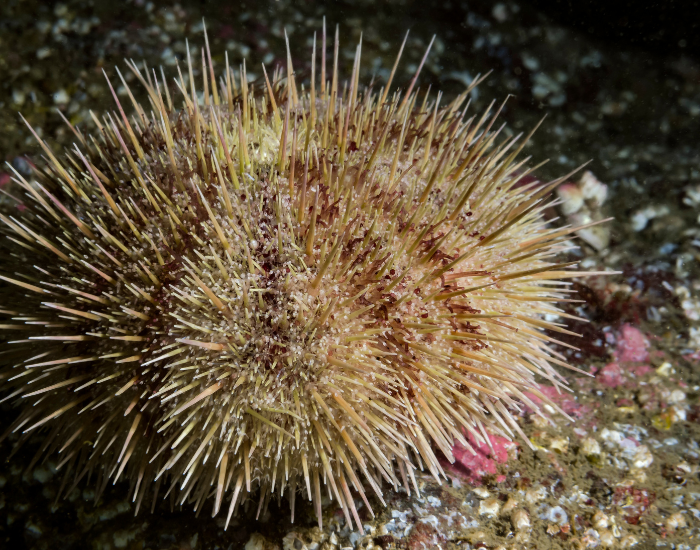
3. Green Sea Urchin (Strongylocentrotus droebachiensis)
The green sea urchin thrives where most sea urchins would struggle, subarctic and Arctic waters across the North Atlantic and North Pacific.
The mouth faces downward and the Aristotle’s lantern works continuously to scrape algae, seaweed, and encrusting organisms from rocky substrate. In Norway and Iceland, green sea urchins are harvested commercially for their roe, a growing export product in northern European fisheries.
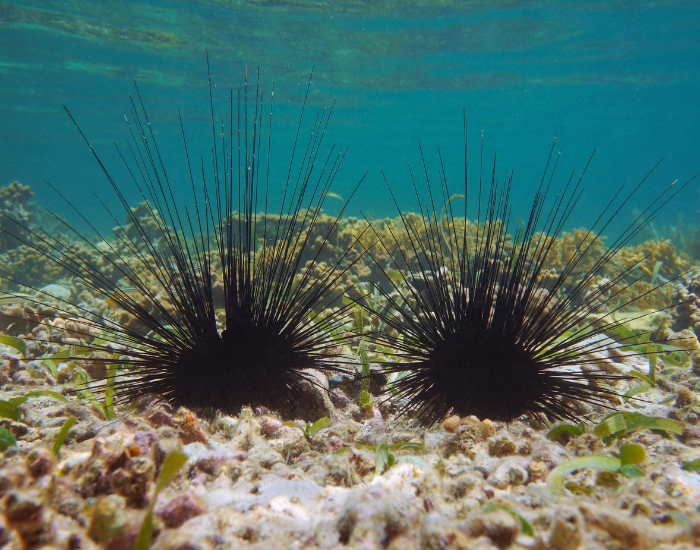
4. Long-Spined Black Sea Urchin (Diadema antillarum)
Diadema antillarum carries the longest spines relative to body size of any shallow-water sea urchin, reaching 30 cm. These spines can penetrate human skin easily and are both barbed and brittle, making removal difficult and painful.
Before 1983, Diadema was so abundant that even natural predators couldn’t control it, its sheer spine density deterred most reef fish. Then a waterborne pathogen wiped out over 95% of the Caribbean population. Recovery was painfully slow. In 2022 a second die-off struck, and this time scientists found the culprit: a tiny parasitic ciliate related to Philaster. Restoration teams now raise Diadema in labs to restock reefs.
Look for long-spined sea urchins in the cracks of the reef in our interactive coral reef.
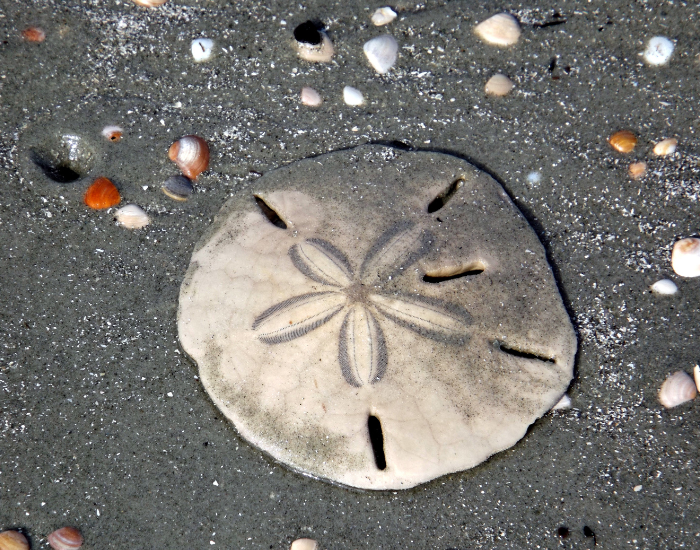
5. Sand Dollar (Echinarachnius parma and related species)
Sand dollars are irregular sea urchins, flattened, disc-shaped, and built entirely for life in soft sediments. All the spines are short and velvety, adapted for burrowing rather than defence. The bleached white object you find on the beach is the empty test; in life, sand dollars are covered in fine brownish or purplish spines.
They eat by ingesting sediment and extracting bacteria, diatoms, and organic particles, a form of deposit feeding far removed from the rock-scraping behaviour of the round, spiny sea urchin species most people recognise.
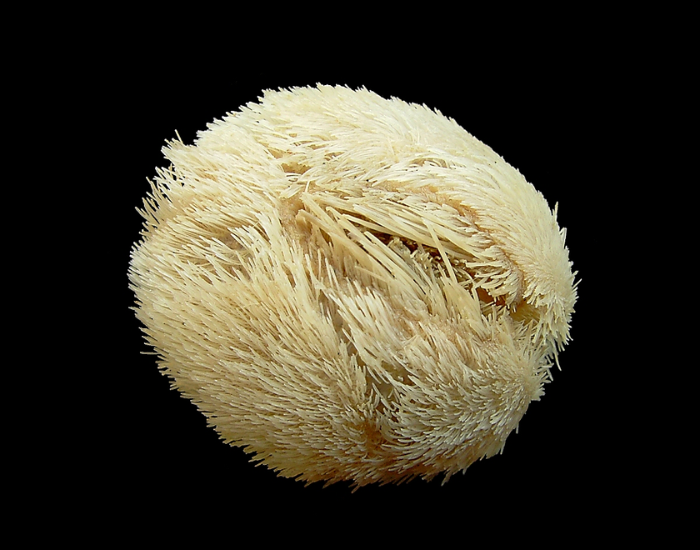
6. Heart Urchin (Echinocardium cordatum)
The heart urchin (Echinocardium cordatum) is an irregular sea urchin with a distinctly heart-shaped test. It lives buried up to 20 cm deep in soft sediments and maintains a mucus-lined burrow with a respiratory tube extending to the surface.
Heart urchins have lost Aristotle’s lantern completely. They shovel sediment into the mouth with specialised tube feet. This species plays a quiet but important role in nutrient cycling on sandy seafloors, turning over sediment the same way earthworms do on land.
7. Slate Pencil Urchin (Heterocentrotus mamillatus)
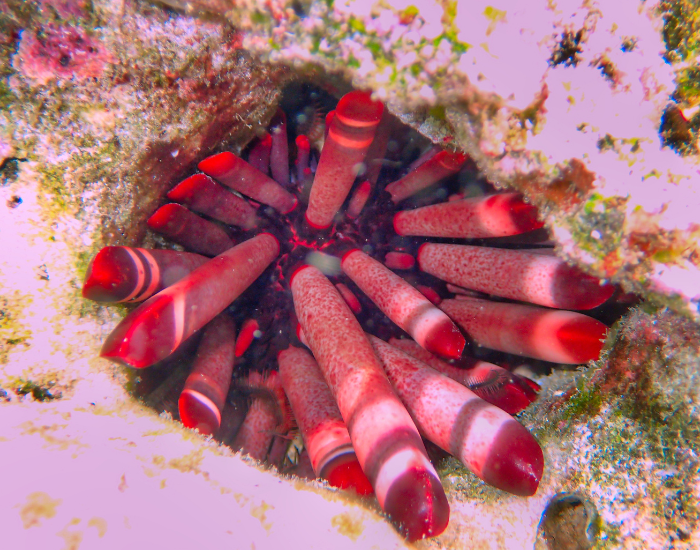
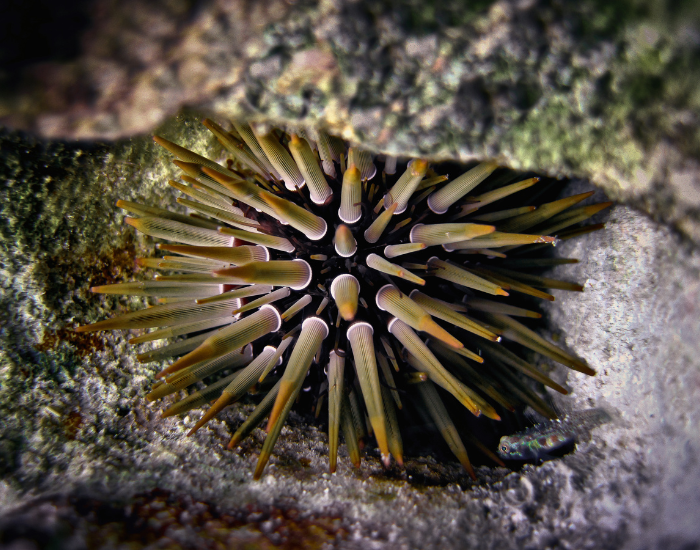
The slate pencil urchin is impossible to confuse with other sea urchins. Its thick, cylindrical, blunt spines look more like wooden dowels than typical urchin spines. Despite its ancient look, it isn’t a cidaroid. It belongs to the family Echinometridae, making it a close cousin of the rock-boring urchin (#12). It lives across the tropical Indo-Pacific, wedged into reef crevices by day. Its thick spines were once used as slate pencils, which is where the name comes from.
8. Flower Sea Urchin (Toxopneustes pileolus)
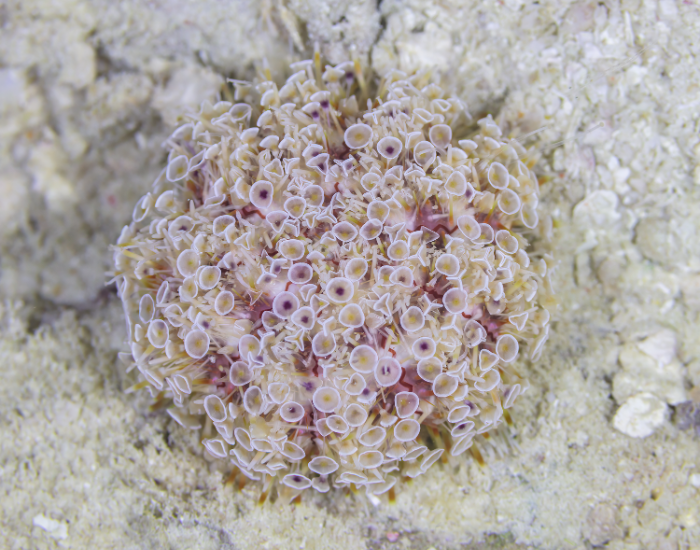
Don’t let the name fool you. The flower sea urchin is covered in colourful pedicellariae, tiny claw-like structures that look like blossoms but are venom-delivery organs. The entire oral surface and body are covered in these structures, leaving almost no safe contact point.
Touching one causes intense pain and muscle weakness, and old reports describe breathing difficulty. It is among the most venomous sea urchins known. This sea urchin is found across the Indo-Pacific and ranks among the most venomous sea urchins in the world. Many animals avoid it entirely, even predators that readily eat sea urchins of other species steer clear.
9. Collector Urchin (Tripneustes gratilla)
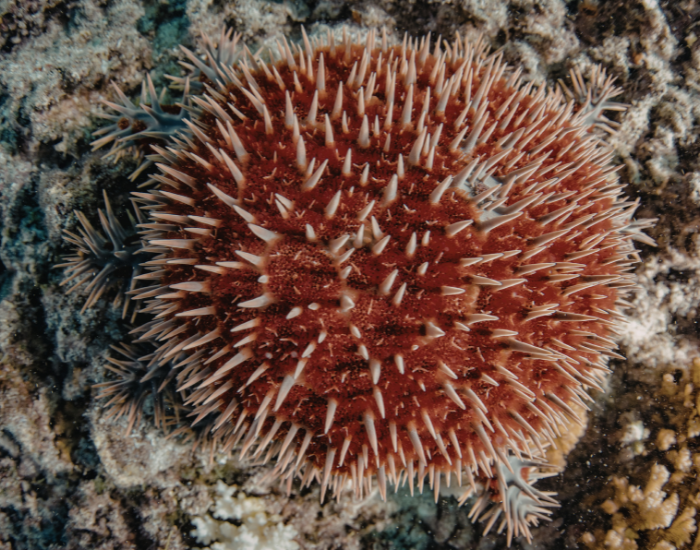
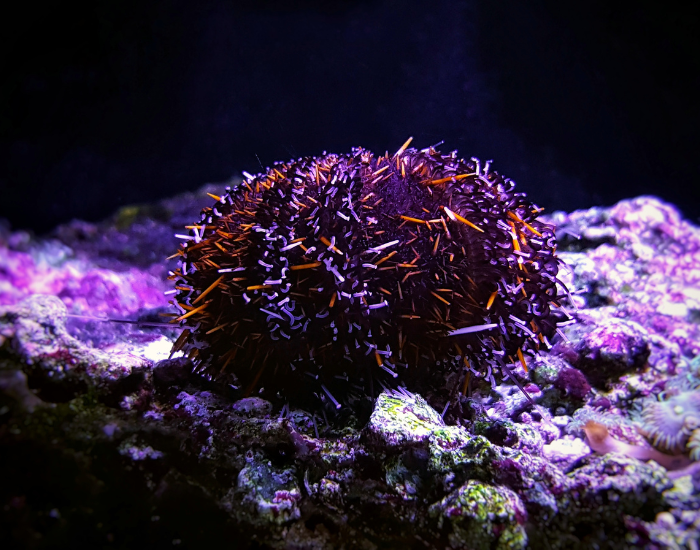
The collector urchin earns its name by picking up shells, algae fragments, and debris with its tube feet and draping them across its body, apparently for camouflage and UV protection. Found in shallow tropical waters across the Indo-Pacific, this sea urchin species is harvested commercially for its roe across Southeast Asia and the Pacific Islands. Researchers also use it in aquaculture studies because it grows faster than most other sea urchin species and tolerates high-density rearing conditions well.
10. Fire Urchin (Asthenosoma varium)
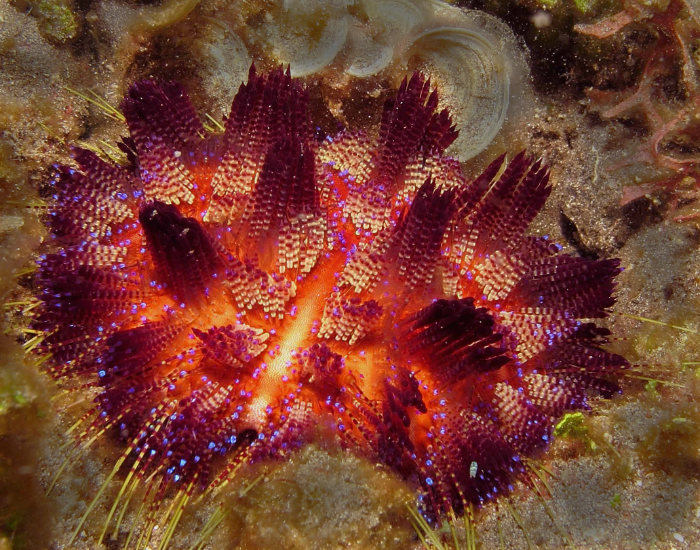
The fire urchin is vivid red with blue-tipped spines that inject a toxin causing intense burning pain on contact with human skin. It lives in the Indo-Pacific from shallow reefs to deeper rocky slopes.
What makes this sea urchin ecologically fascinating is its commensal relationship with the shrimp Allopontonia iaeni, which lives between the spines, protected from its own predators by the urchin’s venom. Even dangerous animals become habitat for other species, that’s ocean ecology in miniature.
11. Pincushion Urchin (Lytechinus variegatus)
Common across the Gulf of Mexico and Caribbean, the pincushion urchin is one of the most studied sea urchin species in the world. Its eggs and embryos are transparent and develop rapidly, making them ideal model organisms for research on fertilisation, cell division, and gene expression.
Sea urchin eggs and larvae from this species appear in laboratories globally, the teeth, tube feet, and mouth all develop from scratch within days, giving researchers a front-row seat to animal development in real time. In the wild, pincushion urchins graze seagrass beds using their tube feet to navigate and are eaten by sea stars, triggerfish, and other predators.
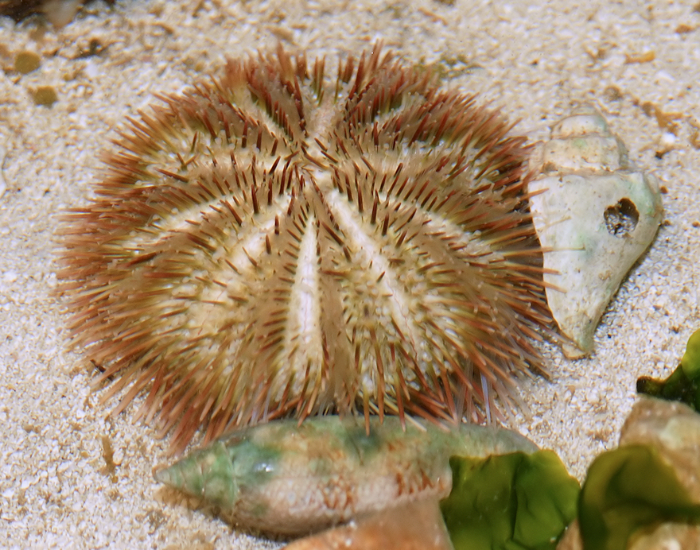
12. Rock-Boring Urchin (Echinometra mathaei)
This sea urchin excavates its own shelter from solid reef rock, using its spines and teeth to physically grind a body-shaped cavity that it rarely leaves. Over years, the cavity conforms precisely to the urchin’s body.
Rock-boring sea urchins are abundant on Indo-Pacific reef flats, and their collective grinding contributes significantly to bioerosion, the gradual breakdown of reef structure. The mouth and Aristotle’s lantern extend from the burrow entrance to scrape algae from rock surfaces within reach, allowing the sea urchin to eat without fully leaving its shelter.
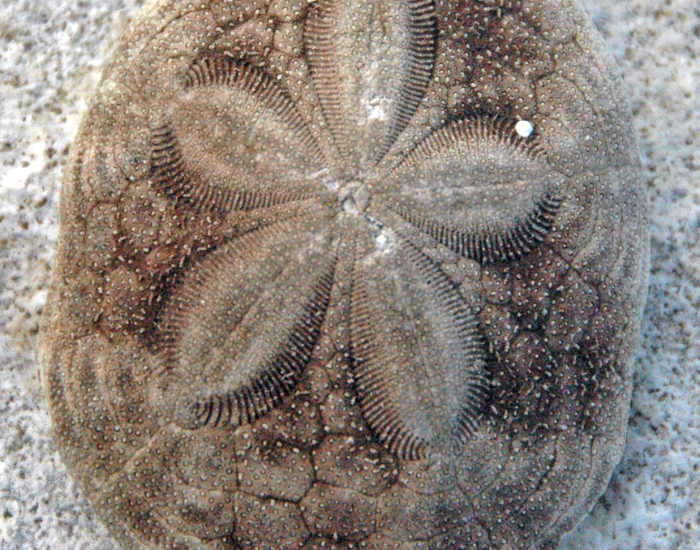
13. Sea Biscuit (Clypeaster rosaceus)
Sea biscuits are large, dome-shaped irregular sea urchins found in shallow Caribbean and tropical Atlantic sandy habitats. They’re essentially oversized sand dollars, covered in short, velvety spines and feeding on microorganisms and organic particles in sediment. Sea biscuits lack the long dramatic spines most people associate with sea urchins, but they’re impressive animals up close: they can reach 15 cm in diameter and their tests show a striking five-petalled pattern reflecting their echinoderm symmetry.
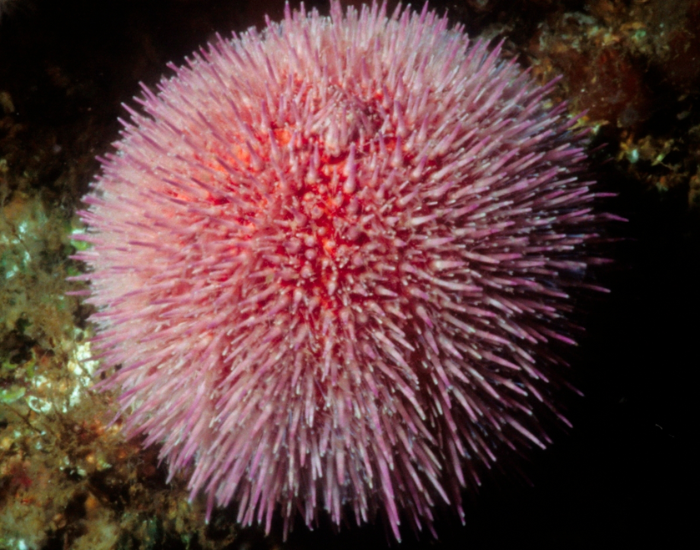
14. Edible Urchin (Echinus esculentus)
The species most likely to appear on your plate if you’re eating sea urchin in Europe. The edible urchin is the largest regular sea urchin in European waters, reaching up to 17 cm in diameter.
It lives on rocky shores of the northeast Atlantic, from Norway to Portugal, including Britain and Ireland, usually down to about 50 m. In the Mediterranean, the urchin on the plate is a different species: the purple Paracentrotus lividus. Its golden roe is served raw across coastal Europe, sometimes with a drizzle of olive oil. Historically, coastal communities have eaten urchins since at least the Roman period.
15. Pencil Urchin (Eucidaris tribuloides)
Like the slate pencil urchin, this Caribbean and tropical Atlantic species belongs to the ancient cidaroid lineage. Its thick, rod-like primary spines look almost fossilised, which reflects their evolutionary age. Pencil urchins move slowly and act as low-key predators, feeding on encrusting organisms, including the same algae limpets. Cidaroid primary spines have no living skin covering them, so algae, sponges and tiny animals settle on them. Most other sea urchins keep their spines clean.
On rocky reefs from 1 to 200 metres deep, they’re among the most common sea urchin species you’ll encounter in the Caribbean, and a good reminder that not all sea urchins need to be dramatic to be ecologically significant.
FAQ: Your Top Sea Urchin Questions
Most sea urchins are not aggressive, but their spines can penetrate human skin and break off inside the wound, causing infection. Species like the flower sea urchin and fire urchin are venomous and require medical attention if contact occurs. The rule while diving: admire without touching.
Most sea urchin species eat algae, seaweed, and encrusting organisms, using the mouth’s five self sharpening teeth (Aristotle’s lantern) to scrape surfaces clean. Sea urchins also eat sponges and dead organic material when algae is scarce. Irregular burrowing species eat bacteria and organic particles from sediment using a modified mouth suited to deposit feeding.
Yes — the part you eat is the sea urchin’s reproductive organs (gonads), which contain the eggs and roe. These are considered a delicacy across Japan, the Mediterranean, and South America. Sea urchins are typically served raw, sometimes with olive oil, lemon, and sea salt. The flavour reflects the sea urchin’s diet, animals grazing on seaweed taste noticeably different from those eating other food sources.
The Spiky Animal Running the Ocean
Most people see a sea urchin and move on. But spend a few minutes with the biology and you realise these spiny creatures are ancient, complex, and ecologically essential. Sea urchins regulate algae, shape reef structure, and when unchecked they transform thriving ecosystems into barren rock.
Animals ranging from sea otters to crabs, to sharks to humans eat sea urchins, they’re a keystone food source connecting dozens of animals across ocean food webs worldwide. Other animals depend on sea urchin habitat. Even smaller animals shelter between sea urchin spines. Understanding the different sea urchin species, what they eat, how their mouth and tube feet work, where they protect themselves, is understanding how the ocean actually functions.
Wildlife Nomads Challenge
Name That Sea Urchin
Twelve photos, all from this article. Name each urchin (and its flat cousins), then scroll back up to meet it properly.
References:
Amir, Y., Insler, M., Giller, A., Gutman, D., & Atzmon, G. (2020). Senescence and Longevity of Sea Urchins. Genes, 11(5), 573. https://doi.org/10.3390/genes11050573
Killian, C. E., Metzler, R. A., Gong, Y., Churchill, T. H., Olson, I. C., Trubetskoy, V., Christensen, M. B., Fournelle, J. H., De Carlo, F., Cohen, S., Mahamid, J., Scholl, A., Young, A., Doran, A., Wilt, F. H., Coppersmith, S. N., & Gilbert, P. U. P. A. (2011). Self-sharpening mechanism of the sea urchin tooth. Advanced Functional Materials, 21(4), 682–690. https://doi.org/10.1002/adfm.201001546
Ehlert-Flaskämper, S., Motti, C. A., & Harris, R. J. (2025). Prickly Defenders: A Review of Venomous Sea Urchins (Echinoidea). Marine Drugs, 23(6), 253. https://doi.org/10.3390/md23060253
Ma, Y., Aichmayer, B., Paris, O., Fratzl, P., Meibom, A., Metzler, R. A., Politi, Y., Addadi, L., Gilbert, P. U., & Weiner, S. (2009). The grinding tip of the sea urchin tooth exhibits exquisite control over calcite crystal orientation and Mg distribution. Proceedings of the National Academy of Sciences of the United States of America, 106(15), 6048–6053. https://doi.org/10.1073/pnas.0810300106
Morris V. B. (2007). Origins of radial symmetry identified in an echinoderm during adult development and the inferred axes of ancestral bilateral symmetry. Proceedings. Biological sciences, 274(1617), 1511–1516. https://doi.org/10.1098/rspb.2007.0312
Rogers-Bennett, L., & Catton, C. A. (2019). Marine heat wave and multiple stressors tip bull kelp forest to sea urchin barrens. Scientific reports, 9(1), 15050. https://doi.org/10.1038/s41598-019-51114-y
Sea Urchin Genome Sequencing Consortium. (2006). The genome of the sea urchin Strongylocentrotus purpuratus. Science, 314(5801), 941–952. https://doi.org/10.1126/science.1133609