
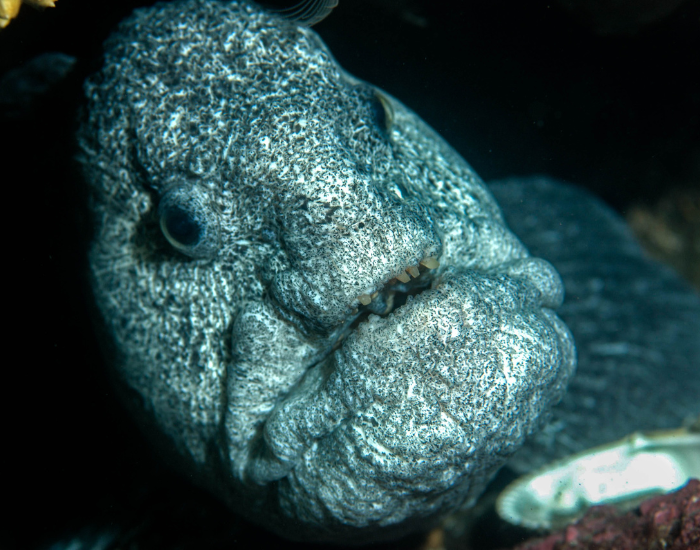
Few ocean creatures are as misunderstood as the wolf eel. With its long, snake-like body, bulging forehead, and formidable jaws, it’s often mistaken for a sea monster rather than a fish. Yet beneath its fearsome appearance lies one of the most fascinating and gentle predators of the Pacific.
Known scientifically as Anarrhichthys ocellatus, the wolf eel is full of contradictions, it looks intimidating but forms lifelong partnerships, crushes shells with ease but carefully massages its eggs, and spends much of its life tucked quietly in rocky dens. From the temperate reefs of Alaska to the kelp forests of California, this unusual creature plays a vital role in maintaining the balance of marine ecosystems.
Over the years, I’ve grown to admire this misunderstood species. It’s fierce yet gentle, monstrous in appearance but devoted in love. The wolf eel blurs every conventional line between predator and nurturer.
In this article, we’ll dive into 12 fascinating facts about the wolf eel, uncovering its habits, behavior, and the science behind one of the ocean’s most remarkable residents.
1. The Wolf Eel (Anarrhichthys ocellatus) Is Not a True Eel
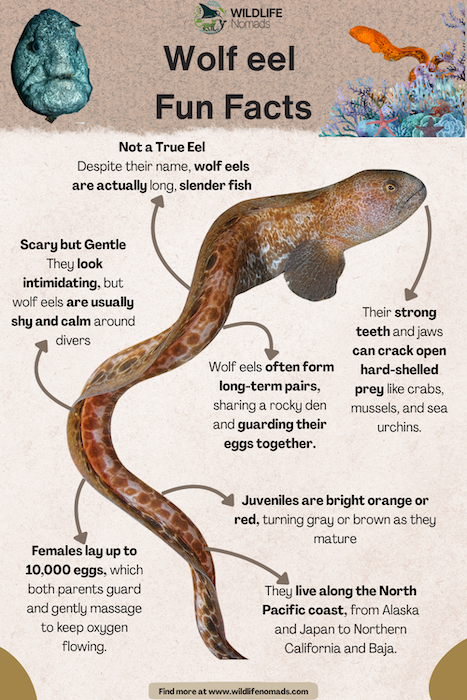
Despite its long, snake-like body, the wolf eel isn’t a true eel. Instead, it belongs to the wolffish family, a group of ray-finned fish species, instantly recognizable by its paired gill slits and robust pectoral fins. As part of the broader group of ray-finned fishes, wolf eels share many biological traits with other fishes, distinguishing them from true eels. True eels belong to the order Anguilliformes and lack paired fins. In contrast, wolf eels possess strong pectoral fins and paired gill slits, which help them navigate rocky reefs with surprising grace.
The name likely stems from their canine-like teeth and powerful jaws rather than their elongated shape. Therefore, when you hear “sea-wolf eel” or “wolf fish eel,” these terms all reference the same species: Anarrhichthys ocellatus.
2. Wolf Eels Live in Cold Pacific Waters
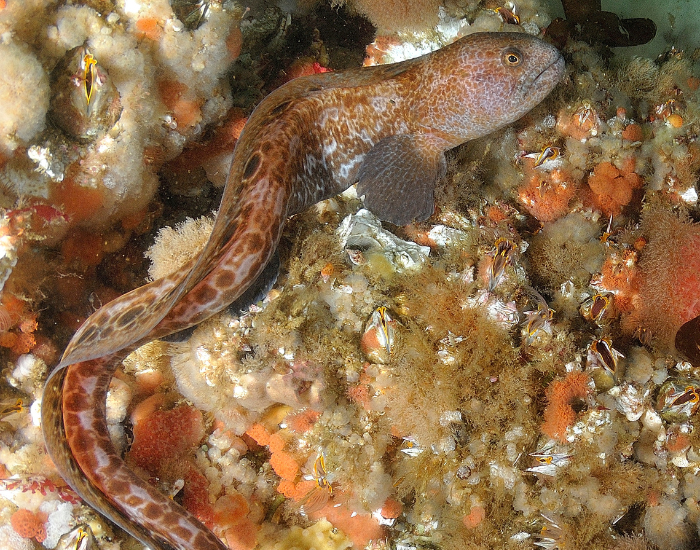
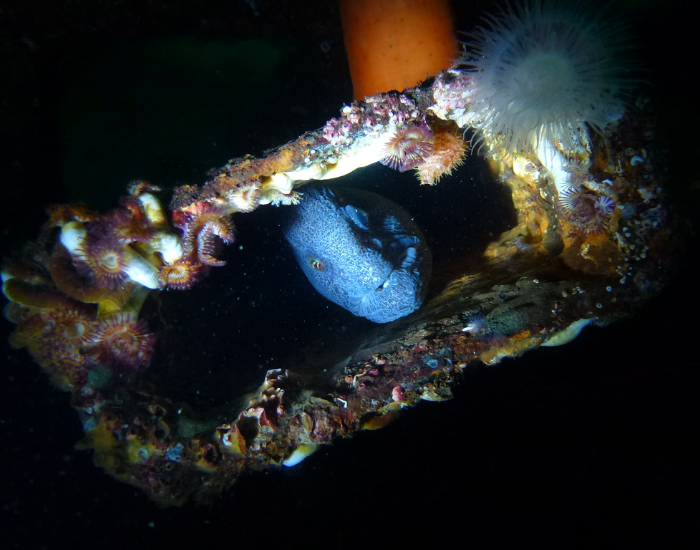
Wolf eels inhabit rocky reefs and crevices throughout the North Pacific Ocean. Their range extends from the Sea of Japan and Alaska’s Aleutian Islands down to Northern California and northern Baja California. These fish species thrive in kelp-covered reefs, caves, and boulder fields.
Most wolf eels prefer depths from shallow coastal waters down to approximately 200 meters. In Puget Sound, British Columbia, and along the Pacific coast, divers frequently spot them peering from dens like underwater dragons. Juvenile wolf eels initially live in open water, drifting for months before settling into permanent rocky homes on the sea bottom.
The Seattle Aquarium has long showcased these creatures, helping visitors understand their Pacific coast habitat. For example, their exhibits demonstrate how wolf eels adapt to crevices and caves along the seafloor.
3. Wolf Eels Can Grow to Giant Sizes
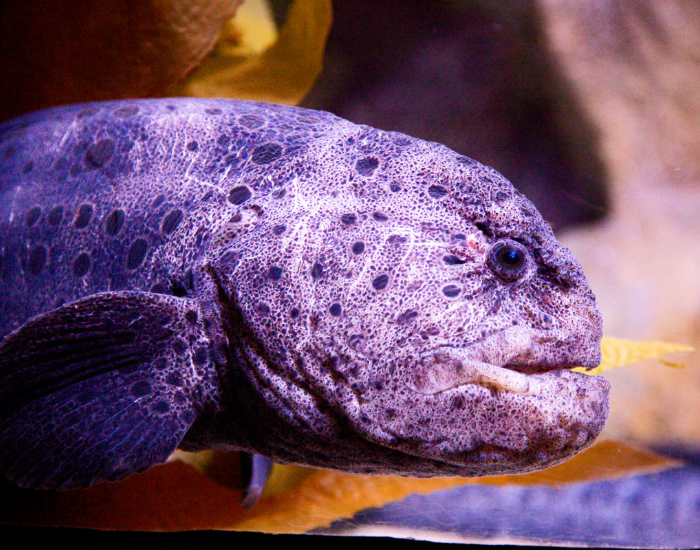
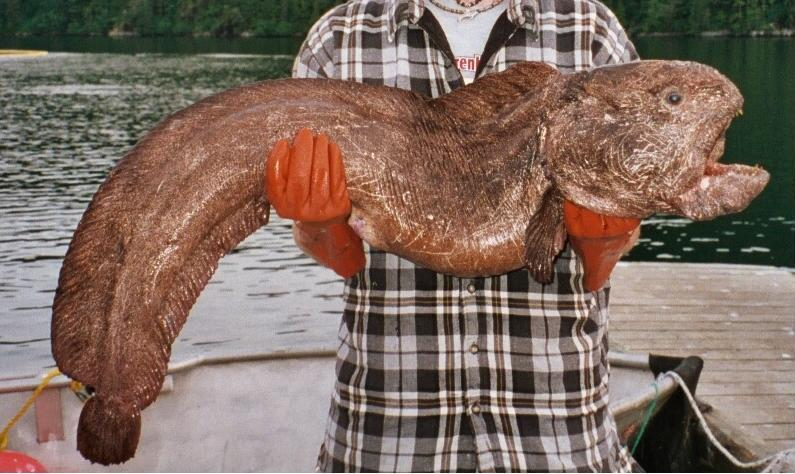
A full-grown adult wolf eel can reach nearly 2.4 meters in length, approximately eight feet—and weigh over 18 kilograms. This impressive size explains the term “giant wolf eel” or “giant pacific octopus-sized predator.” Despite their size, they aren’t deep-sea creatures. Instead, they inhabit temperate coastal environments while tolerating surprisingly deep pressures.
One distinguishing feature of the wolf eel is its long dorsal fin, which extends from the head all the way to the end of the body and helps differentiate it from other similar fish.
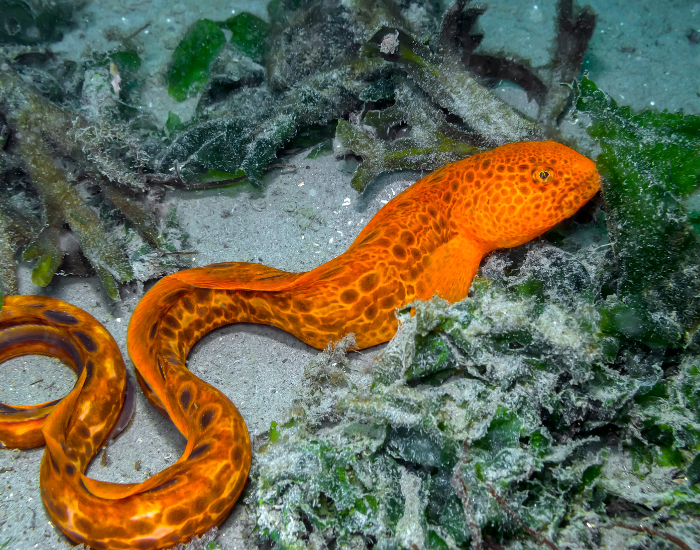
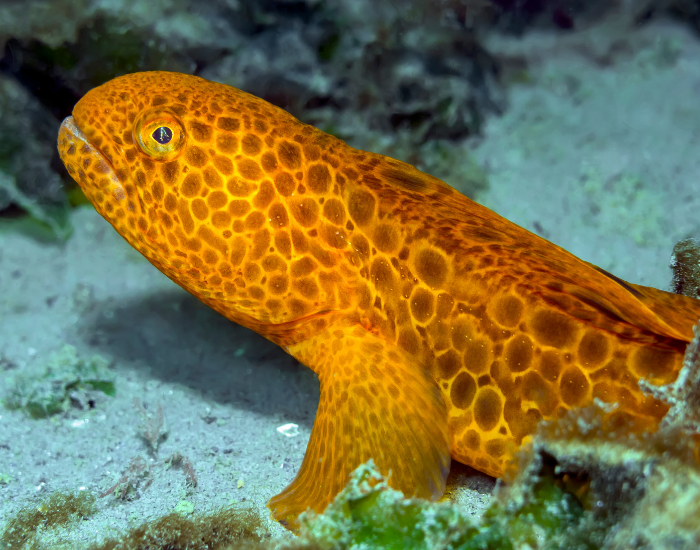
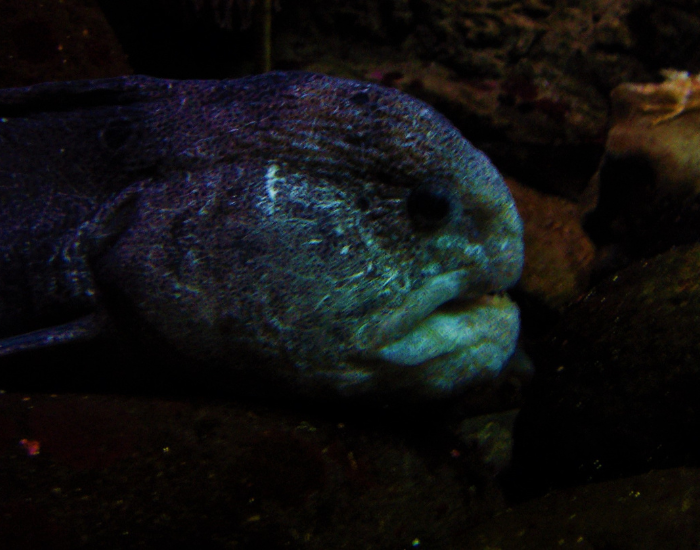
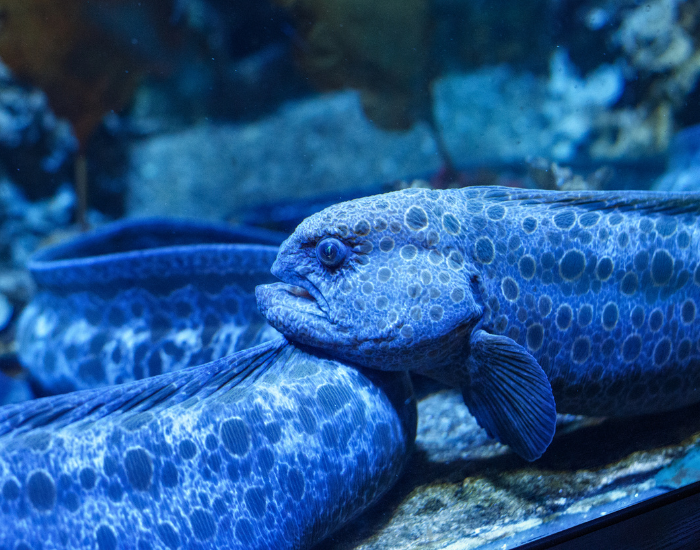
Adult wolf eels display long bodies with mottled gray or brown coloration. This neat sphere of color helps them blend into rocky surroundings. Conversely, juvenile wolf eels are brightly colored, orange or reddish with dark spots. These young wolf eels rank among the most striking fish in the Pacific Ocean.
4. They Have Powerful Jaws Built for Crushing Shells
The wolf eel’s bite is legendary among divers and marine biologists. Their front teeth are sharp and pointed, resembling a wolf’s canines. However, behind these lie rows of molar-like back teeth designed specifically for crushing shells. These strong jaws easily crack open crabs, clams, mussels, and sea urchins.
Within seconds, the can crunch sea urchins through the water. They’re apex invertebrate hunters, methodical, strong-jawed, and deliberate in their approach.
In the wild, wolf eels feast on hard-shelled prey including mussels, clams, crabs, snails, and abalone. Captive wolf eels often receive squid or softer food to prevent excessive wear on their crushing teeth. Additionally, their diet helps control sea urchin populations, thereby maintaining balance in kelp forest ecosystems throughout their habitat.
5. Wolf Eels Form Strong Monogamous Bonds
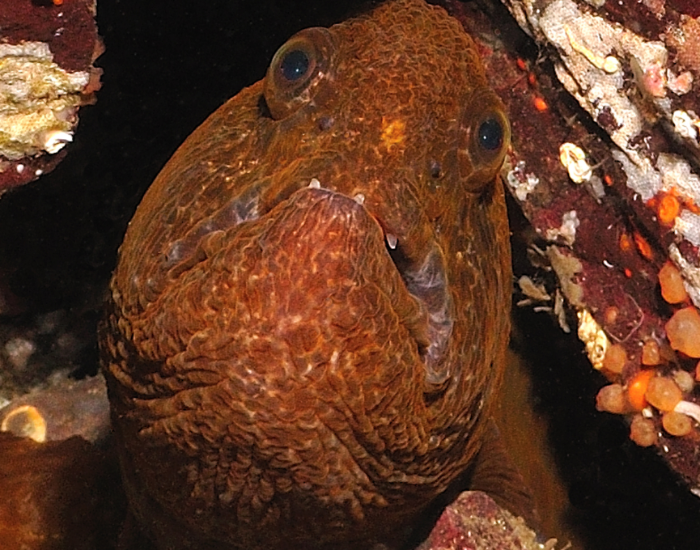
One endearing trait sets wolf eels apart: their social behavior. They often form long-term pair bonds (many remain in the same den for years; in some cases, lifelong pairing). Together, they share a den, hunt cooperatively, and defend eggs with remarkable dedication.
While not all pairs last forever, many remain together for years. This represents one of the more remarkable examples of monogamy in the fish world.
The pair takes special care of their shared den. Males play a key role by helping to defend the den and fertilize the eggs, while both the male and female continue massaging eggs and circulating water, demonstrating cooperation rare among most fish species. Therefore, these monogamous bonds contribute significantly to successful reproduction.

6. Female Wolf Eels Lay Thousands of Eggs
During breeding season, usually from late autumn through winter, the female lays up to 10,000 eggs in a tight, neat sphere roughly the size of a grapefruit. Both parents take turns guarding this precious egg mass with unwavering vigilance.
The female continues to massage and move the eggs periodically to circulate water around them, ensuring a steady supply of oxygen to the developing embryos. This behavior circulates oxygenated water through them, a tender action that contradicts their fierce appearance. Meanwhile, the male often coils around her and the eggs to protect them from predators prowling the sea bottom.
After approximately three months, the larvae float away with the current. These tiny larvae begin life as planktonic drifters before eventually settling to the seafloor as juveniles. Only a mother and father’s dedicated care ensures the next generation survives those critical early weeks.
7. Juvenile Wolf Eels Look Totally Different
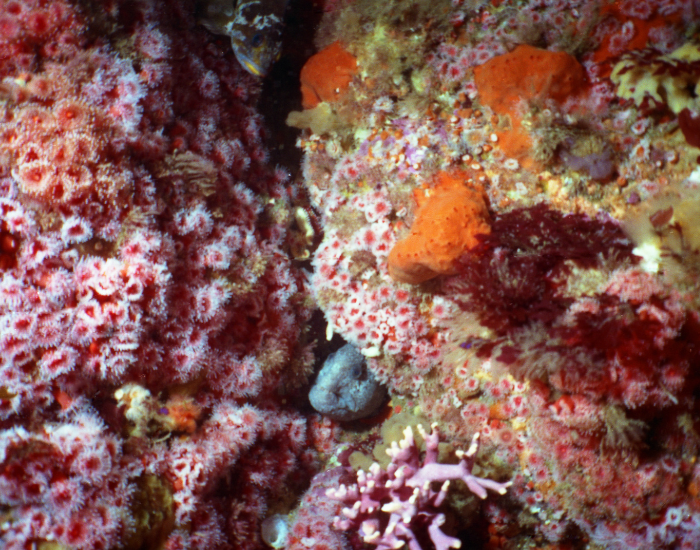
Juvenile wolf eels are often mistaken for a different species altogether. Their bright orange or reddish coloration contrasts sharply with the dull gray of adults. Scientists debate the reason for this dramatic color shift. However, it may serve as camouflage among kelp or signal immaturity to adult predators.
These young wolf eels spend early life drifting among plankton or exploring shallower reefs. Over time, they search for a permanent crevice to call home. As they mature, their bright hues gradually fade. Their bodies grow heavier and more muscular, transforming them into the gray giants familiar to Pacific coast divers.
Juvenile wolf eels mature slowly, taking several years to reach adult size. This slow growth rate makes wolf eel populations vulnerable to habitat disruption and overfishing, even though they’re not targeted commercially.
8. They’re Gentle Giants, Not Aggressive Monsters
Despite fearsome looks and formidable jaws, wolf eels are not aggressive toward humans. Divers frequently encounter them at close range, and many individuals grow accustomed to regular visitors. In fact, some rocky reef residents recognize familiar divers year after year.
That said, they can deliver a serious bite if provoked or hand-fed improperly. Their jaws are strong enough to crush a crab’s shell, therefore, fingers are definitely off the menu. Exercise caution and respect during any encounter.
Wolf eels aren’t venomous, and no records exist of unprovoked attacks on divers. They remain cautious, curious, and surprisingly social when approached respectfully. This gentle nature makes them popular subjects for wildlife photography and educational programs at facilities like the Seattle Aquarium.
9. Wolf Eels Play an Important Role in the Ecosystem
Wolf eels are essential members of rocky reef ecosystems throughout the Pacific coast. By preying on sea urchins, crabs, and mollusks, they help maintain healthy balance in kelp forests. Without predators like them, sea urchin populations can explode and strip kelp beds bare, a phenomenon called “urchin barrens.”
They also serve as prey for larger marine animals, including harbor seals and sea lions. Kelp greenling are known to prey on wolf eel eggs and juveniles, highlighting the complex predator-prey relationships within these habitats. Even their abandoned dens become valuable shelter for smaller fish and invertebrates seeking protection on the sea bottom.
Every aspect of the wolf eel’s life contributes to the intricate web of ocean ecology. This reminds us that even the most misunderstood species hold vital roles in maintaining biodiversity along the Pacific coast.
10. Wolf Eels Are Surprisingly Long-Lived
Wolf eels can live over 20 years in the wild and up to 25 years in aquariums. Their longevity, combined with slow growth and limited reproduction, makes them sensitive to habitat disruption. Therefore, conservation efforts focus on protecting their rocky reef homes.
In regions like Puget Sound, divers and conservationists have tracked wolf eel pairs for decades. Some individuals occupy the same den for years, greeting familiar divers like old neighbors. This site fidelity makes them particularly vulnerable to localized threats.
They’re not currently listed as endangered. However, local protections exist in areas where they’re popular among recreational divers. Maintaining healthy rocky reefs with adequate caves and crevices remains key to ensuring their future throughout the North Pacific Ocean.
11. Human Impacts and Conservation Challenges
Wolf eels aren’t a commercial food fish. However, they’re occasionally caught as bycatch in fishing gear aimed at other species. Habitat destruction, pollution, and warming ocean temperatures may threaten their long-term stability along the Pacific coast.
In some regions, dive tourism creates both opportunities and challenges. While it raises awareness, frequent disturbance can stress resident pairs. Responsible diving, observing without touching or feeding, is vital for protecting these gentle giants in their natural habitat.
Organizations like the Seattle Aquarium have championed wolf eel conservation for decades. They help the public see these creatures not as sea monsters, but as vital guardians of the reef. Educational programs highlight their role in controlling sea urchin populations and maintaining kelp forest health.
Climate change poses additional concerns. As ocean temperatures rise, wolf eels may face altered prey availability and habitat shifts. Protecting rocky reefs and reducing pollution remain critical conservation priorities throughout their range from Alaska to Northern California.
12. Wolf Eels Are Smarter Than You Think
Wolf eels have been known to recognize familiar divers and caretakers in aquariums. They can be surprisingly interactive, showing curiosity and sometimes accepting food by hand from trusted individuals. This intelligence challenges common assumptions about fish cognition.
In captivity, they’ve been observed manipulating objects, exploring new environments, and rearranging their dens. These behaviors suggest problem-solving abilities uncommon in many fish species. Therefore, researchers continue studying their cognitive capabilities.
It’s moments like these that make me question how we perceive “intelligence” in marine life. A creature we once feared as a deep-sea monster may be far more sentient and social than we ever imagined. Their ability to form mate bonds for life further supports this notion.
nlocking Mysteries: Recent Scientific Research
Recent studies continue to reveal fascinating insights into Wolf eels, while also reminding us how much remains unknown. In 2022, research explored how juvenile wolf eels respond to changes in salinity, identifying the species’ isosmotic point, the salinity level where their internal balance of water and salts is most stable. Their work, published in Springer’s Journal of Comparative Physiology B, sheds light on how these fish might cope with shifting ocean conditions driven by climate change.
That same year, another study titled “On Two Poorly Known Species of Wolf Eels” highlighted the taxonomic complexity and data gaps surrounding the group, underscoring how little is still known about their ecology, distribution, and intraspecific variation. Together, these papers emphasize that even one of the Pacific’s most charismatic reef dwellers remains a scientific frontier waiting to be fully explored.
Quick Answers to Common Questions
No. They’re gentle and shy unless provoked or threatened.
In the North Pacific Ocean, from the Sea of Japan and Alaska to Northern California and northern Baja California.
Because it has paired fins and gill slits, like typical fish species. True eels lack these features.
Yes, harbor seals prey on wolf eels, especially juveniles and smaller adults.
No. Their danger lies only in their powerful crushing bite, not venom.
Up to 2.4 meters long and around 18 kilograms in weight. This makes them among the largest fish in their family.
Their monogamous pairs, strong parental care, and crucial ecological role make them one of the ocean’s most unique predators on the Pacific coast.
Over 20 years in the wild and up to 25 years in aquariums with proper care.
Scary but Lovely
The wolf eel embodies everything I love about marine life, beauty hidden behind strangeness, tenderness beneath armor. Watching one glide through a rocky reef feels like glimpsing an ancient spirit of the sea.
As a biologist and traveler, I’ve learned that curiosity drives conservation. When we stop seeing creatures like the wolf eel as frightening and start recognizing them as extraordinary, empathy naturally follows. Their role in maintaining kelp forests and controlling sea urchin populations demonstrates their ecological importance.
The next time you visit the Pacific coast, think of the dens beneath the waves. Picture the paired giants guarding their eggs in silence, keeping balance in the reef. These remarkable fish remind us that even the strangest faces in nature serve a purpose, tell a story, and possess a kind of quiet grace.
For more information about wolf eels and their conservation, visit the Seattle Aquarium or consult resources from NOAA Fisheries and the Monterey Bay Aquarium.
Further Reading
- Top 12 Facts About the Life of the Colorful Parrot Fish
- Echinoderms: The Spiny-Skinned Architects of the Ocean
- The Fascinating World of the Seadragon