Beneath the cool, kelp-draped waters of southern Australia lives one of the ocean’s most enchanting creatures, the seadragon. With delicate leaf-like appendages that seem more mythical than real, these strange looking creatures drift gracefully among seaweed and seagrass, perfectly adapted to their temperate world. Though their name evokes fantasy, seadragons are real fish, distant relatives of seahorses, and among the most extraordinary examples of evolution in the marine realm.
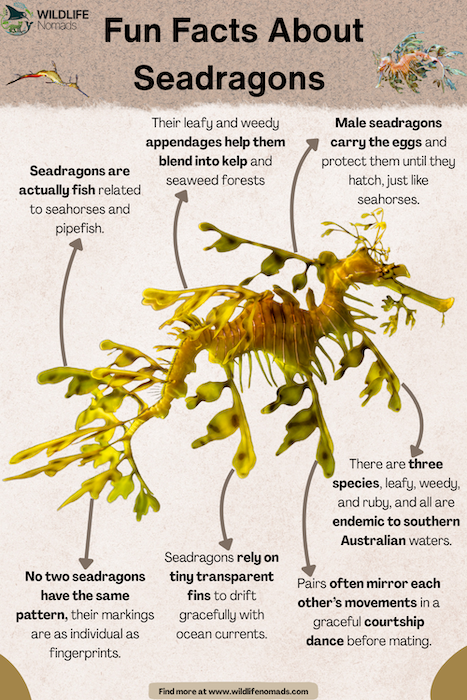
But let’s clarify something first something obvious, Seadragons are fish, not dragons. They belong to the family Syngnathidae alongside seahorses and pipefish. However, their appearance makes them among the ocean’s most captivating animals. Found only in Australia, these creatures have become icons of temperate southern waters. Let’s dive into their world, species, habitat, behavior, conservation, and why they deserve our protection.
What Is a Seadragon?
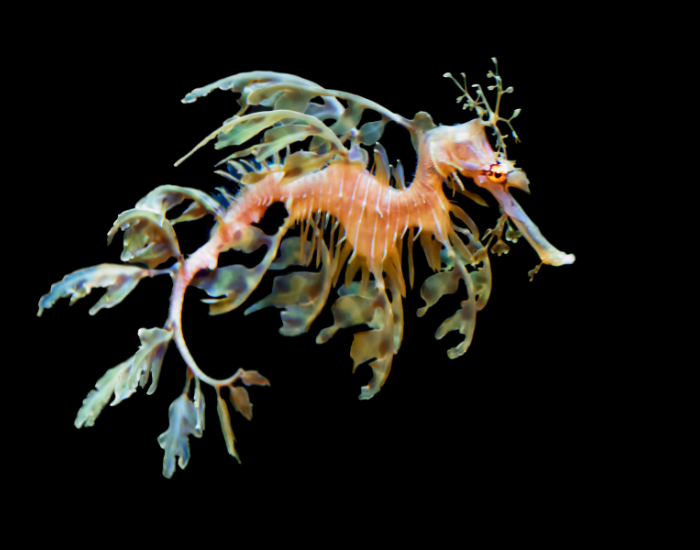
A seadragon is a marine fish from the family Syngnathidae. Unlike seahorses, seadragons have long, leaf-like appendages. Their body is built for blending into seaweed beds and rocky reefs. These fish use strong suction feeding to capture prey.
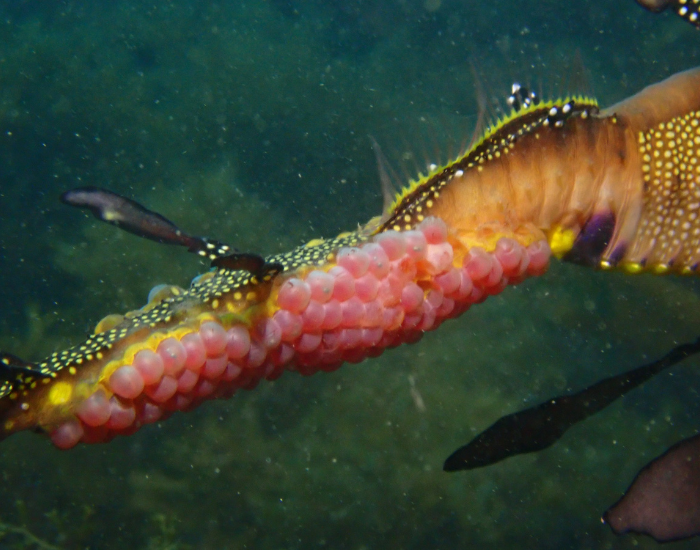
Key traits include a long tubular snout, small fins for propulsion, and leafy lobes for camouflage. Male seadragons carry eggs on a brood patch under their tail. This reproductive strategy fascinates biologists worldwide.
Seadragons differ from seahorses in several ways. They cannot curl their tail around objects. Instead, their tail acts as a rudder while drifting through kelp forests. The prehensile tail in weedy seadragons helps with steering through the water column.
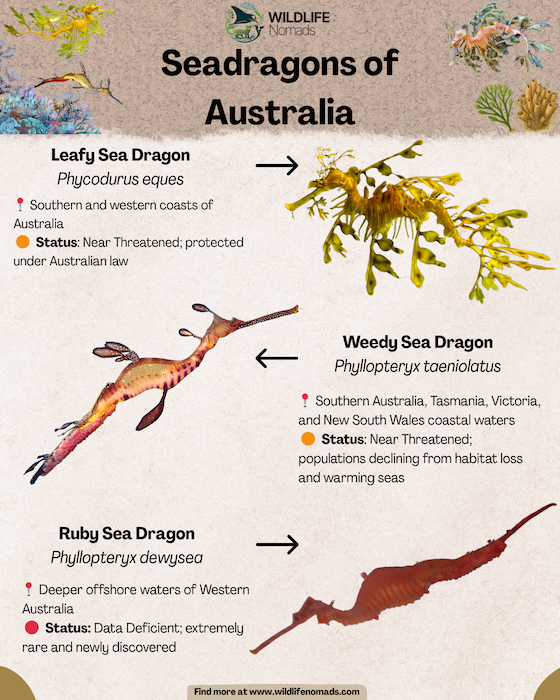
Meet the 3 Seadragon Species
Three recognized seadragon species exist today. Each has unique characteristics and habitat preferences.
Weedy Seadragon (Phyllopteryx taeniolatus)
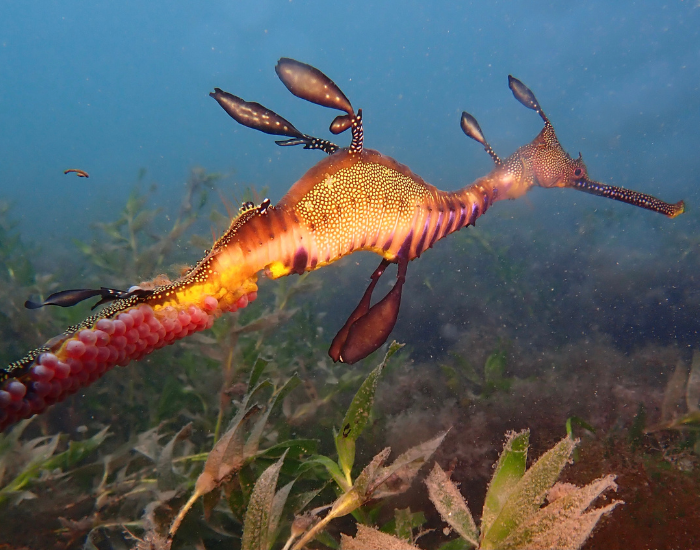
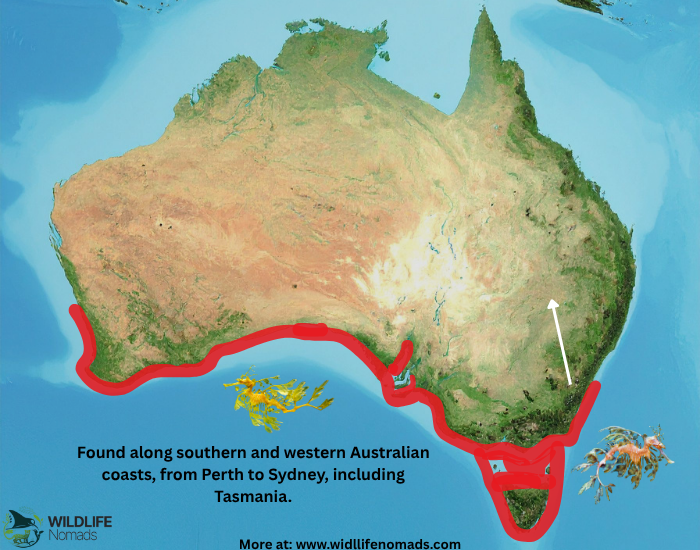
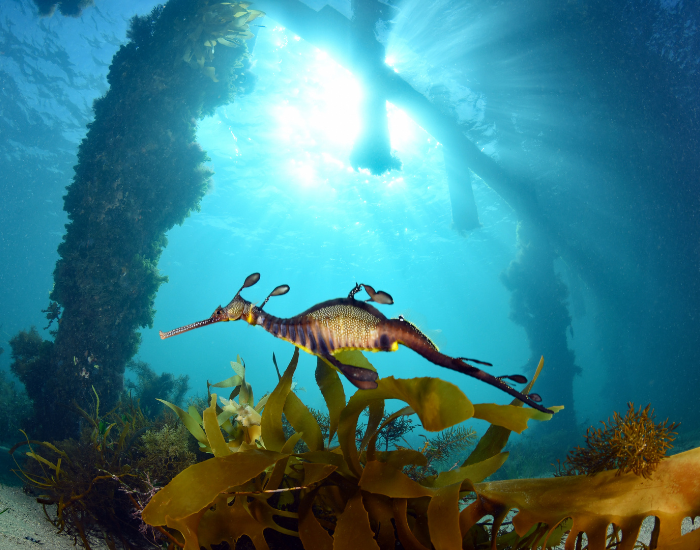
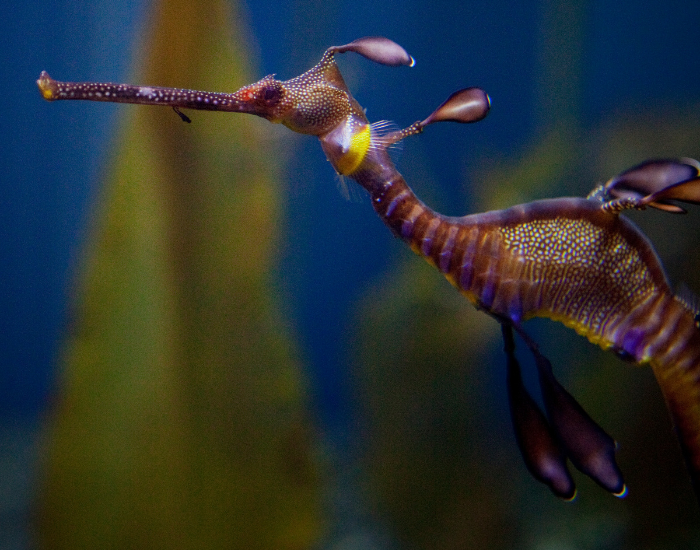
The common seadragon, also called the weedy seadragon, displays brownish-red coloration. Yellow spots cover its body alongside leaf-like appendages. This species ranges from New South Wales to Western Australia. Weedy seadragons inhabit rocky reefs and seaweed beds along Australia’s south coast.
These fish grow up to 45 cm in length. They prefer temperate waters between 5–25°C. Sydney’s coastal reefs provide excellent habitat for weedy seadragons. The species feeds primarily on mysid shrimp and small crustaceans.
Leafy Seadragon (Phycodurus eques)
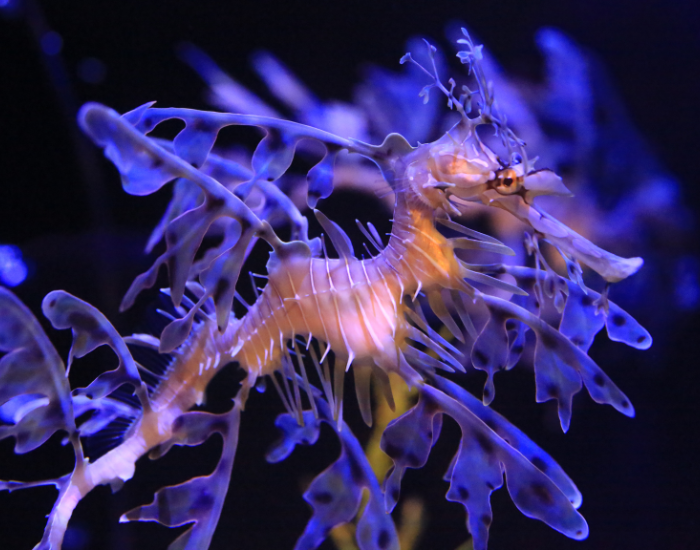
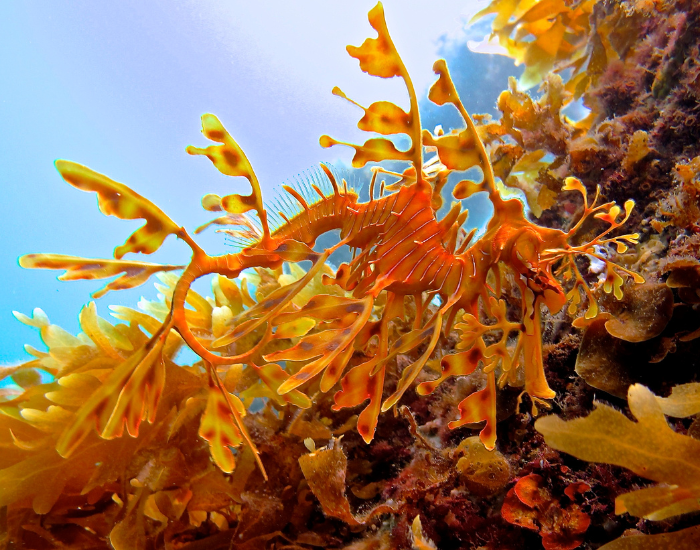
The leafy seadragon is the most ornate species. Extravagant leaf-like appendages cover its entire body. This creates a master of camouflage among kelp and seaweed. Native to South Australia and Western Australia, leafy sea dragons reach lengths of 50 cm.
South Australia’s Fleurieu Peninsula is famous for leafy sightings. The species thrives in seagrass beds and kelp forests. Leafy seadragons use their elaborate appendages to drift unnoticed. Therefore, they avoid predators through visual deception rather than speed.
Ruby Seadragon (Phyllopteryx dewysea)
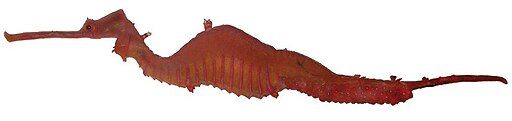
Scientists discovered the ruby seadragon only in 2015. This species lives off Western Australia’s coast in deeper waters. Deep red coloration distinguishes it from other seadragon species. However, it has fewer appendages than its relatives.
Ruby seadragons inhabit depths beyond typical diving ranges. Consequently, researchers know little about their behavior. The species remains listed as Data Deficient on the IUCN Red List. In addition, studying ruby seadragons requires specialized equipment and funding.
Physical Characteristics
Seadragons look fragile but are beautifully adapted to life in temperate seas. Their body structure reflects millions of years of evolution.
Size varies between species. Weedy seadragons grow up to 45 cm, while leafies can reach 50 cm. Coloration includes reds, yellows, and browns with distinctive stripes or spots. These patterns help them blend into their native habitat.
The leaf-like appendages mimic drifting seaweed perfectly. This camouflage protects them from predators in the wild. Their skin consists of bony plates instead of scales. These plates offer protection while maintaining flexibility for swimming.
I remember hovering above a leafy seadragon in South Australia’s waters. It was so well camouflaged that my dive buddy nearly missed it completely. The fish remained motionless, trusting its disguise entirely.
Diet and Feeding
Seadragons lack teeth and stomachs. Therefore, they must feed continuously on tiny prey. Their long, pipe-like snout uses strong suction to capture food.
Their diet consists mainly of mysid shrimp, the primary staple. Small crustaceans provide additional nutrition throughout the day. Plankton and occasionally small fish fry supplement their feeding. However, they rely on stealth rather than speed.
Seadragons creep slowly toward prey before striking. The suction created by their snout pulls food in rapidly. This feeding method requires patience and precision. In addition, they must feed frequently due to their lack of stomach storage.
Habitat and Distribution
Seadragons live exclusively in southern and western Australia. This limited range makes them vulnerable to habitat loss and climate change.
Geographic Range
The species inhabit temperate waters along Australia’s south coast. Tasmania’s east coast provides ideal conditions for weedy seadragons. Victoria’s kelp beds support healthy populations of both species. South Australia’s waters, particularly around the Fleurieu Peninsula, are famous for leafy sea dragons.
Western Australia’s Rottnest Island offers excellent seadragon habitat. Sydney’s coastal reefs support weedy seadragons throughout the year. New South Wales waters mark the northern extent of their range.
Preferred Environments
Seadragons thrive in specific marine environments. Seaweed beds provide both food and shelter. Kelp forests offer perfect camouflage opportunities for hunting. Rocky reefs create complex structures where prey congregates.
Seagrass beds support breeding season activities. Occasional sand patches allow males to display during breeding season. The water column must remain between 5–25°C for optimal survival.
These fish typically inhabit depths of 1–50 meters. Unlike tropical coral reef species, seadragons are specialists of cooler coastal waters. Therefore, they cannot adapt to warming seas easily.
Behavior and Breeding
Seadragons are mostly solitary creatures. However, they come together during late winter and early summer for breeding season.
Courtship and Mating
Courtship involves a graceful dance between male and female seadragons. Synchronized movements occur over several days before mating. The male prepares his brood patch under the tail for egg reception.
Females deposit 100–300 eggs onto the male’s brood patch. Unlike seahorses, male seadragons lack a true pouch. Instead, the eggs attach directly to the underside of the male’s tail. This unique reproductive strategy fascinates researchers studying the family Syngnathidae.
Parental Care
Incubation lasts approximately six weeks. During this time, the male seadragon protects and aerates the eggs. Tiny seadragons, miniature versions of adults, eventually emerge fully formed.
Once released, the young seadragons receive no further parental care. They must immediately hunt for mysid shrimp and other prey. Survival rates in the wild remain relatively low during the first year. However, those reaching adulthood typically live 5–7 years in the wild.
Watching a male seadragon with glowing eggs on his tail is surreal. It reminds us how diverse reproductive strategies can be in the animal kingdom.
Threats and Conservation
Seadragons face multiple pressures despite their protected status. Understanding these threats is essential for effective conservation efforts.
Primary Threats
Habitat loss remains the most significant threat to seadragon populations. Destruction of seagrass beds reduces breeding grounds substantially. Kelp forests disappear due to coastal development and pollution. Rocky reefs face degradation from sedimentation and runoff.
Climate change impacts seadragon species in multiple ways. Warming seas push temperate waters further south. Marine heatwaves damage seaweed beds and kelp forests. Therefore, seadragons lose both food sources and shelter simultaneously.
Pollution from agricultural and urban runoff degrades water quality. Sedimentation smothers seagrass beds essential for breeding. In addition, plastic pollution entangles these delicate fish occasionally.
The aquarium trade once threatened wild populations significantly. However, collection is now tightly controlled under federal legislation. Illegal trade still occurs but enforcement has improved substantially.
Conservation Status
The IUCN Red List categorizes weedy seadragons as Near Threatened. Leafy seadragons also appear as Near Threatened due to declining populations. Ruby seadragons remain Data Deficient because scientists lack sufficient information.
Australia protects all seadragon species under federal legislation. Capturing or trading them without permits is illegal. Penalties for violations can be severe, including substantial fines.
Conservation Programs
Several institutions participate in seadragon conservation efforts. Monterey Bay Aquarium has successfully bred leafy sea dragons in captivity. Sydney’s SEA LIFE Aquarium also maintains breeding programs for both major species.
These programs raise awareness about threats facing seadragons. They also provide insurance populations if wild numbers decline further. However, captivity cannot replace wild populations or their ecosystem roles.
Citizen science projects like Seadragon Search in South Australia engage divers directly. Participants upload sightings and photos to track population trends. These efforts support research while building community awareness. Therefore, conservation truly begins with local communities who care.
Seadragons in Captivity
Seadragons are extremely difficult to maintain in aquarium settings. Unlike seahorses, they require specialized care that few facilities can provide.
Large tanks with precise temperature control are essential. Salinity must remain within narrow parameters continuously. The food supply requires constant cultivation of live mysid shrimp. Consequently, only a handful of aquariums worldwide successfully display them.
Monterey Bay Aquarium pioneered leafy seadragon husbandry techniques. Melbourne Aquarium has also achieved breeding success with multiple species. These institutions share knowledge to improve captive care standards.
People often ask whether they can own a seadragon as a pet. The answer is firmly no. Their survival depends on complex ecosystems impossible to replicate at home. In addition, federal legislation prohibits private ownership entirely. Therefore, viewing them in accredited aquariums or wild encounters remains the only ethical option.
Evolutionary Relatives: Seahorses and Pipefish
Seadragons share ancestry within the family Syngnathidae. However, they evolved distinct adaptations from seahorses and pipefish.
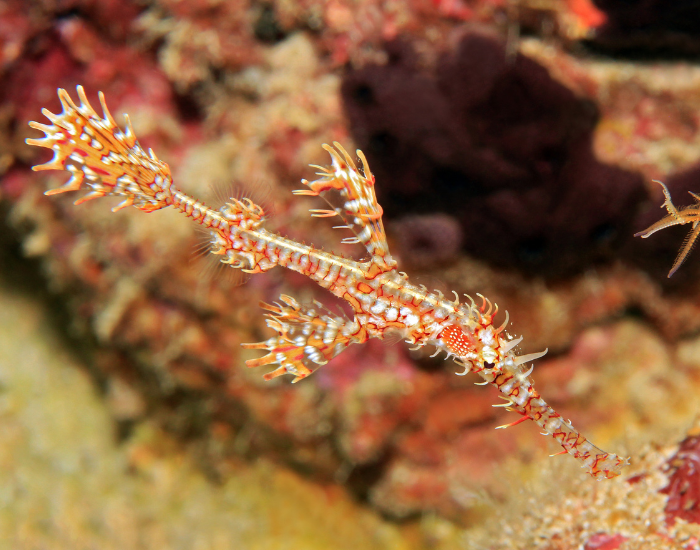
Seahorses curl their prehensile tail around seagrass for stability. Seadragons cannot perform this action despite having similar body structures. Pipefish are slender and lack the elaborate leaf-like appendages of seadragons.
These differences reflect varying environmental pressures over millions of years. Seadragons evolved camouflage as their primary defense strategy. Therefore, predators struggle to distinguish them from drifting seaweed. This evolutionary branch highlights how adaptation creates extraordinary diversity.
Genetic studies confirm close relationships between these three groups. However, they diverged significantly in morphology and behavior. Understanding these relationships helps scientists predict how each species might respond to environmental changes.
Climate Change and the Future of Seadragons
Recent studies reveal concerning trends for southern Australia’s marine ecosystems. Warming seas and marine heatwaves are reshaping kelp forests rapidly. Consequently, seadragons lose both food sources and shelter simultaneously.
Temperature increases push cold-water kelp species further south. However, seadragons cannot migrate easily to follow habitat shifts. Their specialized diet of mysid shrimp depends on intact seaweed beds. Therefore, population declines may accelerate without intervention.
Marine heatwaves have become more frequent along Australia’s south coast. These events cause mass die-offs of seagrass beds and kelp. Recovery takes years even under ideal conditions. In addition, consecutive heatwaves prevent ecosystem recovery entirely.
Research institutions monitor seadragon populations continuously. Data from citizen science projects proves invaluable for tracking trends. However, understanding threats differs from implementing effective solutions.
Protecting and restoring coastal habitats offers the best hope. Reducing pollution and coastal development preserves remaining seaweed beds. Marine protected areas help buffer populations against localized threats. Therefore, comprehensive management strategies must address multiple pressures simultaneously.
Where to See Seadragons in the Wild
Observing seadragons in their native habitat creates unforgettable memories. Several locations along Australia’s south coast offer reliable sightings.
South Australia’s Fleurieu Peninsula remains the premier destination for leafy sea dragons. Rapid Bay and Second Valley provide excellent diving conditions year-round. Local dive operators specialize in seadragon encounters with minimal environmental impact.
Tasmania’s east coast supports healthy weedy seadragon populations. Rocky reefs around Eaglehawk Neck offer good visibility during summer months. However, water temperatures can be challenging for inexperienced divers.
Victoria’s kelp forests provide habitat for both weedy and leafy species. Port Phillip Bay and coastal reefs near Melbourne attract many divers. The temperate waters remain cool even during summer breeding season.
Sydney’s harbors and coastal reefs support weedy seadragons throughout the year. Dive sites like Bare Island and Shiprock are accessible for most skill levels. In addition, these locations offer shore diving opportunities for budget-conscious travelers.
Research and Discoveries
Recent research has revealed just how remarkable seadragons are at both the genetic and ecological level. A 2022 study published produced the first high-quality genome for both leafy and weedy seadragons, uncovering genes linked to their unique camouflage, bone structure, and vivid coloration. These findings suggest that their ornate leaf-like appendages and vibrant hues are the result of millions of years of specialized evolution in Australia’s kelp forests.
Meanwhile, a 2023 population genomics study in BMC Biology found distinct genetic lineages among weedy seadragons along Australia’s coast. This means what was once thought to be one widespread species may actually consist of separate, regionally adapted populations. Together with citizen science projects like SeadragonSearch, these studies are helping scientists map populations, monitor declines, and guide future conservation of these extraordinary marine icons.
FAQ: Seadragons Answered
No, they are relatives but distinct species within the family Syngnathidae. Seadragons have leaf-like appendages while seahorses possess prehensile tails.
Three species exist: the weedy seadragon (Phyllopteryx taeniolatus), leafy seadragon (Phycodurus eques), and ruby seadragon (Phyllopteryx dewysea).
Seadragons live exclusively in southern and western Australian waters. They inhabit temperate seas along Australia’s south coast from New South Wales to Western Australia.
Weedy seadragons grow up to 45 cm while leafy species can reach 50 cm. Ruby seadragons appear slightly smaller but require more research.
Male seadragons carry eggs on a brood patch under their tail. The young hatch after six weeks and swim away independently. Therefore, males incubate rather than give birth.
Weedy seadragons are listed as Near Threatened on the IUCN Red List. Habitat loss and climate change pose significant risks to populations.
No, seadragons cannot survive outside specialized aquarium settings. Federal legislation prohibits private ownership entirely. They require complex ecosystems impossible to replicate at home.
No, seadragons are completely harmless and non-venomous. They pose no threat to humans during encounters in the wild.
Wild seadragons typically live 5–7 years. In captivity with optimal care, they may reach 10 years. However, captive lifespans vary significantly between institutions.
Why Seadragons Matter
Seeing a seadragon in the wild creates an unforgettable experience. They are living works of art, perfectly adapted to drift among kelp and seagrass. However, like many marine species, they are vulnerable to human impacts.
Protecting seadragons means protecting entire ecosystems. Seaweed beds, rocky reefs, and seagrass meadows support countless other species. Therefore, conservation efforts benefit marine biodiversity broadly.
If mythical creatures existed, they would surely look like this. Perhaps that’s why seadragons are so important. They remind us of the magic still alive in our oceans. More importantly, they remind us of our responsibility to preserve it.
Australia’s south coast harbors treasures beyond imagination. The leafy seadragon gliding through kelp forests represents just one example. Weedy seadragons drifting past rocky reefs demonstrate nature’s creativity. Even the mysterious ruby seadragon in deeper waters inspires continued exploration.
Further Reading
Find a Tour to see Seadragons in the wild!
This blog is reader-supported. When you buy experiences through links listed on this site, we may earn an affiliate commission.