
My first week in Sydney I walked past a park where the lawn was covered in pink and grey birds pulling up grass like they owned it. I had grown up seeing parrots in zoos and cages, never loose in a city. These were galahs, and I have been stopping to watch them ever since.
They turned up again on stops five and six of my lap around Australia, at Illaroo on the north coast of New South Wales and Pebbly Beach further south. Illaroo sits in the same park as Lake Arragan and Red Cliff, and the birds there behaved exactly like the ones in Sydney. Also called the rose breasted cockatoo, the galah cockatoo or the roseate cockatoo, this is a species most Australians stopped noticing years ago. Here are 13 facts about galahs, including one where the science disagrees with almost every pet page online.
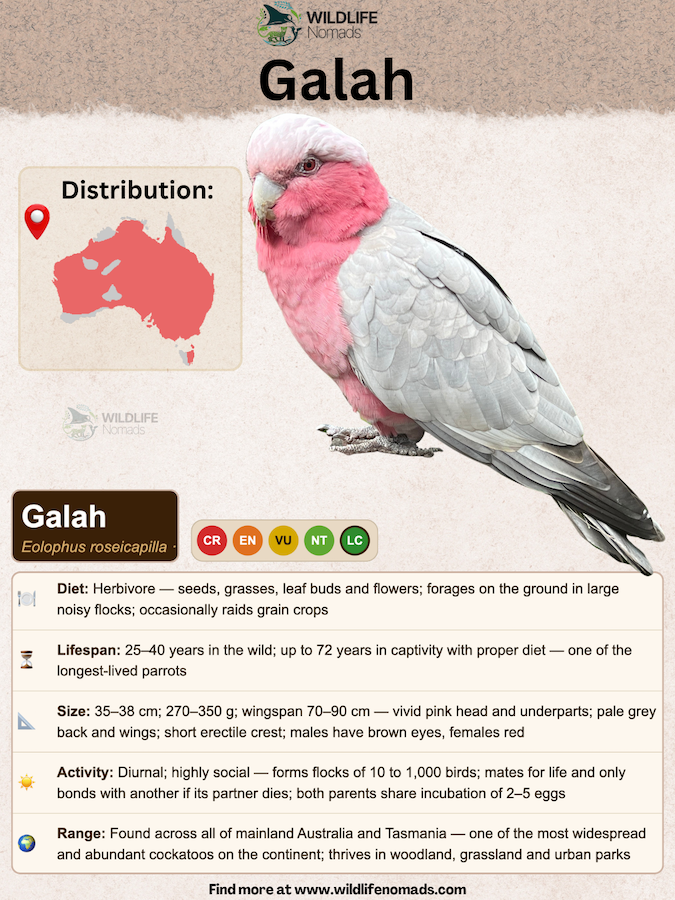
1. Galahs Are a Type of Cockatoo
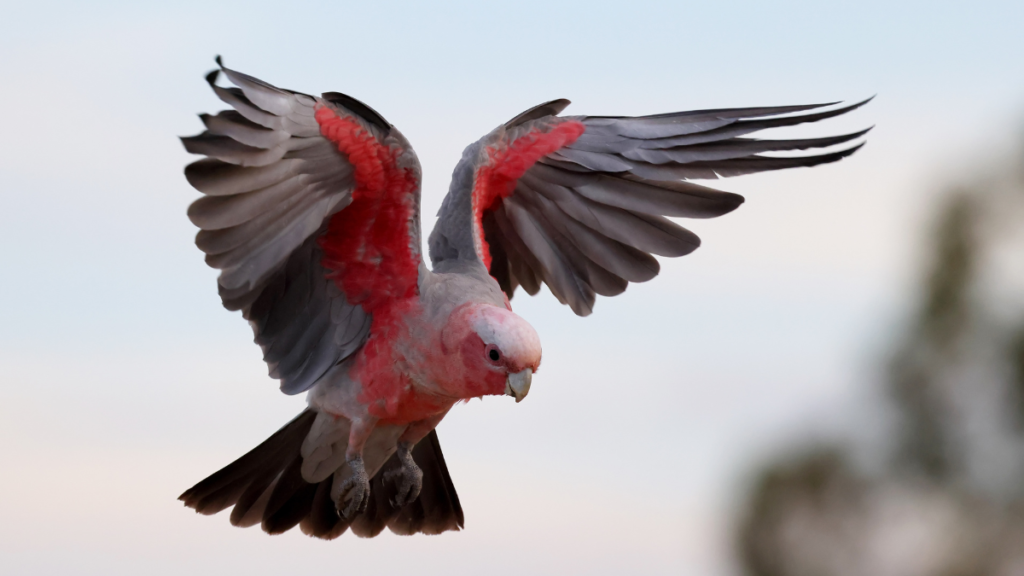
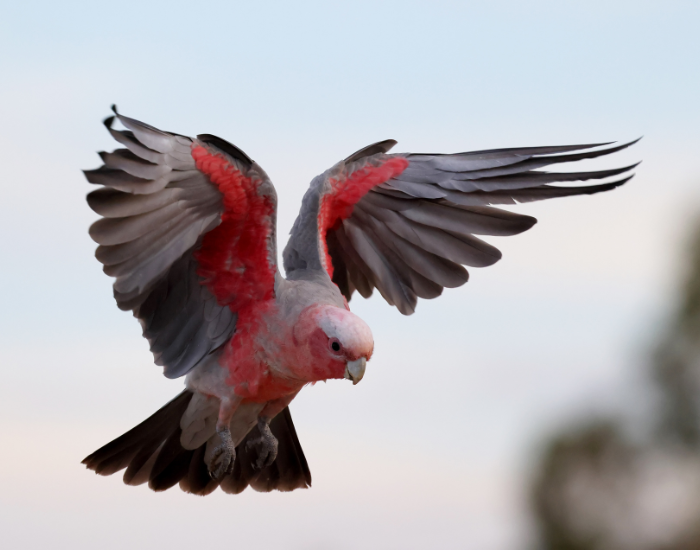
The Australian galah (Eolophus roseicapilla) sits alone in the genus Eolophus, separate from the white Cacatua cockatoos. Adults run about 35 cm long and weigh 270 to 350 g. The bright pink feathers cover the head, neck and underparts; the back, wings and tail are grey, which is why some call it the grey cockatoo. Like all cockatoos it has a crest and a heavy curved beak, and cockatoo beaks are built for cracking hard seed.
The sulphur crested cockatoo, the other city parrot, is white with a yellow crest. Galahs also hybridise with several other cockatoos in the wild, including Major Mitchell’s.
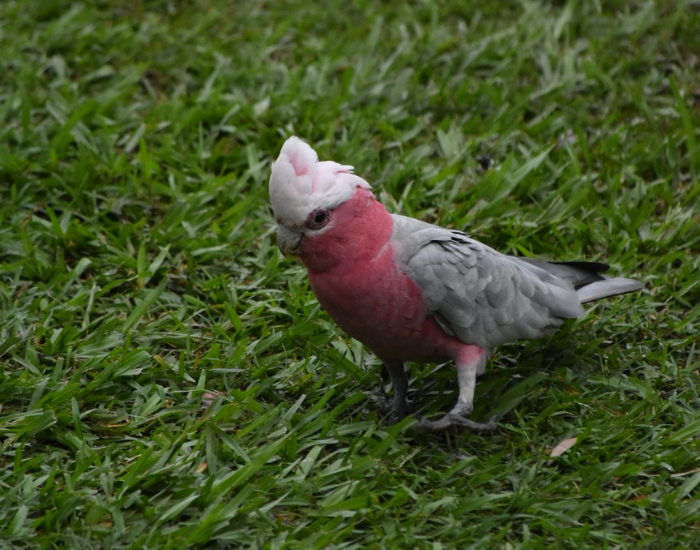
2. They Are Everywhere in Australia
Few Australian parrots are this abundant. They occupy most of mainland Australia, thinning out only in the driest interior, and reached Tasmania as introduced birds in the mid-19th century. Their habitats are open country, woodland, farmland and parks, anywhere with scattered trees and grass underneath.
Dense rainforest they leave alone. Three subspecies are usually recognised, with kuhli in the northern part of the range, though whether those divisions hold up is a live question: a 2015 genetic study by Engelhard and colleagues was titled “Rise (and demise?) of subspecies in the Galah”. Of all the Australian native birds to learn first, this is the easy one.
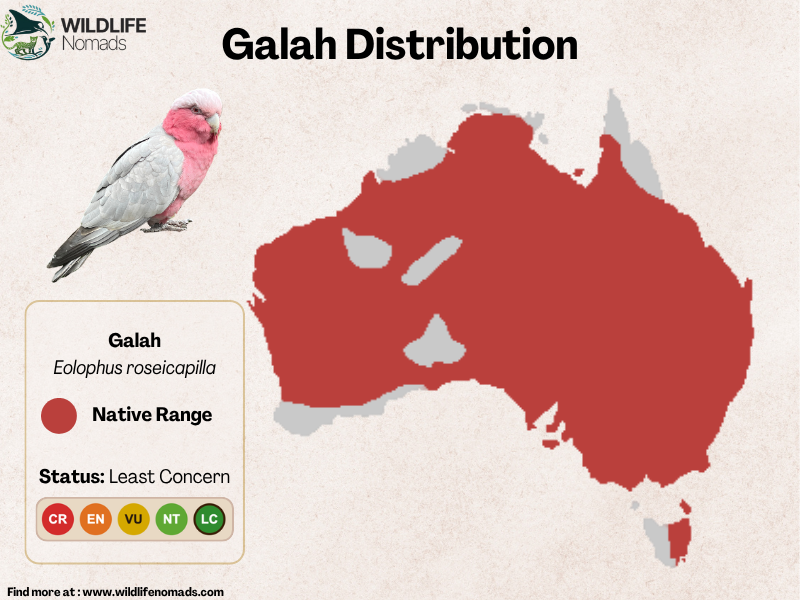
3. Male and Female Galahs Look Different
At a glance one galah looks much like another. Look at the eye and the sexes separate cleanly. The male galah has a very dark brown iris, dark enough to read as black in most light.
The female galah has a mid-brown to reddish pink iris, and females tend to be the easier of the two to pick. It is one of the few Australian parrots you can sex in the field without handling the bird. Getting close enough is the hard part, which is where binoculars earn their keep, something I cover in my notes on birding for beginners.
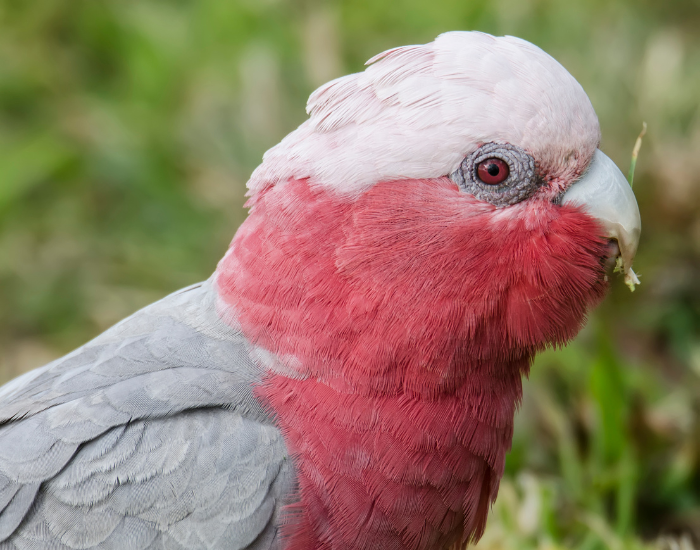
4. They Live in Huge, Noisy Flocks
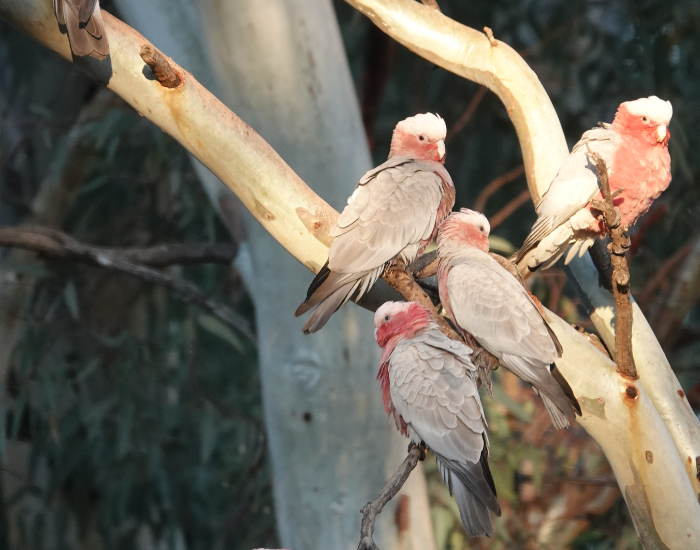
A flock coming in to roost at sunset is loud in a way that is hard to describe. Large flocks run from ten birds to well over a thousand, they congregate to feed on the ground in open areas, and they often mix with other birds.
At Illaroo beach I watched them on the grass beside crested pigeons, another urban success story. Those huge noisy flocks are not sociability for its own sake: more eyes spot predators earlier, and birds perch together at night for the same reason.
5. They Nest in Tree Hollows
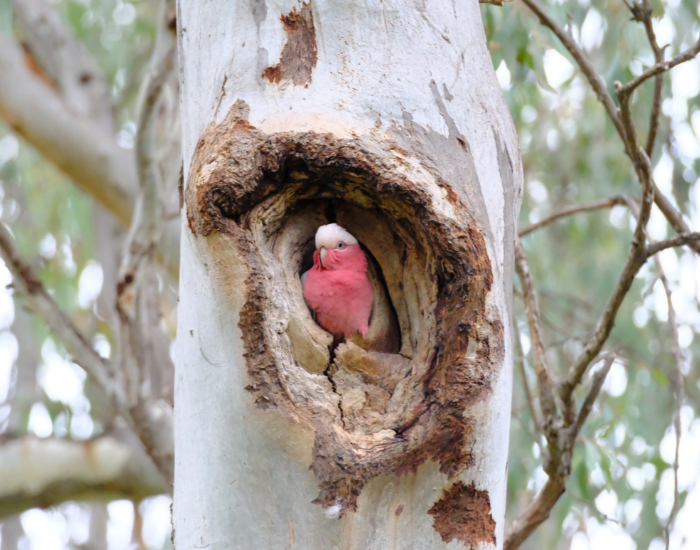
Like most Australian parrots they need a tree hollow to nest in, and one big enough for a cockatoo takes a century to form. Land clearing has removed a great many of those trees, which turns nesting into a fight. A Sydney study by Davis, Major and Taylor monitored 61 hollows across two breeding seasons and recorded 137 aggressive interactions, almost all involving parrots contesting sites with rainbow lorikeets, king parrots and sulphur crested cockatoos. There is no quick substitute for an old tree.
6. Galahs Are Intelligent and Playful
This is a clever bird by any measure. They solve puzzles, work out latches, hang upside down off powerlines for no reason anyone can find, and some learn to imitate people’s voices. In captivity that intelligence is less charming than the listings suggest.
A 2021 study in Proceedings of the Royal Society B led by Mellor found relative brain size and a specialised foraging style were the strongest predictors of feather-damaging behaviour across parrot species. The clever ones suffer most in a cage.
7. They Can Live for Decades
You will read that galahs live up to 70 years in captivity with proper care, and up to 40 in the wild. The ceiling is real: the longest-lived individual in international zoo records reached 72.8 years.
The typical outcome is not. In that same dataset, analysed by Young and colleagues, the median lifespan for birds reaching adulthood was about 9 years, and wild birds contending with traffic, cats and raptors rarely see 20. Treat 70 as the record rather than the plan.

8. Galahs Are a Protected Species
Common does not mean unprotected. They are protected native wildlife under state and territory law, so taking, keeping or trapping one requires permits, and the rules differ between states. The same protections cover every black cockatoo in Australia, several of which are in real trouble, unlike this one. Growers losing cultivated crops can apply for damage mitigation permits, where the legal status and the pest reputation meet
9. They Have a Varied Diet
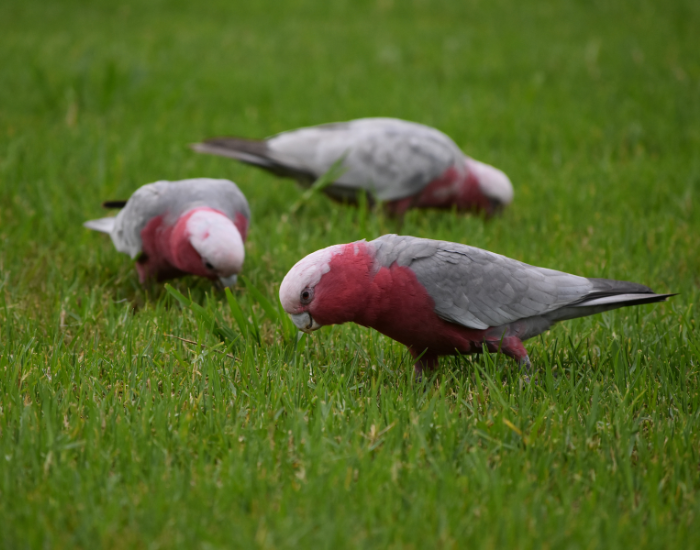
Wild birds eat seeds, grasses and leaf buds taken from the ground, feeding mainly in the early morning and late afternoon. They handle arid country well and can go long stretches without fresh water. They also eat cultivated crops, which is how they earned pest status.
A sunflower study in northeastern New South Wales by Fleming, Gilmour and Thompson tracked the pattern: galahs and sulphur crested cockatoos fed past the normal harvest date, damage began at the crop margins and spread inward, and taller heads were hit hardest. They disperse seed as they go, which rarely makes the same conversation. More on what birds eat across different groups.

10. They Form Lifelong Pairs
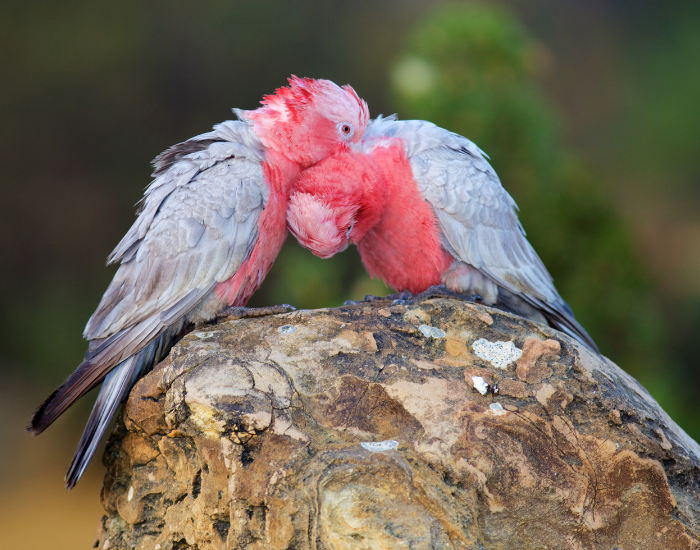
Pair bonds are permanent. You can pick a bonded pair out of a feeding flock because they sit closer than the birds around them and spend their free time preening each other’s head and neck.
Breeding runs once a year in the same hollow where possible: 4 to 6 eggs per clutch, incubated by both sexes for about 25 days, with both parents feeding the chicks until they leave the nest at around 49 days. Up to half of all young then die within six months, which is why a species this abundant still needs every hollow it can get.
11. They Are Cultural Icons in Australia
Few animals are this embedded in Australian English. Call someone a galah and you are calling them a fool, a nod to the noisy, clown-like behaviour. The word comes from gilaa, from Yuwaalaraay and neighbouring Aboriginal languages of northwestern New South Wales, so the name predates the insult by a long way. It holds its own among the better known animals of Australia
12. They Thrive in Urban Environments
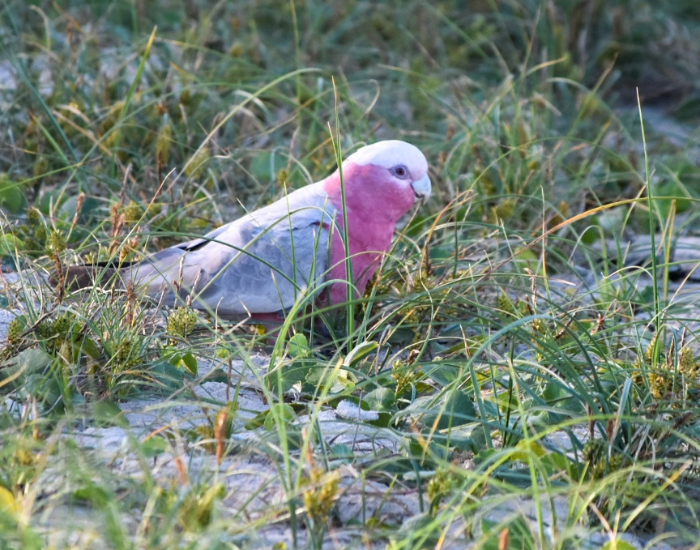
Plenty of native species lose ground to cities. These birds do the opposite, because urban areas hand them reliable food and water. They forage on suburban lawns and in parks, perch along powerlines and drink from backyard birdbaths. Research across Sydney by Davis, Taylor and Major found parrot abundance significantly higher in the outer urban zone than the non-urban zone beside it.
For a granivore that likes mown grass and scattered trees, metropolitan areas improve on the natural habitat they replaced. The practical side is in my guide to building a wildlife friendly garden, and the same logic explains the blue-faced honeyeater in suburban parks.
13. Galahs Are Both Loved and Loathed
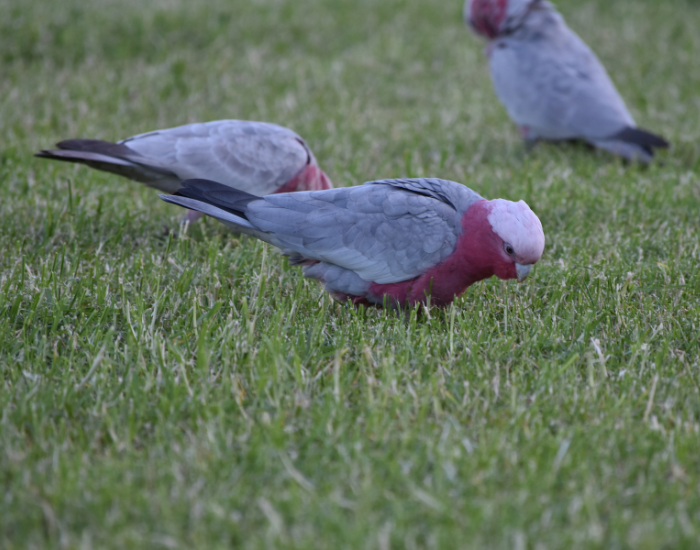
To one person they are the pink and grey birds that brighten a park. To a grower watching 400 of them land on a ripening crop, they are a bill. Both views are correct, and an animal doing well is not automatically an animal everyone is pleased about
Galahs as Pet Birds: What the Research Supports
I watch these birds in the field and have never kept one, so take the husbandry below as standard guidance rather than my own testing, and anything medical to an avian vet.
Most pet birds of this size are under-housed. Aviary birds need a cage of at least 5 feet square as a floor, not a ceiling, plus three to four hours of free time outside it daily for flying and climbing. Feeding is usually given as 50% pellets and 50% fresh food, with leaf buds, vegetables, grasses and occasional insects for extra protein, and a water source refreshed daily. Daily social interaction is not optional for a species that evolved in flocks of hundreds. The Mellor study is why this matters: the traits that make them appealing as pets are the same ones that predict feather plucking in captivity.

Latest Science on Galahs
In 2023 Kim Pryor documented something in the Hunter Region of New South Wales not recorded in the species before: a pair using a single nest box in a suburban backyard at Thornton laid a second clutch while still feeding a chick from the first. Brood overlap within one nest.
They normally wait until a brood has fledged. The first chick did fledge, at around 64 days. The second brood failed, which suggests the overlap is possible but not free.
FAQs About Galahs
A flock. Australians will sometimes say a mob of galahs, which is informal rather than official.
The name comes from gilaa, a word from Yuwaalaraay and neighbouring Aboriginal languages of northwestern New South Wales.
It is a cockatoo, the pink and grey one, and it sits in its own genus Eolophus rather than with the white Cacatua cockatoos.
Yes, among the most capable Australian parrots at problem solving and mimicry. That intelligence is also why they do badly in under-stimulating captivity.
They can be affectionate pets. However, they require space, enrichment, and decades of commitment. Most pet birds enthusiasts recommend extensive research first.
The Pink and Grey Survivors
Finding them again at Illaroo and Pebbly Beach, years after that first Sydney park, felt like the country checking in. Wildlife does not only belong in remote habitat. Sometimes it is on the lawn outside your door, squawking, pulling up grass, entirely unbothered by you. The species we call ordinary are usually the ones nobody has looked at closely enough.
Galah Science & Field Identification Quiz
Ten fun study questions covering Galah genus classification, eye-color field identification, median vs. maximum lifespans, nesting battles, and Indigenous linguistic origins. Test your retention!
Multiple Choice
References:
Davis, A., Major, R. E., & Taylor, C. E. (2013). Housing shortages in urban regions: Aggressive interactions at tree hollows in forest remnants. PLOS ONE, 8(3), e59332. https://doi.org/10.1371/journal.pone.0059332
Davis, A., Taylor, C. E., & Major, R. E. (2012). Seasonal abundance and habitat use of Australian parrots in an urbanised landscape. Landscape and Urban Planning, 106(2), 191–198. https://doi.org/10.1016/j.landurbplan.2012.03.005
Engelhard, D., Joseph, L., Toon, A., Pedler, L., & Wilke, T. (2015). Rise (and demise?) of subspecies in the Galah (Eolophus roseicapilla), a widespread and abundant Australian cockatoo. Emu – Austral Ornithology, 115(4), 289–301. https://doi.org/10.1071/MU15018
Fleming, P. J. S., Gilmour, A., & Thompson, J. A. (2002). Chronology and spatial distribution of cockatoo damage to two sunflower hybrids in south-eastern Australia, and the influence of plant morphology on damage. Agriculture, Ecosystems & Environment, 91(1–3), 127–137. https://doi.org/10.1016/S0167-8809(01)00241-9
Mellor, E. L., McDonald Kinkaid, H. K., Mendl, M. T., Cuthill, I. C., van Zeeland, Y. R. A., & Mason, G. J. (2021). Nature calls: Intelligence and natural foraging style predict poor welfare in captive parrots. Proceedings of the Royal Society B, 288(1960), 20211952. https://doi.org/10.1098/rspb.2021.1952
Young, A. M., Hobson, E. A., Bingaman Lackey, L., & Wright, T. F. (2012). Survival on the ark: Life-history trends in captive parrots. Animal Conservation, 15(1), 28–43. https://doi.org/10.1111/j.1469-1795.2011.00477.x