Wildlife Nomads


I came late to rock pools. Before Australia, I only met them on university field trips. In Sweden, during my exchange year, we sampled rock pools for a course. Later came field trips to Veracruz and Ensenada, Mexico.
Then I moved to Australia and got a surprise. People here love rock pools, my partner included. Families gather on the rock platforms at every low tide. So I started hunting for rock pool creatures for fun, and I never stopped.
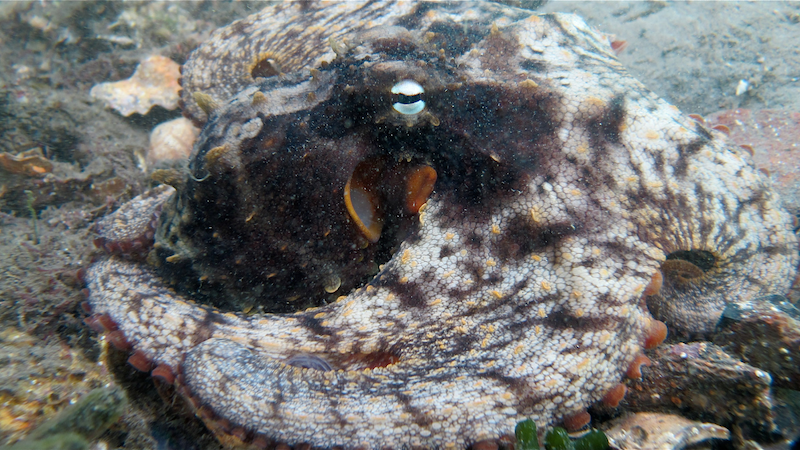
On our Australia lap, we have explored every rock pool we found along the way. I have no regrets. At Red Cliff, beside Lake Arragan, we found a tiny gloomy octopus hiding in plain sight. It was the first octopus I found myself, without a guide pointing it out.
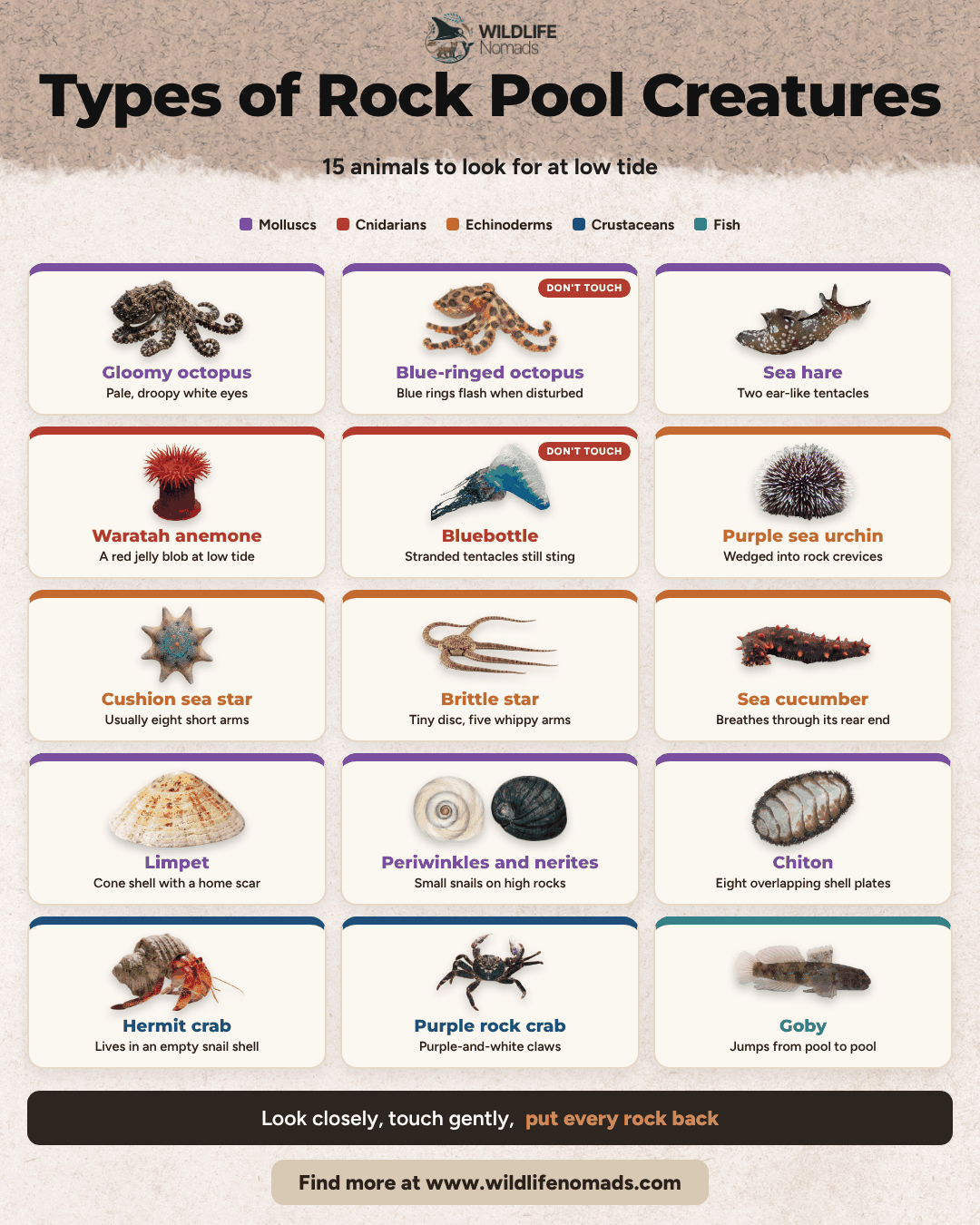
This guide covers 15 creatures you will find at rock pools, mostly on Australian shores. You will learn how to spot each one, how it survives, and which ones to leave alone.
What Are Rock Pools?
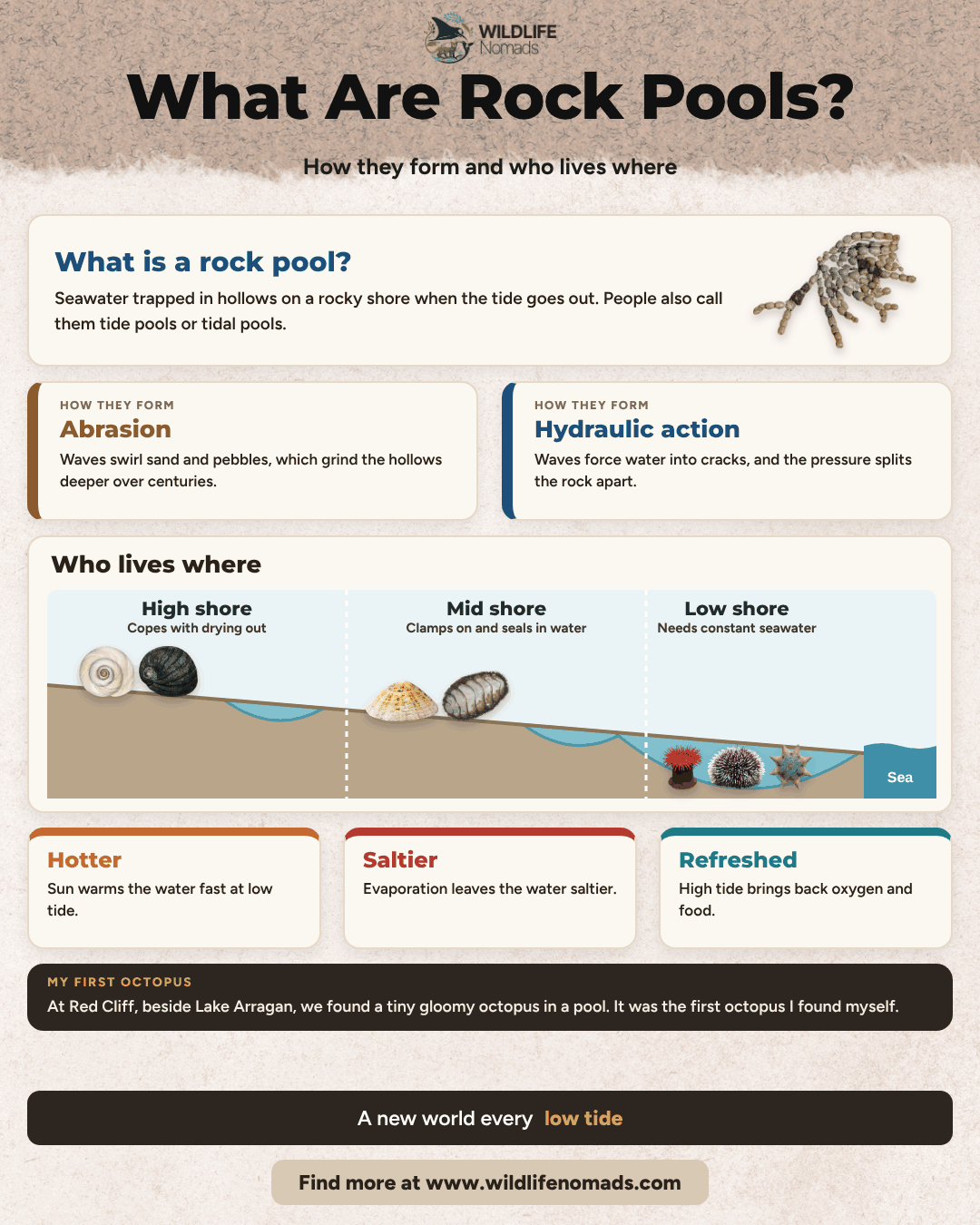
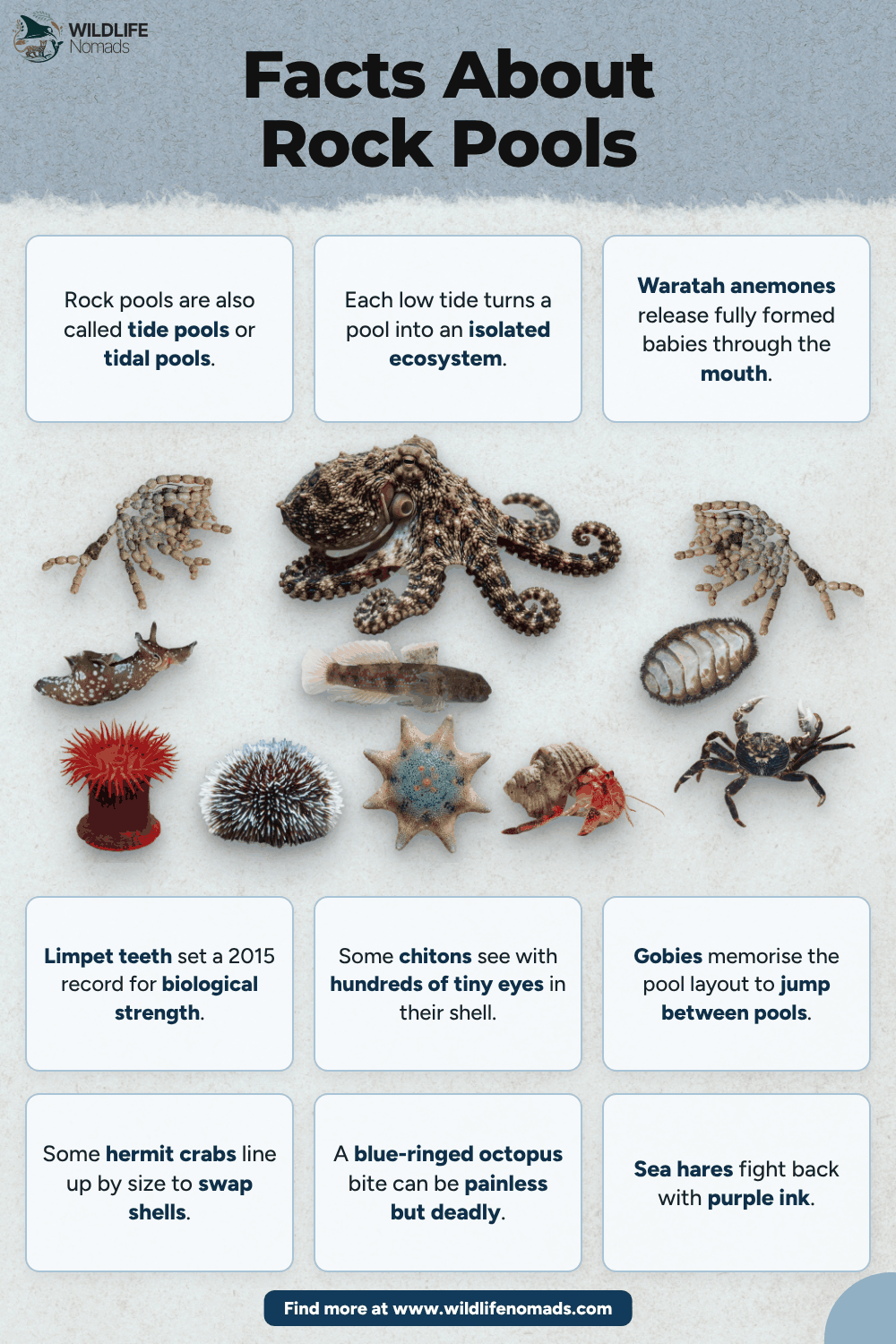
Rock pools, also called tide pools or tidal pools, are pockets of seawater left in hollows on rocky shores. They form when the tide recedes and water stays trapped in cracks and basins. Over centuries, sand and pebbles grind the hollows deeper, a process called abrasion. Hydraulic action, where waves force water into cracks, splits the rock further.
Rock pools provide shelter, but the conditions are harsh. Each low tide turns a pool into a small, isolated ecosystem. On a hot summer day, the water warms fast, and evaporation makes it saltier. The incoming high tide then refreshes the pool with oxygen and food.
These swings sort marine life across the intertidal zone. Animals that tolerate drying out live high on the shore. Species that need constant seawater stay low, near the waves. As a result, a single rock platform holds several distinct communities of marine species.
Seaweed sets the scene for many of them. On the NSW coast, Neptune’s necklace (Hormosira banksii) forms olive-brown chains of beads up to 30 cm long. Each bead holds water, which helps the seaweed cope with water loss at low tide. Its mats shade tiny crustaceans and snails from the sun.
1. Gloomy Octopus
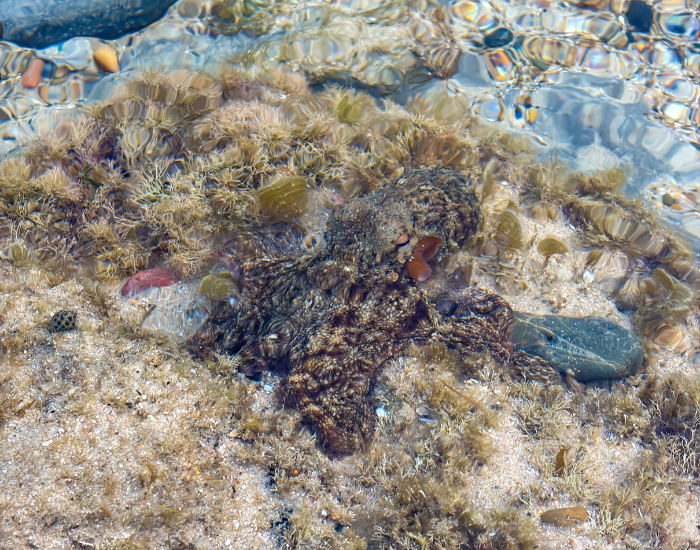
The gloomy octopus (Octopus tetricus) is the big octopus of eastern Australia’s rocky shores and northern New Zealand. Look for pale, droopy white eyes and rust-red undersides on the arms. Adults can reach an arm span of about 2 m.
Ours at Red Cliff was tiny, and its camouflage was superb. It raised small skin bumps called papillae and matched the rock perfectly. Like cuttlefish, octopuses can change colour in a fraction of a second.
Gloomy octopuses hunt crabs and snails, mostly at night. Warmer seas have pushed the species south into Tasmania. There, it lives only about 11 months, a short lifespan for such a clever animal.
2. Blue-Ringed Octopus
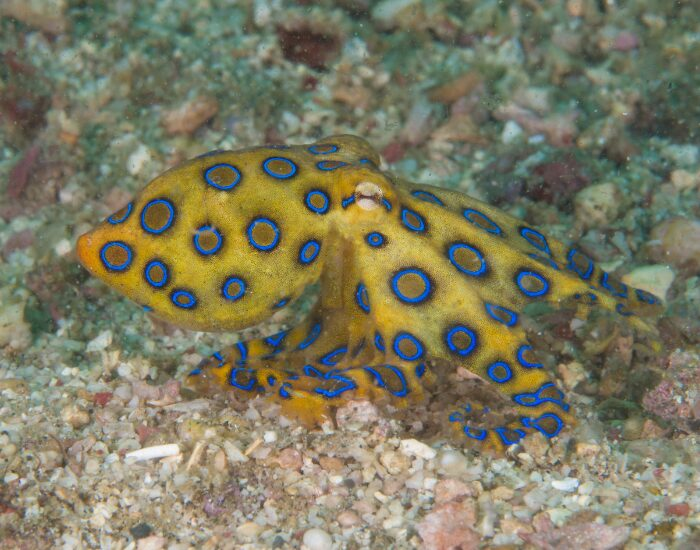
Around ten species of blue-ringed octopus (Hapalochlaena) exist, several in Australian waters. The blue-lined octopus (Hapalochlaena fasciata) is the common one around Sydney. Its body reaches only about 5 cm, with arms to 10 cm.
When disturbed, this plain brown octopus flashes bright blue rings as a warning. Bacteria in its salivary glands make tetrodotoxin, the same nerve toxin found in pufferfish. The bite can be painless, yet paralysis can begin within minutes. No antivenom exists.
These octopuses are timid. Bites happen when someone picks one up, often hidden inside an empty shell. First aid is a pressure bandage, rescue breathing if needed, and a call to 000. It ranks among the most toxic animals in the world, and it features in my venomous animals index. I have not met one in a pool yet.
3. Sea Hare
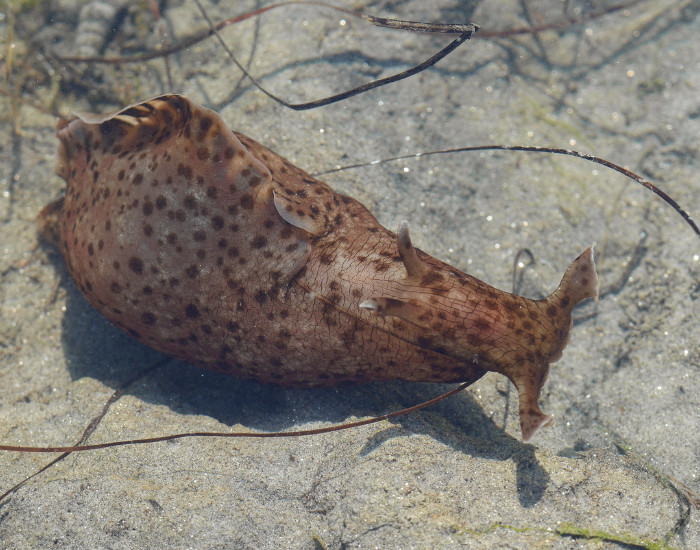
Sea hares are large sea slugs in the genus Aplysia. Two ear-like tentacles on the head gave them their name. They graze seaweed in shallow pools, and some grow longer than your hand.
When a predator attacks, a sea hare releases a cloud of purple ink and white opaline. Researchers found this mix plays a trick. It overloads the feeding senses of spiny lobsters, so they attack the cloud while the sea hare crawls away.
Their large nerve cells also helped Eric Kandel win a 2000 Nobel Prize for memory research. Their colourful cousins, the nudibranchs, also turn up in rock pools. So far, I have only spotted nudibranchs in the Philippines.
4. Waratah Anemone
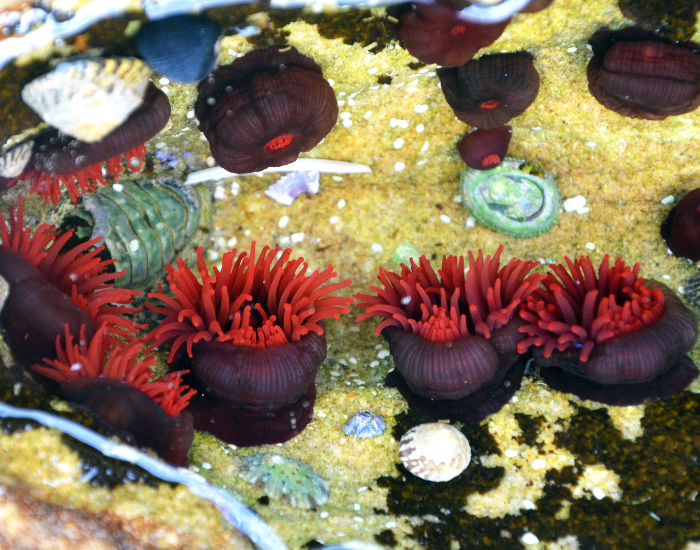
The waratah anemone (Actinia tenebrosa) is the most common anemone on eastern Australian and New Zealand shores. Underwater, it opens a crown of red tentacles. At low tide, it pulls them in and closes into a glossy red blob of jelly. This seals in moisture until the water returns.
Like all sea anemones, it catches prey with stinging tentacles. Look closely at the column for small blue beads called acrorhagi. They carry extra stinging cells for fights with unrelated neighbours. Clones of the same anemone, by contrast, sit side by side in peace.
Its biggest surprise is reproduction. The waratah anemone broods its young inside its body, mostly in summer. Fully formed baby anemones then leave through the mouth. Many of these babies are clones of the parent.
5. Bluebottle
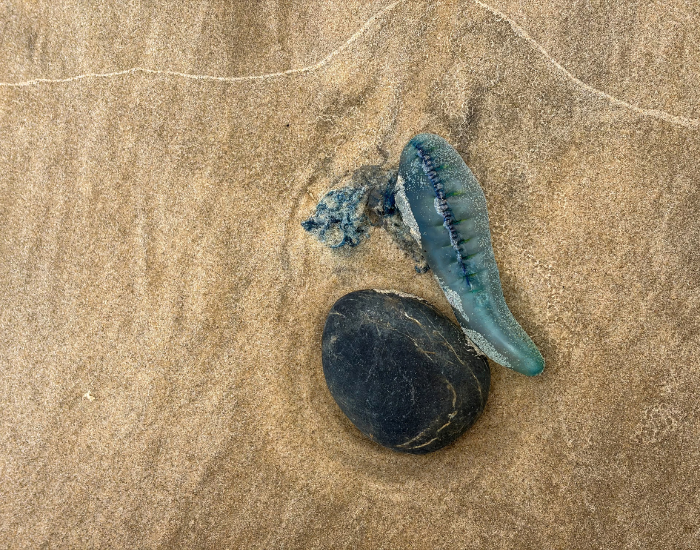
Bluebottles are not true jellyfish. Each one is a siphonophore, a colony of specialised units working as one animal. A gas-filled float acts as a sail, and long blue tentacles trail below.
Scientists long treated all bluebottles as one species. A 2025 genomic study split them into at least four. Scientists now usually call Australia’s east coast bluebottle Physalia utriculus. A new species, Physalia minuta, lives near New Zealand and Australia.
Onshore winds strand them on beaches and rock platforms, especially in summer. I logged one at Evans Head on our lap. Stranded tentacles still sting, so leave them alone. If stung, pick off tentacles, rinse with seawater and soak the area in 45°C water for 20 minutes. Skip the vinegar. In the tropical north, box jellyfish need different first aid.
6. Purple Sea Urchin
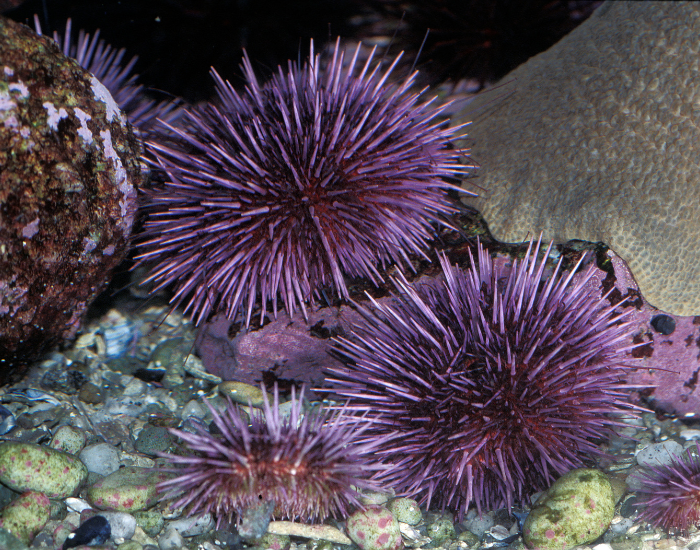
The purple sea urchin (Heliocidaris erythrogramma) is one of the most common sea urchins on Sydney’s coast. It ranges from southern Queensland around the south coast to Western Australia. Despite its name, it comes in olive green, pink or deep purple. Scientists once thought it was three species.
It uses its sharp spines to wedge into rock crevices, safe from waves and predators. Its test, the hard body case, reaches about 9 cm across and often wears bits of shell. In North America, the Pacific purple urchin (Strongylocentrotus purpuratus) reaches about 10 cm. It lives in tide pools from Alaska to Baja California, including around San Diego.
7. Cushion Sea Star
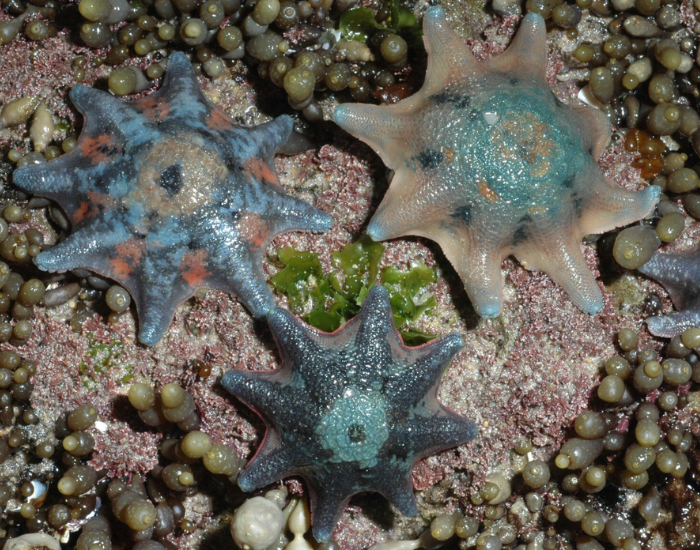
The cushion sea star (Meridiastra calcar) usually has eight short arms, though some have seven or nine. It grows to about 10 cm across. You can find it from Currumbin in Queensland south to Tasmania and west to Albany.
Its colours are the best part. Genes control the patchwork of reds, greens and blues, so neighbours in one pool rarely match.
It glides on hundreds of tube feet, which also anchor it against surging water. It eats algae, detritus and small mussels. Sea stars like this belong to the echinoderms, a group that includes urchins and sea cucumbers.
8. Brittle Stars
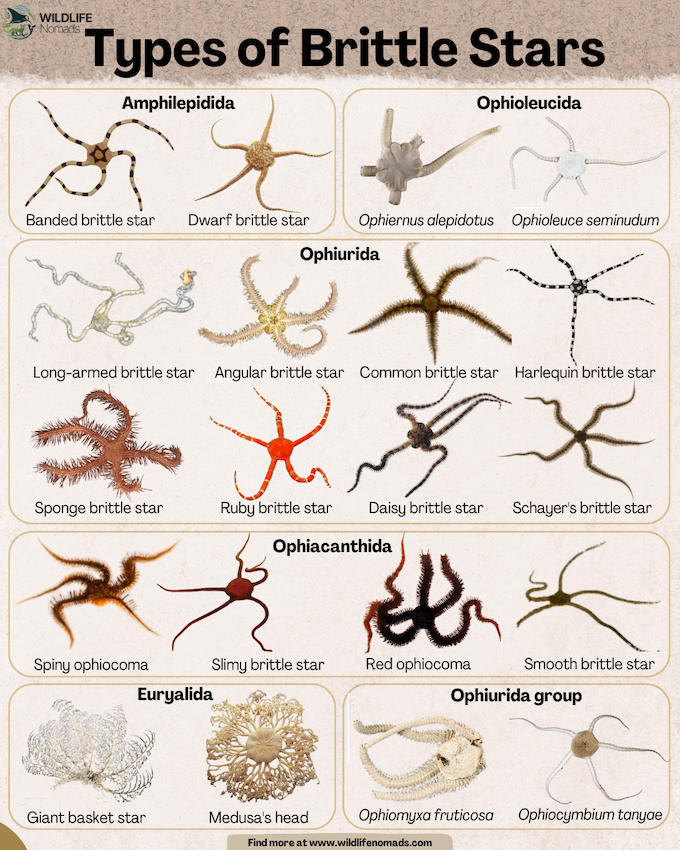
Flip a boulder in a lower-shore pool, and thin arms may whip out of sight. Those belong to brittle stars. They have a small central disc and five long, flexible arms. Unlike sea stars, they move by rowing their arms rather than creeping on tube feet.
Brittle stars hide under rocks by day and feed at night on detritus and tiny animals. When a predator grabs an arm, they can drop it and grow a new one. Under the same rocks, look for sea spiders. These tiny, long-legged arthropods suck the juices of anemones and sponges.
9. Sea Cucumbers
Sea cucumbers look like slow, leathery sausages tucked under ledges. They are echinoderms too, related to urchins and sea stars. Many sift sediment for organic scraps.
They breathe through the rear end, pumping water into branched organs called respiratory trees. Under stress, some species expel sticky white threads called Cuvierian tubules. Others can push out their internal organs and regrow them later.

10. Limpets
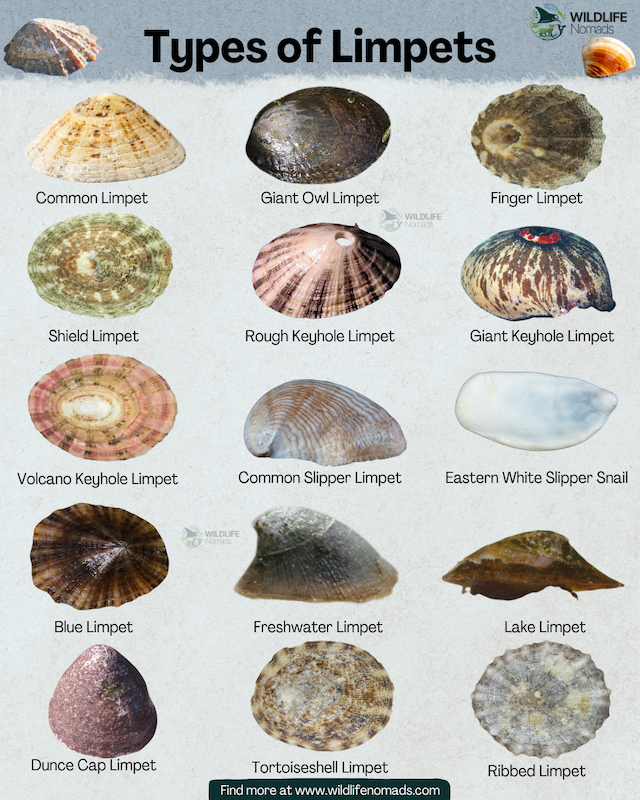
Limpets are snails with a simple cone-shaped shell. At low tide, they clamp onto rock with a muscular foot.
Many limpets return to a home scar worn to fit their shell. The tight seal reduces water loss until the tide returns and they wander off to graze.
They feed with a radula, a tongue covered in rows of tiny teeth. In 2015, engineers tested teeth from the common European limpet. They found the strongest biological material ever measured, stronger than spider silk. Fibres of goethite, an iron mineral, give the teeth that strength.
11. Periwinkles and Nerites
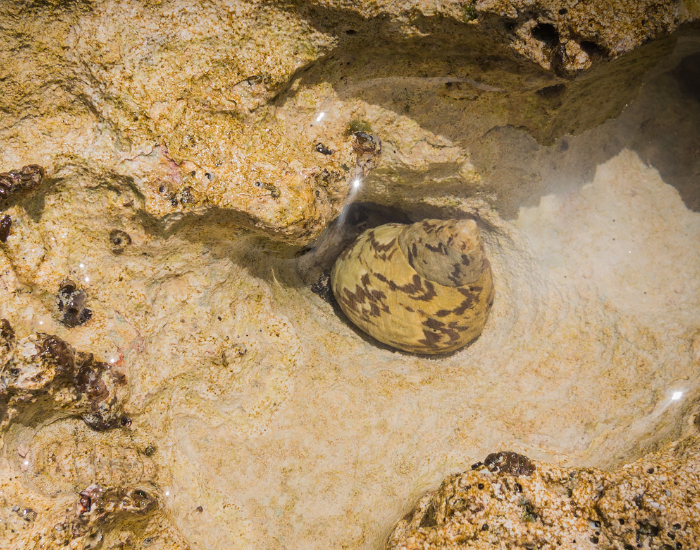
Periwinkles and nerites are the small snails that dot the high rocks. On southern Australian shores, the blue periwinkle (Austrolittorina unifasciata) lives higher than almost any other sea snail. It spends long hours dry, sealed inside its shell.
Lower down, look for the black nerite (Nerita melanotragus), a glossy dark snail common on the NSW coast. Both graze a thin film of algae off the rock. Crabs, birds and octopuses hunt them, along with many other snails.
12. Chitons
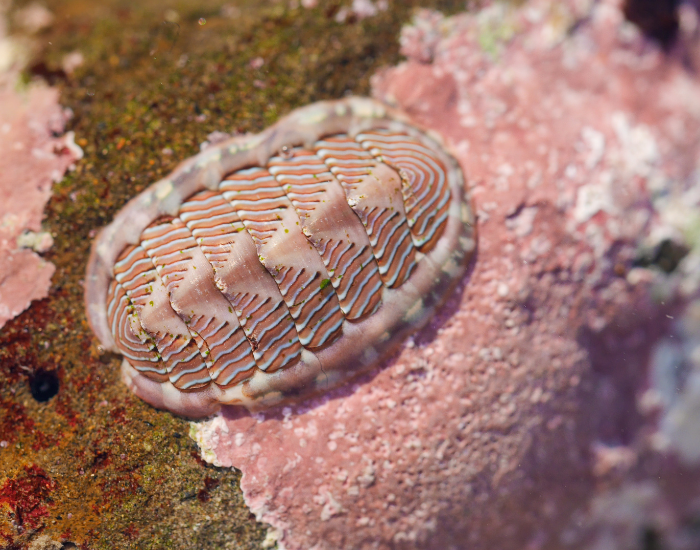
Chitons look like tiny armadillos glued to the rock. Their shell has eight overlapping plates, held by a tough, flexible girdle. That design lets them curl up if a wave knocks them loose. On the NSW coast, the snakeskin chiton (Sypharochiton pelliserpentis) is a common find.
Chitons also have a radula, and their teeth are capped with magnetite, an iron oxide. Some species even see through their shell. A 2015 study found that the West Indian fuzzy chiton has hundreds of tiny eyes. Aragonite, the same mineral as its armour, forms their lenses.
Chitons form their own class of molluscs, one of the odd branches on my tree of life.
13. Hermit Crabs
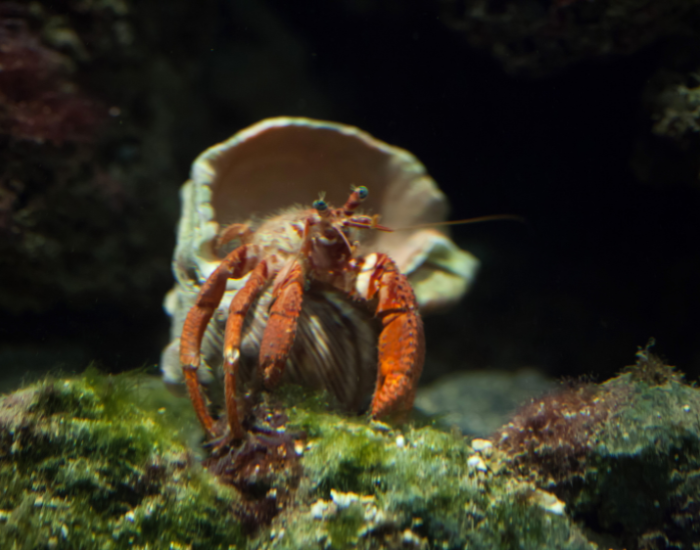
Hermit crabs are among the most common inhabitants of rock pools worldwide. Every time I go to a rock pool, there they are. Their soft, curled abdomen needs protection, so they live inside empty snail shells. As they grow, they must find bigger homes.
House hunting can get competitive. In some species, crabs even line up by size beside a new shell. When the biggest moves in, each smaller crab swaps into the next shell down.
So leave empty shells on the shore, because each one is a future home.
14. Purple Rock Crab
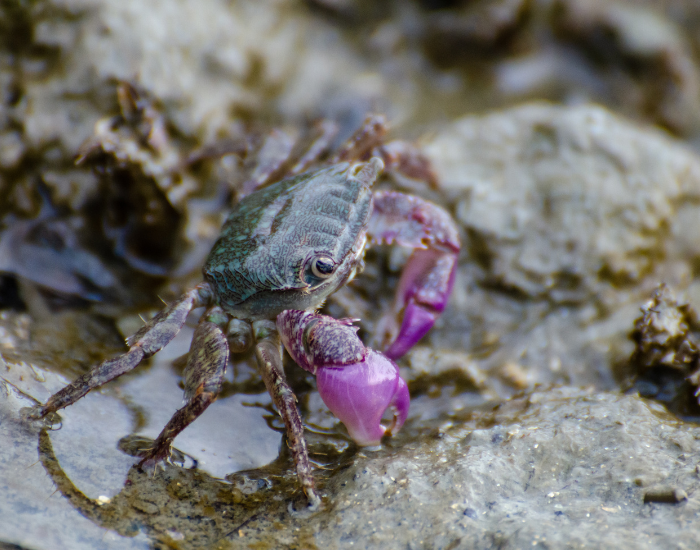
Of all the crabs on Sydney’s rocky coast, the Australian Museum rates this one the most active. The purple rock crab (Leptograpsus variegatus) has a shell about 5 cm wide. Most are purple or olive green with pale flecks, and the big claws are purple and white.
Look for it on exposed shores with heavy surf, in crevices near the high tide mark. Its range covers southern Australia, New Zealand and South America’s Pacific coast.
Good luck catching one. This crab sprints sideways and leaps into the water when approached. Its diet includes algae, limpets and barnacles, mostly eaten at night.
15. Gobies and Blennies
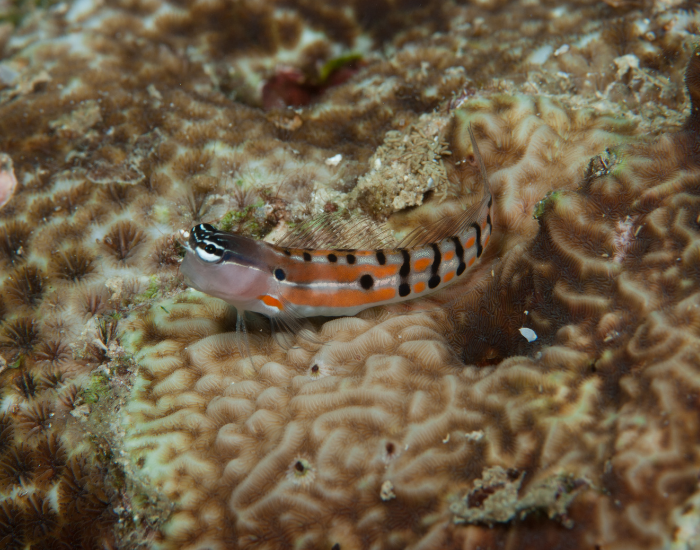
Small fish are easy to miss until they dart. On the east coast, the Cocos frillgoby (Bathygobius cocosensis) is abundant in intertidal rock pools. Blennies also lurk in cracks, many with frilly tentacles above their eyes.
Rock pool gobies are surprisingly smart. In 1951, Lester Aronson showed that frillfin gobies memorise the pool layout at high tide. At low tide, they use that mental map to jump safely into the next pool.
Researchers at Macquarie University, where I did my master’s degrees, study the Cocos frillgoby. They found that gobies from rock pools learn spatial tasks better than gobies from bare, sandy shores. Young reef fish also use pools as nurseries.
How to Find Rock Pool Creatures Safely
Plan every visit around low tide. A tide app or chart shows the best window, and spring tides expose the most rock. Arrive an hour before low tide and leave as the water turns.
Rock platforms can be dangerous. Never turn your back on the ocean, and watch the waves for a few minutes before stepping out. Wear shoes with a good grip, because wet algae is slippery.
Watch from above first, because many animals freeze or hide when a shadow falls. Touch gently, if at all, and never pick up small octopuses or cone shells. Return every rock to its place. In NSW, many rock platforms sit inside aquatic reserves or intertidal protected areas, where the law bans collecting.
FAQs About Rock Pool Creatures
Yes, thousands. Natural rock pools line rocky shores from southern Queensland around to Western Australia. The NSW coast is especially rich, with wide sandstone rock platforms. Sydney also has ocean pools on its rock platforms, such as Bronte’s Bogey Hole.
Rock pools are also called tide pools, tidal pools or rockpools. Scientists treat them as part of the intertidal zone, the shore between high and low tide. In Australia, an ocean pool or ocean baths usually means a swimming pool built into a rock platform.
Yes. The Currumbin Rock Pools are freshwater swimming holes on Currumbin Creek in the Gold Coast hinterland, not tidal rock pools. The City of Gold Coast manages the site. Jumping from the rocks has caused deaths and serious injuries. Follow the safety signs and check conditions before you swim.
Common rock pool creatures include anemones, crabs, hermit crabs, sea snails, limpets, chitons, sea urchins, sea stars and small fish. In Australia, you may also find gloomy octopuses, sea hares and the venomous blue-ringed octopus. Lower pools near the waves usually hold the most species.
Gobies and blennies are the most common rock pool fish. On Australia’s east coast, the Cocos frillgoby is abundant in intertidal pools. Young reef fish, such as juvenile damselfish, also shelter in pools while they grow.
Look first, and touch gently, if at all. Never pick up small octopuses, cone shells or stranded bluebottles, because they can bite or sting. Wet your hands before touching anything, and always put animals and rocks back where you found them.
Lift a Rock, Then Put It Back
Rock pools prove that you don’t need a boat or a dive tank to meet wild animals. Every low tide opens a window into the intertidal zone. Each one survives a world that changes twice a day.
So check the tide, grab your grippy shoes and visit your nearest rocky shore. Start with the 15 rock pool creatures in this guide, then see how many more you can find. If you spot something you can’t name, tell me in the comments. We are still exploring rock pools on our lap, and I’d love to add your finds to my list.
References:
Barber, A. H., Lu, D., & Pugno, N. M. (2015). Extreme strength observed in limpet teeth. Journal of the Royal Society Interface, 12(105), 20141326. https://doi.org/10.1098/rsif.2014.1326
Carbia, P. S., & Brown, C. (2020). Seasonal variation of sexually dimorphic spatial learning implicates mating system in the intertidal Cocos Frillgoby (Bathygobius cocosensis). Animal Cognition, 23(4), 621–628. https://doi.org/10.1007/s10071-020-01366-3
Church, S. H., Abedon, R. B., Ahuja, N., Anthony, C. J., Destanović, D., Ramirez, D. A., Rojas, L. M., et al. (2025). Population genomics of a sailing siphonophore reveals genetic structure in the open ocean. Current Biology, 35. https://doi.org/10.1016/j.cub.2025.05.066
Kicklighter, C. E., Shabani, S., Johnson, P. M., & Derby, C. D. (2005). Sea hares use novel antipredatory chemical defenses. Current Biology, 15(6), 549–554. https://doi.org/10.1016/j.cub.2005.01.057
Li, L., Connors, M. J., Kolle, M., England, G. T., Speiser, D. I., Xiao, X., Aizenberg, J., & Ortiz, C. (2015). Multifunctionality of chiton biomineralized armor with an integrated visual system. Science, 350(6263), 952–956. https://doi.org/10.1126/science.aad1246
Loten, C., Stokes, B., Worsley, D., Seymour, J. E., Jiang, S., & Isbister, G. K. (2006). A randomised controlled trial of hot water (45°C) immersion versus ice packs for pain relief in bluebottle stings. Medical Journal of Australia, 184(7), 329–333. https://doi.org/10.5694/j.1326-5377.2006.tb00265.x
Ramos, J. E., Pecl, G. T., Moltschaniwskyj, N. A., Strugnell, J. M., León, R. I., & Semmens, J. M. (2014). Body size, growth and life span: Implications for the polewards range shift of Octopus tetricus in south-eastern Australia. PLoS ONE, 9(8), e103480. https://doi.org/10.1371/journal.pone.0103480