

When I first moved to Australia in 2023, everyone loved to warn me about “dangerous animals.” Crocodiles, snakes, sharks, you name it. But the one that caught my attention as a biologist wasn’t a reptile or a mammal. It was the box jellyfish.
Often called sea wasps, box jellyfish (Chironex fleckeri and relatives) live in warm coastal waters of northern Australia and across the Indo-Pacific region. They may look delicate, and they may not be the biggest jellyfish out there, but they’re the most dangerous marine animal on Earth, capable of causing excruciating pain and even cardiac arrest within minutes.
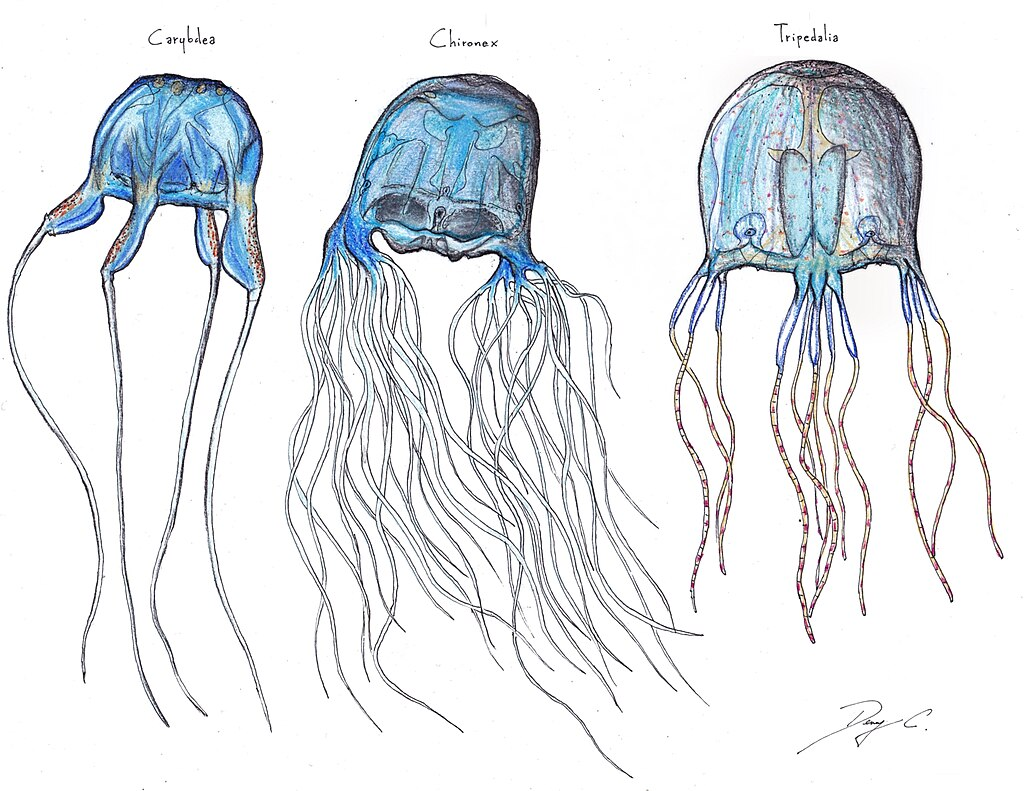
What Are Box Jellyfish? Understanding the Ocean’s Most Venomous Predator
The box jellyfish isn’t just one species – it’s an entire class of cnidarians scientifically known as Cubozoa. These remarkable creatures get their name from their distinctive cube-shaped bell, which sets them apart from their circular cousins, the true jellyfish. As someone who’s spent countless hours studying biological organism, I can tell you that box jellies represent evolutionary perfection in aquatic predation.
Unlike typical jellyfish that drift aimlessly with ocean currents, box jellyfish actively hunt their prey. They possess sophisticated eyesight through 24 eyes arranged in clusters called rhopalia – giving them better vision than most marine animals. This visual acuity allows them to navigate obstacles, chase prey, and unfortunately for humans, detect potential threats or disturbances in their territory.
As scary as that sounds, these creatures are also fascinating survivors with unique adaptations. Here are 20 incredible facts about box jellyfish, answering common questions and uncovering what makes them both feared and respected.
1. The Most Venomous Marine Animal on Earth
The Australian box jellyfish holds the title of the most venomous marine animal and one of the top 5 toxic animals in the world as well. Its sting can kill a human in less than five minutes if left untreated. The venom targets the heart, nervous system, and skin cells, making it far more potent than that of most species.
This is why scientists and lifeguards treat box jellies as the deadliest threat in tropical waters, even more dangerous than sharks or crocodiles.

2. Box Jellyfish Classification: More Than “Just a Jellyfish”
The Box jellyfish belong to the phylum Cnidaria and the class Cubozoa. Unlike many other jellyfish, they’re not passive drifters.
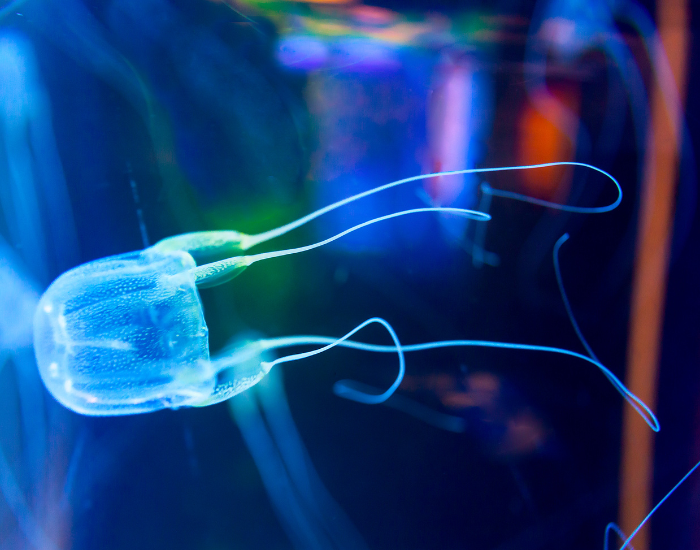
- Body form: They have a distinctive box-shaped bell.
- Stinging cells: Their tentacles contain thousands of cnidocytes (stinging cells) that fire venom into prey.
- Eyes: They’re equipped with complex visual systems, setting them apart from most other jellyfish.
So when people ask, “What are box jellyfish?” the answer is: they’re an advanced, highly specialized group of cnidarians that scientists are still studying to this day.

Rickard Zerpe, CC BY 2.0, via Wikimedia Commons
3. Where Are Box Jellyfish Found?
Box jellies live in tropical and subtropical regions, especially in shallow coastal waters.
- Australia: Found mainly in northern Australia and the Northern Territory, especially from October to May.
- Indo-Pacific region: Populations exist in the Philippines, Thailand, Malaysia, and Indonesia.
- Hawaiian waters: Hawaii experiences seasonal influxes of smaller species.
- United States: Sightings occur in the Gulf of Mexico and occasionally off Florida.
Their presence overlaps with popular beaches and coral reefs, which is why safety nets and vinegar stations are common in stinger-prone areas.
4. How Big Is the Australian Box Jellyfish?
The Australian box jellyfish size makes it especially intimidating:
- Bell: Up to 30 cm (1 ft) across
- Tentacles: Up to 3 m (10 ft) long
- Weight: Around 2 kg (4.4 lbs)
That means a swimmer brushing past just a few meters of tentacle may receive enough venom to cause heart failure. It’s no wonder they inspire so much fear.
5. Strong Swimmers in Warm Coastal Waters
Unlike most jellyfish, box jellies don’t drift aimlessly. They’re strong swimmers, capable of moving at speeds of up to four knots (about 7.5 km/h).
This mobility allows them to hunt small fish, shrimp, and other marine animals in shallow tropical waters. It also means they can actively avoid predators and obstacles, an unusual trait for jellyfish.
6. Box Jellyfish Eyes: True Eyes in a Jellyfish
One of the most surprising facts is that box jellyfish have true eyes. In total, they possess 24 eyes, grouped into clusters called rhopalia.
Some of these eyes have lenses, corneas, and retinas, much like human eyes. This enables them to detect shapes and movement, helping them navigate around coral reefs, mangroves, and piers.
The six eyes in each cluster make them one of the most visually advanced creatures in the class Cubozoa.

7. What Do Box Jellyfish Eat?
Box jellies are predators. They feed mainly on:
- Small fish
- Shrimp
- Other marine animals in coastal waters
Their tentacles act like nets, paralyzing prey instantly with stinging cells. This makes them efficient hunters, despite their delicate appearance.

8. The Sting: Excruciating Pain and Cardiac Arrest
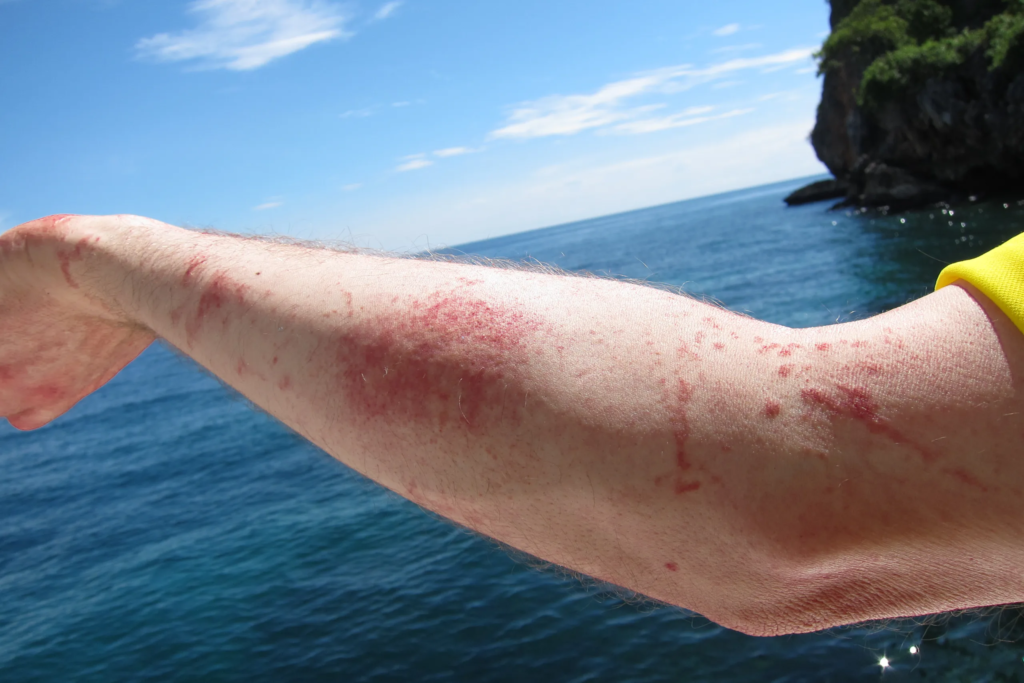
A box jellyfish sting is one of the most painful experiences known. Victims describe it as feeling like being burned with acid or hot metal.
Symptoms include:
- Intense, excruciating pain
- Red, whip-like marks on the skin
- Cardiac arrest or heart failure if venom spreads rapidly
If left untreated, a sting can be fatal within minutes. Survivors often carry scars for life.
9. Can a Human Survive a Box Jellyfish Sting?
Yes, but survival depends on quick action. Immediate first aid is crucial:
- Get the victim out of the water.
- Pour vinegar over the sting to neutralize unfired nematocysts.
- Call for emergency help.
- Begin CPR if the person collapses.
Australia even developed an antivenom in the 1970s, which is still used today. Thanks to safety measures, most stings do not result in death, especially when treatment is immediate.
10. How Many People Have Died From Box Jellyfish?
The death toll from box jellyfish is sobering:
- Australia: About 70–100 deaths since the late 1800s.
- Philippines & Indo-Pacific: Dozens of cases occur each year, often involving children.
- Worldwide: Estimates suggest up to 50 deaths annually.
Many incidents go unreported, particularly in regions without strong medical infrastructure.
11. Box Jellyfish in Northern Australia
In northern Australia, box jellyfish are still one of the deadliest animals in australia, and they are a constant summer concern. During “stinger season” (October–May), locals avoid swimming outside nets.
- Northern Territory: Darwin beaches are hotspots.
- Queensland: Cairns, Port Douglas, and Townsville require stinger nets.
- Western Australia: Broome experiences seasonal arrivals.
Public health campaigns emphasize prevention, because even with antivenom, some stings are too severe to survive.
12. Blue Box Jellyfish: Another Venomous Species
The blue box jellyfish (Chiropsalmus quadrigatus) is smaller but still dangerous. Found mainly in the Indo-Pacific region, it can cause severe stings and occasional fatalities.
- Nickname: Also called sea wasps.
- Risk: Less venomous than Chironex fleckeri, but still harmful.
- Treatment: Vinegar and hospital care remain the standard.
This shows that box jellies are not just one animal, but a group of species spread across the tropics.
13. Irukandji Jellyfish: Tiny but Deadly
The Irukandji jellyfish, another member of class Cubozoa, is tiny, just a few centimeters across. Yet its venom can trigger Irukandji syndrome, a condition involving:
- Severe pain
- Muscle cramps
- High blood pressure
- Risk of stroke or heart attack
While fatalities are rare, the suffering can last days or weeks.
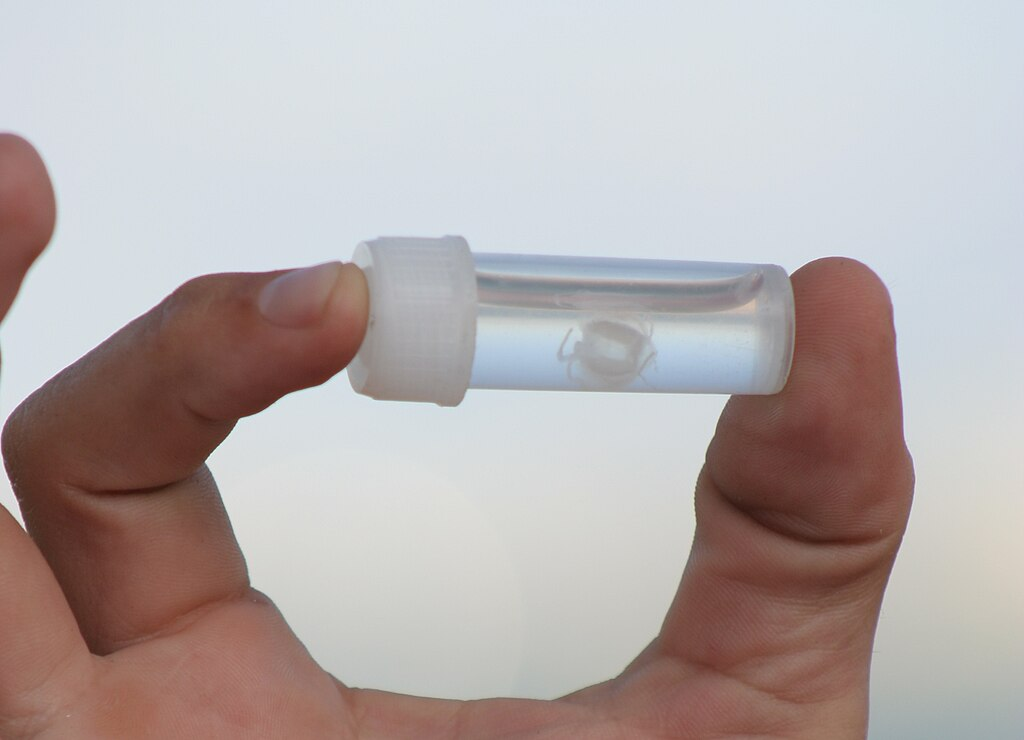
GondwanaGirl 04:29, 6 January 2009 (UTC), CC BY-SA 3.0, via Wikimedia Commons
14. Why Are They Called Sea Wasps?
The nickname sea wasps comes from their stinging cells and the rapid, burning pain they cause. Just as a wasp sting can ruin your day, a brush with box jelly tentacles can be life-threatening.
This term is often used interchangeably with “box jellyfish,” especially in Australia.
15. Do Box Jellyfish Swim After Humans?
No—they’re not predators of humans. Box jellies don’t “chase” people. Most stings occur accidentally when swimmers enter their habitat. Their near invisibility in subtropical regions makes encounters hard to avoid.
16. Scientists Studying Box Jellyfish Venom
Researchers are actively studying box jelly venom for potential medical breakthroughs. Early studies suggest it could help develop treatments for heart disease and pain management.
By unlocking the molecular structure of their toxins, scientists hope to turn this deadly weapon into a tool for saving lives.
17. Box Jellyfish Numbers and Climate Change
Climate change may affect box jellyfish numbers. Warming seas and changing currents may expand their range further south in Australia and beyond.
This raises concerns for new areas unprepared for marine stingers.
18. Predators of the Box Jellyfish
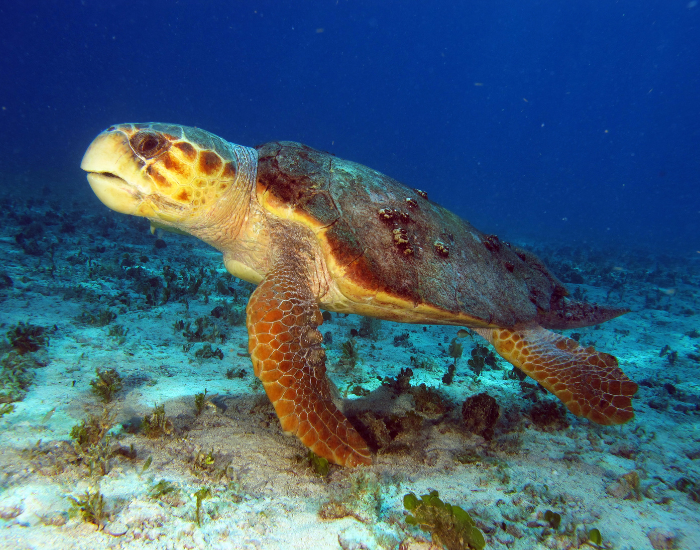
Despite their venom, box jellies have predators. Sea turtles, some large fish, and even other jellyfish species may eat them. Still, their transparency and venom make them difficult targets in the wild.
19. Box Jellyfish in Human Culture
Box jellies symbolize the paradox of nature: beauty mixed with danger. In Australia, they’ve become part of the broader “dangerous animals” narrative that fascinates and terrifies outsiders. For me as a biologist, they highlight the importance of coexisting with marine animals rather than fearing them blindly.
20. Finally- Some Survival Tips: Staying Safe in Box Jellyfish Waters
- Swim inside stinger nets.
- Wear protective stinger suits in tropical waters.
- Heed beach warnings in northern Australia.
- Know where vinegar stations are located.
Preparedness is the best defense.

Scary… But Fascinating
The box jellyfish is both terrifying and fascinating. It’s the most venomous marine animal, equipped with true eyes, stinging cells, and strong swimming abilities that make it unlike any other jellyfish.
Yes, their sting can cause death if left untreated, but with awareness, safety nets, and vinegar stations, the risk is far lower than most people realize.
For me, moving to Australia turned curiosity into respect. Box jellies remind us that the ocean is full of creatures older and stranger than we can imagine. Understanding them helps us replace fear with knowledge, and panic with preparedness.


_(49187737008).jpg)
