Let me introduce You To The Sea Turtles
Sea turtles are among the ocean’s most remarkable inhabitants, tracing their lineage back over 110 million years to a time when dinosaurs still roamed the Earth. As ancient marine reptiles, sea turtles have evolved to thrive in a variety of ocean environments, from the sun-drenched shallows of tropical waters to the cooler expanses of temperate seas.
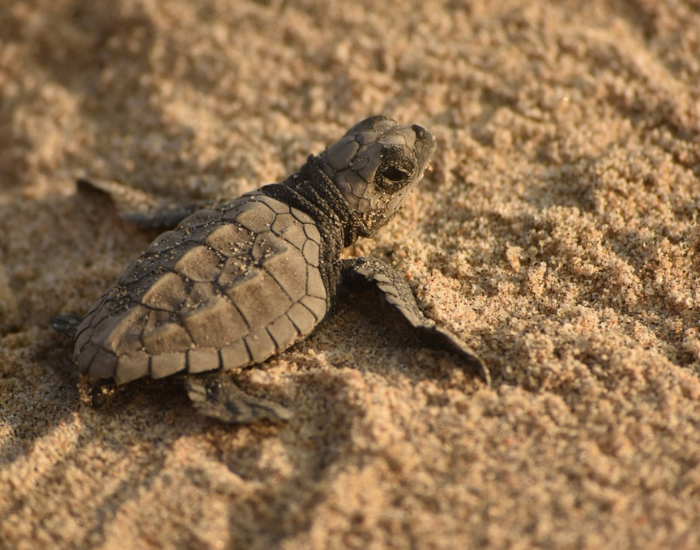
I’ve been fortunate enough to encounter sea turtles in Mexico, Australia, Indonesia, and the Philippines. I’ll admit I never knew which species I was observing at the time. One of my most memorable experiences was participating in a baby turtle release in Puerto Escondido. We carefully carried hatchlings to the ocean’s edge and watched them make their instinctive dash toward the waves. It was bittersweet witnessing nature’s harsh reality as seagulls swooped down to claim some of the tiny turtles. It’s a stark reminder that only a small fraction of hatchlings survive to adulthood. This makes conservation efforts all the more crucial!
The Seven Species of Sea Turtles: Meet Our Marine Giants
The world’s oceans are home to seven distinct types of sea turtles, with these seven different species showcasing remarkable diversity across global marine environments. These marine turtles, also known as sea turtles, represent millions of years of evolution, resulting in remarkable diversity among these marine reptiles.

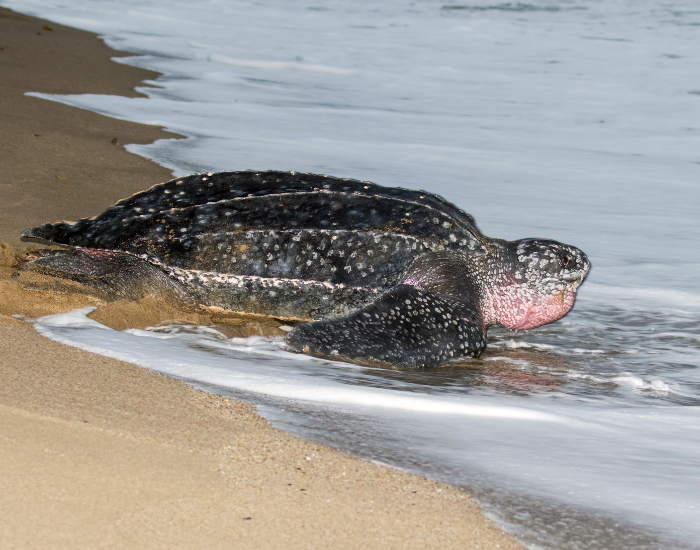
1. Leatherback Sea Turtle (Dermochelys coriacea)
The leatherback sea turtle holds the title as the largest of all sea turtle species. As the largest sea turtles, leatherbacks can reach lengths of up to 7 feet and weigh as much as 2,000 pounds. Imagine encountering something that size gliding gracefully through the water! What makes leatherbacks truly unique among the different types of sea turtle is their shell. Or rather, their lack of a traditional hard shell.
Instead of the typical bony shell found in other sea turtle breeds, the leatherback turtle has a flexible, rubbery carapace made of skin and fatty tissue. This adaptation allows them to perform deep dives to incredible depths, over 4,000 feet, making them the deepest-diving reptiles on Earth. Leatherbacks are the ocean’s jellyfish specialists, with some individuals consuming up to 400 pounds of jellyfish per day. By feeding on jellyfish, they help regulate the jellyfish population and maintain balance in marine ecosystems.
Leatherbacks also have the remarkable ability to regulate their body temperature, allowing them to survive and forage in colder waters where other sea turtles cannot.
Unfortunately, leatherbacks face significant challenges. Climate change affects their nesting beaches, while plastic pollution poses a deadly threat as they often mistake plastic bags for jellyfish. Their conservation status varies by population, with some critically endangered while others show signs of recovery.
2. Green Sea Turtle (Chelonia mydas)
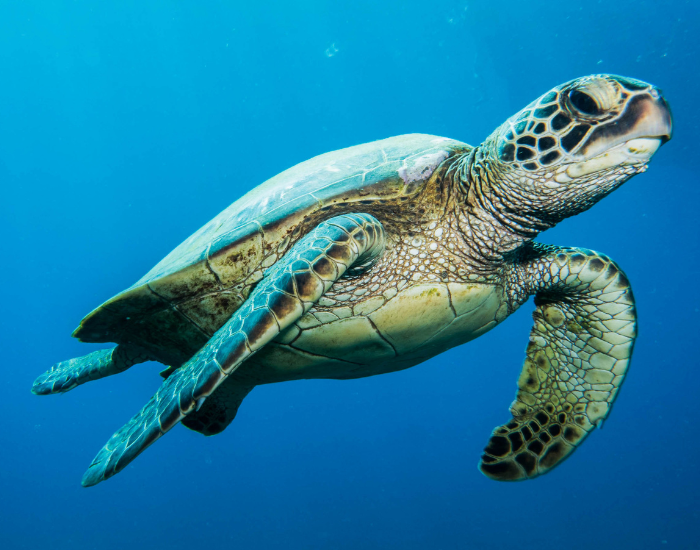
Don’t let the name fool you, green sea turtles aren’t necessarily green on the outside. Their name comes from the greenish color of their fat, which results from their primarily vegetarian diet as adults. The green turtle, a species known for its unique coloration and herbivorous habits, is among the larger sea turtles, with adults typically measuring 3-4 feet in length and weighing between 300-350 pounds. Adult green turtles are easily recognized by their smooth, heart-shaped shells and large size.
Green sea turtles undergo one of the most dramatic dietary shifts in the animal kingdom. As juveniles, they’re carnivorous, feeding on jellyfish, small crustaceans, and fish eggs. However, as they mature, they transition to an almost entirely herbivorous diet, grazing on sea grass beds and algae. This makes them the “lawnmowers of the sea,” helping maintain healthy sea grass ecosystems that many other marine species depend on.
Their nesting behavior is particularly fascinating. Female green sea turtles often return to the same beach where they were born to lay their eggs, sometimes traveling thousands of miles to reach these ancestral nesting grounds. Green sea turtle hatchlings emerge from their nests in large groups, making a rapid dash to the ocean to avoid predators. This remarkable navigation ability continues to amaze researchers studying sea turtle migration patterns. Green turtles play a vital role in marine ecosystems and their collective behaviors are crucial for the health of coastal environments.
3. Loggerhead Sea Turtle (Caretta caretta)
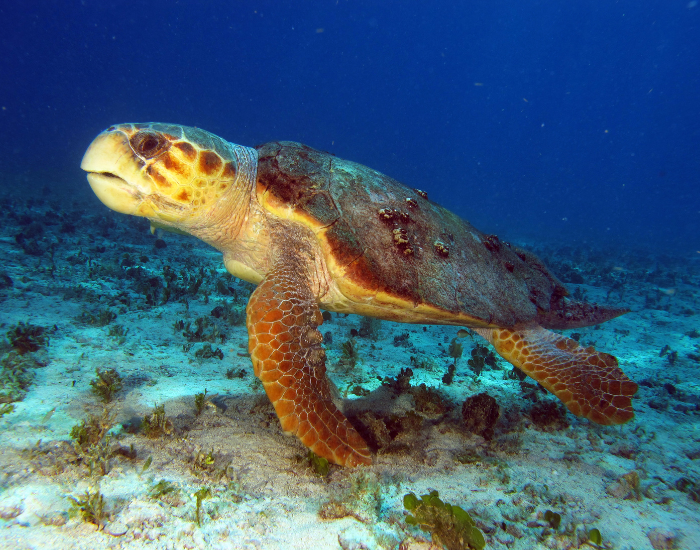
Loggerhead sea turtles are named for their proportionally large heads. These powerful heads house jaw muscles capable of crushing hard-shelled prey like crabs, lobsters, and conch shells. Loggerheads are typically reddish-brown in color and are considered medium to large-sized. Adults average 250-400 pounds and measure about 3 feet in length.
What makes loggerhead turtles particularly interesting is their role as long-distance migrants. Some loggerhead turtles born on beaches in Japan travel across the entire Pacific Ocean to feeding grounds off the coast of California, a journey of over 7,000 miles! This epic migration can take 15-20 years to complete as the young turtles grow and develop.
Loggerhead turtles are often called the “most common” sea turtle in U.S. waters, though this doesn’t mean they’re not threatened. They face significant challenges from fishing gear entanglement, coastal development, and artificial lighting that can disorient hatchlings trying to find the ocean after emerging from their nests.
4. Hawksbill Sea Turtle (Eretmochelys imbricata)
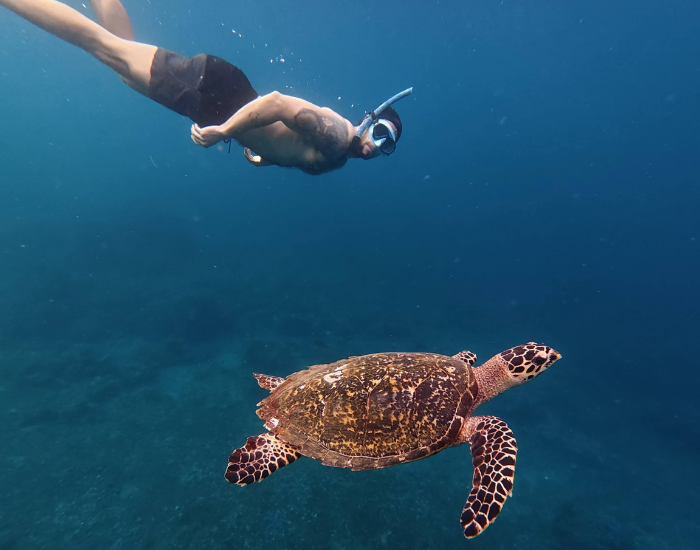
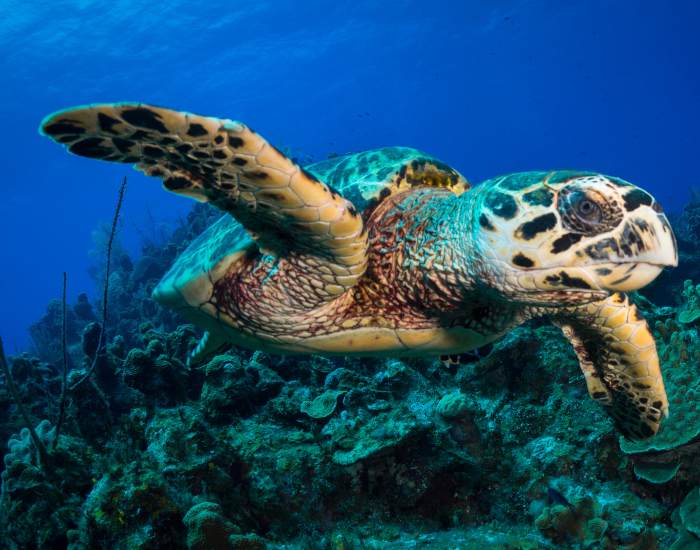
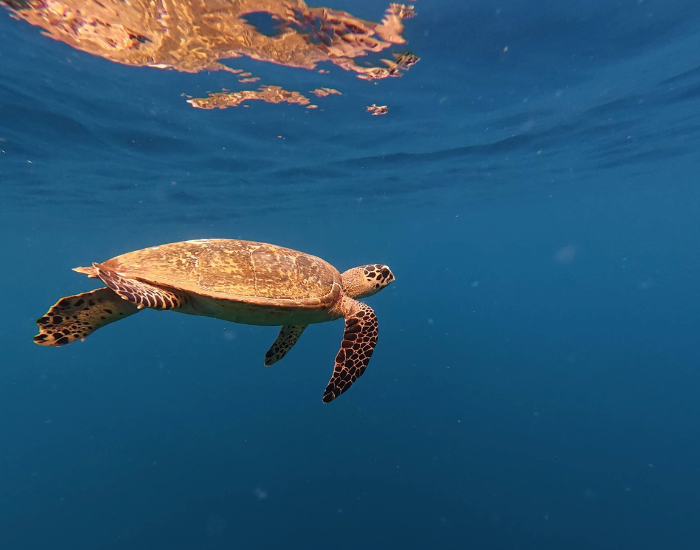
If there were a beauty contest among the types of sea turtles, many would argue that the hawksbill sea turtle would take the crown. The hawksbill turtle, is easily recognized by its beautiful shell. Their shells display a stunning pattern of overlapping scutes in warm browns, ambers, and oranges that create an almost stained-glass window effect. This beautiful shell, unfortunately, has been both a blessing and a curse for hawksbills.
For centuries, hawksbill shells were highly prized for making tortoiseshell jewelry, combs, and decorative items, leading to severe population declines. Today, international trade in hawksbill products is banned, but illegal markets still pose a threat to these critically endangered sea turtles. Hawksbill turtles are listed as critically endangered due to illegal trade and habitat loss.
Hawksbills are the coral reef specialists among sea turtle species. Their narrow, pointed beaks, which give them their name, are perfectly adapted for reaching into crevices in coral reefs to extract their favorite food: sea sponges. By eating sponges, hawksbill turtles help maintain the balance of coral reef ecosystems, preventing sponges from overwhelming and smothering corals. Hawksbill turtles play a vital ecological role as a keystone species, supporting coral growth and contributing to the overall stability and biodiversity of tropical marine ecosystems.
These sea turtles are typically smaller than their cousins, with adults usually weighing between 100-150 pounds and measuring about 2.5-3 feet in length. Despite their smaller size, hawksbills are known for their feisty temperament and are considered one of the more aggressive sea turtle breeds when threatened.
5. Olive Ridley Sea Turtle (Lepidochelys olivacea)
The olive ridley sea turtle, also known as the olive ridley turtle, is arguably the most abundant of all sea turtle species, yet they’re still considered vulnerable due to various threats. These medium-sized sea turtles typically weigh between 75-110 pounds and measure about 2-2.5 feet in length. Their heart-shaped carapace is usually olive or grayish-green, and the olive ridley turtle is easily identified by its distinctive olive green coloured shell, giving them their common name.
What makes olive ridley turtles truly spectacular is their nesting behavior called “arribada,” which means “arrival” in Spanish. During arribada events, thousands of female olive ridley turtles come ashore simultaneously to nest on the same beach. These synchronized mass nesting events are one of nature’s most incredible spectacles, with some beaches in Costa Rica and India hosting hundreds of thousands of nesting females in a single event.
Olive ridleys are the most omnivorous of the sea turtle kinds, with a diet that includes jellyfish, fish, shrimp, crabs, sea urchins, and even algae. This dietary flexibility has likely contributed to their success as the most abundant sea turtle species globally. Olive ridley turtles are commonly found in coastal bays as well as open ocean habitats, reflecting their widespread distribution and migratory behavior.
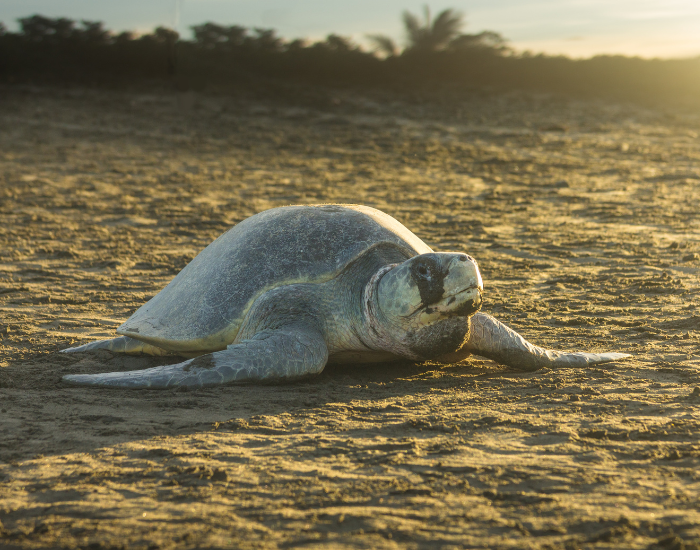
6. Kemp’s Ridley Sea Turtle (Lepidochelys kempii)
The Kemp’s ridley turtle holds several distinctions among the 7 types of sea turtles: it’s the smallest sea turtle species, the most endangered, and has the most restricted range of any sea turtle species. As the smallest sea turtle species, adults reach a maximum of about 2 feet in length and weigh up to 100 pounds, making the Kemp’s ridley turtle notably smaller than other species like the leatherback and green turtle.
What makes Kemp’s ridleys unique among all sea turtle species is their daytime nesting behavior. While most sea turtles nest at night, Kemp’s ridleys are the only species that consistently nests during daylight hours. They also share the arribada nesting behavior with their close relatives, the olive ridleys, though Kemp’s ridley arribadas are much smaller and occur primarily on a single beach in Rancho Nuevo, Mexico.
Kemp’s ridley turtle is classified as Critically Endangered and is considered the rarest sea turtle species. Their population crashed dramatically in the mid-20th century due to egg harvesting and accidental capture in fishing nets. However, thanks to intensive conservation efforts, including protecting nesting beaches and requiring turtle excluder devices on shrimp nets, Kemp’s ridley populations have shown signs of recovery, though they remain critically endangered.
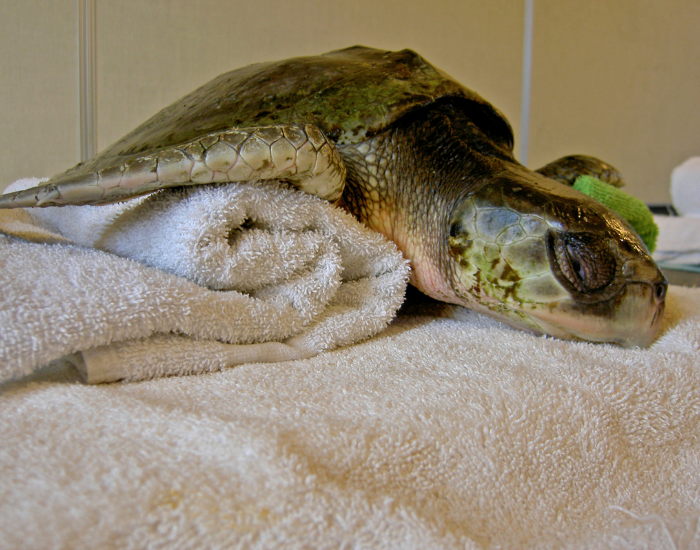
7. Flatback Sea Turtle (Natator depressus)
The flatback sea turtle, also called the flatback turtle, has the most geographically restricted range of any sea turtle; it occurs only off northern Australia, southern Indonesia, and Papua New Guinea. These sea turtles average about 200 pounds and 3 feet in length, making them medium-sized among the different types of sea turtle.
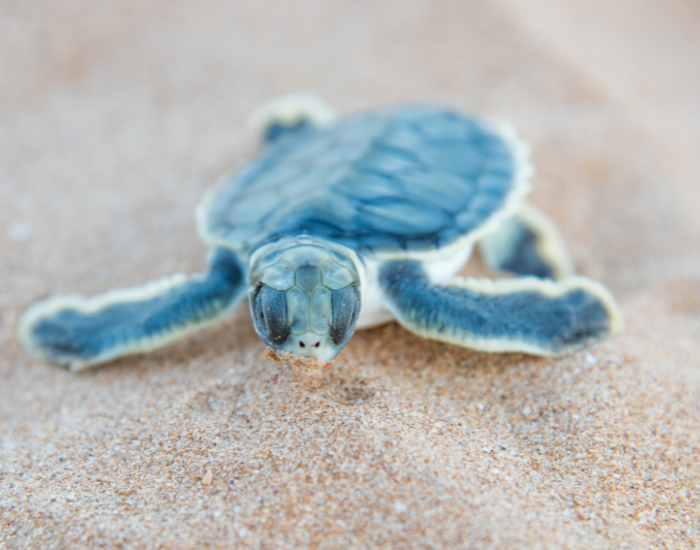
Flatbacks get their name from their relatively flat carapace compared to other sea turtle breeds. The flatback turtle has a shell that is usually olive-green or gray, and unlike other sea turtle species, flatback hatchlings are quite large when they emerge from their nests—about twice the size of other sea turtle hatchlings.
Flatback turtles are unique in that they’re the only sea turtle species that doesn’t undergo long oceanic migrations. They spend their entire lives in relatively shallow, coastal waters, never venturing into the deep ocean like their relatives. The northern coast of Australia is the primary nesting region for flatback turtles. This limited range makes them particularly vulnerable to local threats but also means their conservation can be more focused geographically.
Conservation Status: How Many Sea Turtle Species Are Endangered?
Ask “How many of the seven sea turtle species are endangered?” and the answer is sobering: all face some level of threat. The IUCN classifies hawksbill and Kemp’s ridley as Critically Endangered and lists green sea turtles as Endangered. The IUCN lists loggerhead, olive ridley, leatherback, and flatback as Vulnerable or Data Deficient, though some populations face more severe threats.
In the United States, the Endangered Species Act provides important legal protection for sea turtles, helping to safeguard their populations and habitats. Conservation efforts for each marine turtle species are crucial to their survival and the health of marine ecosystems.
However, there’s reason for cautious optimism. Recent analysis of sea turtle abundance time series has revealed that, in general, sea turtle populations are rebounding worldwide, with nest numbers increasing at many nesting sites. In updated research published in 2024, significant population increases were six times more frequent than significant decreases.
Understanding Sea Turtle Habitats and Behaviors
Different sea turtle kinds prefer different habitats throughout their life cycles. Most species spend their early years in the open ocean, often associated with floating seaweed or debris fields that provide food and shelter for a wide range of marine organisms. As they mature, many species move to coastal areas where they find their preferred feeding grounds. Adult sea turtles, in particular, tend to select habitats that offer both abundant food sources and reduced predation risk compared to juveniles.
Green sea turtles gravitate toward shallow areas with abundant seagrass beds, while hawksbills prefer coral reefs rich in their sponge prey. Loggerheads often feed in areas with hard-bottom habitats where they can find their favorite crustacean prey. Leatherbacks, being jellyfish specialists, follow jellyfish populations across entire ocean basins. These diverse habitats are crucial for the survival of many marine species, as they support complex food webs and contribute to the overall health of marine ecosystems.
The nesting behavior of sea turtles is one of nature’s most remarkable phenomena. Female sea turtles return to beaches to lay their eggs, often the same beaches where they themselves hatched decades earlier. This incredible navigation ability relies on magnetic fields, ocean currents, and possibly even chemical cues.
Migration Patterns: Epic Journeys Across the Oceans
One of the most awe-inspiring aspects of sea turtles is their ability to undertake epic migrations across vast stretches of ocean. Sea turtles, including leatherbacks, travel thousands of miles between feeding grounds and nesting beaches. For instance, leatherback sea turtles can migrate from their breeding sites in the Caribbean all the way to the coast of South America, covering more than 3,000 miles in a single journey. Green sea turtles and loggerhead sea turtles also embark on long-distance migrations, navigating open seas to return to the very beaches where they were born.
Sensing Earth’s magnetic field, sea turtles chart courses across the open ocean with remarkable accuracy. Whether seeking out rich feeding grounds or returning to traditional nesting habitats, sea turtles demonstrate endurance and navigational skills that are nothing short of extraordinary.
Breeding and Nesting: The Next Generation of Mariners
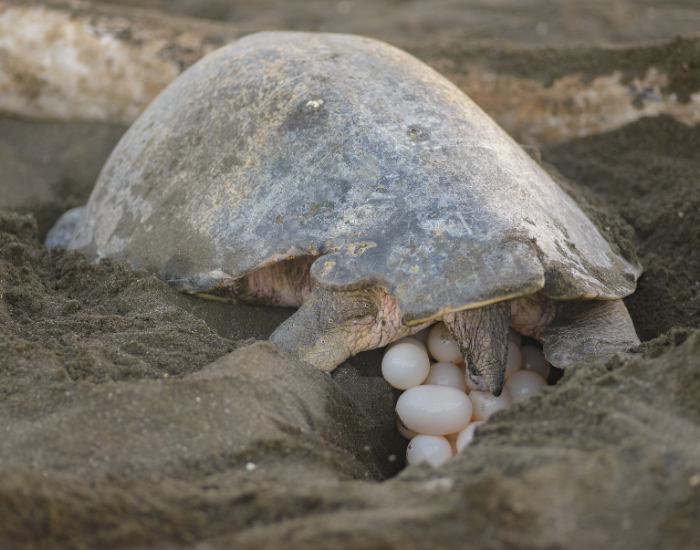
The life cycle of sea turtles is marked by one of nature’s most dramatic rituals: the journey to sandy beaches for breeding and nesting. Female sea turtles, including the green sea turtle and leatherback sea turtle, come ashore under the cover of darkness or, in rare cases, daylight, to lay their eggs in carefully dug nests. The temperature of the sand plays a crucial role in this process, as it determines the sex of the hatchlings, a phenomenon known as temperature dependent sex determination.
Warmer sand produces female hatchlings, while cooler temperatures result in males. After several weeks of incubation, the tiny sea turtle hatchlings emerge and make a perilous dash to the ocean, guided by the natural light on the horizon. The dedication of female sea turtles, who return to the same beaches where they were born to lay their eggs, ensures the survival of the next generation and the continuation of these ancient mariners’ legacy.
Threats Facing Sea Turtle Species
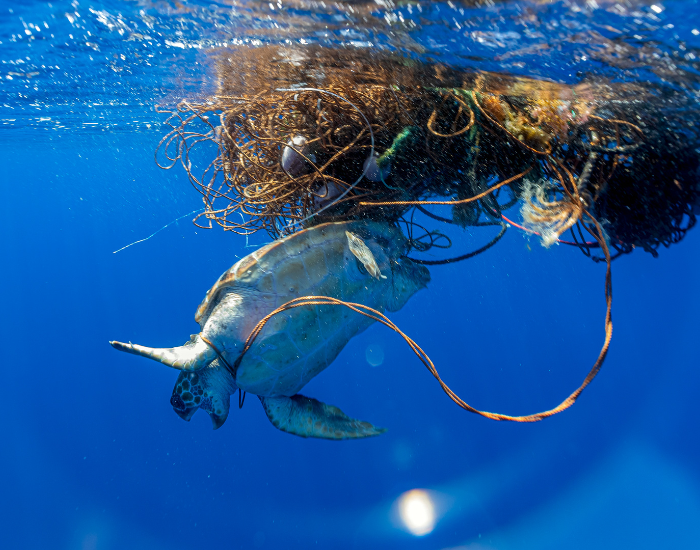
All types of sea turtles face similar threats in our modern world. Plastic pollution and marine debris, such as discarded fishing gear and the Great Pacific Garbage Patch, are major concerns, as sea turtles often mistake plastic bags and other debris for jellyfish or other prey, leading to ingestion, entanglement, and exposure to toxic substances. Coastal development destroys nesting beaches and introduces artificial lighting that can disorient hatchlings, especially during critical nesting seasons when female turtles come ashore to lay eggs.
Commercial fishing operations pose significant threats through accidental capture, known as bycatch. Sea turtles, including adult female sea turtles, can become entangled in fishing nets, caught on hooks, or struck by boat propellers, which is particularly dangerous during the period when they are preparing for laying eggs. Poachers steal sea turtle eggs for food and illegal trade, raiding nests during nesting season and threatening the species.
Climate change adds another layer of complexity, as warming sand temperature affects the sex ratio of hatchlings, higher sand temperatures result in more females, which can skew population dynamics. Rising sea levels also threaten nesting beaches, impacting the ability of female turtles to successfully lay eggs and ensure the survival of future generations.
What Makes Each Sea Turtle Species Special
When people ask “what is the prettiest sea turtle” or “what is the most friendly sea turtle,” the answers are subjective and depend on personal preference. Many people call the hawksbill the most beautiful for its striking shell patterns; others prefer the leatherback’s prehistoric look. Sea turtle shells vary in color, shape, and texture among species, and their unique composition not only provides protection but also serves as a habitat for barnacles and other marine life.
As for friendliness, it’s important to remember that sea turtles are wild animals and interactions with humans can be stressful for them. Many divers consider green sea turtles the calmest and least aggressive, so photographers and ecotourism operators feature them often.
The Role of Sea Turtles in Marine Ecosystems
Each of the 7 sea turtle species, also called marine turtles, plays a unique role in maintaining healthy ocean ecosystems. Green sea turtles help maintain seagrass beds, which serve as nursery areas for many fish species and help prevent coastal erosion. Hawksbills keep sponge populations in check on coral reefs, promoting coral growth and biodiversity.
Leatherbacks help control jellyfish populations, which can otherwise bloom out of control and disrupt marine food chains. Even sea turtle nests contribute to coastal ecosystems—unhatched eggs and hatchlings that don’t make it to the sea provide nutrients for dune vegetation and beach ecosystems.
Symbiosis with Other Ocean Life
Sea turtles forge symbiotic relationships that tie them deeply to the ocean’s health and balance. Green sea turtles, for example, often host sea urchins and small fish that help keep algae growth on their shells in check, benefiting both the turtle and its companions.
Hawksbills feed on sponges on coral reefs and help maintain these ecosystems’ delicate balance. Leatherback sea turtles play a vital role in controlling jellyfish populations, as they are one of the few marine species that regularly eat jellyfish, preventing population booms that could disrupt the food web.
Seabirds sometimes ride on sea turtles’ backs and pick off parasites and algae.. These intricate relationships highlight the importance of sea turtles in supporting the diversity and resilience of coral reefs and other marine habitats, making them true keystone species in the ocean’s complex tapestry of life.
Protecting Our Ocean’s Sea Turtles
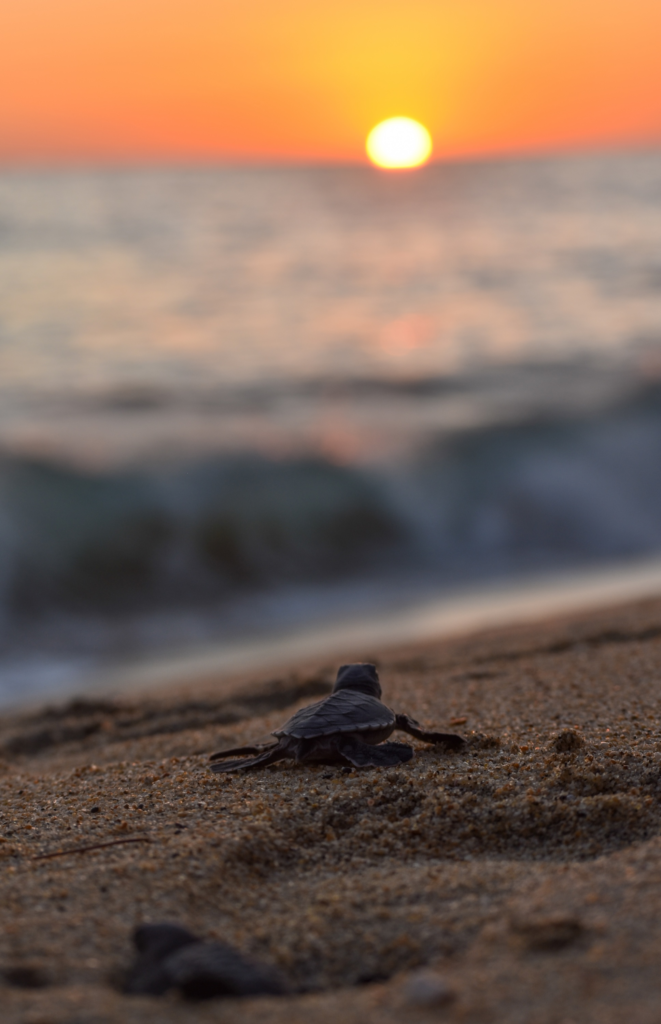
While all sea turtle kinds face significant challenges in our modern world, recent research shows that conservation efforts are making a difference. Sea turtle populations are rebounding worldwide, proving that dedicated conservation work can help these ancient species recover.
The story of sea turtle conservation is ultimately a story of hope and human determination. By continuing to protect nesting beaches, reduce ocean pollution, implement turtle-safe fishing practices, and address climate change, we can ensure that all seven types of sea turtles continue to grace our oceans for millions of years to come.
These remarkable creatures have survived ice ages, asteroid impacts, and dramatic changes in ocean chemistry. With our help, they can survive the challenges of the modern world too. The question isn’t whether we can save sea turtles—it’s whether we will choose to do so. Every action we take today shapes the future of these incredible species and the health of our ocean ecosystems.
Find a Tour with Sea Turtles!
This website is reader-supported. When you book a wildlife experiences through links listed on this site, we may earn an affiliate commission.