I was eight, barefoot in the backyard, when I stepped on a nest hidden under leaf litter.
I still remember the sting. For years afterwards, anything with wings and stripes sent me running.
Then came my biology degree and an entomology course with a professor who specialised in bees and wasps. His lab drawers held paper wasps, mud daubers, cicada killers and honey bees, each pinned and labelled. I spent extra hours there on my social service placement, helping catalogue specimens. The closer I looked, the less I ran.
Fear of wasps is normal. A 2018 study found people rate them as far less useful than bees, mostly because they know so little about them. So here are 12 types of wasps you are most likely to meet, what they do, and which ones genuinely sting.
To see where wasps sit among the insects on the tree of life, open my phylum explorer.

Social Wasps vs Solitary Wasps
There are tens of thousands of wasp species, and not all wasps live the same way.
Social wasps form colonies. A single nest holds one queen, sterile females that work as female workers, and, late in the season, male drones. Paper wasps, yellow jackets and hornets are social.
Solitary wasps live alone. Each female builds her own nest, hunts, and lays eggs without help. Most wasps are solitary, and most species rarely sting people at all.
That one distinction explains most of what you need to know. The ones that defend a nest are the ones that sting.
1. Paper Wasps (Genus Polistes)
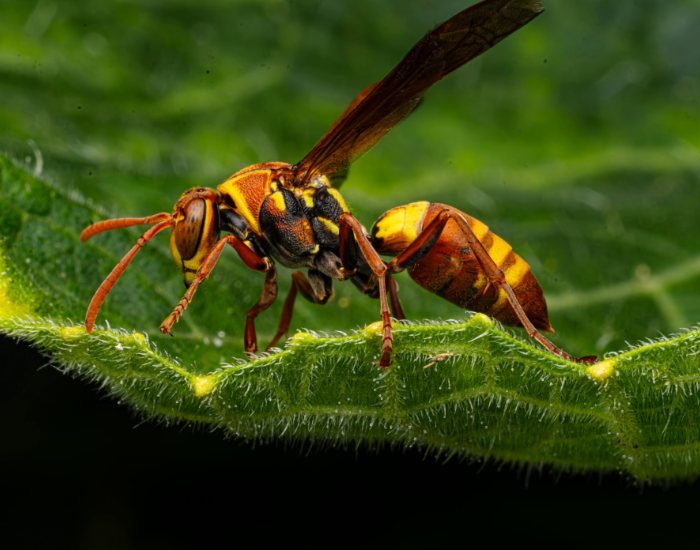
Paper wasps are the long-legged wasps that build umbrella-shaped combs under eaves and on a tree branch. They chew wood into pulp and shape it into open cells you can see from below.
- Look for: a slender body, long legs dangling in flight, and black with yellow or reddish brown markings.
- Behaviour: rarely aggressive unless you bump the nest. Unlike honey bees, they can sting repeatedly.
- Diet: adults consume nectar. Larvae get chewed caterpillars and beetle grubs.
They are beneficial insects in any garden, because they hunt caterpillars all summer.
One to know is the European paper wasp (Polistes dominula). It has spread to North America and Australia, where it’s an invasive species around Melbourne and beyond.
2. Yellowjackets (Genus Vespula)
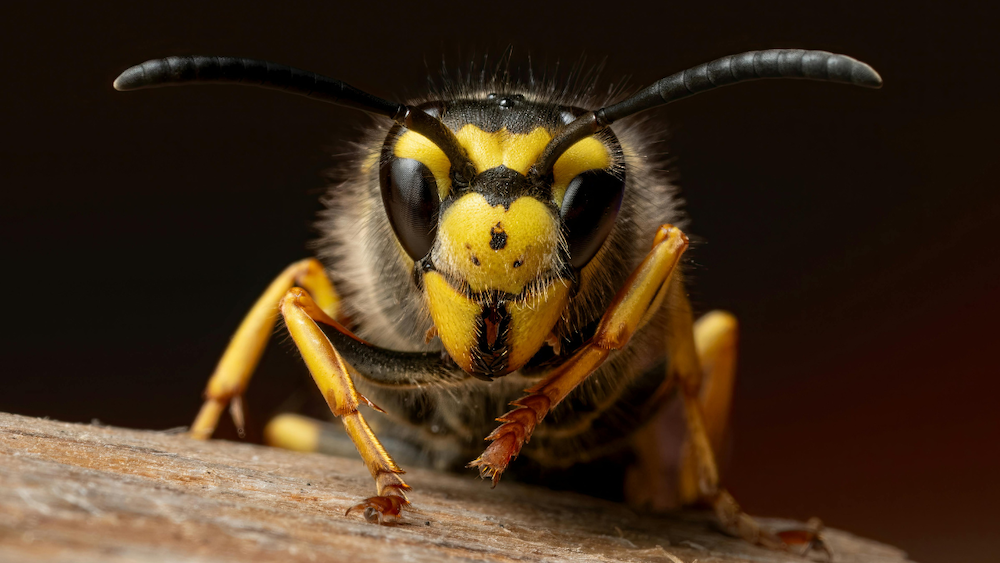
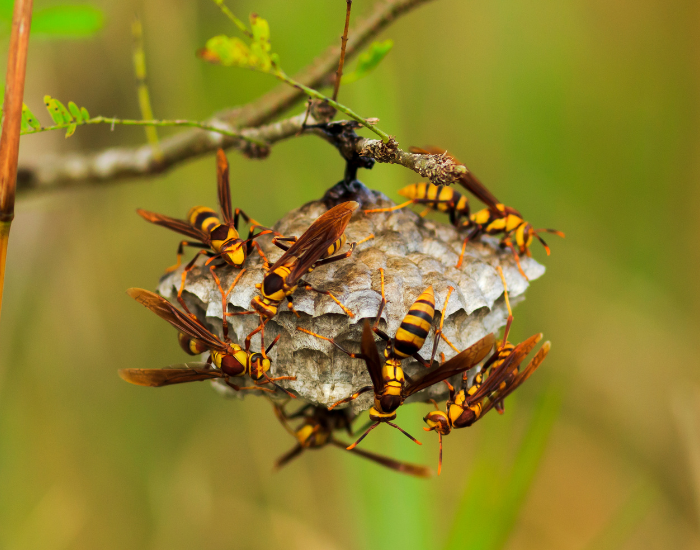
These are the wasps at your picnic. Yellow jackets are smooth, shiny and banded in black and yellow, and people often mistake them for honey bees.
- Nest: most species build nests underground or in wall voids. Each nest consists of stacked combs inside a grey paper envelope.
- Behaviour: the most defensive wasps on this list. They sting repeatedly near the nest.
- Diet: insects for the larvae, sugar for the adults, including your soft drink.
Two Vespula species dominate. The eastern yellowjacket is one of the commonest wasps in the eastern United States. The German yellowjacket (Vespula germanica) has spread worldwide. In Australia it’s called the European wasp, and it’s a serious invasive pest across the south-east.
3. European Hornets (Genus Vespa)
The European hornet is the largest social wasp in Europe. It’s reddish brown on the head and thorax, with yellow bands on the abdomen.
- Nest: inside hollow trees, tree cavities, wall voids and attics, wrapped in a papery shell. Other hornets, like North America’s bald-faced hornet, hang aerial nests from branches.
- Behaviour: calmer than its size suggests. It’s rarely aggressive away from the nest.
- Diet: other insects for the larvae, and fruit juices and tree sap for the adults. It also hunts at night, which few wasps do.
Like other wasps, it can sting repeatedly. In practice, most people who meet one never get stung.

4. Cicada Killer Wasps (Sphecius speciosus)
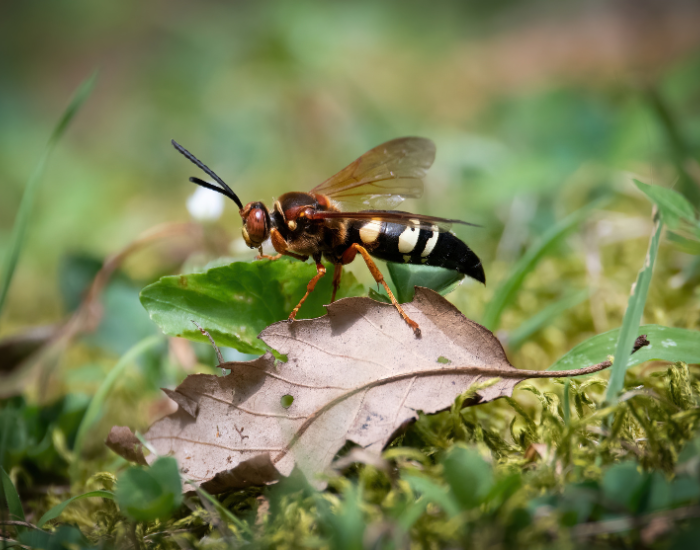
The cicada killer wasp looks terrifying and is almost harmless.
Females dig burrows in sandy soil and paralyse cicadas to feed their larvae. The males are the ones that buzz around your head, and they have no sting at all. Females rarely sting unless handled.
- Where: the eastern United States, south into Mexico and Central America.
- Size: one of the biggest bugs in many US backyards.
If you see them in your lawn, leave them. They’re controlling cicadas for free.
5. Mud Daubers (Families Sphecidae and Crabronidae)
Mud daubers are solitary wasps that construct nests from mud on walls, cliffs, tree trunks and under bridges. They’re quiet and sleek, and they almost never sting.
Three to know:
- Organ pipe mud daubers (Trypoxylon politum) build long mud tubes side by side, like a pan flute.
- Black-and-yellow mud dauber (Sceliphron caementarium) builds lumpy clusters of mud cells.
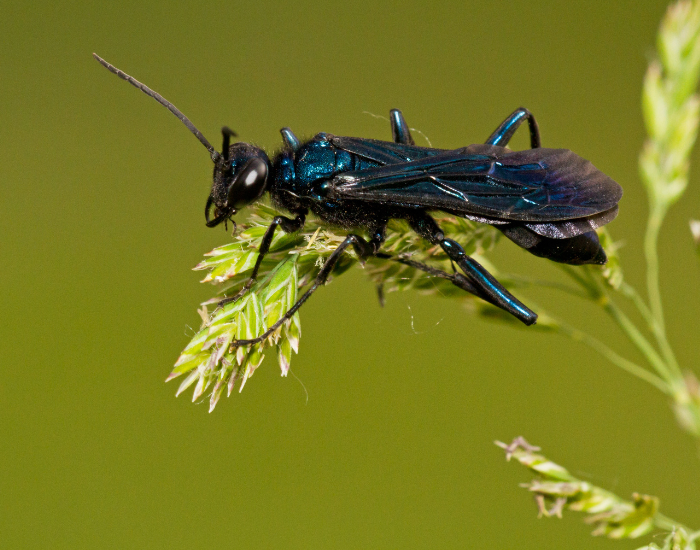
- Blue mud dauber (Chalybion californicum) rarely builds at all. It softens the nests of other mud daubers with water, moves in, and stocks them with spiders, including black widows.
They’re excellent spider control, and a sign of a healthy, wildlife-friendly garden.
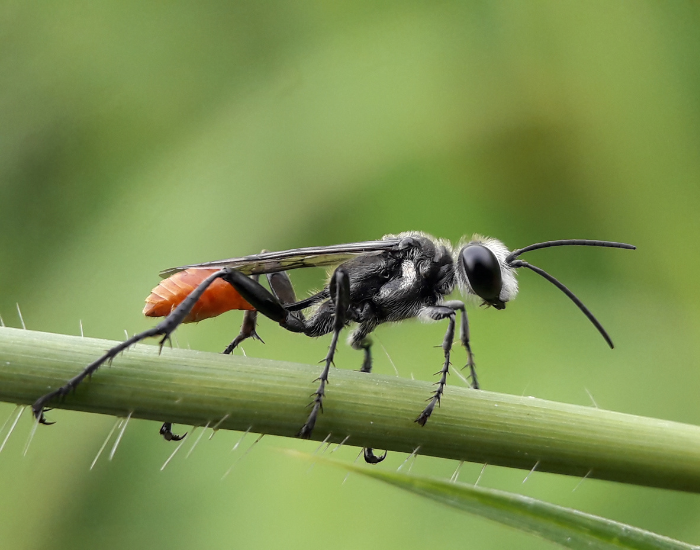
6. Thread-Waisted Wasps (Family Sphecidae)
You can’t miss the waist. The thread-waisted wasp has an abdomen joined to the body by a stalk as thin as a thread.
- Where: sandy paths, open fields and gardens.
- Behaviour: solitary and rarely aggressive.
- Diet: adults drink flower nectar. Females paralyse a caterpillar, drag it into a burrow, lay eggs on it, and seal the entrance.
Some species tamp the burrow closed with a small pebble held in their jaws. It’s one of the few known cases of tool use in insects.
7. Potter and Mason Wasps (Eumeninae)
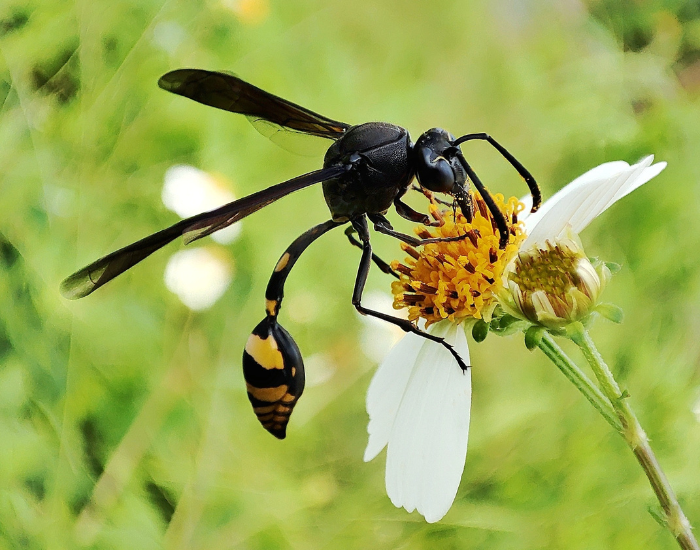
Potter wasps are the potters of the insect world. They build tiny clay jars on twigs, rocks and buildings. Mason wasps are close relatives in the same subfamily. They seal their eggs into hollow stems, old beetle burrows and other suitable nest sites.
Behaviour: gentle and rarely sting.
Inside each pot or cell: one egg and a stash of paralysed caterpillars.
Adults: sip flower nectar and visit flowering plants, pollinating plants as they go.
8. Tarantula Hawk Wasps (Genus Pepsis)
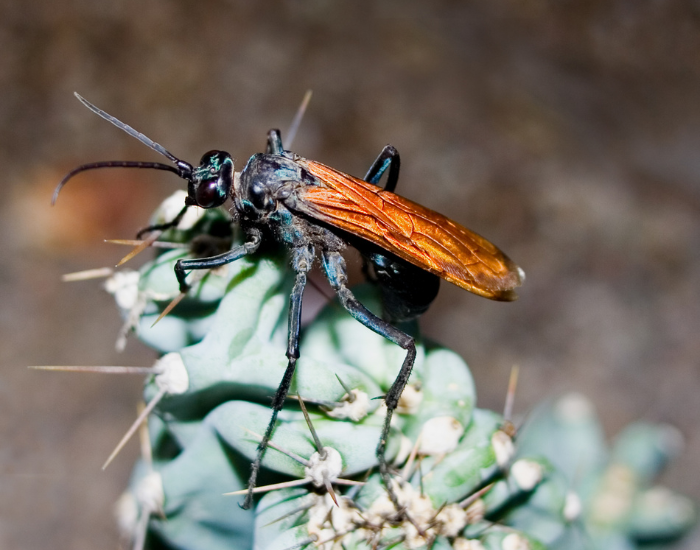
The tarantula hawk is one of the largest wasps in the world. It’s metallic blue-black with bright orange wings, and you notice it from across a desert.
- Where: warm, dry country from the southern United States through Mexico to South America, with around 250 species.
- Behaviour: females hunt tarantulas, paralyse them, drag them into a burrow and lay a single egg on each.
- The sting: it tops the Schmidt sting pain index, at the maximum score of 4. Entomologist Justin Schmidt advised lying down and screaming.
It is not aggressive. It stings only when grabbed or stepped on.
9. Northern Paper Wasps (Polistes fuscatus)
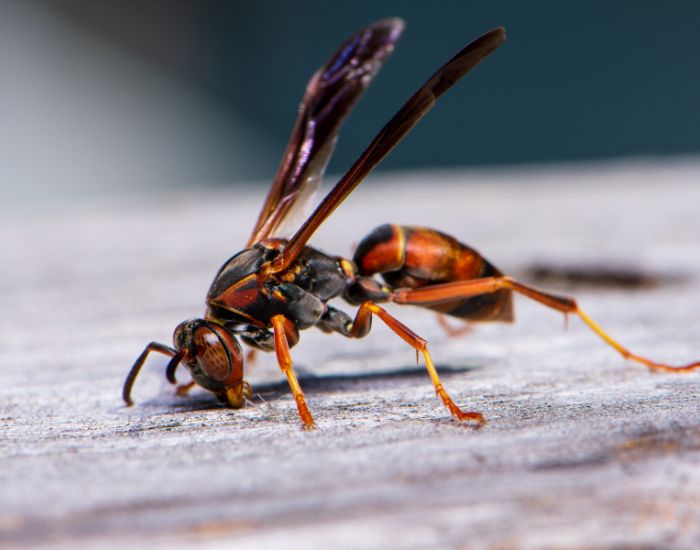
The northern paper wasp builds small, open combs under eaves and branches. Like all paper wasps, its nest has no paper envelope, so you can see every cell.
- Colour: dark reddish brown with thin yellow markings.
- Colony: a few dozen female workers and a queen. In autumn the colony dies, and only the young queens survive the winter.
Its party trick is remarkable. Northern paper wasps recognise each other’s faces. In 2011, researchers showed they learn faces faster and more accurately than other patterns. Each wasp’s face markings are slightly different.
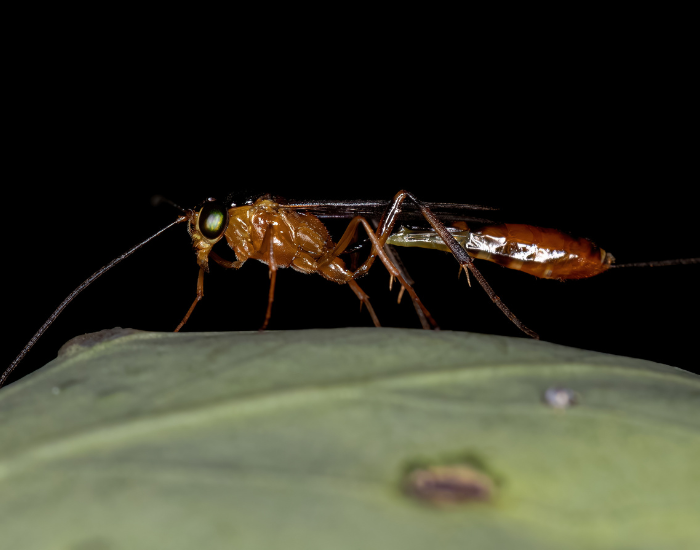
10. Parasitoid Wasps (Ichneumonids, Braconids and Relatives)
These are the wasps most people never notice, and they’re the majority.
Parasitoid wasps lay their eggs in or on other insects. The larvae eat the host from the inside. Many species are smaller than a grain of rice, and almost none can sting people.
They’re so diverse that a 2018 study argued the wasp order, Hymenoptera, may hold more species than beetles. Farmers release some of them to control aphids, caterpillars and whiteflies instead of spraying. This is pest control at its quietest.
11. Northern Giant Hornet (Vespa mandarinia)
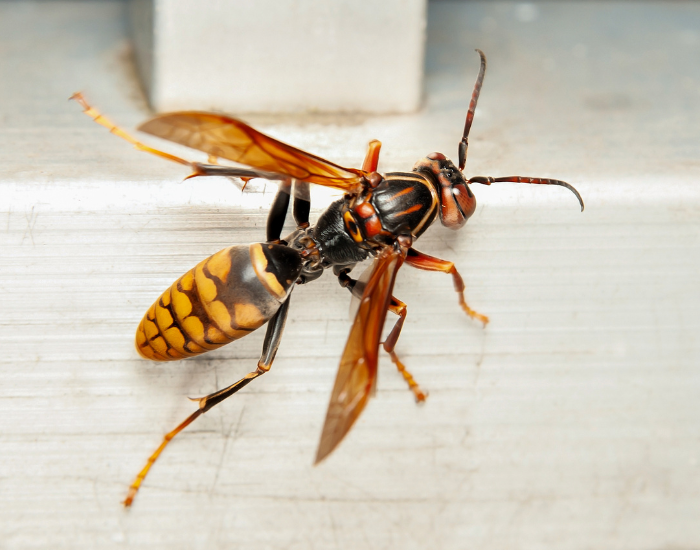
The insect once nicknamed the “murder hornet” is now officially the northern giant hornet, renamed in 2022. It’s the largest hornet in the world, with queens reaching about 5 cm.
- Look for: a broad orange head and a dark abdomen banded in yellow-orange.
- The threat: a small group can wipe out the entire colony of a honey bee hive in hours.
- The good news: after three years with no detections, it was declared eradicated from the United States in December 2024.
Its cousin, the yellow-legged hornet (Vespa velutina), is now the bigger worry. It has spread across Europe and was first found in the US, in Georgia, in 2023. That’s why protecting native species of bees and pollinators matters more each year.
12. Velvet Ants (Mutillidae Family)
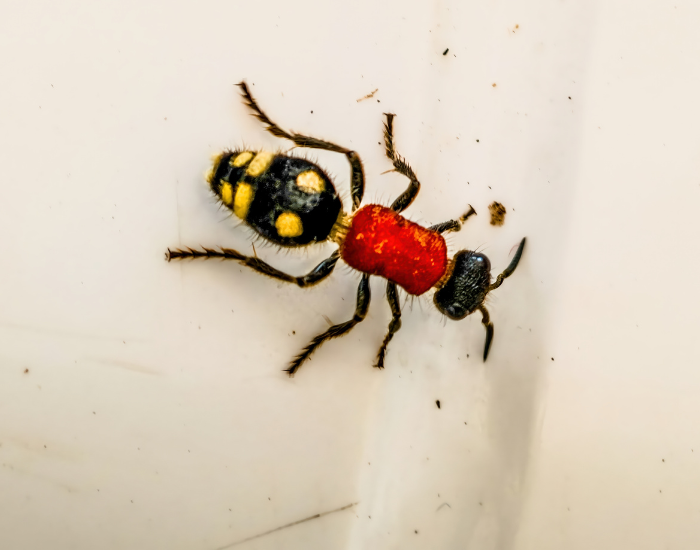
Velvet ants aren’t ants. They’re wasps. The females are wingless and covered in thick red, orange or white hair, and they look like a fuzzy ant. The males have wings.
- Sting: extremely painful. The red “cow killer” earns its nickname.
- Habitat: sandy, open ground.
- Life cycle: females lay eggs in the nests of ground-nesting bees and other wasps. The larvae eat the host’s young.
Their bright colours are a warning. Their armour is so tough that even a determined predator struggles to bite through.
The Wasp Life Cycle
All wasps go through the same life cycle: egg, larva, pupa and adult.
In social wasps, the queen starts a single nest alone in spring. Her first daughters become female workers that build, hunt and feed the larvae. By late summer, larger nests produce male drones and new queens. The drones mate and die. The young queens find a sheltered spot to overwinter, and the old colony collapses.
Solitary species do everything alone. A female builds a nest, stocks it with prey, lays eggs, seals it, and leaves.
Bees and Wasps: How to Tell Them Apart
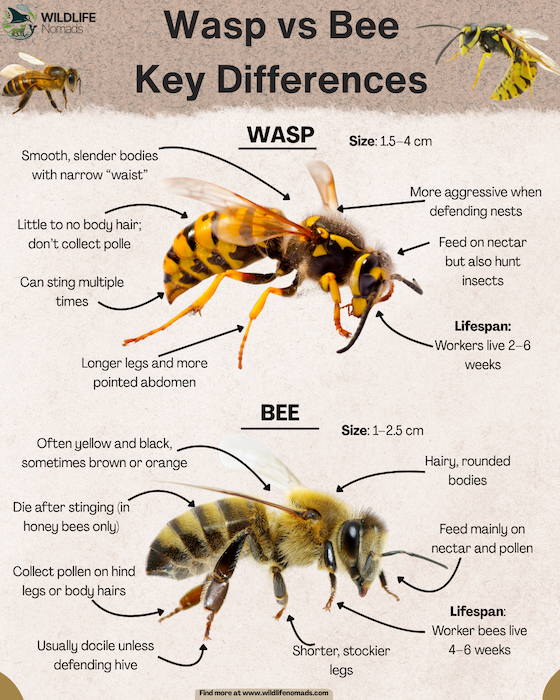
| Feature | Bees | Wasps |
|---|---|---|
| Body | Hairy, to carry pollen | Mostly smooth, with a narrow waist |
| Diet of young | Pollen and nectar | Insects or spiders (most species) |
| Sting | Honey bees sting once and die | Wasps sting repeatedly |
| Main role | Pollination | Pest control, plus some pollination |
Only the honey bee (Apis mellifera) loses its barbed sting and dies. A bumble bee or carpenter bee can sting more than once, just like a wasp. Meet the rest in my guides to bee species and bumblebees.
Why Wasps Matter
Wasps contribute far more than most people think. A 2021 review found they provide pest control, pollination, and even compounds studied for medicine. Some plants, like figs, can’t reproduce without their own species of wasp.
Their value is huge but still largely unmeasured. Bees get the research money. Wasps get the bug spray.
Threats Facing Wasps
Like many insect species, wasps face habitat loss, pesticides and climate change. Solitary wasps that nest in bare ground or old wood lose out when every garden is paved and tidy. Invasive wasps add pressure on native species and other species of insects everywhere they spread.
How to Live With Wasps
- Leave small nests alone if they’re away from doors and paths.
- Keep food and sweet drinks covered outdoors, which deters yellow jackets.
- Leave some bare soil and dead wood for ground-nesting and wood-nesting solitary wasps.
- Plant native flowers. Adult wasps need nectar too.
- Call a professional for nests in wall voids or near children. Don’t seal the entrance yourself, or the wasps may chew their way indoors.
FAQs about Wasps
The yellowjacket is among the most aggressive types, especially when defending its nest. However, even aggressive species typically avoid conflict unless threatened.
The tarantula hawk wasp delivers one of the most painful stings known to humans. Nevertheless, it’s not aggressive and rarely encounters people.
Mud daubers and potter wasps are solitary, peaceful, and unlikely to sting. Therefore, these species pose minimal risk to humans.
How can I tell what kind of wasp I have?
Check the nest type, body shape, and color pattern. Paper wasps have open nests, yellowjackets build enclosed ones, and mud daubers create clay tubes. In addition, observe their behavior and size.
No — they are non-aggressive beneficial insects that help control cicada populations. Therefore, coexistence is the best approach.
Seal food containers outdoors and reduce sweet drinks in open areas. In addition, close tree cavities or wall voids to prevent nesting. However, remember that wasps provide valuable pest control services.
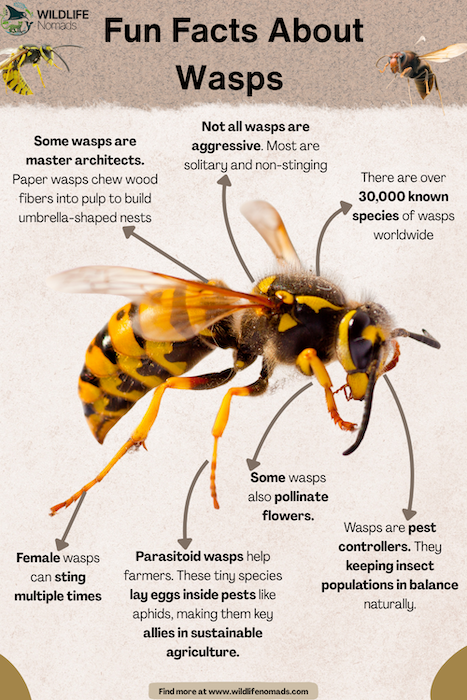
Look Before You Swat
Wasps will never win a popularity contest. But once you learn which ones build, which ones hunt and which ones defend, the fear shrinks fast.
Next time one lands near you, look first. Long legs dangling? A paper wasp. A mud tube on the wall? A mud dauber at work. Give them a metre of space. Most wasps want nothing to do with you.
Wildlife Nomads Challenge
Name That Wasp
Ten photos, all from this article. Name each wasp (one isn’t even an ant), then scroll back up to meet it properly.
References:
Brock, R. E., Cini, A., & Sumner, S. (2021). Ecosystem services provided by aculeate wasps. Biological Reviews, 96(4), 1645–1675. https://doi.org/10.1111/brv.12719
Forbes, A. A., Bagley, R. K., Beer, M. A., Hippee, A. C., & Widmayer, H. A. (2018). Quantifying the unquantifiable: Why Hymenoptera, not Coleoptera, is the most speciose animal order. BMC Ecology, 18, 21. https://doi.org/10.1186/s12898-018-0176-x
Lester, P. J., & Beggs, J. R. (2019). Invasion success and management strategies for social Vespula wasps. Annual Review of Entomology, 64, 51–71. https://doi.org/10.1146/annurev-ento-011118-111812
Sheehan, M. J., & Tibbetts, E. A. (2011). Specialized face learning is associated with individual recognition in paper wasps. Science, 334(6060), 1272–1275. https://doi.org/10.1126/science.1211334
Sumner, S., Law, G., & Cini, A. (2018). Why we love bees and hate wasps. Ecological Entomology, 43(6), 836–845. https://doi.org/10.1111/een.12676