
The first time a tarantula walked across my open hand, my brain screamed run while my eyes said stay. I was running the amphibian and reptile section of a wildlife facility, but we also cared for the spider and tarantula displays. So there I stood, arm out, letting a slow, velvet-footed giant amble from wrist to elbow. Nothing happened. It just looked scary.
That moment reset how I see spiders. Honestly, spiders can be scary, they are strange, alien, and they trip something ancient in us. Yet that same strangeness is exactly what makes them fascinating. Across roughly 53,000 described spider species, evolution has run wild, and I have chased many of them across deserts, rainforests, around Australia, and my own basement. To see how spiders relate to scorpions, ticks and insects, try my phylum explorer.
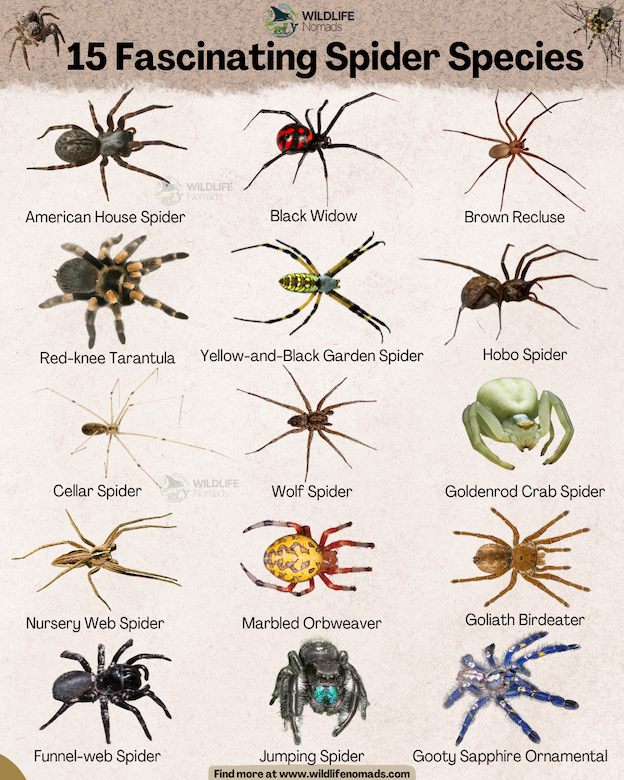
Below are 15 iconic spider species worth knowing, how they live, where they roam, and what I have watched them do up close. Think of it as a field guide with a heartbeat, not a horror reel.
Why Spider Species Matter More Than You Think
Before the parade of legs, one thing deserves saying plainly. Most spiders are harmless to humans, and only a few species carry venom that concerns us. Far from villains, they are quiet allies.
Spiders are effective predators of insects, and they help regulate pest populations in gardens, fields, and forests. One landmark study estimated the world’s spiders kill 400–800 million tons of prey every year. As a result, these eight-legged hunters keep the insect world in check for free.
They also live nearly everywhere. Spiders occupy almost every habitat on Earth, deserts, rainforests, grasslands, and the corners of urban homes. Most are solitary, meeting mainly to mate, and every single one produces silk. That silk builds webs, wraps prey, and lets young spiders balloon on the wind.
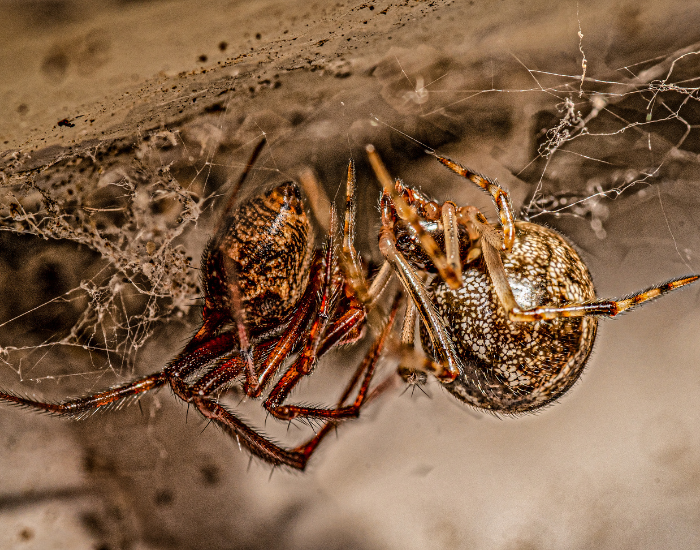
1. American House Spider
If you own a home, you have hosted this one. The American house spider is a cobweb spider about the size of a nickel, with a round abdomen and a talent for messy, tangled webs in ceiling corners.
Common house spiders are usually brown with dark, mottled patterns that help them vanish against wood and shadow. They prefer dark, concealed areas, behind boxes, under sinks, inside garages. Their bites are generally harmless to humans, and they would much rather flee than fight.
I keep a soft spot for them. Every one of these spiders quietly deletes flies, mosquitoes, and moths from your living room, night after night.
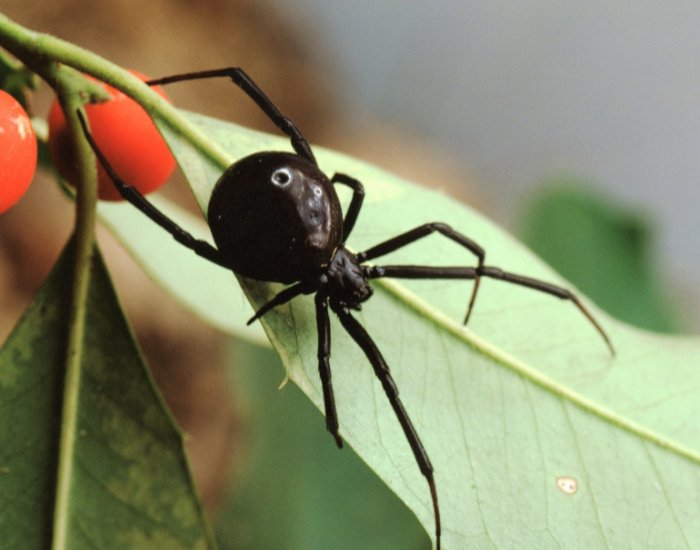
2. Southern Black Widow
Few names spark more innate fear. Adult female black widows run about half an inch long, glossy black, marked with that unmistakable red hourglass on the underside of the abdomen.
Their reputation outpaces reality. U.S. poison centers field thousands of black widow reports a year, and while the bite can cause intense pain, muscle cramping, and stiffness, deaths are extraordinarily rare, none confirmed in the United States in recent decades. The venom is potent, but the spider is shy and rarely aggressive.
I have found widow spiders under woodpiles, always tucked into a tangle of tough silk guarding an egg sac. Give them space and they give you none of their trouble.
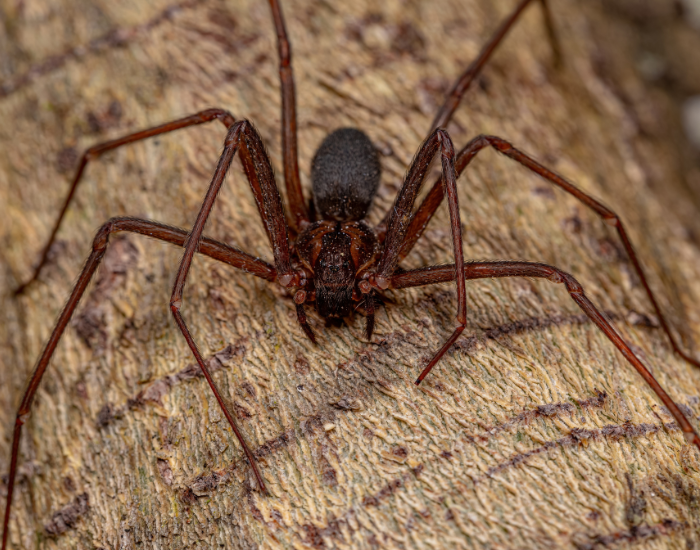
3. Brown Recluse
Here is a spider that earns its caution. The brown recluse wears a dark violin-shaped mark behind its head, has six eyes arranged in three pairs, and stretches roughly the size of a U.S. quarter, legs included.
This is one of the few spiders whose bite genuinely worries doctors. Their venom can inject enzymes that cause necrotizing wounds in a minority of cases. They favor hidden spots, piles of cardboard, stacked wood, undisturbed closets. That said, they are true homebodies and bite only when trapped against skin.
For identification, the violin marking helps, but the six-eye pattern is the real tell. Most brown look-alikes have eight. (Although identifying a brown recluse visually in the field is extremely difficult even for experts and often leads to misidentification).
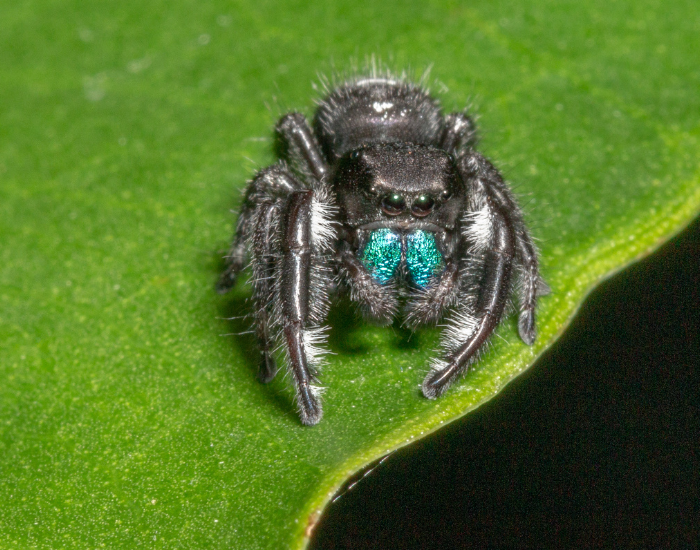
4. Bold Jumping Spider
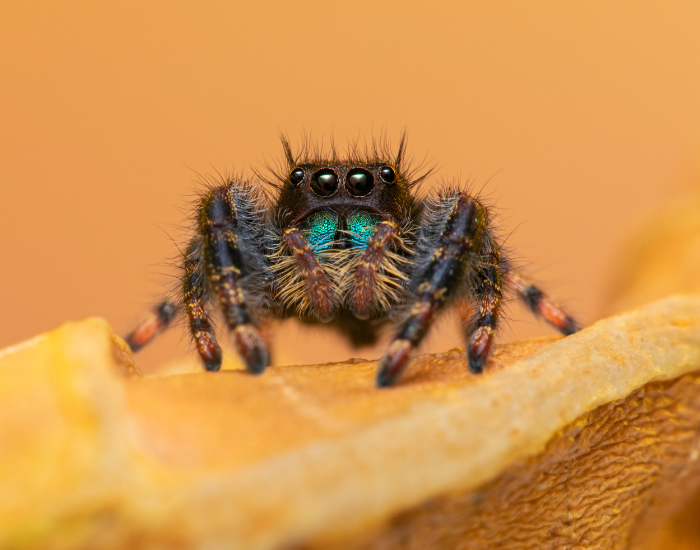
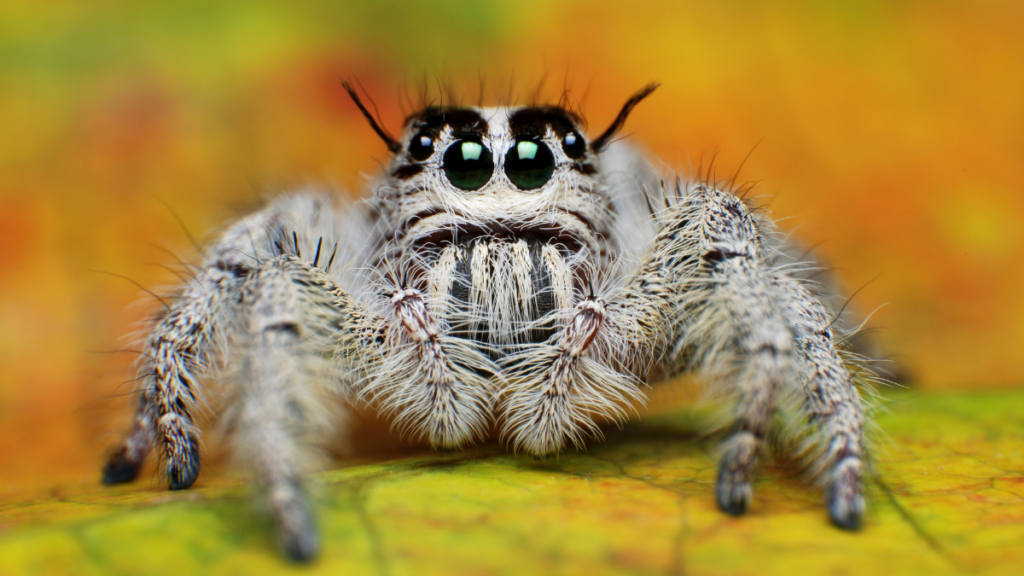
My favorite ambassadors for changing minds. Jumping spiders are tiny (about the size of a dime) with two enormous forward-facing eyes that give them stunning vision and an almost doglike curiosity.
They build no snare webs. Instead these active hunters stalk and pounce, and a jumping spider can leap up to 50 times its body length using hydraulic pressure in its legs. You will spot them on sunny walls, fences, and ceilings indoors, tilting their heads to track you.
Watch one turn to look back at you and the fear tends to melt. There is a small, bright intelligence behind those eyes.
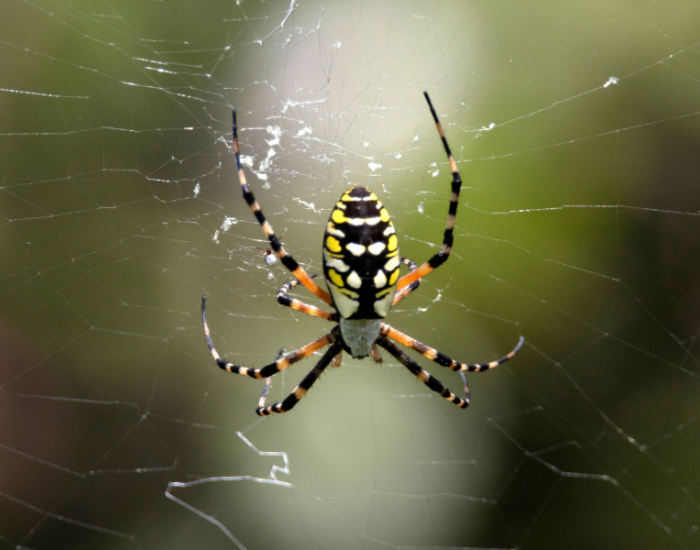
5. Yellow-and-Black Garden Spider
For sheer drama, this orb weaver wins. The yellow-and-black Argiope spins a large orb web with a zigzag silk ribbon down the middle, its body boldly striped and sometimes over an inch long.
Orb weavers are the classic architects, spinning circular spiral webs of sticky silk to snare flying insects. Many rebuild their web daily, eating the old strands to recycle the protein. Despite the size, orb-weaver bites are generally harmless to humans.
I love finding these garden spiders at dawn, their webs strung with dew like beaded chandeliers between sunflower stalks.
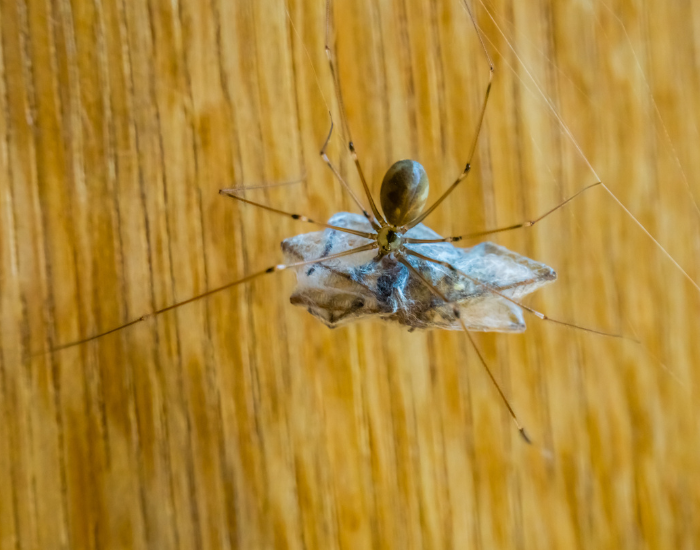
6. Long-Bodied Cellar Spider
You already know this one as the daddy long legs. Long-bodied cellar spiders measure about 7 to 8 millimeters in the body, with absurdly thin legs several times longer, and they hang in loose, messy webs in basement corners.
A stubborn myth claims they are the most venomous spiders alive but have fangs too small to bite. That is false on both counts, their bites are harmless to humans, full stop. When threatened, they vibrate their web into a blur to confuse predators.
They are one of the most commonly encountered spiders in buildings worldwide, and quiet exterminators of other pests.
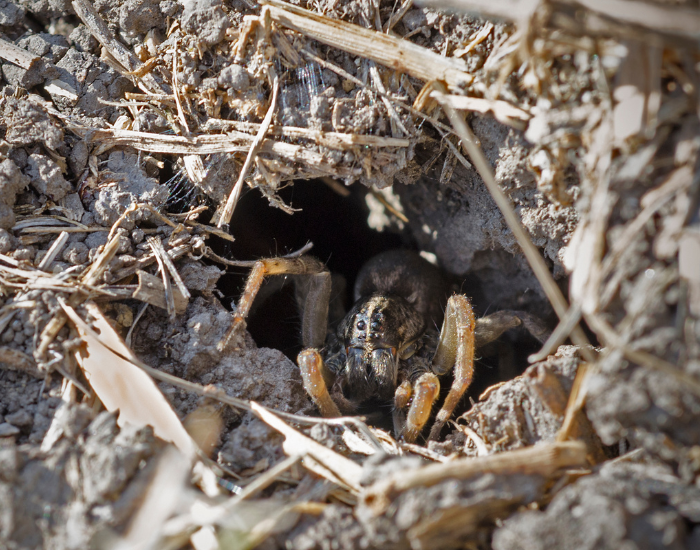
7. Wolf Spider
Built like a sprinter. Wolf spiders can grow up to 1.5 inches long, come in gray, brown, or black, and never bother with a snare web. They are pure active hunters.
By day or night, they chase prey across leaf litter and lawns on powerful legs. What always stops me in the field is the maternal care: a female wolf spider carries her egg sac attached to her spinnerets, then lets the hatched spiderlings ride on her back. Shine a headlamp across a field at night and hundreds of eyeshine points glitter back, each one a hunting wolf spider.
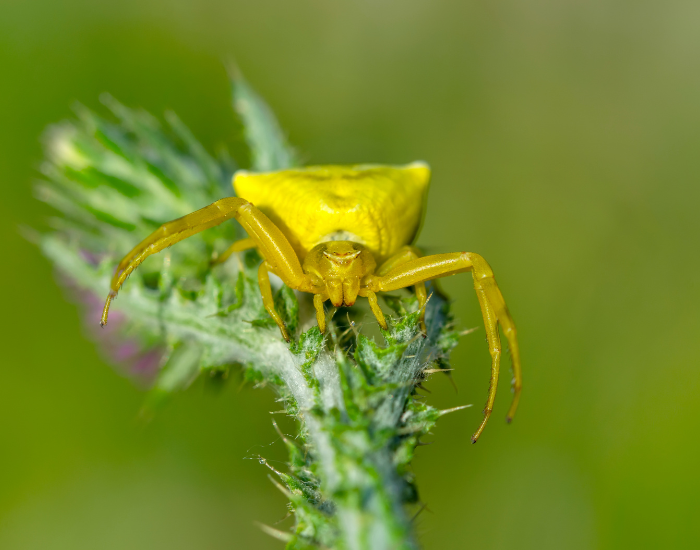
8. Goldenrod Crab Spider
An assassin disguised as a petal. Crab spiders hold their front legs wide like a crab and ambush insects on flowers and vegetation, no web required.
The goldenrod crab spider takes camouflage further than almost any spider I know – it can slowly change color between white and yellow to match the bloom it hunts on. Some crab spiders even mimic flower shapes to lure pollinators closer. Typically about a quarter inch long, they wait motionless for a bee, then strike.
9. Nursery Web Spider
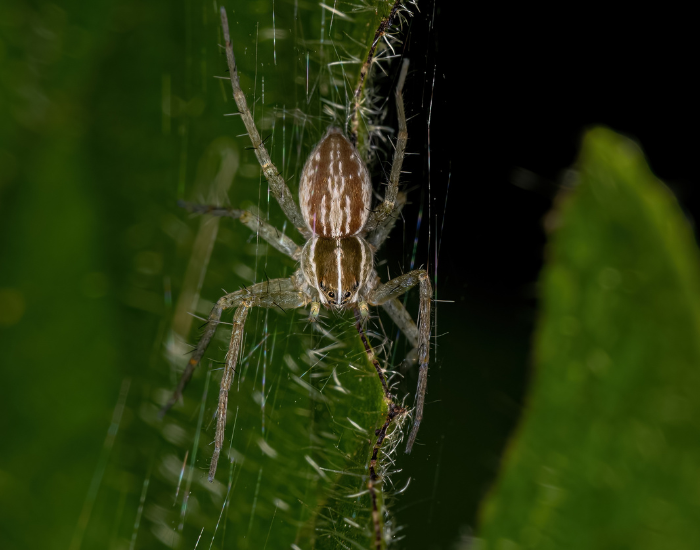
Devoted parents of the spider world. Nursery web spiders are fast, semi-aquatic hunters often found near water, under stones, and among streamside plants, and larger relatives can skate across pond surfaces to catch prey.
The name comes from the mother’s behavior. She carries her egg sac in her jaws, then builds a silk nursery tent over the vegetation and stands guard while the young hatch. Males are famous for offering a silk-wrapped insect as a “wedding gift” before mating, one of the strangest courtship rituals among all the spiders.
10. Marbled Orbweaver
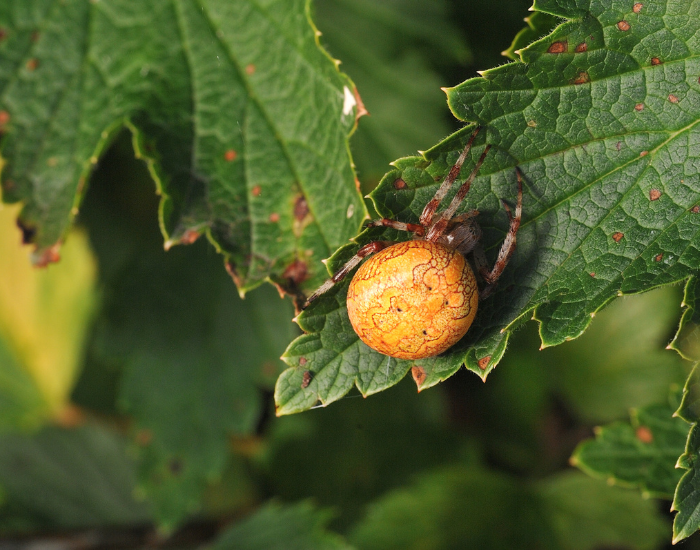
Meet the pumpkin spider. The marbled orbweaver sports a plump orange-and-cream abdomen streaked with dark markings, earning its autumn nickname when its colors peak in fall.
Like other orb-weavers, it builds an organized circular web and rebuilds it regularly after the strands wear out. It hides in a rolled-leaf retreat at the web’s edge, one foot on a signal thread, waiting to feel a trapped insect struggle. Harmless and gorgeous, it is one of my favorite spider species to photograph in October light.
11. Goliath Birdeater
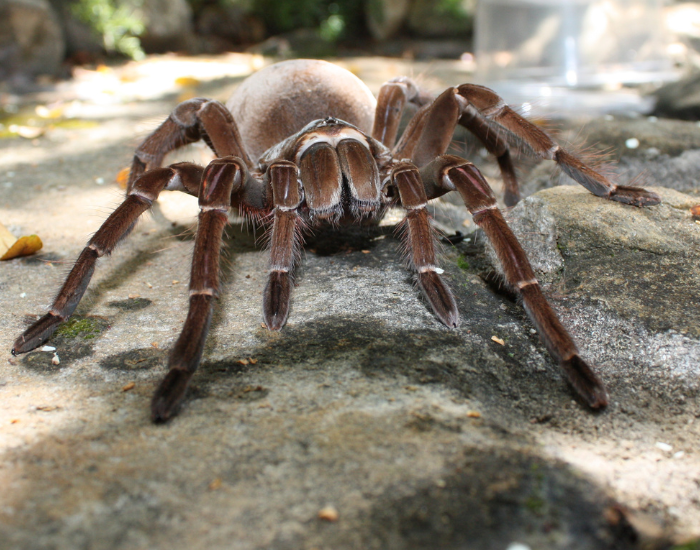
The heavyweight champion. The Goliath birdeater is considered the largest spider on Earth, with a leg span that can reach up to a foot and a body the size of a fist. It prowls the rainforest floor of northern South America.
Despite the name, it rarely eats birds, mostly insects, frogs, and small rodents. It lives in silk-lined burrows dug beneath leaf litter and roots, ambushing whatever wanders past. When threatened, it rubs its legs to hiss and flicks irritating hairs. I have knelt beside a burrow at dusk waiting for one to emerge, heart pounding, and it remains one of the great thrills of my career.
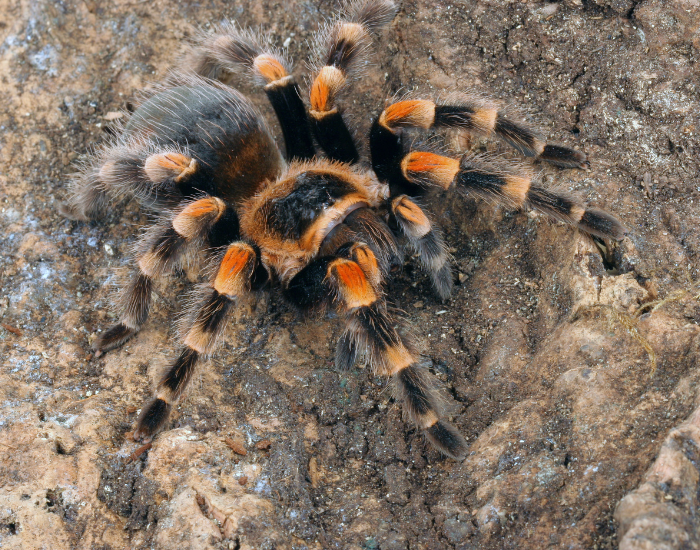
12. Mexican Redknee Tarantula
The postcard tarantula. With a dark body and vivid orange-red bands on its knees, the Mexican redknee is the spider most people picture when they hear the word “tarantula.”
Tarantulas are among the largest spiders, and this species is famously docile and long-lived, females can pass 20 years. Native to the Pacific scrublands of Mexico, it spends days in a burrow and hunts insects at night. This is very likely the calm giant that first walked across my arm, and the reason I stopped flinching.
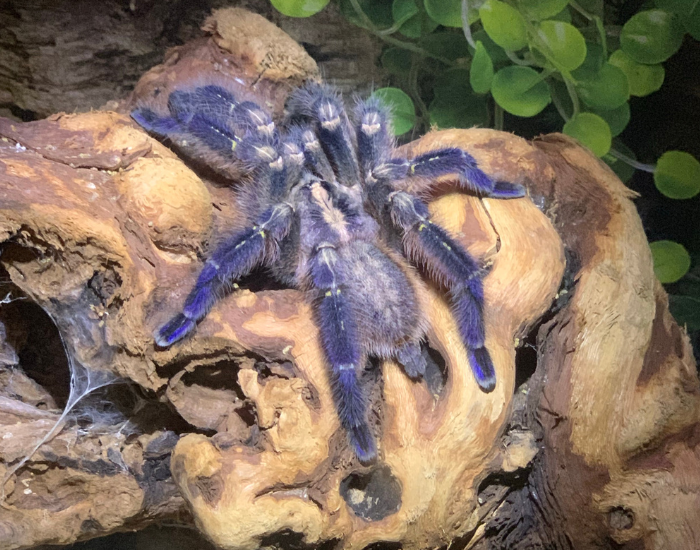
13. Gooty Sapphire Ornamental
Proof that spiders can be jewelry. The Gooty sapphire, a peacock parachute spider, is a rare arboreal tarantula from a tiny patch of forest in India, cloaked in electric metallic blue.
Unlike ground-dwelling tarantulas, this one lives high in tree trunks, tucked into bark crevices and hollows where it spins silken retreats. It is faster and more defensive than its docile cousins, and its shrinking habitat makes it a conservation priority. Seeing that blue in person genuinely does not look real.
14. Hobo Spider
A much-maligned funnel weaver. The hobo spider builds funnel-shaped webs in ground-level cracks, woodpiles, and foundations across the Pacific Northwest, then darts out to grab prey that stumbles onto the sheet.
For years it was blamed for necrotic bites, but current research has largely cleared its name, the evidence for serious envenomation is weak. It is a brown, unassuming spider that would rather run than confront you. Its funnel web is the real signature: a flat sheet narrowing into a silk tube where the spider waits.

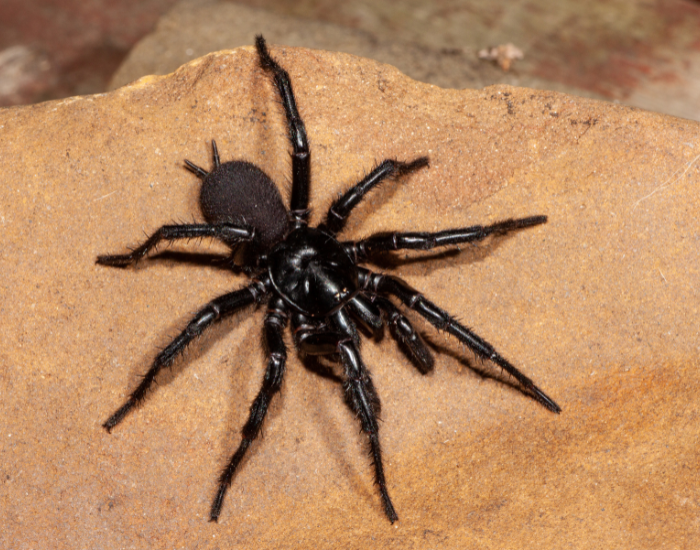
15. Australian Funnel-Web Spider
Now the genuinely dangerous one. The Australian funnel-web is a stout, glossy, ground-dwelling spider that can inject potent venom, and males in particular are medically serious around eastern Australia.
They dig silk-lined burrows with trip-lines radiating out, and males wander during humid summer nights, sometimes into gardens and shoes. Here is the trust-building part: since antivenom arrived in 1981, no one in Australia has died from a funnel-web bite. Respect, not panic, is the right response, a theme that runs through nearly every spider on this list.
Frequently Asked Questions
Start with a few features: body size, leg arrangement, web type, and markings. Web-building spiders like orb weavers and cobweb spiders leave telltale funnel-shaped webs or messy tangles, while active hunters like wolf and jumping spiders wander in the open. For tricky cases, count the eyes and note the abdomen shape, spider identification often comes down to those small details, and comparing good spider species photos speeds it up enormously.
Alaska. Black widows live across all of the contiguous United States, but Alaska’s cold climate keeps established populations out. Hawaii has introduced widow spiders, so on the mainland the practical answer is: only Alaska is reliably widow-free.
Spiders “taste” and “smell” through their legs, and strong plant scents seem to repel many species. Peppermint, citrus, tea tree, and eucalyptus oils are the usual folk remedies, and there is modest evidence some of these deter spiders. To prevent spiders naturally, pair scent with sealing cracks and reducing the insects they hunt.
Yes, in their own way. Spiders lack ears, but sensitive hairs and slit organs on their legs detect airborne vibrations, and research shows some jumping spiders react to sound from across a room. Web-building species also “hear” through their silk, reading the trembles of an approaching insect, or a nearby voice.
Can You Name That Spider? 🕷️
A 15-photo identification challenge — the wrong answers are deliberately tricky look-alikes, especially among the brown hunters and the tarantulas. Go back and change any answer before you score.
Which spider is this?
The Takeaway
Fifteen spiders, one shared lesson: the fear they trigger and the danger they pose almost never match. Most of the world’s spiders are shy, harmless, and doing us the enormous favor of eating the insects we like even less.
That tension (the shiver and the fascination) is exactly why I keep chasing them. So next time one appears in your doorway, lean in for a closer look before you reach for a shoe. Notice the eyes, the web, the way it moves.
If this sparked your curiosity, keep exploring: meet the calm giant behind my first hand-walk in the Mexican redknee tarantula guide, get to know the autumn pumpkin spider, understand the truly venomous Australian funnel-web spider, separate myth from fact on the hobo spider, size up the record-breakers in the biggest spiders in the world, or meet a gentle native in the Texas brown tarantula profile. Then tell me in the comments: which spider fascinates you most?
References:
Cardoso, P., Malumbres-Olarte, J., Milne, M., Costa, F. G., & Nyffeler, M. (2025). Ecosystem services provided by spiders. Biological Reviews. https://doi.org/10.1111/brv.70044
Kerns, A. F., Scheffel, E. T., Farah, R., & Holstege, C. P. (2025). Black widow spider exposures: A retrospective review of the National Poison Data System 2012–2022. Wilderness & Environmental Medicine. https://doi.org/10.1177/10806032241300134
Loden, J. K., Seger, D. L., Spiller, H. A., Wang, L., & Byrne, D. W. (2020). Cutaneous-hemolytic loxoscelism following brown recluse spider envenomation: New understandings. Clinical Toxicology, 58(12), 1297–1305. https://doi.org/10.1080/15563650.2020.1739701
Hart, S. A., Gailani, D., Bibb, L. A., Zwerner, J. P., Booth, G. S., & Jacobs, J. W. (2025). Coagulation abnormalities following brown recluse spider (Loxosceles reclusa) envenomation. American Journal of Clinical Pathology, 163(6), 822–830. https://doi.org/10.1093/ajcp/aqaf001
Nyffeler, M., & Birkhofer, K. (2017). An estimated 400–800 million tons of prey are annually killed by the global spider community. The Science of Nature, 104, 30. https://doi.org/10.1007/s00114-017-1440-1
Bruce, M., Daniel, R. E., & Nørgaard, T. (2021). Spatial acuity-sensitivity trade-off in the principal eyes of a jumping spider: Possible adaptations to a ‘blended’ lifestyle. Journal of Comparative Physiology A, 207, 261–276. https://doi.org/10.1007/s00359-021-01486-2