Meeting My First Texas Brown Tarantula
I first learned about the Texas brown tarantula (Aphonopelma hentzi) not in the wild grasslands of Texas, but while working alongside keepers during my zoo internship. After spending weeks caring for reptiles and amphibians, and even handling a Mexican redknee tarantula, I found myself fascinated by the larger tarantula family. The Texas brown, sometimes called the Oklahoma brown or Missouri tarantula, stood out to me because of its reputation: one of the most common and widespread tarantulas in North America, yet so often misunderstood.
Unlike the brightly marked redknee, the Texas brown is more subdued in color, shades of earthy brown that help it blend into prairies and scrublands across the southern United States. What captivated me was how calm and gentle they are despite their size, often retreating into burrows rather than showing aggression. For an animal that can grow larger than a human hand, they embody shyness in the most surprising way.
This guide dives into 12 fascinating facts about the Texas brown tarantula, covering everything from its life cycle and defense strategies to care in captivity and its role in ecosystems across the southern United States.

1. The Texas Brown Tarantula Belongs to the Genus Aphonopelma
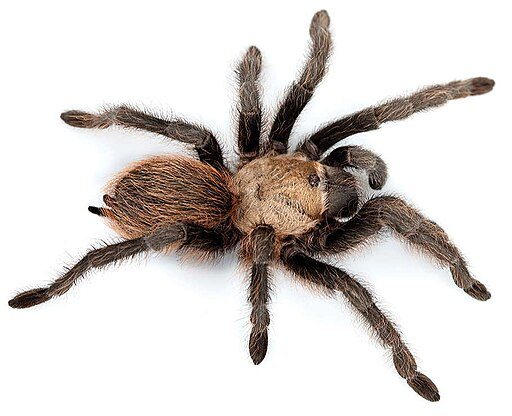
The Texas brown tarantula (Aphonopelma hentzi) is the most widespread tarantula in the U.S., particularly in Texas, Oklahoma, and Missouri. The range of Aphonopelma hentzi includes Colorado as well. It’s a terrestrial species commonly found in grasslands, deserts, and abandoned dens. Tarantulas found in these regions often inhabit such environments, utilizing abandoned dens for shelter.
Unlike some flashy tarantulas from South America, this species blends in with its environment. Its dark brown coloration and large size (up to 4 inches in leg spans) give it a formidable look, but in reality it’s a nonaggressive species that rarely causes serious harm to humans.
2. Where Do Texas Brown Tarantulas Live?
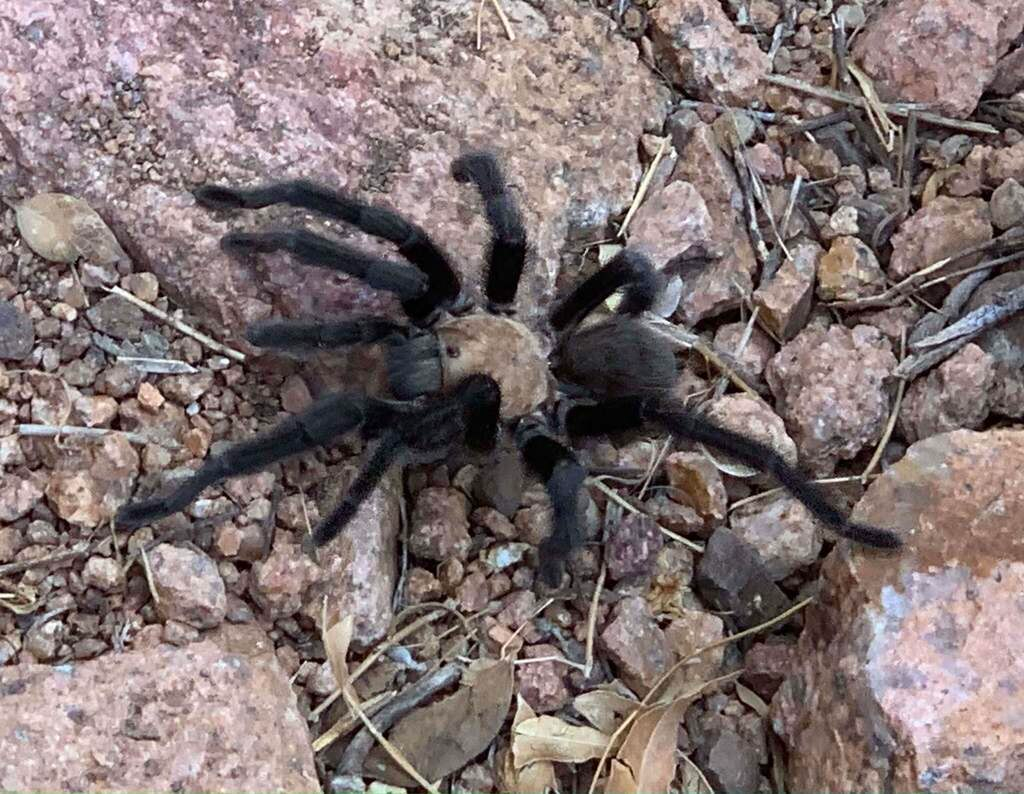
If you’ve ever wondered where Texas brown tarantulas live, the answer is: just about everywhere across the south-central U.S. They dig their own burrows, often remaining burrowed underground for protection and to regulate temperature, take over small animals’ abandoned dens, and hide under rocks or logs.
I remember kneeling in the dry scrublands of west Texas and finding burrows positioned securely along a fencerow, each one sealed with silk at night like a tiny “Do Not Disturb” sign.
Their natural cavities provide protection from predators and harsh temperatures. These locations also serve as their feeding grounds, where they hunt for prey. This underground lifestyle is also why they’re often overlooked despite being a common species.
3. Texas Brown Tarantula Size
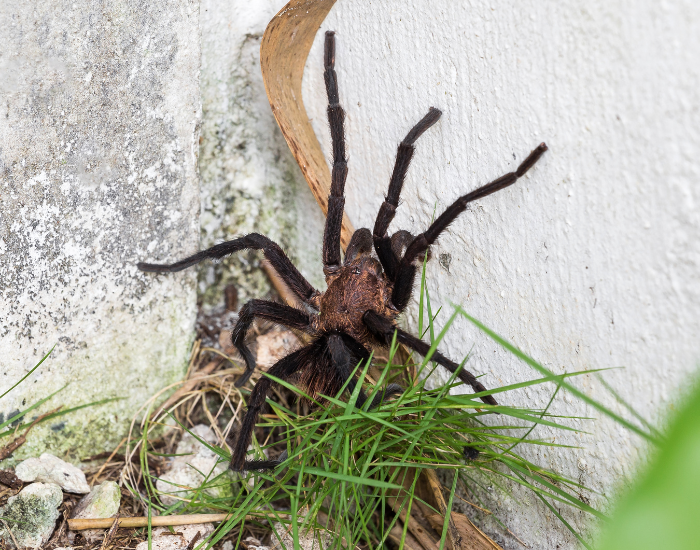
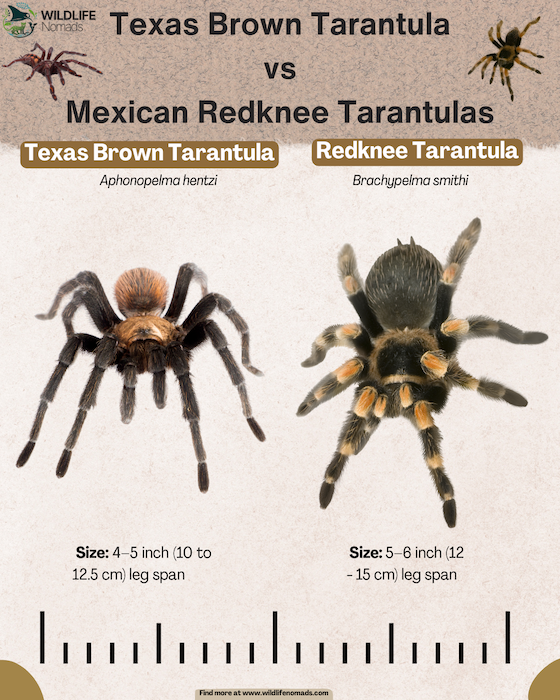
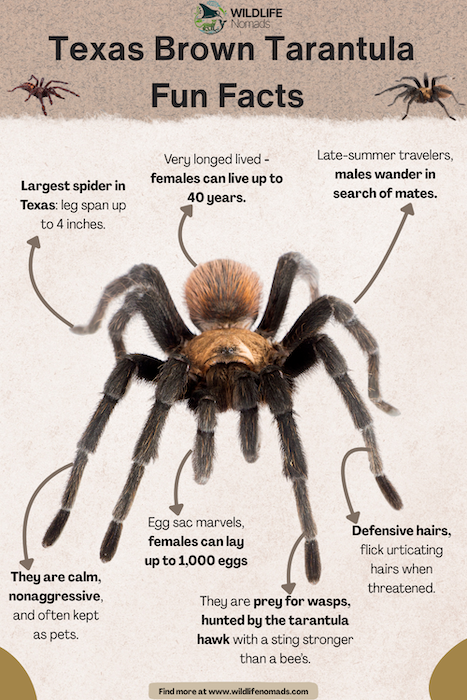
The Texas brown tarantula size is impressive, mature males and females often reach 4 inches across with front legs that stretch even further. While not the largest tarantula in the animal world, their large size makes them one of the most iconic spiders in the southern United States.
If you are one of those people that wonder how big a spider can get, read our article about the biggest spiders in the world.
4. Male vs Female Tarantulas
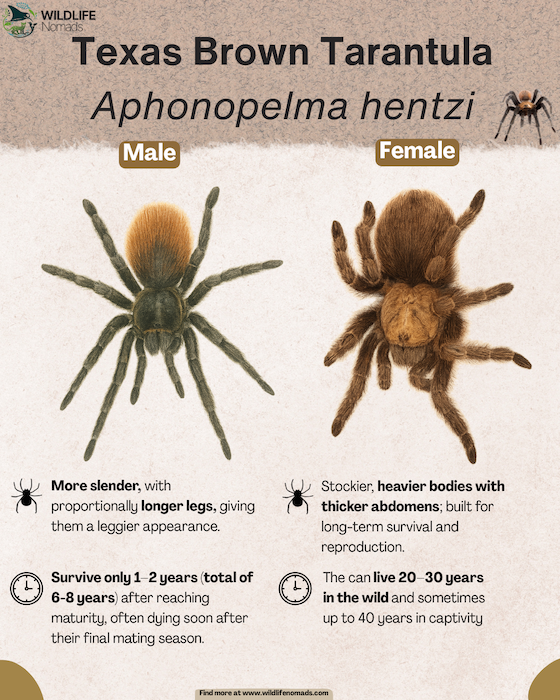
A male Texas brown tarantula lives a very different life than the female. Mature males often wander in late summer in search of mates, which is why you might see them crossing roads in Texas around August. Unfortunately, males rarely live more than a year after maturity.
Females, on the other hand, enjoy a long Texas brown tarantula lifespan, up to 20 years in the wild and 30–40 years in captivity. This huge difference in lifespan is one of the quirks of tarantula biology.
5. The Life Cycle and Egg Sac
The life cycle of Aphonopelma hentzi is fascinating. A female lays her eggs in a web-shaped egg sac, sometimes containing 1,000 spiderlings. The eggs hatch after 45–60 days.
I once assisted with a captive breeding program where watching an egg sac open felt like a scene from a nature documentary, hundreds of tiny spiders dispersing, each destined for its own burrow. After hatching, spiderlings leave the egg sac and stay briefly with the female before dispersing to establish their own burrows.
Understanding this cycle helps hobbyists who want to breed Aphonopelma hentzi. However, caring for an egg sac requires experience, controlled humidity, and patience.
6. Defense Mechanisms
When threatened, the Texas brown tarantula doesn’t bite first. Instead, it uses several strategies:
- Raising its front legs and rearing up on hind legs in a threatening manner.
- Flicking urticating hairs from its abdomen, which can irritate human skin.
- Retreating quickly to its burrow and sealing the entrance.
When they feel threatens, Texas brown tarantulas, like most other tarantulas, may adopt a threatening posture and kick urticating hairs as a defense.
Despite their size, they’re a nonaggressive species. A bite may feel like a bee sting, but it causes no serious harm if properly treated.
7. Predators: The Tarantula Hawk
The biggest danger to these spiders isn’t humans, it’s the tarantula hawk, a wasp with one of the most painful stings in the animal world. I’ve watched one paralyze a tarantula in the field, dragging it into a burrow where it would serve as living food for the wasp’s larva.
These two species, the Texas brown tarantula (Aphonopelma hentzi) and the tarantula hawk (Pepsis grossa), interact in their shared habitat, with the tarantula hawk preying on the tarantula where their ranges overlap.
It’s brutal but a reminder of the intricate species overlap in ecosystems where every creature has its role.

8. Diet and Feeding
Like most hunting spiders, the Texas brown tarantula eats insects such as crickets, roaches, and beetles. The tarantula’s feeding frequency in captivity is typically once or twice a week, depending on its age and size. In captivity, they should be fed a varied diet but not overfed—obesity shortens their lifespan.
Their feeding method fascinates me: they use fangs to inject digestive enzymes, turning their prey into soup before slurping it up. Watching this up close reminded me of how many arthropods rely on external digestion.
9. Temperament and Personality
Are Texas brown tarantulas friendly? Not in the human sense, but they are calm. Many keepers describe them as docile, curious, and easy to handle.
During my work in arachnid husbandry, I noticed how individual tarantulas displayed unique quirks, some retreated instantly when disturbed, while others stood their ground. Individual tarantulas may differ, but overall they’re considered one of the best beginner species.
10. Conservation and Threats
Although a common species, habitat loss from urbanization threatens populations. Tarantulas are also collected for the pet trade. In some areas along the Texas borders, populations have fragmented.
Conservationists argue that protecting tarantula habitats benefits not only spiders but many other arthropods and animal species. After all, they are part of the food web, providing prey for birds, mammals, and even other arachnids.
11. Comparison to Other Species
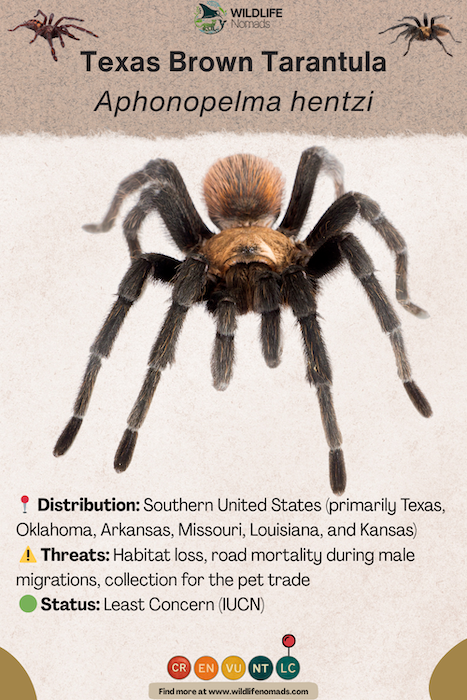
The Texas brown tarantula is often confused with the Oklahoma brown tarantula or Missouri tarantula, but all belong to the same genus, Aphonopelma.
Compared to other spiders or other tarantulas, Aphonopelma hentzi stands out for its calm nature and adaptability. Unlike arboreal tarantulas that spin webs high in trees, these are true terrestrial species.
12. Do Texas Brown Tarantulas Make Good Pets?
Many enthusiasts keep Texas brown tarantulas as pets. Their long lifespan, calm temperament, and hardy nature make them appealing. Still, they require proper enclosures with deep substrate, hiding spaces, and occasional live prey.
While handling is possible, I always tell beginners: respect the spider. They’re not toys but fascinating members of the animal world that teach us about evolution, behavior, and the diversity of many arthropods.
Care and Housing: Creating a Comfortable Home
Creating the perfect home for your Texas brown tarantula, also known as the Oklahoma brown tarantula or Missouri tarantula, means mimicking the natural grasslands and underground dens where this terrestrial species is commonly found. Start with a secure, well-ventilated enclosure of at least 5-7 gallons, giving your brown tarantula plenty of space to explore and burrow. A deep substrate layer (4-6 inches) made from a mix of peat moss, sand, and perlite will allow your tarantula to dig its own burrow, just as it would in the wilds of Texas or Oklahoma.
Hiding places are essential for this species. Add rocks, logs, or artificial plants to help your tarantula feel safe and reduce stress. In their natural habitat, these spiders line the entrance of their burrows with silk to detect passing prey, so don’t be surprised if your tarantula spins webbing around its hide or the enclosure entrance. This behavior is a sign your tarantula feels at home and is ready to hunt.
Maintain a temperature range of 75-85°F (24-29°C), with a slight nighttime drop to mimic the natural fluctuations of Texas grasslands. Humidity should stay around 60-70%, increasing slightly during molting. A shallow, sturdy water dish is a must, large enough for drinking, but not so deep that your tarantula could drown. Change the water regularly to keep the environment clean and healthy.
Handling and Safety: Interacting with Your Tarantula
Interacting with your Texas brown tarantula can be a rewarding experience, but it’s important to approach handling with care and respect. While this brown tarantula is one of the most common species in the southern United States and is known for being a nonaggressive species, it still has natural defenses. When threatened, it may use its hind legs to kick urticating hairs, tiny barbed bristles that can irritate your skin or eyes. Always handle your tarantula gently, supporting its body and legs, and avoid touching its sensitive front legs, which it uses to sense the world around it.
Male tarantulas, especially during mating season, can be more restless and may display defensive behaviors, while female tarantulas are generally more docile and tolerant of gentle handling. Remember, males rarely live more than a year after reaching maturity, while females can be long-lived companions, sometimes thriving for decades.
Before handling, wash your hands thoroughly to avoid transferring any harmful substances to your tarantula. Limit handling sessions to reduce stress, and always supervise young tarantulas or spiderlings, as they can be more delicate. If your tarantula feels threatened, it may rear up on its hind legs and display its urticating hairs, a clear sign to give it space.
In the wild, the main species preyed upon by the tarantula hawk are often female tarantulas guarding their eggs. While your pet is safe from such predators, understanding these natural behaviors helps you appreciate the instincts that drive your tarantula’s actions. By respecting its needs and providing a secure, enriching environment, you’ll ensure your Texas brown tarantula, whether you call it the Missouri tarantula, Oklahoma brown tarantula, or simply a brown tarantula, remains a fascinating and healthy member of your animal world. With patience and proper care, you’ll witness the full life cycle, from eggs hatching to young tarantulas maturing, and enjoy the unique presence of one of the most remarkable arachnids found in Texas and beyond.
Research & Science Insights
Science has revealed fascinating details about Aphonopelma hentzi that go beyond the typical pet-care or nature-guide info.
- A 2019 study in the Comanche National Grasslands of Colorado documented nesting times, embryogenesis (how long developing embryos take before hatching) and protocol for collecting specimens and egg sacs. In addition to Colorado, Aphonopelma hentzi has also been documented in the northern parts of Mexico and along the borders of New Mexico and Texas, highlighting its broader habitat range in the southwestern United States and northern Mexico.
- A foundational paper by Punzo & Henderson (1999) studied its natural history and behavioural ecology: they found strong sexual dimorphism (females much larger than males), differences in diet between sexes, and detailed timing of their surface activity (when females and males emerge, nocturnal patterns, etc.).
These studies strengthen what field observations suggest: that environmental variables (temperature, habitat type, etc.) significantly influence how fast eggs develop, how long the spiders live, and when males vs females move about.
FAQ: Texas Brown Tarantula
No, their bite is mild, comparable to a bee sting.
Yes, but handle with care, most prefer being left alone.
Adults reach about 4 inches in leg span.
Females can live 20–40 years; males live only 1–2 years after maturity.
They’re found across Texas, Oklahoma, Missouri, and the broader southern United States.
Late summer, especially when males wander in search of mates.
The Texas Brown Tarantula Deserves Respect
My field encounters with the Texas brown tarantula always left me humbled. Watching these spiders emerge at dusk or retreat into their silk-lined burrows reminded me of the delicate balance in nature. Far from monsters, they’re gentle, terrestrial species that play crucial roles in ecosystems.
Whether admired in the wild or kept responsibly in captivity, Aphonopelma hentzi continues to fascinate. By learning about their life cycle, size, and temperament, we move beyond fear and into respect, a shift that helps not just tarantulas, but the animal world they’re a part of.