
Meeting a Legend in the Wild
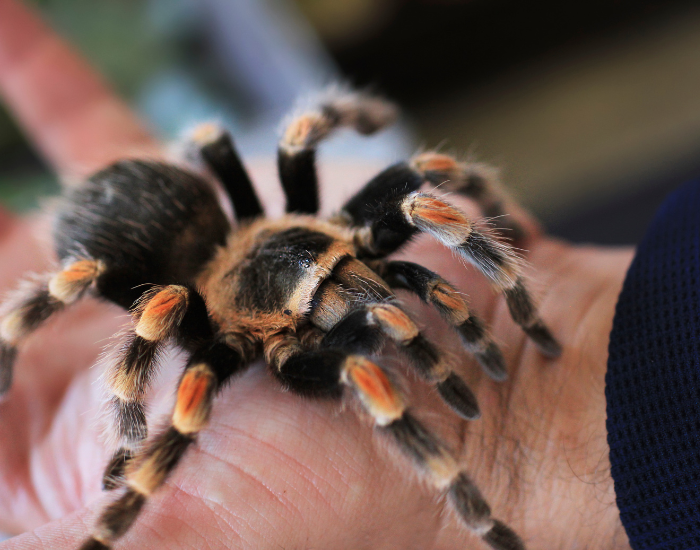
I’ll never forget the first time I came face to face with a Mexican redknee tarantula (scientifically Brachypelma smithi) during my internship at a zoo. I was assigned to help care for the reptiles and amphibians, and, to my surprise, that also meant looking after the spiders. Among them was a redknee tarantula, her bright orange markings joints glowing like embers against her dark body.
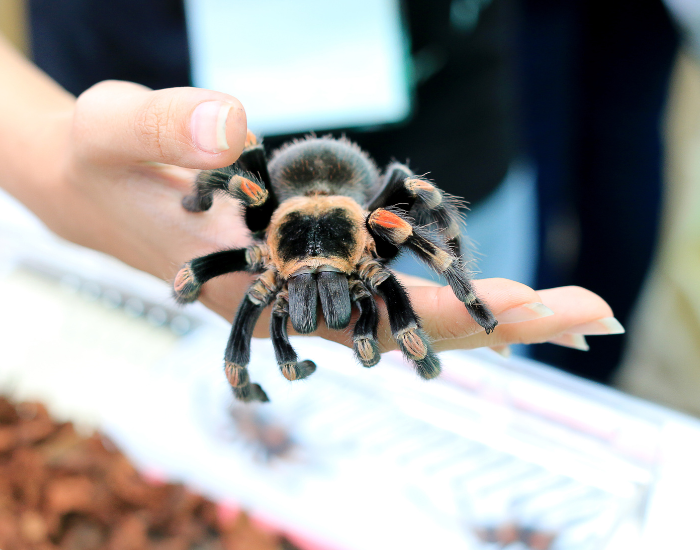
Part of my job involved cleaning enclosures, which meant I sometimes had to gently move her from one space to another. Even with gloves and the guidance of keepers, I felt a mix of fascination and respect I hadn’t experienced with any other animal. I never imagined I would be the one carefully holding a tarantula, but there I was, marveling at a creature that inspires fear in so many, yet radiates such calm presence.
So what makes this tarantula so extraordinary? Here’s everything you need to know about the Mexican redknee, 12 fascinating facts, care insights, and the conservation challenges this species faces.
1. Striking Beauty: Why They’re Called Redknees
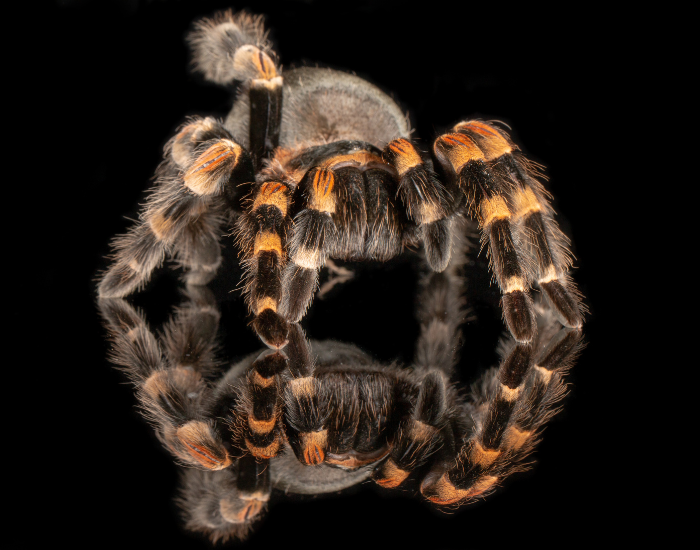
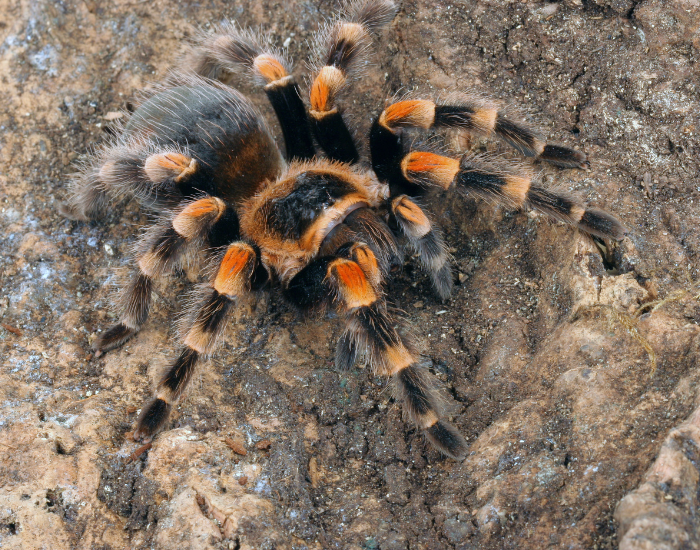
The Mexican redknee tarantula gets its name from the vivid orange-red patches on its leg joints. These colors act as a warning to predators, a defense strategy called aposematism. Paired with their dark body and yellowish-brown carapace, they’re among the most photographed and recognizable tarantulas in the world.

2. Where Do They Live?
Native to Mexico’s Pacific coast, redknees are found in tropical deciduous forests, thorny vegetation, and dry scrublands. They are opportunistic burrowers, often digging into soil beneath rocks or tree roots.
Distribution includes:
- Western coast south of Mexico, especially Guerrero and Michoacán
- Central Pacific coast regions
- Endemic only to Mexico, making them true Mexican species
- Read the article “Animals of Mexico” to know find more animals from this country
3. Long Lifespans
These tarantulas are in no rush. They grow slowly, taking years to reach maturity. Once they do:
- Adult females can live 25–30 years in captivity
- Adult males usually survive only 4–5 years after reaching sexual maturity
Mature males are distinguished by specific morphological features, such as the shape of the palpal bulb, and males tend to be more slender with longer legs than females.
This longevity makes them one of the longest-living spiders on Earth. And if you are interedt on animals that live for a long time, read our article : “What Animal Live The Longest? Top 15“
4. Gentle Nature: Docile but Defensive
Despite their size, Mexican redknees are known for a docile temperament. They rarely bite, and their venom is considered mild, similar to a bee sting. Instead, they rely on urticating hairs, tiny barbed hairs on their abdomen that they flick at threats, causing itching and irritation.
5. Brachypelma smithi vs. Brachypelma hamorii
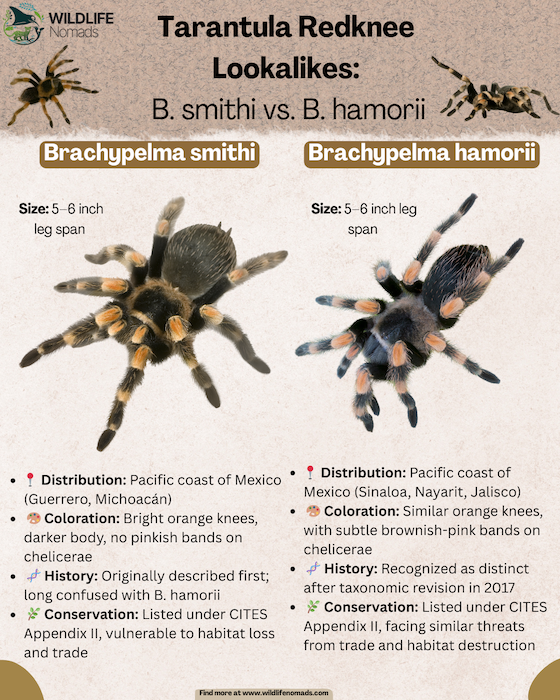
Here’s where it gets tricky: the two species, the redknee tarantula (Brachypelma smithi) and its lookalike cousin, Brachypelma hamorii, have been historically confused due to their similar appearance. For decades, scientists thought they were the same species. Both have orange knees, but:
- B. smithi: lacks two brownish-pink bands on the chelicerae
- B. hamorii: shows those subtle bands on a greyish background on the chelicerae
Both species are beloved by hobbyists, but accurate ID is essential for breeding and conservation.
Some specimens initially identified as adult males were later found to be immature males, which contributed to taxonomic confusion between the two species.
6. Red Rump vs. Redknee
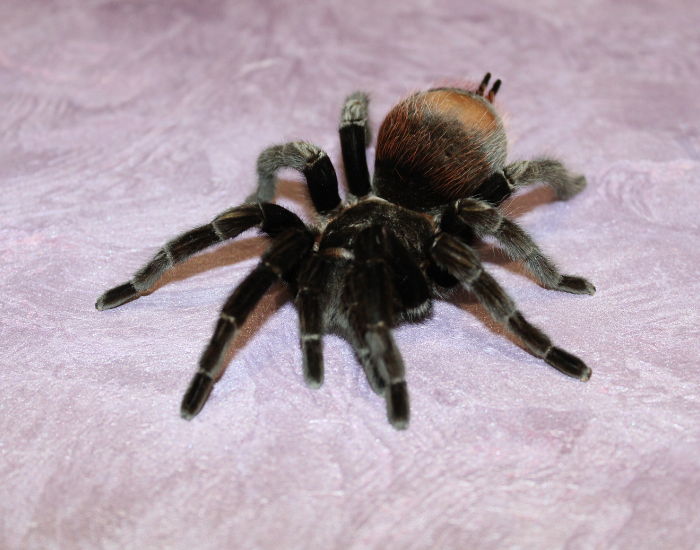
Another relative, the red rump tarantula (Tliltocatl vagans, formerly known as Brachypelma vagans), is a member of the tliltocatl species and is easy to confuse with the redknee. Instead of orange joints, it has a black body with a fiery red abdomen. Native to the Yucatán Peninsula, Belize, El Salvador, and even northeastern Costa Rica, it’s hardy and grows faster than redknees, but also tends to be more defensive. Mature individuals are typically docile, but can become defensive if provoked.
7. Egg Sacs and Spiderlings
Females create a silk egg sac holding 200–400 eggs. After 1–3 months, spiderlings hatch and molt rapidly in their first years.
- Males typically mature in 4–5 years
- Females take 6–7 years to reach maturity
During mating, the male deposits sperm onto a silk web before transferring it to the female for fertilization.
The early years are risky, predators, parasites, and environmental changes can wipe out clutches.
8. Opportunistic Hunters
In the wild, the Mexican redknee is a large spider capable of hunting a variety of prey. They feed on insects, but they’re not picky:
- Crickets, beetles, grasshoppers
- Small frogs, lizards, or even rodents
- Occasionally other spiders
In captivity, keepers feed them crickets, mealworms, or roaches, usually at night when tarantulas are most active.
Despite being formidable hunters, Mexican redknee tarantulas are also preyed upon by other predators in their ecosystem.
9. Conservation and CITES Protection
The Mexican redknee tarantula was once heavily overcollected for the international pet trade, leading to population declines. Today, it is listed on CITES Appendix II, meaning export is regulated.
Main threats include:
- Habitat destruction from deforestation and agriculture
- Habitat loss due to urbanization, agriculture, and climate change, which reduces and degrades their living spaces
- Illegal international trade despite protections
- Slow reproductive rates and long lifespan making recovery difficult
Captive breeding efforts have helped reduce wild collection, but ongoing monitoring is vital. In the wild, Mexican redknee tarantulas continue to survive by constructing burrows and adapting their behaviors, even as habitat loss and other threats persist.
10. Pet Trade and Beginners
Thanks to their calm demeanor, Mexican redknees became the “poster child” of world tarantulas in the pet hobby. For beginners, they’re often the first tarantula recommended. But ownership is a long-term responsibility, keeping a spider that can live three decades requires serious commitment.
11. Behavior and Burrows
Redknees are opportunistic burrowers, creating silk-lined tunnels where they spend most of their time. They emerge at night, especially during the rainy season, to hunt. Watching one carefully drag prey into its burrow is a reminder of just how finely tuned their natural behaviors are to survival.

12. Flagship Species for Conservation
Much like the jaguar or sea turtle, the Mexican redknee tarantula has become a flagship species for conservation. Protecting it means protecting the tropical deciduous forests it inhabits, ecosystems that shelter countless other species.
Captive Care and Breeding: Life in Human Hands
The allure of the Mexican redknee tarantula isn’t just limited to the wild, these striking spiders have become stars of the pet trade, captivating hobbyists worldwide. With their docile temperament and stunning appearance, Mexican redknees and other Brachypelma species rank among the most sought-after tarantulas for both beginners and seasoned keepers.
Setting Up the Perfect Home
To help an adult Mexican redknee tarantula thrive, give it space. Choose an enclosure that’s at least three to four times the tarantula’s leg span in length, and make sure it has a secure, well-ventilated lid—these spiders are surprisingly skilled escape artists.
Keep temperatures between 75–80°F (24–27°C) and humidity around 60–70%. Add a deep layer of substrate (4–6 inches) for burrowing, along with rocks, logs, and artificial plants to provide hiding spots and enrichment. Mimicking their natural habitat doesn’t just keep your tarantula healthy, it also encourages fascinating natural behaviors.
Breeding in Captivity
Captive breeding efforts have become essential for conserving Mexican redknees and their close relatives. When breeding, mature females and adult males of the same species are carefully introduced. Males perform a courtship dance, tapping and drumming with their front legs. If the female is receptive, mating occurs. Remove the male immediately afterward, females can turn aggressive.
A mated female produces a silk egg sac containing 200–400 eggs. Breeders usually incubate this sac in a separate container with high humidity and stable warmth. After about 6–8 weeks, the eggs hatch into spiderlings. These tiny tarantulas live in small, humid enclosures and feed on pinhead crickets or fruit flies. As they molt and grow, they’re moved to larger homes and given bigger prey.
Raising the Next Generation
Raising spiderlings is rewarding but requires patience. Cleanliness is crucial, remove uneaten prey and waste to prevent mold and mites. As spiderlings grow, they’ll need more space and larger food items. With careful care, they’ll become the next generation of captivating adults.
Beyond the Red Knee
The genus Brachypelma includes other dazzling tarantulas popular in the pet trade, such as:
- Mexican orange beauty (Brachypelma annitha)
- Mexican fire leg (Brachypelma boehmei)
- Mexican flame knee (Brachypelma auratum)
Another favorite is the Mexican red rump (Tliltocatl vagans), from the closely related genus Tliltocatl. Sadly, habitat destruction and overcollection have pushed many of these species—including Brachypelma smithi and – Brachypelma hamorii – onto endangered species lists.
Conservation Through Captive Breeding
Captive breeding plays a vital role in reducing demand for wild-caught tarantulas. By choosing captive-bred specimens, enthusiasts help safeguard wild populations and support the long-term survival of these iconic Mexican tarantulas.
In the end, caring for a Mexican redknee, or any Brachypelma species, is more than a hobby. It’s a chance to take part in conserving some of the world’s most beautiful and threatened spiders. With responsible care and a commitment to captive breeding, these living jewels can continue to inspire awe for generations.
Fun Facts About the Mexican Redknee Tarantula
- Often featured in movies (yes, that’s a redknee in Indiana Jones).
- One of the most docile tarantula species, making it a hobbyist favorite.
- The typical body length of a Mexican redknee tarantula is about 6–7 cm, with a leg span reaching up to 15 cm.
- Their red hairs become brighter with each molt.
- Despite their size, they are vulnerable, a fall can kill them.
- Fun fact: Brachypelma emilia, also known as the Mexican redleg tarantula, is another popular and docile species in the pet trade.

FAQ: Mexican Redknee & Red Rump Tarantulas
A bite is rare and usually mild, comparable to a bee sting. The bigger risk is irritation from urticating hairs.
No. They’re famously docile, relying on hairs before biting.
Yes, for beginners willing to commit to decades of care.
Like redknees, their venom is mild, but they are more defensive.
B. hamorii has faint brownish-pink cheliceral bands; B. smithi does not.
Their leg span reaches 5–6 inches, making them large but manageable.
More Than Just a Pet Spider
For me, the Mexican redknee tarantula represents a turning point in how we view spiders. From fear-inducing monsters to cultural icons of biodiversity, they’ve challenged me, and countless others, to rethink what deserves admiration.
Whether you see them in the wild along Mexico’s Pacific coast, or in a terrarium far from their homeland, they carry the same message: beauty and fragility often come hand in hand. Protecting them isn’t just about saving a spider, it’s about conserving entire ecosystems.
Further reading that you may find interesting?