The Wild Heart of the Planet: A Journey Into the Deep Green
Standing in the middle of a tropical rainforest at midnight reveals an extraordinary truth. The term “quiet” becomes meaningless. Deep in the rainforests of Sumatra, Indonesia, miles from any digital noise, the forest transforms after sunset. It becomes a symphony of life where animals in rain forest habitats never truly sleep.
The rhythmic sawing of cicadas blends with the distant hoots of primates. As a enthusiast traveller biologist, I’ve woken in the humid Chiapas jungles of Southern Mexico and looked for wildlife through dense Sumatran undergrowth. My heart beats fastest under a closed canopy, where you realize you’re part of an ancient ecosystem. Rainforests cover less than 6% of Earth’s surface but are home to many exotic animals that attract tourists and wildlife enthusiasts from around the world.
Today, we’ll explore 18 incredible animals in rain forest habitats that define these ecosystems. Whether you’re curious about rainforest animals or seeking detailed information about animals found in rainforest zones globally, this guide covers it all.
Understanding Rainforest Ecosystems
The Many Faces of Rainforests
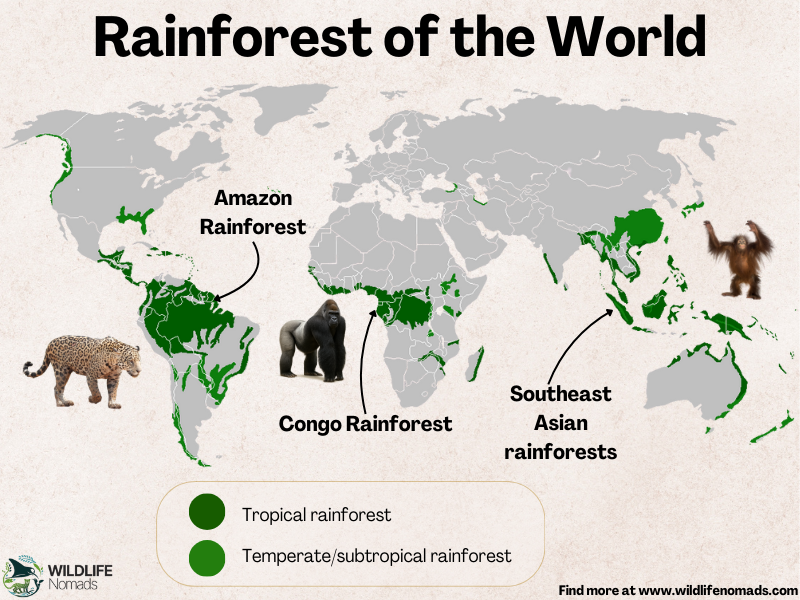
When most people think of rainforests, the Amazon comes to mind. However, not all rainforests are tropical. Temperate rainforests exist in the Pacific Northwest and Australia. Our focus centers on tropical rainforests near the equator, the world’s biodiversity hotspots where temperatures stay warm and humidity remains high year-round.
The Global Trio: Earth’s Lungs
The world’s most vital rainforest habitats cluster in three major regions:
The Amazon (South America): This undisputed champion of biodiversity spans nine countries. The Amazon rainforest contains more animal species than any other ecosystem on Earth.
The Congo Basin (Africa): Known as the “second lung,” (metaphorically, as in terms of net oxygen contribution to the atmosphere, the marine prochlorococcus and phytoplankton in the oceans are the actual lungs) this vast region shelters our closest primate relatives. The humid forests of Central Africa harbor countless species found nowhere else.
Southeast Asia: These ancient, fragmented island jungles stretch across Indonesia, Papua New Guinea, and Malaysia. Here, dense tropical forests have evolved in isolation for millennia.
Life in Layers: The Rainforest Structure
Understanding animals in rain forest systems requires knowing the vertical structure. Evolution carved specific niches so thousands of species coexist without competition.
The Emergent Layer: These giant trees poke above everything else. It’s windy, bright, and home to massive raptors and birds of paradise. The canopy layer below receives less wind but abundant sunlight.
The Rainforest Canopy: This thick layer hosts about 90% of rainforest animals. It’s a maze of tree branches, fruits, and flowers. Spider monkeys and other species navigate this complex world with remarkable agility.
The Understory: Dark and humid, this mid-level receives limited sunlight. Large-leaved plants catch every stray photon while camouflaged predators hunt.
The Forest Floor: Humid, dark, and rich with decomposition, this basement level belongs to decomposers, big cats, and other powerful mammals. The forest floor supports a complex food web.

The Amazon: South America’s Giant
The Amazon rainforest spans nine countries, primarily Brazil. It represents the largest habitat for animals that live in rainforest conditions.
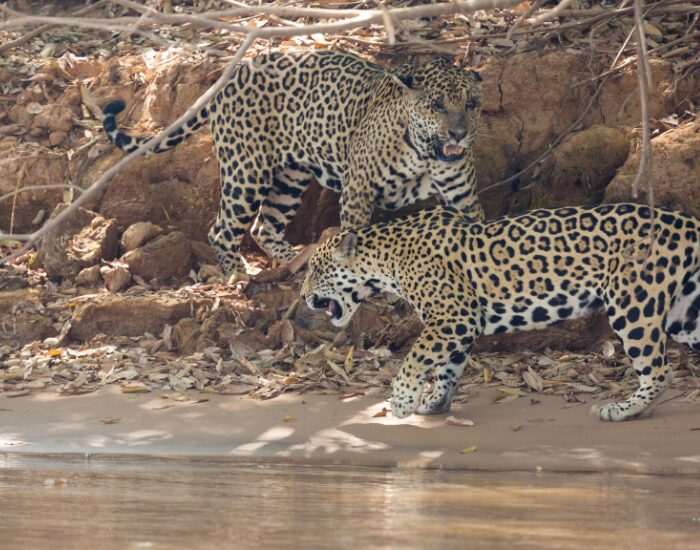
1. Jaguar (Panthera onca)
The jaguar, the largest feline living in Central and South America, rules as the apex predator of the forest floor. Unlike most big cats, jaguars love water and often hunt and rest near river banks along the Amazon River. They possess the strongest bite of all big cats relative to their size. These powerful mammals use their sharp teeth to pierce skulls and shells, hunting prey from fish to caimans. As predators, jaguars help maintain the balance of the rainforest ecosystem by controlling herbivore populations.
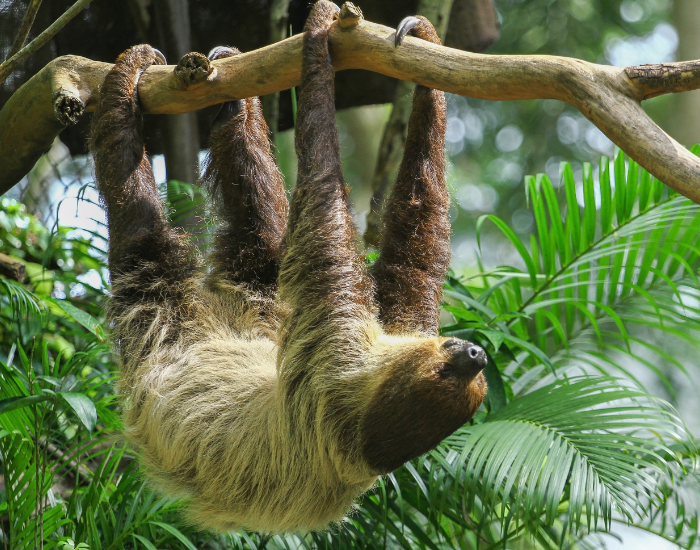
2. Three-Toed Sloth
Probably one of the most iconic animals of Costa Rica, the sloth embodies the rainforest canopy lifestyle. These amazing animals move so slowly that algae grows on their fur, creating mini-ecosystems. Sloths have a slow metabolism, which allows them to expel waste only once a week, and they spend their lives in tree branches, descending only once weekly. Their brown fur provides excellent camouflage against potential predators in Central and South America’s forests.
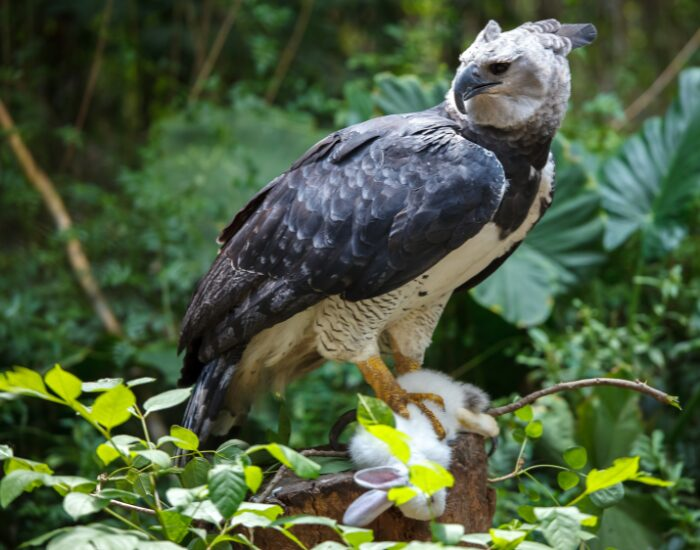
3. Harpy Eagle
This massive predator dominates the emergent layer. With talons rivaling grizzly bear claws, harpy eagles snatch monkeys and sloths from trees. Indigenous cultures have revered these powerful birds for centuries. Their wingspan and hunting prowess make them fascinating animals of tropical rainforests.
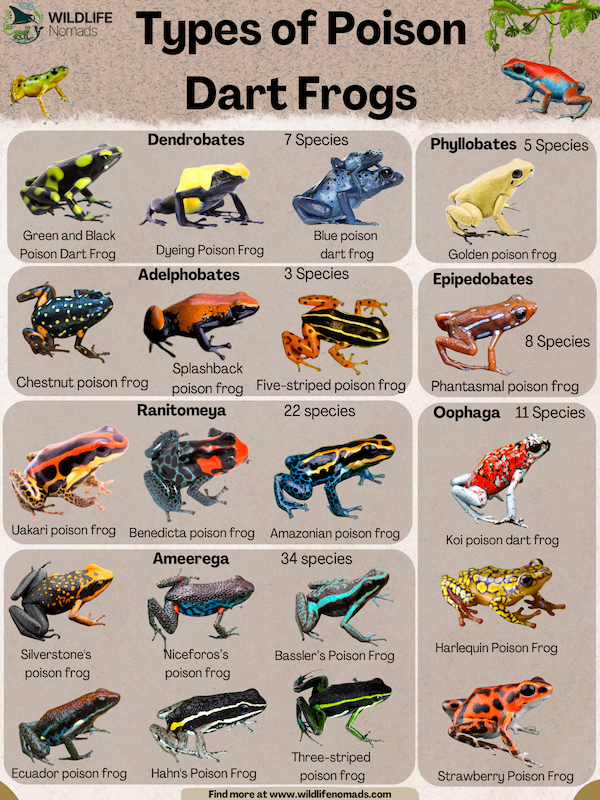
4. Poison Dart Frog
Poisonous dart frogs use bright colors as warning signals, a defense mechanism called aposematism. Indigenous cultures used their toxins for blowgun darts for centuries. These small amphibians live primarily on the forest floor alongside the blue morpho butterfly in Costa Rica and other regions.
5. Scarlet Macaw
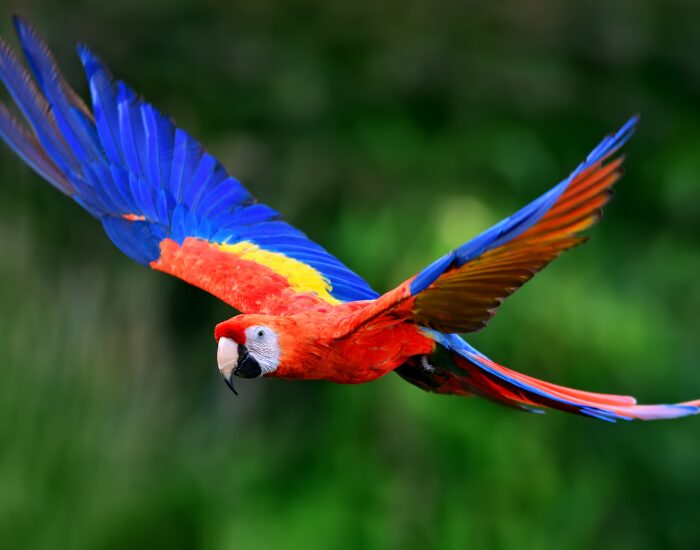
It was har to choice among all types of Macaws in the rainforest. The scarlet macaw brings vibrant life to upper trees. Macaws are known for their vibrant plumage and can have a wingspan reaching up to a meter. These highly social parrots live up to 50 years and serve as vital seed dispersers. Scarlet macaws mate for life and travel in pairs or small flocks. Other birds pale compared to their brilliant red, yellow, and blue plumage. Some macaws can even imitate human speech, making them especially fascinating to visitors.
6. Pink River Dolphin (Boto)
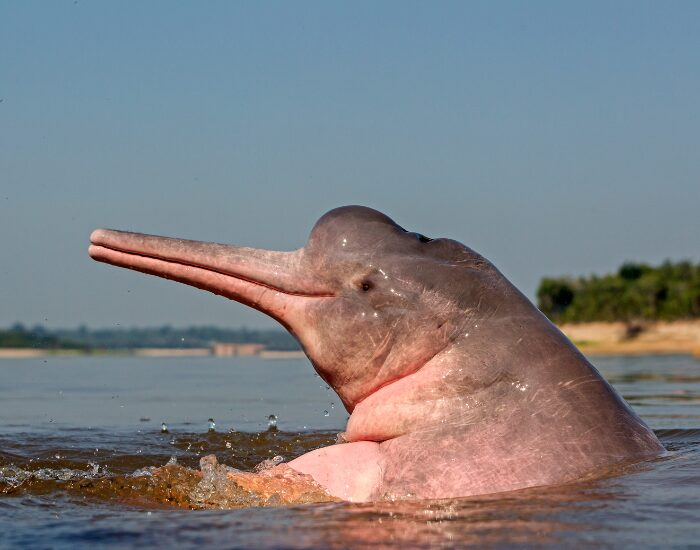
In flooded Amazon forests, pink river dolphins navigate between tree trunks. They’re a distinct species adapted to complex freshwater systems of the Amazon River basin. These dolphins use echolocation to hunt fish in murky waters and swim through submerged forests during flood season.
The Congo Basin: Africa’s Hidden Treasure
The Congo Basin serves as the world’s “second lung,” supporting incredible mammals and birds across humid forests.
7. Western Lowland Gorilla
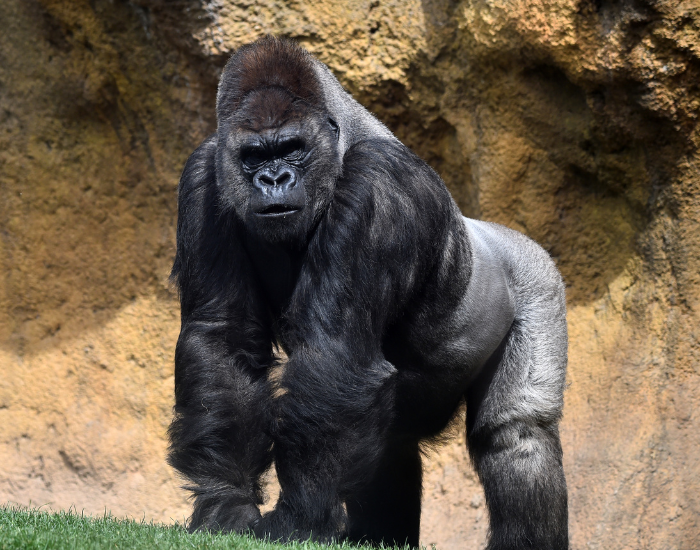
These types of primate are gentle giant that inhabit the forest floor in family groups led by a silverback male. They’re essential “gardeners,” creating clearings as they move and forage. Gorillas share 98% of human DNA, making conservation efforts critical for protecting these endangered species.
8. Bonobo
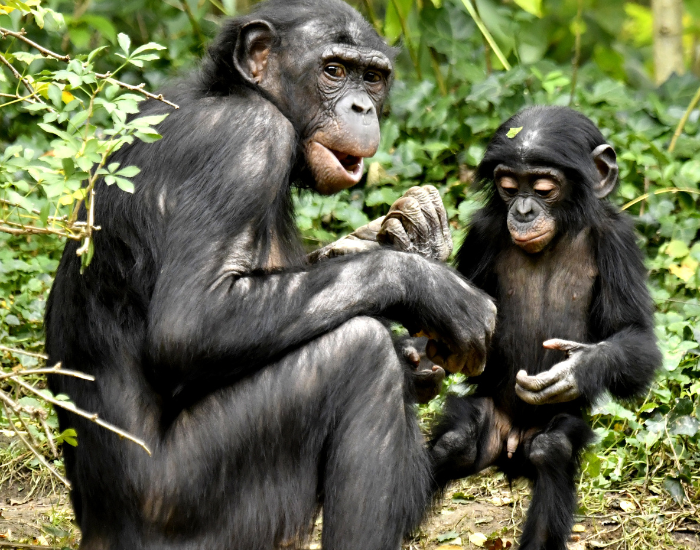
Our peaceful, matriarchal cousins live only in the Democratic Republic of Congo. Bonobos use social bonding to resolve conflicts, representing one of humanity’s closest primate relatives with complex social behaviors.
9. Okapi
The “forest giraffe” looks like a deer-zebra hybrid but is actually the giraffe’s only living relative. Striped hindquarters serve as “follow me” signals for calves in the dark understory. The okapi use their elongated snout and long tongue to browse leaves in the dense tropical Ituri forest.

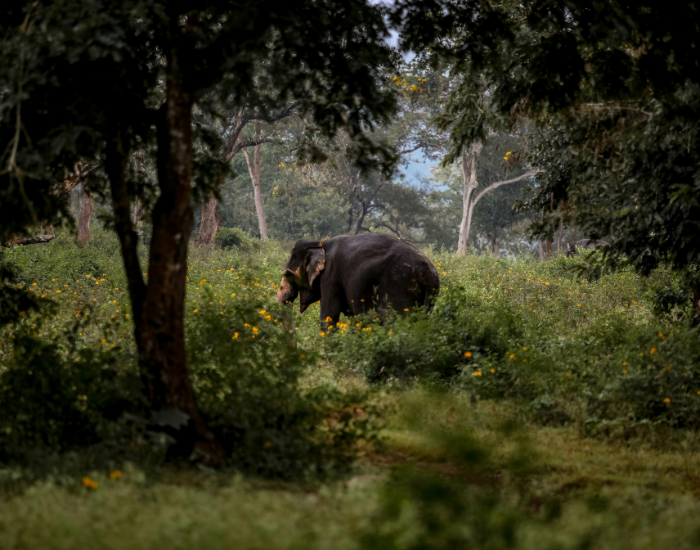
10. African Forest Elephant
Smaller and more elusive than savanna cousins, forest elephants have straighter tusks for navigating thick vegetation. They engineer the Congo, creating trails that other animals use. These larger mammals shape entire ecosystems as seed dispersers throughout the vast region.
11. African Grey Parrot
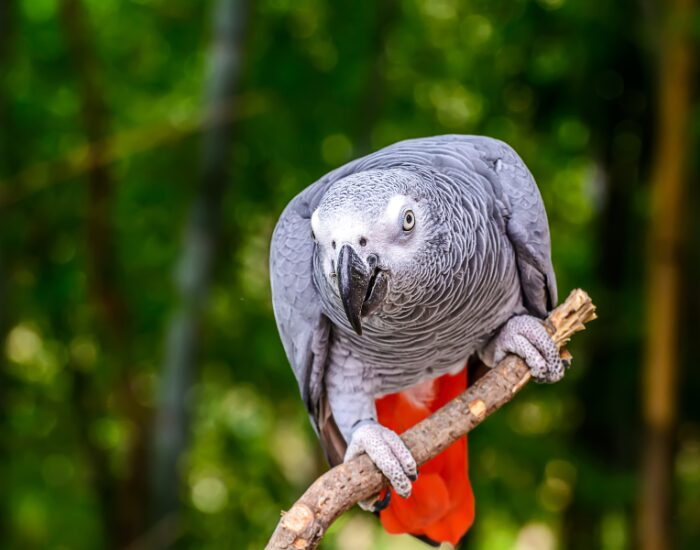
This type of parrot is regarded as one of the world’s most intelligent birds, their mimicry barely scratches the surface. Wild African grey parrots live in large, noisy flocks dominating the canopy layer with remarkable problem-solving skills.
12. Bongo Antelope
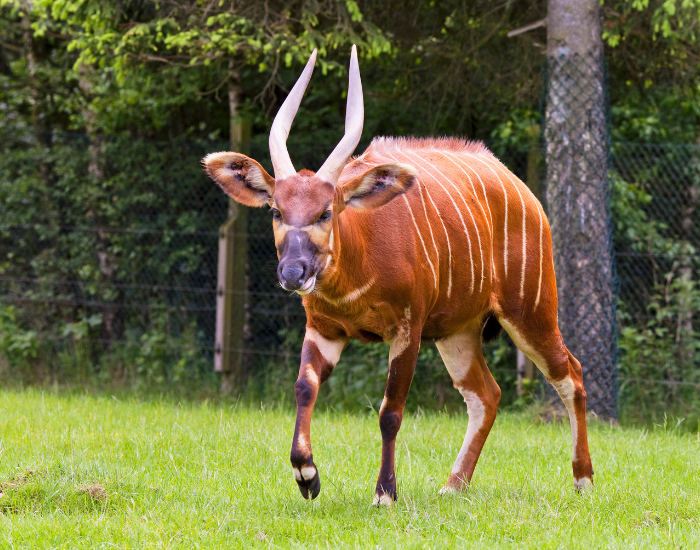
Very unique chestnut coloring and vertical white stripes characterize this antelope. These stripes break up their outline in dappled forest light, making them nearly invisible to predators. Bongos browse on leaves and bark in the understory.
Southeast Asia: The Ancient Island Jungles
Southeast Asian forests rank among Earth’s oldest, spanning Indonesia, Papua New Guinea, and Malaysia.
13. Orangutan
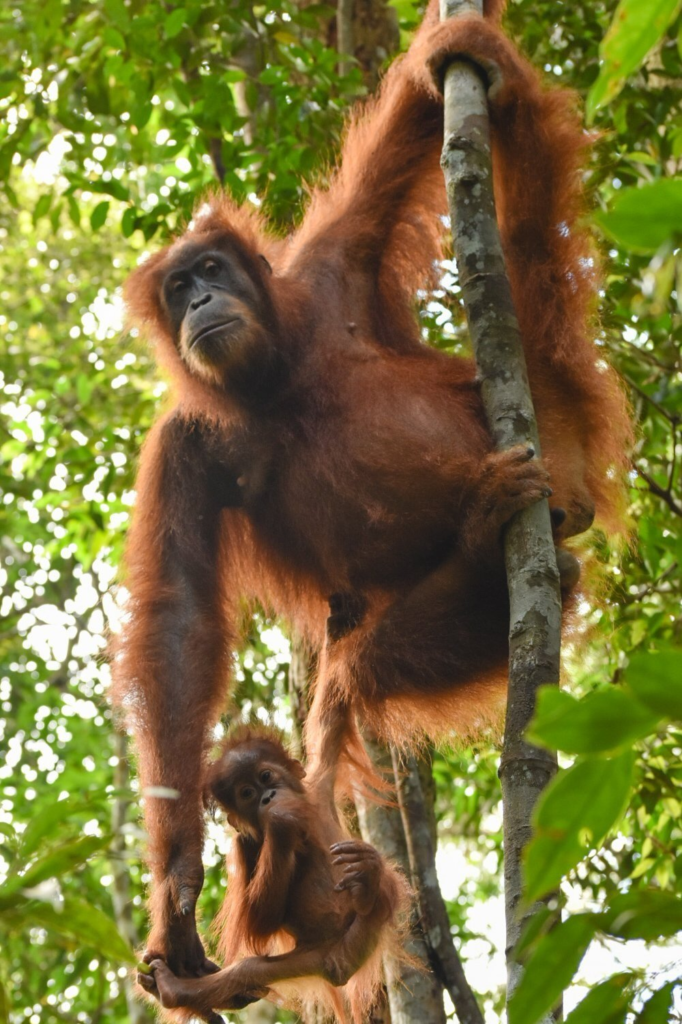
The “person of the forest” embodies arboreal life. Orangutans are highly adapted to climb trees and spend most of their lives in the canopy, using their strong arms and grasping hands to move effortlessly among the branches. Watching a mother and baby reveals haunting human-like intelligence. They’re the largest mammals spending entire lives in trees, inhabiting Sumatra and Borneo’s rainforest canopy. Conservation efforts combat threats from palm oil plantations destroying their rainforest habitats.
14. Sumatran Tiger
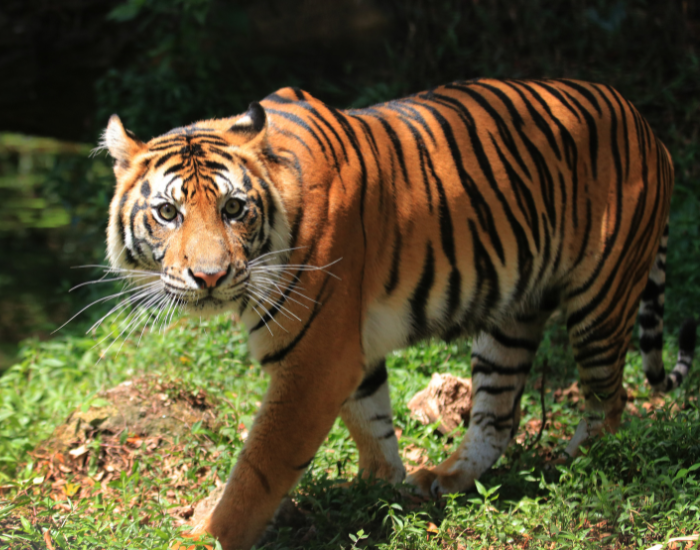
There are two subspecies of tigers in the world, the Continental tiger (includes Bengal tiger, Siberian, etc.) and the Sunda island tiger (includes the Sumatran). These striped ghosts represent the smallest tigers, adapted for dense vegetation. They hunt wild boar, deer, and other mammals on the forest floor. Sumatran tigers face extinction from habitat loss and poaching.
15. Greater Bird-of-Paradise
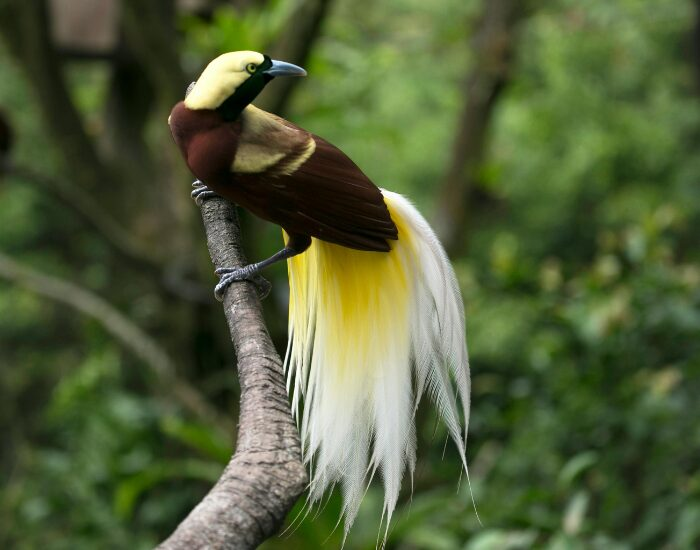
Found in Papua New Guinea, these birds of paradise perform the world’s most complex mating dances. Males create elaborate displays in the canopy layer. Evolution prioritized beauty and display over survival advantages.
16. Javan Rhino
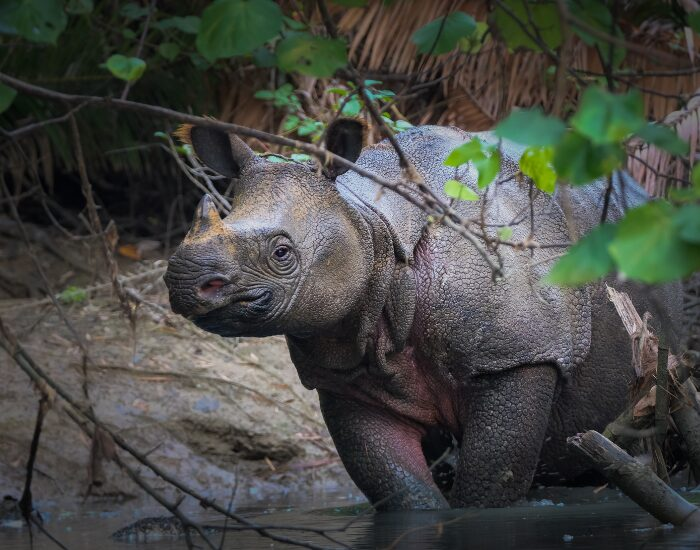
The rarest large mammal on Earth, the Javan rhino is a solitary inhabitant of the densest tropical rainforests in Java, Indonesia. These “forest ghosts” use their prehensile upper lips to browse on twigs and fallen fruit in the dark understory. Unlike their savanna-dwelling cousins, they are highly adapted to life in thick vegetation and are rarely seen by humans. With fewer than 80 individuals remaining in a single national park, they are the ultimate symbol of the fragility of Southeast Asia’s ancient jungles.
17. Sunda Clouded Leopard
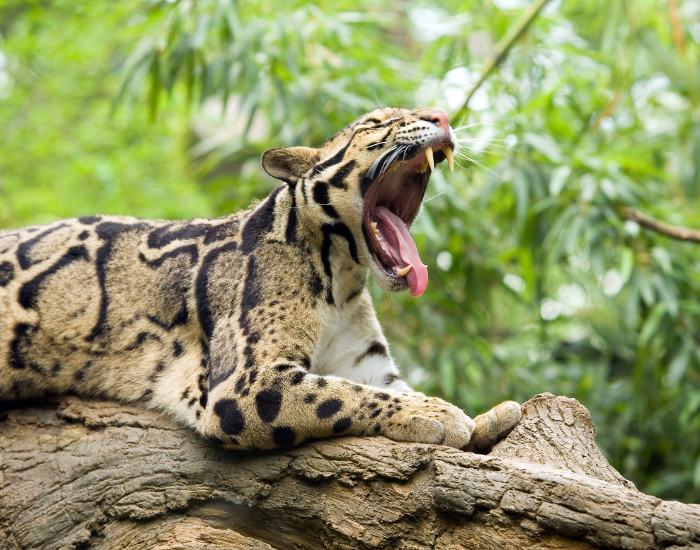
This mysterious, arboreal cat possesses the longest canine teeth relative to body size among living felines. They’re canopy acrobats, able to climb down tree trunks head-first. Their marbled coat provides perfect camouflage.
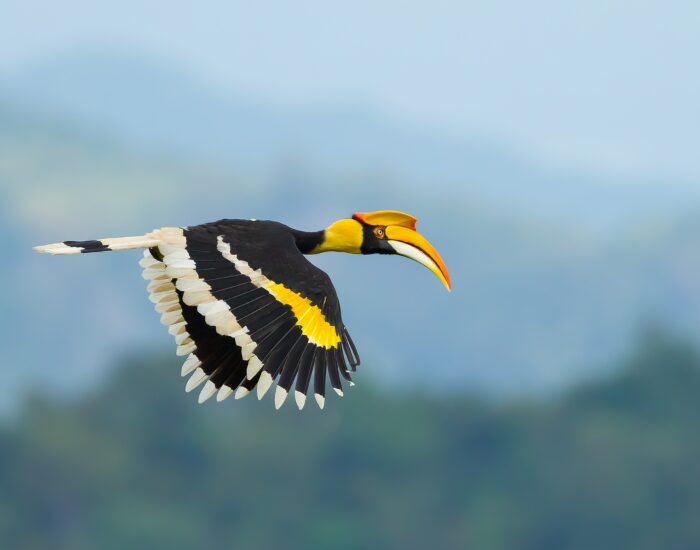
18. Great Hornbill
Massive yellow “casques” identify these birds. When flying overhead, their wingbeats sound like steam locomotives echoing through trees. Great hornbills are one of many hornbill species that feed on fruits, helping seed dispersal while nesting in tree hollows in the emergent layer. Find more facts about hornbill birds in our previous article!
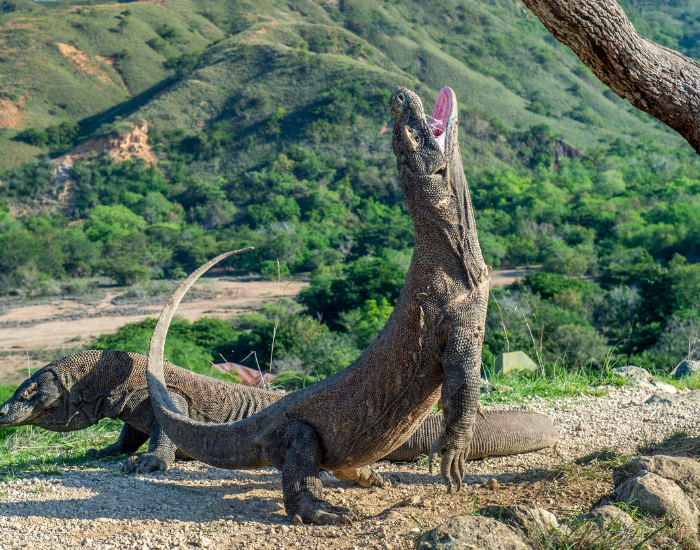
19. Komodo Dragon
The world’s largest lizard roams Indonesian islands. While preferring drier areas, they remind us of prehistoric reptilian giants. Komodo dragons use sharp teeth and venomous bites to hunt prey, eating up to 80% of their body weight in one meal.
Protecting Rainforest Animals: Conservation Efforts
The interconnectivity of rainforest species proves remarkable. When forest floor decomposers disappear, giant trees in the emergent layer lose nutrients. Without spider monkeys or toucans, seeds don’t get planted.
When trees are cut down in the rainforest, animals and people alike lose their homes.
Many large mammals need miles of territory to roam and have a tough time surviving in the smaller and fragmented habitats they are forced into by humans.
Humans must share the earth with all plants and animals; otherwise, carelessness will result in the continued extinction of many species.

Threats to Rainforest Habitats
Deforestation driven by cattle ranching and agriculture threatens countless species. The Amazon River basin faces particular pressure. Palm oil plantations destroy vast regions of Southeast Asian rainforests. Climate change alters rainfall patterns affecting all rainforest animals.
Conservation Success
National parks provide safe havens for many species. Conservation efforts combine local community engagement with international support. Indigenous cultures often serve as best rainforest protectors, helping modern conservation strategies succeed.
Experiencing Rainforests: A Call to Action
If you get the chance to visit rainforests, take it. Listen to the symphony, it’s the sound of a living planet that urgently needs protection.
These 18 animals represent millions more species scientists haven’t named yet. From the smallest insects to larger mammals, rainforests contain unimaginable biodiversity. Costa Rica, Brazil, Indonesia, and Democratic Republic of Congo all offer rainforest experiences. The blue morpho butterfly, harpy eagles, and poison dart frogs await discovery.
Frequently Asked Questions
Insects, specifically ants and termites, represent the most common animals by sheer numbers. In the canopy layer, certain bat species and small rodents prove incredibly numerous. These many species form the foundation of rainforest food webs.
The “big ten” include the jaguar, green anaconda, black caiman, harpy eagle, blue morpho butterfly, poison dart frog, spider monkeys, pink river dolphin, sloth, and toucan. These Amazon rainforest animals represent the ecosystem’s diversity.
Scientists estimate more than half the world’s species inhabit tropical rainforests. We’ve likely discovered less than 10% of insect and microbial life. The vast region may contain millions of unnamed species.
Habitat destruction from cattle ranching, logging, and agriculture threatens endangered species. Climate change, poaching, and human encroachment reduce available rainforest habitats. Conservation efforts work to reverse these trends.
Where to See Rainforest Animals?
You have many spots on the multiple rainforest found on our planet. Here is a list of 6 safari tours where you can see Rainforest Animals. As a biologist, I only recommend tours that follow strict ethical guidelines to ensure we don’t disturb wildlife. These are the three tours/ partners I trust most based on their conservation records:
This blog is reader-supported. When you buy experiences through links listed on this site, we may earn an affiliate commission.