The first turtle I ever released was a green sea turtle hatchling on a beach in Oaxaca, Mexico. It fit in my palm, no bigger than a bottle cap. Since then I’ve untangled marine turtles from nets in Southeast Asia, watched Galápagos giants graze like slow gray boulders, and kept terrapins in my own backyard pond. Along the way I learned something surprising: most people lump all these animals together, yet the different types of turtles are wildly, gorgeously distinct. In truth, different turtle species can look nothing alike.
Part of the confusion is language. If you grew up speaking Spanish, you know the problem: “tortuga” covers everything. English at least gives us three buckets, and getting them straight changes how you see every shelled reptile you meet.
Below are the 15 most iconic species I’ve encountered, grouped so the categories finally click, with quick specs, field notes, and a few misconceptions worth killing.
The 3 Types of Turtles: Sea Turtles, Tortoises, and Terrapins
Here’s the fast answer searchers want. All turtles are reptiles of the order Testudines, and biologists sort them into 3 types of turtles by where they live: sea turtles, freshwater turtles, and tortoises. In everyday English, that freshwater middle group is usually called terrapins, the semi-aquatic pond and marsh species.
Sea turtles are marine species that spend almost their entire lives in the ocean and come ashore only to lay eggs. Tortoises are exclusively terrestrial, built for land with high, domed shells and stumpy elephant legs; they belong to the family Testudinidae. Terrapins split the difference: semi-aquatic animals that live in ponds, rivers, lakes, marshes, and brackish water. That freshwater world holds various species: aquatic turtles like sliders, snapping turtles, softshell turtles, and the little spotted turtle — all of them aquatic species built for life in and out of the water.
The turtle shell tells the same story. Every turtle carries a carapace (the top) and a plastron (the belly plate), both built from bony plates fused with the animal’s ribs and vertebrae, so a turtle can never crawl out of its shell. Most species carry 38 scutes, the horny plates on the carapace, and none of them have teeth; they bite with hard, bony jaws shaped like a beak. And despite lives spent in water, all turtles breathe air. Biologists even split turtles by how they fold their necks: Cryptodira pull it straight back in an S-curve, while Pleurodira tuck it sideways under the shell rim.
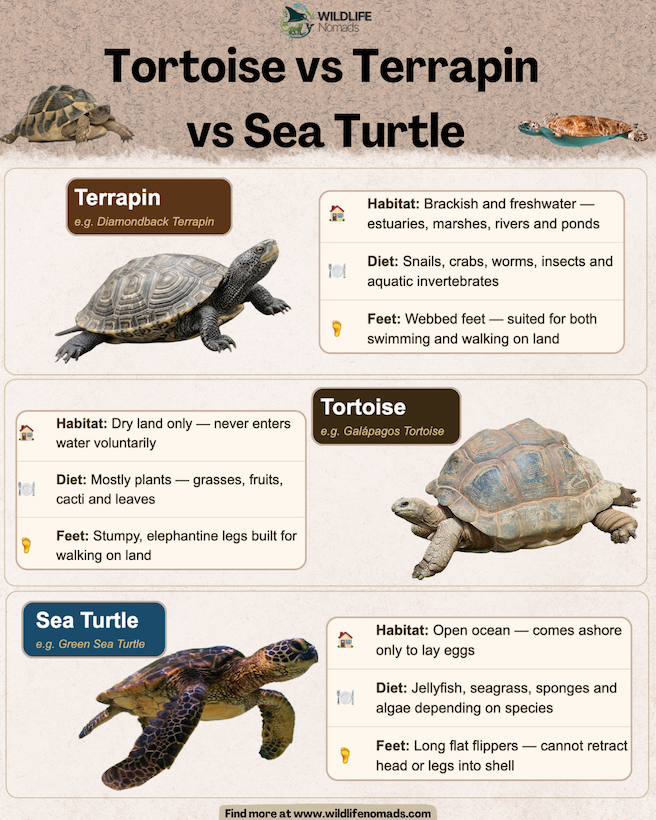
5 Sea Turtles: The Ocean Wanderers
There are seven sea turtle species worldwide, and I’ve worked with most of them. Six species roam oceans across the globe, while the flatback turtle keeps to the shallow seas around Australia and Papua New Guinea. Their lives follow one ancient rhythm: adult sea turtles migrate thousands of miles, then female turtles haul onto the same nesting beaches where they hatched to lay multiple clutches of turtle eggs. Weeks later the hatchlings dig their way up through the sand and race for the surf.
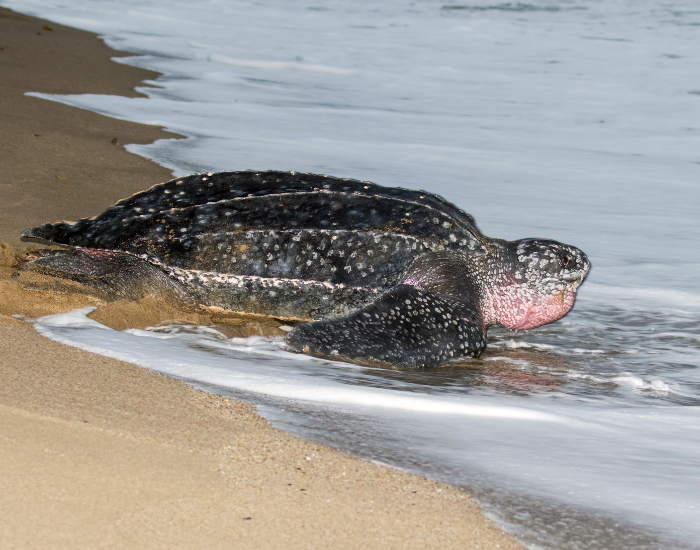
Leatherback Turtle (Dermochelys coriacea)
Scientific name: Dermochelys coriacea · Habitat: open ocean, tropical to sub-polar seas · Size: over over 2.7 m (8.8 ft) long, up to 900+ kg (2,000+ lbs) · Shell: leathery, ridged, no hard scutes
The first time one surfaced beside our boat, I actually gasped. It can reach over 2.7 m in length, making it the largest turtle alive. Unlike every other species, it has no hard shell, just a leathery back marked with seven longitudinal ridges, and it dives deeper than 1,000 meters. Even stranger, leatherbacks generate and retain body heat through sheer bulk, a trick called gigantothermy, so they forage in cold water that would sluggish any other reptile. They eat almost nothing but jellyfish, which is exactly why floating plastic bags are so deadly to them.
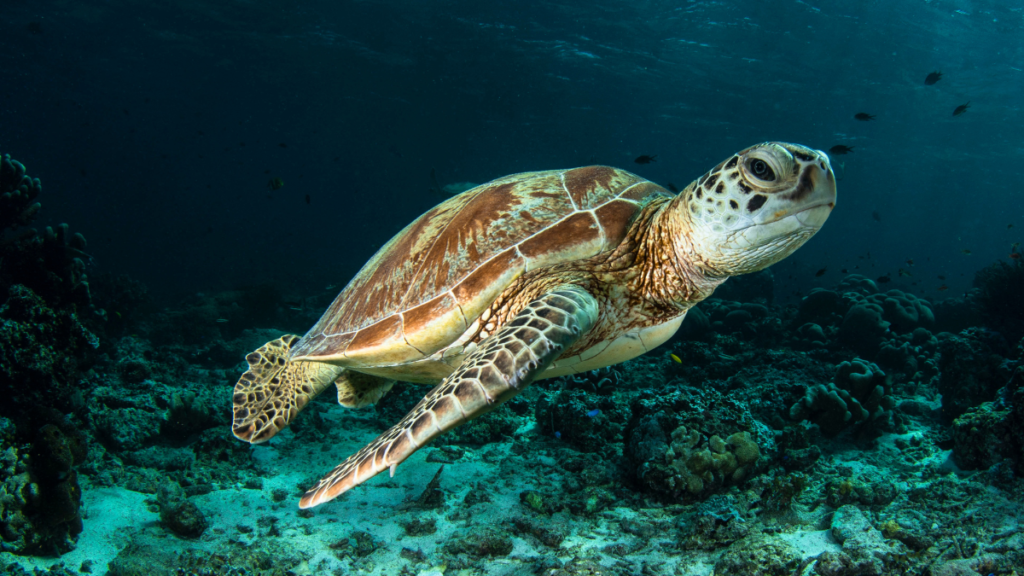
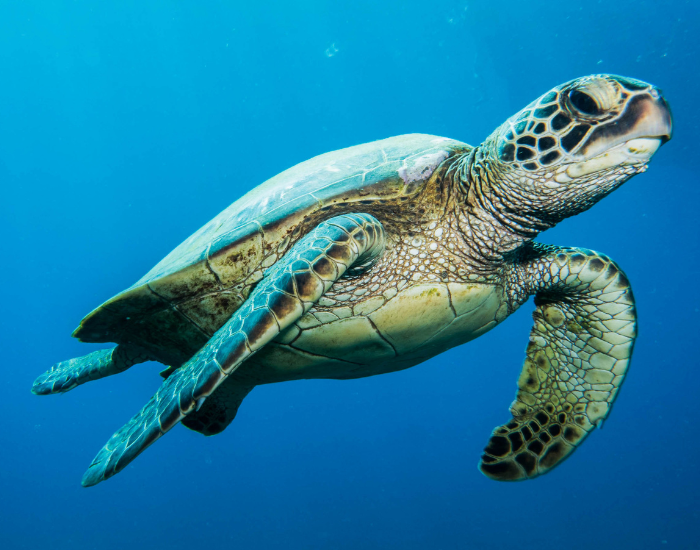
Green Sea Turtle (Chelonia mydas)
Scientific name: Chelonia mydas · Habitat: tropical and subtropical coasts, seagrass beds · Size: up to 1.5 m (5 ft), up to 230 kg (500 lbs) · Shell: smooth, teardrop-shaped carapace
Green sea turtles can grow up to 1.5 m in length, and adults are the ocean’s great lawnmowers. Green turtles are named not for their shell but for the greenish body fat beneath it, colored by a lifelong diet of seagrass, algae, and aquatic plants. Young turtles actually start out carnivorous before turning vegetarian, a shift that keeps seagrass meadows healthy and shelters fish nurseries. I’ve drifted over feeding aggregations in Australia where a dozen grazed below me, the closest I’ve come to snorkeling through a herd of cattle.
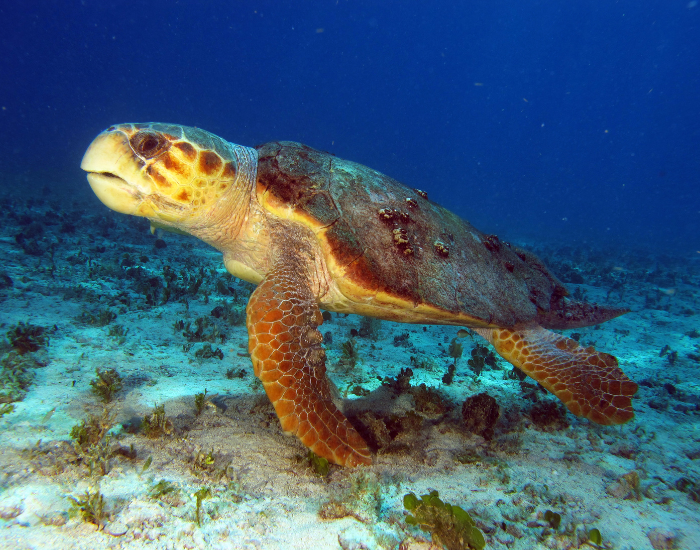
Loggerhead Turtle (Caretta caretta)
Scientific name: Caretta caretta · Habitat: temperate and tropical oceans · Size: up to 1.1 m (3.5 ft), up to 160 kg (350 lbs) · Shell: reddish-brown, heart-shaped
Loggerheads earn their name honestly, those large heads house jaw muscles powerful enough to crush conch, whelks, and horseshoe crabs. A big adult can weigh up to 160 kg (350 lbs). They’re champion navigators, and hatchlings imprint on the magnetic signature of their home beach, returning decades later to nest within a few miles of where they hatched. I once knelt beside a nesting female as she dropped a hundred eggs, nothing rattles her once the trance starts.
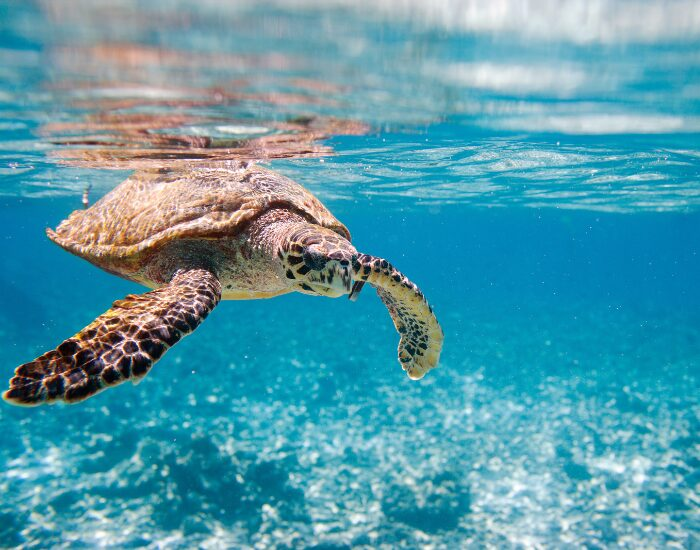
Hawksbill Turtle (Eretmochelys imbricata)
Scientific name: Eretmochelys imbricata · Habitat: coral reefs, tropical seas · Size: up to 1 m (3.3 ft), up to 80 kg (175 lbs) · Shell: overlapping, serrated, richly patterned
The hawksbill is the reef’s specialist and the most beautiful turtle I’ve photographed. Its narrow, pointed beak reaches into crevices, and the overlapping scutes along its shell taper into serrated, sharp edges. It primarily feeds on reef sponges, species so toxic and glass-laden that almost nothing else will touch them. That amber-and-brown shell, tragically, is the “tortoise shell” of jewelry and combs, and centuries of harvest have left it critically endangered. By eating sponges, hawksbills keep corals from being smothered.
Kemp’s Ridley Turtle (Lepidochelys kempii)
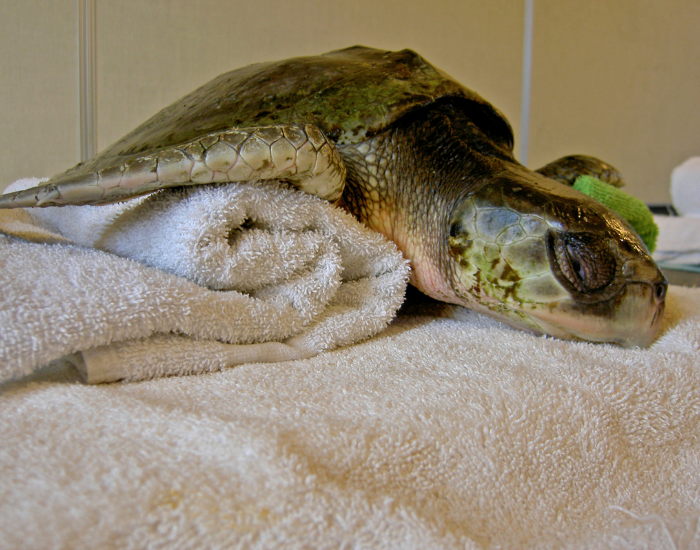
Scientific name: Lepidochelys kempii · Habitat: Gulf of Mexico, western Atlantic · Size: ~65 cm (25 in), averaging 45 kg (100 lbs) · Shell: nearly circular, olive-gray
Kemp’s ridleys are the smallest sea turtles, averaging around 100 lbs, and also the most imperiled. They’re critically endangered with a famously restricted range, nesting mostly on a single stretch of Mexican coast. Like their cousins the olive ridley turtles, they nest in the arribada, a synchronized mass event where thousands of females storm the same beach in daylight. Today their biggest threat is drowning in shrimp trawls and fishing nets. It’s one of the spectacles I most want to witness again before it’s gone.
Want the full story on all seven species, their nesting locations, and how the other sea turtles compare? Read our deep-dive guide to the different types of sea turtles.
5 Tortoises: The Land Giants and Wanderers
Tortoises are the homebodies of the group, exclusively terrestrial reptiles primarily found across deserts, savannas, and islands. High domed shells and sturdy, pillar-like legs let them lug that armor over land. Few animals carry more natural history in their bodies; here are five I’ve either studied in the wild or met in conservation programs.
Galápagos Giant Tortoise (Chelonoidis niger)
Scientific name: Chelonoidis species complex (C. niger, C. vicina, et al.) · Habitat: Galápagos Islands · Size: up to 1.8 m (6 ft), over 400 kg (880 lbs) · Shell: domed or saddle-backed by species/island
Standing beside a Galápagos giant, you feel time slow down. These are the largest tortoises on Earth, and some individuals have passed the 150-year mark. While long classified under a single species (Chelonoidis niger), geneticists now recognize them as a complex of 13–15 distinct species across the archipelago. Their shells vary dramatically by island and species: domed on lush, wet islands, and saddle-backed with a raised front on dry islands, letting them stretch their necks high to reach cactus pads. Darwin noticed those differences too, and meeting them rewired how I think about isolation and evolution.
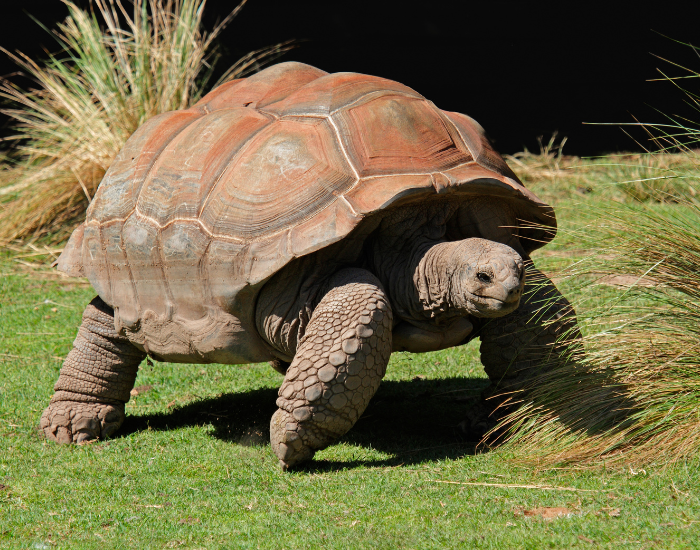
Aldabra Giant Tortoise (Aldabrachelys gigantea)
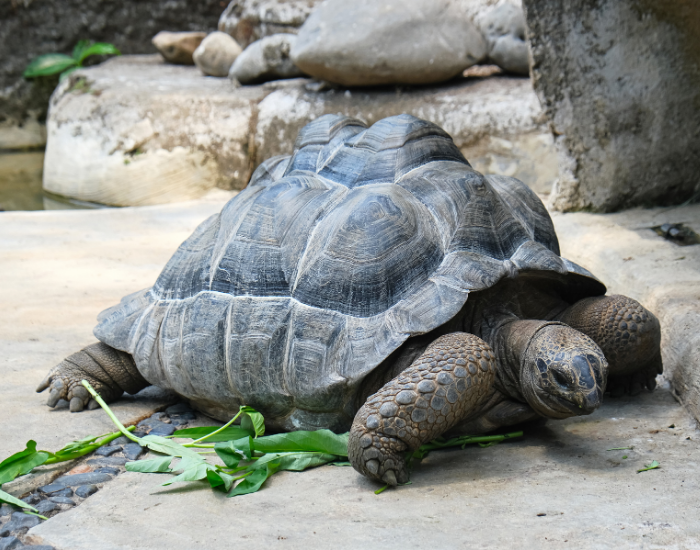
Scientific name: Aldabrachelys gigantea · Habitat: Aldabra Atoll, Seychelles · Size: up to 1.2 m (4 ft), ~250 kg (550 lbs) · Shell: high, brown, domed
The Aldabra is the Indian Ocean’s answer to the Galápagos giant, and one of the last surviving giants of its kind. A single atoll holds roughly 100,000 of them, the largest wild population anywhere. They’re surprisingly important gardeners, dispersing seeds and trampling paths that shape the whole ecosystem, and some living individuals are well over a century old.
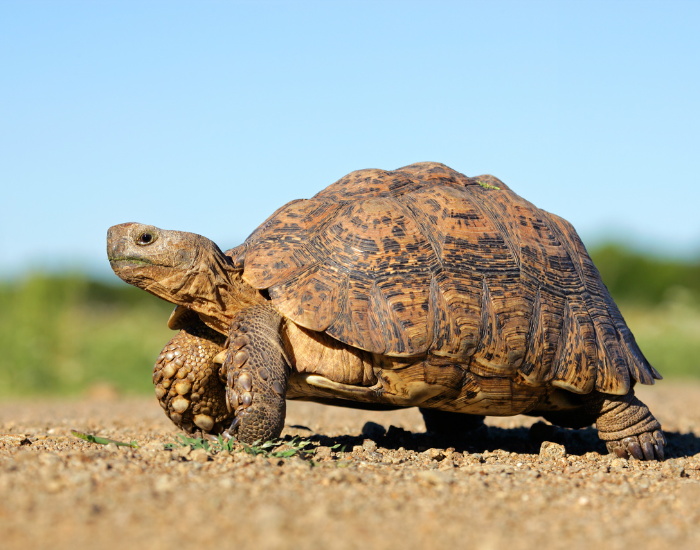
Leopard Tortoise (Stigmochelys pardalis)
Scientific name: Stigmochelys pardalis · Habitat: African savanna and grassland · Size: up to 70 cm (28 in), ~40 kg (88 lbs) · Shell: high, domed, spotted like a leopard
Across the African savanna, the leopard tortoise is the one you’ll actually trip over. That gorgeous spotted carapace names it, and its size makes it one of the larger tortoises in the world. Unusually, it can swim, and it’s the only tortoise I know that can lift its head to genuinely look up. On safari it’s easy to overlook, until you realize it’s been grazing the same clearing as the elephants.
Gopher Tortoise (Gopherus polyphemus)
Scientific name: Gopherus polyphemus · Habitat: sandy soils and pine scrub, southeastern U.S. · Size: up to 38 cm (15 in), ~5 kg (11 lbs) · Shell: domed, brown to grayish
The gopher tortoise is one of the few tortoises native to North America, and it’s a genuine ecosystem engineer. Using shovel-like front legs, it digs burrows up to three meters deep and twelve meters long. More than 350 other animals (from burrowing owls to indigo snakes) shelter in those tunnels, which is why biologists call it a keystone species. In the Florida scrub I once watched one back slowly into its burrow at dusk, sand cascading off its shell. Habitat loss has made it a threatened species across much of its range, so those burrows are now protected by law.

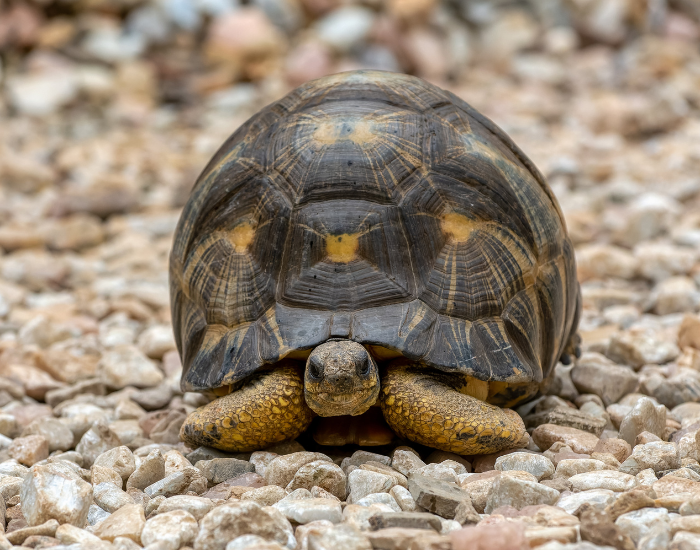
Radiated Tortoise (Astrochelys radiata)
Scientific name: Astrochelys radiata · Habitat: southern Madagascar · Size: up to 40 cm (16 in), ~16 kg (35 lbs) · Shell: black with bright yellow star radiations
If beauty could save a species, the radiated tortoise would be fine. Its shell wears a starburst pattern so striking it looks hand-painted. That very beauty fuels its downfall: illegal trafficking for the pet trade has pushed it to critically endangered status, with smugglers seizing thousands at a time. Every one
Curious how tortoises live so long, and how to tell a tortoise from a turtle at a glance? Dig into our complete guide to tortoise types and facts.
5 Terrapins: The Semi-Aquatic In-Betweeners
Terrapins are the aquatic turtles most people have actually held. These freshwater and brackish species inhabit ponds, rivers, lakes, and marshes, and they’re the classic pet-shop and garden-pond turtles. Most are omnivorous species, snapping up insect larvae, small fish, and aquatic plants alike. One warning up front: the wood turtle, a beautiful North American species, is now considered endangered due to habitat loss, so admire wild turtles and never take them home.
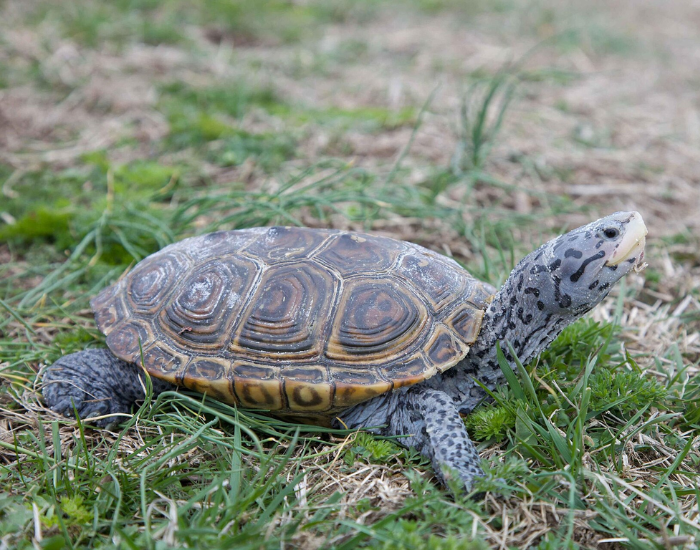
Diamondback Terrapin (Malaclemys terrapin)
Scientific name: Malaclemys terrapin · Habitat: coastal salt marshes, estuaries · Size: up to 23 cm (9 in) · Shell: gray with diamond-shaped growth rings
The diamondback is the true, original terrapin, the only North American turtle that lives full-time in brackish water where rivers meet the sea. Concentric diamond markings on each scute give it a jeweler’s name, and special glands let it shed excess salt, a rare adaptation among turtles. Once nearly eaten to extinction for terrapin soup, it now faces drowning in crab traps. I scan the marsh line for their tiny heads every time I paddle the East Coast.
Red-Eared Slider (Trachemys scripta elegans)
Scientific name: Trachemys scripta elegans · Habitat: ponds, slow rivers, lakes · Size: up to 30 cm (12 in) · Shell: olive-green with yellow striping
The red-eared slider is the world’s most popular pet turtle, named for the red flash behind each eye. Females can grow up to 12 inches long, far bigger than the coin-sized hatchlings sold in shops. That mismatch is exactly why released pets have become an invasive species on nearly every continent, outcompeting native turtles. If you’ve ever seen turtles basking in a city park pond, odds are these were them.
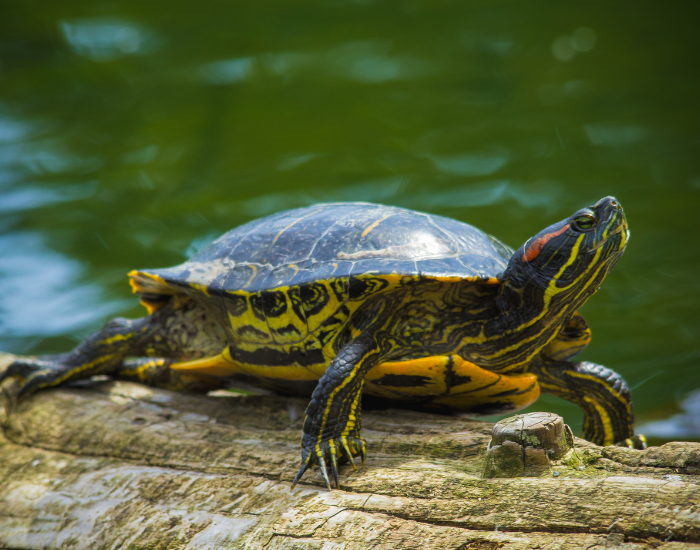
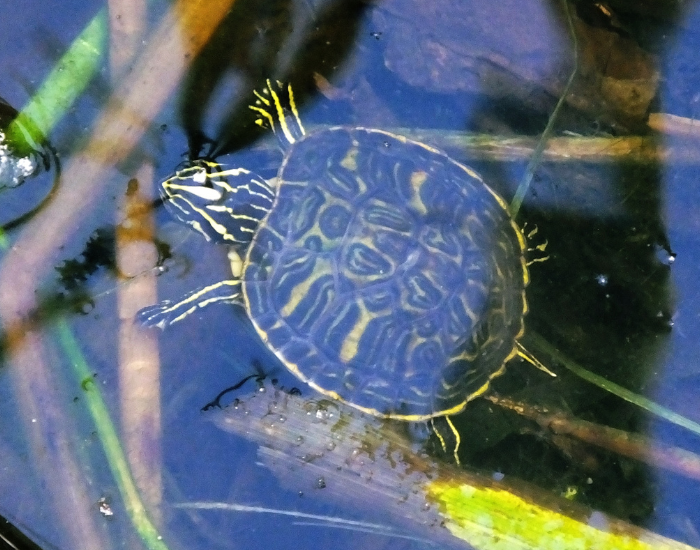
Yellow-Bellied Slider (Trachemys scripta scripta)
Scientific name: Trachemys scripta scripta · Habitat: southeastern U.S. wetlands · Size: up to 33 cm (13 in) · Shell: dark with yellow stripes, bright yellow plastron
A close cousin of the red-eared slider, the yellow-bellied slider wears a vivid lemon underside, its yellow markings brightest on young animals. They’re avid baskers, stacking three-deep on logs to soak up warmth. As pets they’re a serious commitment: a full-grown adult requires a 120-gallon tank, which surprises most first-time keepers. In the wild these omnivorous species eat almost anything, shifting from carnivorous youngsters to plant-leaning adults.
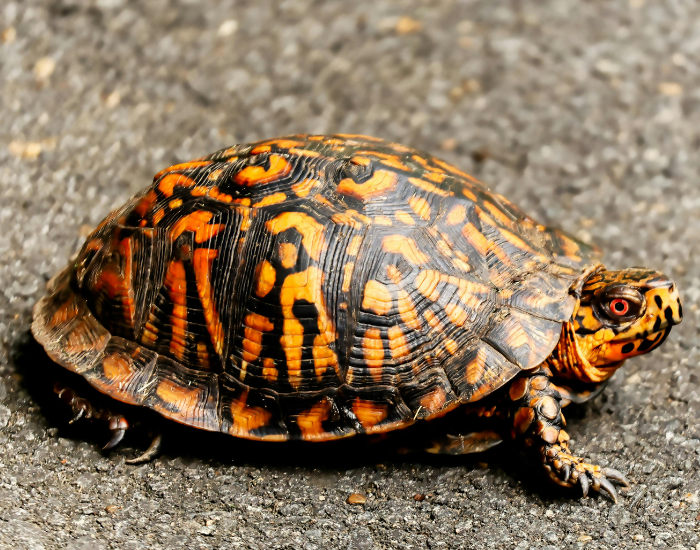
Eastern Box Turtle (Terrapene carolina)
Scientific name: Terrapene carolina · Habitat: woodlands and meadows, eastern U.S. · Size: up to 15 cm (6 in) · Shell: high-domed with a hinged plastron
The eastern box turtle bends the rules, it’s a terrapin by family but spends most of its life on land. Its superpower is that hinged plastron, which snaps fully shut like a box to seal the animal inside. Eastern box turtles can live 30 to 40 years on average, and some pass a century. They’re deeply territorial, often spending their whole lives inside a few acres, so one moved from its home range may wander lost for years.
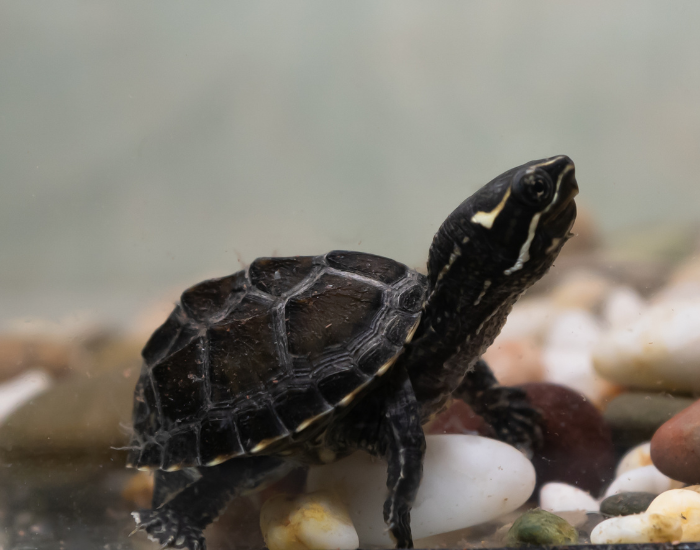
Common Musk Turtle (Sternotherus odoratus)
Scientific name: Sternotherus odoratus · Habitat: muddy-bottomed ponds and streams · Size: up to 14 cm (5.5 in) · Shell: small, high, dark and often algae-covered
Small, grumpy, and gloriously smelly, the common musk turtle is also known as the stinkpot, it releases a foul musk when handled, a chemical shove that says leave me alone. Rather than basking, it walks along the bottom underwater, yet it climbs surprisingly well. I once found one clinging to a branch a meter above a creek. For a turtle that looks like a wet rock, it has real personality.
Ready to compare pond species side by side and set up a proper habitat? See our full guide to terrapin types.
Frequently Asked Questions
The green sea turtle is arguably the most popular and recognizable, thanks to its worldwide range and starring role in nesting tourism. Among sea turtle breeds followed by conservation sponsors, the loggerhead and leatherback also draw enormous attention.
“Turtle” is the umbrella term for all species in Testudines. Tortoises are the land-only group with domed shells and elephant legs, while terrapins are the semi-aquatic freshwater and brackish species. So among the different types of turtles, all tortoises and terrapins are turtles — but not the reverse.
Many turtle species are threatened by habitat loss and climate change, and a 2020 review found 51–56% at risk — which is why so many are now listed as an endangered species. Sea turtles face an added threat from fisheries: one global analysis estimated bycatch in the millions, with figures over 8 million between 1990 and 2008. Illegal trafficking for pets, food, and shells compounds the pressure on these and other turtles. Turtle hatcheries help by shielding nests from flooding and poaching, then giving the hatchlings a head start to avoid predators.

The Real Reason These Categories Matter
Learn the split between sea turtles, tortoises, and terrapins and you stop seeing one blurry “tortuga” and start seeing a family of specialists, a jellyfish hunter, a savanna grazer, a salt-marsh jeweler. That clarity is also what conservation runs on, because you can’t protect an animal you can’t name.
So the next time you meet a shelled reptile, pause and place it. Is it built for the sea, the land, or the water’s edge? If you want to keep going, compare these species with the wonderfully weird snapping turtle or the jewel-toned northern painted turtle, and read why turtles, as cold-blooded animals, survive in places that would freeze the rest of us. Then tell me in the comments: which of these 15 have you seen in the wild?
Turtle Challenge: Name It, Then Prove It 🐢
First, identify 15 shelled reptiles — the wrong answers are tricky look-alikes from the same group. Then a quick true-or-false round on what really separates a turtle, a tortoise, and a terrapin.
References:
Paladino, F. V., O’Connor, M. P., & Spotila, J. R. (1990). Metabolism of leatherback turtles, gigantothermy, and thermoregulation of dinosaurs. Nature, 344(6269), 858–860. https://doi.org/10.1038/344858a0
Rhodin, A. G. J., Stanford, C. B., van Dijk, P. P., Eisemberg, C., Luiselli, L., Mittermeier, R. A., et al. (2018). Global conservation status of turtles and tortoises (Order Testudines). Chelonian Conservation and Biology, 17(2), 135–161. https://doi.org/10.2744/CCB-1348.1
Sato, K. (2014). Body temperature stability achieved by the large body mass of sea turtles. Journal of Experimental Biology, 217(20), 3607–3614. https://doi.org/10.1242/jeb.109470
Stanford, C. B., Iverson, J. B., Rhodin, A. G. J., van Dijk, P. P., Mittermeier, R. A., Kuchling, G., et al. (2020). Turtles and tortoises are in trouble. Current Biology, 30(12), R721–R735. https://doi.org/10.1016/j.cub.2020.04.088
Wallace, B. P., Lewison, R. L., McDonald, S. L., McDonald, R. K., Kot, C. Y., Kelez, S., et al. (2010). Global patterns of marine turtle bycatch. Conservation Letters, 3(3), 131–142. https://doi.org/10.1111/j.1755-263X.2010.00105.x