My cousin kept a terrapin in a glass tank when we were kids. We named him Pebble, fed him too many pellets, and watched him paddle in circles for hours. I never knew which species he was. Decades later, as a field biologist who has waded tidal creeks on three continents, I finally do, and the answer turned out far stranger than I expected.
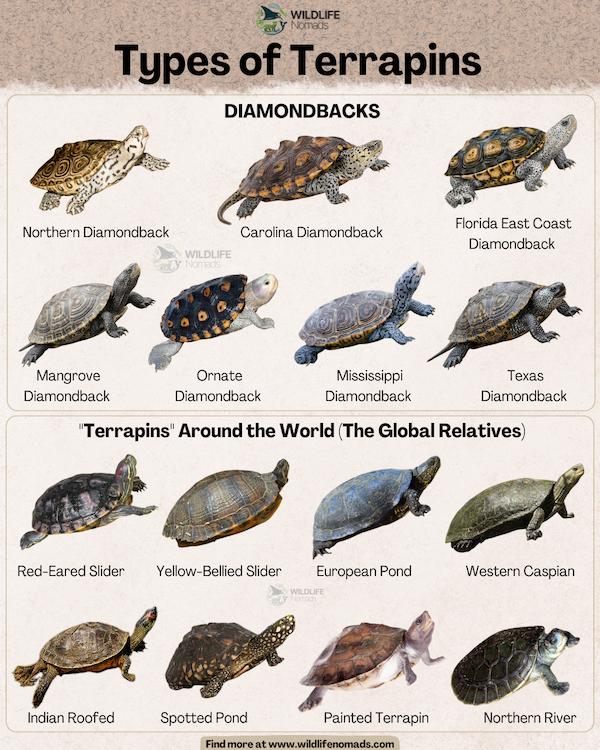
Terrapins are small to moderate sized turtles that live in brackish water, the salty-fresh blend where rivers meet the sea. The word “terrapin” comes from the Algonquian torope, and the most famous of them all, the diamondback terrapin (Malaclemys terrapin), is the only true terrapin in North America. This guide walks through 15 iconic terrapins, including all seven diamondback terrapin subspecies and eight remarkable cousins from around the world.
You will learn how to tell them apart, where they live, why terrapin populations are crashing, and what actually saves them. Female terrapins, in particular, hold the key to every recovery story here. Pebble deserved a better field guide. This is the one I wish I’d had.
What Is a Terrapin Turtle? The Definition That Trips Everyone Up
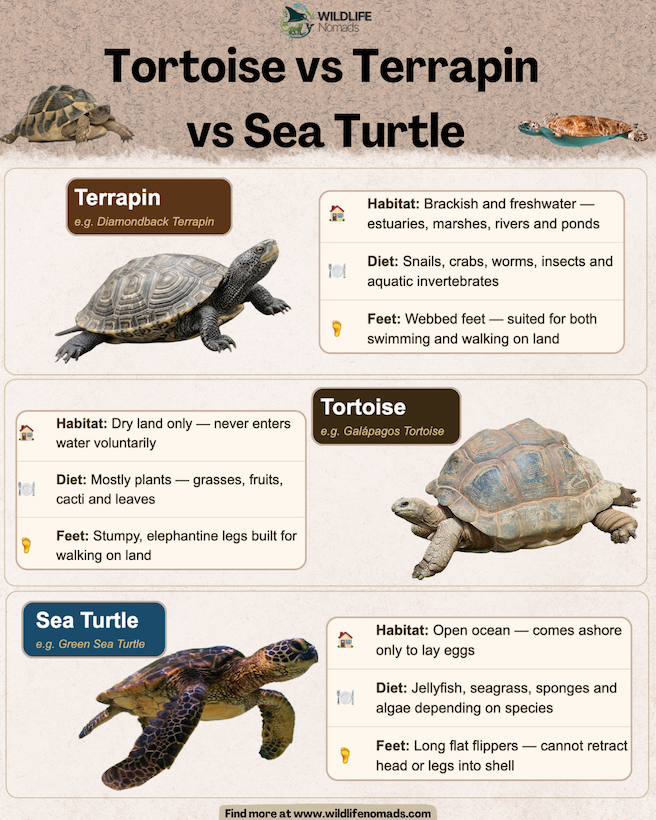
A terrapin is a small, hard-shelled turtle adapted to brackish or freshwater habitats, sitting ecologically between land tortoises and marine sea turtles. The terrapin meaning is essentially geographic: these are the turtles of the in-between, the estuarine middle ground.
The distinction matters because “turtle,” “tortoise,” and “terrapin” describe lifestyle, not a clean taxonomic split. Tortoises live on land. Sea turtles roam the open Atlantic Ocean and beyond. Terrapins occupy salt marshes, tidal flats, and freshwater margins between them. The table below sorts the confusion.
| Group | Primary habitat | Diet | Example |
|---|---|---|---|
| Tortoise | Dry land | Mostly plants | Galápagos tortoise |
| Sea turtle | Open ocean | Jellyfish, seagrass, sponges | Green sea turtle |
| Terrapin | Brackish & fresh water | Snails, crabs, invertebrates | Diamondback terrapin |
The 7 Diamondback Terrapin Subspecies
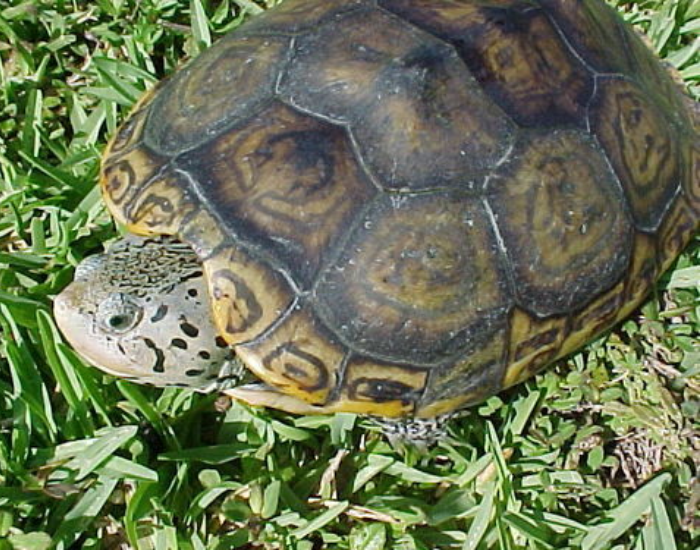
Scientists recognize seven diamondback terrapin subspecies along the Atlantic and Gulf coasts. You will also see the name spelled “diamond-backed terrapin,” and both spellings mean the same animal. The diamond backed terrapin earns its name from the diamond-shaped, concentric rings carved into each shell plate. No two terrapins wear the same pattern, which is part of why I fell for these salt marshes specialists as a researcher.
The diamondback is the only species of true terrapin in North America, yet it varies wildly across its range. From the eastern shore of the Chesapeake to southern Florida, shell color, skin tone, and size all shift. Here are the seven.
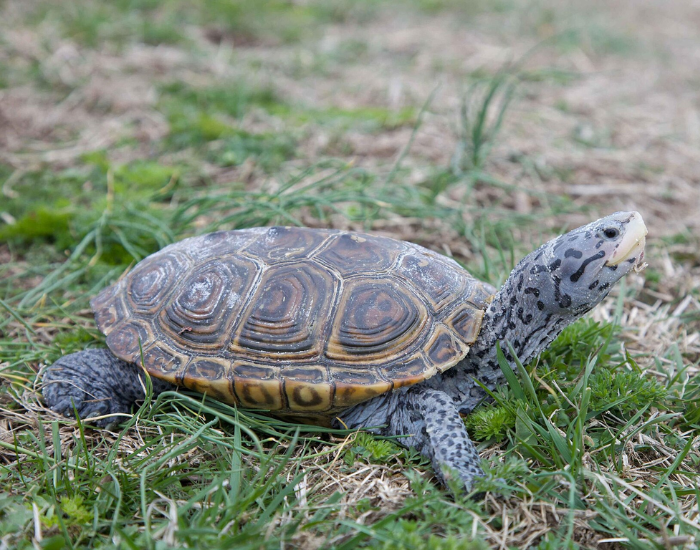
1. Northern Diamondback Terrapin (Malaclemys terrapin terrapin)
The northern diamondback terrapin ranges from Cape Cod, Massachusetts, south to Cape Hatteras along the Atlantic coast. This is the textbook northern diamond backed terrapin: gray to brown shell, pale skin flecked with dark spots, and brown concentric circles on each scute. Adult females reach roughly 23 centimeters; adult males stay near 13.
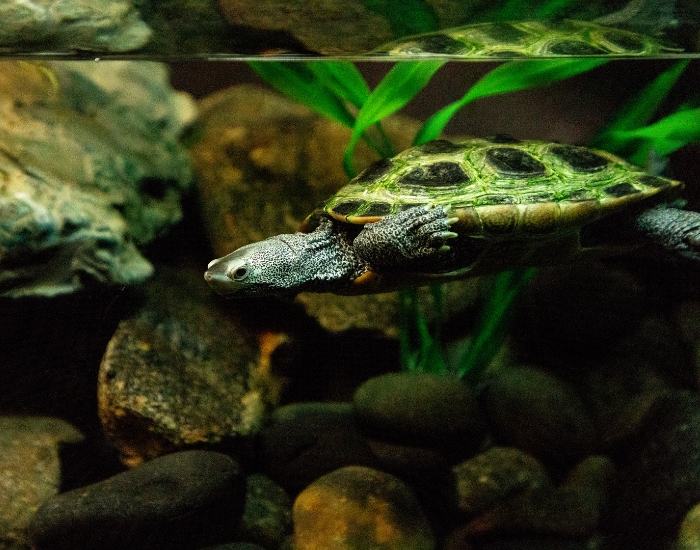
2. Carolina Diamondback Terrapin (Malaclemys terrapin centrata)
The Carolina diamondback terrapin (Malaclemys terrapin centrata) occupies the coast from Cape Hatteras to northern Florida. It tends toward a rounder, smoother carapace than its northern cousin, often with paler, almost ghostly skin. It favors the broad Spartina estuarine habitats of South Carolina and Georgia.
These diamond-backed terrapins hunt periwinkle snails and fiddler crabs across the low marsh. Commercial crabbing for blue crabs hits them hard here. Abandoned crab traps, sometimes called ghost pots, drown an estimated 14,000 to 15,000 terrapins every year across the species’ range.
3. Texas Diamondback Terrapin (Malaclemys terrapin littoralis)
The Texas diamondback terrapin lives along the western Gulf coasts, from Louisiana to the Texas-Mexico border. It ranks among the larger, paler subspecies, with deeply etched growth rings and white to greenish skin. Bay systems like Galveston and the Laguna Madre hold its strongholds.
4. Ornate Diamondback Terrapin (Malaclemys terrapin macrospilota)
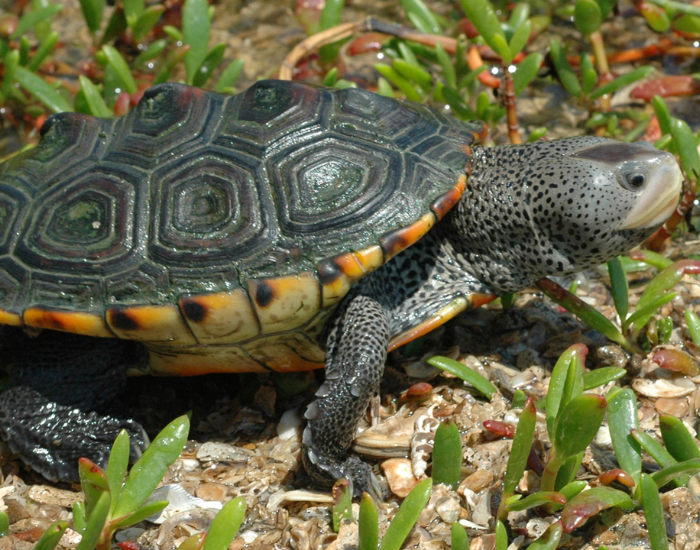
The ornate diamondback terrapin (Malaclemys terrapin macrospilota) is the showpiece of the genus Malaclemys. Found along Florida’s Gulf coast, it raises scutes stamped with bright orange or yellow centers. The name macrospilota literally means “large spots.”
5. Mississippi Diamondback Terrapin (Malaclemys terrapin pileata)
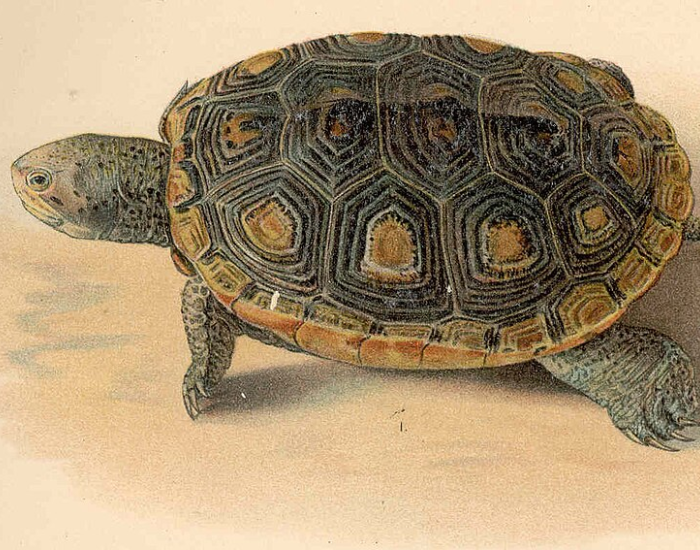
The Mississippi diamondback terrapin spans the north-central Gulf, from the Florida Panhandle to Louisiana. It typically shows dark skin, a knobby carapace, and a yellow or orange underside. A dark brown blotch often marks the top of the head.
These terrapins live in some of the most industry-stressed coastal salt marshes in North America. The 2010 Deepwater Horizon spill soaked prime pileata habitat. Terrapins, I have come to believe, absorb every insult we aim at the coast.
6. Mangrove Diamondback Terrapin (Malaclemys terrapin rhizophorarum)
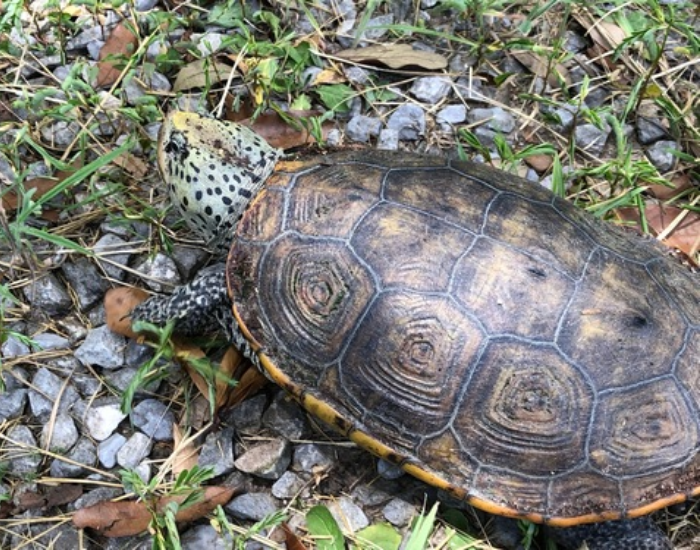
The mangrove diamondback terrapin haunts the Florida Keys, threading through red mangrove swamps. Its name, rhizophorarum, nods to Rhizophora, the red mangrove. Look for thin black lines streaking the neck and limbs and a narrow shell.
A 2024 study documented a sudden population decline in these mangrove terrapins. Isolated island populations can vanish quietly. I have searched the Keys roots for hours and found a single terrapin. That ratio still haunts me.
7. Florida East Coast Diamondback Terrapin (Malaclemys terrapin tequesta)
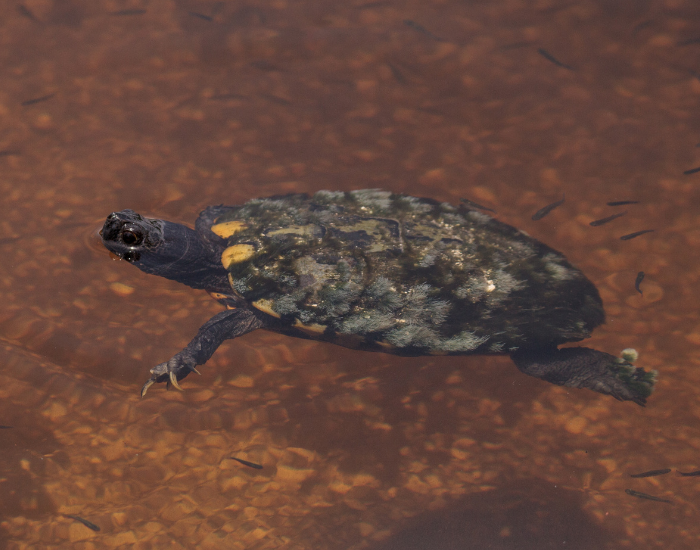
The Florida east coast diamondback terrapin runs along the Atlantic shore of the peninsula, from Daytona toward southern Florida. It carries a dark, often spotless carapace and grayish, flecked skin. It remains among the least studied subspecies.
How Do Terrapins Mate, Nest, and Grow?
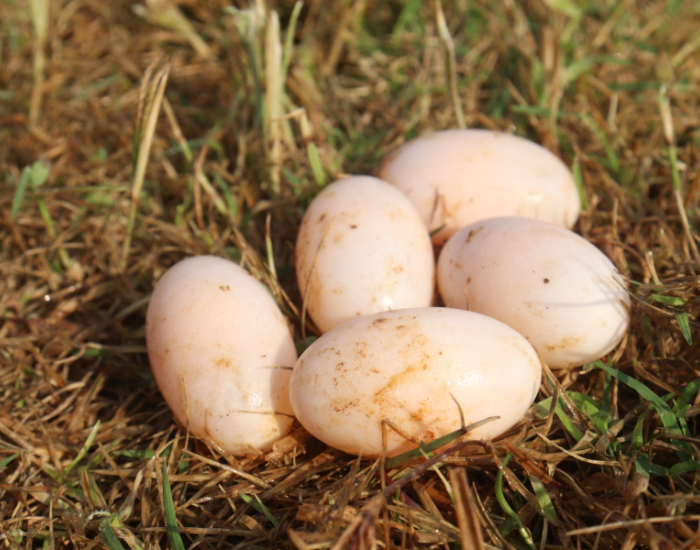
Terrapins mate in the water in spring, then females haul out to dig nests in sandy soil above the high-tide line. The nesting season runs late spring through midsummer, the window when most road deaths occur. Understanding this life cycle explains why every threat below lands so hard.
Adult males mature earlier than females, often by age three, while female terrapins reach sexual maturity at 8 to 10 years old. That gap matters. A population can lose a few adult males and recover, but losing nesting females is catastrophic.
Nesting females favor open, elevated, sandy ground above the salt marshes, and unfortunately, road shoulders mimic ideal nesting beaches. Females search out suitable nesting areas with real determination, sometimes crossing four lanes of traffic to reach a remembered dune. Terrapins prefer the same nesting sites year after year, a fidelity that concentrates risk.
8 Terrapins From Around the World
North America claims only one true terrapin, but the broader name travels far. These eight terrapin turtles, from Pebble’s lineage to critically endangered river giants, complete the global picture across freshwater and brackish habitats.
8. Red-Eared Slider (Trachemys scripta elegans): the “Pet Terrapin”
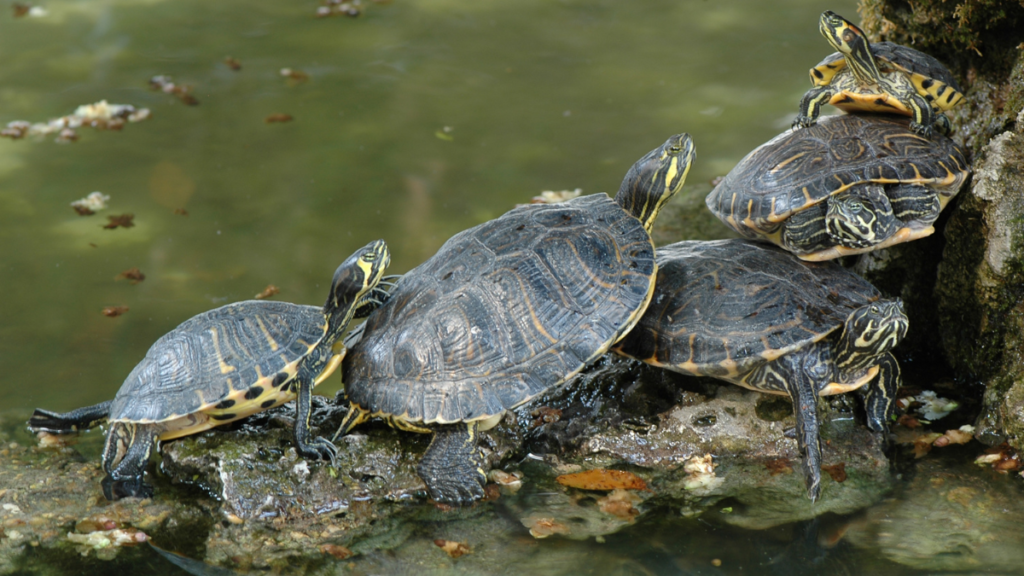
The red-eared slider is the world’s most common pet “terrapin,” marked by a red stripe behind each eye. Native to the central United States, it is a freshwater species of ponds, lakes, and slow rivers. This, I finally confirmed, was Pebble.
Here lies the bittersweet truth of my childhood pet. Released sliders rank among the planet’s worst invasive freshwater turtle species, outcompeting native turtles across Europe and Asia. Loving a terrapin and protecting wild ones, I learned, are not always the same act.
9. Yellow-Bellied Slider (Trachemys scripta scripta)
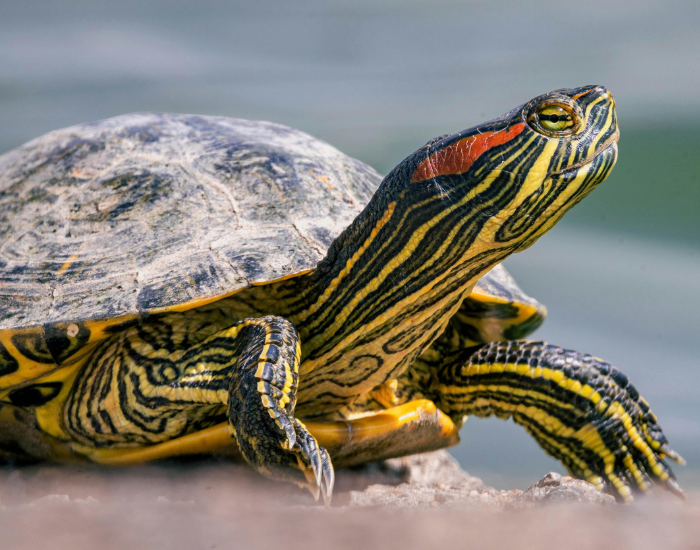
The yellow-bellied slider replaces the red-eared form across the southeastern United States, from Virginia to northern Florida. A bright yellow plastron and yellow facial blotches set it apart. It shares the freshwater habitats of the diamondback’s range but stays in ponds and oxbows rather than the salt.
These sliders tolerate human-altered water far better than terrapins of the marsh. Adaptability, again, decides who persists.
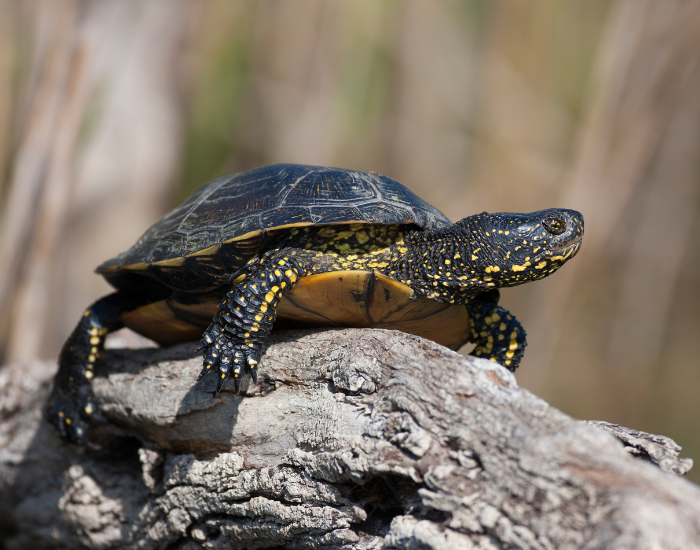
10. European Pond Terrapin (Emys orbicularis)
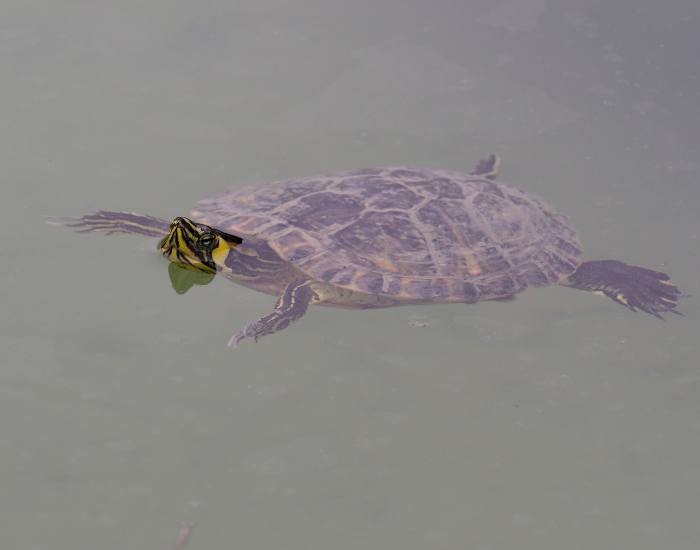
The European pond terrapin is a dark, yellow-flecked freshwater terrapin ranging across Europe, North Africa, and western Asia. It basks on logs in marshes and slow streams, sliding under at the faintest footstep. Adults reach about 20 centimeters.
Habitat drainage and the invading red-eared slider both squeeze them. Watching a native pond terrapin share a log with an escaped pet felt like watching two timelines collide.
11. Painted Terrapin (Batagur borneoensis)
The painted terrapin of Southeast Asia is arguably the most beautiful turtle alive. In breeding season, males develop a white head crowned with a brilliant red stripe. It inhabits mangrove rivers and estuaries from Thailand to Borneo.
Once I traveled to a Malaysian river mouth and I accidentally watched a nest. The species is Critically Endangered, hammered by egg collection and coastal development. A conservation hatchery there releases head-started young, and holding a hatchling reset my sense of what hope weighs.
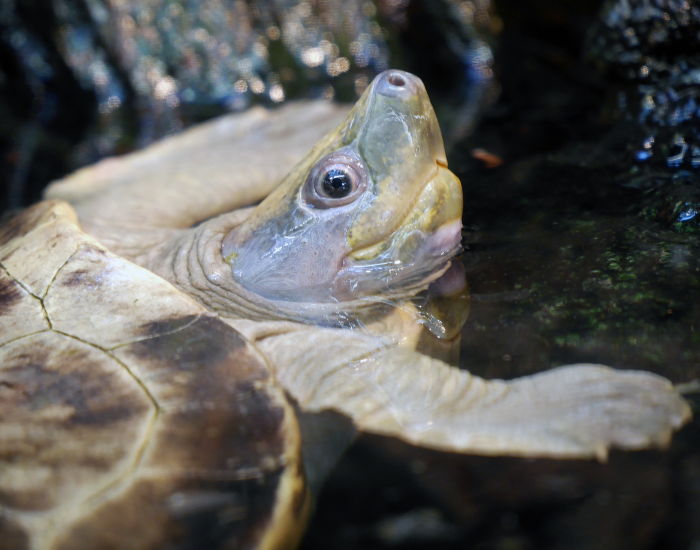
12. Northern River Terrapin (Batagur baska)
The northern river terrapin is one of the most endangered turtles on Earth, with only a few hundred adults left. This large estuarine terrapin once thronged the rivers of Bangladesh, India, and Southeast Asia. Captive-breeding programs now guard its survival almost entirely.
I have never seen a wild Batagur baska, and I likely never will. That sentence is the whole conservation story in miniature. Terrapins this large vanish when humans take both their eggs and their estuaries.
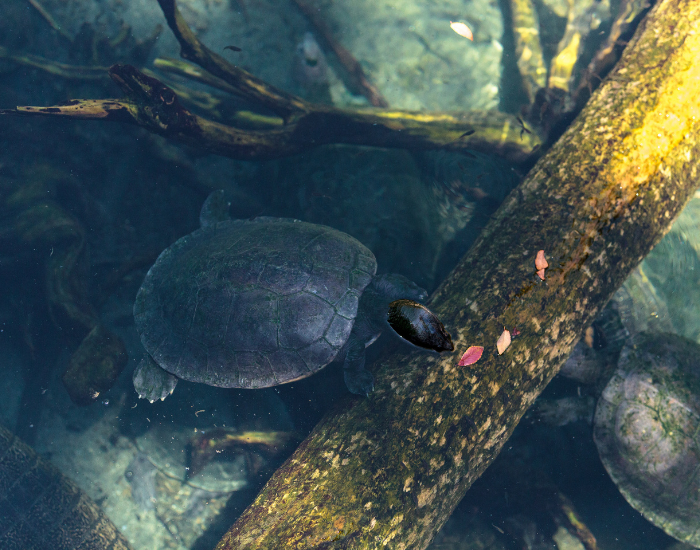
13. Western Caspian Terrapin (Mauremys rivulata)
The western Caspian terrapin is a hardy freshwater and brackish turtle of the eastern Mediterranean and Middle East. Dark olive with faint striping, it survives polluted, low-oxygen water that would kill fussier turtles. You will find it in pristine streams and roadside ditches alike.
On a survey in coastal Greece, I watched these terrapins surface in water I would not have touched. Their toughness is a lesson. Adaptability buys terrapins time, but no terrapin is invincible against a paved coastline.
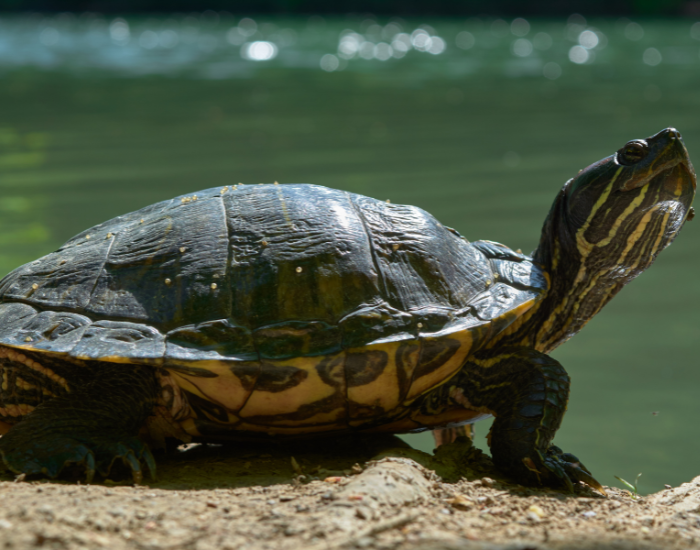
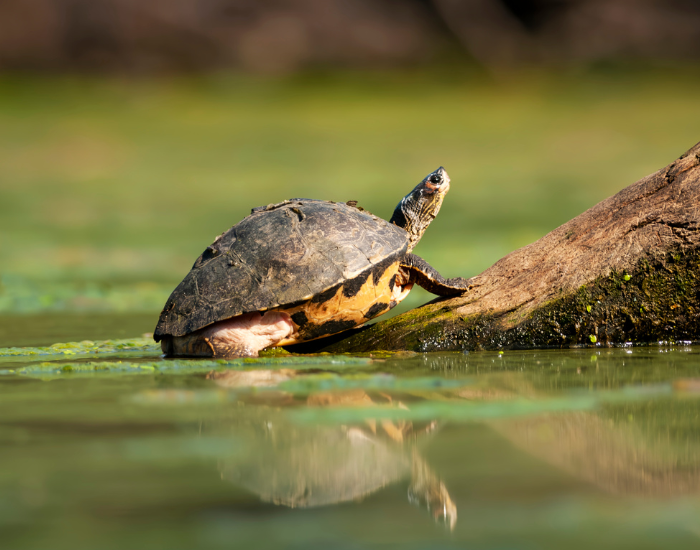
14. Indian Roofed Terrapin (Pangshura tecta)
The Indian roofed terrapin of South Asia carries a high, peaked vertebral ridge that gives it a “roofed” silhouette. Bright orange and red wash its head and limbs during the breeding season. It favors the slow rivers and ponds of the Ganges and Indus systems.
15. Spotted Pond Terrapin (Geoclemys hamiltonii)
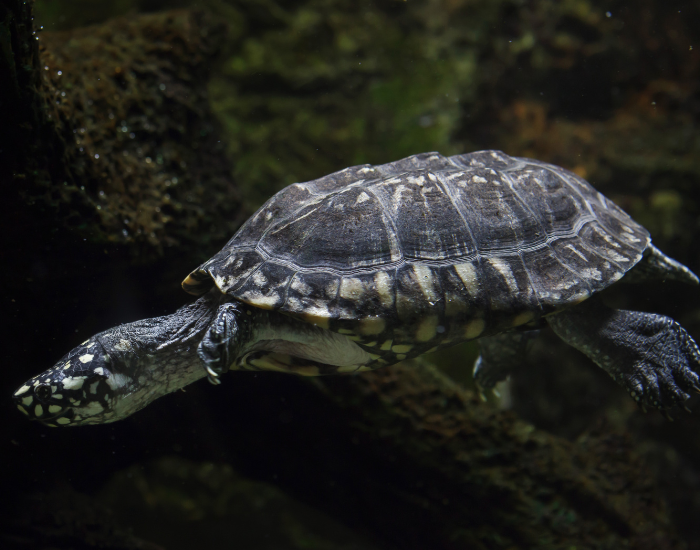
The spotted pond terrapin, or black pond terrapin, wears a stunning black shell scattered with yellow-white spots. Native to South Asia, it inhabits shallow, vegetation-choked wetlands across Pakistan, India, Bangladesh, and Nepal. It is one of several species now squeezed by the international pet trade.
Of all 15 terrapins here, this is the one strangers most often mistake for jewelry rather than an animal. That very beauty fuels its decline. I have only seen captive individuals, each a reminder that admiration and exploitation often share a doorway.
Why Terrapin Populations Are Crashing
Terrapin populations are declining mainly from habitat destruction, drowning in crab traps, and road mortality during nesting. The diamondback terrapin is listed as Vulnerable on the IUCN list of threatened species, and several global terrapins rank as Critically Endangered.
The threats to diamondback terrapins stack on top of one another. Coastal development paves the salt marshes and salt marsh ecosystems this moderate sized estuarine turtle depends on. Crab pots kill terrapins underwater, and abandoned gear keeps fishing for years. Meanwhile raccoons clear the nests. Each pressure alone is survivable; together they push populations past recovery.
Marine fisheries make the deadliest threat manageable, though, because the fixes work. Today, terrapin excluder devices—often called Bycatch Reduction Devices (BRDs)—are mandated in various capacities across nearly every state along the Atlantic and Gulf coasts, including New York, New Jersey, Maryland, Virginia, the Carolinas, Georgia, and Florida. The Diamondback Terrapin Working Group coordinates research across the range, and the Terrapin Conservation Project, launched in 1989 at The Wetlands Institute, has fenced more than 11 miles of road. Through a partnership that incubates eggs rescued from roadkills, the program now helps release hundreds of head-started terrapins into the marsh every single year, totaling thousands of successes over its three-decade history.
Frequently Asked Questions About Terrapins
Diamondback terrapins live 25 to 40 years in the wild, and sometimes longer in captivity. Female terrapins reach sexual maturity at 8 to 10 years old, while adult males mature earlier. This slow life history is exactly why losing nesting females to roads and crab traps hurts populations so badly.
The scientific name for the diamondback terrapin is Malaclemys terrapin. It is the only species in the genus Malaclemys, split into seven subspecies such as Malaclemys terrapin centrata and Malaclemys terrapin macrospilota. The name “diamondback” describes the diamond-shaped, concentric rings on the shell.
Most freshwater turtles and terrapins sleep resting on the bottom, tucked under vegetation, or buried in mud. Diamondback terrapins often settle into the muddy bottoms of tidal creeks, and during winter they hibernate there in a dormancy called brumation. Sleeping submerged keeps them hidden from predators.
Here is a genuinely silly one: diamondback terrapins drink rainwater that floats on top of salty seawater. They have lachrymal salt glands near their eyes that cry out excess salt, letting them sip the thin freshwater layer after a storm. A turtle that drinks rain off the sea sounds invented, but it is real.
Every terrapin is a turtle, but not every turtle is a terrapin. “Terrapin” specifically describes small, hard-shelled turtle species of brackish and freshwater habitats, while “turtle” covers the whole order, including sea turtles and tortoises. The terrapin definition is about lifestyle and habitat, not a separate branch of the family tree.
The Coast Remembers Its Terrapins
Terrapins are the quiet engineers of the salt marshes, working alongside blue crabs to hold snail populations in check so the cordgrass can stand. Lose the diamond-backed terrapin and you slowly lose the marsh itself.
I started this journey trying to name a childhood pet and ended it convinced that terrapins deserve far more attention than they get. So go find one. Walk a tidal creek at low tide, scan the mangrove roots, and watch for that diamond-etched shell breaking the surface. If you spot one, tell me in the comments which species you think it was — and if you loved this, wander over to my guides on the types of eagles and the lizards of Texas next.
References:
Crawford, B.A., Maerz, J.C., Nibbelink, N.P., Buhlmann, K.A., Norton, T.M. and Albeke, S.E. (2014), Hot spots and hot moments of diamondback terrapin road-crossing activity. J Appl Ecol, 51: 367-375. https://doi.org/10.1111/1365-2664.12195
Silliman, B. R., & Bertness, M. D. (2002). A trophic cascade regulates salt marsh primary production. Proceedings of the National Academy of Sciences, 99(16), 10500–10505. https://doi.org/10.1073/pnas.162366599
Cowan, F. B. M. (1981). Effects of salt loading on salt gland function in the euryhaline turtle, Malaclemys terrapin. Journal of Comparative Physiology B, 145(1), 101–108. https://doi.org/10.1007/BF00782600
Williard, A. S., Harden, L. A., Jones, T. T., & Midway, S. R. (2019). Effects of temperature and salinity on body fluid dynamics and metabolism in the estuarine diamondback terrapin (Malaclemys terrapin). Journal of Experimental Biology, 222(10), jeb202390. https://doi.org/10.1242/jeb.202390