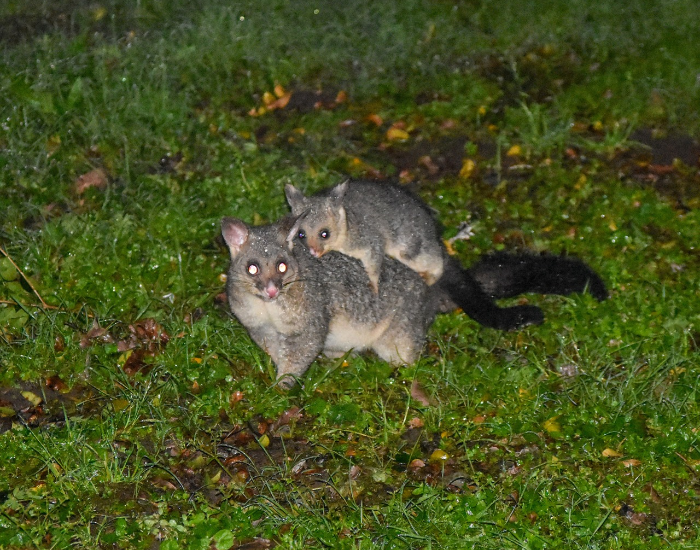
At 9 pm, a dog-sized shadow brushed against my leg. I was working late under our awning at Gloucester River campground. I jumped out of my chair. Once my heart slowed down, I saw a common brushtail possum with a tiny joey hugging her back.
That night set the tone for our second stop in Barrington Tops National Park, New South Wales from our lap around Australia. After the cold, rain-soaked plateau at Polblue Campground, we drove close to an hour and a half to the Gloucester River. Between the two camps, cleared cattle paddocks ran for kilometres. Honestly, it put into perspective how hard it is to convince farmers to restore their land.
Then the forest closed in again. Down here it felt like a rainforest: wet, mossy and full of birdsong. It also came with leeches, mostly on my feet.
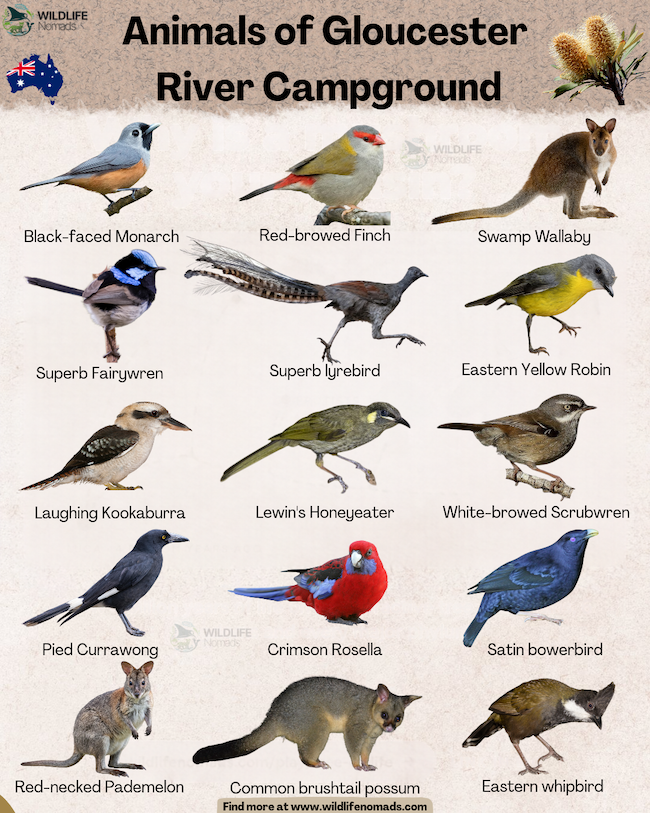
This stop on our lap around Australia gave me my first wild superb lyrebird, plus 19 other species. Below are all 20, and what you need to know about water, river crossings and walking trails before you go.
Gloucester River Campground, Barrington Tops National Park: What to Know
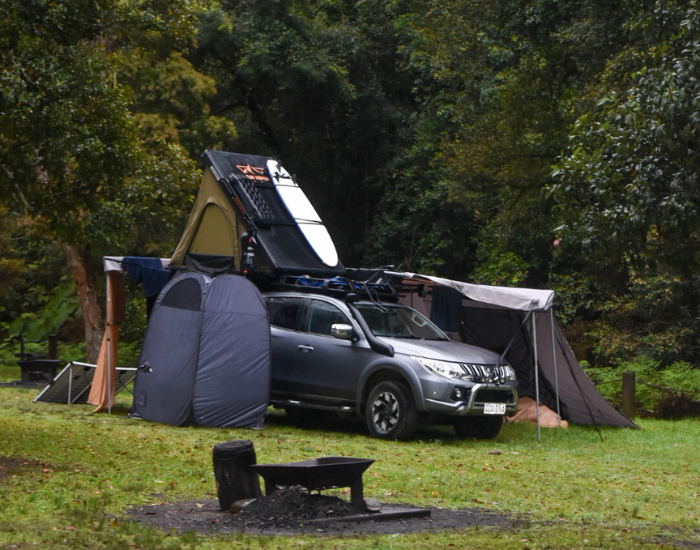
Gloucester River campground sits in the Gloucester Tops precinct, on the eastern side of Barrington Tops National Park. The address is Gloucester Tops Road, Invergordon NSW 2422. You turn off Bucketts Way between Gloucester and Stroud, about three and a half hours’ drive north of Sydney.
Gloucester River campground at a glance
- Sites: 30 unmarked, unpowered sites for tents, camper trailers and caravans
- Facilities: drop toilets, barbecues and picnic tables; no showers
- Water: none drinkable, so bring your own. We found rainwater beside the toilets and washed in the river and creek
- Firewood: bring your own, and check fire restrictions before lighting the fire pit
- Bins: none, so take all rubbish out
- Mobile reception: very limited, so download maps before you leave town
- Pets: not allowed, apart from certified assistance animals
- Bookings: required through NSW National Parks, and camping fees apply
River crossings and wet weather
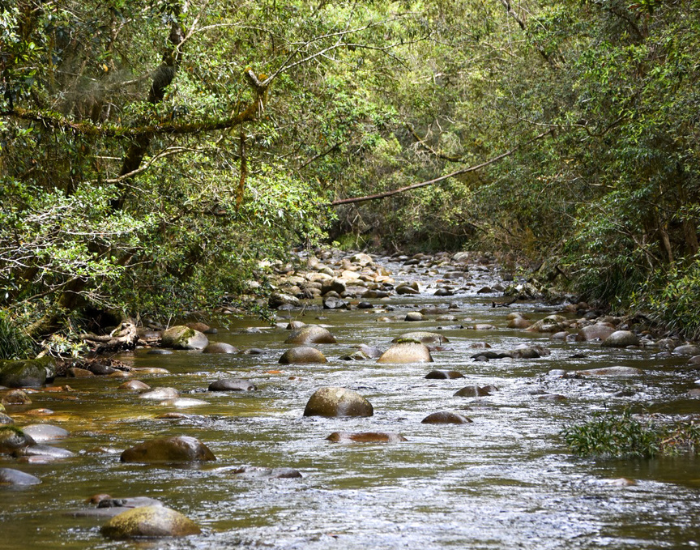
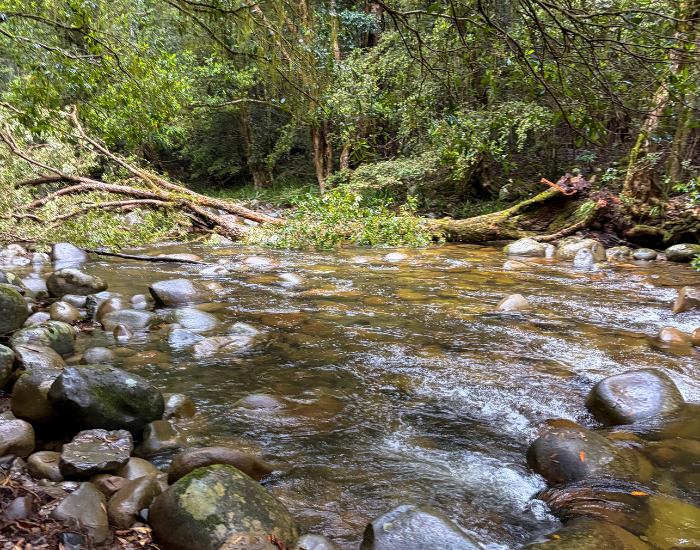
The gravel roads in are fine for 2WD in dry weather. However, Gloucester Tops Road crosses the river several times, and those crossings rise fast after rain. NPWS notes an all-weather council detour when the water is high. Check the current weather before you drive in.
We arrived after days of rain at Polblue. Even though this camp sits lower and warmer, everything stayed damp. By the day we left, we were almost out of dry socks, and I was relieved.
Leeches, platypus and walking trails
With that wet forest come land leeches. They find you through warmth and movement, and an anticoagulant keeps the bite bleeding afterwards. Most of mine were on my feet, so tuck your pants into your socks.
There are numerous walking trails here, and I walked them all looking for a platypus. I even crossed the river to reach the far bank and collected more leeches for it. A park sign mentions platypus, the pools look perfect, and people have logged them here on iNaturalist. I had no luck, so it isn’t on my list. You may do better at dawn or dusk.
The easy Gloucester River walking track loops 2.5 km from the picnic area. Sharpes Creek walking track also starts nearby. About 30 minutes up the road, the 6.5 km Gloucester Tops Circuit passes snow gums, Antarctic beech forest and the Gloucester Falls lookout. That beech forest is a favourite haunt of the rufous scrub-bird, one of Australia’s rarest birds.
The bigger Barrington picture
Barrington Tops National Park was declared in 1969 with about 14,000 hectares. Today it protects more than 74,000 hectares. Since 1986 it has formed the southern end of the Gondwana Rainforests of Australia World Heritage Area. Elevation runs from near sea level to over 1,500 m, so you move from subtropical rainforest layers to snow gums and alpine meadows in one drive.
Up on the plateau, the Barrington Trail is a 4WD route to Junction Pools and Little Murray campgrounds, beside the upper Barrington River. It opens only from 1 October to 31 May. If you want powered sites and more comfort, private campgrounds such as Gloucester Tops Riverside Caravan Park sit along the same river. The closest town for supplies is Gloucester, roughly 40 minutes away.
20 Animals We Saw at Gloucester River Campground
Most of these came to us. Our unassigned site seemed to sit on a bird highway, and the river did the rest.
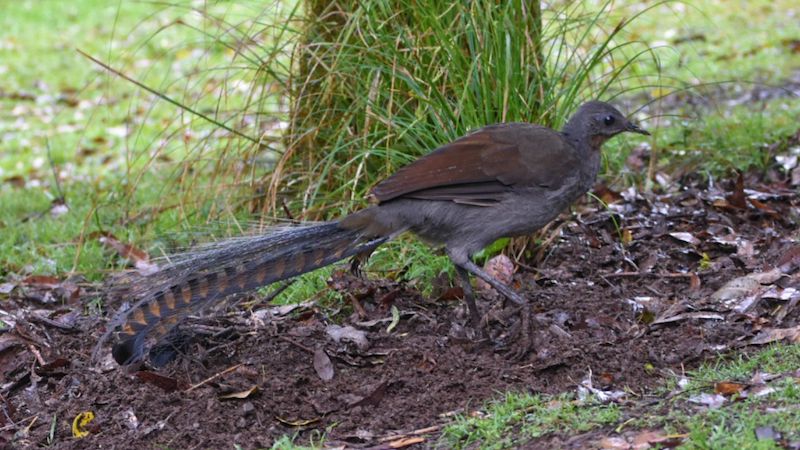
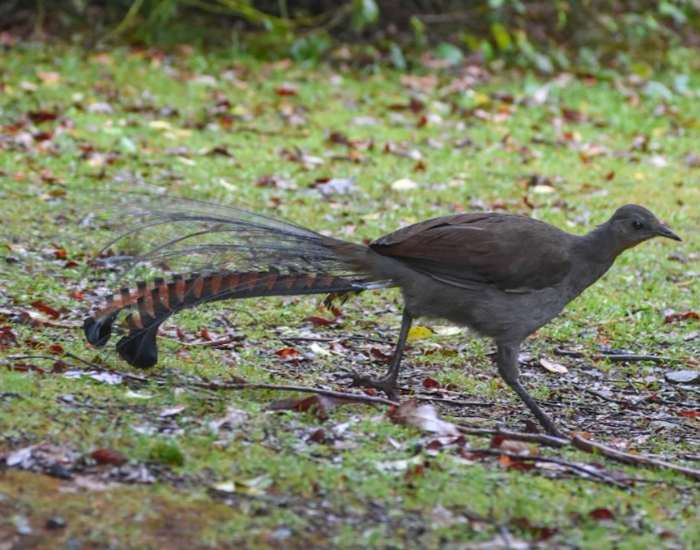
1. Superb Lyrebird (Menura novaehollandiae)
As a kid, I watched David Attenborough film a lyrebird copying camera shutters and chainsaws. So when one perched on the fence in front of the toilets, I was fascinated. It felt like watching a dinosaur.
We had already seen one on the drive in, a male chasing a female across the unsealed road. We thought that was our only chance. Instead, we saw many more. If you are looking for this bird, this is the place.
Fittingly, the lyrebird is the emblem of the NSW National Parks and Wildlife Service. Beyond mimicry, it engineers the forest floor, moving around 155 tonnes of litter and soil per hectare each year. A 2025 experiment found raked plots held more and larger invertebrates, so lyrebirds effectively farm their own food.
2. Common Brushtail Possum (Trichosurus vulpecula)
This was the mum from the intro. After finding no food, she disappeared into the night with her baby. The next night she came back, got super close and jumped onto our picnic table! Be carefult to not leave any scraps or food at night or this possum may surprise you getting to close.
Brushtails usually raise a single joey. Once it outgrows the pouch, at around five months, it rides on mum’s back. That reminded me of the opossums I saw in North America, which carry several young at once.
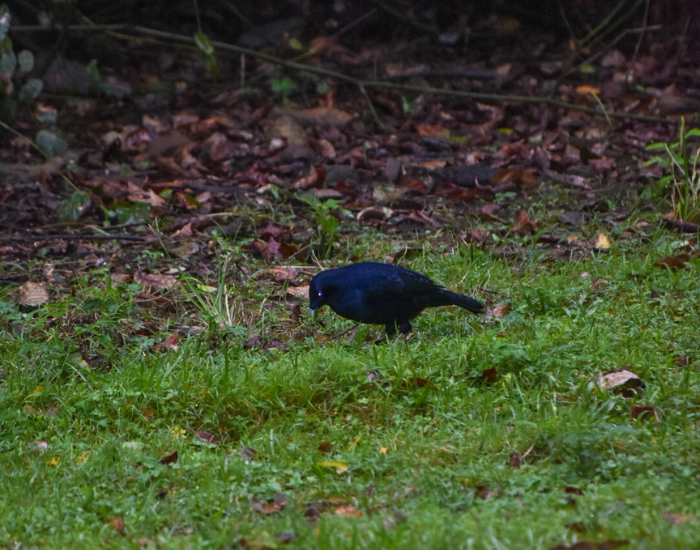
3. Satin Bowerbird (Ptilonorhynchus violaceus)
A couple visited our camp, one from the river and one from the toilet block. I photographed them twice. I also left a small piece of blue cardboard on the ground to tempt one. So far, no luck.
Males build an avenue of sticks and decorate it with blue objects. Adult males only get their glossy blue-black plumage in about their seventh year. In one study, well-decorated bowers made females less likely to be startled by intense male displays.
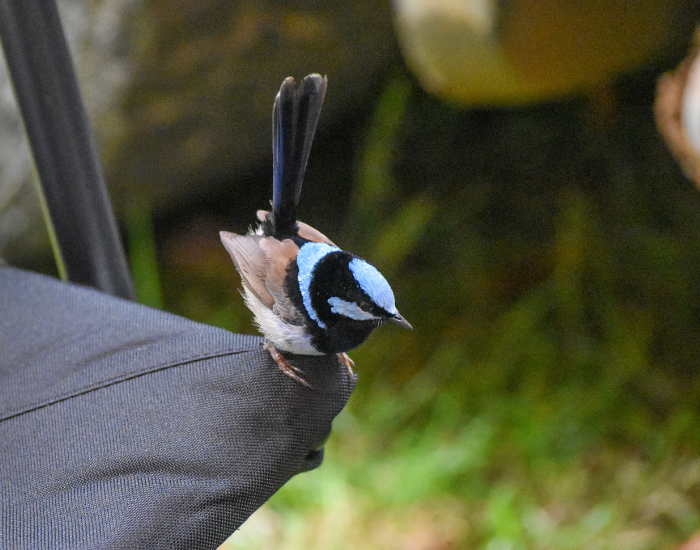
4. Superb Fairywren (Malurus cyaneus)
I have never seen so many together in Australia. They always moved as a male and female pair, and they were the least afraid of us. A couple hopped inside our awning. One male became obsessed with our car mirror and almost came inside.
That mirror fixation makes sense in spring. A breeding male treats his reflection as a rival on his territory. At Polblue, a lone female scolded us near her nest. Read more in my wren facts.
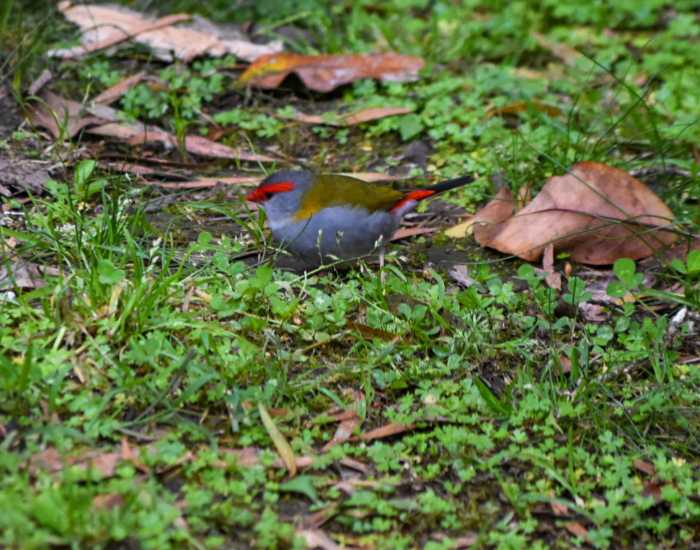
5. Red-browed Finch (Neochmia temporalis)
Flocks fed on the ground at our site, rising in short bursts and dropping back down. Each finch is tiny, olive and grey, with a red eyebrow and red rump.
Feeding in a group means many eyes watch for hawks, so each bird can spend more time eating. At university in Sweden, I ran a small experiment on exactly this. We measured how a predator on an open plain changed birds’ foraging time.
6. White-browed Scrubwren (Sericornis frontalis)
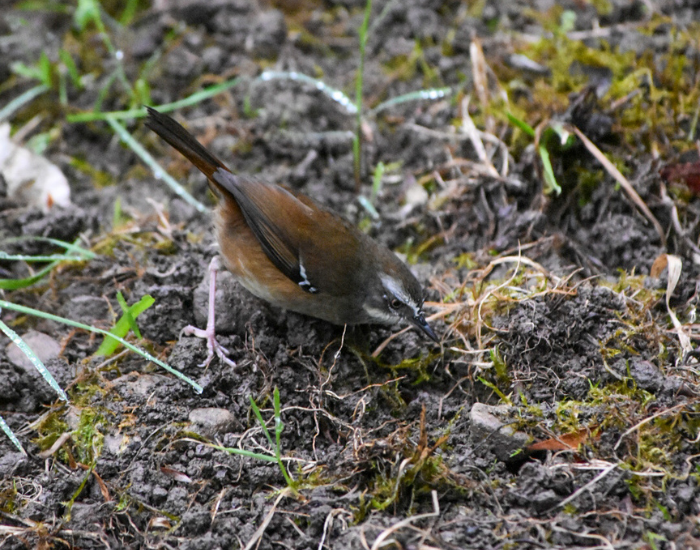
I spotted this one hopping beside the river and around camp. At first I thought it was a female wren I’d already logged. After careful ID on iNaturalist, it turned out to be a new species.
Despite the name, scrubwrens belong with thornbills, not fairywrens. Interestingly, the two share an alarm network. In playback experiments, both species fled to cover after hearing the other’s hawk alarm.
7. Eastern Yellow Robin (Eopsaltria australis)
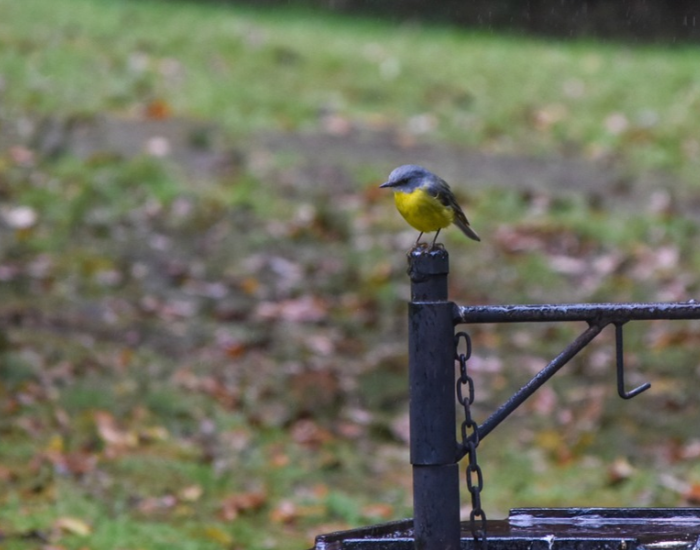
This robin came very close to camp. Look for a grey back, bright yellow belly and a habit of clinging sideways to trunks. It perches low, then pounces on insects below.
Australian robins aren’t related to European or American robins. They belong to their own family, which I cover in robins of Australia.
8. Eastern Whipbird (Psophodes olivaceus)
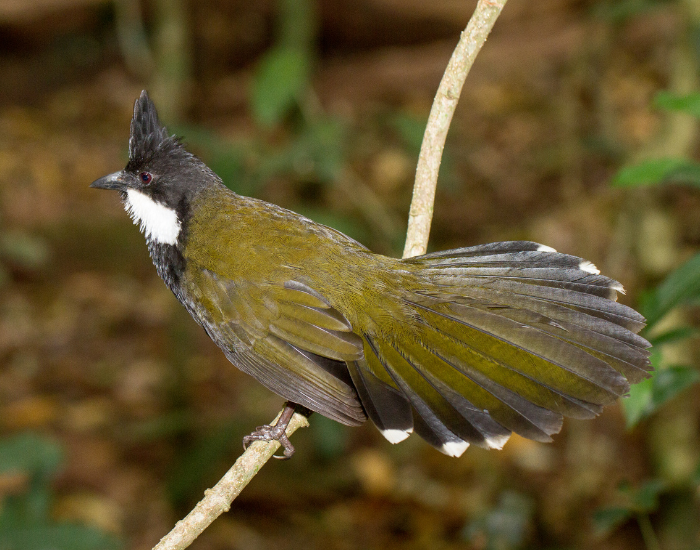
I heard whipbirds all the time, at camp and on every trail. Seeing one was another story, just like at Red Cliff.
That famous call is a duet. The male gives a long whistle ending in a whip-crack, and the female answers instantly. One study found females answered more often when a lone rival female sang nearby. In another population, unpaired females outnumbered unpaired males seven to one.
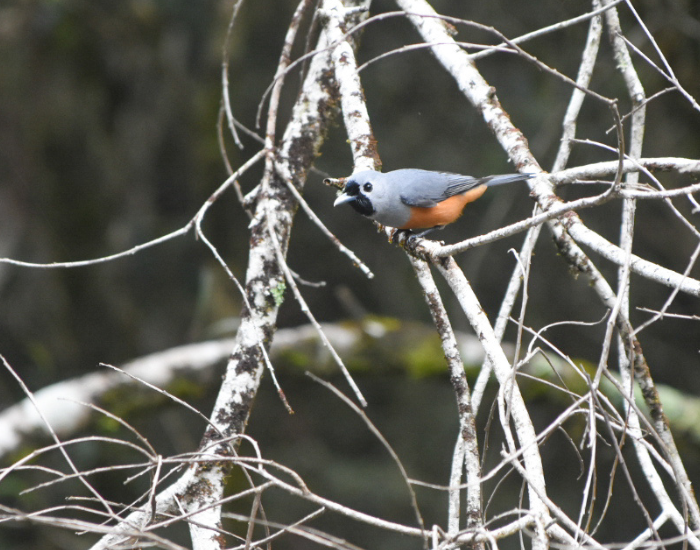
9. Black-faced Monarch (Monarcha melanopsis)
This one hung out along the river, flying from branch to branch in the shoreline trees. It has a soft grey back, a rufous belly and a black face.
Black-faced monarchs migrate. They breed in eastern forests through spring and summer, then winter in northern Queensland and New Guinea. Our October sighting fits their return. They are monarch flycatchers, not butterflies.
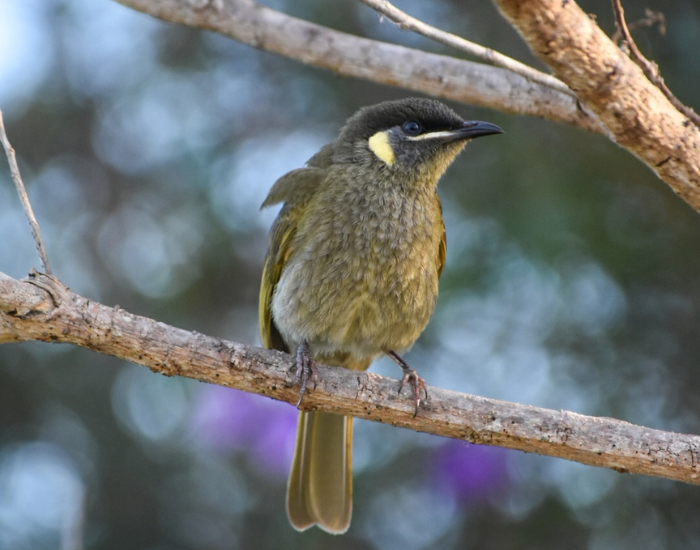
10. Lewin’s Honeyeater (Meliphaga lewinii)
I watched this one on the creek near camp, jumping from rock to rock and into the trees. Look for olive plumage and a pale yellow crescent behind the eye.
Lewin’s honeyeaters favour rainforest edges. They eat fruit and insects as well as nectar, and their rapid, machine-gun call carries a long way. More in my guide to honeyeaters of Australia.
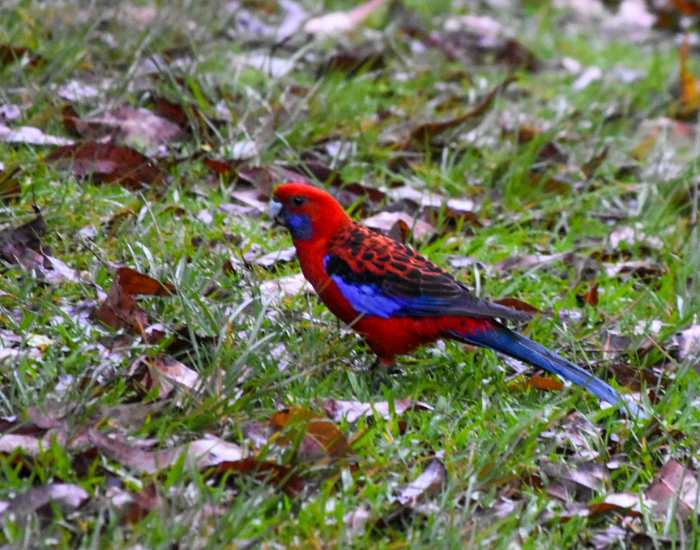
11. Crimson Rosella (Platycercus elegans)
This one fed right next to the toilet block. It is always a delight to spot them because of those colours: deep crimson with violet-blue cheeks and wings.
Polblue gave us crimson rosellas all day, so they clearly use the whole park, from plateau to valley. People have also introduced them to Norfolk Island and New Zealand.
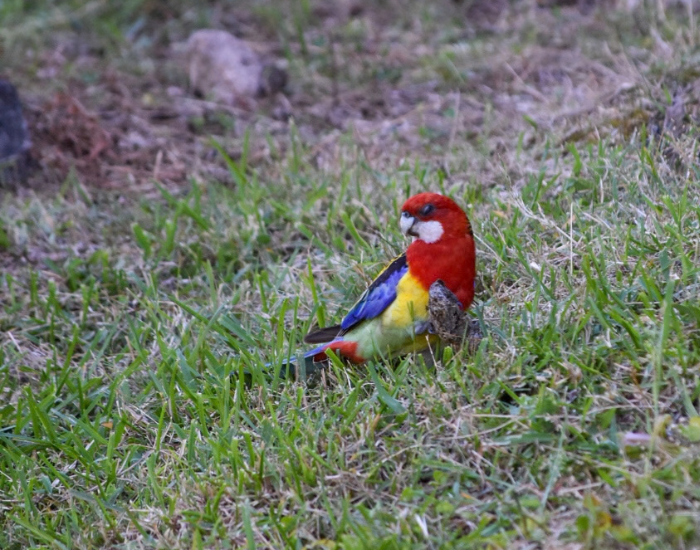
12. Eastern Rosella (Platycercus eximius)
We spotted this one about 10 minutes before arriving, perched in a tree before it flew off. Look for a red head, white cheeks and a yellow belly.
Unlike its crimson cousin, this australian parrot prefers open woodland and farmland edges. That may explain why we saw it on the approach rather than around camp.
13. Galah (Eolophus roseicapilla)
Galahs followed us here, just as they did at Illaroo and Pebbly Beach. Their pink and grey plumage is hard to miss over open ground.
They are one of the winners of land clearing. As farms opened up forests and planted grain, galahs spread from inland Australia towards the coast.
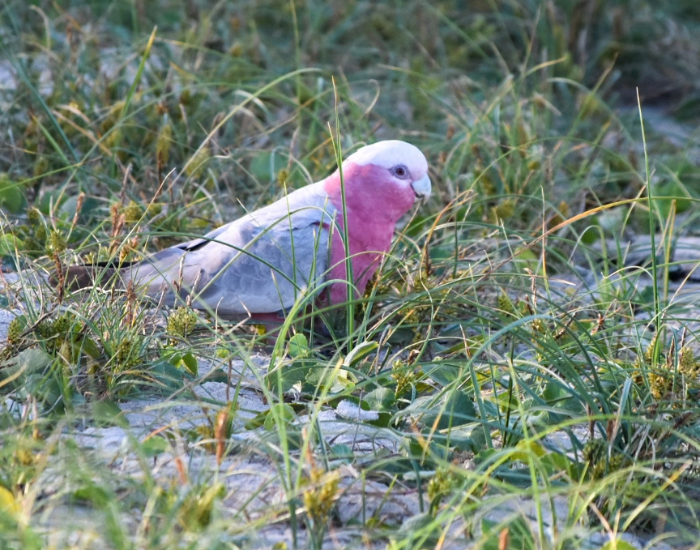
14. Laughing Kookaburra (Dacelo novaeguineae)
We logged kookaburras here too, a familiar sound after five years in Australia. That famous laugh is a family chorus announcing its territory to the neighbours.
Kookaburras are the largest members of the kingfisher family. Young birds often stay with their parents for years and help raise the next brood.
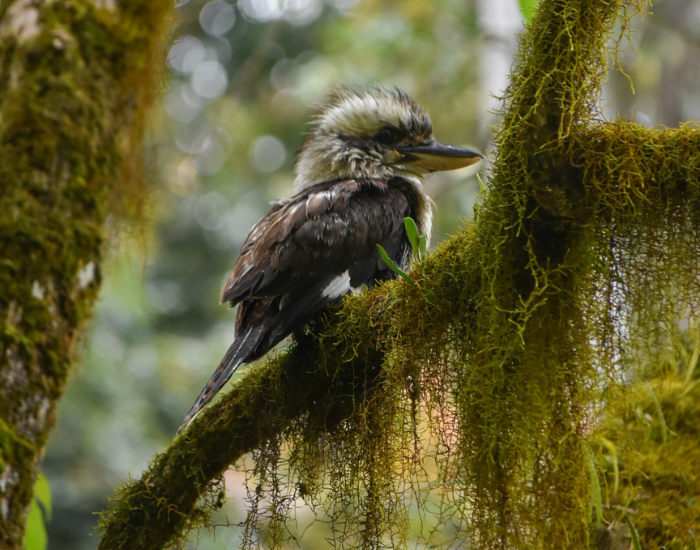
15. Pied Currawong (Strepera graculina)
This one came into our camp, and I had never seen one before. At first I thought it was a crow or some kind of raven, but it had white on it. It was too black for a magpie and too white for a crow.
Look for a yellow eye, white wing patches and a white-tipped tail. Currawongs are actually closer to magpies and butcherbirds than to ravens and crows. They also raid other birds’ nests in spring.
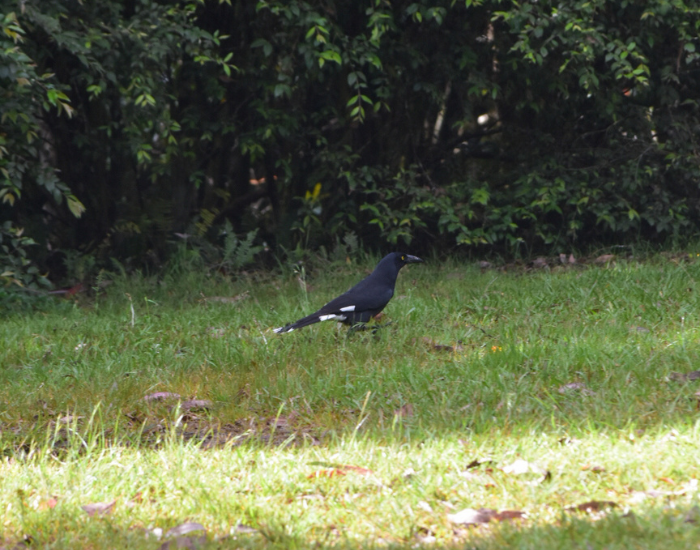
16. Australian Brushturkey (Alectura lathami)
Honestly, I had missed the scrub turkeys. There are no bins in the park, so you carry all rubbish out. By then we were also carrying our bags from Polblue, and this turkey kept trying to get into them.
Males rake huge compost mounds to incubate the eggs. The chicks dig themselves out and live fully independently from day one.
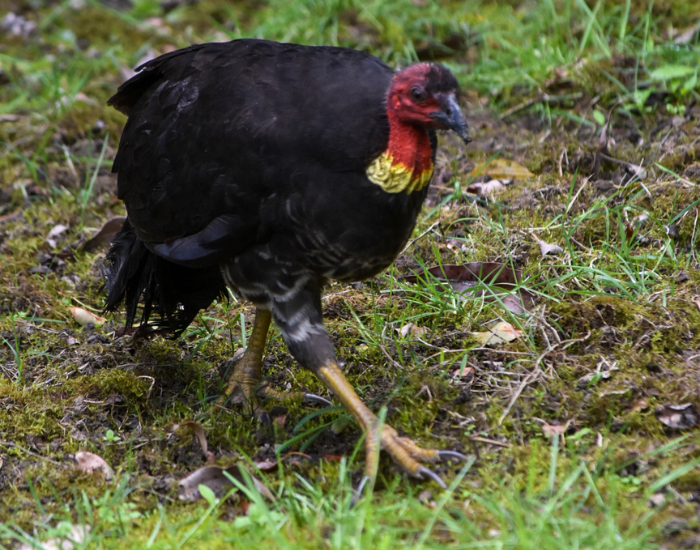
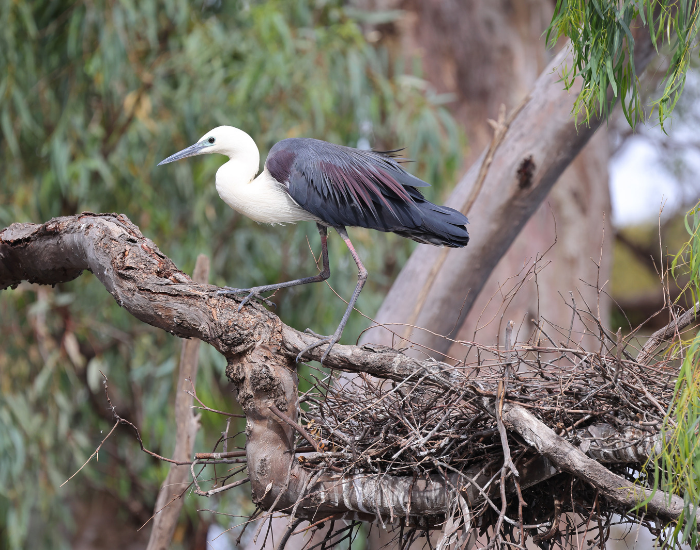
17. White-necked Heron (Ardea pacifica)
We spotted two flying overhead, easily distinguished by their distinctive dark bodies and contrasting pale, white necks and heads.
White-necked Herons are large wading birds often seen stalking small fish, frogs, and aquatic insects in shallow waters or damp pastures. Unlike some other waterbirds, their plumage is water-resistant, allowing them to patiently hunt along edges and wetlands before quietly moving on to the next feeding spot.
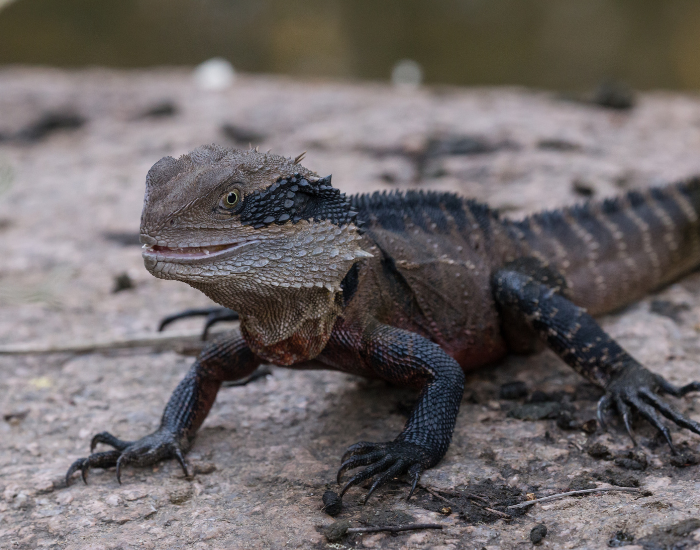
18. Eastern Water Dragon (Intellagama lesueurii lesueurii)
This one stood on a rock in the river with water rushing around its body. For the first time, I understood the name. It looked glorious, almost like a statue. Then I cracked a branch underfoot, and it was gone.
That is classic water dragon behaviour: when disturbed, they drop into the water and can stay submerged for a long time. The eastern subspecies lives along the coast, while the Gippsland form lives in Victoria.
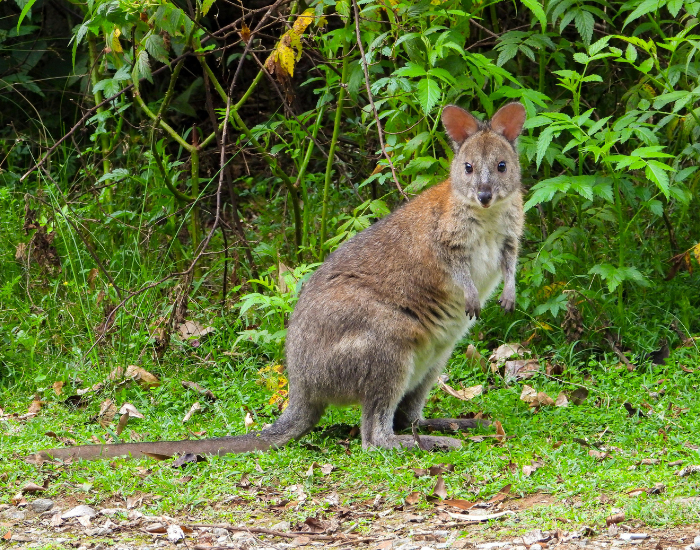
19. Red-necked Pademelon (Thylogale thetis)
I saw this little buddy twice. The first time was on a 6 am walk just next to camp, and the second was on the road. Both times, it bounded off before I could get a proper photo.
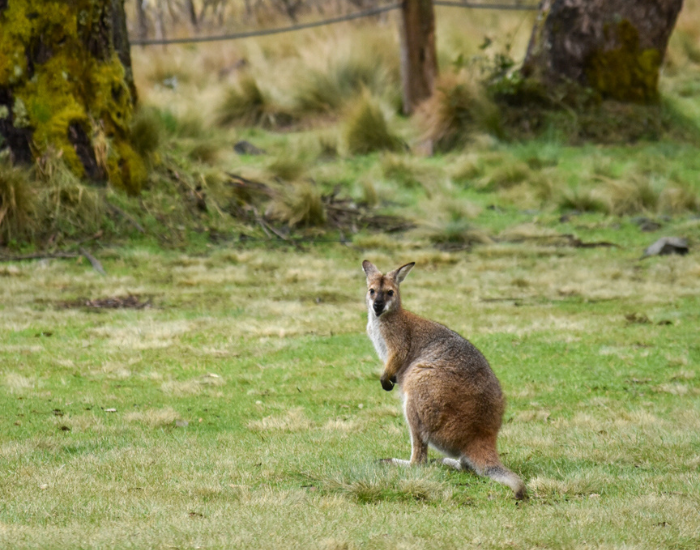
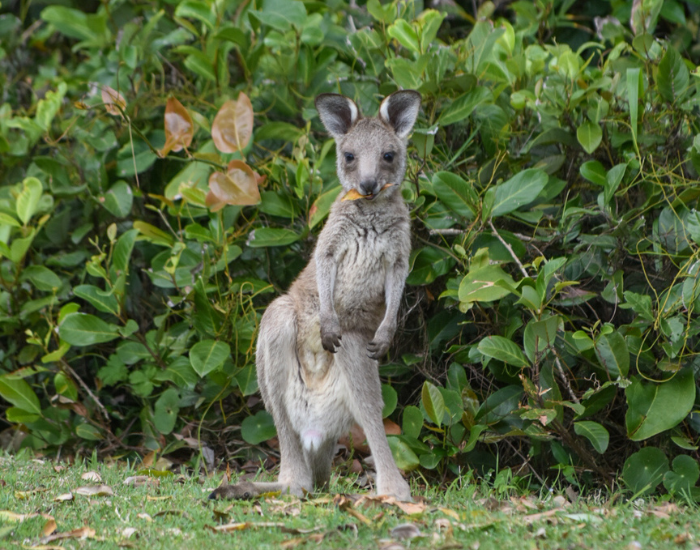
It looked like a red-necked wallaby, but far smaller, with a short, thick tail. Pademelons stay close to the forest edge and graze nearby at dawn and dusk. Not sure how they differ from other macropods? Read wallaby vs kangaroo differences.
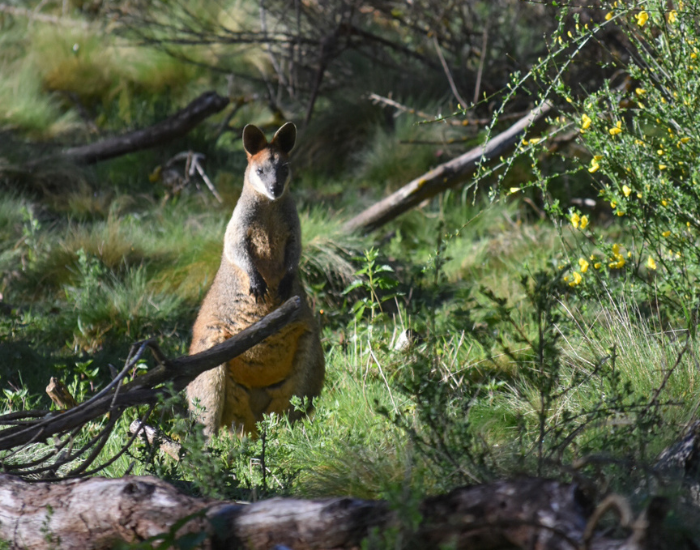
20. Swamp Wallaby (Wallabia bicolor)
We also logged a swamp wallaby here, just like at Polblue. Look for dark fur, a pale cheek stripe and a hop with the head held low.
Swamp wallabies are the only living species in their genus. Their chromosomes also set them apart. Most wallabies have 16, while male swamp wallabies have 11 and females have 10.
Barrington Tops FAQ
No. Vehicle-based camping is only allowed at designated camping grounds such as Gloucester River, Polblue and Junction Pools, and they need a booking. Experienced walkers can bush camp in parts of the Barrington wilderness. Check current rules with the NPWS Gloucester office before you go.
For wildlife, stay in the park. Gloucester River campground suits riverside camping on the eastern side, while Polblue offers high, cold plateau camping near snow gums. For more comfort, private campgrounds along the Gloucester River and accommodation in nearby towns like Gloucester, Dungog and Scone work well.
Not for the main areas. Barrington Tops Forest Road and Gloucester Tops Road are gravel roads suitable for 2WD in dry weather. You do need a 4WD for the Barrington Trail to Junction Pools and Little Murray, open 1 October to 31 May. River crossings can rise quickly after rain.
Yes. In one park you move from near sea level to over 1,500 m, through World Heritage Gondwana rainforest. Our two campgrounds felt like different worlds, from wallaby-filled plateau grassland to a lyrebird-rich river valley. Just pack for wet weather, cold nights and leeches.
Lyrebirds, Leeches and a Possum on the Table
Gloucester River showed me the other face of Barrington Tops National Park, New South Wales. Polblue meant cold grassland and wallabies. Down here, the wet forest packed 20 species around one campsite, and the lyrebird alone made every leech worth it.
If you are planning a route through the best NSW national parks, give this valley at least three nights. Bring water, firewood, spare socks and binoculars, then walk the river at dawn. You might find the platypus I missed. If you do, tell me in the comments.
Next, we keep heading south on our Australia lap. For more ideas, browse my guide to the best places to see wildlife in Australia.
References:
Magrath, R. D., Pitcher, B. J., & Gardner, J. L. (2007). A mutual understanding? Interspecific responses by birds to each other’s aerial alarm calls. Behavioral Ecology, 18(5), 944–951. https://doi.org/10.1093/beheco/arm063
Maisey, A. C., Haslem, A., & Bennett, A. F. (2025). Foraging activity by an ecosystem engineer, the superb lyrebird, ‘farms’ its invertebrate prey. Journal of Animal Ecology. https://doi.org/10.1111/1365-2656.70009
Patricelli, G. L., Uy, J. A. C., & Borgia, G. (2003). Multiple male traits interact: Attractive bower decorations facilitate attractive behavioural displays in satin bowerbirds. Proceedings of the Royal Society B, 270(1531), 2389–2395. https://doi.org/10.1098/rspb.2003.2530
Rogers, A. C., Langmore, N. E., & Mulder, R. A. (2007). Function of pair duets in the eastern whipbird: Cooperative defense or sexual conflict? Behavioral Ecology, 18(1), 182–188. https://doi.org/10.1093/beheco/arl070
Rogers, A. C., & Mulder, R. A. (2004). Breeding ecology and social behaviour of an antiphonal duetter, the eastern whipbird (Psophodes olivaceus). Australian Journal of Zoology, 52(4), 417–435. https://doi.org/10.1071/ZO04001